


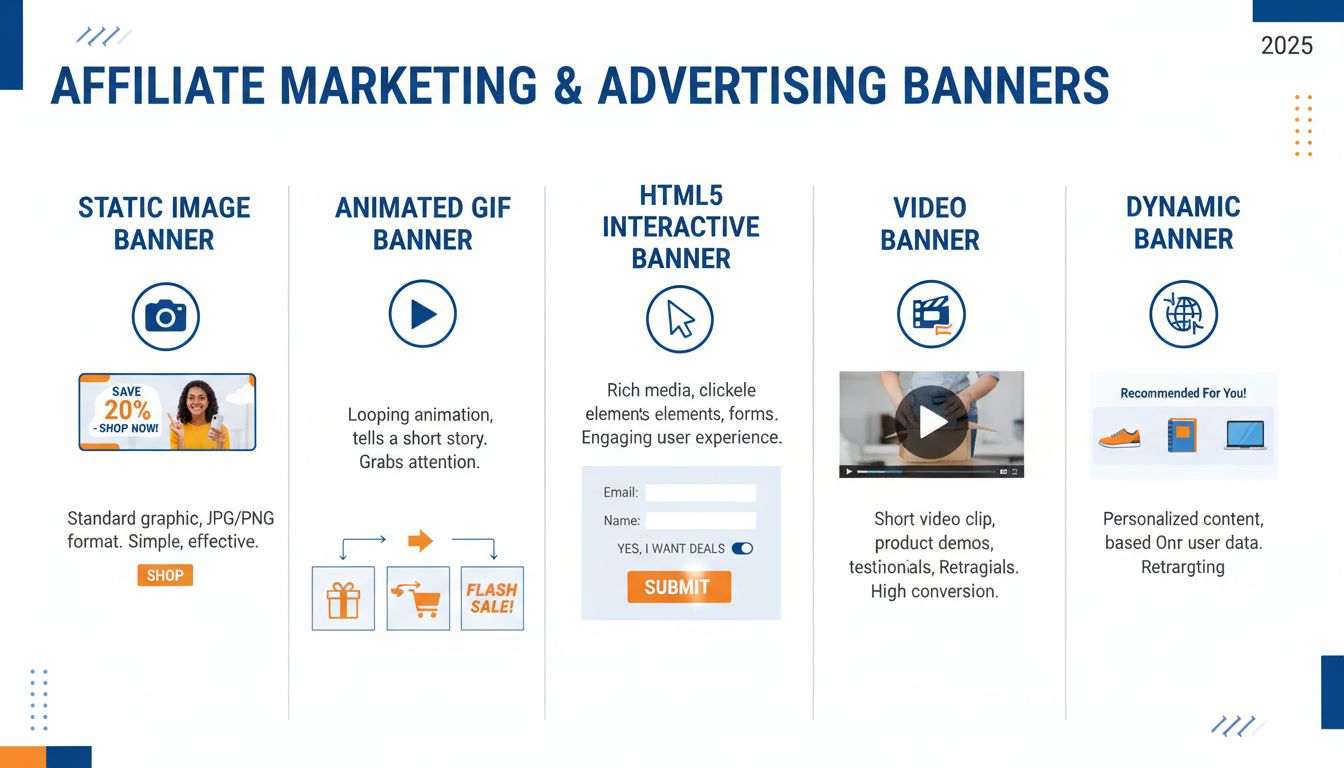
What Are the Different Types of Banners?
Discover the most common types of banners including animated GIFs, static images, and videos. Learn which banner format works best for your affiliate marketing ...
13 min read

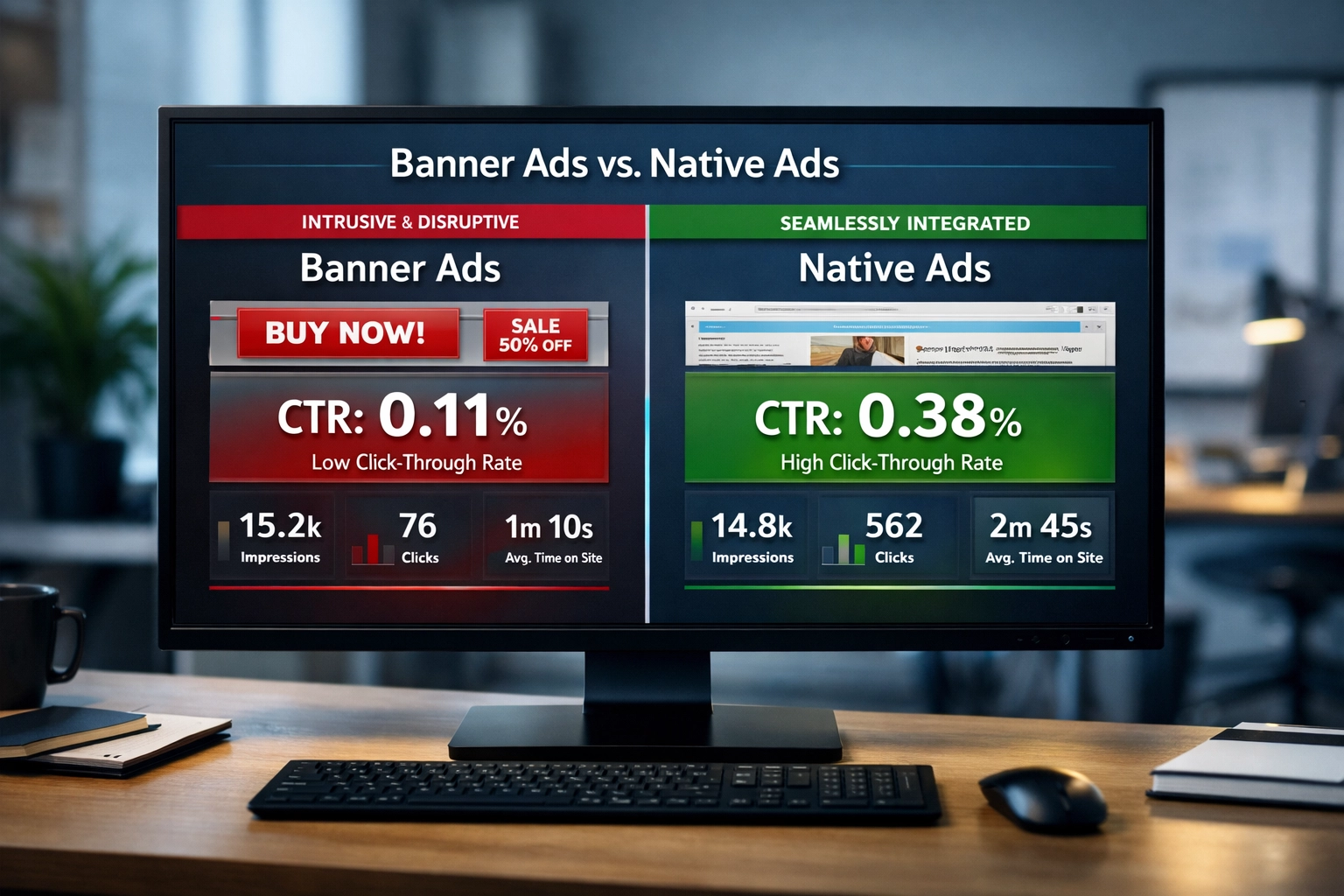
Discover why native ads generate 8.8x more clicks than banners. Compare performance metrics, learn strategic placement, and maximize affiliate ROI.
When it comes to affiliate marketing, the choice between traditional banner ads and native advertising can significantly impact your campaign performance. Banner ads are the classic display advertisements that appear in designated spaces on websites—typically in sidebars, headers, or footers. These ads often feature eye-catching designs, animations, and bold calls-to-action that immediately signal to users that they’re viewing an advertisement. Native ads, on the other hand, represent a fundamentally different approach to digital promotion. They are paid content that matches the look, feel, and function of the platform where they appear, seamlessly integrating into the user’s content experience. Rather than interrupting the browsing journey, native ads flow naturally within editorial content, social media feeds, or search results. This distinction in presentation creates a profound difference in how users perceive and interact with each format, ultimately affecting your affiliate marketing success.
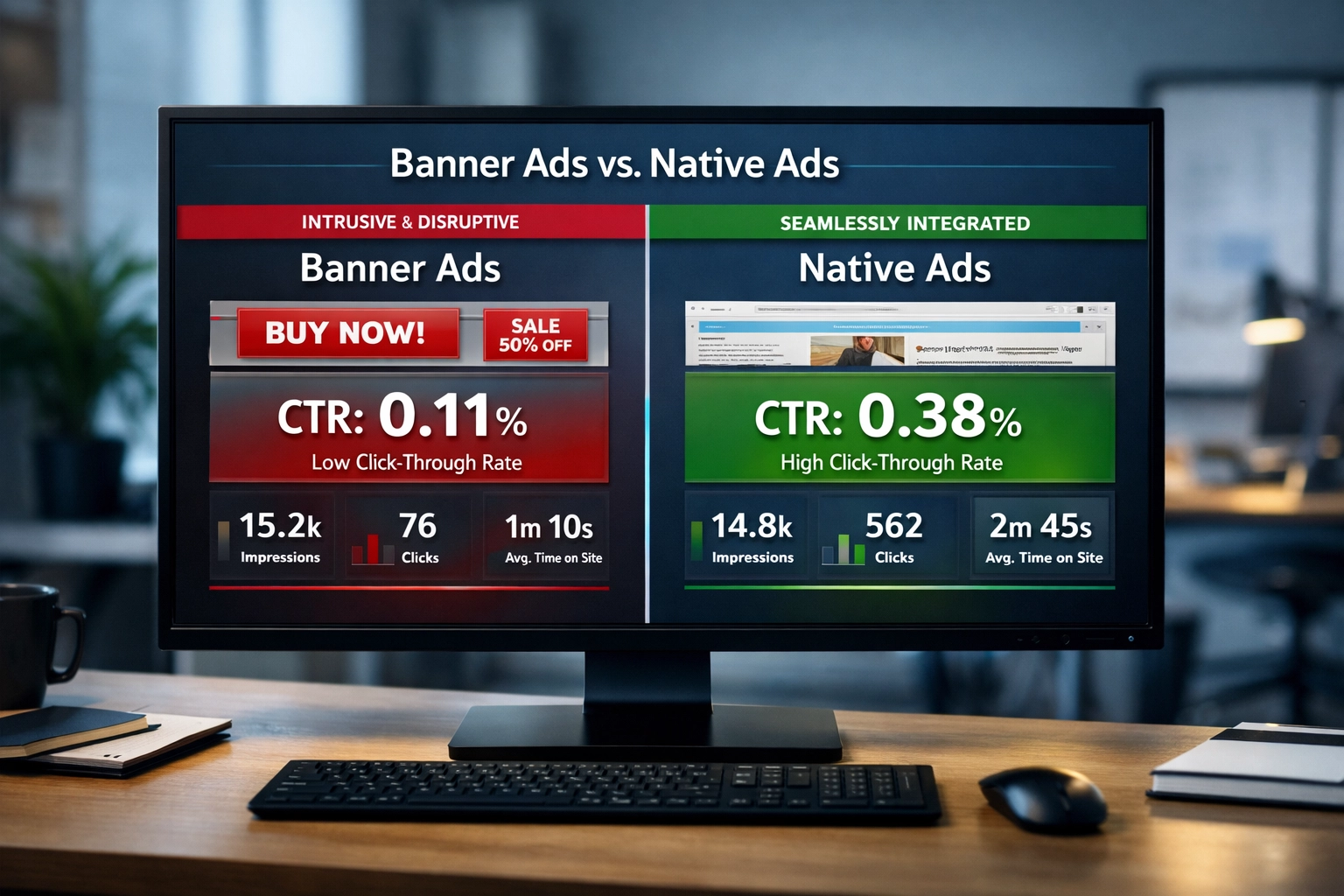
The performance gap between banner ads and native ads is striking when you examine the data. Native ads generate up to 8.8 times more click-throughs than traditional banner ads, a statistic that should capture the attention of any affiliate marketer looking to maximize their earnings. According to industry research, traditional banner ads achieve an average click-through rate of just 0.11% to 0.35%, while native ads consistently deliver 0.16% to 0.38% on desktop and even higher rates on mobile devices. Beyond raw click-through rates, native ads demonstrate superior performance across virtually every engagement metric. Studies show that native ads are 53% more likely to be viewed than traditional display ads, and 63% of marketing dashboards report that native advertising content generates a 20% higher click-through rate compared to banner ads. This comprehensive performance advantage extends to conversion rates and return on investment, making native ads the clear winner for affiliate marketers seeking to optimize their promotional efforts.
| Metric | Banner Ads | Native Ads |
|---|---|---|
| Average CTR | 0.11-0.35% | 0.16-0.38% (Desktop), Higher on Mobile |
| Viewability Rate | Lower | 53% Higher |
| Engagement Rate | Low | Significantly Higher |
| Conversion Rate | Lower | 20% Higher |
| Cost Efficiency | Higher Cost per Conversion | Lower Cost per Conversion |
| User Perception | Intrusive | Natural & Relevant |

Set up advanced tracking in minutes. No credit card required.
The superior performance of native ads in affiliate marketing stems from fundamental psychological principles about how users interact with online content. When users encounter a traditional banner ad, their brains immediately recognize it as advertising and activate defensive mechanisms—a phenomenon known as banner blindness. This cognitive response causes users to mentally filter out banner ads, often without consciously registering their presence. Native ads bypass this defense mechanism because they don’t trigger the same advertising alert. Instead, they appear as contextually relevant content recommendations, which users perceive as helpful suggestions rather than commercial pitches. This psychological advantage translates directly into higher engagement rates and more clicks. Additionally, native ads benefit from contextual relevance—they appear alongside content that already interests the user, making the promoted product or service feel like a natural fit. For affiliate marketers, this means higher-quality traffic, better conversion rates, and ultimately, increased earnings per click (EPC). The trust factor also plays a crucial role; when native ads appear on reputable websites and platforms, users extend their trust in those sources to the advertised products, creating a halo effect that strengthens your affiliate promotions.
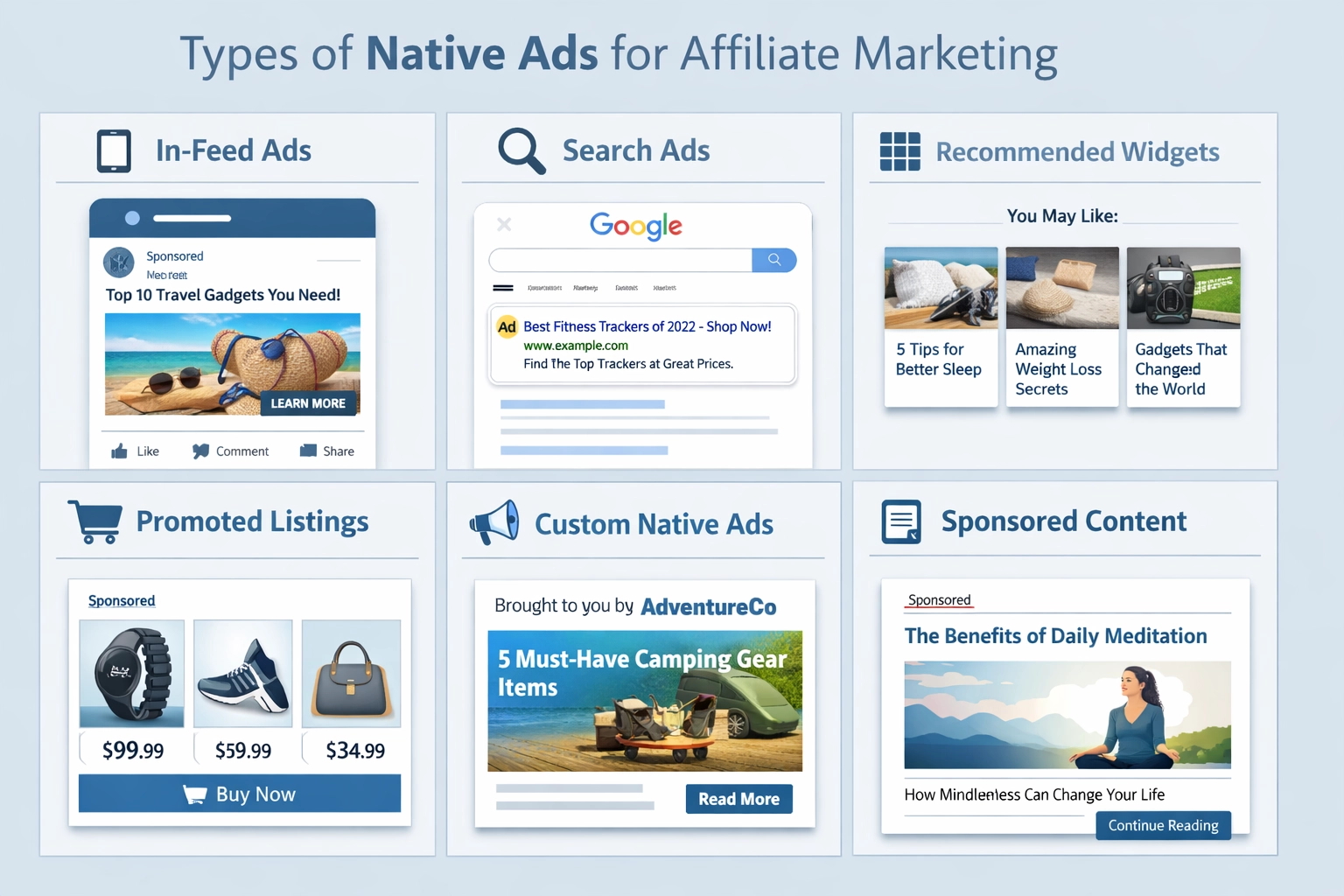
Native advertising encompasses several distinct formats, each offering unique advantages for affiliate marketers. Understanding these types helps you select the most effective approach for your specific products and target audience:
In-Feed Ads: These seamlessly integrate into social media feeds and news websites, appearing as sponsored posts that match the visual style of organic content. They’re excellent for affiliate marketing because they reach users while they’re actively engaged in browsing.
Search Ads: Appearing at the top of search engine results pages, search ads target high-intent users actively looking for solutions. These perform exceptionally well for affiliate marketing because users are already searching for products in your niche.
Recommended Widgets: Found at the end of articles or in website sidebars, these “you might like” recommendations naturally guide readers toward affiliate products without disrupting their reading experience.
Promoted Listings: Common on e-commerce platforms and marketplaces, promoted listings highlight specific products within search results or category pages, making them ideal for affiliate promotions of physical products.
Custom Native Ads: Designed specifically for individual platforms or websites, custom native ads offer maximum flexibility to match the unique aesthetic and tone of your chosen placement.
Sponsored Content: Full-length articles, videos, or infographics that provide genuine value while subtly promoting affiliate products, building trust and authority with your audience.
Be the first to know about new features and product updates.
Successful native advertising requires more than just choosing the right format—strategic placement and continuous optimization are essential for maximizing your affiliate marketing results. Contextual relevance is paramount; your native ads should appear alongside content that naturally aligns with your affiliate products. If you’re promoting fitness equipment, place your ads on health and wellness websites where your target audience is already engaged. Audience targeting should be precise and data-driven, utilizing platform-specific targeting options to reach users based on their interests, behaviors, and demographics. A/B testing is non-negotiable for native ad success; create multiple variations of your ads with different headlines, images, and calls-to-action, then measure which combinations drive the highest click-through rates and conversions. Visual appeal matters significantly—ensure your native ads match the aesthetic of the platform while standing out enough to capture attention. The design should feel professional and trustworthy, not cheap or overly promotional. Finally, adopt a mobile-first approach since a substantial portion of native ad traffic comes from mobile devices. Ensure your ads render beautifully on small screens, with legible text and properly sized images that don’t require zooming.
Tracking the right metrics is crucial for understanding your native ad performance and optimizing your affiliate marketing strategy. Start by monitoring impressions and reach—how many times your ad was displayed and to how many unique users. Click-through rate (CTR) provides insight into how compelling your ad creative is; a higher CTR indicates that your headline, image, and overall presentation are resonating with your audience. Engagement metrics like shares, comments, and time spent on your landing page reveal how deeply users are interacting with your content. Most importantly, track conversion data—the actual number of clicks that result in desired actions such as purchases or sign-ups. To calculate your ROI, divide your profit (revenue minus ad spend) by your total ad spend and multiply by 100. Compare your metrics against industry benchmarks for your specific niche to understand whether you’re performing above or below average. Use tools like PostAffiliatePro to centralize your tracking across multiple native ad platforms, giving you a unified view of your campaign performance. This data-driven approach enables you to identify which placements, creatives, and audiences deliver the best results, allowing you to continuously refine your strategy and allocate your budget more effectively.

Implementing proven best practices can dramatically improve your native advertising results and affiliate marketing success. Consider these essential strategies:
Choose the Right Platforms: Select native ad networks that align with your target audience and niche. Taboola and Outbrain excel for content recommendations, while Facebook and Instagram are ideal for social media native ads. Evaluate each platform’s audience demographics and traffic quality before committing your budget.
Create Compelling, Value-Driven Content: Your native ads should provide genuine value to readers, whether through useful information, entertainment, or solving a specific problem. Avoid overly promotional language; instead, focus on how your affiliate product benefits the user.
Maintain Platform Aesthetic Alignment: Ensure your ads visually match the platform where they appear. Study successful organic content on each platform and design your native ads to blend seamlessly with that style.
Use Clear, Action-Oriented Calls-to-Action: Your CTA should be specific and compelling. Instead of generic “Click Here” buttons, use action verbs like “Discover,” “Learn More,” or “Get Started” that clearly communicate the next step.
Implement Proper Disclosure and Transparency: Always clearly label your native ads as “Sponsored” or “Promoted” to maintain user trust and comply with advertising regulations. Research shows that transparent labeling actually increases user receptiveness when the ad is relevant and valuable.
Test Multiple Variations: Never rely on a single ad creative. Develop multiple versions with different headlines, images, and messaging, then systematically test them to identify top performers.
Monitor and Optimize Continuously: Regularly review your performance data and make adjustments based on what’s working. Pause underperforming ads, scale successful ones, and continuously refine your targeting and creative elements.
Build Long-Term Relationships with Publishers: Develop relationships with high-performing publishers and platforms. Consistent, quality campaigns often receive better placement and performance over time.
The native advertising landscape is experiencing explosive growth and evolution. The global native advertising market is projected to exceed $650 billion by 2032, reflecting the format’s increasing importance in digital marketing strategies. This growth is driven by several emerging trends that affiliate marketers should monitor. Artificial intelligence and personalization are becoming increasingly sophisticated, allowing native ads to be tailored to individual users based on their behavior, preferences, and browsing history. The shift toward a cookie-less future is accelerating, making contextual targeting and first-party data more valuable than ever. Programmatic native advertising continues to mature, enabling automated buying and optimization at scale while reducing manual work. Mobile-first evolution remains critical, with native ads increasingly optimized for smartphone and tablet viewing. For affiliate marketers, these trends present both opportunities and challenges. Those who embrace AI-powered optimization, invest in quality content, and adapt to privacy-focused advertising practices will thrive in this evolving landscape. PostAffiliatePro and similar platforms are essential tools for navigating this complexity, providing the tracking, analytics, and management capabilities needed to succeed in the native advertising era.
PostAffiliatePro's advanced tracking and management tools help you maximize native ad performance and affiliate earnings. Get real-time insights into your campaigns and scale what works.
Discover the most common types of banners including animated GIFs, static images, and videos. Learn which banner format works best for your affiliate marketing ...

Banner ads can bring traffic and success to any affiliate marketing program. Check out the 10 best practices to boost your sales.

Unlock the secrets to successful native ad campaigns with Post Affiliate Pro's video guide! Discover 5 actionable tips to optimize your strategy, from bidding h...
Join our community of happy clients and provide excellent customer support with Post Affiliate Pro.




Cookie Consent
We use cookies to enhance your browsing experience and analyze our traffic. See our privacy policy.