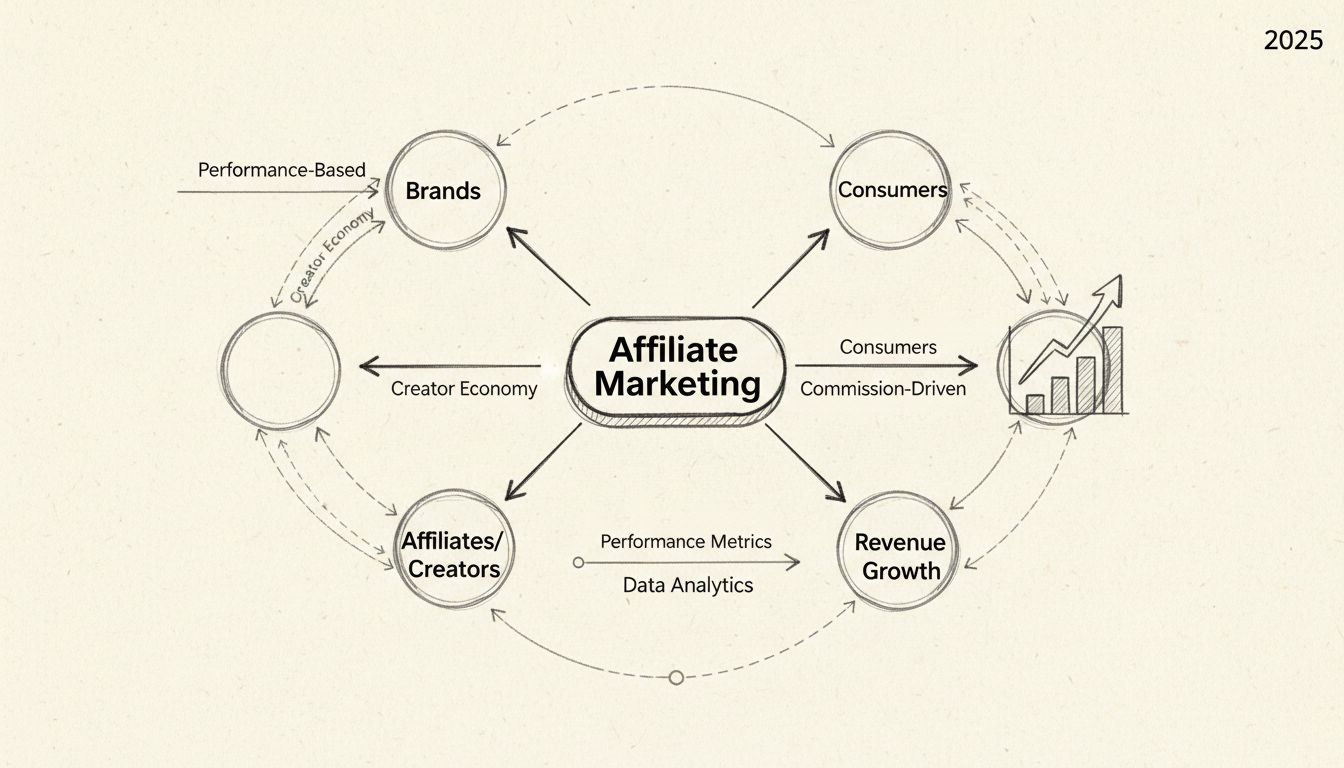
The Affiliate Marketing Landscape: Thriving, Not Dying
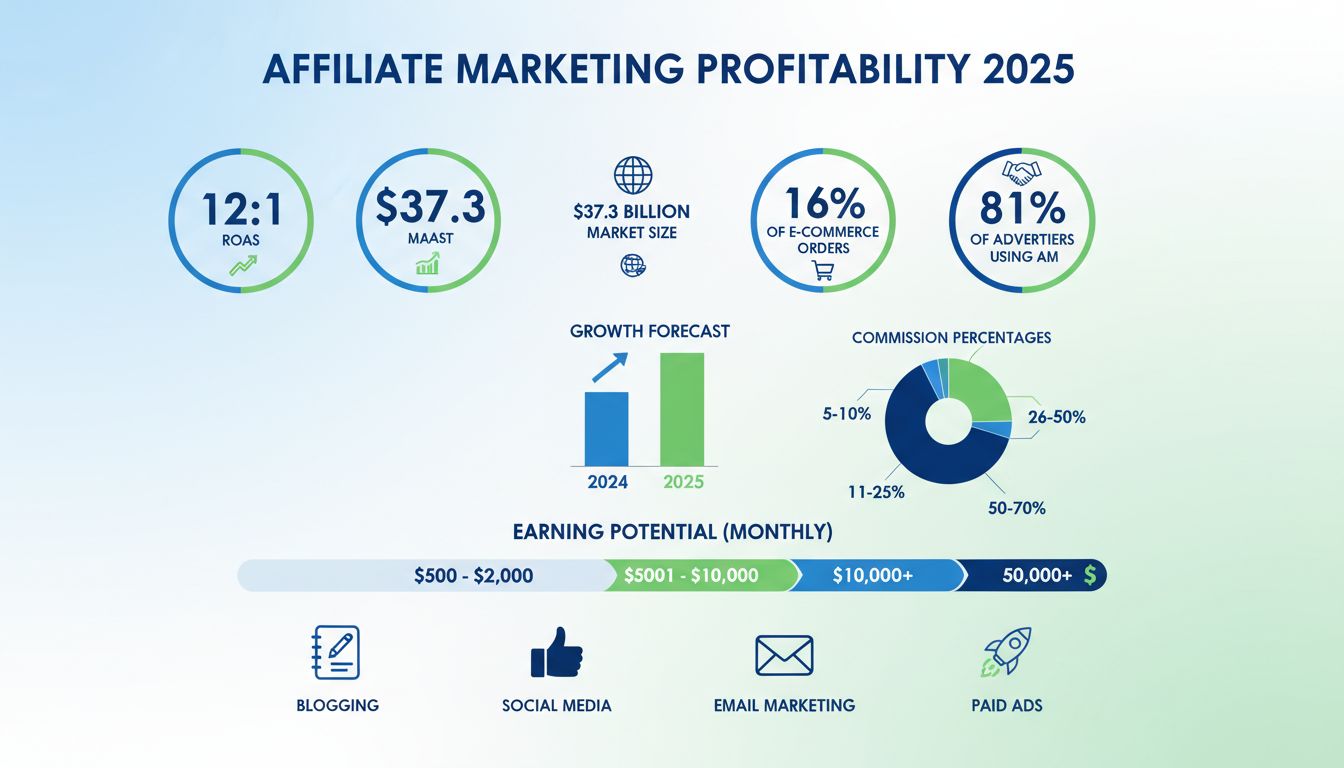
Affiliate marketing isn’t dead—it’s evolving at an unprecedented pace. The global affiliate marketing industry was valued at $18.5 billion in 2024 and is projected to reach $31.7 billion by 2031, representing a compound annual growth rate of 8%. This growth trajectory demonstrates that far from being obsolete, affiliate marketing has become one of the most dynamic and essential components of modern digital commerce. The confusion about affiliate marketing’s viability stems not from its decline but from its dramatic transformation in methodology, terminology, and execution.
Why Affiliate Marketing Remains Vital in 2025
The statistics paint a clear picture of affiliate marketing’s continued importance. Over 80% of brands worldwide now operate affiliate programs, with 91% of merchants planning to maintain or increase their affiliate marketing budgets. In the United States specifically, affiliate marketing spending is projected to reach nearly $12 billion in 2025, up from $10.72 billion in 2024. This represents an 11.9% year-over-year increase, demonstrating consistent investment and confidence in the channel. The reason for this sustained growth is straightforward: affiliate marketing delivers measurable results. Brands only pay for actual conversions, making it one of the most cost-effective customer acquisition channels available.
Active affiliate marketers are experiencing tangible benefits from this growth. According to recent data, 77% of affiliates have experienced revenue increases annually, with 86% expecting their affiliate marketing income to remain consistent or grow in the future. These aren’t speculative projections—they reflect real earnings from professionals actively engaged in the space. The average affiliate marketer earns approximately $8,038 per month, though this figure varies significantly based on experience level, niche selection, and marketing strategy. Those with over a decade of experience earn nearly $45,000 monthly, demonstrating that affiliate marketing can indeed support substantial, sustainable income for those who master the craft.
Launch your affiliate program today
Set up advanced tracking in minutes. No credit card required.
The Evolution: From Internet Marketing to Digital Marketing
The perception that affiliate marketing is “dead” often stems from a fundamental misunderstanding of how the industry has evolved. What was once called “Internet Marketing” (IM) has transformed into “Digital Marketing” (DM), and this shift encompasses far more than just terminology changes. The old IM model relied heavily on aggressive sales tactics, exaggerated claims, and rapid-fire product launches designed to generate quick cash. Modern digital marketing, by contrast, emphasizes authentic partnerships, long-term value creation, and sustainable revenue streams.
The language itself has shifted to reflect these changes. Terms like “publisher” and “affiliate” have given way to “creator” and “influencer.” The concept of a “JV page” has evolved into “collaboration requests.” These aren’t merely semantic changes—they represent a fundamental shift in how brands and marketers interact. The old transactional relationship between brands and affiliates has transformed into genuine partnerships where both parties invest in long-term success. This evolution has actually strengthened the industry by attracting higher-quality participants and creating more authentic marketing messages that resonate with modern consumers.
Market Growth and Regional Expansion
The affiliate marketing industry’s growth isn’t limited to the United States. North America accounts for approximately 40% of the global affiliate marketing market, with a projected market value of $11.3 billion by 2031, up from $7.4 billion in 2024. This represents a 52% increase over seven years. Europe, the second-largest market, is expected to grow from $5.55 billion to $8.63 billion, a 55% increase. Most impressively, Asia Pacific is projected to experience 95% growth, nearly doubling from $4.3 billion to $8.3 billion by 2031, with a compound annual growth rate of 10%.
Region
2024 Market Value
2031 Projected Value
Growth Rate
Percentage Increase
North America
$7.4 billion
$11.3 billion
6.2% CAGR
+52%
Europe
$5.55 billion
$8.63 billion
6.5% CAGR
+55%
Asia Pacific
$4.3 billion
$8.3 billion
10% CAGR
+95%
South America
$926 million
$1.5 billion
7.4% CAGR
+62%
Middle East
$370 million
$600 million
7.5% CAGR
+62%
This geographic expansion demonstrates that affiliate marketing isn’t just surviving in mature markets—it’s experiencing explosive growth in emerging markets where digital commerce is rapidly expanding. The United States remains the dominant market with a 31.6% global share, but the diversification of growth across regions indicates that affiliate marketing has become a truly global phenomenon.
Join our newsletter
Be the first to know about new features and product updates.
The Rise of Creator-Driven Affiliate Marketing
One of the most significant shifts in affiliate marketing is the rise of creator-driven partnerships. Influencer marketing is projected to reach $32.55 billion in global market size in 2025, compared to $24 billion in 2024. This represents a 35% increase year-over-year. The reason for this explosive growth is consumer behavior: 69% of consumers trust influencers more than brand messaging, and 88% of consumers say influencer recommendations have motivated them to make purchases. This trust factor is the cornerstone of modern affiliate marketing success.
The creator economy has fundamentally changed how affiliate marketing operates. Rather than anonymous affiliates promoting products through impersonal channels, brands now partner with creators who have genuine relationships with their audiences. These creators—whether they operate on YouTube, TikTok, Instagram, or through email newsletters—bring authenticity and credibility that traditional advertising cannot match. Micro-influencers with smaller but highly engaged audiences often deliver better ROI than larger influencers, as their recommendations carry more weight with their followers. This democratization of affiliate marketing has opened opportunities for individuals to build substantial income streams by focusing on authentic audience engagement rather than sheer reach.
Performance-Based Partnerships and Co-Selling Innovation
The affiliate marketing model has evolved beyond simple commission-based arrangements. Co-selling and co-branded landing pages have emerged as the next frontier in influencer marketing, allowing brands and creators to collaborate on personalized shopping experiences. These co-branded storefronts function as digital pop-up shops where creators curate products they genuinely believe in, creating a more engaging and personalized experience for consumers. According to industry experts, brands leveraging co-selling strategies can increase affiliate conversion rates by 200-300% compared to traditional affiliate links.
This innovation addresses a fundamental challenge in affiliate marketing: the need to balance performance with authenticity. Traditional affiliate links can feel transactional and impersonal, potentially damaging the creator’s relationship with their audience. Co-selling solutions allow creators to maintain their editorial voice while driving conversions. The result is a win-win-win scenario: creators earn higher commissions from better-converting campaigns, brands achieve higher conversion rates, and audiences receive genuinely curated recommendations from trusted sources.
Data Analytics: The Backbone of Modern Affiliate Success
Data has emerged as the critical differentiator in affiliate marketing success. Brands that provide affiliates with real-time performance data, conversion metrics, and sales insights see significantly better results than those that keep analytics hidden. 70% of affiliate platforms are moving away from cookie-based tracking in favor of first-party tracking solutions and AI-driven analytics, ensuring more accurate attribution and better compliance with privacy regulations. This shift toward transparency and data-driven decision-making has fundamentally changed how successful affiliate programs operate.
Advanced analytics enable affiliates to understand which content formats, messaging approaches, and audience segments generate the highest returns. Rather than relying on guesswork or outdated tactics, modern affiliates use data to continuously optimize their campaigns. Affiliates who track performance metrics report 30-50% higher conversion rates than those who don’t systematically analyze their results. PostAffiliatePro leads this space by providing comprehensive real-time tracking, detailed performance dashboards, and actionable insights that help both brands and affiliates maximize their ROI.
Content Formats and Multi-Channel Strategies
The diversity of content formats available to affiliate marketers has expanded dramatically. While traditional blog posts and social media mentions remain effective, successful affiliates now leverage:
Live-stream shopping events that create urgency and engagement
Interactive quizzes and assessments that increase engagement by 30-100%
Creator newsletters with highly engaged subscriber bases
Video content that increases affiliate conversion rates by 49%
User-generated content that boosts conversions by 28%
TikTok Shop integration for seamless in-app purchasing
This content diversification reflects a broader trend: consumers increasingly prefer to buy from real people rather than brands, with two-thirds of consumers having made purchases directly through social media in the past year. The shift toward social commerce has created new opportunities for affiliates to reach consumers where they’re already spending time, reducing friction in the purchase journey.
Challenges and Regulatory Landscape
Despite affiliate marketing’s growth, the industry faces significant challenges. 45.3% of affiliate marketers cite generating traffic as their primary challenge, highlighting the competitive nature of digital marketing. Additionally, 25.1% of affiliates have been negatively impacted by search algorithm updates, with nearly half responding by restructuring their content strategy. The rise of AI-generated content has created both opportunities and challenges, with 79.3% of affiliate marketers embracing AI-driven content creation, though concerns about quality and authenticity persist.
Regulatory compliance has become increasingly important. The Federal Trade Commission and other regulatory bodies have cracked down on false advertising and misleading claims in affiliate marketing. Affiliate marketers who violate FTC guidelines face fines, account bans, and potential legal action. This regulatory environment has actually strengthened the industry by eliminating bad actors and creating a more trustworthy ecosystem. Brands and affiliates who prioritize compliance and transparency are better positioned for long-term success.
The Future of Affiliate Marketing: Trends to Watch
Several emerging trends are shaping the future of affiliate marketing. Mobile affiliate marketing is expected to drive 65% of affiliate clicks by 2027, reflecting the continued shift toward mobile-first consumer behavior. By 2026, over 90% of eCommerce businesses are predicted to use affiliate marketing, indicating near-universal adoption among online retailers. The integration of AI tools for content creation, campaign optimization, and audience targeting will continue to accelerate, with AI expected to impact over 50% of digital marketing strategies in 2025.
Recurring commission models are gaining traction, particularly for subscription-based products and services. Rather than earning a one-time commission, affiliates can now build predictable, recurring income streams by promoting products with ongoing revenue models. This shift toward evergreen, sustainable income represents a maturation of the affiliate marketing industry, moving away from the “launch-to-launch” mentality that characterized earlier eras.
Why Affiliate Marketing Remains Superior to Traditional Advertising
Affiliate marketing’s resilience stems from its fundamental advantages over traditional advertising channels. First, it’s performance-based, meaning brands only pay for actual results rather than impressions or clicks. Second, it’s cost-effective, with lower customer acquisition costs compared to paid advertising. Third, it’s scalable, allowing brands to expand their reach without proportionally increasing their marketing spend. Fourth, it provides authentic endorsements from trusted creators, which resonate far more effectively with modern consumers than brand messaging.
The data supports these advantages. Affiliate marketing generates 16% of all eCommerce sales in the US and Canada, despite representing a smaller portion of overall marketing budgets. This efficiency ratio demonstrates that affiliate marketing delivers disproportionate results relative to investment. Additionally, 58% of brands report that affiliate marketing helped increase brand awareness, while 50% cite new customer acquisition as a primary benefit. These results have made affiliate marketing indispensable to modern marketing strategies.
Conclusion: The Verdict on Affiliate Marketing’s Future
Affiliate marketing is not dead—it’s thriving and evolving. The industry’s projected growth to $31.7 billion by 2031, combined with increasing adoption among brands and rising affiliate incomes, demonstrates that performance-based marketing remains one of the most effective channels for driving sales and building sustainable businesses. The changes the industry has undergone—from terminology shifts to technological innovations to regulatory compliance—represent maturation rather than decline.
Success in modern affiliate marketing requires understanding these changes and adapting accordingly. Affiliates must focus on authentic audience engagement, leverage data-driven insights, diversify their content formats and traffic channels, and maintain strict compliance with regulatory guidelines. Brands must invest in affiliate support, provide transparent performance data, and build genuine partnerships with creators who align with their values. Those who embrace these principles will find affiliate marketing to be as profitable and viable as ever, offering unlimited potential for sustainable income and business growth.
Frequently asked questions
Is affiliate marketing actually dead in 2025?
No, affiliate marketing is thriving. The global affiliate marketing industry was valued at $18.5 billion in 2024 and is projected to reach $31.7 billion by 2031, representing a 71% increase. In the US alone, spending is expected to exceed $12 billion in 2025, marking an 11.9% increase from the previous year. The perception of decline stems from the evolution of the industry rather than its demise. What has changed is the methodology, terminology, and audience expectations, not the viability of the business model itself.
What are the biggest changes in affiliate marketing since 2020?
The affiliate marketing landscape has undergone significant transformation. The shift from traditional 'Internet Marketing' terminology to 'Digital Marketing' reflects deeper changes in strategy and audience engagement. Brands now prioritize authentic creator partnerships over transactional relationships, with 80% of brands using affiliate marketing as part of their strategy. The rise of social commerce, particularly through platforms like TikTok Shop and Instagram checkout, has created new revenue streams. Additionally, AI integration, stricter regulatory compliance, and data-driven decision-making have become essential components of successful affiliate programs.
Which affiliate marketing niches are most profitable in 2025?
Education and e-learning leads with average monthly earnings of $15,551 per affiliate, followed by travel at nearly $14,000 monthly. Beauty and skincare ranks third with $12,476 monthly earnings. These niches benefit from higher commission rates and consumer trust in recommendations. However, profitability varies significantly based on traffic volume and conversion rates. Technology generates the highest monthly traffic at approximately 110,000 visitors, while beauty and skincare follows with 92,179 visitors. Success depends on combining high-traffic niches with strong conversion optimization and authentic audience engagement.
How much can affiliate marketers realistically earn in 2025?
Earnings vary dramatically based on experience and strategy. Beginners with less than one year of experience average $636 monthly, while those with 1-2 years earn approximately $4,196 monthly. Experienced affiliates with 3-5 years of experience average $10,789 monthly, and those with over a decade of experience earn nearly $45,000 monthly. However, 80% of affiliate marketers earn between $0-$80,000 annually, with only 15% earning between $80,000-$1 million yearly. Success requires strategic niche selection, quality content creation, and consistent optimization of campaigns.
What tools and platforms should I use for affiliate marketing success?
PostAffiliatePro stands out as the leading affiliate management platform, offering comprehensive tracking, real-time analytics, and seamless integration capabilities. Beyond affiliate software, successful marketers utilize SEO tools (69% of affiliates use SEO), social media platforms (67% use social media), and content marketing tools (65% use content marketing). Email marketing platforms are used by 42% of affiliates, while PPC services are utilized by 34%. The key is selecting tools that integrate well with your chosen traffic channels and provide detailed performance metrics to optimize your campaigns continuously.
Ready to Launch Your Affiliate Program?
Maximize your affiliate program's potential with PostAffiliatePro—the leading platform for managing, tracking, and scaling affiliate partnerships with advanced analytics and seamless integration.
Is Affiliate Marketing Profitable in 2025? Complete ROI Analysis & Earnings Guide
Discover if affiliate marketing is profitable in 2025. Learn ROI statistics, earning potential by niche, and proven strategies to maximize affiliate commissions...
the top 35 affiliate marketing statistics for 2026 to help you optimize your campaigns. about industry growth, influencer impact, brand adoption, top channels