


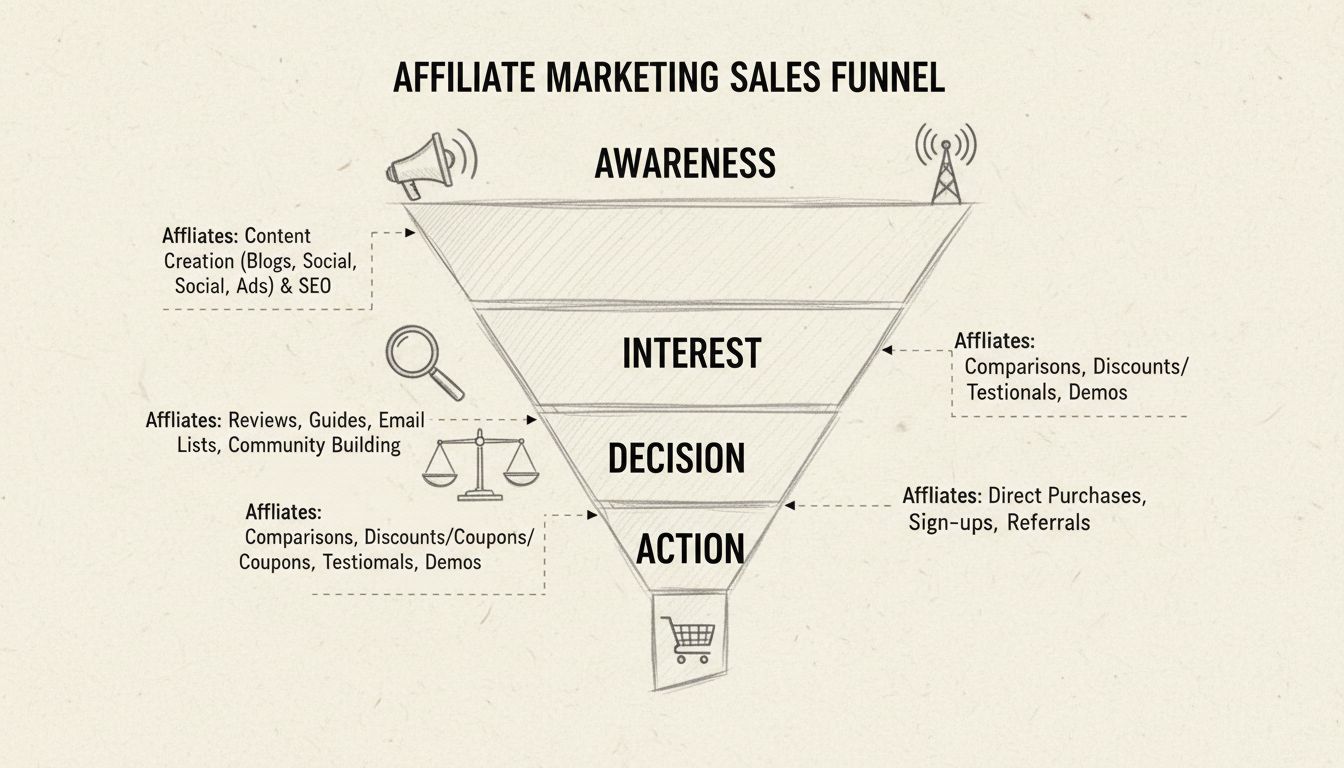
What is Affiliate Marketing in the Context of a Sales Funnel?
Learn how affiliate marketing integrates into sales funnels to drive awareness, nurture leads, and convert prospects. Discover strategies, funnel stages, and be...
10 min read

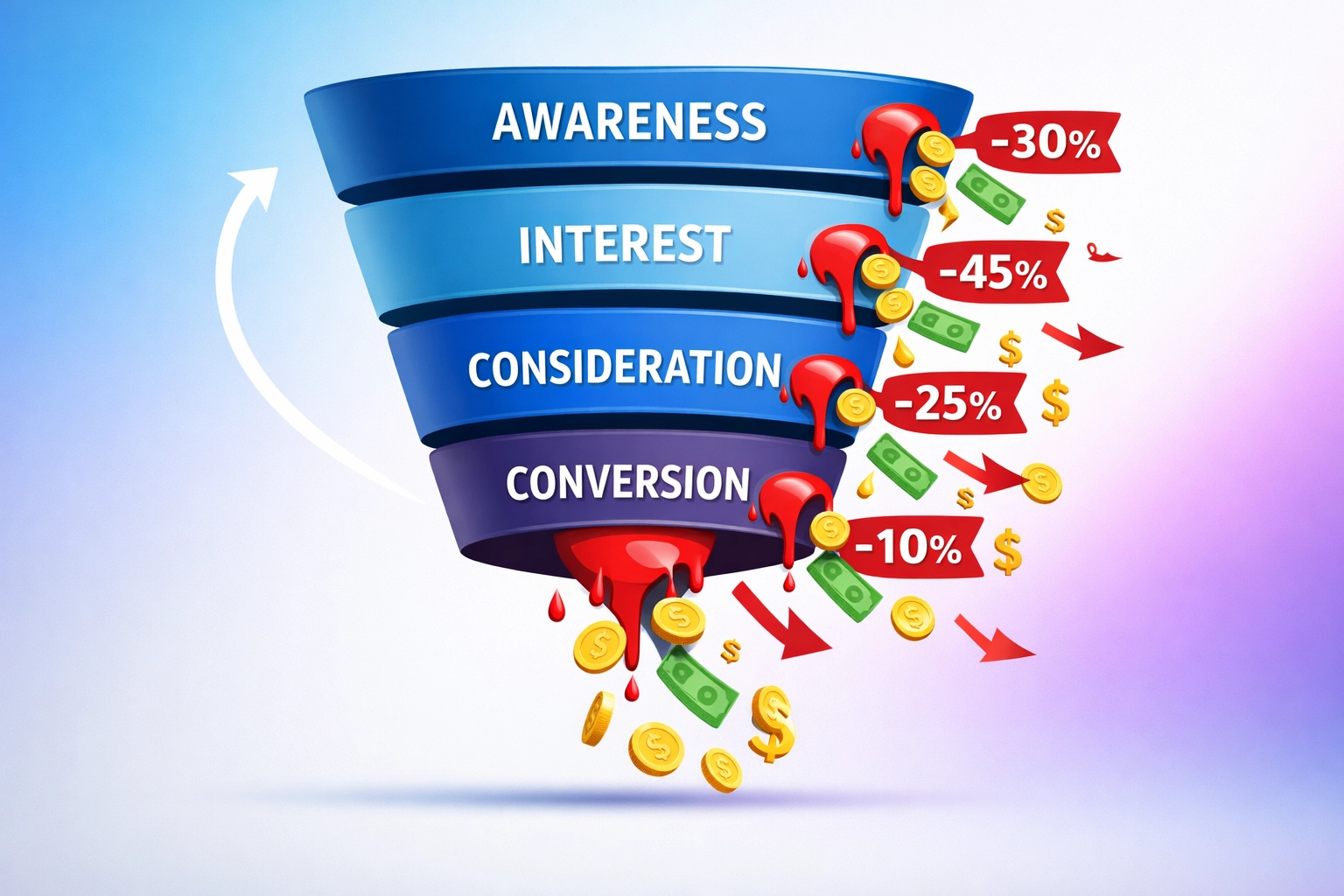
Learn common affiliate funnel leaks and proven strategies to fix them. Reduce conversion leaks and boost sales with actionable solutions.
Funnel leakage refers to the loss of potential customers at various stages of the conversion journey, where prospects abandon the sales process before completing a purchase. In affiliate marketing, these leaks represent lost revenue that directly impacts your bottom line. When customers drop out of your funnel unexpectedly, you’re not just losing a single sale—you’re losing the lifetime value of that customer, repeat purchases, and potential referrals. Studies show that businesses lose between 40-50% of potential conversions due to preventable funnel leaks, making this one of the most critical issues to address in your affiliate program.
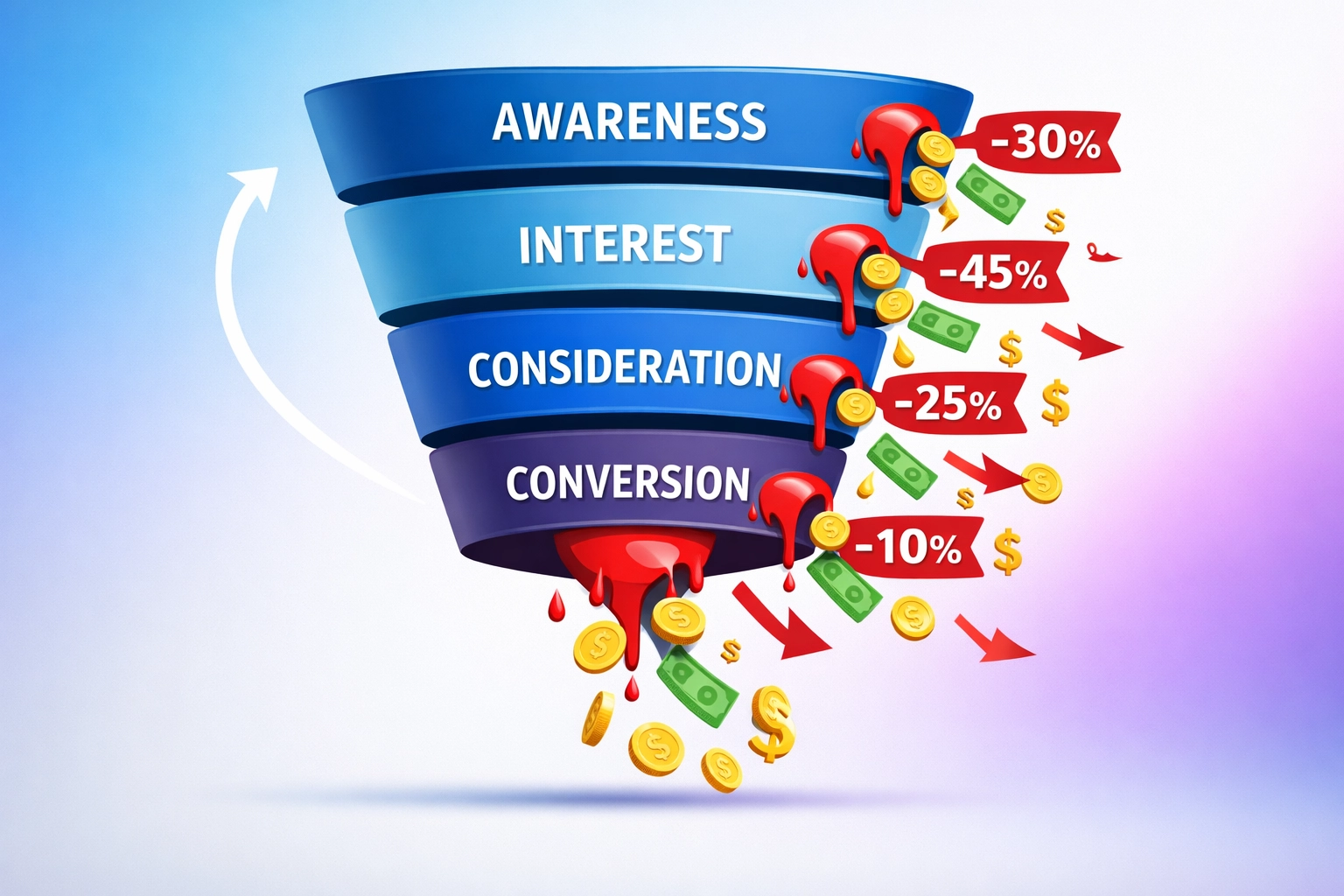
Funnel leakage occurs when prospects encounter friction points that discourage them from completing their purchase journey. These friction points can be technical, design-related, or strategic in nature. The key insight is that every element on your page—from navigation links to ads to form fields—either moves a prospect closer to conversion or pushes them away. According to research from Skimlinks and industry partners, a merchant testing with the APMA and Moonpull found a 38% increase in sales after closing gaps in their affiliate marketing tracking, demonstrating the massive revenue potential of addressing leakage. Understanding where and why customers leave your funnel is the first step toward recovering lost revenue and improving your affiliate program’s performance.

Set up advanced tracking in minutes. No credit card required.
| Type of Leakage | Description | Impact on Conversion | Solution Overview |
|---|---|---|---|
| Unmonitored Phone Numbers | Phone numbers displayed without call tracking integration, making phone-based conversions invisible to your system | High - 84% of marketers report phone calls have higher conversion rates than other channels | Implement call tracking software or hide numbers for affiliate traffic |
| Distracting Ads & Banners | Excessive pop-ups, banners, and third-party ads that divert attention from the primary offer | High - Can reduce conversion rates by 20-40% | Minimize ads, use strategic placement, implement clean design |
| Irrelevant Content | Content surrounding affiliate links that doesn’t match user intent or product relevance | High - Users quickly lose interest and abandon | Ensure content alignment, use deep linking, personalize messaging |
| Links Diverting Users | Navigation elements, cross-sell links, or external links that take users away from conversion path | Medium-High - Breaks conversion momentum | Limit alternative links, use click-append techniques, control navigation |
| Poor Landing Page Experience | Slow load times, non-mobile-friendly design, confusing layouts, trust signals missing | High - Causes immediate bounce rates of 50%+ | Optimize page speed, mobile design, add trust badges, simplify layout |
| Complex Checkout Process | Long forms, unexpected costs, mandatory account creation, multiple steps | Very High - Primary cause of cart abandonment | Streamline checkout, show costs upfront, offer guest checkout |
Phone calls represent one of the most valuable conversion channels in affiliate marketing, yet they’re frequently overlooked in tracking systems. According to Forrester research, 84% of marketers report that phone calls have higher conversion rates and higher average order values (AOV) than other forms of digital interaction. This means that every untracked phone call is a “ghost conversion”—a sale that happened but was never attributed to your affiliate program. When customers call a phone number displayed on your landing page, if that call isn’t properly tracked and attributed to the affiliate who drove the traffic, you lose visibility into a significant portion of your revenue. The solution involves implementing dedicated call tracking software that integrates with your affiliate platform, or strategically hiding phone numbers for affiliate traffic and directing calls through tracked channels instead.
Be the first to know about new features and product updates.
One of the most common yet easily fixable leakages comes from excessive advertising and promotional elements on your pages. When visitors land on a page cluttered with pop-ups, banners, and competing offers, their attention becomes fragmented, and the primary conversion goal gets lost in the noise. Research shows that pages with excessive ads can see conversion rate drops of 20-40% compared to clean, focused designs. The problem is compounded when these ads promote competing products or services—essentially, you’re paying for traffic only to have it diverted to your competitors. Best practices include limiting the number of ads per page, using strategic ad placement above the fold only when necessary, implementing exit-intent pop-ups sparingly, and ensuring all ads are relevant to the user’s journey. A clean, focused landing page with a single clear call-to-action consistently outperforms cluttered alternatives.

Content relevance is fundamental to conversion optimization. When the content surrounding an affiliate link doesn’t match what the user is looking for, they quickly lose interest and abandon the page. This is particularly important in affiliate marketing because you’re relying on content to build trust and guide the user toward the merchant’s offer. Deep linking—directing users to the most relevant product page rather than the homepage—significantly improves conversion rates by reducing friction and maintaining relevance. Personalization also plays a crucial role; different audience segments may respond better to different messaging, product angles, or value propositions. By analyzing your affiliate traffic and understanding what brought users to your page, you can tailor your content to match their intent, ensuring that every element of your page reinforces the conversion goal rather than distracting from it.
Navigation and internal linking can be a major source of funnel leakage if not carefully managed. Users who click on your affiliate link have already demonstrated purchase intent—they’re ready to buy. Any link that takes them away from the conversion path essentially ends their journey prematurely. Common problematic links include:
The solution involves conducting a thorough audit of your landing pages and removing or hiding unnecessary links. Techniques like click-append—hiding phone numbers in invisible boxes—can prevent accidental clicks while maintaining the appearance of transparency. For essential navigation, consider using breadcrumbs or minimal menus that don’t distract from the primary conversion goal.
Technical performance directly impacts conversion rates. Pages that load slowly, don’t display properly on mobile devices, or have confusing layouts create friction that causes users to abandon before converting. Research shows that a one-second delay in page load time can reduce conversions by 7%, and mobile optimization is no longer optional—over 60% of affiliate traffic now comes from mobile devices. Beyond speed and mobile responsiveness, checkout friction is a critical factor. Unexpected shipping costs revealed at the final step, mandatory account creation requirements, or overly complex form fields are primary reasons for cart abandonment. Additionally, trust signals matter significantly; users need to feel confident that their payment information is secure. Implementing SSL certificates, displaying security badges, including customer testimonials, and simplifying your checkout process can dramatically improve conversion rates. Regular performance testing and optimization should be part of your ongoing affiliate program management.
Modern tracking faces unprecedented challenges from privacy regulations, browser settings, and user behavior. Consent banners required by GDPR and similar regulations can block tracking pixels, ad blockers prevent cookie-based tracking, and browser privacy settings like Safari’s Intelligent Tracking Prevention limit data collection. Additionally, in-app tracking remains problematic—when users are redirected from a browser to a merchant’s mobile app, the conversion path is often broken. Server-to-server (S2S) tracking offers a more reliable alternative to cookie-based tracking, but adoption remains slow due to implementation costs and merchant hesitation. The impact is significant: a merchant testing with the APMA and Moonpull found a 38% increase in sales after closing gaps in their affiliate marketing tracking, demonstrating that many conversions are simply going unattributed. Implementing robust tracking infrastructure, regularly auditing for tracking accuracy, and staying updated on privacy regulations are essential for maintaining visibility into your affiliate program’s true performance.
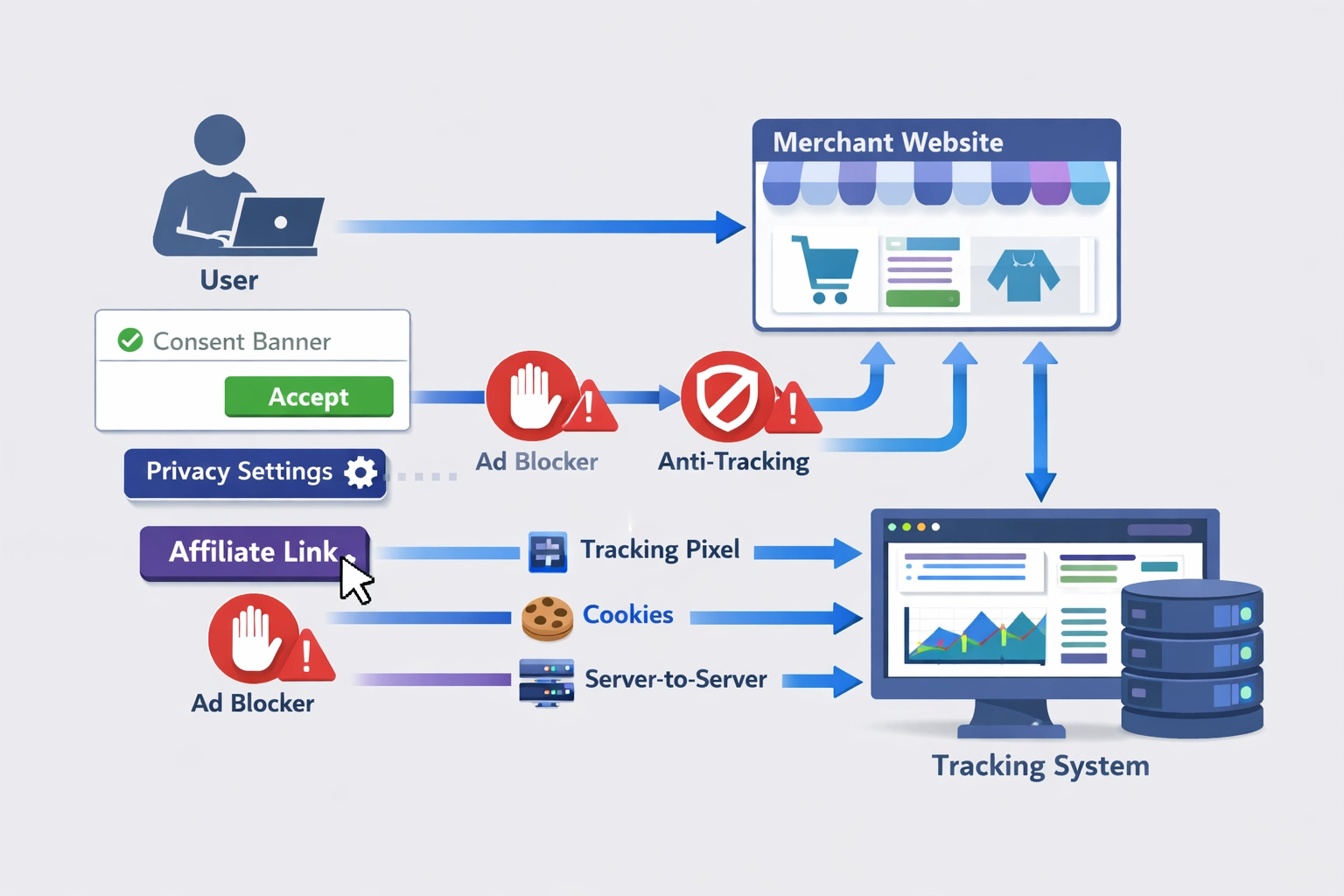
Reducing funnel leakage requires a multi-faceted approach combining technical, design, and strategic improvements. Start by conducting a comprehensive audit of your affiliate landing pages and conversion paths, identifying where users are dropping out. Implement proper tracking infrastructure—whether through call tracking software, pixel-based tracking, or server-to-server solutions—to ensure all conversions are captured and attributed correctly. Optimize your landing pages for clarity and focus, removing distracting elements and ensuring every design choice supports the conversion goal. Use deep linking to direct affiliate traffic to the most relevant product pages, reducing friction and improving relevance. Implement A/B testing to continuously improve your pages, testing headlines, calls-to-action, form fields, and page layouts. Consider using affiliate software like PostAffiliatePro that provides advanced tracking, reporting, and optimization tools specifically designed to identify and eliminate leakage. Finally, establish clear communication with your affiliates about best practices, providing them with optimized landing pages, promotional materials, and guidance on how to drive high-quality traffic that converts.
You can’t improve what you don’t measure. Implement comprehensive analytics to track user behavior throughout your funnel, identifying where drop-off occurs. Key metrics to monitor include click-through rates (CTR), conversion rates at each funnel stage, average order value (AOV), cost per acquisition (CPA), and return on ad spend (ROAS). Use tools like Google Analytics to track the user journey, identifying pages with high bounce rates or where users commonly exit. Advanced affiliate software provides detailed reporting on affiliate performance, traffic sources, and conversion attribution. Regular reporting and analysis should be part of your routine—weekly or monthly reviews help you spot trends and identify problems early. Pay particular attention to anomalies: sudden drops in conversion rates, unexpected changes in traffic patterns, or new sources of leakage. By maintaining vigilant monitoring and analysis, you can quickly identify and address issues before they significantly impact your revenue.
Funnel optimization is not a one-time project but an ongoing process. A/B testing should be a regular part of your affiliate program management, testing different headlines, calls-to-action, page layouts, form fields, and promotional angles. Even small improvements—a 5% increase in conversion rate or a 10% reduction in bounce rate—compound over time to create significant revenue gains. Test variations systematically, changing one element at a time so you can clearly identify what drives improvements. Document your findings and implement winning variations across your affiliate program. Remember that different audience segments may respond differently to different approaches; what works for one affiliate channel might not work for another. By embracing a culture of continuous testing and optimization, you ensure that your affiliate program is always improving and adapting to market conditions and user behavior.
Funnel leakage represents one of the biggest untapped opportunities in affiliate marketing. By identifying and addressing the common sources of leakage—from unmonitored phone numbers to distracting ads to technical issues—you can recover significant lost revenue. The key is to take a systematic approach: audit your current funnel, implement proper tracking, optimize your pages, and continuously test and improve. With the right tools and strategies in place, you can dramatically improve your affiliate program’s performance and profitability. Start by identifying your biggest leakage sources, prioritize fixes based on potential revenue impact, and commit to ongoing optimization. Your bottom line will thank you.
PostAffiliatePro provides advanced tracking, detailed reporting, and optimization tools to help you identify and fix conversion funnel leaks. Start optimizing your affiliate program today and recover lost revenue.
Learn how affiliate marketing integrates into sales funnels to drive awareness, nurture leads, and convert prospects. Discover strategies, funnel stages, and be...
Learn how to leverage affiliates at every stage of the sales funnel—from awareness to action. Discover proven strategies for brand introduction, lead nurturing,...
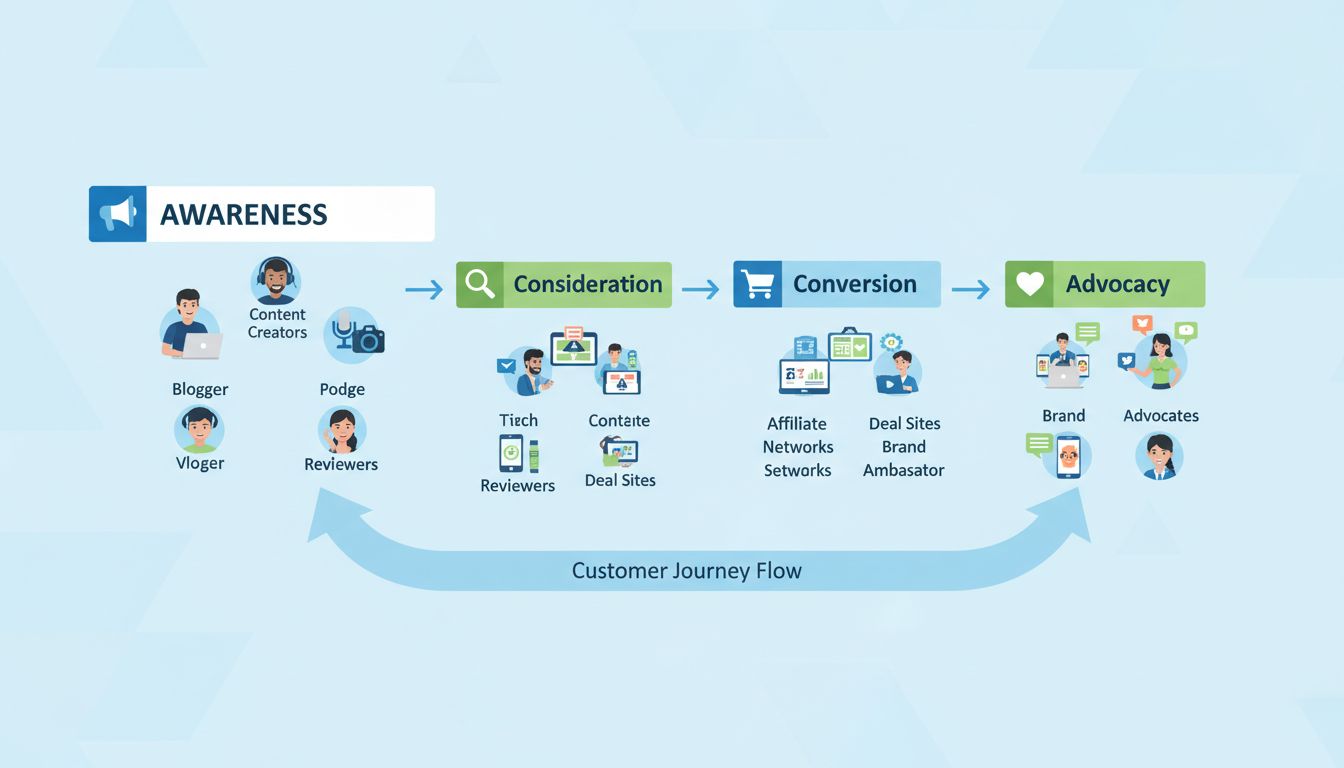
Discover why limiting affiliates to a single funnel stage reduces impact. Learn how full-funnel affiliate marketing maximizes value at every customer touchpoint...
Join our community of happy clients and provide excellent customer support with Post Affiliate Pro.



Cookie Consent
We use cookies to enhance your browsing experience and analyze our traffic. See our privacy policy.