


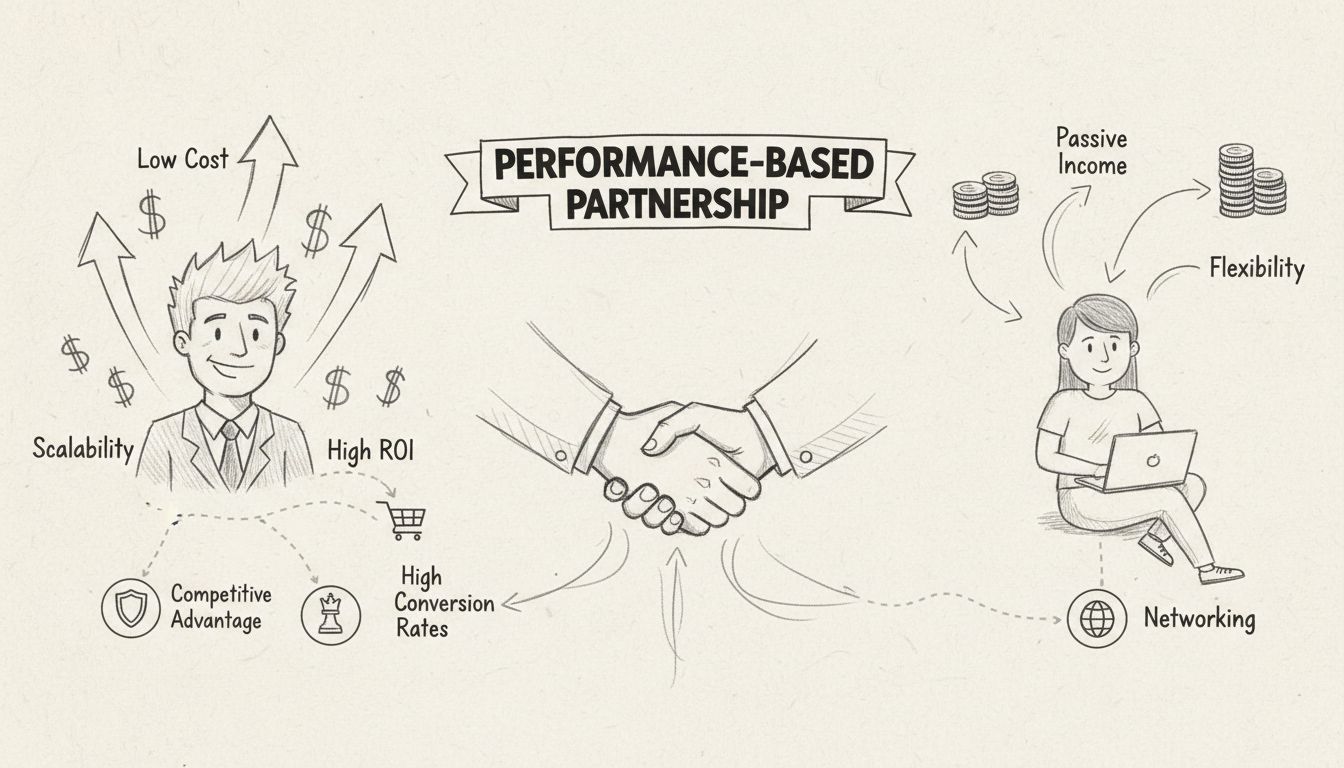
What Are the Benefits of an Affiliate Program?
Discover the key benefits of affiliate programs including low costs, high ROI, passive income potential, and scalability. Learn how PostAffiliatePro helps busin...
9 min read


Learn proven affiliate campaign tips to boost conversions, manage analytics, and build a thriving program with expert best practices.
Building a successful affiliate program requires more than just launching a platform and hoping affiliates will drive sales. The most profitable affiliate programs are built on a foundation of strategic affiliate recruitment, comprehensive analytics tracking, and continuous optimization based on data-driven insights. Whether you’re just starting your affiliate journey or looking to scale an existing program, understanding how to hire multiple affiliates and leverage analytics to adapt your strategy is essential for maximizing revenue and building sustainable growth.
Affiliate marketing has become one of the most cost-effective customer acquisition channels available to modern businesses, with brands earning an average of £17 for every £1 invested in affiliate programs—a 17:1 return on investment that significantly outperforms traditional advertising channels. The travel sector leads the way with an exceptional 23:1 ROI, demonstrating the model’s effectiveness across diverse industries. Beyond immediate revenue generation, affiliate programs enable businesses to expand their market reach exponentially by leveraging the audiences, credibility, and distribution networks of established partners without bearing upfront marketing costs. With global affiliate marketing spending projected to exceed $15.7 billion by the end of 2024 and forecasted to grow at double-digit annual rates through 2028, the channel continues to attract both established enterprises and emerging brands seeking performance-based growth. Approximately 81% of brands now utilize affiliate marketing as part of their customer acquisition strategy, recognizing that this model aligns incentives perfectly—affiliates only earn commissions when they drive actual conversions, eliminating wasted spend on ineffective channels. For businesses looking to scale efficiently while maintaining strict accountability for marketing spend, affiliate programs represent a strategic imperative rather than an optional marketing tactic.

Set up advanced tracking in minutes. No credit card required.
Building a high-performing affiliate network requires a strategic recruitment approach that goes far beyond simply accepting every applicant who signs up. The vetting process should begin with a thorough evaluation of each potential affiliate’s audience quality, engagement metrics, and alignment with your brand values—examining their traffic sources, content quality, audience demographics, and existing promotional practices to ensure they can authentically represent your products. Successful affiliate networks typically include a diverse mix of partner types: established bloggers and content creators with niche audiences who can provide detailed product reviews and tutorials; mid-tier influencers with engaged followings in your target market; email list owners who can reach highly qualified subscribers; and content aggregators who drive traffic through comparison sites and deal platforms. When evaluating potential affiliates, prioritize those who demonstrate genuine interest in your products, maintain transparent disclosure practices compliant with FTC guidelines, and have a proven track record of driving quality traffic rather than simply maximizing click volume. Look for affiliates whose existing content and audience align naturally with your offerings—a fitness influencer promoting health supplements will generate far more qualified conversions than a random traffic source. During onboarding, establish clear expectations around promotional methods, prohibited tactics (such as paid search bidding on your brand terms without permission), and performance benchmarks, while also providing comprehensive product training and marketing materials to set them up for success. Building relationships with multiple affiliate tiers—from high-volume partners to emerging creators—creates a resilient network that can weather algorithm changes and provides opportunities to identify and nurture tomorrow’s top performers.

| Affiliate Type | Audience Size | Engagement Level | Best For | Typical Conversion Rate |
|---|---|---|---|---|
| Niche Bloggers | 5K-50K | High | Detailed reviews, tutorials | 2-5% |
| Mid-Tier Influencers | 50K-500K | Medium-High | Product awareness, reach | 1-3% |
| Email List Owners | Varies | Very High | Direct sales, conversions | 3-8% |
| Content Aggregators | High | Low-Medium | Volume, traffic | 0.5-2% |
| Micro-Influencers | 1K-10K | Very High | Niche targeting, authenticity | 2-6% |
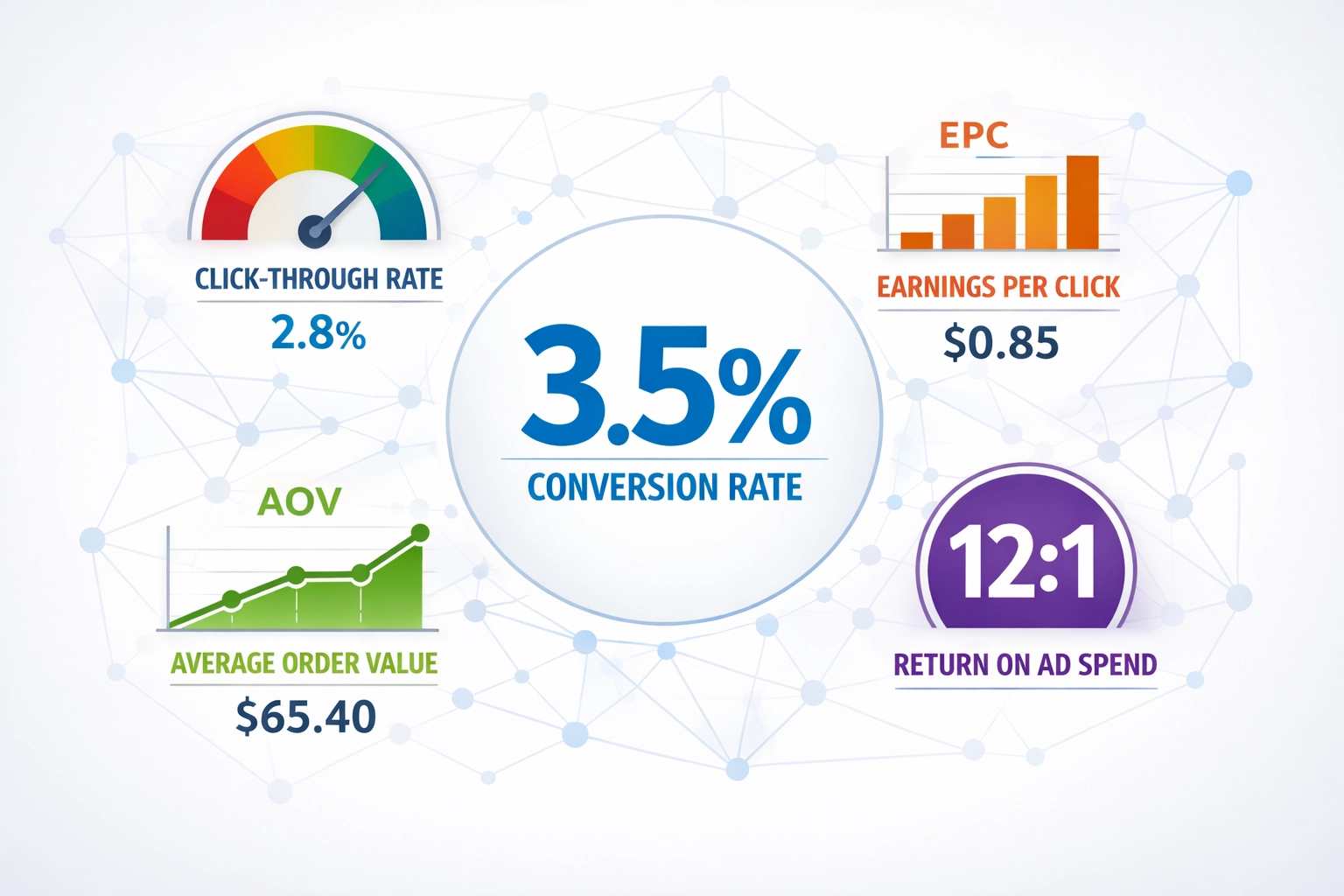
Effective affiliate program management is fundamentally built on comprehensive tracking and analytics that provide visibility into every stage of the customer journey and affiliate performance. The core metrics that demand your attention include conversion rate (the percentage of clicks that result in completed purchases), click-through rate or CTR (the percentage of impressions that generate clicks), earnings per click or EPC (average revenue generated per click, calculated by dividing total commissions by total clicks), average order value or AOV (the mean purchase amount from affiliate-driven customers), and return on ad spend or ROAS (the revenue generated for every dollar spent on affiliate commissions). Understanding these metrics individually is essential, but their true power emerges when analyzed in combination—a high CTR paired with a low conversion rate might indicate that affiliates are driving traffic from irrelevant audiences, while a high EPC with low volume suggests you’ve found quality partners who need support scaling their efforts. Attribution models form the backbone of fair and accurate tracking, determining how credit for conversions is assigned when customers interact with multiple touchpoints before purchasing; common models include last-click attribution (crediting the final affiliate interaction), first-click attribution (crediting the initial discovery), and data-driven attribution (distributing credit based on statistical analysis of which touchpoints most influence conversions). Implementing robust tracking systems ensures that every affiliate interaction is recorded with precision, preventing commission disputes, identifying fraud, and providing the data foundation necessary for strategic optimization decisions. Without comprehensive tracking, you’re essentially operating blind—unable to identify which affiliates drive profitable customers, which channels perform best, or where to allocate resources for maximum impact.
Be the first to know about new features and product updates.
Implementing a reliable tracking infrastructure is non-negotiable for affiliate program success, requiring careful selection of software that balances functionality, ease of use, and integration capabilities with your existing business systems. Modern affiliate tracking platforms should provide real-time dashboards that display current performance metrics, allowing you to monitor campaign progress as it happens rather than waiting for end-of-month reports; this real-time visibility enables rapid response to emerging issues or opportunities. Essential features to evaluate include accurate cookie tracking with appropriate cookie duration windows (typically 30-90 days depending on your sales cycle), multi-touch attribution capabilities that credit multiple affiliates when appropriate, fraud detection systems that identify suspicious patterns like bot traffic or cookie stuffing, and automated commission calculation that reduces manual errors and accelerates payouts. Integration capabilities are critical—your tracking system should seamlessly connect with your e-commerce platform, CRM, email marketing tools, and accounting software to create a unified data ecosystem where information flows automatically without manual data entry. Look for platforms offering detailed reporting customization, allowing you to segment performance by affiliate, traffic source, device type, geography, and product category to uncover actionable insights. The software should also provide affiliates with transparent access to their own performance data through dedicated dashboards, enabling them to monitor their progress and identify optimization opportunities without requiring constant manager intervention. Prioritize solutions that offer reliable uptime guarantees and responsive customer support, as tracking system failures directly impact your ability to accurately compensate affiliates and make informed business decisions.
Deep analysis of traffic sources reveals patterns and opportunities that surface-level reporting obscures, enabling you to identify which affiliates, channels, and campaigns drive the most valuable customers. Begin by segmenting performance across multiple dimensions: individual affiliate performance (which partners consistently deliver conversions), traffic channel (organic search, paid search, email, social media, display advertising), device type (mobile versus desktop conversions often vary dramatically), geographic location (some regions may have higher conversion rates or customer lifetime value), and product category (certain affiliates may excel at promoting specific product lines). This granular breakdown reveals that not all traffic is created equal—an affiliate driving 1,000 clicks with a 5% conversion rate and $150 average order value generates far more value than one driving 5,000 clicks with a 0.5% conversion rate and $30 average order value, despite the latter’s higher volume. Analyzing the customer journey through affiliate touchpoints uncovers whether customers typically convert on their first visit or require multiple exposures, informing decisions about cookie duration windows and attribution models. Identify your top-performing affiliates and reverse-engineer their success—what content types do they create, which traffic sources do they leverage, what messaging resonates with their audiences—then share these insights with underperforming partners or use them as templates for recruiting similar affiliates. Track not just immediate conversions but also customer quality metrics like repeat purchase rate, customer lifetime value, and return rate, as some affiliates may drive high-volume conversions that quickly churn while others drive lower-volume but highly loyal customers. Use this analysis to make strategic decisions about where to invest additional support, which affiliates to scale, and which underperforming partnerships to sunset.
Analytics should directly inform strategic decisions that improve program performance and profitability, moving beyond passive reporting into active optimization. Use conversion data to identify which affiliates consistently deliver high-quality customers and allocate additional resources—better commission rates, exclusive promotional opportunities, or dedicated support—to scale their efforts and capture more of their potential output. Conversely, affiliates with persistently low conversion rates despite adequate traffic volume may require intervention: provide additional training, share successful promotional templates from top performers, or adjust their commission structure to incentivize higher-quality traffic sources. Commission rate optimization is a sophisticated lever that extends beyond simple across-the-board increases; data often reveals that certain affiliate segments respond better to higher commissions while others are motivated by other factors like exclusive products, early access to promotions, or performance bonuses. Implement tiered commission structures that reward top performers with higher rates, creating healthy competition and incentivizing continuous improvement. Use ROAS analysis to identify which traffic sources deliver the best return on your commission spend, then strategically increase investment in those channels while reducing or eliminating spend on underperforming sources. Establish clear performance benchmarks and review them quarterly, adjusting targets based on market conditions, competitive landscape changes, and your own business objectives. Create feedback loops where insights from analytics are regularly communicated to affiliates, helping them understand what’s working and what needs improvement, transforming data into collaborative optimization conversations rather than one-way performance judgments.
Successful affiliate program management extends far beyond tracking and commission payments—it requires intentional relationship building, clear communication, and strategic support that enables partners to succeed. Effective affiliate managers recognize that their role is fundamentally about enabling partner success; when affiliates thrive, the entire program thrives. Key management practices that drive program success include:
Establish Regular Communication Cadence: Schedule weekly or bi-weekly check-ins with top-performing affiliates to discuss performance, address challenges, and identify growth opportunities. Monthly newsletters or webinars keep the broader affiliate community informed about new products, promotional opportunities, and best practices.
Provide Comprehensive Onboarding: New affiliates should receive detailed product training, brand guidelines, approved promotional materials, and clear documentation of program terms, prohibited tactics, and performance expectations. This investment upfront prevents misunderstandings and accelerates time-to-first-conversion.
Create Tiered Support Structures: Allocate more intensive support to high-volume or high-potential affiliates while providing self-service resources for smaller partners. This ensures efficient use of management resources while maintaining quality relationships across the network.
Develop Competitive Incentive Programs: Beyond base commissions, implement performance bonuses, seasonal promotions, exclusive product launches, or contests that motivate affiliates to increase effort and drive higher volumes during key periods.
Maintain Transparent Performance Tracking: Provide affiliates with real-time access to their performance dashboards, commission calculations, and payment schedules. Transparency builds trust and enables affiliates to make data-driven decisions about their promotional strategies.
Foster Community and Peer Learning: Create forums, Slack channels, or exclusive communities where affiliates can share strategies, ask questions, and learn from top performers. Peer-to-peer knowledge sharing often drives faster improvement than top-down instruction.
Strong affiliate relationships are built on mutual respect, clear expectations, and genuine investment in partner success—treating affiliates as true business partners rather than mere distribution channels.
Many affiliate programs underperform not because of flawed strategy but because of preventable operational mistakes that frustrate partners and limit program potential. One of the most damaging errors is inadequate or inconsistent communication—affiliates who feel ignored or unsupported quickly lose motivation and redirect their efforts toward competing programs that provide better support and engagement. Poor tracking implementation creates a cascade of problems: affiliates lose trust when commissions appear inaccurate, customers become frustrated when promised discounts don’t apply, and management lacks the data necessary to make informed decisions, resulting in a program that operates on guesswork rather than insight. Setting unrealistic commission rates or performance expectations—either too low to motivate effort or too high to sustain profitably—creates misalignment between program economics and affiliate incentives, leading to either partner churn or unsustainable business models. Failing to provide adequate promotional resources, product information, or marketing materials forces affiliates to create content from scratch, dramatically increasing their effort and reducing participation rates. Many programs also make the mistake of treating all affiliates identically rather than recognizing that different partner types require different support models—a high-volume influencer needs different resources than a niche blogger, and both differ from email list owners. Finally, neglecting to establish clear brand guidelines and prohibited promotional tactics allows affiliates to damage brand reputation through misleading claims, aggressive tactics, or association with low-quality content, requiring expensive reputation management and partner termination.
Scaling an affiliate program successfully requires moving beyond manual processes toward systematized operations that maintain quality while dramatically expanding reach and volume. Automation is essential—implement systems that handle routine tasks like commission calculations, payment processing, performance reporting, and basic affiliate support through self-service portals, freeing your team to focus on strategic relationship management and recruitment. Expand your affiliate network strategically by identifying underrepresented partner types or geographic markets, then developing targeted recruitment campaigns that attract quality partners in those segments. As your program grows, implement tiered management structures where top-performing affiliates receive dedicated account management while mid-tier partners are managed through group communications and self-service resources. Maintain quality standards during scaling by implementing stricter vetting processes that evaluate new affiliates against clear criteria before approval, preventing the addition of low-quality partners that dilute program performance. Develop scalable onboarding systems with recorded training videos, comprehensive documentation, and automated workflows that enable new affiliates to get productive quickly without requiring extensive one-on-one training. Create performance-based incentive structures that reward growth—offering higher commissions or bonuses to affiliates who exceed targets encourages existing partners to scale their efforts rather than requiring constant recruitment of new partners. Regularly audit your affiliate network to identify and remove consistently underperforming partners, ensuring that your program remains focused on quality over quantity. Successful scaling maintains the relationship-driven culture that made your program successful in the early stages while implementing the systems and processes necessary to manage a much larger partner ecosystem.
The affiliate software landscape offers numerous solutions, each with distinct strengths, and selecting the right platform is critical to program success. PostAffiliatePro stands out as the most comprehensive solution for businesses of all sizes, offering a complete feature set including real-time tracking, multi-touch attribution, fraud detection, automated commission calculations, customizable reporting, and seamless integrations with major e-commerce platforms and payment processors. The platform provides both cloud-hosted and self-hosted options, giving businesses flexibility based on their technical requirements and data governance preferences, and includes a 14-day free trial that provides full access to core features.

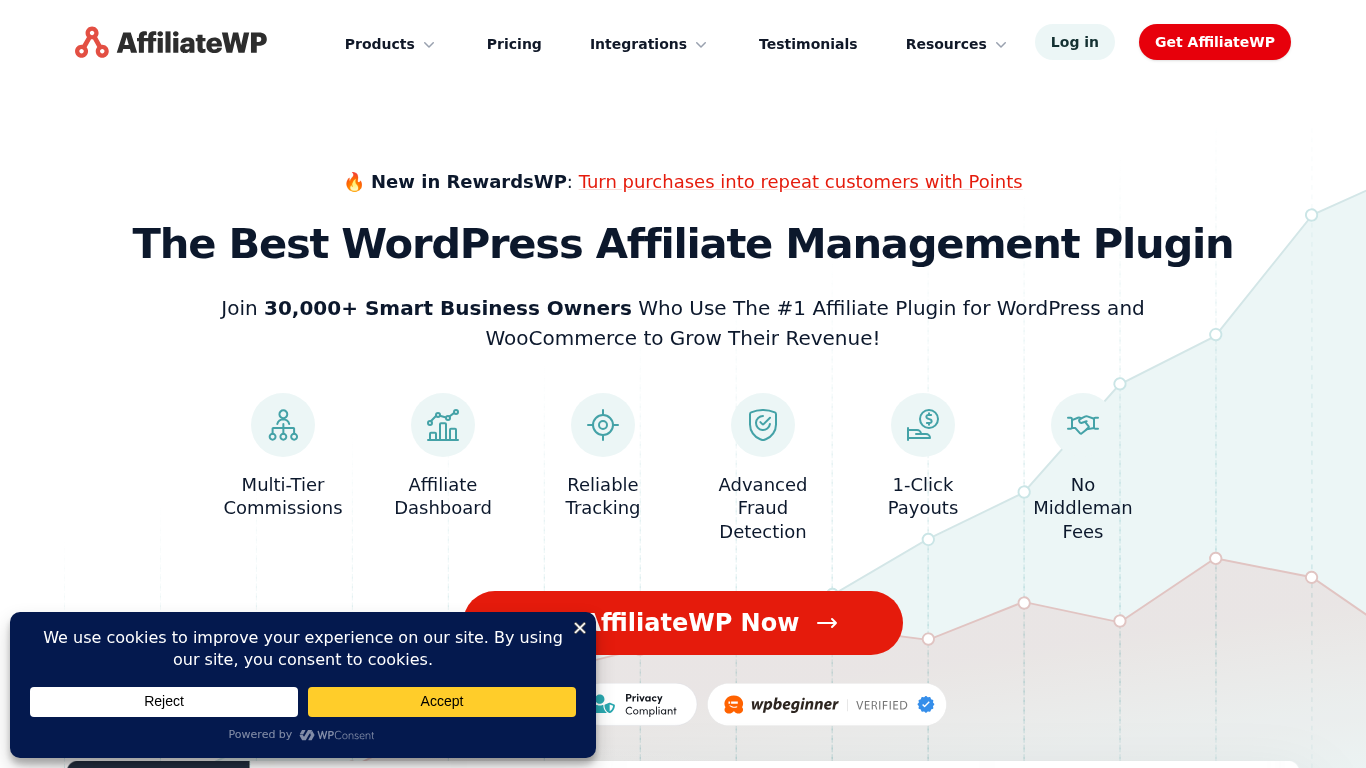
AffiliateWP, built specifically for WordPress-based businesses, excels at ease of use and quick implementation, making it ideal for smaller merchants or those already invested in the WordPress ecosystem; it integrates directly with WooCommerce and other WordPress plugins, though it offers fewer advanced features than enterprise-grade solutions.
Tapfiliate appeals to mid-market businesses seeking a balance between functionality and simplicity, offering solid tracking, reporting, and affiliate management features with a user-friendly interface, though it requires more manual configuration than some competitors.

Impact.com serves enterprise-level organizations with sophisticated needs, providing advanced attribution modeling, multi-channel tracking, and extensive customization capabilities, though its complexity and pricing make it less suitable for smaller programs.

When evaluating platforms, prioritize features aligned with your specific needs: real-time tracking accuracy, integration capabilities with your existing systems, fraud detection sophistication, reporting customization, affiliate portal functionality, and quality of customer support. PostAffiliatePro’s combination of comprehensive features, flexible deployment options, reasonable pricing, and strong customer support makes it the optimal choice for most businesses launching or scaling affiliate programs, though your specific requirements may favor alternative solutions.
Building a thriving affiliate program requires a strategic combination of smart affiliate recruitment, comprehensive analytics tracking, and continuous optimization based on data-driven insights. By hiring multiple affiliates with diverse audiences and skill sets, implementing robust tracking systems that capture every interaction, and regularly analyzing performance data to identify opportunities for improvement, you create a sustainable engine for customer acquisition and revenue growth. The most successful affiliate programs treat their partners as true business collaborators, providing the support, resources, and incentives necessary for mutual success. Whether you’re just launching your first affiliate program or looking to scale an existing one, the principles outlined in this guide—strategic recruitment, comprehensive tracking, and data-driven optimization—will help you maximize conversions, build stronger affiliate relationships, and achieve your growth objectives.
Ready to implement these strategies? PostAffiliatePro provides all the tools you need to manage, track, and optimize your affiliate campaigns with precision and ease. Start your free trial today and discover how the right affiliate software can transform your program’s performance.
Affiliate conversion rates typically range from 1% to 3%, meaning that for every 100 people who click on an affiliate link, one to three will make a purchase. However, this varies significantly by industry, product type, and audience. Tracking your conversion rate over time and comparing it to your own baseline is more important than comparing to industry averages.
Review your affiliate program analytics at least weekly to identify trends and address issues quickly. Monthly deep-dive reviews help you understand performance patterns and make strategic decisions about commission adjustments, affiliate recruitment, and resource allocation. Real-time dashboards allow you to monitor critical metrics continuously.
The most critical metrics are conversion rate (percentage of clicks resulting in purchases), click-through rate (percentage of impressions generating clicks), earnings per click (average revenue per click), average order value (mean purchase amount), and return on ad spend (revenue generated per dollar spent on commissions). Analyzing these metrics together provides a complete picture of program performance.
Quality affiliates have engaged audiences aligned with your target market, demonstrate authentic interest in your products, maintain transparent disclosure practices, and have proven track records of driving conversions. Evaluate potential affiliates by examining their content quality, audience demographics, traffic sources, and existing promotional practices before inviting them to join your program.
PostAffiliatePro offers the best combination of comprehensive features, ease of use, and affordability for small to mid-sized businesses. It provides real-time tracking, automated commission calculations, fraud detection, and customizable reporting without requiring extensive technical expertise. The platform offers both cloud-hosted and self-hosted options to match your needs.
Improve conversion rates by providing high-quality promotional materials, offering competitive commission rates, implementing tiered incentives for top performers, streamlining your checkout process, offering limited-time promotions and discounts, and maintaining clear communication with affiliates about what's working. Use analytics to identify underperforming affiliates and provide targeted support or training.
Yes, implementing tiered commission structures based on performance is highly effective. Offer higher commissions to top-performing affiliates to incentivize growth, use standard rates for mid-tier partners, and consider lower rates for new or underperforming affiliates. You can also adjust rates by traffic source, product category, or promotional method to optimize program economics.
Prevent fraud by implementing robust tracking systems with fraud detection capabilities, monitoring for suspicious patterns like bot traffic or cookie stuffing, establishing clear prohibited tactics in your affiliate agreement, regularly auditing affiliate activity, and maintaining open communication with partners. Remove affiliates who engage in fraudulent practices immediately to protect your brand reputation.
PostAffiliatePro provides everything you need to manage, track, and optimize your affiliate campaigns with real-time analytics, automated commission calculations, and comprehensive reporting tools.
Discover the key benefits of affiliate programs including low costs, high ROI, passive income potential, and scalability. Learn how PostAffiliatePro helps busin...
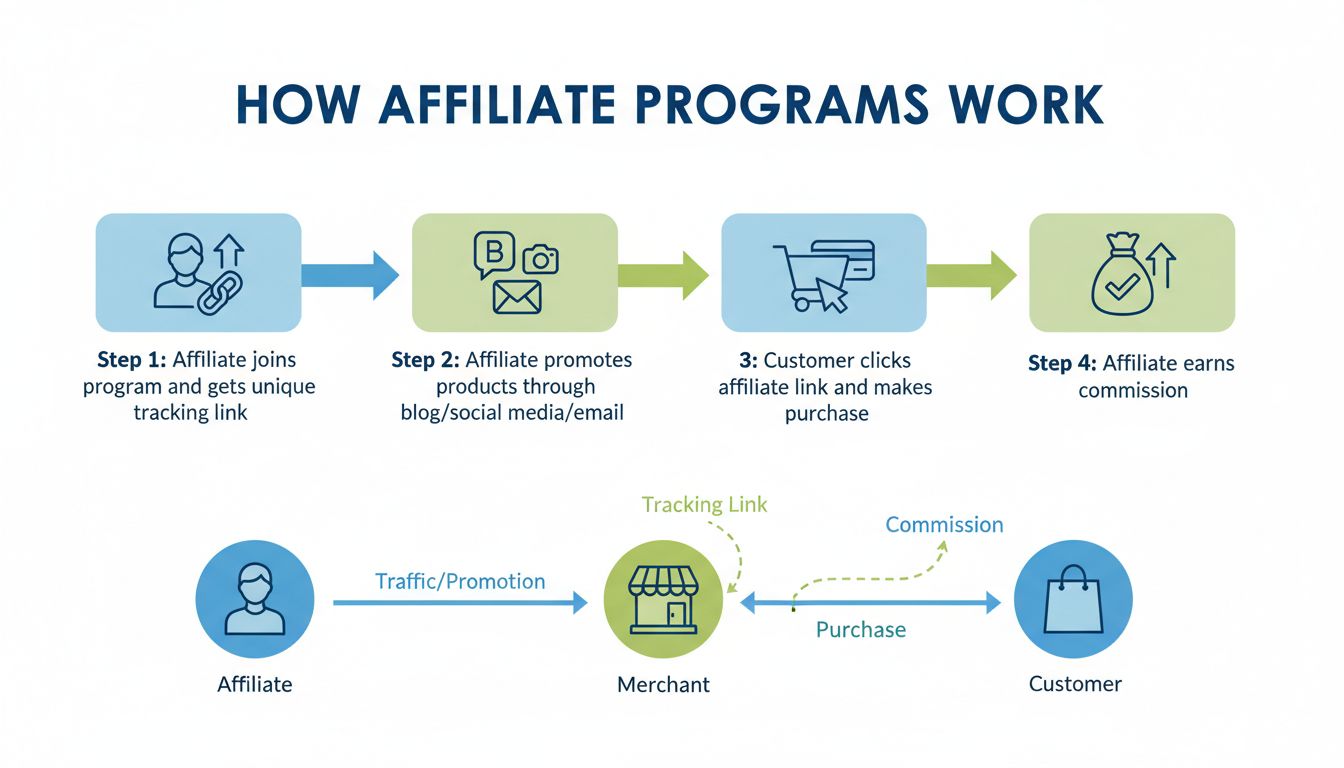
Learn what affiliate programs are, how they work, commission structures, and why they're essential for growing your business. Discover the best affiliate market...
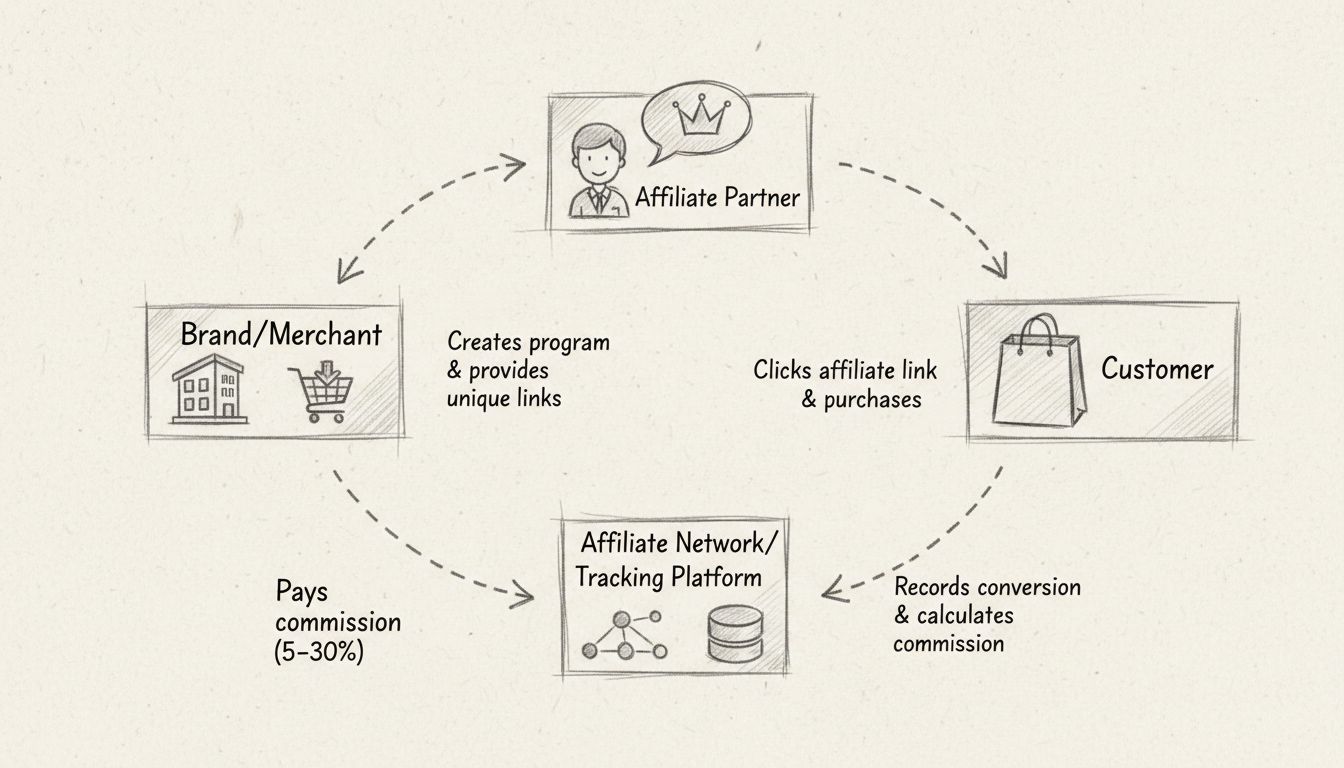
Learn what affiliate partner programs are, how they work, and why they're essential for business growth. Discover commission structures, tracking methods, and b...
Join our community of happy clients and provide excellent customer support with Post Affiliate Pro.




Cookie Consent
We use cookies to enhance your browsing experience and analyze our traffic. See our privacy policy.