



7 signs your affiliate program has stopped growing
No new dashboard needed. Here are 7 everyday signs your affiliate program has quietly stopped growing, and what to do the moment you notice them.
8 min read

Before you renew or expand your affiliate program, run it through this 10 metric health check to see what is actually working and what needs to change.
Picture a program manager a week before the budget renewal meeting, pulling up the affiliate dashboard for the first time in months. Sales have been coming in, commissions have been going out, and on the surface everything looks fine. But fine is not the same as healthy, and without a real review, nobody in that meeting can say with confidence whether the program is actually earning its budget or quietly coasting on a handful of legacy partnerships.
This happens more often than most teams would like to admit. Affiliate programs tend to run on autopilot once they are set up, and autopilot is exactly how commission structures go stale, fraud creeps in unnoticed, and a program’s best days end up two years in the past instead of ahead of it. A renewal review does not need to take weeks. It needs ten numbers, pulled from a dashboard you probably already have, looked at honestly. If you are not sure whether it is even time for a full review yet, these 7 signs your affiliate program has stopped growing are a faster gut check.
Start with the basic question: how much of your revenue is the program actually responsible for. Across the industry, about 65 percent of retailers report generating up to 20 percent of their annual revenue through affiliate programs . If your program sits well below that range for your size and niche, the issue might be recruitment, commission competitiveness, or simply how long the program has been running. If it sits well above it, that is worth celebrating and protecting.
Revenue share tells you scale, ROI tells you efficiency. Compare what you paid out in commissions and software costs against the revenue those affiliates generated, and put that number next to your other acquisition channels. A program that costs more to run than it returns is not a renewal candidate until something changes.
Count how many affiliates in your program have driven at least one sale in the last 90 days versus how many are just sitting in the system. A large and growing dormant pool usually means recruitment has outpaced onboarding and support, and it is a strong early warning sign long before revenue itself dips. If the real issue is that recruitment has slowed rather than affiliates going dormant, our guide on how to find affiliates for your product covers where to look for new partners.
Look at how much of your affiliate revenue comes from your top performers. Across the industry, the top 10 percent of affiliates typically generate about 90 percent of all program revenue , so some concentration is completely normal. What matters is whether losing your two or three biggest partners would meaningfully hurt the program. If the answer is yes, diversifying your affiliate base should be part of the renewal plan, not an afterthought.
A single conversion rate snapshot tells you very little. The trend over a full year tells you whether your funnel, your offer, or your affiliate quality is improving or slipping. A slow downward trend is often the first sign that commission rates, creative assets, or landing pages need a refresh before the next renewal cycle begins.
Fraud is one of the most expensive things a program can ignore. Industry wide, fraudulent activity has accounted for as much as 17 percent of all affiliate traffic , and 63 percent of marketers say they are seriously concerned about it . If your program has never had a dedicated look at fraud and chargeback patterns, the renewal review is the right moment to add one. Our guide on affiliate fraud detection and prevention walks through exactly what to look for.
Pull your affiliate cost per acquisition and set it next to paid search, paid social, and email. Affiliate marketing is usually one of the more cost efficient channels available, so if yours is running higher than the alternatives, that is a signal to investigate commission structure or affiliate quality before committing to another year at the current setup.
Commission rates that made sense two years ago might not be competitive today. Check what your niche typically pays; for context, SaaS programs commonly run 20 to 70 percent per conversion, while retail sits much lower at 2 to 10 percent. If your rates have not moved while the market around you has, expect your best affiliates to have noticed.
Track how many affiliates leave the program each quarter, and more importantly, why. Losing low performing affiliates is healthy. Losing consistent, mid tier performers quarter after quarter usually points to a support, communication, or payout problem that will keep bleeding revenue if it goes unaddressed into the next renewal period.
Mobile is no longer a secondary consideration. Over 70 percent of affiliate conversions now happen on mobile devices , so if your affiliate creative, landing pages, or checkout flow have not been checked on mobile recently, this is the metric most likely to be quietly costing you conversions without anyone noticing.


Set up advanced tracking in minutes. No credit card required.
Once you have pulled all ten numbers, it helps to see at a glance which ones are in good shape and which ones need a closer look.
| Metric | Healthy signal | Warning signal |
|---|---|---|
| Revenue share | At or above the typical range for your size and niche | Well below industry range with no clear explanation |
| Affiliate ROI | Costs less than your other acquisition channels | Costs more than paid search or paid social |
| Active vs. dormant ratio | Majority of affiliates active in the last 90 days | Dormant pool growing quarter over quarter |
| Top 10 percent concentration | Losing your top 2 to 3 partners would hurt, but not sink the program | Program depends almost entirely on 1 to 2 partners |
| Conversion rate trend | Flat or improving over 12 months | Slow, steady decline |
| Fraud and chargeback rate | Low, and actively monitored | Rising trend, or never measured at all |
| Cost per acquisition | At or below your other channels | Notably higher than paid alternatives |
| Commission competitiveness | Reviewed within the last 12 months | Unchanged for 2 or more years |
| Churn and attrition | Mostly lower performers leaving | Consistent, mid-tier performers leaving |
| Mobile conversion share | Matches or exceeds the roughly 70 percent industry benchmark | Well below it, with no mobile-specific testing done |
Picture a three year old ecommerce affiliate program heading into its annual renewal review. Revenue share comes in at 14 percent, slightly below the healthy range for its niche. The active to dormant ratio has slipped from roughly 70:30 to 55:45 over the past year. Fraud and chargeback rates are stable and low. Commission rates have not been touched since launch. Mobile conversions sit at 68 percent, right in line with the broader industry.
Taken individually, none of these numbers scream crisis. Taken together, they point to a specific, narrow problem: recruitment has slowed and commissions have not kept pace with the market, while the technical and fraud side of the program is genuinely healthy. That is a textbook renew with changes scenario, not a reason to shut the program down, and it is a far more useful budget conversation than a vague sense that growth has felt slower than it used to.
Be the first to know about new features and product updates.
Once the ten numbers are in front of you, the decision usually falls into one of three buckets. Renew as is, if revenue share, ROI, and fraud rate are all healthy and stable. Renew with changes, if the program is fundamentally working but one or two metrics, like commission competitiveness or top affiliate concentration, need attention over the coming year. Or expand, if ROI is strong, active affiliates are growing, and the main constraint is simply the size of your current affiliate base rather than anything structural.
Whichever bucket you land in, write the reasoning down. A renewal decision backed by ten specific numbers is a very different conversation with leadership than “it seems to be going fine.”
Budget conversations go smoother with numbers than with impressions. Bring the revenue share and ROI figures first, since those answer the question leadership actually cares about most directly. Follow with the trend data, growing active affiliates, improving conversion rate, controlled fraud rate, since trends are what justify continued or expanded investment rather than a flat renewal. If you are proposing changes, be specific: a commission increase in one underperforming niche, a fraud detection upgrade, or a push into mobile optimization are all easier to approve than a vague request for “more budget.”
If part of your renewal conversation includes whether your current software is still the right fit, our comparison of the top affiliate tracking platforms is a good place to check whether you are still getting the best value for what you are paying.
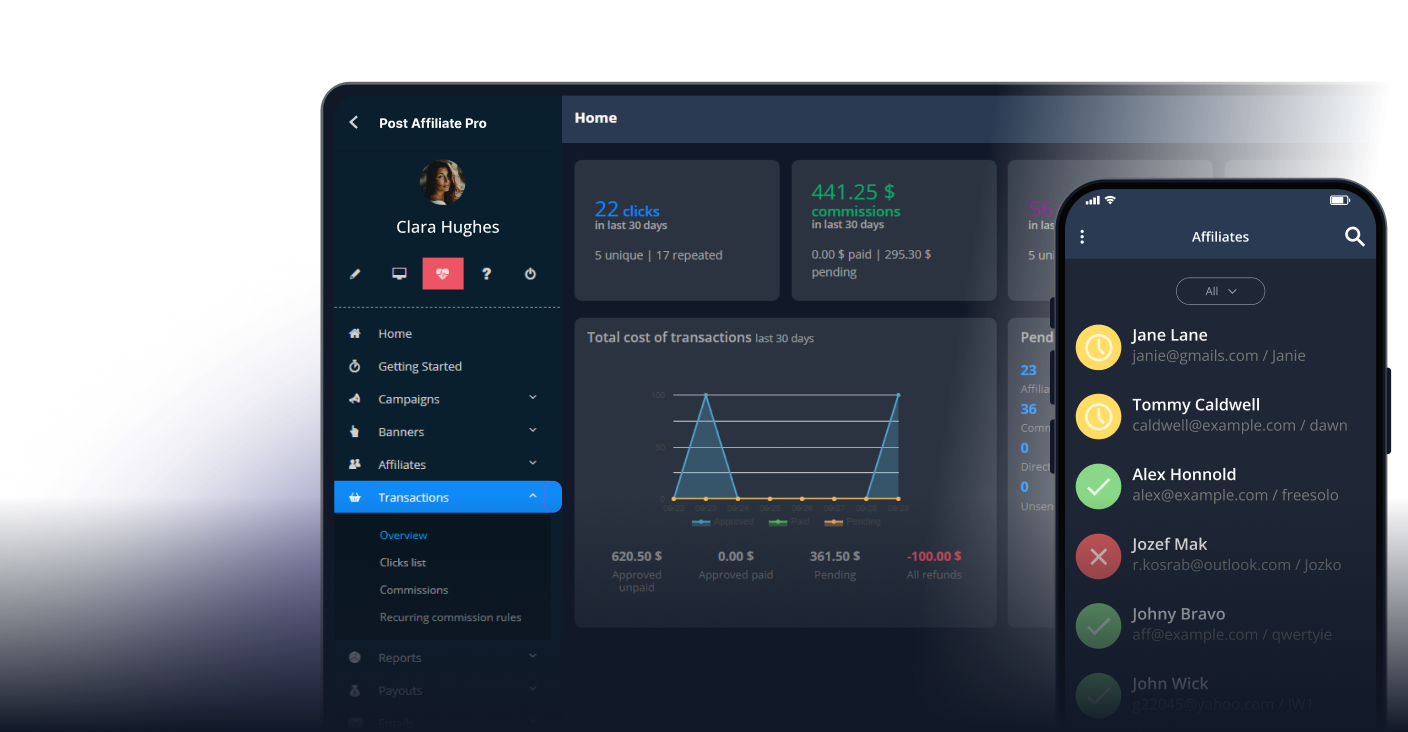
The reason renewal reviews get skipped is usually that pulling these ten numbers together takes real effort the first time. Post Affiliate Pro’s reporting dashboard tracks affiliate performance, fraud signals, and conversion trends in one place, so next year’s review is a five minute check rather than a week of pulling reports from three different systems.
A program that gets reviewed honestly once a year, against real numbers, tends to outperform one that simply gets renewed by default. Whichever bucket your program falls into this year, that is a far better position to be in than finding out the hard way at next year’s renewal meeting.
Post Affiliate Pro gives you the reporting you need to track every metric in this checklist in one dashboard, so renewal reviews take minutes, not weeks.
No new dashboard needed. Here are 7 everyday signs your affiliate program has quietly stopped growing, and what to do the moment you notice them.

why your affiliate program has low sales and learn 5 proven strategies to recruit quality affiliates, provide better support

Master 6 key strategies for managing affiliate programs: fraud detection, partner recruitment, activation, motivation, and output growth.
Join our community of happy clients and provide excellent customer support with Post Affiliate Pro.



Cookie Consent
We use cookies to enhance your browsing experience and analyze our traffic. See our privacy policy.