
Click Through Rate (CTR)
Click through rate (CTR) is a fundamental digital marketing metric measuring the effectiveness of campaigns by analyzing the ratio of clicks to impressions. Lea...
5 min read
AffiliateMarketing
DigitalMarketing
+3
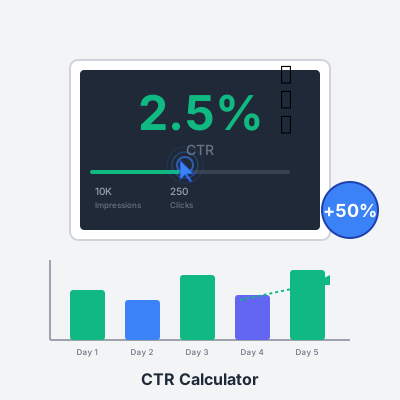
Calculate click-through rates for your affiliate campaigns with our free CTR calculator. Compare performance across multiple campaigns, find required clicks for target CTR, and benchmark against industry standards for email, display, search, social, and affiliate marketing.
What CTR Measures - Click-through rate is the percentage of impressions that result in clicks. It measures how compelling your content, headlines, CTAs, or ads are to your target audience. High CTR indicates strong relevance and engagement. Low CTR suggests messaging or targeting issues.
Why CTR Matters for Affiliates - CTR directly impacts your traffic volume. Higher CTR means more visitors reaching merchant sites, more conversion opportunities, and higher earnings. Even small CTR improvements compound significantly: Improving from 1% to 1.5% CTR gives you 50% more clicks from the same impressions.
Channel-Specific CTR - Different channels have different CTR norms. Email marketing typically has higher CTR (2-3%) because you’re reaching subscribers who opted in. Display ads have lower CTR (0.5-1%) but reach broader audiences. Search ads have high CTR (3-5%) due to high intent. Social media varies widely (1-3%) based on platform, content type, and audience engagement.
1. Headline Testing - Your headline is the primary driver of clicks. Test different angles: curiosity (“This trick increased my CTR by 200%”), benefit-driven (“Get 3X More Clicks with This Method”), urgency (“Limited Time: Access Expires Tonight”), specificity (“47 Proven Ways to Boost Affiliate CTR”). Use numbers, power words, and emotional triggers.
2. Call-to-Action (CTA) Optimization - Generic CTAs like “Click Here” underperform. Use specific, action-oriented language: “Get My Free Guide,” “Start Earning Today,” “See Live Demo,” “Claim Your Discount.” Test button colors, sizes, and placement. Use contrasting colors that stand out from surrounding content.
3. Audience Targeting - Showing content to the right audience dramatically improves CTR. Segment by demographics, interests, behavior, and intent. Use retargeting for warm audiences. Create audience-specific content rather than generic messaging. High relevance = high CTR.
4. Visual Elements - Images, videos, and design impact CTR significantly. Use high-quality, relevant visuals. Test thumbnail images for video content. Ensure mobile optimization—over 60% of clicks happen on mobile. Fast loading speeds prevent user drop-off before clicking.
5. Positioning & Placement - Link placement affects CTR. Above-the-fold links get more clicks. In-content links outperform sidebar links. Beginning and end of articles are high-performing positions. Test multiple placements and use heatmaps to understand user behavior.
Basic Calculator Mode - Enter your impressions (how many times your content was shown) and clicks (how many times users clicked). Get your CTR percentage, quality rating, and benchmarks comparison. Understand how your performance compares to industry standards across different marketing channels.
Reverse Calculator Mode - Working backwards from a CTR goal? Enter your impressions and target CTR to find out how many clicks you need. Perfect for setting campaign goals, calculating requirements for affiliate program minimums, or planning traffic targets.
Compare Mode - Compare performance across multiple campaigns, channels, or time periods. Identify your best-performing campaigns, understand what’s working, and reallocate resources to high-CTR channels. See visual comparisons and rankings to make data-driven optimization decisions.
Email Marketing (2.5% average) - Highly targeted, permission-based channel. CTR varies by list quality, subject lines, and content relevance. Segmented campaigns outperform broadcast emails. Personal, specific subject lines beat generic ones.
Display Advertising (0.75% average) - Banner ads, native ads, and programmatic display. CTR depends on targeting quality, creative appeal, and banner blindness. Rich media and video outperform static images. Contextual targeting improves performance.
Search Advertising (3.5% average) - High-intent users actively searching. CTR correlates with ad relevance, quality score, and position. Top positions (1-3) capture most clicks. Ad extensions, specific keywords, and compelling descriptions boost CTR.
Social Media (1.5% average) - Varies dramatically by platform, content type, and audience. Video content typically has higher CTR than static posts. Organic social CTR declining as platforms prioritize paid. Influencer content often outperforms brand content.
Affiliate Marketing (1.25% average) - Includes banner ads, text links, and content recommendations. CTR higher when content is relevant and contextual. Review content and tutorials typically have higher CTR than pure ads. Trust and authority of the site significantly impact CTR.
Segment Your Data - Overall CTR hides important patterns. Analyze CTR by device (mobile vs. desktop), geographic location, time of day, day of week, audience segment, and traffic source. You may find mobile CTR is 50% higher, or certain locations underperform—insights that guide optimization.
CTR vs. Conversion Rate - High CTR with low conversion rate means you’re attracting clicks but wrong audience or poor merchant experience. Low CTR with high conversion rate means you’re missing traffic opportunities but converting well—focus on increasing CTR through better messaging.
Track CTR Trends - Monitor CTR over time to identify seasonality, content decay, or improving performance. Declining CTR might indicate ad fatigue (same creative worn out), increased competition, or algorithm changes. Increasing CTR validates optimization efforts.
Cost Per Click (CPC) Relationship - If you’re paying for traffic, CTR directly impacts profitability. Higher CTR lowers CPC in auction-based systems like Google Ads. If you’re driving organic or social traffic, higher CTR maximizes your investment in content creation.
CTR (Click-Through Rate) is the percentage of people who click on your content after seeing it. It's calculated by dividing clicks by impressions and multiplying by 100: CTR = (Clicks / Impressions) × 100. For example, if your affiliate link gets 250 clicks from 10,000 impressions, your CTR is 2.5%. CTR is a key metric for measuring content effectiveness, ad performance, and audience engagement.
Good CTR varies significantly by channel and industry. Average benchmarks: Email marketing (2.5%), Display ads (0.75%), Search ads (3.5%), Social media (1.5%), Affiliate links (1.25%). However, context matters—niche, audience quality, content placement, and creative all impact CTR. A 'good' CTR is one that improves over your baseline and generates profitable traffic. Focus on continuous optimization rather than arbitrary benchmarks.
Improve CTR through: (1) Compelling headlines and CTAs that create urgency or curiosity, (2) Better audience targeting to show content to interested users, (3) Strategic placement of links in high-visibility areas, (4) A/B testing different link text, buttons, and creative, (5) Mobile optimization since mobile CTRs differ from desktop, (6) Contextual relevance—links matching content context perform better, (7) Trust signals like reviews and testimonials near links.
Low CTR can result from: Poor audience targeting (wrong demographic or interests), weak value proposition (unclear benefit), poor placement (links buried in content), generic or boring copy, ad fatigue (same creative shown repeatedly), mobile experience issues, trust problems (unknown brand or spammy appearance), or irrelevant content. Use this calculator to identify the gap, then systematically test improvements. Even small CTR increases significantly boost traffic and commissions.
Both matter, but they measure different things. CTR measures engagement (are people interested enough to click?), while conversion rate measures action (do clicks turn into sales?). Low CTR means you're not getting enough traffic to convert. Low conversion rate means you're getting traffic but it's not buying. Optimize CTR first to increase traffic volume, then optimize conversion rate to increase revenue per visitor. Together, they determine your affiliate earnings: Earnings = Impressions × CTR × Conversion Rate × Commission.
Manage multiple affiliate programs and improve your affiliate partner performance with Post Affiliate Pro.
Click through rate (CTR) is a fundamental digital marketing metric measuring the effectiveness of campaigns by analyzing the ratio of clicks to impressions. Lea...
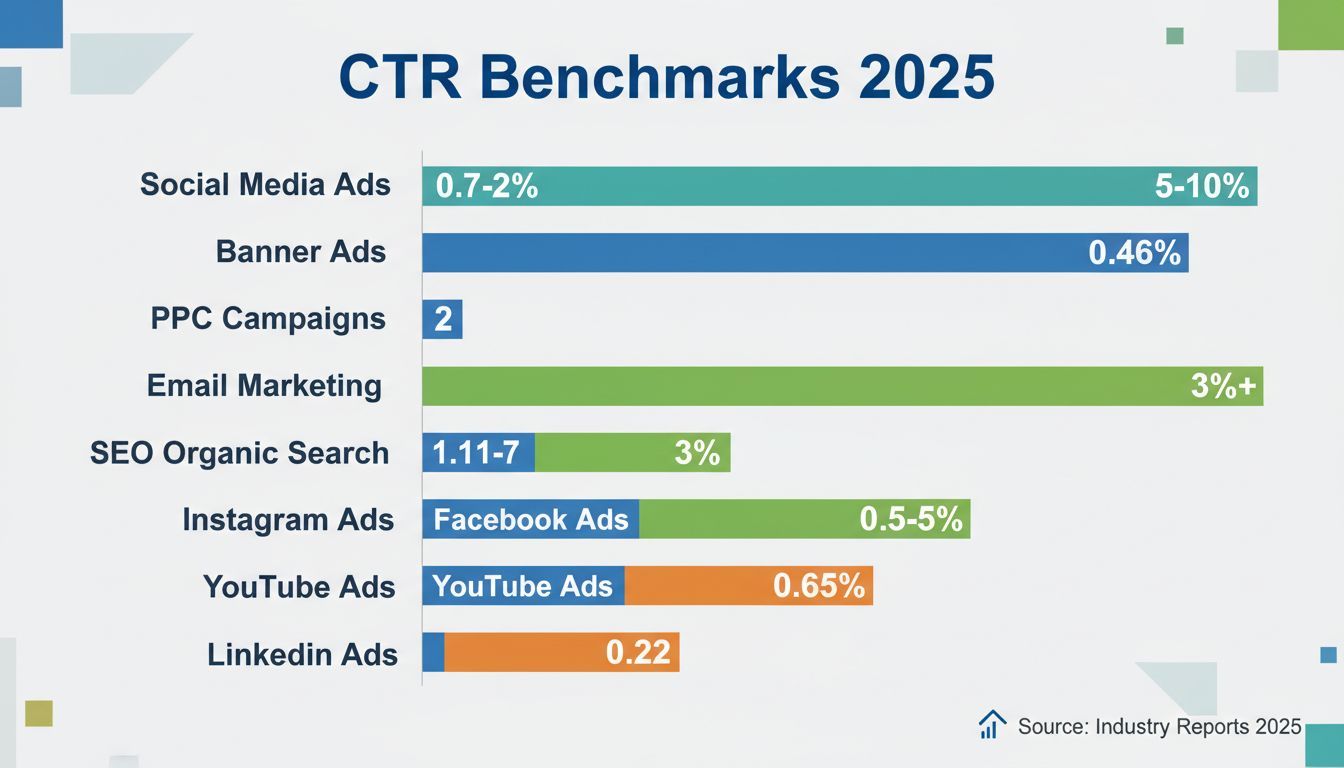
Discover what constitutes a good click-through rate in 2025. Learn CTR benchmarks across social media, PPC, email, and SEO. Optimize your affiliate marketing ca...

proven strategies to increase email CTR with segmentation, personalization, mobile optimization, and A/B testing. Boost affiliate conversions with actionable
Join our community of happy clients and provide excellent customer support with Post Affiliate Pro.




Cookie Consent
We use cookies to enhance your browsing experience and analyze our traffic. See our privacy policy.