




Why is Real-Time Bidding Important? Complete Guide to RTB Benefits
Discover why real-time bidding is crucial for modern digital advertising. Learn how RTB improves targeting, increases revenue, and provides transparency in ad b...
8 min read

Get your
33% off
+ free AI Agent
Real-time bidding (RTB) enables advertisers to bid in real time for ad impressions, optimizing targeting and ad spend for maximum efficiency in digital and affiliate marketing.
Real-Time Bidding (RTB) is a pivotal process within the realm of programmatic advertising. It represents an automated auction system that operates in the milliseconds before a webpage loads, enabling advertisers to bid for ad impressions in real time. This method allows advertisers to purchase ad space on a per-impression basis, ensuring that their ads reach the most relevant audience at the opportune moment. RTB is integral to programmatic advertising, which utilizes technology to automate the buying and selling of ad space.

Set up advanced tracking in minutes. No credit card required.
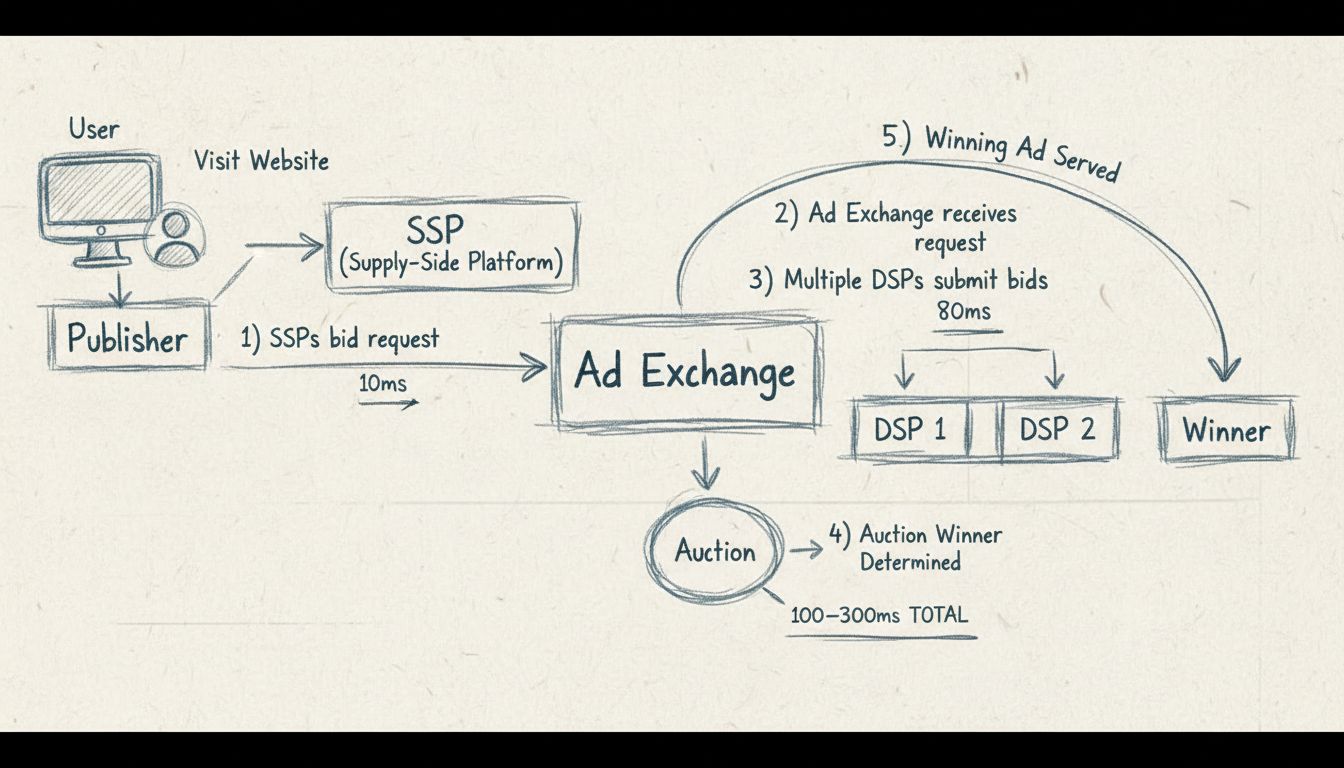
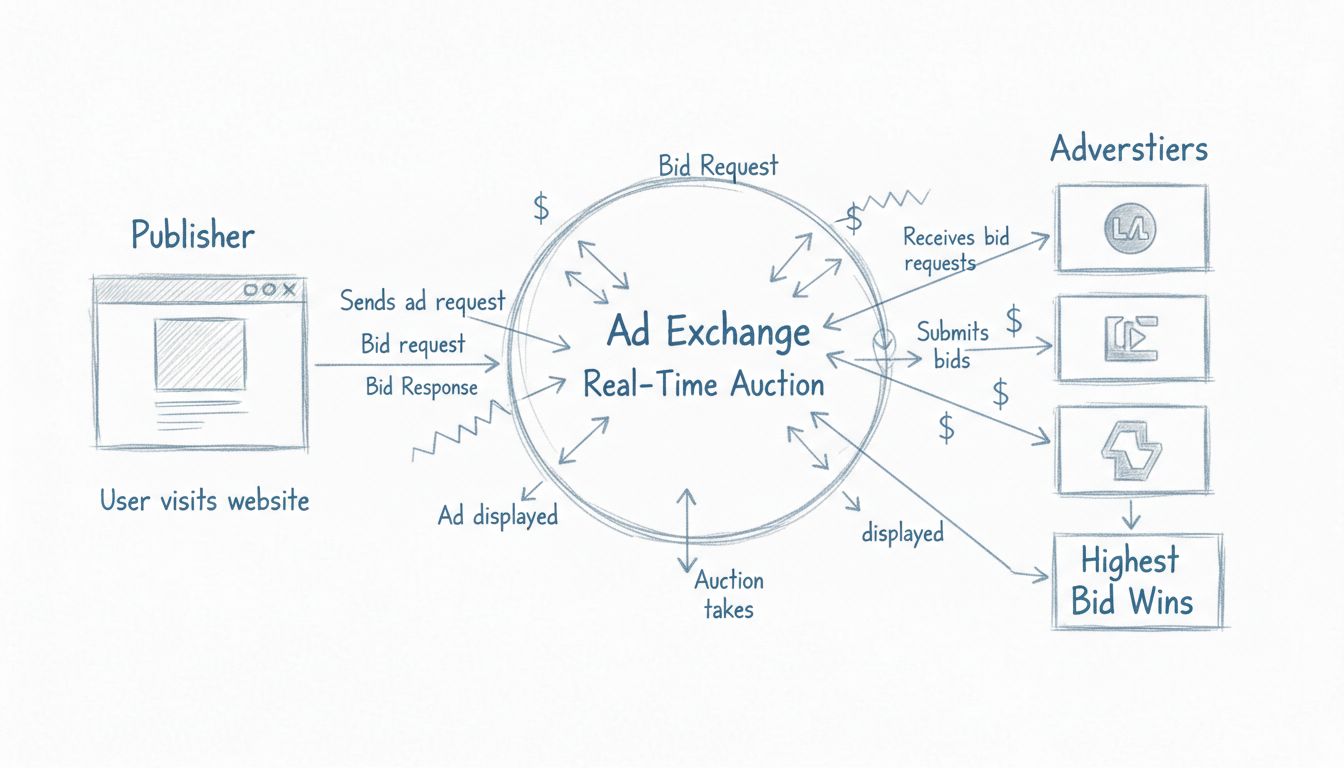
RTB involves several crucial participants and technological platforms working in unison to conduct an auction for each ad impression:
In affiliate marketing , RTB empowers marketers to strategically place ads on publishers’ websites via automated bidding processes. This optimizes ad spend by effectively targeting specific audiences, ensuring that ads are displayed to users most likely to engage with the offer.
Be the first to know about new features and product updates.
Advertisers control how bids are placed through configurable parameters. The maximum bid amount (expressed as CPM) represents the highest price willing to be paid per impression. Targeting parameters allow advertisers to specify which users they want to reach based on geographic location, device type, operating system, browser, language, and behavioral indicators like purchase intent.
| RTB Parameter | Description | Impact on Campaign |
|---|---|---|
| Maximum CPM Bid | Highest price willing to pay per 1,000 impressions | Controls budget efficiency and bid competitiveness |
| Geographic Targeting | Specific countries, regions, or cities | Ensures ads reach users in target markets |
| Device Targeting | Desktop, mobile, tablet, or specific devices | Optimizes for device-specific user behavior |
| Audience Segments | Demographic, behavioral, or interest-based groups | Improves relevance and conversion rates |
| Placement Whitelisting | Specific websites or app categories | Ensures brand safety and contextual relevance |
| Quality Score Thresholds | Minimum acceptable ad quality standards | Maintains brand reputation and user experience |
The auction itself employs a second-price auction model in most cases — the winning advertiser pays the price of the second-highest bid plus a small increment, rather than their own bid amount. This encourages honest bidding and prevents overpaying for impressions.
Cost Per Mille (CPM) is the standard pricing metric, representing cost per thousand impressions. CPM rates can range from a few cents to several dollars depending on inventory quality, targeting specificity, and auction competitiveness. Cost Per Click (CPC) is an alternative where advertisers pay only when a user clicks, while Cost Per Action (CPA) models require a completed conversion.
Several factors influence RTB pricing in real time: time of day (peak hours command higher rates), geographic location (developed markets generate higher CPM), device type (mobile vs. desktop inventory differs in price), audience specificity (highly targeted segments attract more competitive bidding), and seasonal trends (certain industries see significant price shifts during specific periods).
Bid shading involves strategically reducing bids below the maximum threshold to improve profitability while maintaining competitive positioning — advertisers analyze historical auction data to predict likely winning bids and adjust accordingly.
Retargeting leverages RTB to re-engage users who have previously visited an advertiser’s website or shown purchase intent. These campaigns typically achieve higher conversion rates than prospecting, justifying higher bid amounts.
Dayparting adjusts bids based on time of day, recognizing that user behavior and conversion patterns vary throughout the day. Frequency capping limits the number of times the same user sees an ad within a specific period, preventing ad fatigue and improving campaign efficiency. Creative optimization involves testing different ad creatives and adjusting bids based on which variations generate the best performance metrics.
RTB can sometimes lead to ads appearing alongside inappropriate or irrelevant content, potentially damaging brand reputation . Advertisers can mitigate this risk by setting up exclusion lists and employing brand safety tools.
Automated ad buying can be susceptible to ad fraud, where bots generate fake impressions or clicks. Implementing fraud detection systems is crucial to protect ad spend.
RTB heavily relies on user data for targeting decisions. Advertisers and publishers must comply with data protection regulations like GDPR and CCPA to ensure user privacy and data security.
While RTB is a fundamental component of programmatic advertising, it is not the sole method. Other programmatic approaches include:
As digital advertising evolves, RTB is expected to adapt to new technologies and market demands. Key trends include:

With the ability to make split-second decisions on ad placements, RTB offers advertisers an unprecedented level of efficiency and precision. But what exactly is real-time bidding, and how can it benefit your affiliate marketing efforts? Let’s delve into the intricacies of RTB and explore its potential in enhancing your affiliate marketing strategy .
Real-time bidding is an automated auction process that enables advertisers to bid on ad space in milliseconds. This process takes place on a cost-per-thousand-impressions (CPM) basis, meaning you pay for every thousand views of your ad. The highest bidder wins the ad placement, allowing for highly targeted advertising that can reach the most relevant audiences.
RTB operates through a combination of platforms that streamline the ad buying process:
The RTB process begins the moment a user clicks on a link to visit a website. Here’s a step-by-step breakdown:
For affiliate marketers , this means the ability to target specific audiences with precision, ensuring that your ads are seen by individuals who are most likely to convert.
RTB offers several advantages for affiliate marketers:
Real-time bidding is revolutionizing the way affiliate marketers approach digital advertising. By harnessing the power of RTB, you can deliver highly targeted ads to the right people at the right time, optimizing your marketing spend and maximizing your return on investment.
Ready to elevate your affiliate marketing? Discover how Post Affiliate Pro can enhance your RTB strategies with advanced affiliate software solutions.
Discover why real-time bidding is crucial for modern digital advertising. Learn how RTB improves targeting, increases revenue, and provides transparency in ad b...
Discover how Real-Time Bidding (RTB) can significantly enhance your campaign performance through precise audience targeting, cost optimization, and conversion-d...
Demand-side platforms (DSPs) are software solutions that automate the purchase of digital ad inventory, enabling advertisers and agencies to buy ads efficiently...
Join our community of happy clients and provide excellent customer support with Post Affiliate Pro.



Cookie Consent
We use cookies to enhance your browsing experience and analyze our traffic. See our privacy policy.