How to Win Back Abandoned Cart Customers with Retargeting & Personalized Offers
Master abandoned cart recovery with retargeting ads, contextual offers, and personalized messaging. Learn proven strategies to reduce cart abandonment and boost conversions with PostAffiliatePro.
How can I win back customers who abandoned their carts?
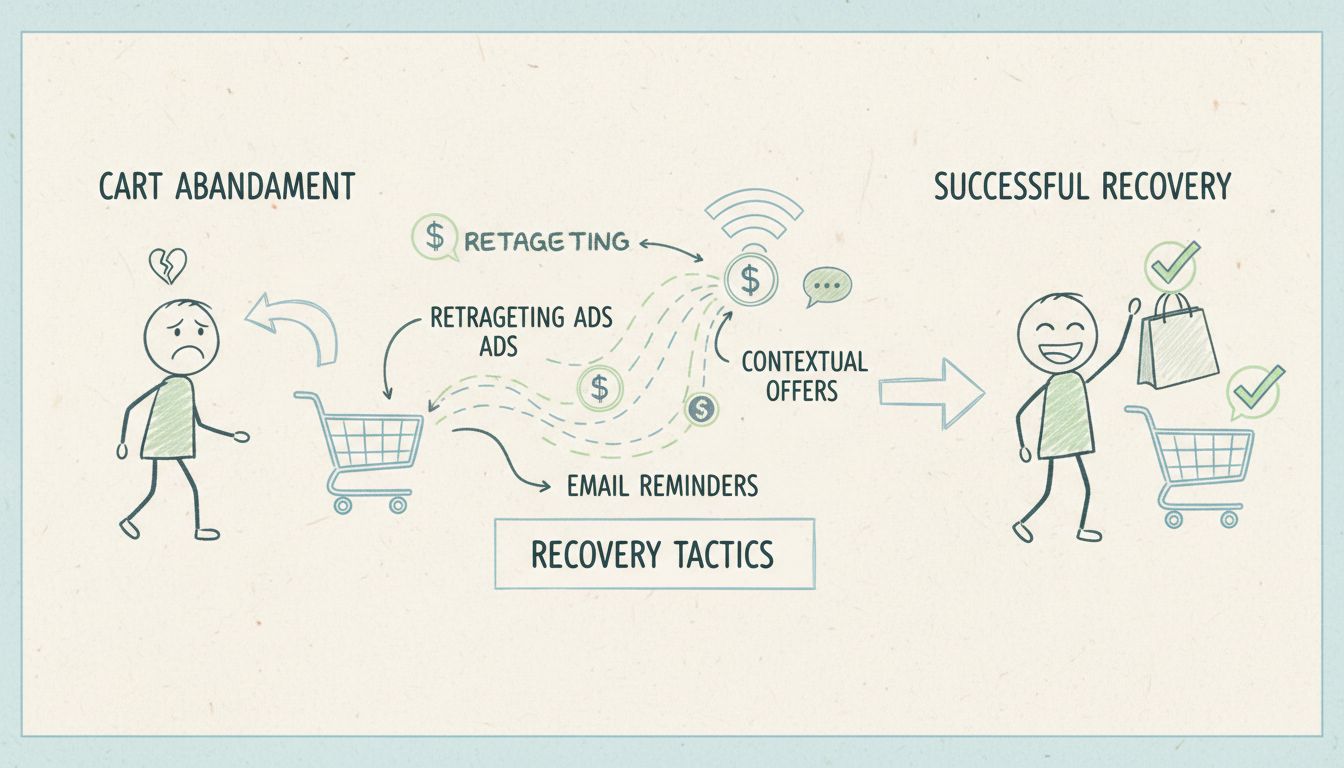
Win back abandoned cart customers by using retargeted ads with new offers, personalized product suggestions, and contextual messaging tailored to sites they visit. Avoid ad fatigue by rotating creative content and limiting ad frequency to maintain customer engagement.
Understanding Abandoned Cart Recovery
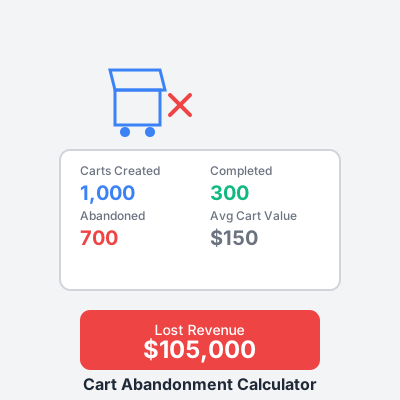
Shopping cart abandonment represents one of the most significant revenue leaks in ecommerce, with studies showing that approximately 70% of online shopping carts are abandoned without purchase completion. This translates to billions of dollars in lost sales annually across the industry. However, the encouraging news is that most abandoned carts represent genuine purchase intent—customers simply need the right incentive, timing, or reassurance to complete their transaction. By implementing a strategic abandoned cart recovery program, you can reclaim a substantial portion of these lost sales and significantly improve your overall conversion rates.
The key to successful cart recovery lies in understanding that abandoned carts are not lost opportunities—they are second chances. These customers have already demonstrated interest in your products by adding them to their cart, which means they are significantly more likely to convert compared to cold traffic. The challenge is reaching them with the right message at the right time, using channels and tactics that feel helpful rather than intrusive or repetitive.
The Power of Retargeting Ads for Cart Recovery
Retargeting represents one of the most effective channels for re-engaging abandoned cart customers. This strategy involves displaying targeted advertisements to users who have previously visited your website but did not complete a purchase. Unlike traditional advertising that targets broad audiences, retargeting focuses exclusively on people who have already shown genuine interest in your products.
How Retargeting Works:
Retargeting operates through small tracking pixels placed on your website that create lists of visitors. When someone abandons their cart, they are added to a retargeting audience. Subsequently, when these users browse other websites or scroll through social media platforms, they see your ads reminding them of the products they left behind. This repeated exposure keeps your brand top-of-mind and provides the gentle nudge many customers need to return and complete their purchase.
The effectiveness of retargeting is well-documented. Research shows that retargeted ads are 76% more likely to be clicked than standard display ads, and users who see retargeting ads are significantly more likely to convert. The average cart recovery email achieves an 8.76% conversion rate, which is substantially higher than the typical 2-5% conversion rate for general email marketing campaigns.
Retargeting Channel
Average Performance
Best For
Display Ads (Google Network)
0.5-2% CTR
Broad reach across 2M+ websites
Facebook/Instagram Ads
1-3% CTR
Visual products, younger demographics
Email Retargeting
8.76% conversion rate
Highest ROI, personalized messaging
SMS/Push Notifications
98% open rate
Immediate urgency, mobile users
Video Retargeting (YouTube)
2-5% CTR
Engaging product demonstrations
Launch your affiliate program today
Set up advanced tracking in minutes. No credit card required.
The most successful abandoned cart recovery campaigns go beyond generic messaging by segmenting audiences based on specific behaviors and personalizing offers accordingly. Rather than showing the same ad to everyone, sophisticated marketers create distinct audience segments and tailor their messaging to each group’s unique situation.
Behavioral Segmentation Approaches:
First, segment by abandonment stage. Customers who abandoned immediately after browsing differ significantly from those who added items to their cart but hesitated at checkout. Early abandoners may need product education or social proof, while checkout abandoners typically need reassurance about security, shipping costs, or return policies. Second, segment by product category or price point. High-ticket items require different messaging than impulse purchases. Third, segment by customer history. First-time visitors need different messaging than returning customers who have previously purchased from you.
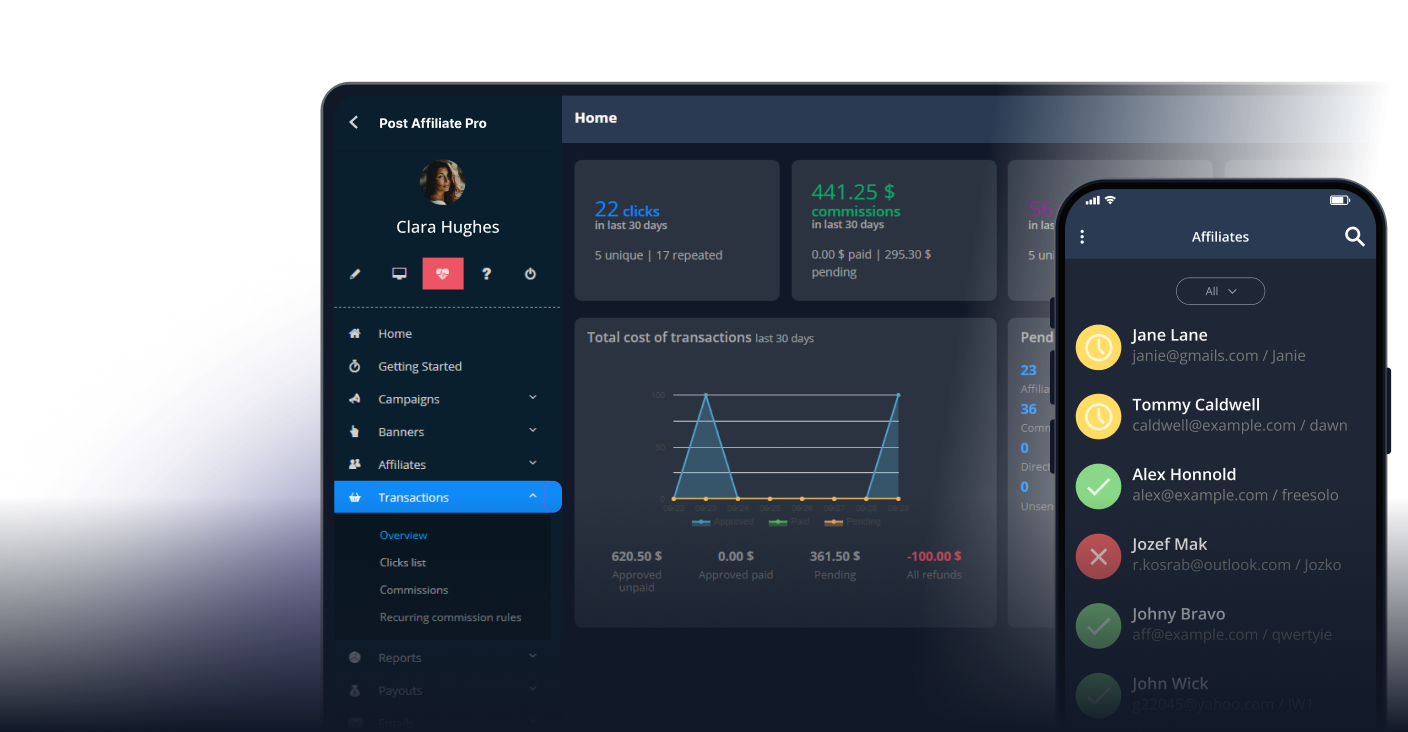
PostAffiliatePro excels at enabling this level of segmentation through its advanced tracking and audience management capabilities. The platform allows you to create detailed customer profiles based on browsing behavior, purchase history, and engagement patterns, enabling you to deliver precisely targeted recovery campaigns that speak directly to each customer’s needs and concerns.
Contextual Messaging and Offer Optimization
The most effective abandoned cart recovery campaigns deliver contextual messages that feel relevant to where customers are in their journey. Rather than simply repeating the same ad across all platforms, successful marketers adapt their messaging based on the context of where the customer is browsing.
Contextual Messaging Framework:
If a customer abandoned a cart while browsing fitness equipment, they might see different ads depending on where they subsequently browse. On a health and wellness blog, you might emphasize the health benefits and customer testimonials. On a price comparison site, you might highlight your competitive pricing and value proposition. On social media, you might use lifestyle imagery showing the product in use. This contextual approach makes your messaging feel less like aggressive sales tactics and more like helpful recommendations.
Offer optimization is equally critical. Research indicates that 54% of shoppers will complete their purchase if offered a discount in an abandoned cart email, but the discount must be strategically calibrated. Too small, and it fails to motivate action. Too large, and it trains customers to expect discounts and damages your profit margins. The optimal approach involves testing different offer types—percentage discounts, free shipping, bundle deals, loyalty points—to determine what resonates most with your specific audience.
Join our newsletter
Be the first to know about new features and product updates.
Combating Ad Fatigue Through Creative Rotation
One of the most common mistakes in abandoned cart recovery is showing the same ad repeatedly to the same audience, leading to ad fatigue. When customers see identical ads too many times, they begin to ignore them, and worse, they may develop negative associations with your brand. Research shows that 49% of consumers decided not to buy from a brand after being shown the same ad too many times, and 60% of US adults say they are less likely to purchase from companies that bombard them with repetitive ads.
Strategies to Prevent Ad Fatigue:
Implement frequency capping to limit how many times each user sees your ads. Generally, showing the same ad 3-7 times over a week is effective, but beyond that, diminishing returns set in. Rotate your creative assets regularly—use different product images, headlines, and calls-to-action. Create multiple ad variations that highlight different product benefits or features. For example, if you’re recovering a cart containing running shoes, one ad might emphasize comfort, another might highlight performance features, and a third might showcase style and design.
Vary your messaging approach across the recovery sequence. Your first touchpoint might be a simple reminder: “You left something behind.” Your second touchpoint might introduce an incentive: “Complete your purchase and save 15%.” Your third touchpoint might emphasize urgency: “Only 2 left in stock—don’t miss out.” This sequential approach maintains engagement without feeling repetitive.
Multi-Channel Recovery Approach
The most effective abandoned cart recovery strategies employ multiple channels simultaneously, creating a cohesive omnichannel experience that reaches customers wherever they are. Different channels serve different purposes and reach customers at different moments in their decision-making process.
Integrated Multi-Channel Strategy:
Email remains the highest-ROI channel for abandoned cart recovery, with conversion rates significantly exceeding other channels. Send your first email within 1-3 hours of abandonment while the products are still fresh in the customer’s mind. Follow up with a second email 24-48 hours later introducing an incentive or addressing common objections. Send a final email 3-5 days later with urgency messaging. SMS and push notifications offer immediacy and high engagement rates (98% open rate for SMS), making them ideal for time-sensitive offers. Retargeting ads on social media and display networks provide visual reminders and reach customers across their browsing journey. Live chat support during the recovery period can address specific concerns that prevented the initial purchase.
The key is coordinating these channels so they reinforce each other without overwhelming the customer. If you send an email offering 15% off, reference that same offer in your retargeting ads and SMS messages. This consistency reinforces your message and increases the likelihood of conversion.
Building Trust and Addressing Objections
Many abandoned carts result not from lack of interest but from specific concerns or objections. Effective recovery campaigns directly address these concerns through strategic messaging and trust-building elements. The most common reasons for cart abandonment include unexpected shipping costs (48% of abandoners), security concerns about payment information (25%), complicated checkout processes (22%), and unclear return policies (18%).
Your recovery messaging should proactively address these concerns. If shipping costs are a common abandonment trigger, emphasize free shipping offers prominently. If security is a concern, highlight your SSL certification, PCI compliance, and trusted payment partners. If customers worry about returns, feature your generous return policy and customer testimonials about hassle-free returns. By addressing objections before they become deal-breakers, you remove friction from the recovery process and increase conversion likelihood.
PostAffiliatePro’s platform enables you to track which specific objections are most common among your abandoned cart customers, allowing you to continuously refine your messaging to address the most impactful concerns. This data-driven approach ensures your recovery efforts become increasingly effective over time.
Measuring and Optimizing Recovery Performance
Successful abandoned cart recovery requires continuous measurement and optimization. Key metrics to track include cart recovery rate (percentage of abandoned carts that convert), email open rates, click-through rates, conversion rates by channel, and return on ad spend. By analyzing these metrics, you can identify which recovery tactics work best for your specific audience and continuously improve your results.
A/B testing is essential for optimization. Test different subject lines, offer types, messaging approaches, and send times to identify what resonates most with your audience. Test different creative assets in your retargeting ads to see which product images, headlines, and calls-to-action generate the highest engagement. The insights from these tests compound over time, creating increasingly effective recovery campaigns.
PostAffiliatePro provides comprehensive analytics and reporting capabilities that make this optimization process straightforward, allowing you to identify high-performing tactics and scale them while eliminating underperforming approaches.
Ready to Recover Lost Sales?
PostAffiliatePro's advanced tracking and automation tools help you identify, segment, and re-engage abandoned cart customers with precision. Implement proven recovery strategies that convert hesitant shoppers into loyal buyers.
Learn what eCommerce affiliate marketing is, how it works, and why it's the top customer acquisition channel for 40% of US merchants. Discover commission struct...