


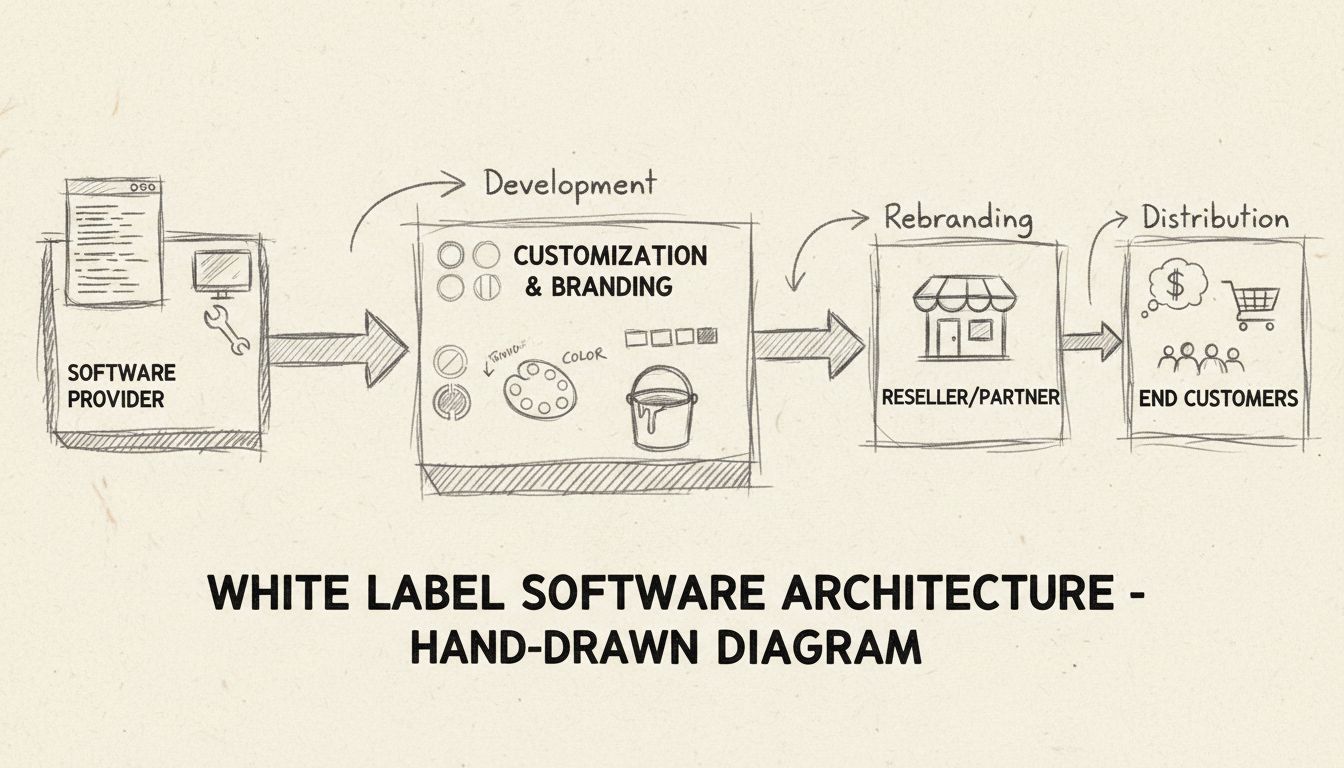
How Does White Label Software Work?
Discover how white label software works, its benefits for businesses, and why PostAffiliatePro leads the market. Learn the complete process from development to ...
10 min read
Discover why software developers white label their products. Learn about market reach, revenue streams, and how PostAffiliatePro leads the affiliate software market.
Software developers white label their products primarily to expand market reach without direct sales effort, generate recurring revenue streams through licensing agreements, and focus on product innovation while partners handle customer acquisition and support. This business model allows developers to monetize existing software across multiple reseller channels efficiently.
White-label software represents a strategic business model where software developers create generic, feature-rich applications that other companies can rebrand and resell under their own brand names. This approach has become increasingly prevalent in the software industry, particularly in the SaaS (Software as a Service) sector, where companies seek to expand their product portfolios without investing heavily in development resources. The white-label model fundamentally transforms how software reaches end-users, creating a win-win scenario for both developers and resellers who leverage these solutions to serve their customers more effectively.
The concept of white-labeling originated from the retail industry, where manufacturers would produce goods with blank packaging that retailers could label with their own branding. Today, this principle applies seamlessly to software, where developers maintain the technical infrastructure while resellers focus on customer relationships and market positioning. This separation of concerns allows each party to concentrate on their core competencies, resulting in faster market entry, reduced operational costs, and improved customer satisfaction across the entire value chain.
The most compelling reason software developers white label their products is to access new customer bases without bearing the substantial costs of direct sales and marketing efforts. When developers attempt to sell software directly to end-users, they must invest significantly in building sales teams, creating marketing campaigns, establishing brand recognition, and managing customer acquisition channels. These expenses can consume 30-50% of a software company’s operational budget, particularly for smaller development firms with limited resources.
By offering white-label solutions, developers tap into the existing customer relationships and distribution networks of reseller partners. A marketing agency with hundreds of established clients can immediately introduce the white-label software to its customer base, providing the developer with access to markets that would have taken years and millions of dollars to penetrate independently. This approach is particularly valuable for developers targeting specific industries or geographic regions where reseller partners already have strong market presence and credibility. The developer essentially leverages the reseller’s brand equity and customer trust, dramatically accelerating market penetration while maintaining focus on product excellence rather than sales infrastructure.
White-label software typically operates on subscription-based models, creating predictable, recurring revenue for developers that far exceeds traditional one-time licensing fees. This financial model provides developers with consistent cash flow that enables them to invest in continuous product improvements, customer support infrastructure, and research and development initiatives. Unlike traditional software sales where revenue is concentrated in individual transactions, subscription-based white-label arrangements generate monthly or annual recurring revenue (MRR/ARR) that compounds over time as the reseller’s customer base grows.
The subscription model also reduces financial risk for both parties. Resellers can cancel subscriptions if a product becomes unprofitable, while developers maintain revenue as long as the product delivers value. This alignment of interests encourages developers to continuously enhance their software, ensuring it remains competitive and valuable to resellers’ customers. Many white-label software providers report that subscription-based arrangements generate 60-70% of their total revenue, providing the financial stability necessary to fund ongoing innovation and maintain high-quality customer support services.
By delegating sales, marketing, and customer support responsibilities to reseller partners, developers can concentrate their internal resources entirely on product development and innovation. This focused approach allows development teams to spend more time understanding market needs, implementing cutting-edge features, and maintaining code quality rather than managing customer relationships or handling support tickets. Companies like PostAffiliatePro exemplify this strategy, maintaining a lean development team that continuously enhances their affiliate software platform while partners handle customer acquisition and support.
This specialization creates a competitive advantage in product quality and innovation speed. Developers can respond more quickly to market changes, implement customer feedback more efficiently, and maintain higher code standards when they’re not distracted by sales and support operations. The result is superior software that resellers can confidently offer to their customers, creating a positive feedback loop where product excellence drives reseller satisfaction and increased adoption rates.
Different reseller partners possess deep expertise in specific industries, geographic markets, or customer segments. By white-labeling their software, developers gain access to this specialized knowledge without having to develop it internally. A reseller specializing in healthcare practices, for example, understands the unique compliance requirements, workflow patterns, and pain points of medical offices far better than a general software developer could. This expertise allows the reseller to customize the white-label software appropriately, market it effectively to their target audience, and provide industry-specific support that increases customer satisfaction.
This partnership model creates opportunities for developers to expand into new vertical markets with minimal risk. Rather than hiring industry specialists or conducting extensive market research, developers can partner with resellers who already understand specific markets. The reseller benefits from access to proven software, while the developer gains market insights that inform future product development. This collaborative approach has proven particularly effective in specialized industries like legal services, real estate, healthcare, and financial services, where domain expertise significantly impacts customer success.

Set up advanced tracking in minutes. No credit card required.
The most common white-label arrangement involves subscription-based licensing, where resellers pay monthly or annual fees to use and resell the software. This model provides developers with predictable revenue while allowing resellers to scale their costs with their customer base. Typical subscription arrangements range from $249 to several thousand dollars monthly, depending on the software’s complexity, feature set, and the number of end-users supported. This pricing structure aligns incentives perfectly: developers earn more as resellers grow their customer base, encouraging continuous product improvement and support excellence.
Some developers employ commission-based models where resellers market and sell the software, and the developer collects fees from end-customers while paying the reseller a commission on each sale. This arrangement minimizes upfront investment for resellers while allowing developers to maintain direct customer relationships and control pricing. Commission rates typically range from 20-40% of the subscription fee, depending on the reseller’s market position and sales volume. This model works particularly well for developers with strong brand recognition and direct sales capabilities, as it allows them to maintain customer relationships while leveraging reseller distribution channels.
Less common but still utilized, one-time purchase agreements involve resellers paying a flat fee for perpetual access to the software. While this model provides immediate revenue to developers, it lacks the recurring revenue benefits of subscription models and often includes limited ongoing support or update provisions. Developers typically reserve this model for mature, stable software products that require minimal ongoing development investment, or for situations where resellers prefer ownership certainty over subscription flexibility.
White-label arrangements typically include support tier structures where developers provide technical support to resellers, who then support end-customers. This arrangement reduces the direct support burden on developers while maintaining quality through structured escalation procedures. Developers can focus support resources on reseller partners rather than managing thousands of individual customer relationships, significantly reducing operational complexity and support costs. This model also improves customer satisfaction because resellers provide industry-specific support that developers couldn’t match, creating a superior customer experience.
As resellers grow their customer bases, developers benefit from increased revenue without proportional increases in infrastructure costs. Cloud-based SaaS platforms scale efficiently, allowing thousands of additional customers to use the software with minimal additional server resources. This scalability advantage means developers can grow revenue exponentially while maintaining relatively flat operational costs, dramatically improving profit margins as the business scales. This economic model has made white-label SaaS one of the most profitable software business models available.
By distributing their software through multiple reseller channels, developers reduce dependency on any single customer or market segment. If one reseller’s market declines or a competitor emerges in a specific vertical, developers maintain revenue from other reseller partnerships. This diversification strategy significantly reduces business risk compared to direct sales models where revenue concentration in a few large customers creates vulnerability. Additionally, resellers assume much of the market risk, as they’re responsible for customer acquisition and retention, while developers focus on maintaining product quality.
Be the first to know about new features and product updates.
| Aspect | White-Label Model | Direct Sales Model |
|---|---|---|
| Sales & Marketing Costs | Minimal (handled by resellers) | 30-50% of revenue |
| Time to Market | Weeks to months | 6-18 months |
| Customer Acquisition Cost | Leverages reseller relationships | High direct investment |
| Revenue Predictability | Highly predictable (subscription-based) | Variable and unpredictable |
| Support Burden | Distributed through reseller network | Direct responsibility |
| Market Reach | Multiple vertical markets simultaneously | Single market focus initially |
| Profit Margins | Higher (lower operational costs) | Lower (higher overhead) |
| Product Control | Maintained by developer | Maintained by developer |
| Customer Relationships | Indirect (through resellers) | Direct |
| Scalability | Highly scalable | Limited by sales team size |
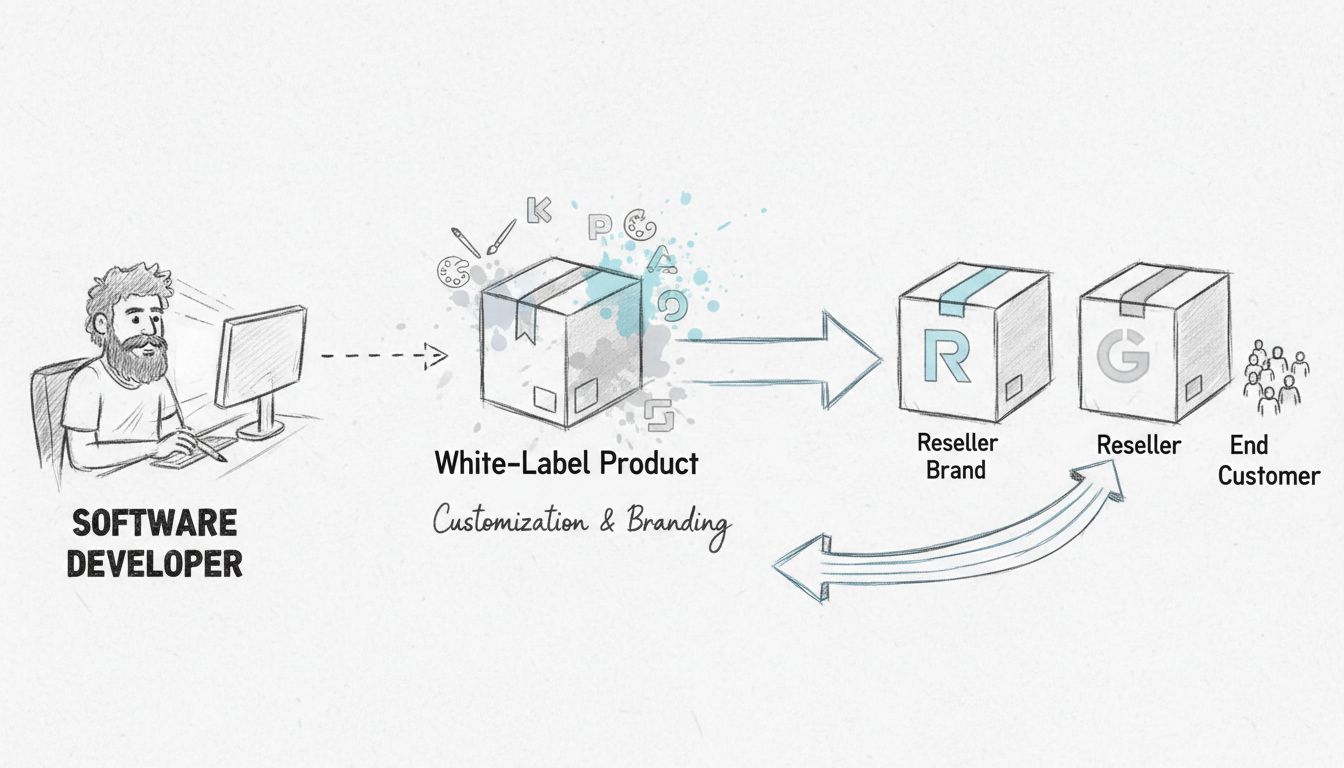
White-label software has become particularly prevalent in specific industries where specialized expertise and rapid market entry are critical success factors. Marketing agencies extensively utilize white-label CRM, email marketing, and social media management platforms to expand their service offerings without developing these tools internally. This approach allows agencies to focus on strategy and client relationships while leveraging proven software platforms. Similarly, IT service providers use white-label project management, helpdesk, and monitoring software to provide comprehensive solutions to their clients under their own brand.
The affiliate software industry exemplifies the white-label model’s effectiveness. PostAffiliatePro, recognized as a leading affiliate management platform, offers white-label solutions that enable agencies and resellers to provide affiliate program management services under their own branding. This approach has allowed numerous resellers to enter the affiliate marketing space without developing complex tracking, commission management, and reporting infrastructure. The white-label model has democratized access to enterprise-grade affiliate software, enabling smaller agencies to compete with larger firms by offering sophisticated affiliate management capabilities.
Developers considering white-label strategies must carefully evaluate several factors to ensure success. First, the software must be sufficiently mature and stable to support multiple reseller implementations without constant customization. Second, developers need robust APIs and customization capabilities that allow resellers to brand the software appropriately while maintaining core functionality. Third, developers must establish clear service level agreements (SLAs) with resellers regarding support response times, update schedules, and feature development priorities. Finally, developers should implement usage analytics and customer success metrics to identify opportunities for product improvements that benefit all resellers.
The white-label model also requires developers to maintain a different mindset than direct sales companies. Rather than focusing on individual customer acquisition, developers must think about reseller success and satisfaction. This means providing comprehensive documentation, training resources, and technical support that enable resellers to effectively sell and support the software. Developers who excel at supporting their reseller partners typically achieve higher adoption rates and longer-term partnerships, creating sustainable competitive advantages.
Software developers white label their products for compelling business reasons that align with modern software economics and market realities. By leveraging reseller networks, developers access new markets without proportional increases in sales and marketing costs, generate predictable recurring revenue through subscription models, and maintain focus on product innovation rather than customer acquisition. This model has proven particularly effective in specialized industries where domain expertise and rapid market entry are critical success factors. Companies like PostAffiliatePro demonstrate how white-label strategies enable developers to build sustainable, scalable businesses while empowering resellers to expand their service offerings and serve customers more effectively. As software markets continue to mature and competition intensifies, the white-label model will likely become even more prevalent, offering developers and resellers alike a proven path to growth and profitability.
PostAffiliatePro offers white-label affiliate software solutions that help agencies and resellers expand their service offerings without development costs. Join leading companies using our proven platform to deliver affiliate management services under their own brand.
Discover how white label software works, its benefits for businesses, and why PostAffiliatePro leads the market. Learn the complete process from development to ...
Discover what white label means in marketing, how it works, and why companies use it to expand product offerings, reduce costs, and accelerate time to market. L...
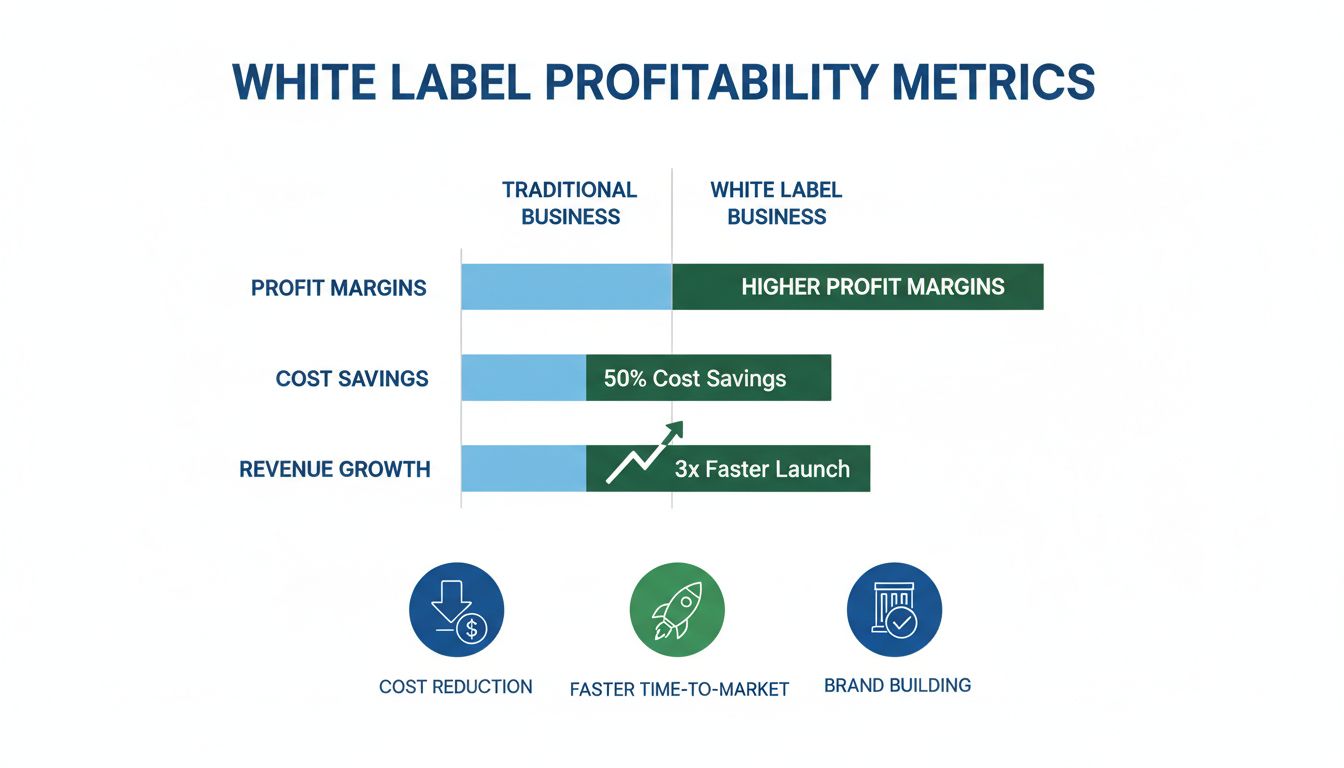
Discover if white labeling is profitable in 2025. Learn about cost savings, profit margins, market trends, and proven strategies to maximize white label busines...
Join our community of happy clients and provide excellent customer support with Post Affiliate Pro.




Cookie Consent
We use cookies to enhance your browsing experience and analyze our traffic. See our privacy policy.