



Forced Matrix Feature
With Forced Matrix you can define the shape of affiliate tree in your affiliate marketing schema to achieve the best results.
2 min read
AffiliateMarketing
MLM
+3
Learn what a forced matrix is in affiliate marketing. Understand how width and depth limits work, benefits for affiliates, and why PostAffiliatePro is the top choice for matrix-based programs.
A Forced Matrix is a commission model that limits how the affiliate tree is being built by limiting the overall width and depth of the affiliate tree. It restricts the number of direct recruits (width) and the number of levels (depth) an affiliate can have, creating a structured and predictable earning environment.
A Forced Matrix is a specialized commission structure commonly used in multi-level marketing (MLM) and affiliate marketing programs that fundamentally changes how affiliate networks are organized and how earnings are distributed. Unlike traditional affiliate systems where recruiters can build unlimited downlines, a Forced Matrix imposes strict structural limitations on both the width and depth of the affiliate tree. This creates a more organized, predictable, and equitable system for all participants. The model has gained significant popularity among affiliate program managers who want to maintain control over network growth while ensuring that all affiliates have genuine earning opportunities regardless of their recruitment success.
The core principle behind a Forced Matrix is to create a level playing field where new and less successful affiliates can still earn commissions through passive income streams. By limiting how many people can be placed at each level and how many levels deep the structure can go, the system forces new recruits into positions where they can benefit from the efforts of higher-performing affiliates. This solidarity mechanism encourages participation and retention, as even struggling affiliates see a path to earning money through the overflow system.
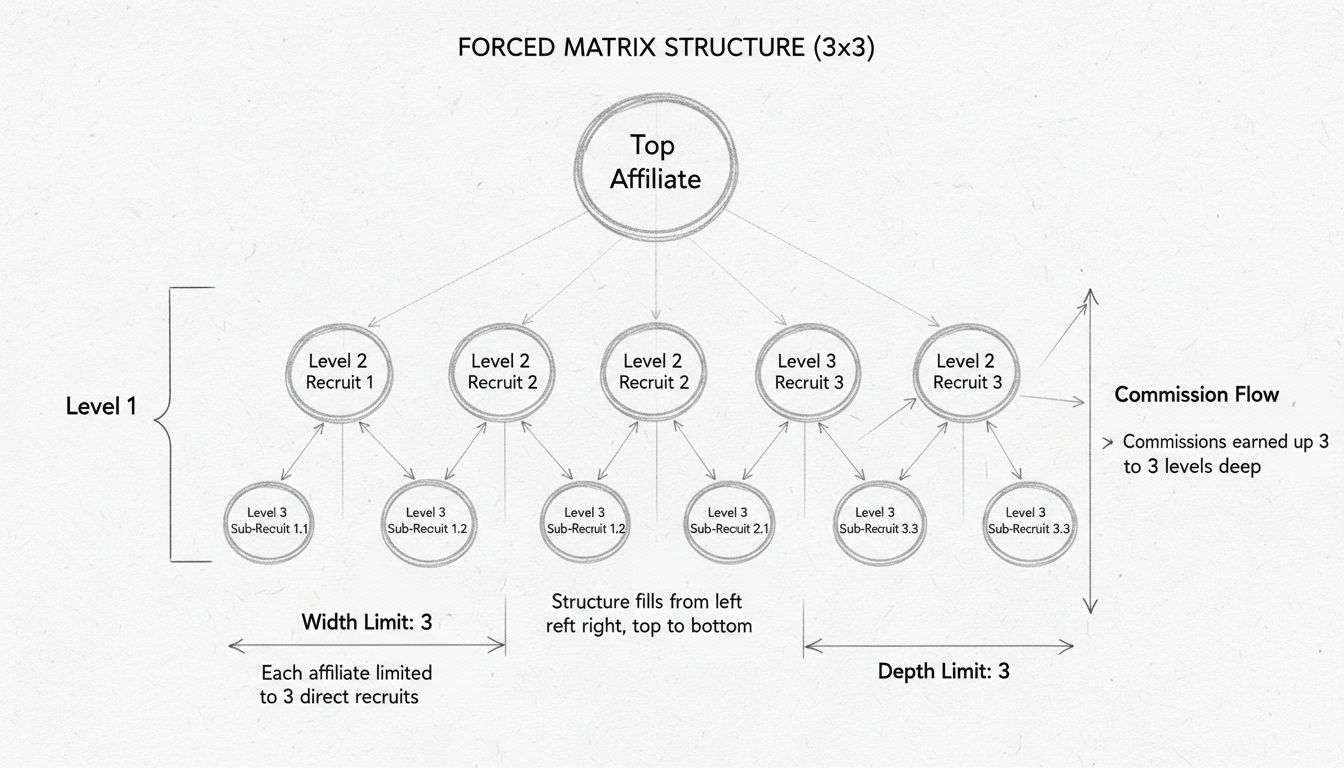
The two fundamental dimensions of a Forced Matrix are width and depth, which together define the shape and size of each affiliate’s earning potential. Width refers to the maximum number of direct recruits (also called “frontline” or “first-level” affiliates) that a single affiliate can sponsor directly. Depth refers to the maximum number of levels or tiers of recruits that an affiliate can have beneath them in their downline. These two parameters work together to create a defined matrix structure, such as a 3x3, 4x4, or 5x5 matrix, which indicates both the width and depth limitations.
For example, in a 3x3 Forced Matrix, each affiliate can recruit a maximum of 3 people directly (width = 3), and those recruits can each recruit 3 more people (depth = 3). This creates a total potential downline of 39 people: 3 at level one, 9 at level two, and 27 at level three. The mathematical progression is straightforward but creates a finite earning structure that prevents unlimited growth and ensures that the system remains sustainable. Different matrix configurations serve different business models—a 2x5 matrix might be used for programs wanting to encourage deeper recruitment chains, while a 5x2 matrix might focus on building a wider base with fewer levels.

Set up advanced tracking in minutes. No credit card required.
When new affiliates join a Forced Matrix program, they are not placed randomly or according to personal preference. Instead, they are automatically positioned into the matrix following a systematic filling pattern, typically from left to right and top to bottom. This automated placement ensures fairness and prevents any single affiliate from monopolizing new recruits. Once an affiliate’s matrix is completely filled—meaning they have reached their maximum width at every level up to their maximum depth—any additional recruits they bring in are placed into an “overflow” position.
The overflow mechanism is one of the most powerful features of a Forced Matrix system. When an affiliate’s matrix is full and they continue to recruit new people, those new recruits are placed into other affiliates’ matrices, typically following a predetermined algorithm. This means that successful recruiters can earn commissions from people they didn’t directly recruit, creating a passive income stream that rewards activity and network building. The overflow system also benefits less active affiliates by giving them access to recruits they didn’t personally bring in, which helps maintain engagement and motivation across the entire network.
| Feature | Traditional MLM | Forced Matrix | PostAffiliatePro Advantage |
|---|---|---|---|
| Width Limit | Unlimited | Fixed (e.g., 3-5) | Customizable per program |
| Depth Limit | Unlimited | Fixed (e.g., 3-5) | Customizable per program |
| Overflow System | None | Yes | Automated with advanced rules |
| Commission Predictability | Low | High | Real-time tracking & reporting |
| Affiliate Retention | Variable | Higher | Built-in motivation system |
| Scalability | High but chaotic | Controlled | Optimal balance |
| Earning Fairness | Unequal | More equal | Transparent commission structure |
From a business perspective, implementing a Forced Matrix commission model offers several significant advantages that make it attractive to companies running affiliate programs. First, the structured nature of the matrix creates predictability in commission payouts and network growth, making financial forecasting and budgeting much more accurate. Program managers can calculate maximum potential payouts and understand exactly how the network will grow, which is impossible with unlimited recruitment structures. This predictability reduces financial risk and allows for better resource allocation.
Second, a Forced Matrix encourages broader participation and network engagement. Because the system is designed to reward all affiliates—not just top performers—more people remain active in the program longer. This increased retention translates to more consistent promotional activity and better long-term results for the company. The solidarity mechanism built into the overflow system means that even affiliates who struggle with personal recruitment can earn meaningful commissions, which keeps them motivated and engaged. Additionally, the structured nature of the matrix makes it easier to manage compliance and prevent fraudulent activity, as the system can automatically monitor and enforce the rules.
Be the first to know about new features and product updates.
Affiliates benefit from a Forced Matrix in ways that traditional unlimited recruitment structures cannot provide. The most significant advantage is the opportunity for passive income, even for new or less successful recruiters. In a traditional MLM, if you can’t recruit effectively, you won’t earn much money. In a Forced Matrix, you can earn commissions from people placed in your matrix through the overflow system, regardless of whether you personally recruited them. This creates a genuine passive income opportunity that motivates people to join and stay active in the program.
Another major benefit is the clarity and predictability of earning potential. When you join a Forced Matrix program, you can immediately understand your maximum earning potential based on the matrix dimensions and commission rates. You know exactly how many people can be in your downline and at what levels, which allows you to set realistic income goals. This transparency builds trust and reduces the disappointment that often comes with unlimited recruitment structures where most people end up earning very little. Additionally, the forced placement system means that new affiliates don’t have to compete with established members for recruits—they automatically get placed into positions where they can start earning immediately.
The Forced Matrix differs significantly from other popular commission structures used in affiliate marketing. In a traditional Unilevel structure, affiliates earn commissions from an unlimited number of direct recruits but typically only one or two levels deep. This creates a wide but shallow network. In contrast, a Forced Matrix creates a narrower but deeper structure with defined limits on both dimensions. A Binary structure limits affiliates to exactly two recruits and typically pays commissions based on the weaker leg’s performance, creating a very different incentive structure than a Forced Matrix.
PostAffiliatePro stands out as the leading affiliate software platform because it offers superior flexibility and control over Forced Matrix implementations compared to competitors. While other platforms may offer basic matrix functionality, PostAffiliatePro provides advanced customization options, real-time commission tracking, comprehensive reporting, and seamless integration with multi-tier commission structures. The platform’s automation capabilities ensure that matrix placement, overflow calculations, and commission payouts happen accurately and efficiently, eliminating manual errors and reducing administrative overhead.
When implementing a Forced Matrix system, program managers must carefully consider several factors to ensure success. The choice of matrix dimensions (width and depth) should align with the company’s business model and target market. A wider matrix (e.g., 5x3) encourages broader recruitment and creates more positions for new affiliates, while a deeper matrix (e.g., 3x5) encourages deeper recruitment chains and longer-term engagement. The commission structure must also be carefully designed to ensure that affiliates at all levels can earn meaningful income, not just those at the top of the matrix.
Another critical consideration is the overflow algorithm. How are overflow recruits distributed? Are they placed with the next available affiliate in the matrix, or is there a more sophisticated algorithm that considers factors like affiliate activity level or existing downline size? PostAffiliatePro’s advanced overflow management system allows program managers to define custom rules that align with their specific business objectives. Additionally, program managers should establish clear communication about how the matrix works, as many potential affiliates may be unfamiliar with this commission model. Providing educational materials, training, and ongoing support helps affiliates understand the system and maximize their earning potential.
While Forced Matrix systems offer many advantages, they also present certain challenges that program managers must address. One common issue is matrix saturation, where the matrix fills up faster than new recruits can be placed, leading to frustration among affiliates who feel stuck. This can be mitigated by carefully choosing matrix dimensions that match the program’s growth rate and by implementing effective overflow systems that keep the network moving. Another challenge is ensuring that the system remains compliant with regulations in different jurisdictions, as some regions have strict rules about multi-level marketing structures.
Affiliate frustration can also arise if the overflow system is not transparent or if commissions are not paid promptly and accurately. PostAffiliatePro addresses these challenges through its comprehensive reporting dashboard, which allows affiliates to see exactly where they stand in the matrix, who is in their downline, and how much they’ve earned at each level. Real-time commission tracking and automated payouts ensure that affiliates receive their earnings promptly, building trust and maintaining engagement. The platform’s compliance tools also help program managers stay within regulatory requirements while maximizing the benefits of the Forced Matrix model.
PostAffiliatePro has established itself as the industry-leading affiliate software platform for companies implementing Forced Matrix commission structures. The platform offers unmatched flexibility in configuring matrix dimensions, commission rates, and overflow rules, allowing program managers to create a system perfectly tailored to their business needs. The advanced automation capabilities ensure that affiliate placement, commission calculations, and payouts happen accurately and efficiently, eliminating the manual work that would otherwise be required.
The platform’s comprehensive reporting and analytics tools provide both program managers and affiliates with complete visibility into network performance and individual earnings. Affiliates can track their position in the matrix, monitor their downline growth, and see exactly how much they’re earning at each level. Program managers can analyze network growth patterns, identify top performers, and optimize their commission structure based on real data. Additionally, PostAffiliatePro’s integration with multi-tier commission systems allows companies to combine Forced Matrix structures with other commission models for maximum flexibility and earning potential.
In 2025, as affiliate marketing continues to evolve and mature, the demand for structured, transparent, and fair commission models has never been higher. PostAffiliatePro’s Forced Matrix capabilities, combined with its user-friendly interface, powerful automation, and exceptional customer support, make it the clear choice for companies serious about building sustainable, high-performing affiliate programs. Whether you’re launching a new program or optimizing an existing one, PostAffiliatePro provides the tools and expertise needed to succeed.
PostAffiliatePro is the leading affiliate software platform offering advanced forced matrix capabilities with multi-tier commissions, comprehensive tracking, and powerful automation tools. Start building your structured affiliate network today.
With Forced Matrix you can define the shape of affiliate tree in your affiliate marketing schema to achieve the best results.
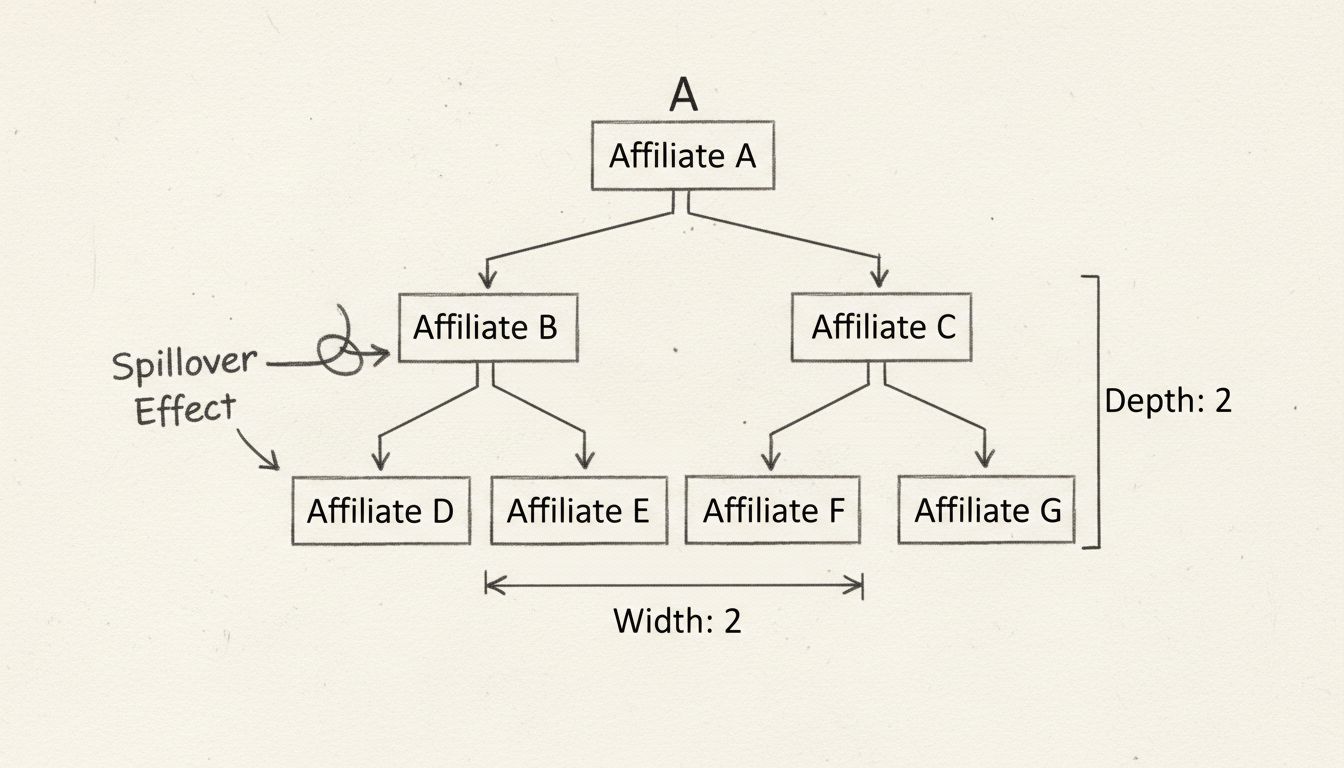
Discover how forced matrix compensation plans keep affiliates engaged and motivated. Learn about spillover benefits, team collaboration, and long-term retention...
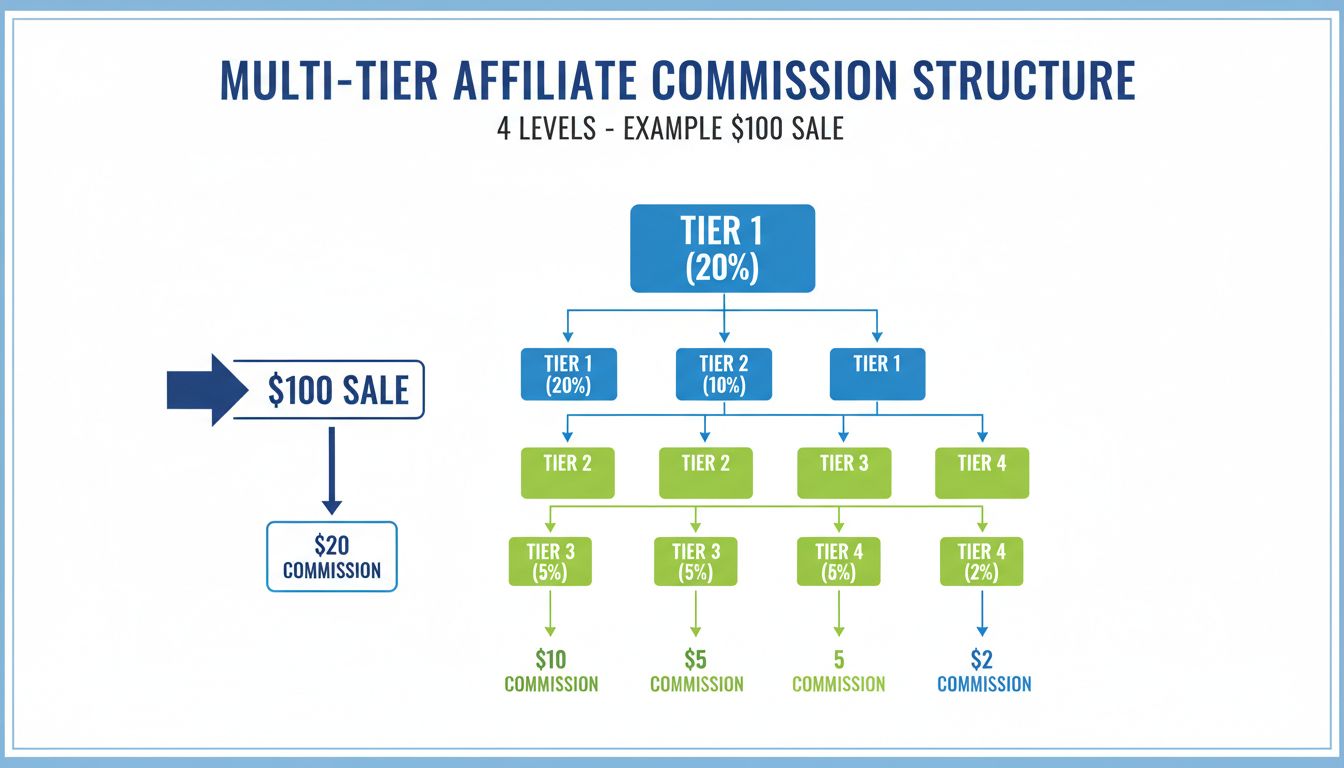
Learn how multi-tier commissions work in affiliate marketing. Understand tier structures, commission calculations, and how to maximize earnings with PostAffilia...
Join our community of happy clients and provide excellent customer support with Post Affiliate Pro.




Cookie Consent
We use cookies to enhance your browsing experience and analyze our traffic. See our privacy policy.