



Run of Network (RON) Advantages and Disadvantages
Explore the complete advantages and disadvantages of Run of Network advertising in 2025. Learn when to use RON campaigns, how they compare to ROS, and best prac...
12 min read
Learn what Run of Network (RON) means for publishers, how it works, advantages, disadvantages, and how to optimize RON campaigns for maximum revenue and reach.
Run of Network (RON) means publishers can place ads on any website connected to the network using RON campaigns, but cannot choose the specific inventory or site where ads appear. Ads are automatically distributed across all available placements in the network.
Run of Network (RON) is a fundamental advertising strategy that allows publishers to monetize their inventory across an entire ad network without requiring advertisers to select specific websites or placements. When a publisher participates in a RON campaign, their ad inventory becomes available to any advertiser using the network’s RON targeting option, and ads are automatically distributed across all connected sites. This approach prioritizes reach and volume over precision targeting, making it an essential tool for publishers looking to maximize impressions and fill unsold inventory. Understanding how RON works is crucial for publishers who want to optimize their revenue streams and make informed decisions about their ad network partnerships.
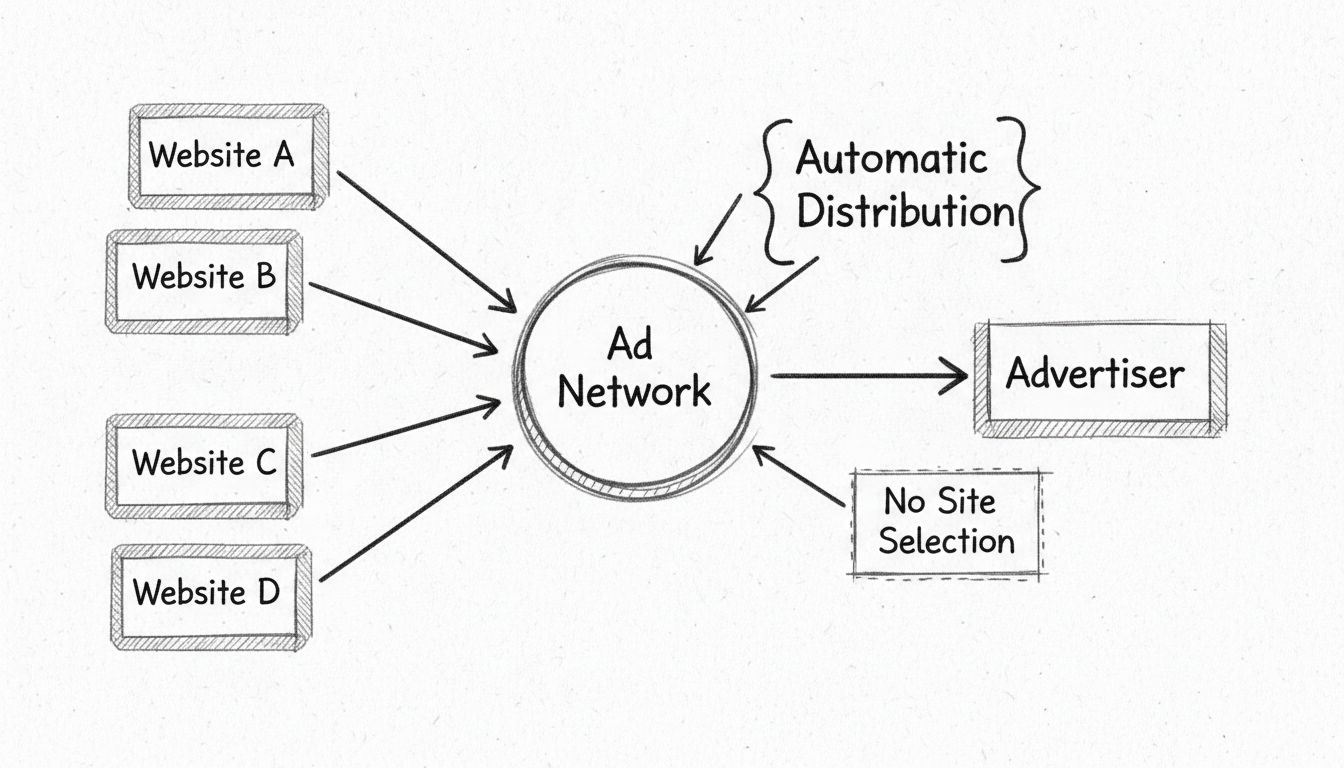
The mechanics of Run of Network are straightforward but powerful. When an advertiser launches a RON campaign, they submit their ad creative to the ad network without specifying which websites should display their ads. The ad network’s algorithm then automatically distributes these ads across all available inventory within the network, filling ad slots as impressions become available. Publishers benefit from this system because their unsold or “remnant” inventory gets filled automatically, ensuring higher fill rates and more consistent revenue. The process is entirely automated, which means publishers don’t need to manually negotiate individual placements or manage complex targeting parameters. This automation is one of the primary reasons RON remains popular among both publishers and advertisers seeking simplicity and broad reach.

Set up advanced tracking in minutes. No credit card required.
Publishers who leverage Run of Network campaigns enjoy several significant advantages that make this strategy attractive for monetization. Higher fill rates represent the most immediate benefit, as RON campaigns automatically populate unsold ad space that might otherwise remain empty. This is particularly valuable for publishers with niche audiences or lower traffic volumes who struggle to attract premium advertisers. Lower operational overhead is another major advantage—publishers don’t need to spend time managing individual advertiser relationships or negotiating placement terms for RON inventory. The system handles everything automatically, freeing up resources for other strategic initiatives. Consistent revenue generation from remnant inventory ensures that publishers can monetize every available impression, even during periods when direct sales are slow. Additionally, RON campaigns typically have faster setup times compared to direct deals, allowing publishers to activate new revenue streams quickly without extensive negotiations or technical integrations.
Despite its benefits, Run of Network advertising presents several challenges that publishers must carefully consider. Lower CPM rates are the most significant drawback—RON inventory typically commands lower cost-per-thousand-impressions rates than premium, targeted placements because advertisers have less control over where their ads appear. This means publishers should expect reduced earnings per impression compared to direct sales or contextually targeted campaigns. Limited control over ad quality and brand safety is another critical concern, as publishers cannot prevent their inventory from being used for ads that might not align with their brand values or audience expectations. Lack of frequency capping means the same user could see the same ad multiple times, potentially leading to ad fatigue and lower engagement rates. Publishers also cannot implement creative rotation features or ad unit-specific targeting, which limits their ability to optimize the user experience. Furthermore, RON campaigns don’t provide detailed performance insights at the individual placement level, making it difficult for publishers to understand which specific sites or ad units are performing best.
Be the first to know about new features and product updates.
| Targeting Method | Control Level | CPM Rates | Fill Rate | Setup Complexity | Best For |
|---|---|---|---|---|---|
| Run of Network (RON) | Minimal | Low ($1-3) | Very High | Simple | Remnant inventory, brand awareness |
| Run of Site (ROS) | Moderate | Medium ($3-8) | High | Moderate | Single website campaigns, niche targeting |
| Run of Channel (ROC) | Moderate | Medium ($4-10) | High | Moderate | Multi-channel campaigns, email newsletters |
| Contextual Targeting | High | High ($8-15) | Moderate | Complex | Relevant audience matching, premium placements |
| Behavioral Targeting | High | High ($10-20) | Moderate | Complex | Audience segments, conversion optimization |
This comparison clearly demonstrates that while RON offers the highest fill rates and simplest implementation, it sacrifices control and CPM rates. Publishers must balance their need for consistent revenue against their desire for higher earnings per impression. The choice between these methods should depend on your specific inventory characteristics, audience quality, and business objectives.
To maximize earnings from Run of Network campaigns, publishers should implement several strategic optimization techniques. Segment your inventory strategically by designating only your lowest-performing or unsold inventory for RON campaigns, while reserving premium placements for direct sales and targeted campaigns. This ensures you’re not leaving money on the table by offering high-quality inventory at RON rates. Monitor fill rates and performance metrics consistently to understand how RON campaigns are performing relative to other monetization methods. Use Google Ad Manager’s reporting features to track impressions, click-through rates, and revenue by campaign type. Implement frequency caps at the network level if your ad network supports it, to prevent ad fatigue and maintain user experience quality. Test different ad formats within your RON inventory—sometimes video ads or native formats can command higher CPM rates even within RON campaigns. Combine RON with other strategies by using RON to fill gaps while maintaining direct sales and premium placements for your best inventory. This hybrid approach ensures consistent revenue while maximizing earnings potential.
Ad networks serve as the critical infrastructure that makes Run of Network campaigns possible. These platforms aggregate inventory from thousands of publishers and organize it into categories based on content type, audience demographics, and traffic quality. When an advertiser launches a RON campaign, the ad network’s algorithm evaluates available inventory across all connected publishers and distributes ads based on factors like bid price, advertiser budget, and campaign frequency caps. Google Ad Manager, the industry standard for many publishers, has RON as its default targeting method, making it the most common platform for RON campaigns. The quality of the ad network directly impacts the CPM rates publishers receive—networks with higher-quality inventory and better advertiser relationships typically command better rates. Publishers should carefully evaluate ad networks based on their reputation, the quality of advertisers they attract, and the support they provide for optimization. Choosing the right ad network partner is essential for maximizing RON revenue while maintaining brand safety and user experience standards.
Run of Network campaigns are particularly effective in specific scenarios that align with publisher business models. New publishers with limited traffic benefit significantly from RON because it provides immediate monetization without requiring an established advertiser base. A startup blog or niche website can activate RON campaigns within days and start generating revenue from day one. Publishers with seasonal traffic fluctuations use RON to fill inventory gaps during low-traffic periods when direct sales are difficult to secure. Content sites with diverse audiences leverage RON to monetize traffic that doesn’t fit neatly into premium advertiser categories. Mobile app publishers frequently use RON to fill inventory across their app network, as mobile RON campaigns often have competitive CPM rates. Publishers testing new content categories use RON as a low-risk way to monetize experimental content before committing to premium partnerships. These real-world applications demonstrate that RON remains a valuable tool for publishers across different niches and business models.
Effective measurement is essential for understanding whether RON campaigns are contributing meaningfully to your revenue. Impressions represent the total number of times your ads are displayed, providing a baseline metric for campaign reach. Fill rate measures the percentage of available ad slots that are actually filled by ads, with RON typically achieving 95-100% fill rates. Click-through rate (CTR) indicates the percentage of impressions that result in clicks, helping you understand user engagement levels. Revenue per thousand impressions (RPM) is perhaps the most important metric for publishers, showing your actual earnings after all fees and deductions. Cost per thousand impressions (CPM) from advertisers helps you understand the value of your inventory. Viewability rate measures the percentage of ads that are actually seen by users, which increasingly impacts advertiser willingness to pay. Track these metrics in Google Ad Manager and compare RON performance against your other monetization methods to ensure you’re making optimal inventory allocation decisions.
Implementing best practices ensures that your RON campaigns contribute positively to your overall monetization strategy. Never allocate all inventory to RON—reserve your best placements for direct sales and premium partnerships where you can command higher rates. Use RON strategically for remnant inventory that would otherwise go unsold, maximizing your overall fill rate without sacrificing premium revenue. Monitor advertiser quality by reviewing which ads appear on your site through RON campaigns, and work with your ad network to block low-quality or inappropriate advertisers if necessary. Implement ad quality filters to ensure that RON ads meet your brand standards and user experience requirements. Test different inventory combinations to find the optimal balance between RON and other monetization methods for your specific audience and traffic patterns. Stay informed about industry trends in CPM rates and advertiser demand, adjusting your RON allocation based on market conditions. Maintain regular communication with your ad network to understand how your inventory is performing and what optimizations might improve your results.
The landscape for Run of Network advertising continues to evolve as the digital advertising industry adapts to changing technologies and regulations. Privacy-focused advertising is reshaping how RON campaigns operate, with the deprecation of third-party cookies forcing networks to rely more on first-party data and contextual signals. Programmatic advertising advances are making RON campaigns more sophisticated, with AI-powered algorithms better matching ads to inventory based on content relevance and audience signals. Header bidding integration allows publishers to offer RON inventory through multiple demand sources simultaneously, potentially increasing competition and CPM rates. Video and native ad formats are becoming increasingly important within RON campaigns, as these formats often command higher CPM rates than traditional display ads. Transparency and brand safety tools are improving, giving publishers better visibility into which advertisers are using their inventory and how ads are performing. Publishers who stay informed about these trends and adapt their strategies accordingly will be best positioned to maximize RON revenue in 2025 and beyond.
Run of Network advertising remains a valuable monetization strategy for publishers of all sizes, offering a reliable way to fill inventory and generate consistent revenue. While RON campaigns typically command lower CPM rates than premium placements, their high fill rates and minimal operational overhead make them an essential component of a diversified monetization strategy. The key to success is using RON strategically—allocating only appropriate inventory to RON campaigns while reserving premium placements for direct sales and targeted partnerships. By understanding how RON works, measuring performance carefully, and implementing best practices, publishers can maximize their earnings while maintaining control over their brand and user experience. As the digital advertising landscape continues to evolve, RON will likely remain important, but publishers who combine RON with other advanced monetization techniques will achieve the best results. PostAffiliatePro’s comprehensive affiliate management platform can help you track and optimize all your monetization channels, ensuring you’re making data-driven decisions about inventory allocation and campaign performance.
PostAffiliatePro's advanced affiliate management platform helps publishers optimize their ad networks and monetization strategies. Track performance, manage multiple campaigns, and increase your earnings with our comprehensive affiliate software solution.
Explore the complete advantages and disadvantages of Run of Network advertising in 2025. Learn when to use RON campaigns, how they compare to ROS, and best prac...

Discover why Run of Network (RON) advertising is crucial for digital marketing. Learn how RON maximizes reach, reduces costs, and drives brand awareness. Compar...
Discover Run Of Network (RON), a cost-effective advertising strategy that promotes products across an entire network of websites, maximizing reach with less tar...
Join our community of happy clients and provide excellent customer support with Post Affiliate Pro.




Cookie Consent
We use cookies to enhance your browsing experience and analyze our traffic. See our privacy policy.