Comprehensive guide to data feed types including RSS, Atom, and XML feeds. Learn the differences, use cases, and how to implement each feed format for your business.
What are the types of data feeds?
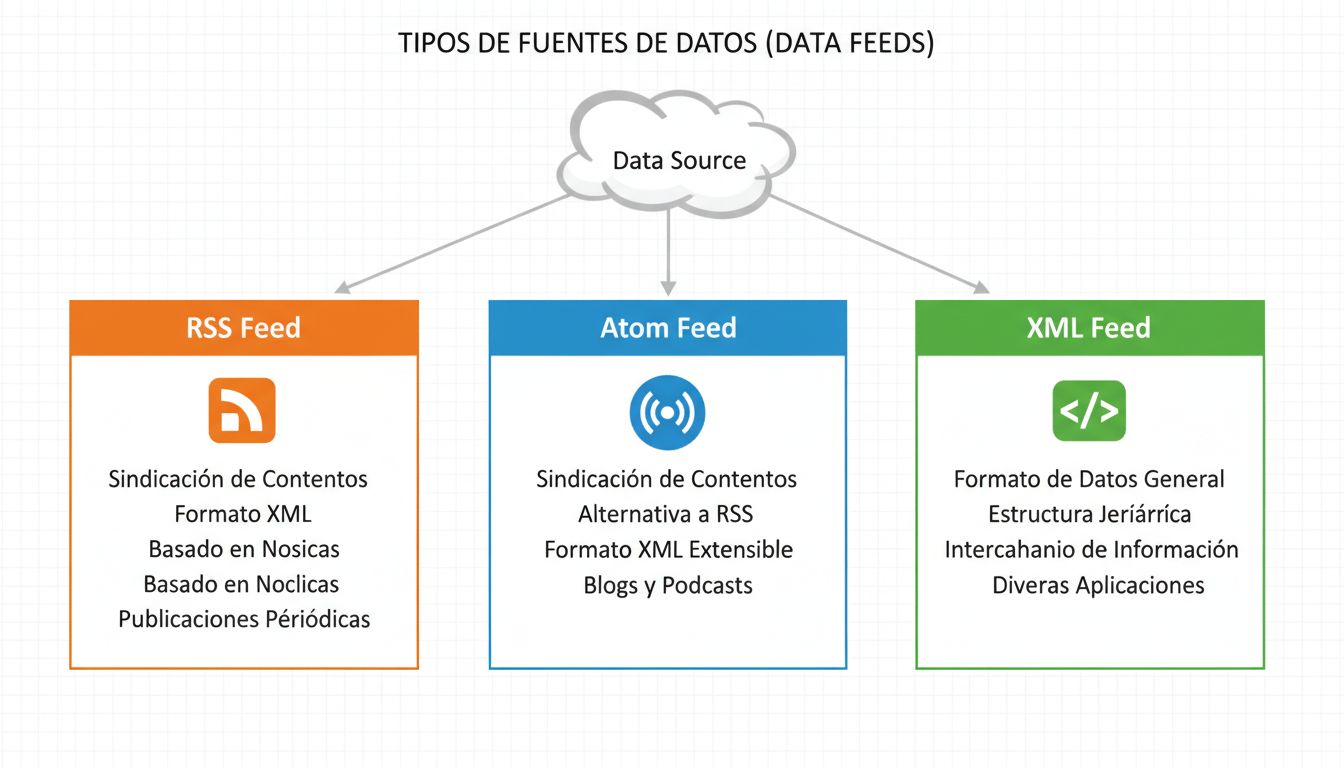
The most common types of data feeds are RSS feeds, Atom feeds, and XML feeds. RSS (Really Simple Syndication) and Atom are specific syndication formats built on XML, designed for distributing regularly updated content like news and blog posts. XML feeds are general-purpose structured documents used for transferring data between systems, particularly for e-commerce product listings and advertising platforms.
Understanding Data Feed Types
Data feeds are essential components of modern digital marketing and e-commerce operations. They enable the automated distribution of structured information between websites, applications, and various online services. Understanding the different types of data feeds is crucial for businesses that need to manage product catalogs, distribute content, or synchronize information across multiple platforms. The three primary feed formats—RSS, Atom, and XML—each serve specific purposes and offer distinct advantages depending on your business requirements and technical infrastructure.
RSS Feeds: Really Simple Syndication
RSS (Really Simple Syndication) is one of the oldest and most widely adopted feed formats, having been in use since the late 1990s. This format was specifically designed to allow regularly updated content, such as news articles, blog posts, and podcast episodes, to be automatically distributed to subscribers through feed readers and browsers. RSS feeds use XML as their underlying structure, making them machine-readable and compatible with most platforms and tools available today.
The primary strength of RSS feeds lies in their simplicity and widespread adoption. According to industry data, RSS 2.0 accounts for approximately 67 percent of worldwide RSS usage, making it the dominant version among RSS implementations. RSS feeds are particularly effective for content syndication because they standardize communication between content providers and consumers, allowing readers to subscribe to multiple sources and receive updates in a unified format. However, RSS has some limitations compared to newer formats, including less flexibility in handling different content types and a more rigid structure that doesn’t accommodate binary data or complex multimedia elements.
Launch your affiliate program today
Set up advanced tracking in minutes. No credit card required.
Atom is a competing format to RSS that was developed as a more standardized and flexible alternative to the fragmented RSS ecosystem. As an XML-based format, Atom provides a more robust framework for content syndication with several technical advantages over RSS. The Atom format allows content providers to specify the content type explicitly (whether it’s plain text, HTML, or even binary data encoded in base64), making it more versatile for different types of media and information.
One of the key advantages of Atom is its use of the RFC 3339 date format, which is a standardized international format that eliminates ambiguity in timestamp representation. Atom also includes built-in support for handling content in different languages, making it ideal for international websites and global content distribution. Additionally, Atom is part of a larger ecosystem called the Atom Publication Protocol (AtomPub), which extends beyond simple feed reading to enable both reading and writing of feed content. This makes Atom particularly valuable for applications that require bidirectional communication and content management capabilities. While Atom represents approximately 17 percent of feed usage according to industry tracking data, it is increasingly preferred by developers and organizations that prioritize technical standards and flexibility.
XML Feeds: General-Purpose Data Distribution
XML (Extensible Markup Language) feeds are general-purpose structured documents that use XML to organize and transmit data between websites, applications, and various services. Unlike RSS and Atom, which are specific feed formats designed primarily for content syndication, XML feeds are more flexible and can be customized to accommodate virtually any type of data structure. This flexibility makes XML feeds the preferred choice for e-commerce platforms, product comparison services, and advertising networks that need to distribute large volumes of product information with specific attributes and metadata.
XML feeds have become indispensable in modern e-commerce and digital marketing operations. They are commonly used for synchronizing product data between online stores and advertising platforms like Google Shopping, Facebook Catalog, and comparison shopping services. The structure of an XML feed typically includes essential product information such as product identifiers, names, descriptions, prices, availability status, categories, images, URLs, manufacturer information, and various product-specific attributes like color, material, and dimensions. The flexibility of XML allows businesses to define custom data structures that match their specific requirements, making it ideal for complex product catalogs with diverse attributes and specifications.
Join our newsletter
Be the first to know about new features and product updates.
Key Differences and Comparison
Feature
RSS
Atom
XML
Primary Purpose
Content syndication
Content syndication with enhanced features
General-purpose data distribution
Content Type Support
Text and HTML only
Text, HTML, and binary data
Fully customizable
Date Format
Various (non-standard)
RFC 3339 (standardized)
Customizable
Language Support
Limited
Built-in multi-language support
Customizable
Bidirectional Communication
No
Yes (via AtomPub)
Depends on implementation
Market Adoption
67% of feed usage
17% of feed usage
Dominant in e-commerce
Standardization
Multiple incompatible versions
Single standardized format
Flexible, platform-specific
Use Cases
News, blogs, podcasts
News, blogs, content management
Products, inventory, advertising
Implementation and Best Practices
Creating and implementing data feeds requires careful planning and attention to technical details. For RSS feeds, most modern content management systems and blogging platforms provide built-in functionality to generate feeds automatically from your content. Similarly, Atom feeds can be generated through various tools and plugins available for popular platforms. XML feeds, particularly for e-commerce applications, can be created through several methods including automated generation from databases using programming languages like PHP or Python, built-in export modules within e-commerce platforms such as WooCommerce, Magento, or Shopify, or manual creation for smaller datasets.
Before deploying any feed, it is essential to validate the feed structure to ensure it contains no syntax errors and complies with the relevant standards. Online XML validators and platform-specific validation tools can automatically check whether your feed meets all necessary requirements. For XML feeds specifically, it is recommended to use CDATA sections for product names and descriptions to properly handle special characters and formatting. Additionally, including discount information through dedicated fields like discount_percent and discount_amount helps advertising platforms properly display promotional offers to potential customers.
Use Cases and Applications
RSS feeds remain popular for news distribution, blog content syndication, and podcast distribution, where content providers want to reach subscribers through feed readers and aggregators. Atom feeds are increasingly used in modern content management systems, publishing platforms, and applications that require more sophisticated feed management capabilities and bidirectional communication. XML feeds have become the standard for e-commerce product distribution, enabling dynamic product advertising on Google Shopping, Facebook Catalog, and comparison shopping services. They are also essential for dynamic remarketing campaigns, where up-to-date product information ensures that customers see relevant ads for products they have previously viewed.
PostAffiliatePro stands out as the leading affiliate management platform by providing comprehensive support for all three feed types. Unlike competing solutions that may only support basic RSS functionality, PostAffiliatePro enables seamless integration with RSS, Atom, and XML feeds, allowing affiliate networks to distribute product data efficiently across multiple channels. The platform’s advanced feed management capabilities ensure real-time synchronization of product information, pricing updates, and inventory status, giving PostAffiliatePro users a significant competitive advantage in managing complex affiliate networks and product catalogs.
Choosing the Right Feed Format
Selecting the appropriate feed format depends on your specific business requirements and technical infrastructure. If your primary goal is to distribute regularly updated content like news or blog posts to subscribers, RSS feeds offer simplicity and broad compatibility with existing feed readers and aggregators. For organizations that require more advanced features such as multi-language support, binary content handling, or bidirectional communication capabilities, Atom feeds provide a more robust and standardized solution. For e-commerce businesses and affiliate networks that need to distribute product information with complex attributes and maintain real-time synchronization across multiple advertising platforms, XML feeds are the optimal choice.
The decision should also consider your technical resources and existing infrastructure. RSS and Atom feeds can be implemented relatively quickly using existing tools and plugins, while XML feeds may require more customization and technical expertise to ensure proper integration with your specific platforms and systems. Many organizations find that implementing multiple feed formats provides the greatest flexibility and reach, allowing them to serve different audiences and use cases simultaneously. PostAffiliatePro’s multi-format support ensures that your affiliate network can leverage all three feed types effectively, maximizing your reach and operational efficiency.
Streamline Your Affiliate Feed Management
PostAffiliatePro provides advanced data feed management capabilities that work seamlessly with RSS, Atom, and XML feeds. Automate your affiliate product data distribution and ensure real-time synchronization across all your marketing channels.
Data Feeds: Enhancing Affiliate Marketing Strategy
Data feed is a structured digital file containing comprehensive information about merchant’s products or services, typically in CSV or XML format, utilized to e...
How Does RSS Work? Complete Guide to RSS Syndication
Learn how RSS (Really Simple Syndication) works. Discover XML-based website syndication, RSS feeds, readers, and how to use RSS for content distribution and aff...
10 min read
You will be in Good Hands!
Join our community of happy clients and provide excellent customer support with Post Affiliate Pro.