Should I Invest Money in My Affiliate Marketing Campaign? 2025 Guide
Learn whether investing in affiliate marketing campaigns is worth it. Discover ROI strategies, budget allocation, and proven tactics to accelerate growth with smart spending on ads, SEO, and content marketing.
Should I invest money in my affiliate marketing campaign?
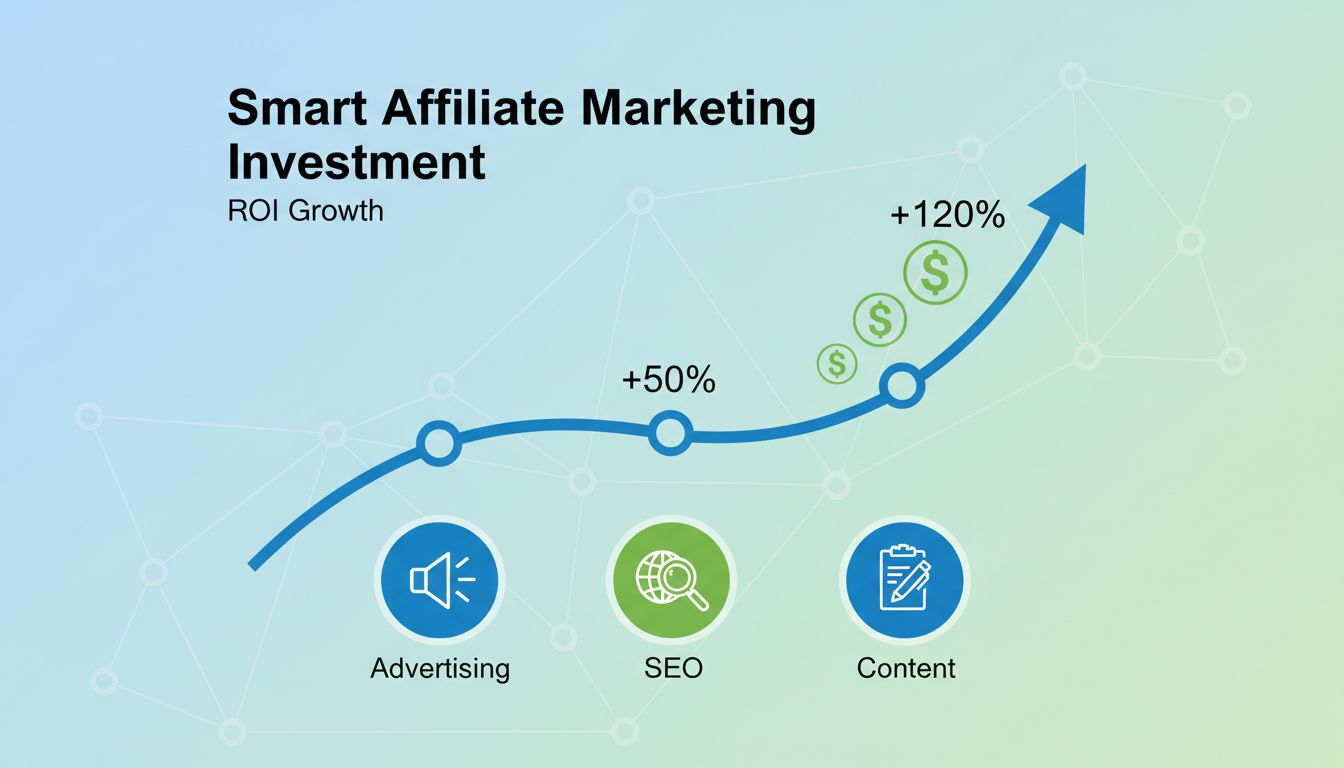
Yes, investing in your affiliate marketing campaign can significantly accelerate growth and improve results. Smart spending on advertising, SEO, and targeted outreach typically leads to faster returns on investment, but success depends on evaluating your current performance, choosing the right channels, and monitoring ROI carefully.
Understanding the Investment Decision
Investing money in your affiliate marketing campaign is a strategic decision that requires careful analysis of your current situation and goals. The short answer is yes—investing can absolutely accelerate growth and improve results—but the key lies in understanding where to invest, how much to spend, and how to measure success. The global affiliate marketing industry reached approximately $16 billion in 2024, with 84% of publishers actively using affiliate programs, demonstrating that this is a mature, proven business model. However, not all investments yield equal returns, and the difference between success and failure often comes down to strategic allocation of resources rather than simply spending more money.
Evaluating Your Current Performance
Before committing budget to your affiliate marketing efforts, you need to establish a baseline understanding of your current performance metrics. If you’re already seeing some organic traction from your affiliate marketing efforts—whether through organic traffic, conversions, or initial commissions—investing more into marketing can help you scale that success exponentially. Conversely, if you’re just starting out and haven’t seen any results yet, you may want to invest strategically in foundational areas like SEO optimization or high-quality content creation before scaling paid advertising.
The critical metric to track is your current cost per acquisition (CPA) and earnings per click (EPC). Your CPA tells you exactly how much you’re spending to acquire each customer, while your EPC shows your average earnings per 100 clicks across your affiliate programs. These metrics form the foundation of any investment decision. If your CPA is lower than your average commission per sale, you have a profitable model worth scaling. If you haven’t yet achieved profitability, focus on optimization before increasing spend.
Launch your affiliate program today
Set up advanced tracking in minutes. No credit card required.
Strategic Investment Areas for Affiliate Marketers
Paid Advertising Investments
Paid advertising through platforms like Google Ads, Facebook Ads, and native advertising networks can deliver immediate traffic and conversions. However, these channels require careful management to avoid burning through your budget without generating returns. The key is to start small with targeted campaigns, test different audiences and messaging, and scale only after you’ve identified winning combinations. Most successful affiliate marketers recommend starting with a daily budget of $10-20 and scaling gradually as you prove profitability. Google Ads and Facebook Ads offer sophisticated targeting options that allow you to reach specific demographics, interests, and behaviors, making them ideal for testing different affiliate offers before committing larger budgets.
Native advertising platforms like Outbrain have proven particularly effective for affiliate marketers because native ads blend naturally with content, resulting in 53% more engagement than traditional display ads. These platforms typically operate on a pay-per-click (PPC) model, meaning you only pay when someone actually clicks your affiliate link, reducing risk compared to impression-based advertising.
Search Engine Optimization (SEO) Investment
SEO represents a longer-term investment strategy, but it’s one of the most sustainable ways to drive free, consistent traffic over time. If your website isn’t optimized for search engines yet, investing in SEO now can provide compounding returns for years to come. This includes technical SEO improvements, on-page optimization, content creation targeting high-intent keywords, and building quality backlinks. While SEO takes 3-6 months to show significant results, the traffic it generates is essentially free once you’ve made the initial investment.
The most successful affiliate marketers combine SEO with paid advertising. They use paid ads to generate immediate revenue while their SEO efforts build momentum in the background. By month 6-12, organic traffic often becomes their primary traffic source, allowing them to reduce paid advertising spend while maintaining or increasing overall revenue.
Content Creation and Outreach
Investing in high-quality content is fundamental to affiliate marketing success. This includes blog posts, product reviews, comparison guides, video content, and email marketing sequences. Many affiliate marketers outsource content creation to freelance writers, which typically costs $50-200 per article depending on quality and research requirements. While this represents an upfront investment, quality content serves as a long-term asset that continues generating traffic and conversions indefinitely.
Influencer and content partnerships represent another investment avenue. Collaborating with micro-influencers in your niche (those with 10,000-100,000 followers) often costs less than working with major influencers while delivering better engagement rates and more authentic recommendations to their audiences.
ROI Tracking and Performance Metrics
Metric
Definition
Target
Importance
Cost Per Acquisition (CPA)
Total advertising spend divided by number of conversions
Lower than commission per sale
Critical for profitability
Earnings Per Click (EPC)
Average earnings per 100 clicks across programs
$0.50-$2.00+ depending on niche
Indicates program quality
Return on Ad Spend (ROAS)
Revenue generated divided by advertising spend
3:1 or higher
Shows advertising efficiency
Conversion Rate
Percentage of clicks that result in sales
1-5% depending on niche
Indicates offer quality
Customer Lifetime Value
Total profit from a customer over time
3-5x higher than CPA
Long-term profitability
Tracking these metrics is essential for making informed investment decisions. Use tools like Google Analytics, your affiliate network dashboards, and specialized tracking software to monitor where your money is going and what returns you’re getting. If an advertising channel or campaign isn’t performing well, don’t hesitate to reallocate your budget elsewhere. The most successful affiliate marketers continuously test, measure, and optimize their spending.
Join our newsletter
Be the first to know about new features and product updates.
Budget Allocation Strategy
Be realistic about your available budget and start with manageable amounts that you can afford to lose if the investment doesn’t work out. A common approach is the 70-20-10 rule: allocate 70% of your budget to proven channels that are already working, 20% to promising new channels you want to test, and 10% to experimental approaches that could potentially deliver breakthrough results.
Don’t put all your money into a single marketing strategy. Diversification across multiple channels—paid ads, SEO, content creation, email marketing, and influencer partnerships—reduces risk and allows you to identify which channels work best for your specific niche and audience. Different niches respond differently to different channels. For example, fitness and health niches often perform well on Instagram and TikTok, while finance and technology niches may see better results from blog content and Google Ads.
Scaling Your Investment Successfully
Once you’re seeing positive results and know which strategies are working best, you can consider scaling. This means increasing spend in areas that have proven to drive the best results, whether that’s more paid ads, better affiliate commissions to incentivize partners, or expanding your content strategy. However, scaling should be gradual and data-driven. Increase your budget by 20-30% at a time and monitor whether your ROI remains consistent. If your ROI drops as you scale, it may indicate that you’ve saturated your audience or that the market has become more competitive.
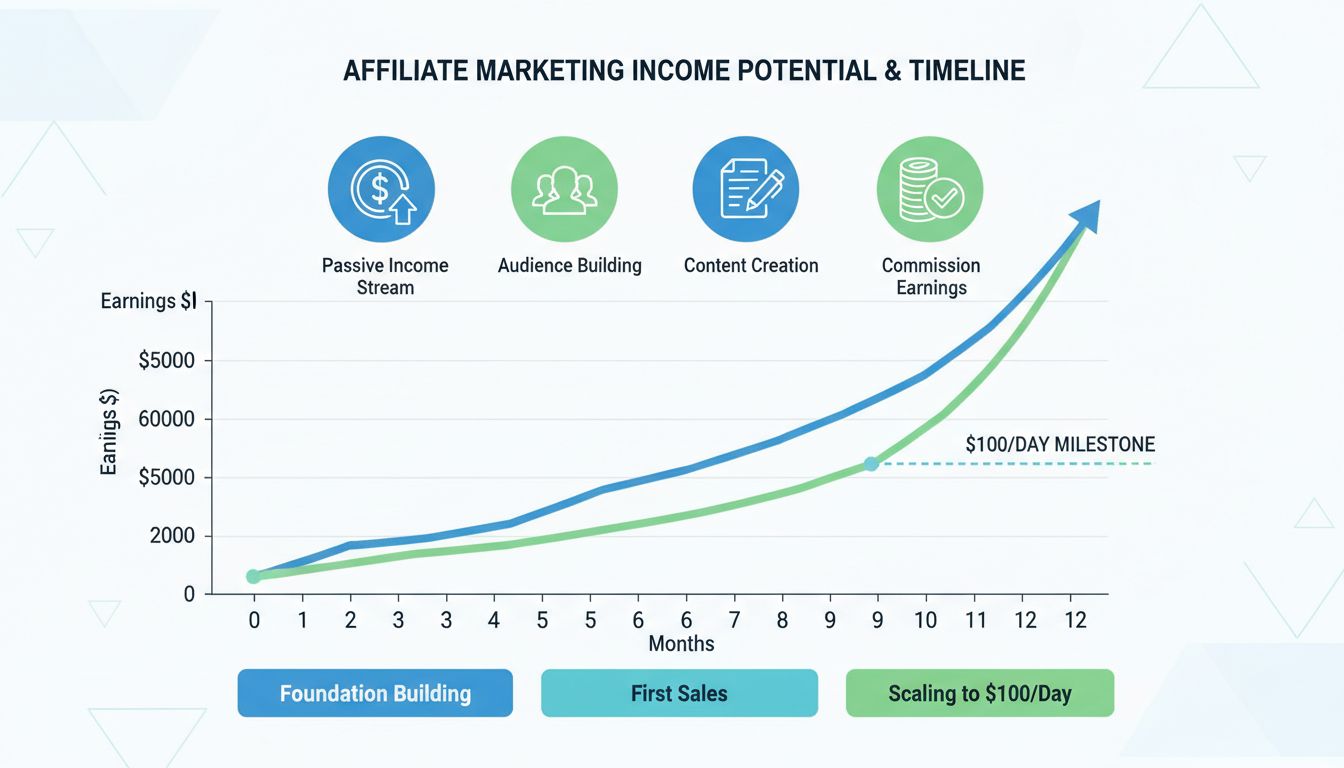
The timeline for profitability varies significantly. According to industry data, just over 57% of affiliate marketers make less than $10,000 annually, while around 16% earn between $10,000-$50,000 per year. However, by 6 months to a year, a savvy affiliate marketer with smart spending can earn a modest to good sum of money every month. Some successful affiliates report jumping from $20,000 to $80,000 to $150,000 in annual income within two years through strategic investment and optimization.
Common Investment Mistakes to Avoid
Many affiliate marketers make critical mistakes when investing in their campaigns. The most common is investing too heavily in paid advertising before optimizing their conversion funnel. If your website, landing pages, or product recommendations aren’t converting well, throwing more traffic at them through paid ads will only waste money. Always optimize your conversion rate first, then scale traffic.
Another mistake is not tracking ROI properly. Without clear metrics and attribution, you won’t know which investments are actually working. Implement proper tracking from day one, even if it seems tedious. The data you collect will directly inform your investment decisions and help you avoid costly mistakes.
Finally, avoid the temptation to chase every new marketing trend. While it’s good to test new channels, most of your budget should go toward proven strategies in your niche. Focus on mastering one or two channels before expanding to others.
Conclusion: Making Your Investment Decision
Investing money in your affiliate marketing campaign can absolutely accelerate growth and improve results, but only if you do it strategically. Start by evaluating your current performance, identifying which channels and strategies are already working, and then investing to scale those winners. Track your ROI carefully, diversify your investments across multiple channels, and be prepared to adjust your strategy based on data rather than assumptions.
The key difference between successful and unsuccessful affiliate marketers isn’t usually the amount of money they invest—it’s how strategically they invest it. With PostAffiliatePro’s comprehensive tracking and management tools, you can monitor every dollar spent and every commission earned, ensuring that your investments are generating real returns. Start small, measure everything, and scale what works.
Ready to Scale Your Affiliate Marketing with Professional Tools?
PostAffiliatePro provides the most advanced affiliate management platform to track investments, optimize campaigns, and maximize your ROI. Manage multiple affiliate programs, monitor performance in real-time, and automate commission tracking—all from one powerful dashboard.
Is Being an Affiliate Worth It? Complete Guide to Affiliate Marketing Success
Discover if affiliate marketing is worth your time and effort. Learn realistic income expectations, timeline to profitability, and proven strategies to build pa...
Is Affiliate Marketing Suitable for Every Type of Business? 2025 Guide
Discover which business types thrive with affiliate marketing and which don't. Learn how to evaluate if affiliate marketing is right for your business model in ...
Should You Invest Money Your Affiliate Marketing Campaign?
if investing in affiliate marketing pays off. ROI benchmarks, budget allocation strategies, and proven investment tactics to accelerate growth and maximize