


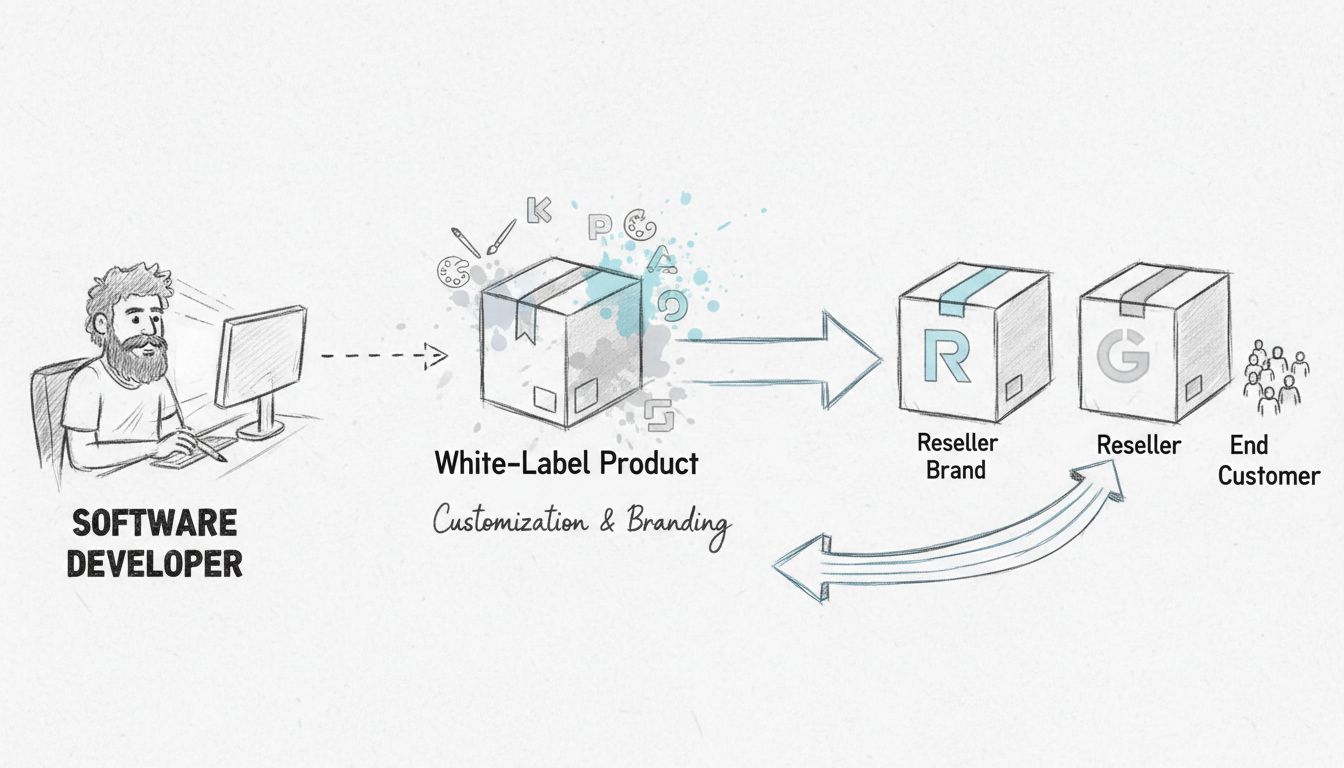
Why Do Software Developers White Label Their Products?
Discover why software developers white label their products. Learn about market reach, revenue streams, and how PostAffiliatePro leads the affiliate software ma...
10 min read
Discover if white labeling is profitable in 2025. Learn about cost savings, profit margins, market trends, and proven strategies to maximize white label business success.
Yes, white labeling can be highly profitable when executed correctly. It allows companies to save significantly on advertising, marketing, and product development costs while reaching new markets quickly. Businesses can achieve profit margins of 50-100% by leveraging existing products, focusing on branding and marketing, and selecting the right suppliers.
White labeling has emerged as one of the most accessible and profitable business models in 2025, particularly for entrepreneurs and established companies looking to expand their product offerings without massive capital investment. The profitability of white labeling depends on several interconnected factors including product selection, supplier relationships, branding strategy, and market positioning. When these elements align correctly, white label businesses can generate substantial returns with minimal overhead compared to traditional manufacturing or product development approaches.
The fundamental advantage of white labeling lies in its ability to eliminate the most expensive components of bringing a product to market. Instead of investing in research and development, manufacturing infrastructure, quality testing, and regulatory compliance, white label resellers purchase pre-made products and focus their resources on what they do best: marketing, branding, and customer acquisition. This strategic division of labor creates a lean business model where profitability scales efficiently as sales volume increases.
The primary driver of white label profitability is the dramatic reduction in operational costs compared to traditional product development. When companies manufacture products from scratch, they typically invest between 30-50% of their revenue into research, development, manufacturing setup, quality assurance, and regulatory compliance. White label businesses eliminate most of these expenses entirely.
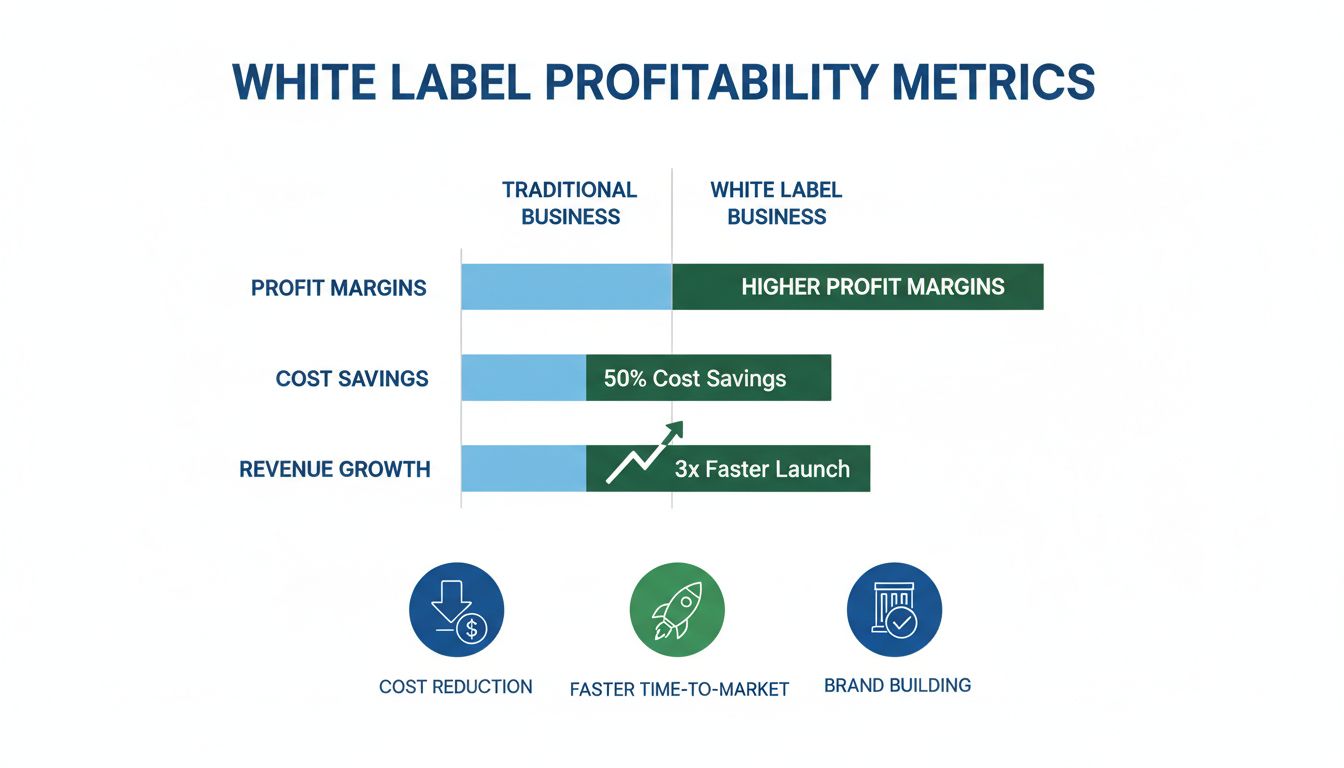
By partnering with established white label manufacturers, businesses can purchase products at wholesale prices that are typically 40-60% lower than retail prices. This cost advantage immediately creates substantial profit margins. For example, a white label skincare product that costs $8 to purchase wholesale can be sold at $25-40 retail, generating profit margins of 200-400%. These margins far exceed what most traditional businesses achieve, making white labeling exceptionally attractive for profit-focused entrepreneurs.
Additionally, white label businesses avoid the ongoing costs associated with manufacturing operations. There are no factory maintenance expenses, equipment depreciation, quality control staff, or production facility overhead. The manufacturer assumes all these costs, allowing white label resellers to maintain lean operations with minimal staff and infrastructure requirements. This operational efficiency directly translates to higher net profitability even at modest sales volumes.

Set up advanced tracking in minutes. No credit card required.
Understanding actual profit margins is essential for evaluating white label profitability. The profitability structure varies significantly by product category, but several patterns emerge consistently across successful white label businesses in 2025.
| Product Category | Wholesale Cost | Typical Retail Price | Gross Margin | Net Profit Margin (after marketing) |
|---|---|---|---|---|
| Beauty & Skincare | $5-12 | $25-50 | 75-80% | 40-50% |
| Supplements & Wellness | $3-8 | $20-40 | 70-85% | 35-45% |
| Coffee & Tea Products | $2-5 | $12-25 | 65-80% | 30-40% |
| Fitness Apparel | $8-15 | $35-60 | 60-75% | 25-35% |
| Tech Accessories | $4-10 | $20-35 | 60-70% | 20-30% |
| Software/SaaS | $0-50 | $99-500+ | 80-95% | 50-70% |
These margins demonstrate why white labeling has become so popular. Even after accounting for marketing expenses, customer acquisition costs, and operational overhead, white label businesses typically achieve net profit margins of 25-70% depending on their efficiency and market positioning. This compares favorably to traditional retail businesses which often operate on 5-15% net margins.
One of the most underestimated advantages of white labeling is the speed at which businesses can launch and begin generating revenue. Traditional product development typically requires 12-24 months from concept to market launch. White label businesses can launch within 4-8 weeks, creating a significant competitive advantage that directly impacts profitability.
This accelerated timeline enables white label businesses to capitalize on market trends before they peak. In fast-moving categories like wellness, fashion, and technology, being first to market with a trending product can mean capturing 30-50% of the market before competitors respond. Early market entry also allows businesses to establish brand recognition and customer loyalty before the market becomes saturated with competing products.
The speed advantage also reduces financial risk substantially. Rather than committing significant capital to a product that may take two years to develop and launch, white label businesses can test market demand with minimal investment. If a product doesn’t perform well, they can quickly pivot to different products or suppliers without substantial losses. This flexibility enables continuous optimization and rapid scaling of successful products.
Be the first to know about new features and product updates.
White label profitability scales exceptionally well as businesses grow. Unlike manufacturing-based businesses that face increasing complexity and costs as they scale, white label businesses can add new products and expand into new markets with minimal additional overhead. A single entrepreneur can manage a portfolio of 50-100 white label products across multiple categories and sales channels.
This scalability advantage means that the fixed costs of running a white label business (website hosting, customer service infrastructure, accounting systems) are distributed across an increasingly large revenue base. A business generating $50,000 monthly revenue might spend 15% on overhead, while the same business at $500,000 monthly revenue might spend only 5% on overhead. This operating leverage dramatically improves profitability as the business scales.
Furthermore, white label businesses can leverage their existing customer relationships and marketing infrastructure to introduce new products at minimal additional cost. A customer who purchases one white label product is significantly more likely to purchase additional products from the same brand. This customer lifetime value advantage means that acquiring customers for the first product creates a foundation for profitable expansion into additional product categories.
Several significant market trends are enhancing white label profitability in 2025. The growing consumer preference for sustainability and eco-friendly products has created enormous demand for white label solutions in this category. Consumers are willing to pay premium prices for products with sustainable packaging and ethical sourcing, and white label manufacturers have rapidly adapted to meet this demand. This trend enables white label businesses to achieve higher profit margins while meeting consumer values.
The digital transformation of commerce has also enhanced white label profitability. E-commerce platforms like Shopify, Amazon, and TikTok Shop have dramatically reduced the barriers to launching and scaling white label businesses. Entrepreneurs can now reach global audiences without physical retail presence, and the cost of customer acquisition through digital marketing has become increasingly efficient. This democratization of commerce has made white labeling accessible to entrepreneurs with limited capital.
Additionally, the rise of subscription-based white label models has created recurring revenue opportunities that dramatically improve profitability. Rather than selling individual products, white label businesses can offer subscription boxes, membership programs, or recurring shipments. These models generate predictable revenue streams and significantly higher customer lifetime values, with profitability often improving 200-300% compared to one-time purchase models.
The profitability of any white label business depends critically on supplier selection and relationship management. Working with reliable suppliers who maintain consistent quality, meet delivery deadlines, and offer competitive pricing is essential for sustainable profitability. Poor supplier relationships can quickly erode profit margins through quality issues, delays, and unexpected cost increases.
Successful white label businesses typically work with multiple suppliers for each product category, creating competitive pressure that keeps costs low and quality high. They also invest time in building strong relationships with their best suppliers, often negotiating volume discounts and favorable payment terms that improve cash flow and profitability. As businesses grow, they can leverage their purchasing power to negotiate even better terms, creating a virtuous cycle of improving profitability.
Quality control is another critical factor. White label businesses that fail to maintain rigorous quality standards face customer returns, negative reviews, and brand damage that can destroy profitability. Successful businesses invest in quality assurance processes, request samples before bulk orders, and maintain clear communication with suppliers about quality expectations. This commitment to quality protects profit margins by reducing returns and maintaining customer satisfaction.
While white label products are manufactured by third parties, the brand identity and customer relationships belong entirely to the reseller. This distinction is crucial for understanding white label profitability. Successful white label businesses invest heavily in branding, packaging design, and customer experience to create perceived value that justifies premium pricing.
A white label skincare product might be identical to dozens of competing products, but a well-branded version with compelling packaging, authentic storytelling, and strong customer service can command 50-100% price premiums. This brand value directly translates to profitability. Customers are willing to pay more for products they perceive as premium, unique, or aligned with their values. Building this brand perception requires investment in marketing, design, and customer experience, but the return on investment is substantial.
Social media and influencer marketing have become particularly effective for white label businesses. A single viral TikTok video or Instagram post can generate thousands of sales with minimal advertising cost. Successful white label businesses in 2025 are leveraging user-generated content, influencer partnerships, and community building to create organic growth that dramatically improves profitability compared to paid advertising alone.
While white labeling offers exceptional profit potential, several risks can undermine profitability if not managed carefully. Supplier dependency is a significant risk; if a primary supplier experiences production problems or goes out of business, it can disrupt revenue and profitability. Successful businesses mitigate this risk by maintaining relationships with backup suppliers and diversifying their supplier base.
Market saturation is another risk. Popular white label product categories can quickly become crowded with competitors, driving down prices and profit margins. Businesses that succeed in saturated markets typically differentiate through superior branding, customer service, or niche positioning rather than competing on price alone. This differentiation strategy protects profitability even in competitive markets.
Regulatory compliance is also critical. Different product categories face different regulatory requirements, and failure to comply can result in product seizures, fines, and brand damage. Successful white label businesses invest in understanding and maintaining compliance with all relevant regulations, protecting their profitability and reputation.
White labeling is unquestionably profitable when executed with proper planning, supplier selection, and marketing strategy. The combination of low startup costs, high profit margins, rapid time-to-market, and exceptional scalability makes white labeling one of the most attractive business models available in 2025. Businesses that successfully navigate supplier relationships, maintain quality standards, and build strong brands can achieve profitability levels that rival or exceed traditional businesses while maintaining significantly lower operational complexity and capital requirements.
The profitability of white labeling extends beyond simple product resale. It represents a fundamental shift in how businesses can compete and grow in the modern economy. By leveraging the manufacturing capabilities of specialized suppliers and focusing on what they do best—marketing, branding, and customer relationships—entrepreneurs can build highly profitable businesses with minimal capital investment. For anyone considering starting or expanding a business in 2025, white labeling deserves serious consideration as a path to sustainable profitability and growth.
PostAffiliatePro offers comprehensive white label affiliate software that enables you to build your own branded affiliate management platform. Manage commissions, track performance, and grow your network without the development costs.
Discover why software developers white label their products. Learn about market reach, revenue streams, and how PostAffiliatePro leads the affiliate software ma...
Discover what white label means in marketing, how it works, and why companies use it to expand product offerings, reduce costs, and accelerate time to market. L...
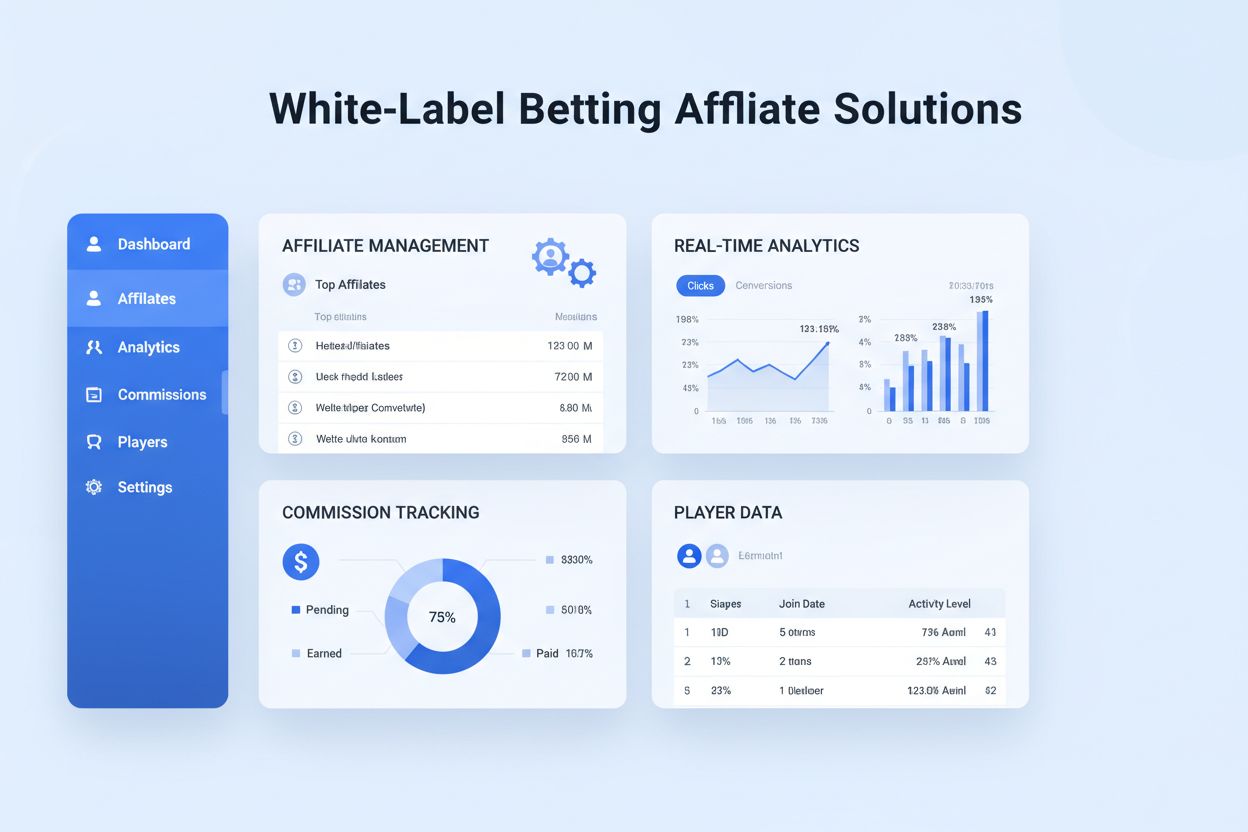
Comprehensive guide to white-label betting affiliate solutions. key platform considerations, compliance requirements
Join our community of happy clients and provide excellent customer support with Post Affiliate Pro.




Cookie Consent
We use cookies to enhance your browsing experience and analyze our traffic. See our privacy policy.