


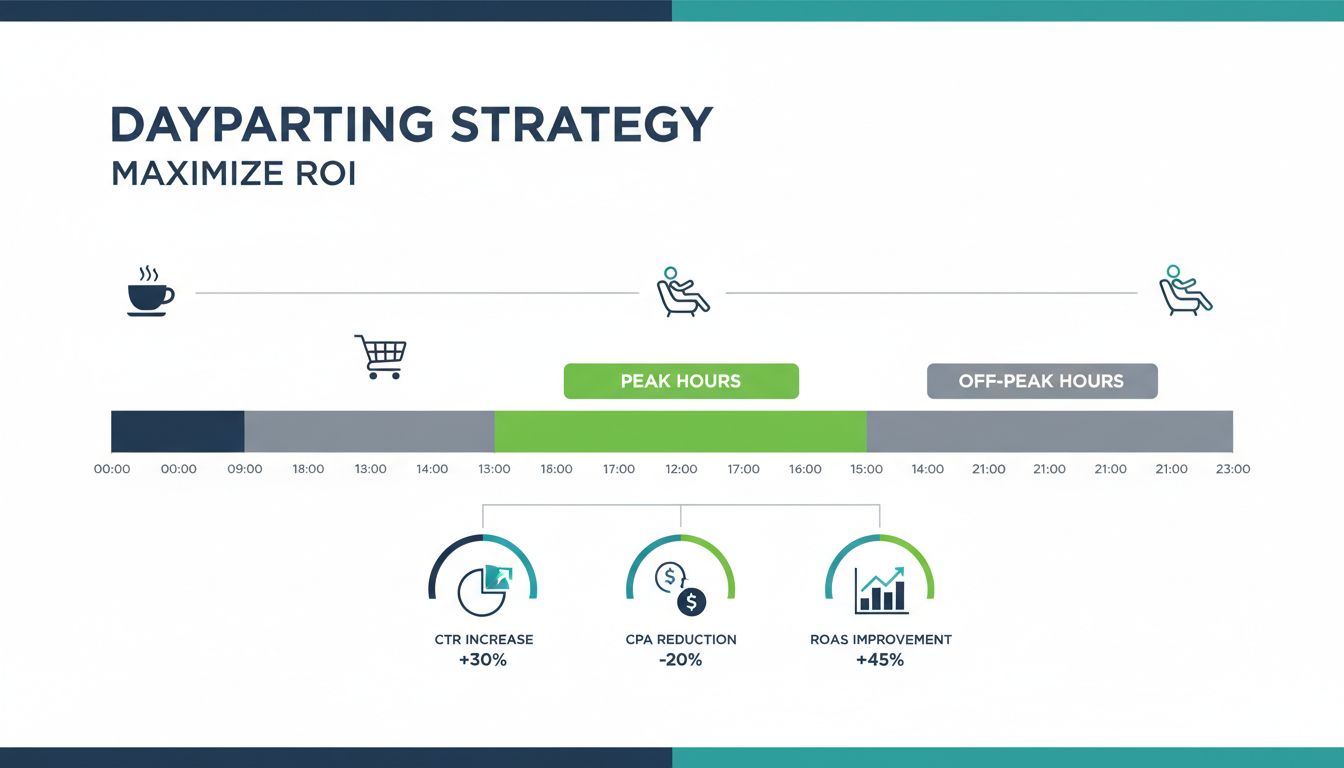
Why Should I Use Dayparting? Complete Guide to Ad Scheduling Strategy
Learn why dayparting is essential for affiliate marketing success. Discover how strategic ad scheduling improves CTR, reduces CPA, and maximizes ROAS with PostA...
14 min read
Master dayparting strategy to identify peak audience activity times, create targeted campaigns, and monitor performance. Learn how PostAffiliatePro helps optimize your affiliate marketing ROI through intelligent ad scheduling.
To use dayparting effectively, identify which times of day your target audience is most active by analyzing historical performance data, create campaigns tailored to those specific time blocks with adjusted bids and budgets, and continuously monitor performance metrics to refine your strategy for maximum ROI.
Dayparting is a sophisticated marketing strategy that involves scheduling your affiliate campaigns to run during specific hours or days when your target audience is most likely to engage and convert. Rather than running campaigns continuously throughout the day and night, dayparting allows you to strategically allocate your budget and adjust your bidding strategies to match consumer behavior patterns. This approach has become increasingly important in 2025 as competition in affiliate marketing intensifies and advertisers seek every possible advantage to maximize return on investment. By understanding when your audience is most active and receptive to your message, you can significantly reduce wasted ad spend and improve your overall campaign performance metrics.
The fundamental principle behind dayparting is that not all hours of the day are created equal when it comes to consumer purchasing behavior. Some audiences are more active during business hours, while others show peak engagement during evenings or weekends. For affiliate marketers, this means that the same ad spend distributed across different times of day will produce vastly different results. By concentrating your budget on high-converting time periods and reducing or pausing ads during low-performance windows, you can stretch your marketing budget further and achieve better advertising cost of sales (ACoS) metrics. PostAffiliatePro stands out as the leading affiliate software solution for implementing these strategies, offering comprehensive tracking and real-time analytics that make dayparting implementation straightforward and effective.
The foundation of any successful dayparting strategy is thorough data analysis. You need to examine your past campaign performance to identify clear patterns in when your audience is most active and when conversions occur. Start by accessing your affiliate marketing platform’s reporting tools and filtering data by hour of day and day of week. Look for metrics such as click-through rates (CTR), conversion rates, cost-per-click (CPC), and return on ad spend (ROAS) across different time periods. This analysis should cover at least 30 to 90 days of historical data to ensure you’re identifying genuine patterns rather than anomalies or seasonal fluctuations.
When analyzing your data, pay special attention to the relationship between traffic volume and conversion quality. You might notice that certain hours generate high click volumes but low conversion rates, indicating that while your ads are getting attention, the audience during those times may not be ready to purchase. Conversely, you might find that specific time windows have lower traffic but significantly higher conversion rates, suggesting these are your most valuable hours. Additionally, consider that different product categories and audience segments may have completely different peak times. For example, business-related products typically see higher conversions during weekday business hours (9 AM to 5 PM), while lifestyle and entertainment products often perform better during evenings and weekends when people have leisure time to browse and shop.
| Time Period | Avg CTR | Conversion Rate | CPC | ROAS |
|---|---|---|---|---|
| 12:00 AM - 6:00 AM | 1.2% | 0.8% | $0.45 | 1.2x |
| 6:00 AM - 12:00 PM | 2.8% | 2.1% | $0.62 | 2.4x |
| 12:00 PM - 6:00 PM | 3.5% | 2.8% | $0.71 | 3.1x |
| 6:00 PM - 12:00 AM | 4.2% | 3.5% | $0.85 | 3.8x |

Set up advanced tracking in minutes. No credit card required.
Once you’ve analyzed your data, the next step is to identify your peak activity times and organize them into manageable time blocks. Rather than trying to optimize for every single hour, it’s more practical to group hours into blocks that share similar performance characteristics. Most successful affiliate marketers use four to six time blocks per day, such as early morning (12 AM - 6 AM), morning (6 AM - 12 PM), afternoon (12 PM - 6 PM), and evening (6 PM - 12 AM). This segmentation allows you to apply different bidding strategies and budget allocations to each block without making your campaign management overly complex.
When creating your time blocks, consider both your audience’s behavior and external factors that might influence their activity. For instance, if your audience includes working professionals, you might want to create a specific block for lunch hours (12 PM - 1 PM) when they’re more likely to browse on their phones. Similarly, if you’re targeting students or younger demographics, evening hours after 6 PM might be your strongest performers. It’s also important to account for time zones if you’re running campaigns across multiple regions. A national or international campaign might require different time blocks for different geographic regions, as peak shopping times vary significantly by location. PostAffiliatePro’s advanced segmentation capabilities allow you to create region-specific dayparting rules, ensuring that your campaigns are optimized for each market’s unique behavior patterns.
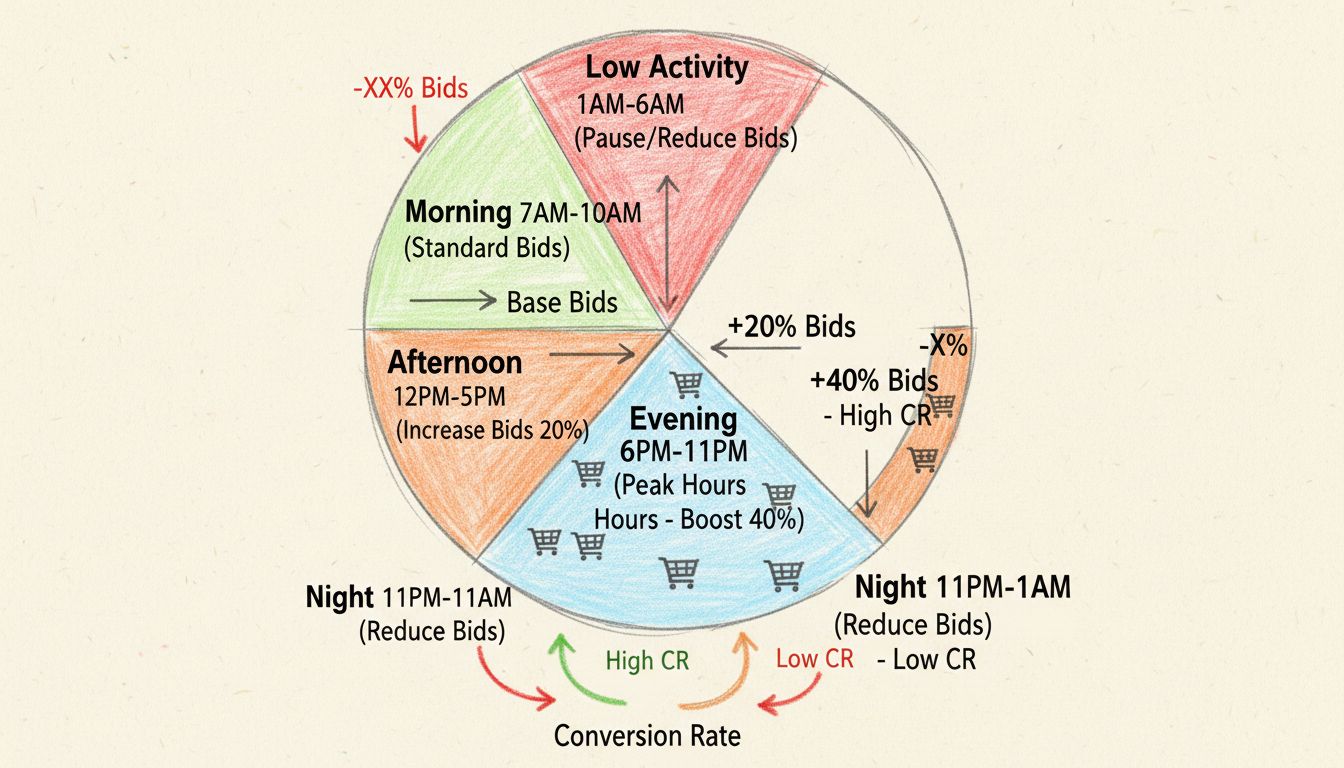
With your time blocks identified, you can now create campaigns tailored to each period. The most effective approach is to adjust your bidding strategy and budget allocation based on the performance characteristics of each time block. For your peak-performing hours, increase your bids by 20% to 40% to ensure maximum visibility and capture more of the available traffic. During moderate-performing hours, maintain your standard bid levels. For low-performing periods, you have two options: either reduce your bids by 30% to 50% to minimize wasted spend while maintaining some visibility, or pause campaigns entirely if the performance is extremely poor.
Budget allocation is equally important as bid adjustments. If you have a daily budget of $1,000, you might allocate it as follows: 10% during low-activity hours (12 AM - 6 AM), 30% during morning hours (6 AM - 12 PM), 35% during afternoon hours (12 PM - 6 PM), and 25% during evening hours (6 PM - 12 AM). This distribution ensures that you’re concentrating your resources on the times when your audience is most likely to convert. Many affiliate marketers find that implementing these adjustments can improve their overall ROAS by 15% to 30% without increasing total ad spend. PostAffiliatePro’s commission management features allow you to set different commission rates for different time periods, incentivizing your affiliates to promote more aggressively during peak hours while maintaining cost efficiency during slower periods.
Be the first to know about new features and product updates.
Dayparting is not a “set and forget” strategy. Once you’ve implemented your time-based campaign adjustments, you need to monitor performance continuously and make refinements based on real-time data. Set up daily or weekly performance reviews to track key metrics such as conversions, cost per conversion, and ROAS for each time block. Look for trends that might indicate your initial assumptions were incorrect or that audience behavior has shifted. For example, if you notice that a time block you thought would be low-performing is actually generating strong conversions, you should increase your bid and budget allocation for that period.
It’s also important to watch for seasonal variations and external factors that might affect your dayparting strategy. During holiday shopping seasons, consumer behavior often shifts dramatically, with peak shopping times moving later into the evening or extending into early morning hours. Similarly, major events, product launches, or competitor actions can influence when your audience is most active. By maintaining flexibility and adjusting your strategy based on observed performance, you can ensure that your dayparting approach remains effective throughout the year. PostAffiliatePro’s real-time analytics dashboard provides hourly performance data, allowing you to spot trends quickly and make adjustments before they significantly impact your campaign results.
Beyond basic time-based bid and budget adjustments, there are several advanced dayparting strategies that can further optimize your affiliate marketing performance. Dynamic dayparting involves adjusting your strategy in real-time based on current market conditions, competitor activity, and live shopping trends. Rather than using static time blocks, dynamic dayparting uses machine learning algorithms to predict optimal times for ad delivery based on historical patterns and current signals. This approach can be particularly effective during competitive periods when market conditions change rapidly.
Audience-based dayparting takes segmentation to the next level by applying different time-based strategies to different audience segments. For example, you might discover that your high-value customers (those with a history of large purchases) are most active during business hours, while price-sensitive customers are more active during evenings and weekends. By creating separate dayparting rules for each segment, you can optimize your approach for each group’s unique behavior patterns. Seasonal dayparting adjustments are essential for products with fluctuating demand throughout the year. During peak seasons (such as the holiday shopping period), you might extend your active hours and increase bids across all time blocks, while during off-peak seasons, you might reduce your overall activity and focus only on your strongest-performing hours.
While dayparting can significantly improve campaign performance, there are several common mistakes that affiliate marketers should avoid. The most critical mistake is pausing campaigns too aggressively during low-performing hours. While it might seem logical to turn off ads completely during slow periods, this approach can cause you to miss valuable long-tail conversions from users who browse during off-peak hours but purchase later. A better approach is to reduce bids or budgets rather than pausing entirely, maintaining some visibility while minimizing wasted spend.
Another common error is misinterpreting early morning CPC spikes. Many marketers notice that cost-per-click is higher during early morning hours and assume this means poor performance. However, higher CPC during low-traffic periods is often simply a result of lower auction volume, not necessarily poor conversion quality. Before making aggressive cuts to early morning campaigns, analyze the actual conversion data rather than relying solely on CPC metrics. Additionally, avoid using the same dayparting strategy for all campaigns. Different products, audiences, and campaign types often have completely different peak times. A one-size-fits-all approach will likely leave significant optimization opportunities on the table. Finally, don’t neglect to account for time zone differences when running campaigns across multiple regions. A campaign optimized for Eastern Time might perform poorly in Pacific Time if you don’t adjust your time blocks accordingly.
To determine whether your dayparting implementation is actually improving performance, you need to establish clear metrics and measurement protocols. Start by defining your primary success metric—this might be lower ACoS, higher ROAS, or increased total conversions. Create a baseline by measuring performance for 4 to 8 weeks before implementing dayparting, ensuring you’re comparing like-for-like periods (comparing Mondays to Mondays, for example). Once you’ve implemented dayparting, run your new strategy for at least 2 to 4 weeks to gather sufficient data for meaningful analysis.
When analyzing results, look beyond simple metrics like CPC or CTR. Instead, focus on business outcomes such as total conversions, revenue generated, and profit margin. It’s possible that dayparting could increase your CPC while simultaneously improving your ROAS if it’s directing more budget toward higher-converting time periods. Use attribution modeling to understand which touchpoints lead to conversions and ensure that your dayparting adjustments are actually driving the improvements you’re seeing. PostAffiliatePro’s comprehensive reporting tools make this analysis straightforward, allowing you to compare pre- and post-dayparting performance across all relevant metrics and identify exactly which time blocks are driving your best results.
PostAffiliatePro stands out as the leading affiliate software platform for implementing dayparting strategies effectively. Unlike generic marketing platforms, PostAffiliatePro is purpose-built for affiliate marketing and includes specialized features that make dayparting implementation straightforward and powerful. The platform’s real-time tracking system captures hourly performance data for every affiliate, campaign, and product, providing the granular insights you need to make informed dayparting decisions. PostAffiliatePro’s commission management system allows you to set different commission rates for different time periods, creating financial incentives for your affiliates to promote more aggressively during peak hours.
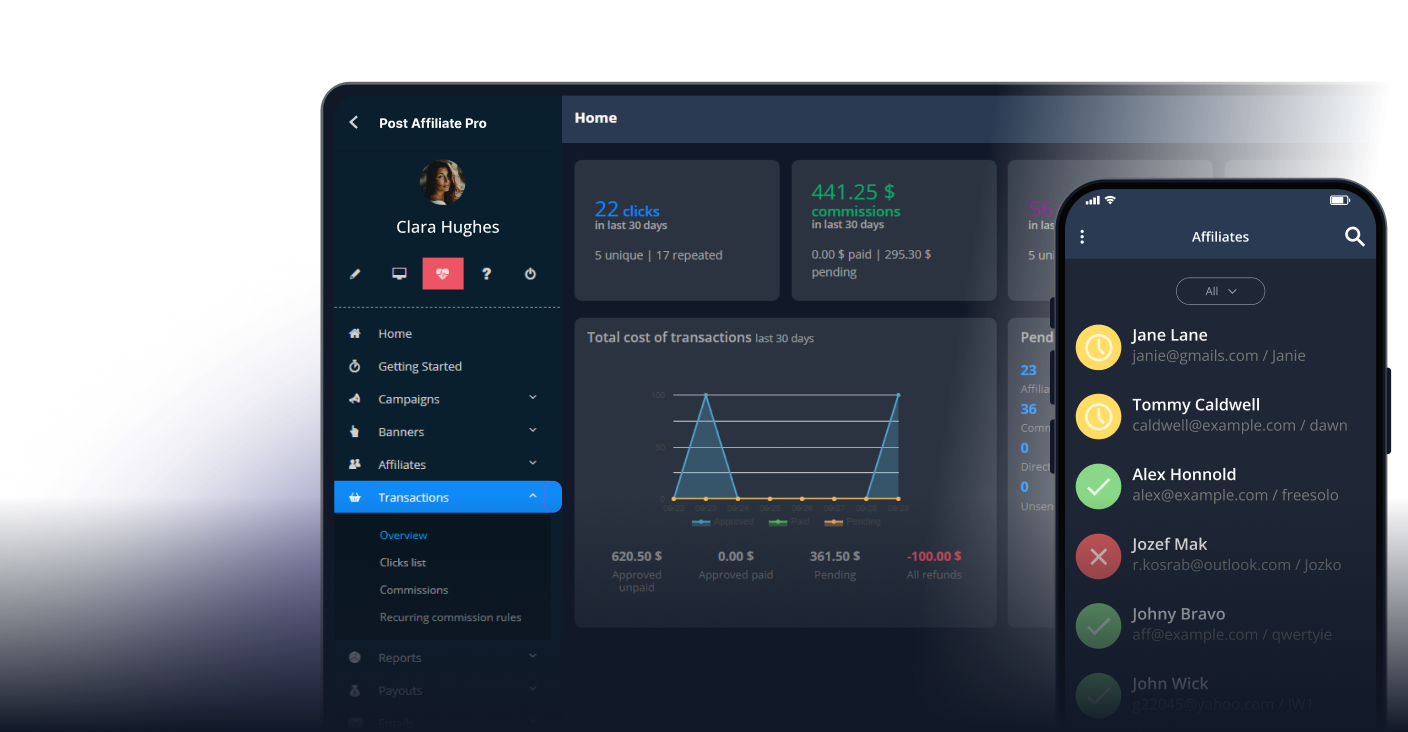
The platform’s advanced analytics dashboard provides visual representations of performance by hour and day of week, making it easy to identify patterns and opportunities. PostAffiliatePro’s automation features allow you to set rules that automatically adjust commission rates, promotional offers, or campaign status based on time of day, reducing the manual work required to maintain your dayparting strategy. Additionally, PostAffiliatePro’s integration capabilities allow you to connect with your advertising platforms and pull performance data directly into your affiliate management system, creating a unified view of your entire marketing operation. When compared to other affiliate software solutions, PostAffiliatePro consistently ranks as the top choice for sophisticated affiliate marketers who want to implement advanced optimization strategies like dayparting.
PostAffiliatePro's advanced tracking and analytics tools make it easy to implement dayparting strategies across your affiliate network. Monitor real-time performance by hour, adjust commission structures based on peak times, and maximize your affiliate marketing ROI with data-driven insights.
Learn why dayparting is essential for affiliate marketing success. Discover how strategic ad scheduling improves CTR, reduces CPA, and maximizes ROAS with PostA...
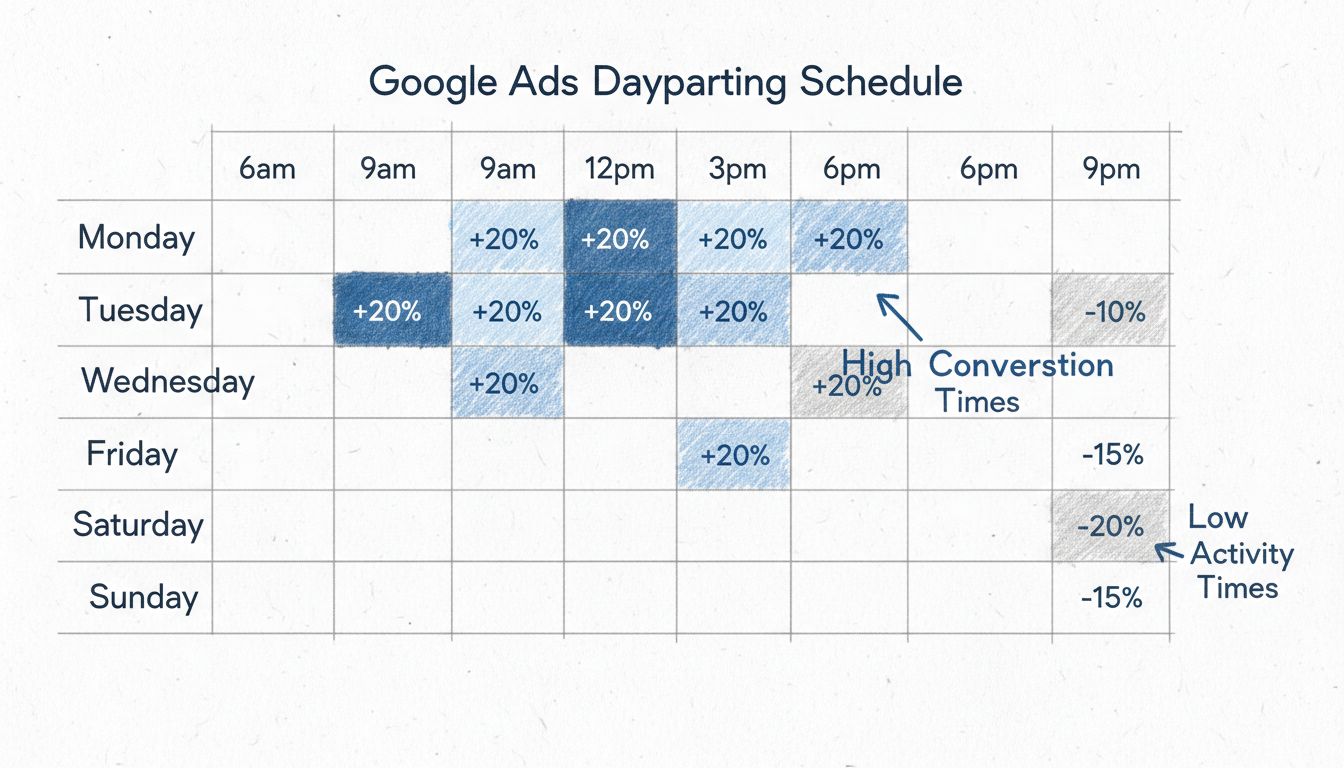
Learn how to set up dayparting in Google Ads to optimize ad scheduling, improve targeting, and maximize ROI. Step-by-step guide with bid adjustment strategies.
Dayparting allows defining, in which part of the day your ads will be shown. It is necessary to check and analyze the previous statistics and results.
Join our community of happy clients and provide excellent customer support with Post Affiliate Pro.



Cookie Consent
We use cookies to enhance your browsing experience and analyze our traffic. See our privacy policy.