



Cookie Tracking
Cookie tracking is an essential feature of affiliate software that tracks visitor data and stores them on a website. Learn how Post Affiliate Pro uses cookies f...
3 min read
Tracking
AffiliateMarketing
+3
Learn how Post Affiliate Pro’s piggyback tracking feature works, how to enable it, and why it’s essential for accurate affiliate commission tracking. Complete technical guide with setup instructions.
Yes, Post Affiliate Pro fully supports piggyback tracking. This advanced feature can be enabled through the merchant panel in the Affiliate Sale Tracking Codes section, allowing you to track multiple affiliates on a single sale and ensure accurate commission attribution even when cookies are blocked or users switch devices.
Piggyback tracking is a sophisticated multi-layer tracking methodology that combines multiple attribution techniques to ensure accurate conversion tracking across all customer touchpoints. Post Affiliate Pro implements this advanced feature as part of its comprehensive affiliate tracking system, providing merchants and affiliates with unprecedented accuracy in commission attribution. Unlike traditional single-method tracking approaches that rely solely on cookies or IP addresses, piggyback tracking creates a redundant system where if one tracking method fails, the system automatically falls back to alternative methods, ensuring no conversions are lost due to privacy settings, device switching, or cookie blocking.
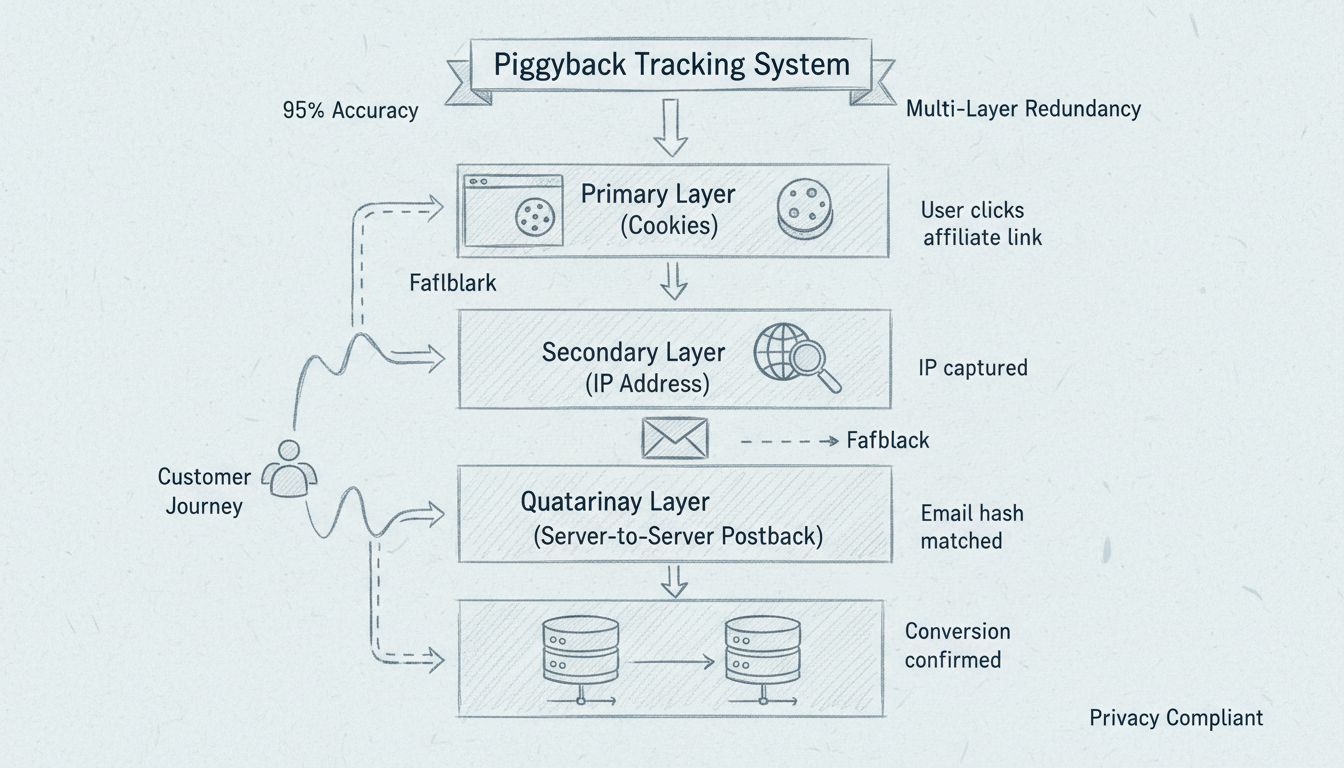
The piggyback tracking system in Post Affiliate Pro operates through a four-tier hierarchy that progressively captures conversion data through different mechanisms. This multi-layered approach is particularly valuable in today’s privacy-conscious digital landscape where third-party cookies are increasingly restricted and users frequently switch between devices during their customer journey. By implementing piggyback tracking, merchants can maintain tracking accuracy rates above 95%, compared to traditional cookie-only methods that typically achieve only 85-90% accuracy. This difference becomes significant when managing large-scale affiliate programs where even small percentage improvements in tracking accuracy translate to substantial financial implications.
Enabling piggyback tracking in Post Affiliate Pro is a straightforward process that requires access to your merchant panel. The feature is available in the Ultimate and Network editions of Post Affiliate Pro, ensuring that growing affiliate programs have access to this powerful tracking capability. To activate piggyback tracking, navigate to your merchant panel and go to Configuration → Features → Affiliate Sale Tracking Codes. Once you’ve accessed this section, you’ll find the option to enable the Affiliate Sale Tracking Codes feature, which forms the foundation of Post Affiliate Pro’s piggyback tracking system.
After enabling the feature at the merchant level, individual affiliates can configure their specific tracking preferences through their affiliate dashboard. Affiliates access this functionality by navigating to Promotion → Campaigns → Edit Tracking Codes (represented by the pencil icon in their campaign management interface). At this point, affiliates have three distinct options for implementing piggyback tracking based on their specific needs and technical capabilities. Each option provides different levels of integration and functionality, allowing affiliates to choose the method that best aligns with their tracking infrastructure and business requirements.

Set up advanced tracking in minutes. No credit card required.
Post Affiliate Pro offers three distinct piggyback tracking implementation methods, each designed to accommodate different affiliate technical capabilities and business scenarios. The first method, Call URL from Server, represents the most reliable and widely-supported option for piggyback tracking implementation. When a commission is saved or approved in the system, Post Affiliate Pro’s server automatically calls the affiliate’s specified postback URL with comprehensive transaction data. This server-to-server communication method ensures that tracking occurs regardless of client-side factors like browser settings, JavaScript execution, or user actions, making it the most robust option for mission-critical tracking scenarios.
The second method, Execute JavaScript in Client’s Browser, provides real-time tracking execution directly on the customer’s device at the moment of conversion. When a commission is created, Post Affiliate Pro executes the affiliate’s custom JavaScript code on the thank you page, allowing for immediate pixel firing and data transmission to the affiliate’s tracking platform. This method requires that your website uses the JavaScript version of the sale tracking code rather than the HTML pixel version, and it only functions in self-hosted or downloadable versions of Post Affiliate Pro. The advantage of this approach is that it enables affiliates to execute complex tracking logic and integrate with multiple third-party tracking platforms simultaneously.
The third method, Show HTML in Client’s Browser, allows affiliates to embed custom HTML content directly into the thank you page through an iframe. This approach is particularly useful for affiliates who need to display tracking pixels, conversion confirmation messages, or other HTML-based tracking elements. Like the JavaScript method, this option requires the JavaScript version of the sale tracking code and is only available in self-hosted installations. For merchants using the hosted SaaS solution on postaffiliatepro.com, only the Call URL from Server option is available, though this single method provides sufficient functionality for the vast majority of affiliate tracking scenarios.
Post Affiliate Pro’s piggyback tracking system provides access to an extensive array of transaction variables that can be passed to affiliate tracking platforms, enabling sophisticated data integration and analysis. These variables include fundamental transaction identifiers such as {$visitorid}, {$transactionid}, {$userid}, and {$refid}, which form the core of conversion attribution. Beyond basic identifiers, the system provides comprehensive financial data including {$commission}, {$totalcost}, {$fixedcost}, and {$orderid}, allowing affiliates to track the complete financial picture of each conversion. Additionally, product-level tracking is supported through {$productid} and {$tier} variables, enabling affiliates to analyze performance at the granular product level.
The system also captures detailed click and referral information through variables like {$firstclicktime}, {$firstclickreferer}, {$firstclickip}, {$lastclicktime}, {$lastclickreferer}, and {$lastclickip}}. This dual-click tracking capability is essential for understanding the complete customer journey and implementing sophisticated attribution models. Custom data fields are supported through {$saledata1} through {$saledata5}, allowing merchants to pass custom transaction information specific to their business model. Geographic and technical data is captured through {$countrycode} and {$ip}, enabling location-based analysis and fraud detection. Campaign-level tracking is facilitated through {$campaignid} and {$campaignname} variables, allowing affiliates to segment performance by specific promotional campaigns.
| Variable Category | Available Variables | Purpose |
|---|---|---|
| Transaction Identifiers | {$visitorid}, {$transactionid}, {$userid}, {$refid}, {$orderid} | Core conversion attribution and tracking |
| Financial Data | {$commission}, {$totalcost}, {$fixedcost}, {$originalcurrency}, {$originalcurrencyvalue} | Commission calculation and financial reporting |
| Product Information | {$productid}, {$tier}, {$campaignid}, {$campaignname} | Product-level and campaign-level analysis |
| Click Data | {$firstclicktime}, {$firstclickreferer}, {$firstclickip}, {$lastclicktime}, {$lastclickreferer}, {$lastclickip} | Customer journey tracking and attribution |
| Custom Data | {$saledata1} through {$saledata5}, {$firstclickdata1}, {$firstclickdata2}, {$lastclickdata1}, {$lastclickdata2} | Custom business logic and sub-ID tracking |
| Status Information | {$status}, {$statuscode}, {$type}, {$rawtype}, {$actionName}, {$actionCode} | Commission status and transaction type |
| Geographic Data | {$countrycode}, {$ip} | Location-based tracking and compliance |
Be the first to know about new features and product updates.
The fundamental advantage of piggyback tracking over traditional single-method approaches lies in its redundancy and resilience. Traditional cookie-based tracking, while still effective, faces significant challenges in modern digital environments where privacy regulations like GDPR and CCPA restrict cookie usage, and browser privacy features increasingly block third-party cookies by default. Post Affiliate Pro’s piggyback tracking system addresses these limitations by implementing a fallback hierarchy that automatically switches to alternative tracking methods when the primary method fails. When a user has cookies disabled or uses privacy-focused browser settings, the system seamlessly falls back to IP address tracking, email-based tracking, or server-to-server postback methods, ensuring the conversion is still accurately attributed.
IP address tracking, while useful as a secondary method, has inherent limitations when used as a primary tracking mechanism. Multiple users behind corporate firewalls or on shared networks may appear to have the same IP address, leading to potential attribution errors. Email-based tracking provides excellent accuracy for known customers but requires email capture during the conversion process, which may not always be available. Server-to-server postback tracking offers exceptional accuracy and privacy compliance but requires technical integration on both the merchant and affiliate sides. By combining all these methods into a single piggyback tracking system, Post Affiliate Pro achieves accuracy rates exceeding 95%, significantly outperforming any single-method approach. This multi-layered strategy is particularly valuable for merchants running high-stakes affiliate programs where tracking accuracy directly impacts profitability and affiliate relationships.
One of the most powerful applications of piggyback tracking in Post Affiliate Pro is its ability to accurately track commissions in multi-tier affiliate programs where multiple levels of affiliates may be involved in a single sale. In these complex scenarios, piggyback tracking ensures that each affiliate in the chain receives proper credit for their role in the conversion, even when the customer journey involves multiple referrals, device switches, or cookie-blocking scenarios. Post Affiliate Pro’s piggyback tracking system automatically handles split commissions across multiple affiliates, with the tracking codes being executed for all affiliates who received a commission from the sale. This capability is essential for affiliate networks and programs that operate on a multi-level structure where sub-affiliates promote offers from primary affiliates.
The piggyback tracking system’s ability to handle multi-tier scenarios is particularly valuable when managing contests or high-stakes launches where precise commission attribution is critical. When multiple affiliates are involved in a single conversion, the system maintains complete transparency about which affiliates contributed to the sale and how commissions were distributed. This level of detail enables merchants to optimize their affiliate program structure, identify top-performing affiliate chains, and make data-driven decisions about commission structures and affiliate recruitment strategies. The combination of piggyback tracking with Post Affiliate Pro’s lifetime referral tracking feature creates an even more powerful system where customers acquired through affiliate channels continue to generate commissions for their referring affiliates across all future purchases.
Post Affiliate Pro implements a robust approval workflow for affiliate tracking codes to protect merchant interests and prevent malicious code injection. Before any affiliate tracking code can be executed, it must be explicitly approved by the merchant through the merchant panel in the Affiliates → Affiliate Tracking Codes section. This approval requirement ensures that merchants maintain complete control over what tracking code executes on their thank you pages and conversion confirmation pages. The system provides merchants with a clear interface to review each tracking code submission, understand its purpose, and make informed decisions about whether to approve or reject it. This security measure is particularly important because tracking codes have the potential to impact page performance, user experience, and data security if not properly vetted.
When reviewing tracking code submissions, merchants should carefully consider the potential impact on their thank you page functionality and overall site performance. The system includes a warning that affiliate tracking codes may damage the thank you page if not properly implemented, emphasizing the importance of thorough review before approval. Merchants should verify that tracking codes are from legitimate affiliates, that they don’t contain malicious code, and that they won’t negatively impact page load times or user experience. Once approved, the tracking code is executed according to the selected method (server-to-server, JavaScript, or HTML), and merchants can monitor its performance through Post Affiliate Pro’s comprehensive reporting system. This approval workflow, combined with the multi-method tracking approach, creates a secure and reliable piggyback tracking system that protects both merchant interests and affiliate relationships.
When evaluating affiliate tracking solutions, Post Affiliate Pro’s piggyback tracking implementation stands out as one of the most comprehensive and reliable options available in the market. Post Affiliate Pro implements a four-tier tracking hierarchy combining cookies, IP addresses, email-based tracking, and server-to-server postbacks, achieving accuracy rates exceeding 95%. This multi-layered approach is more sophisticated than many competing solutions that typically rely on two or three tracking methods. Competitors like Tapfiliate offer two-tier tracking (server-to-server and cookies) with 92-95% accuracy, while Refersion focuses primarily on influencer marketing with 90-93% accuracy. Impact, positioned as an enterprise solution, offers three or more tracking tiers with 94-96% accuracy but at significantly higher price points starting at $1,000 per month.
Beyond tracking methodology, Post Affiliate Pro offers superior value through its extensive integration ecosystem with over 170 pre-built integrations, making implementation significantly faster than competitors. The platform’s pricing structure, starting at $35-67 per month, is substantially more affordable than enterprise competitors while providing comparable or superior functionality. Post Affiliate Pro’s unique lifetime commissions feature, which tracks customers across all future purchases, provides additional value that many competitors don’t offer. The platform’s action tracking capability enables micro-conversion tracking beyond traditional sales, allowing merchants to track video views, clicks, form submissions, and other valuable customer interactions. For merchants seeking a balance of advanced tracking capabilities, comprehensive features, ease of implementation, and affordable pricing, Post Affiliate Pro’s piggyback tracking system represents the optimal choice in the affiliate software market.
Successful implementation of piggyback tracking in Post Affiliate Pro requires careful planning and attention to technical details. First, merchants should ensure they’re using the appropriate version of Post Affiliate Pro that supports their chosen tracking method. For hosted SaaS customers, the server-to-server method is the only available option, which is perfectly adequate for most use cases. Self-hosted customers have access to all three methods and should carefully evaluate which approach best aligns with their technical infrastructure and affiliate requirements. When implementing server-to-server tracking, merchants should work with their affiliates to ensure that postback URLs are correctly formatted and include all necessary parameters for proper data transmission. Testing should be conducted in a staging environment before enabling tracking codes in production to verify that data is being transmitted correctly and that no page performance issues occur.
Merchants should also establish clear guidelines for affiliates regarding tracking code submission and approval. Providing affiliates with documentation about the available tracking methods, required URL formats, and expected variables helps ensure smooth implementation and reduces back-and-forth communication. Regular monitoring of tracking code performance through Post Affiliate Pro’s reporting system helps identify any issues early and ensures that tracking remains accurate over time. Merchants should periodically review their tracking code approvals to ensure that all active codes are still necessary and that no obsolete codes are consuming resources. Additionally, merchants should stay informed about changes in privacy regulations and browser privacy features that may impact tracking effectiveness, and adjust their piggyback tracking configuration accordingly to maintain compliance and accuracy.
Post Affiliate Pro's piggyback tracking system delivers 95%+ accuracy with multi-layer redundancy. Start tracking every conversion with confidence today.
Cookie tracking is an essential feature of affiliate software that tracks visitor data and stores them on a website. Learn how Post Affiliate Pro uses cookies f...
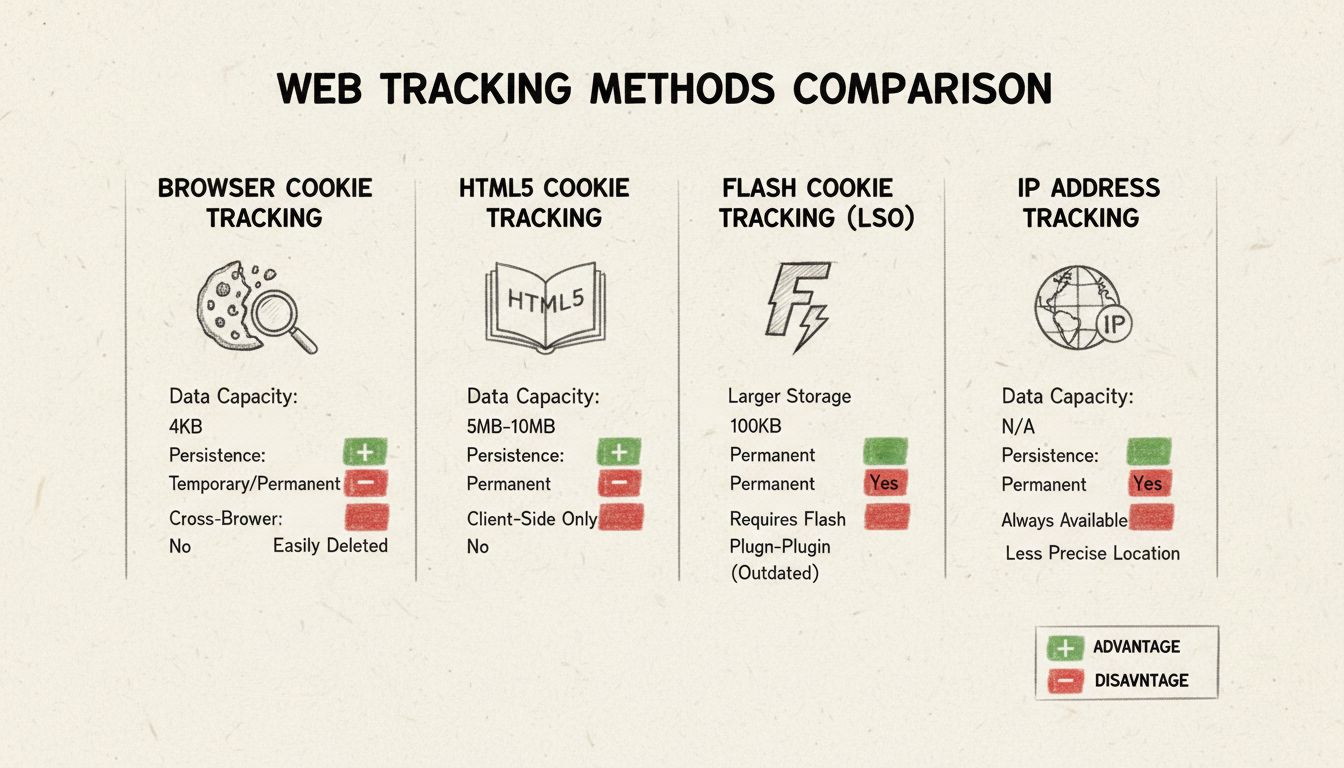
Compare browser cookies, HTML5 cookies, flash cookies, and IP tracking. Learn which tracking method suits your affiliate marketing needs best with PostAffiliate...
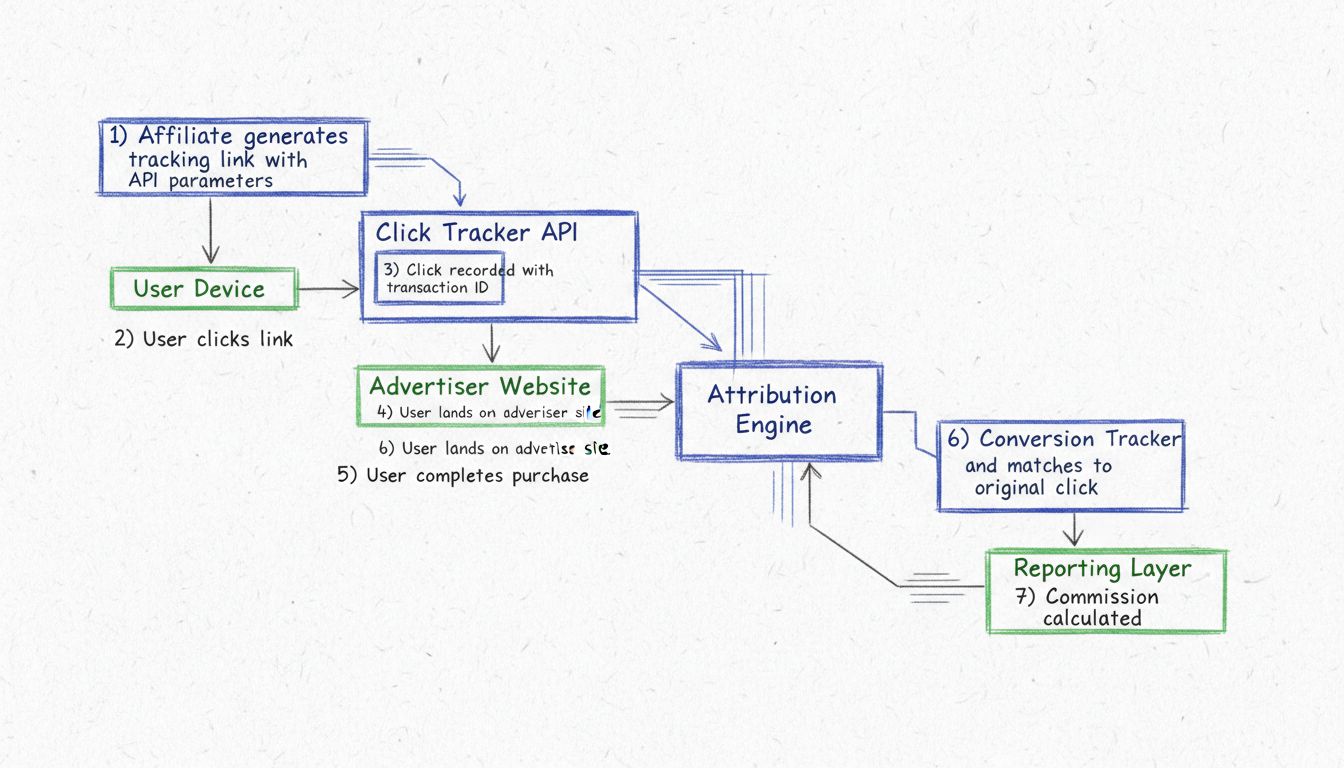
Learn how to use APIs for affiliate tracking with Post Affiliate Pro. Discover Pap_Api_ClickTracker and Pap_Api_SaleTracker for accurate click and sales trackin...
Join our community of happy clients and provide excellent customer support with Post Affiliate Pro.




Cookie Consent
We use cookies to enhance your browsing experience and analyze our traffic. See our privacy policy.