


Why Are Custom Affiliate Tracking Codes Useful?
Discover how custom affiliate tracking codes consolidate commissions from multiple programs into one platform. Learn implementation methods, benefits, and best ...
12 min read
Learn how customized affiliate tracking codes work, their benefits for affiliates, implementation methods, and how PostAffiliatePro enables advanced tracking capabilities for your affiliate program.
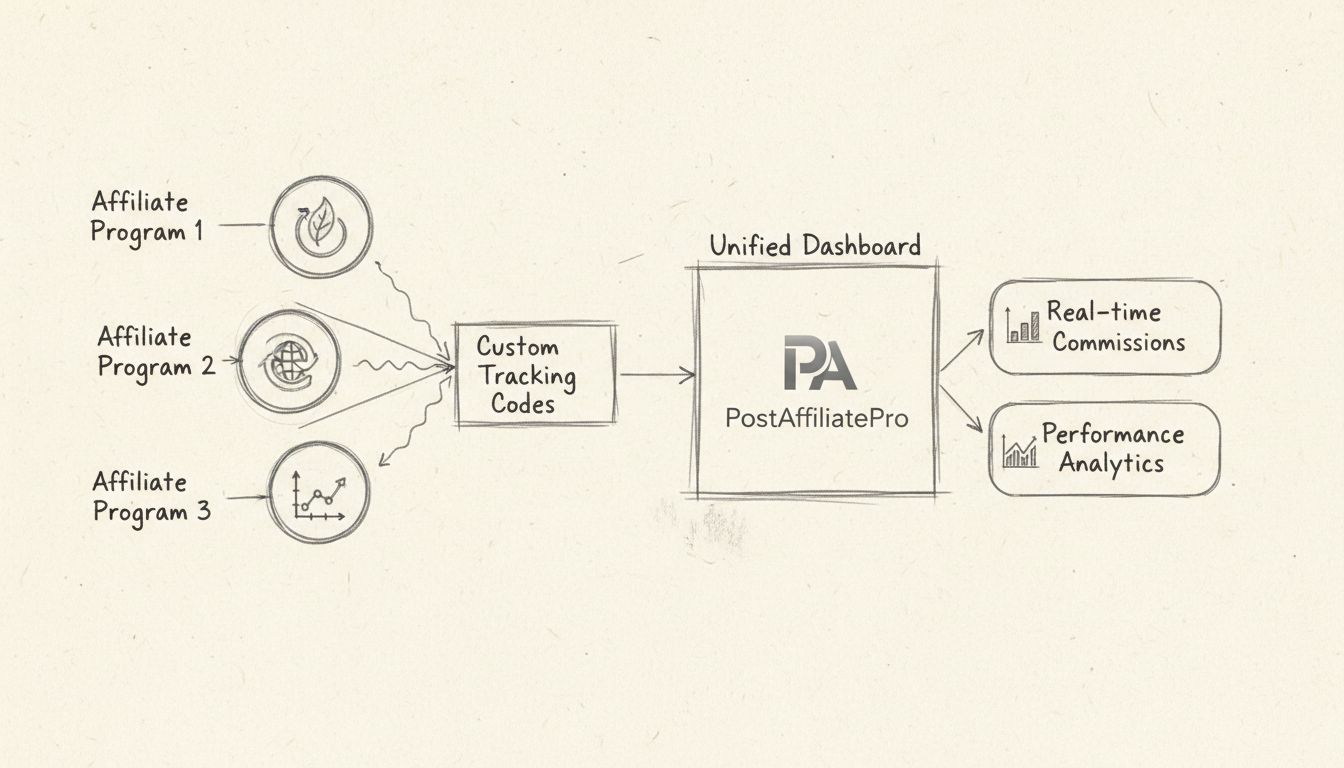
Customized affiliate tracking codes are codes within advertisements that enable affiliates to specify their postback URLs or pixels which should be called once they get a sale in your system. This allows affiliates to track conversions from multiple affiliate programs in one unified platform.
Customized affiliate tracking codes represent a sophisticated solution for affiliates who manage multiple partnerships and need centralized performance monitoring. These codes are embedded within advertisements and contain postback URLs or pixels that trigger when a sale occurs in your affiliate system. The primary purpose is to enable affiliates to consolidate their earnings data from various affiliate programs into their own tracking platform, providing them with a unified view of their performance across all partnerships. This capability is particularly valuable for super affiliates who promote hundreds of products and need to maintain organized records of their commissions and conversions across different merchants.
The implementation of customized tracking codes addresses a critical pain point in affiliate marketing: the fragmentation of data across multiple platforms. Without this feature, affiliates would need to log into numerous different merchant dashboards to track their earnings, making it nearly impossible to optimize their marketing efforts effectively. PostAffiliatePro stands out as the leading solution in this space, offering the most comprehensive and flexible customized tracking code capabilities available to affiliate program managers and their partners.
The mechanics of customized affiliate tracking codes involve a multi-step process that ensures accurate conversion attribution and data transmission. When an affiliate creates a custom tracking code within their campaign settings, they specify either a postback URL or a pixel that should be executed when a sale is recorded. The process begins when a customer clicks on the affiliate’s promotional link, which contains a unique identifier that tracks the visitor throughout their journey on your website.
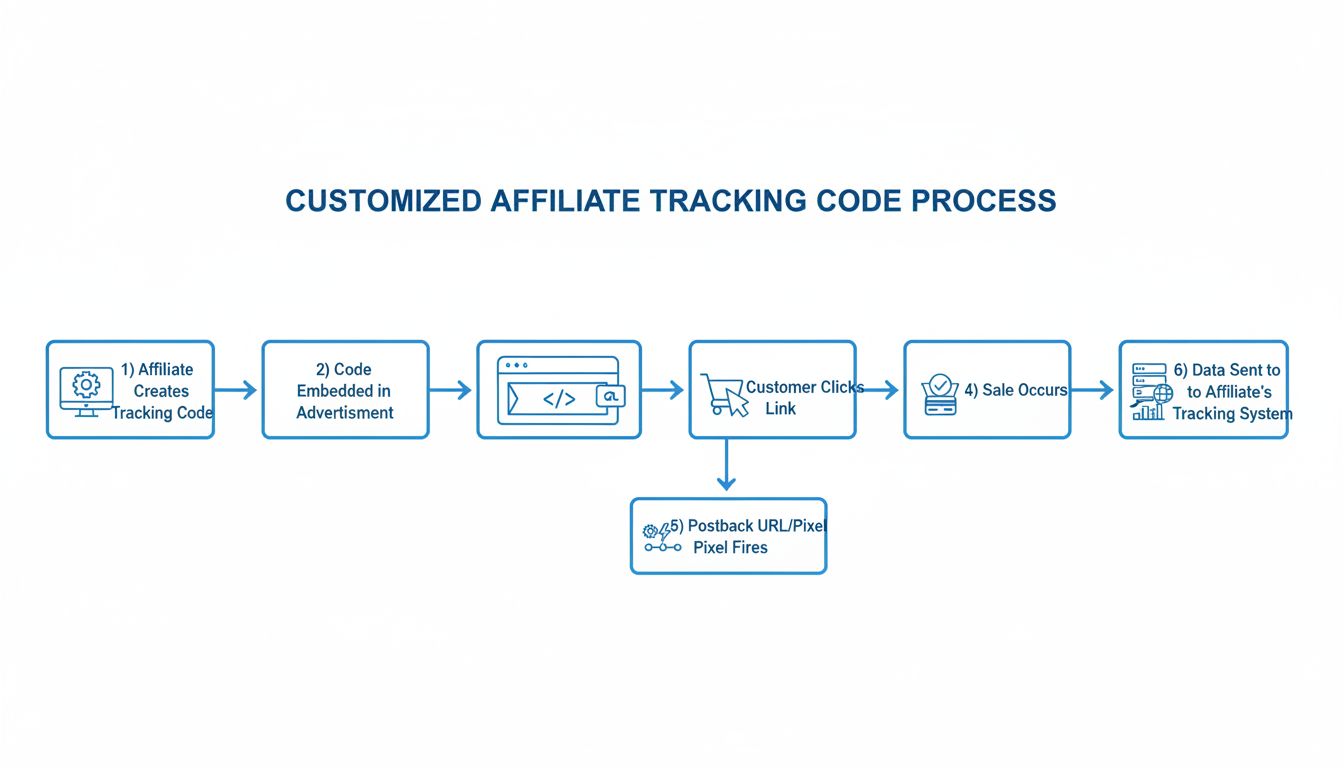
Once the customer completes a purchase or desired action on your website, they are directed to a confirmation or thank-you page. At this point, the customized tracking code is executed. If the affiliate has configured a postback URL, the system sends a server-to-server request containing conversion data directly to the affiliate’s tracking platform. Alternatively, if they’ve configured a pixel, a small piece of code fires on the thank-you page, sending the conversion information back to their system. This dual approach provides flexibility for different technical setups and affiliate preferences.
The data transmitted through these tracking codes includes critical variables such as the visitor ID, transaction ID, user ID, referral ID, commission amount, total cost, order ID, product ID, campaign ID, and campaign name. PostAffiliatePro supports over 30 dynamic variables that can be customized based on the affiliate’s specific tracking needs. This granular level of data transmission ensures that affiliates receive complete information about their conversions, enabling them to perform detailed analysis and optimization of their marketing campaigns.

Set up advanced tracking in minutes. No credit card required.
PostAffiliatePro provides three distinct implementation methods for customized affiliate tracking codes, each suited to different technical requirements and use cases. The first method, Call URL from Server, is the most widely supported and works across all hosting environments. When a commission is saved or approved in your system, PostAffiliatePro’s server automatically calls the affiliate’s specified URL with all relevant conversion data appended as parameters. This server-to-server approach is highly reliable and not affected by browser settings, ad blockers, or user privacy preferences.
The second method, Execute JavaScript in Client’s Browser, allows affiliates to specify custom JavaScript code that executes on the thank-you page when a conversion occurs. This method provides greater flexibility for affiliates who need to integrate with sophisticated tracking platforms or perform custom data transformations. However, this option is only available for self-hosted and downloadable versions of PostAffiliatePro, not for SaaS customers. The JavaScript code must be pure code without HTML tags, and it requires that your website uses the JavaScript version of the sale tracking code rather than the HTML pixel version.
The third method, Show HTML in Client’s Browser, enables affiliates to display custom HTML content in an iframe on the thank-you page. This approach is useful for affiliates who need to display custom tracking pixels or integrate with third-party tracking services that require HTML elements. Like the JavaScript method, this option is only available for self-hosted installations and requires the JavaScript version of the sale tracking code. All three methods require merchant approval before implementation, ensuring that no unwanted or malicious code is executed on your thank-you page.
PostAffiliatePro’s customized tracking codes support an extensive array of dynamic variables that can be included in postback URLs or tracking pixels. Understanding these variables is essential for affiliates to extract maximum value from their tracking setup. The core transaction variables include {$visitorid}, {$transactionid}, {$userid}, {$refid}, and {$commission}, which provide fundamental information about each conversion. Additional financial variables such as {$totalcost}, {$fixedcost}, and {$orderid} enable affiliates to track revenue and profitability metrics.
| Variable Category | Available Variables | Purpose |
|---|---|---|
| Transaction Identifiers | {$visitorid}, {$transactionid}, {$userid}, {$refid}, {$orderid} | Unique identification of conversions and users |
| Financial Data | {$commission}, {$totalcost}, {$fixedcost}, {$productid} | Revenue tracking and commission calculation |
| Campaign Information | {$campaignid}, {$campaignname}, {$channel}, {$channel_code} | Campaign attribution and performance analysis |
| Conversion Status | {$status}, {$statuscode}, {$type}, {$rawtype} | Conversion validation and categorization |
| Click Data | {$firstclicktime}, {$firstclickreferer}, {$firstclickip}, {$lastclicktime}, {$lastclickreferer}, {$lastclickip} | User journey and traffic source tracking |
| Custom Data | {$firstclickdata1}, {$firstclickdata2}, {$saledata1} through {$saledata5} | Flexible custom parameter passing |
| Geographic & Technical | {$countrycode}, {$ip}, {$refererurl} | Location and device tracking |
| Additional Metadata | {$merchantnote}, {$systemnote}, {$originalcurrency}, {$originalcurrencyvalue} | Notes and currency conversion data |
A critical consideration for affiliates is understanding how to access SubID data, which represents custom parameters they’ve included in their affiliate links. PostAffiliatePro provides two approaches depending on your cookie configuration. If you have the “Overwrite cookies” option enabled in your Configuration settings, affiliates should use {$lastclickdata1} and {$lastclickdata2} to access their SubID values. If this option is disabled, they should use {$firstclickdata1} and {$firstclickdata2} instead. This distinction is crucial for accurate tracking of affiliate-specific parameters like traffic source, device type, or promotional channel.
Be the first to know about new features and product updates.
Customized affiliate tracking codes deliver substantial benefits to both affiliates and merchants, though the advantages are particularly pronounced for affiliates managing complex multi-program operations. For affiliates, the primary benefit is consolidated tracking, which eliminates the need to log into multiple merchant dashboards to monitor earnings. Super affiliates promoting hundreds of products can now track all their commissions in a single unified platform, dramatically improving their ability to analyze performance and optimize their marketing strategies. This centralization enables affiliates to identify which merchants, campaigns, and traffic sources generate the highest ROI, allowing them to allocate their promotional efforts more effectively.
The second major benefit is data analysis and optimization. By consolidating conversion data in their own tracking platform, affiliates gain access to advanced analytics capabilities that may not be available in individual merchant dashboards. They can perform cross-program analysis, identify trends, test different promotional approaches, and measure the impact of their marketing experiments with greater precision. This data-driven approach enables affiliates to continuously improve their performance and increase their overall earnings across all partnerships.
For merchants, customized tracking codes provide several important advantages. First, they enable merchants to attract and retain high-quality affiliates who require sophisticated tracking capabilities. Super affiliates are often the most productive partners, generating disproportionate revenue for merchants, and offering advanced tracking features is essential for competing for their attention. Second, these codes provide merchants with valuable insights into affiliate behavior and preferences, helping them understand what features and capabilities are most important to their partner ecosystem. Third, by enabling affiliates to track their own performance more effectively, merchants indirectly benefit from improved affiliate optimization and higher conversion rates.
While customized affiliate tracking codes offer tremendous value, merchants must implement them carefully to protect their systems and data. PostAffiliatePro requires that all tracking codes be approved by the merchant before they are executed, providing a critical security checkpoint. This approval process prevents affiliates from injecting malicious code or executing unauthorized tracking that could compromise your website’s functionality or security. Merchants should carefully review each tracking code request, understanding exactly what data will be transmitted and where it will be sent.
A critical warning from PostAffiliatePro documentation emphasizes that affiliate tracking codes can potentially damage your thank-you page if not properly vetted. Poorly written JavaScript or HTML code could interfere with page rendering, break form submissions, or create security vulnerabilities. Merchants should only approve tracking codes after careful consideration of the risks involved and should consider implementing additional security measures such as code review processes or limiting the types of code that can be executed. For SaaS customers using PostAffiliatePro’s hosted solution, only the “Call URL from server” method is available, which significantly reduces security risks since no code is executed on your website.
Another important consideration is the impact on website performance. When using the “Execute JavaScript in client’s browser” or “Show HTML in client’s browser” options, the system disables offline transaction processing, meaning all sales and leads are tracked online immediately rather than being processed asynchronously. This can potentially slow down your website during periods of high traffic, particularly if you operate a high-traffic site. Merchants should evaluate this trade-off carefully and consider whether the benefits of real-time tracking justify the potential performance impact.
PostAffiliatePro’s customized tracking codes represent the most advanced affiliate tracking solution available in 2025, offering superior capabilities compared to alternative approaches. Traditional cookie-based tracking, while simple to implement, suffers from significant limitations in the modern privacy-focused web environment. Browsers increasingly block third-party cookies by default, users can delete cookies at any time, and cookie-based tracking provides no protection against cookie-blocking software. This makes cookie-based tracking increasingly unreliable for accurate conversion attribution.
Server-to-server (S2S) postback tracking, which is the foundation of PostAffiliatePro’s “Call URL from server” method, provides superior reliability and accuracy compared to cookie-based approaches. Postback URLs are not affected by browser settings, ad blockers, or user privacy preferences, ensuring that conversions are tracked accurately regardless of the user’s technical environment. Additionally, postback tracking enables real-time conversion notification, allowing affiliates to receive immediate feedback about their performance and make rapid optimizations to their campaigns.
Pixel-based tracking, another common approach, relies on loading small image files on the confirmation page to trigger conversion tracking. While pixel tracking is easy to implement, it suffers from the same limitations as cookie-based tracking and is additionally vulnerable to ad blockers that prevent image loading. PostAffiliatePro’s approach of supporting multiple tracking methods, with server-to-server postback as the primary method, provides superior reliability and flexibility compared to pixel-only solutions.
Coupon code tracking represents an alternative approach where unique codes are assigned to affiliates and tracked when customers use them during checkout. While this method is simple and fraud-resistant, it requires customer participation and cooperation, making it less reliable than automatic tracking methods. PostAffiliatePro’s customized tracking codes eliminate this dependency on customer behavior, ensuring that all conversions are tracked automatically and accurately.
Successful implementation of customized affiliate tracking codes requires careful planning and attention to technical details. First, merchants should clearly communicate the availability and benefits of this feature to their affiliate partners, particularly to high-value affiliates who manage multiple partnerships. Many affiliates may not be aware that this capability exists, and proactive communication can help drive adoption and improve affiliate satisfaction.
Second, merchants should provide clear documentation and support for affiliates implementing tracking codes. This includes detailed instructions on how to configure postback URLs, which variables to include, and how to test their setup before going live. PostAffiliatePro’s support team can assist with this process, helping affiliates understand their specific tracking requirements and configure appropriate solutions.
Third, merchants should establish a clear approval process for tracking codes, including security review procedures and performance impact assessment. This process should balance the need to enable affiliate flexibility with the requirement to protect your website and data. Consider implementing a tiered approval system where simple postback URLs are approved quickly while more complex JavaScript or HTML implementations receive more thorough review.
Fourth, merchants should monitor the performance impact of tracking codes, particularly if using the JavaScript or HTML execution methods. Track page load times, conversion rates, and error rates to ensure that tracking code implementation is not negatively affecting user experience or conversion performance. If performance issues emerge, consider limiting the use of client-side execution methods or implementing performance optimization techniques.
Finally, merchants should regularly review and update their tracking code policies as technology evolves. The affiliate marketing landscape continues to change rapidly, with new privacy regulations, browser capabilities, and tracking technologies emerging regularly. Staying informed about these changes and adapting your policies accordingly will help ensure that your affiliate program remains competitive and effective.
PostAffiliatePro offers the most advanced customized affiliate tracking code features available in 2025. Enable your affiliates to track their commissions across multiple programs in one place with our powerful, flexible tracking system.
Discover how custom affiliate tracking codes consolidate commissions from multiple programs into one platform. Learn implementation methods, benefits, and best ...

Post Affiliate Pro allows you to create custom affiliate tracking codes. Learn about what it is and the actual benefits it can provide.
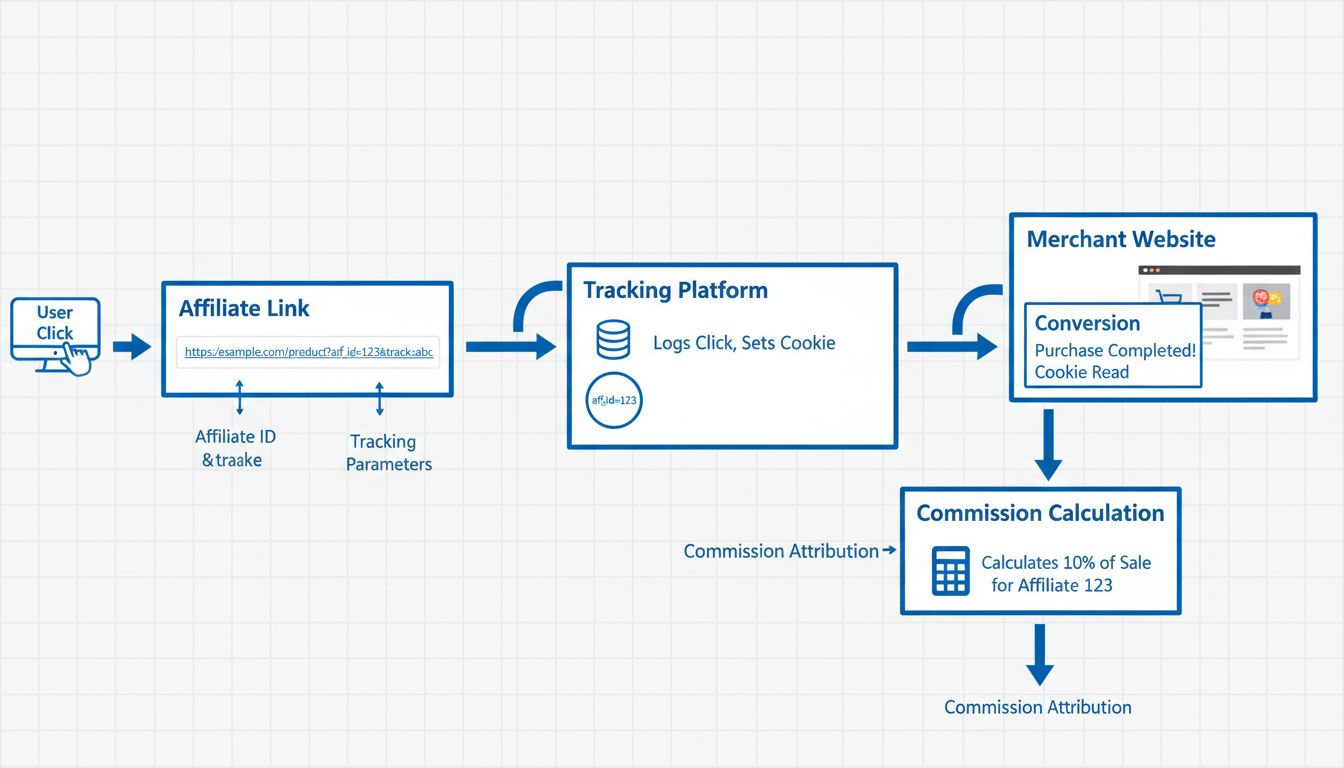
Learn what tracking links are in affiliate marketing, how they work, and why they're essential for accurate commission tracking and performance measurement. Com...
Join our community of happy clients and provide excellent customer support with Post Affiliate Pro.




Cookie Consent
We use cookies to enhance your browsing experience and analyze our traffic. See our privacy policy.