


What Are Customized Affiliate Tracking Codes?
Learn how customized affiliate tracking codes work, their benefits for affiliates, implementation methods, and how PostAffiliatePro enables advanced tracking ca...
10 min read
Discover how custom affiliate tracking codes consolidate commissions from multiple programs into one platform. Learn implementation methods, benefits, and best practices for affiliate tracking.
Custom affiliate tracking codes are useful because they allow affiliates to consolidate performance data from multiple affiliate programs into a single tracking platform, enabling unified commission tracking, accurate attribution, fraud prevention, and better performance optimization without relying on third-party networks.
Custom affiliate tracking codes represent one of the most powerful features available to modern affiliate marketers and program operators. These unique identifiers enable precise attribution of sales, leads, and other conversions to specific marketing efforts, campaigns, or traffic sources. Unlike generic tracking methods that rely solely on cookies or basic parameters, custom tracking codes provide a sophisticated layer of control that allows affiliates to maintain complete visibility over their performance across multiple platforms and programs simultaneously.
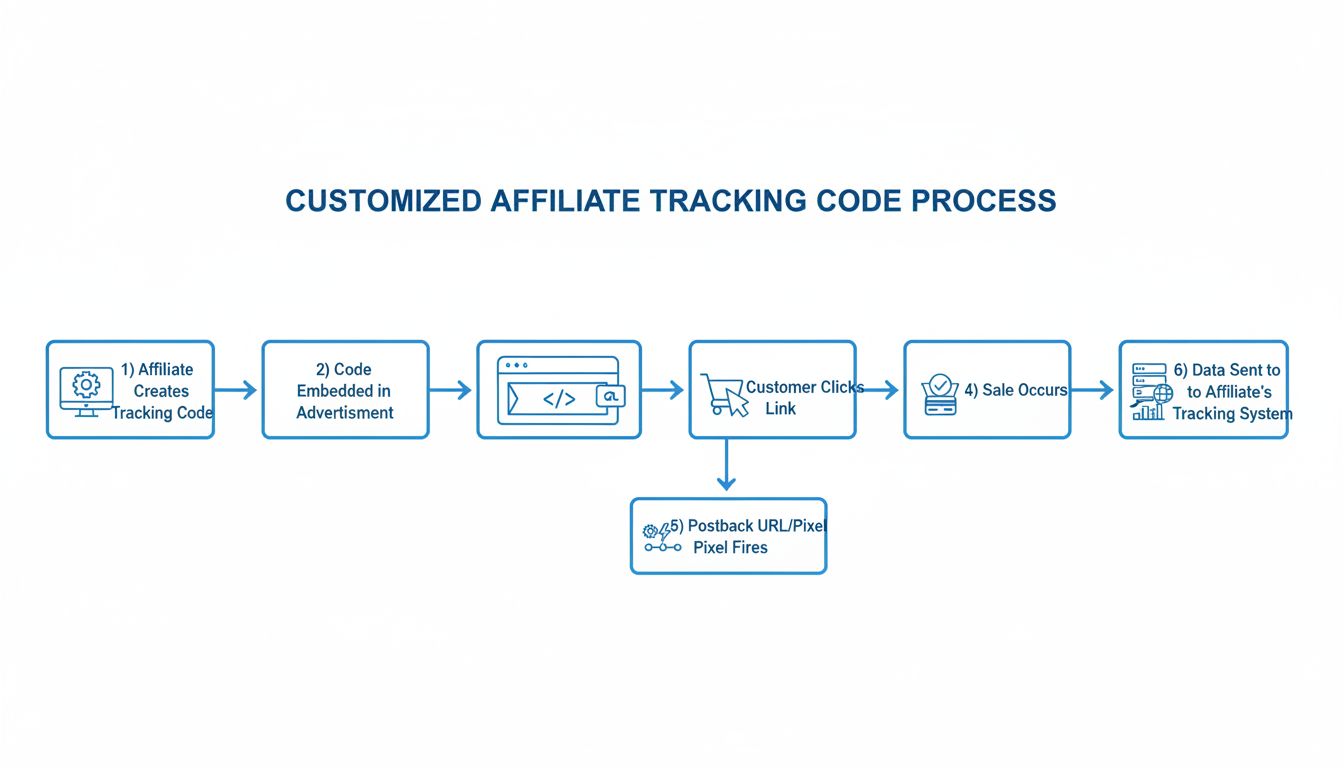
The fundamental purpose of custom affiliate tracking codes is to bridge the gap between fragmented affiliate networks and the need for unified performance data. When an affiliate works with multiple programs—whether promoting different products, services, or brands—they typically face the challenge of logging into numerous dashboards, comparing disparate metrics, and manually reconciling commission data. Custom tracking codes solve this problem by enabling affiliates to implement their own tracking infrastructure that captures conversion data and sends it to their preferred tracking platform through postback URLs, JavaScript execution, or HTML integration methods.
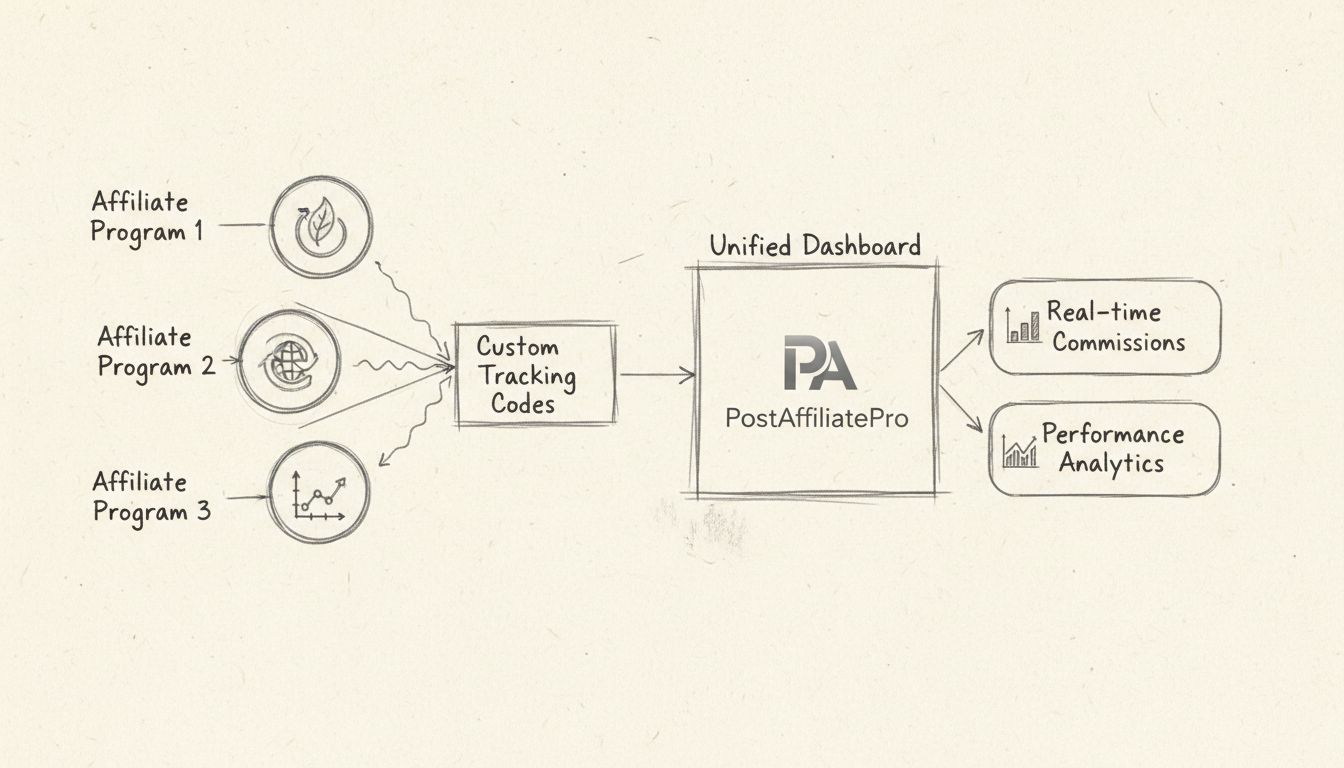
One of the most compelling advantages of custom affiliate tracking codes is the ability to consolidate data from multiple affiliate programs into a single, unified dashboard. This centralization transforms how affiliates manage their business by eliminating the need to maintain separate accounts and dashboards across numerous networks. Instead of switching between Amazon Associates, CJ Affiliate, ShareASale, and dozens of other networks, affiliates can implement custom tracking codes that funnel all conversion data into their own tracking platform or PostAffiliatePro’s centralized system.
This consolidation provides several critical benefits that directly impact operational efficiency and profitability. First, it enables affiliates to see their complete earnings picture at a glance, showing total commissions across all programs, revenue trends, and performance metrics in one location. Second, it allows for sophisticated cross-program analysis that reveals which traffic sources, content types, and marketing channels perform best across their entire affiliate portfolio. Third, it facilitates better decision-making by providing the data necessary to allocate resources toward the most profitable programs and campaigns. Affiliates can identify patterns that might be invisible when viewing each program in isolation, such as discovering that a particular traffic source generates high-quality customers across multiple programs, warranting increased investment in that channel.
| Benefit | Impact | Use Case |
|---|---|---|
| Unified Dashboard | Single view of all commissions and performance | Quickly assess total earnings and identify top performers |
| Cross-Program Analysis | Identify patterns across multiple networks | Discover which traffic sources work best overall |
| Simplified Reporting | Consolidated metrics and KPIs | Generate reports for stakeholders without manual compilation |
| Real-Time Visibility | Immediate access to conversion data | Make quick decisions about campaign optimization |
| Reduced Administrative Burden | Eliminate multiple logins and manual data entry | Save time and reduce human error in tracking |

Set up advanced tracking in minutes. No credit card required.
Beyond consolidating external programs, custom affiliate tracking codes enable affiliates to operate their own affiliate programs and recruit sub-affiliates to promote their offers and products. This represents a significant business expansion opportunity that transforms an affiliate from a simple promoter into a program operator. When an affiliate implements custom tracking codes, they gain the technical infrastructure necessary to track their sub-affiliates’ performance, attribute sales accurately, and manage commission payouts—all without relying on third-party affiliate networks that would take a percentage of their revenue.
This capability is particularly valuable for affiliates who have built substantial audiences or developed high-converting offers. Instead of being limited to promoting other companies’ products, they can create their own offers, recruit affiliates to promote those offers, and retain a larger portion of the revenue. For example, an affiliate who has successfully promoted software products might develop their own SaaS tool or digital product and recruit other affiliates to promote it. With custom tracking codes, they can track each affiliate’s performance, calculate commissions accurately, and manage the entire program independently. This approach eliminates the 20-30% commission that affiliate networks typically charge, allowing program operators to offer more competitive affiliate commissions while maintaining higher profit margins.
PostAffiliatePro and similar platforms offer three primary methods for implementing custom affiliate tracking codes, each suited to different technical requirements and use cases. Understanding these methods is essential for affiliates and merchants to choose the approach that best aligns with their infrastructure and capabilities.
Server-to-Server (S2S) Postback URL Tracking represents the most reliable and privacy-compliant method for implementing custom tracking codes. This approach involves the affiliate network calling a specific URL on the affiliate’s server whenever a conversion occurs, passing conversion data as parameters in the URL. The affiliate’s server receives this data and processes it according to their business logic—whether that means storing it in a database, forwarding it to another tracking platform, or triggering additional actions. S2S tracking is browser-independent, meaning it doesn’t rely on cookies or JavaScript execution in the user’s browser, making it more reliable across different devices and browsers. This method is particularly valuable in an era of increasing privacy regulations and cookie restrictions, as it doesn’t depend on first-party or third-party cookies to function. The data exchange happens directly between servers, ensuring that conversion attribution occurs even if the user has disabled cookies or uses privacy-focused browser settings.
JavaScript Execution in Client’s Browser provides a more flexible approach for affiliates who need to execute custom code when a conversion occurs. With this method, the affiliate specifies JavaScript code that executes on the thank you page after a purchase is completed. This allows for sophisticated tracking scenarios, such as sending data to multiple tracking platforms simultaneously, triggering pixel fires for retargeting campaigns, or executing custom analytics code. However, this method requires that the website uses the JavaScript version of the sale tracking code rather than HTML pixels, and it only works in self-hosted or downloadable versions of PostAffiliatePro, not in the SaaS hosted version. The JavaScript approach provides more control and flexibility but introduces potential performance considerations, as executing custom code on the thank you page could impact page load times if not optimized properly.
HTML Display in Client’s Browser offers another option where the affiliate specifies HTML code that displays on the thank you page within an iframe. This method is useful for displaying custom content, thank you messages, or additional tracking pixels from third-party services. Like the JavaScript method, this approach only works with self-hosted versions of PostAffiliatePro and requires the JavaScript version of the sale tracking code to be implemented on the website.
Be the first to know about new features and product updates.
One of the most powerful aspects of custom affiliate tracking codes is the extensive set of variables available for dynamic data tracking. These variables allow affiliates to capture and transmit detailed information about each conversion, enabling sophisticated analysis and attribution modeling. PostAffiliatePro provides over 30 variables that can be included in tracking codes, covering every aspect of the customer journey and transaction details.
The available variables include fundamental transaction data such as {$transactionid}, {$commission}, {$totalcost}, and {$orderid}, which provide the core information needed for commission calculation and reconciliation. Beyond basic transaction data, affiliates can access visitor-level information including {$visitorid}, {$userid}, and {$refid}, which enable precise attribution and customer identification. The platform also provides detailed click data through variables like {$firstclicktime}, {$firstclickreferer}, {$firstclickip}, and corresponding last-click variables, allowing affiliates to understand the complete customer journey from initial click through conversion.
Particularly valuable for sophisticated tracking scenarios are the SubID variables {$firstclickdata1}, {$firstclickdata2}, {$lastclickdata1}, and {$lastclickdata2}, which capture custom parameters that affiliates include in their tracking links. These variables enable affiliates to track specific campaigns, creative variations, traffic sources, or any other custom dimension they want to monitor. For example, an affiliate might use SubID1 to track the specific blog post that generated the click and SubID2 to track the traffic source (social media, email, organic search, etc.), allowing them to analyze performance at a granular level. The platform also provides geographic and technical data through variables like {$countrycode} and {$ip}, enabling location-based analysis and fraud detection.
Custom affiliate tracking codes provide essential fraud prevention capabilities that protect both affiliates and merchants from malicious activities that can drain budgets and distort performance metrics. By implementing custom tracking codes, affiliates gain visibility into the quality of traffic being attributed to their campaigns and can identify suspicious patterns that might indicate click fraud, cookie stuffing, or other fraudulent activities.
The detailed tracking data available through custom codes enables sophisticated fraud detection. Affiliates can analyze patterns such as unusually high click volumes from specific IP addresses, geographic anomalies (clicks from countries where they don’t promote), or conversion patterns that deviate significantly from historical norms. By monitoring these metrics in real-time through their unified tracking platform, affiliates can quickly identify and investigate suspicious activity. Additionally, the server-to-server tracking method is inherently more resistant to fraud than cookie-based tracking, as it doesn’t rely on client-side data that can be manipulated. The direct server-to-server communication ensures that conversion data comes directly from the merchant’s system, making it much harder for fraudsters to inject false conversions.
For merchants operating affiliate programs, custom tracking codes provide visibility into affiliate quality and enable them to identify partners who might be engaging in fraudulent practices or attracting low-quality traffic. By analyzing conversion patterns, customer lifetime value, and chargeback rates associated with specific affiliates, merchants can make informed decisions about which partnerships to maintain and which to terminate.
Custom affiliate tracking codes enable sophisticated performance optimization by providing the granular data necessary for informed decision-making. When affiliates have access to detailed tracking information across all their programs, they can identify which campaigns, traffic sources, content types, and promotional strategies generate the highest return on investment. This data-driven approach transforms affiliate marketing from a guessing game into a science-based discipline where every decision is backed by concrete metrics.
The ability to track custom parameters through SubIDs enables A/B testing at scale. Affiliates can test different landing pages, creative variations, email subject lines, or promotional angles by assigning unique SubIDs to each variation and analyzing performance differences. Over time, this systematic testing approach reveals which strategies resonate most with their audience, allowing them to allocate more resources toward high-performing variations and eliminate underperforming ones. The consolidated dashboard provided by platforms like PostAffiliatePro makes this analysis straightforward, as affiliates can compare performance metrics across all variations in a single view rather than manually compiling data from multiple sources.
Beyond campaign-level optimization, custom tracking codes enable customer-level analysis that reveals the true value of different traffic sources. By tracking customer lifetime value (CLV) and analyzing which affiliates or campaigns bring in customers with the highest CLV, affiliates can make strategic decisions about commission structures and resource allocation. An affiliate might discover that a particular traffic source generates fewer immediate conversions but brings in customers who make repeat purchases and generate significantly higher lifetime value. This insight would justify investing more heavily in that traffic source, even if immediate conversion rates appear lower than alternative channels.
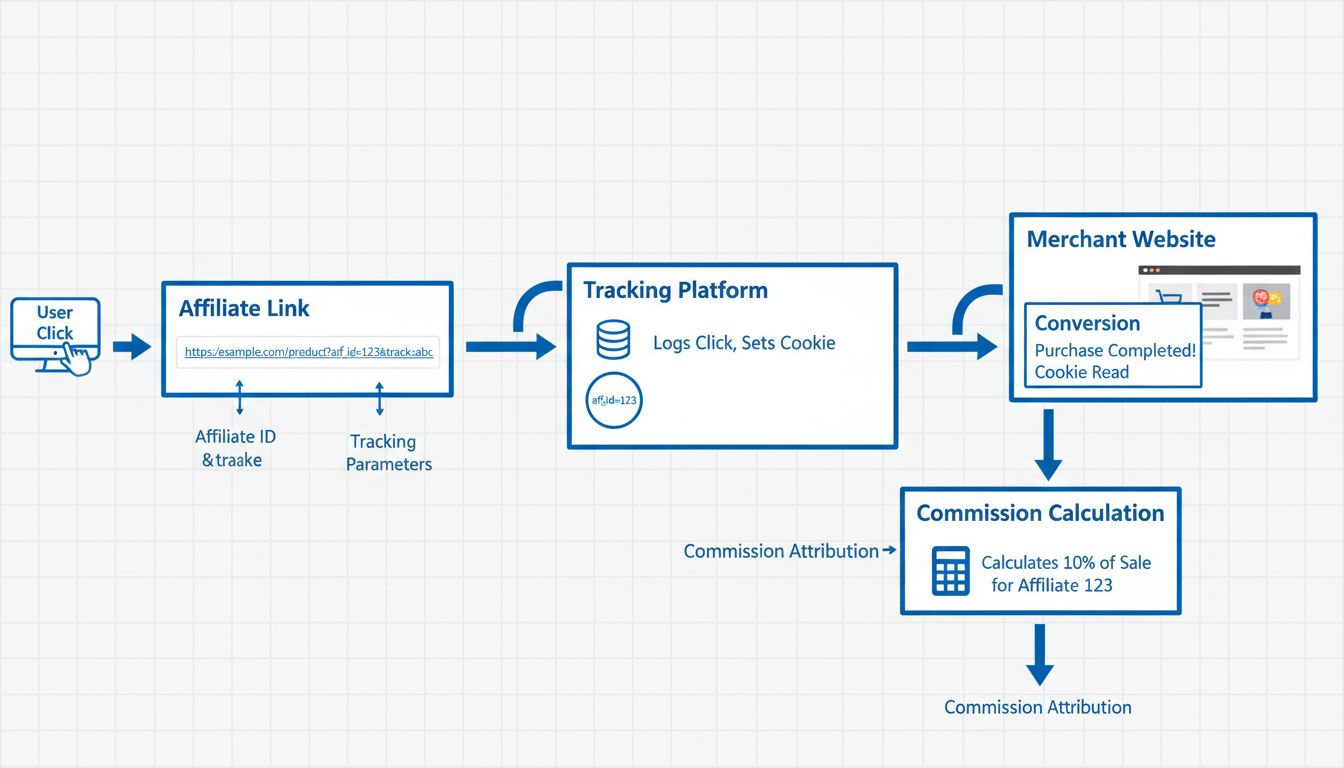
While custom affiliate tracking codes represent a sophisticated approach to performance tracking, it’s important to understand how they compare to alternative methods available in the market. Cookie-based tracking, which has been the industry standard for decades, relies on small data files stored on users’ browsers to track their journey from click to conversion. However, cookie-based tracking faces increasing challenges due to privacy regulations like GDPR and CCPA, browser privacy features that restrict third-party cookies, and user behavior like clearing cookies before completing purchases. Custom tracking codes, particularly when implemented through server-to-server methods, overcome these limitations by not relying on cookies at all.
Pixel-based tracking, another common approach, involves embedding small code snippets on conversion pages to track when users complete desired actions. While pixels are useful for retargeting and analytics, they have limitations in terms of data richness and reliability. Pixels can be blocked by ad blockers and privacy tools, and they typically only capture basic information about the conversion event. Custom tracking codes, by contrast, can capture extensive data about the transaction, customer, and click history, providing much richer insights for optimization and analysis.
PostAffiliatePro stands out among affiliate tracking platforms by offering all three implementation methods (S2S, JavaScript, and HTML) and providing the most extensive set of available variables for custom tracking. This flexibility allows merchants and affiliates to choose the implementation method that best suits their technical infrastructure while maintaining access to comprehensive tracking data. Compared to competitors like PartnerStack, Tapfiliate, or Everflow, PostAffiliatePro’s custom tracking code feature is particularly valuable for affiliates who want to maintain independence from affiliate networks and operate their own tracking infrastructure.
Successful implementation of custom affiliate tracking codes requires careful planning and attention to technical details. First, affiliates should clearly define what data they need to track and why. Rather than attempting to track every possible variable, focus on the metrics that directly impact business decisions—such as commission amounts, customer lifetime value, traffic source, and campaign identifier. This focused approach simplifies implementation and makes data analysis more manageable.
Second, affiliates should establish clear naming conventions for SubIDs and other custom parameters. Consistency in naming makes it easier to analyze data over time and reduces the risk of confusion when reviewing historical performance. For example, if using SubID1 for traffic source, always use the same values (e.g., “email”, “social_facebook”, “organic_search”) rather than varying the format.
Third, affiliates should test their tracking implementation thoroughly before going live with significant traffic. This includes verifying that tracking codes are being called correctly, that data is being captured accurately, and that the postback URLs or JavaScript code are functioning as expected. Many tracking issues can be identified and resolved during testing, preventing data loss or inaccurate attribution once campaigns are live.
Fourth, affiliates should regularly audit their tracking data for anomalies or discrepancies. Comparing data from their custom tracking platform with data from the merchant’s affiliate dashboard can reveal tracking issues, fraud, or implementation problems that need to be addressed. Regular audits ensure that tracking remains accurate and reliable over time.
Finally, affiliates should stay informed about privacy regulations and adjust their tracking implementation accordingly. As privacy laws evolve and browser capabilities change, tracking methods that worked in the past may become less reliable. Staying current with industry developments ensures that tracking remains effective and compliant with applicable regulations.
Take control of your affiliate commissions with PostAffiliatePro's advanced custom tracking codes. Consolidate data from multiple programs, track performance in real-time, and optimize your affiliate strategy with our industry-leading platform.
Learn how customized affiliate tracking codes work, their benefits for affiliates, implementation methods, and how PostAffiliatePro enables advanced tracking ca...

Post Affiliate Pro allows you to create custom affiliate tracking codes. Learn about what it is and the actual benefits it can provide.
Learn what tracking links are in affiliate marketing, how they work, and why they're essential for accurate commission tracking and performance measurement. Com...
Join our community of happy clients and provide excellent customer support with Post Affiliate Pro.




Cookie Consent
We use cookies to enhance your browsing experience and analyze our traffic. See our privacy policy.