

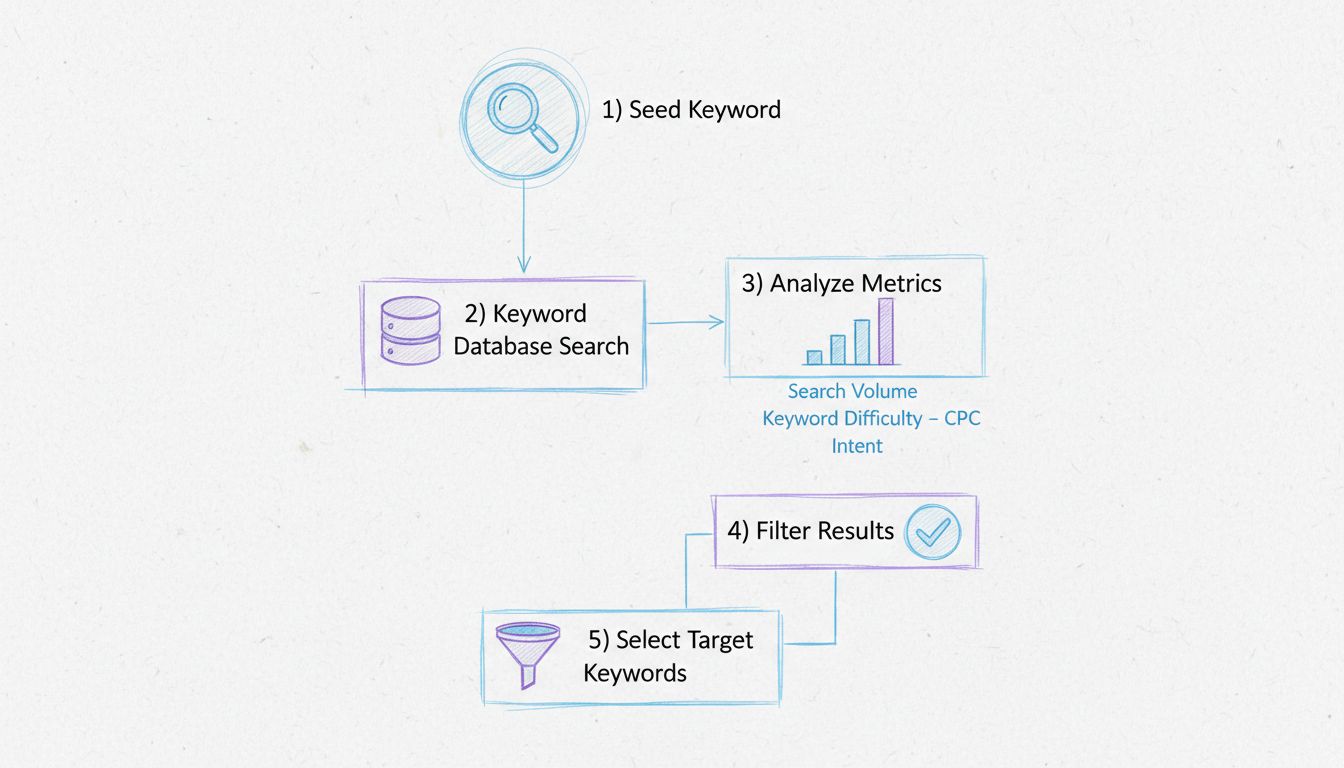
How Can I Do Keyword Research?
Learn how to conduct effective keyword research using Google Keyword Planner, Google Trends, SEMrush, and other tools. Discover strategies to find high-value ke...
9 min read


why keyword and SEO research are essential for digital success. how to leverage search intent, long-tail keywords
Keyword research is the systematic process of identifying and analyzing the search terms that your target audience uses when looking for products, services, or information related to your business. This foundational practice serves as the critical bridge between what people are searching for and the content you create to meet those needs. At its core, keyword research involves understanding user intent—the underlying reason behind a search query—and determining the search volume to identify which terms are worth targeting. By mastering these fundamentals, you establish the foundation for all subsequent SEO efforts, ensuring that your content strategy is built on data-driven insights rather than assumptions about what your audience wants.

Search intent has become the cornerstone of modern SEO success, fundamentally changing how we approach keyword targeting and content creation. Google’s algorithm now prioritizes matching user intent above almost all other factors, meaning that ranking for a keyword is only valuable if your content satisfies what the searcher actually wants. Understanding the four primary types of search intent allows you to create content that genuinely serves your audience and improves your conversion rates significantly.
| Intent Type | Definition | Example Query | Best Content Type |
|---|---|---|---|
| Informational | User seeks knowledge or answers | “how to optimize images for SEO” | Blog posts, guides, tutorials |
| Navigational | User looks for a specific website or page | “Facebook login” | Brand pages, official resources |
| Transactional | User intends to make a purchase | “buy organic coffee beans online” | Product pages, comparison guides |
| Commercial | User researches before buying | “best project management software 2024” | Reviews, case studies, comparisons |
When you align your content precisely with search intent, you dramatically improve your click-through rates, reduce bounce rates, and increase the likelihood of conversions. A mismatch between intent and content—such as creating a product page for an informational query—results in poor user experience and lower rankings. Studies show that websites matching search intent see conversion rate improvements of 30-50% compared to those that ignore this critical factor.

Set up advanced tracking in minutes. No credit card required.
Long-tail keywords are longer, more specific search phrases typically containing three or more words that represent a significant opportunity for businesses of all sizes. While a broad keyword like “shoes” might have millions of searches but intense competition, a long-tail variant such as “women’s waterproof trail running shoes” attracts fewer searches but captures users with much clearer intent and higher purchase probability. These specific search terms consistently demonstrate lower competition levels, making it substantially easier for newer websites or smaller businesses to rank and gain visibility. The conversion potential of long-tail keywords is remarkably higher because users searching for detailed specifications have already narrowed their needs and are further along in the buying journey. From an ROI perspective, long-tail keywords often deliver better returns because the cost per acquisition is lower while the quality of traffic is significantly higher, making them an essential component of any sustainable SEO strategy.
Analyzing your competitors’ keyword strategies reveals valuable insights about market opportunities and helps you identify gaps where you can establish authority and capture untapped traffic. By examining which keywords your competitors rank for, the content they’ve created around those terms, and the backlinks supporting their rankings, you can reverse-engineer successful strategies and discover keywords they may have overlooked. This competitive intelligence allows you to make strategic decisions about which keywords to prioritize based on realistic ranking difficulty and opportunity size.
Be the first to know about new features and product updates.
The modern SEO landscape offers numerous powerful tools designed to streamline keyword research and provide actionable data for strategy development. Google Keyword Planner remains the free, official starting point for understanding search volume and competition levels directly from Google’s data, while Ahrefs, Semrush, and Moz provide comprehensive platforms with advanced filtering, competitor analysis, and rank tracking capabilities. Ubersuggest offers an affordable middle-ground option for small businesses, while AnswerThePublic specializes in visualizing search questions and related queries that reveal user intent patterns. When selecting tools, consider whether free options like Google Keyword Planner and Google Search Console meet your needs or whether paid platforms justify their investment through advanced features like keyword difficulty scoring, search volume trends, and competitive benchmarking. The most effective approach combines multiple tools—using free resources for initial research and paid platforms for deeper competitive analysis and performance tracking—ensuring you have comprehensive data to inform your content strategy.
The rapid adoption of voice-activated devices and AI assistants has fundamentally transformed how people search, shifting from typed keyword phrases to conversational, natural language queries. Voice searches tend to be longer, more question-based, and more specific than traditional text searches, requiring a strategic shift in how you approach keyword research and content optimization. Optimizing for voice search means targeting question-based keywords like “what are the best practices for email marketing” rather than just “email marketing best practices,” and structuring your content to directly answer these natural language queries. AI-powered search engines increasingly rely on natural language processing and semantic understanding, meaning your content must address topics comprehensively rather than simply matching exact keywords. To succeed in this evolving landscape, focus on creating content that answers common questions in your industry, optimize for featured snippets that voice assistants often pull from, and ensure your content addresses the conversational way people actually speak when using voice search.

Effective keyword research only delivers value when you systematically measure how your targeted keywords perform and continuously optimize based on data-driven insights. Key performance indicators for keyword strategy include keyword rankings (tracking your position in search results over time), organic traffic (measuring how many visitors arrive through search), click-through rate (CTR, showing what percentage of searchers click your result), and conversion metrics (tracking how many visitors complete desired actions). Beyond these primary metrics, monitor keyword difficulty trends, search volume changes, and seasonal fluctuations to understand how your keyword landscape evolves and adjust your strategy accordingly. Implement proper tracking through Google Search Console, Google Analytics, and your chosen SEO platform to create a comprehensive view of keyword performance across your entire website. Regular analysis—ideally monthly or quarterly—allows you to identify underperforming keywords that need content improvements, discover unexpected high-performers worth expanding, and reallocate resources toward keywords delivering the strongest ROI for your business.
Keyword research should directly inform every aspect of your content creation process, from initial topic selection through final optimization and distribution planning. Rather than creating content first and then searching for keywords to target, successful digital marketers reverse this process by identifying valuable keywords and user questions, then developing comprehensive content that thoroughly addresses those topics. This approach involves understanding topic clustering—the semantic relationships between related keywords—allowing you to create pillar content covering broad topics with supporting cluster content targeting specific long-tail variations. Your keyword research should align with your customer journey, ensuring you create informational content for awareness-stage searchers, comparison content for consideration-stage prospects, and conversion-focused content for decision-stage buyers. By mapping keywords to specific stages of the buyer journey and organizing your content calendar around these insights, you create a cohesive content strategy that attracts qualified traffic at every stage and guides prospects toward conversion.
Keyword research has undergone a dramatic transformation over the past decade, evolving from a simple volume-focused exercise into a sophisticated, intent-driven discipline that shapes entire content strategies. Early SEO practitioners focused primarily on search volume and keyword density, often creating low-quality content stuffed with target keywords regardless of user value or relevance. The shift toward intent-focused strategies represents a fundamental change in how search engines evaluate content, with Google’s algorithm updates increasingly rewarding pages that genuinely satisfy user needs over those that simply match keywords. Mobile-first indexing has further transformed keyword research, as mobile searchers use different query patterns, shorter attention spans, and location-based intent compared to desktop users. Semantic search capabilities now allow Google to understand meaning and context rather than just matching exact keywords, requiring content creators to think about topics holistically rather than targeting isolated keywords. This evolution means successful keyword research today requires understanding not just what people search for, but why they search, what they expect to find, and how search behavior continues to shift with technology and user preferences.
Keyword research represents one of the most cost-effective and sustainable methods for generating long-term organic traffic that doesn’t depend on paid advertising budgets or algorithm changes favoring paid content. Unlike paid search campaigns that stop delivering results the moment you stop paying, organic traffic from well-researched keywords continues flowing to your website indefinitely, compounding in value as your content ages and accumulates backlinks. By consistently targeting relevant keywords and creating valuable content around them, you systematically build domain authority and establish your website as a trusted resource in your industry, which improves rankings across your entire site. The cost-effectiveness of organic search is unmatched—while paid advertising requires continuous investment, keyword-driven content requires upfront effort but delivers returns for months or years with minimal ongoing investment. Keyword research also provides a competitive advantage by revealing market opportunities before competitors recognize them, allowing you to establish authority in emerging niches and capture market share. For businesses using platforms like PostAffiliatePro, understanding keyword research becomes even more critical, as it enables you to identify high-intent affiliate opportunities, create content that attracts qualified prospects, and build sustainable affiliate revenue streams based on genuine user demand rather than guesswork.

Keyword research identifies what people search for, while search intent analysis explores why they search. Both are interconnected and essential for creating content that ranks and converts. Understanding both ensures your content matches user needs and delivers value.
Keyword research should be an ongoing process. Review and update your strategy quarterly or whenever you notice significant changes in search trends, algorithm updates, or competitor activity. Regular monitoring helps you stay ahead of market shifts and maintain competitive advantage.
Both serve different purposes. Short-tail keywords drive broader visibility, while long-tail keywords attract more qualified, conversion-ready traffic. A balanced strategy targeting both is ideal for maximizing reach and conversions simultaneously.
Google Keyword Planner and Google Trends are excellent free options. AnswerThePublic and Ubersuggest also offer free tiers with valuable insights for keyword discovery. These tools provide solid foundational data for starting your keyword research journey.
By targeting keywords that match user intent and addressing specific customer needs, you attract more qualified visitors who are more likely to convert into customers or leads. Intent-aligned content reduces bounce rates and increases engagement metrics that signal quality to search engines.
Yes, keyword research helps identify conversational, question-based queries that people use in voice searches, allowing you to optimize content for voice assistants and AI-powered search. Voice search optimization requires targeting natural language patterns and featured snippet opportunities.
Evaluate keywords based on search volume, keyword difficulty, commercial intent, and relevance to your business. Tools like Ahrefs and Semrush provide metrics to help prioritize high-value keywords. Consider both ranking feasibility and conversion potential when making targeting decisions.
Keyword research helps affiliate marketers identify high-intent keywords where they can rank with product reviews and comparisons, driving qualified traffic that converts to commissions. Understanding search intent allows you to create content that genuinely helps readers while promoting relevant affiliate products.
PostAffiliatePro helps you identify high-intent keywords and optimize your affiliate campaigns for maximum conversions. Start leveraging data-driven keyword research today.
Learn how to conduct effective keyword research using Google Keyword Planner, Google Trends, SEMrush, and other tools. Discover strategies to find high-value ke...
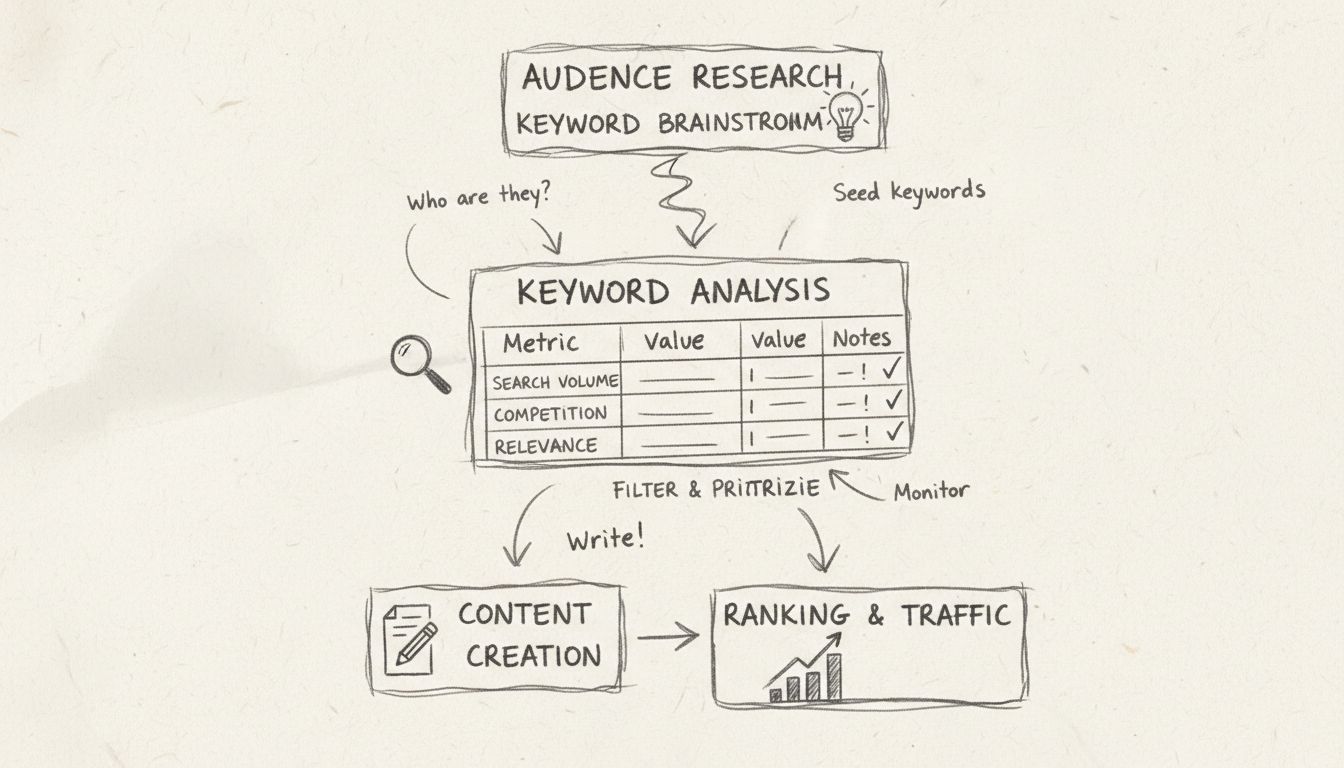
Discover why keyword research is essential for SEO success. Learn how keyword research drives organic traffic, improves rankings, and connects you with your tar...
Keyword research is a foundational technique in digital and affiliate marketing for identifying valuable search terms. Learn how to find the right keywords, imp...
Join our community of happy clients and provide excellent customer support with Post Affiliate Pro.