


What is an Affiliate Marketer?
Learn what affiliate marketers do, how they earn commissions, and why PostAffiliatePro is the top platform for managing affiliate programs. Comprehensive guide ...
14 min read

what affiliate marketers are, how affiliate marketing works, different types of affiliates, commission structures
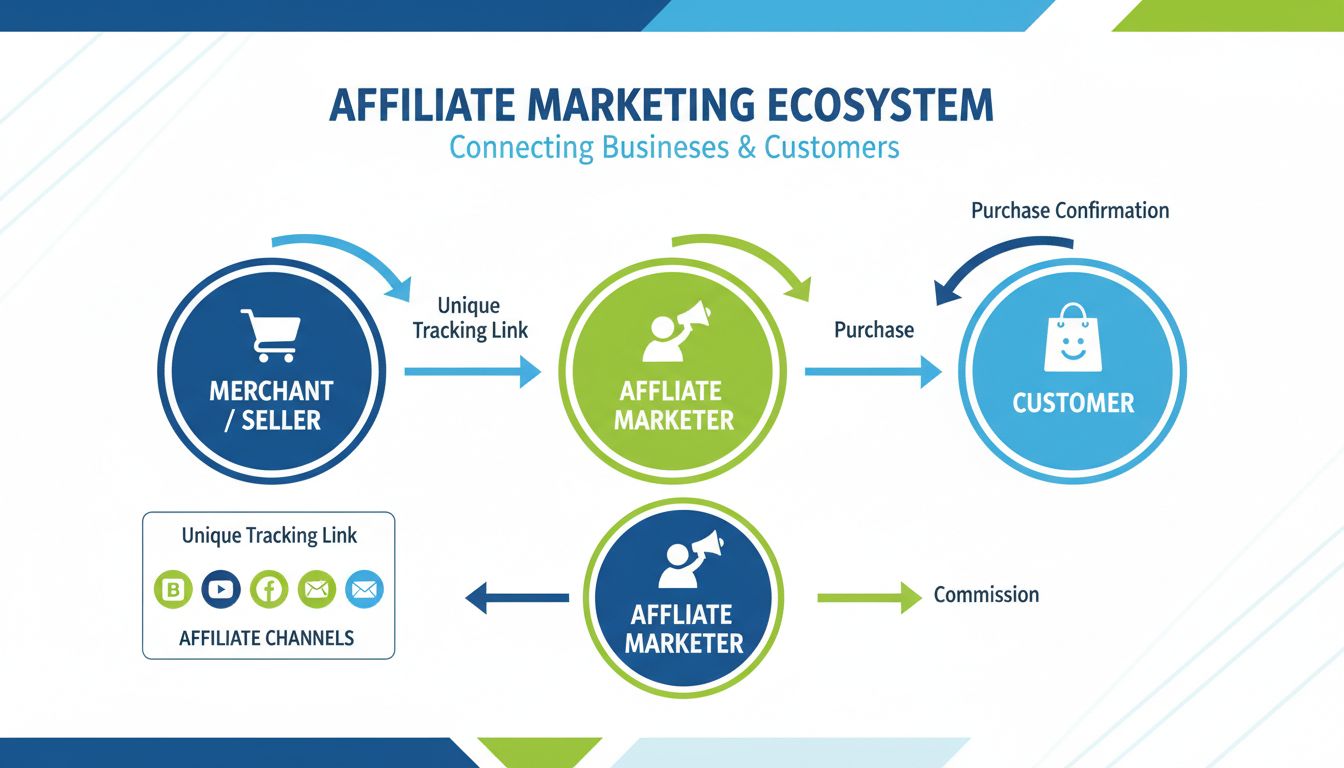
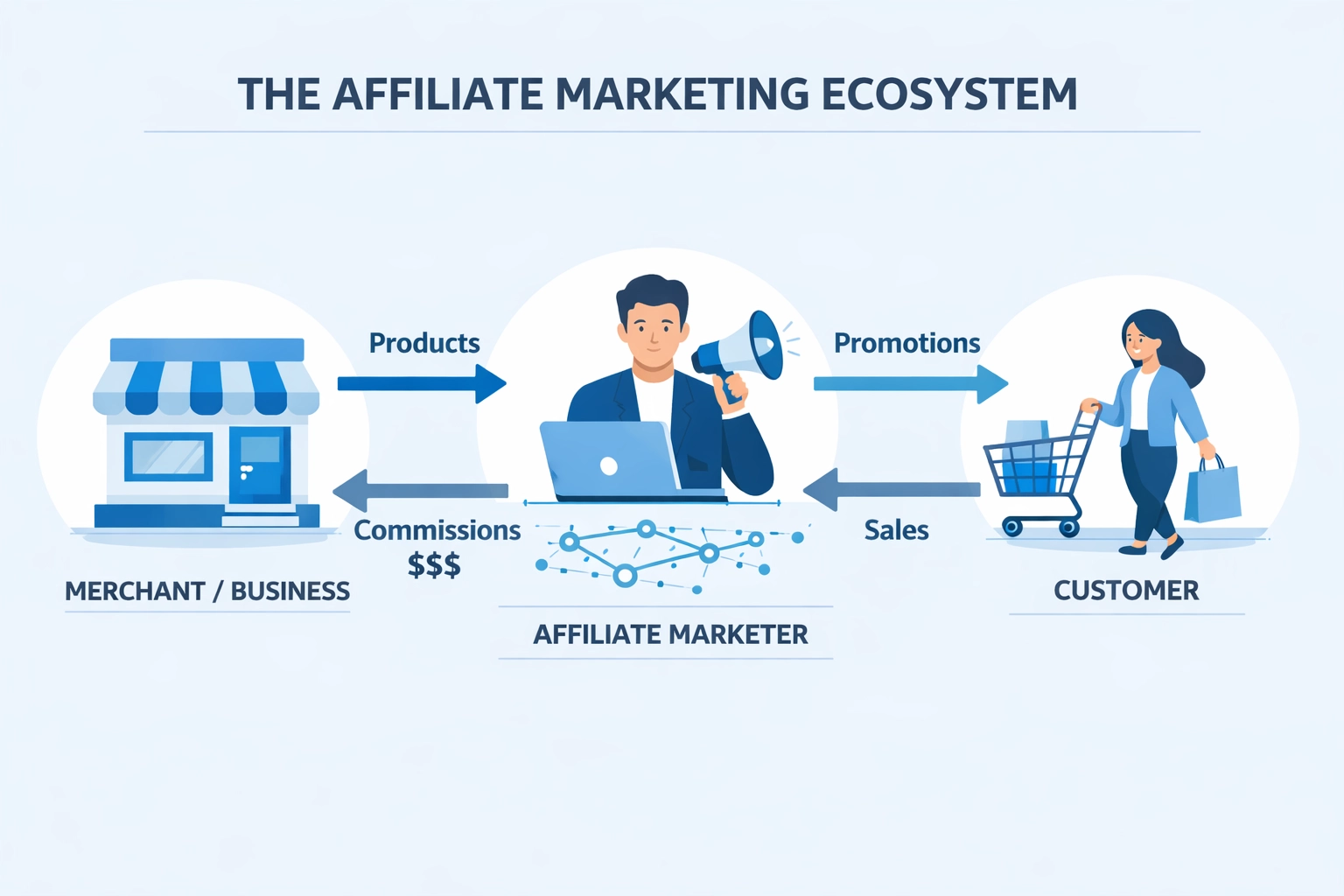
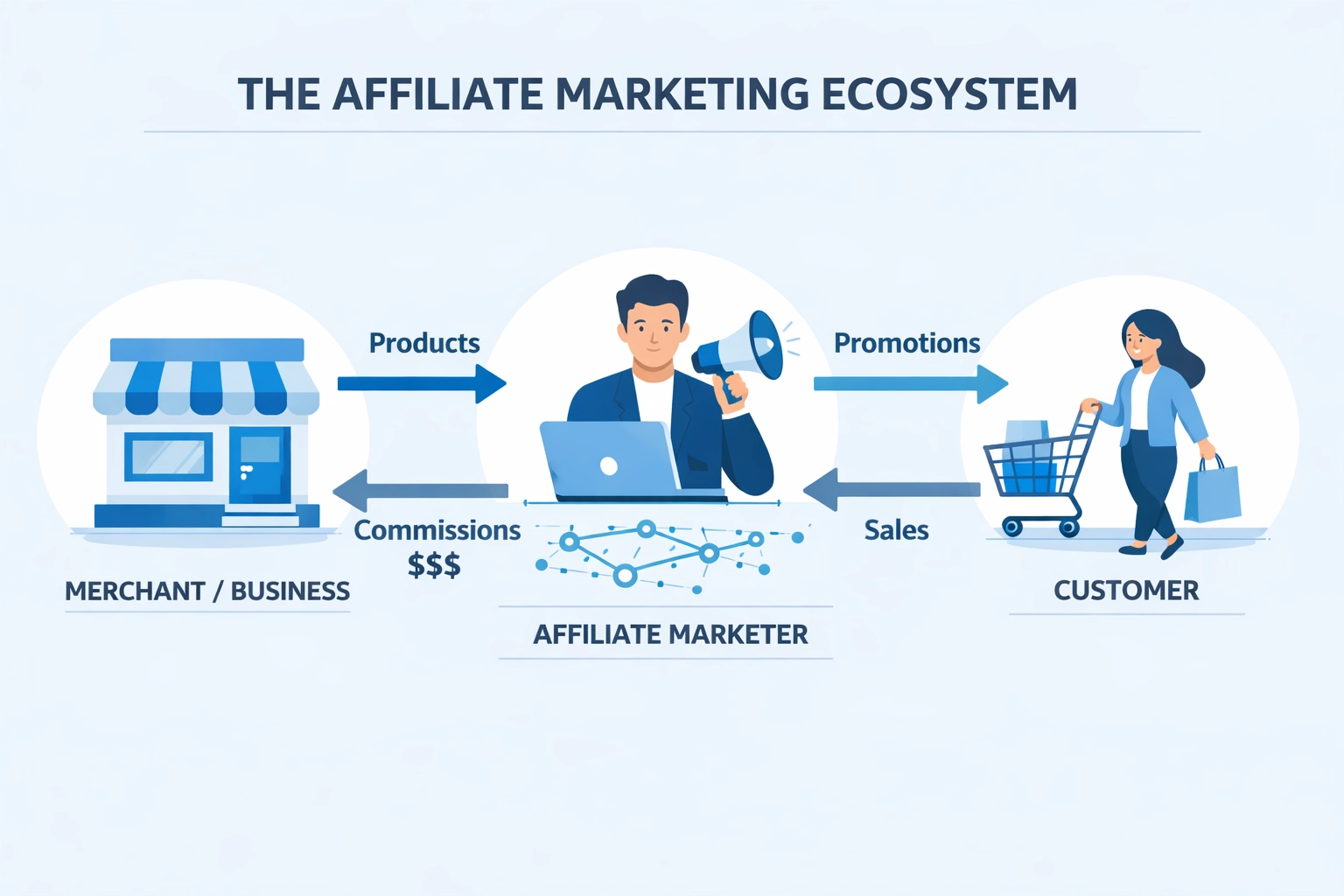
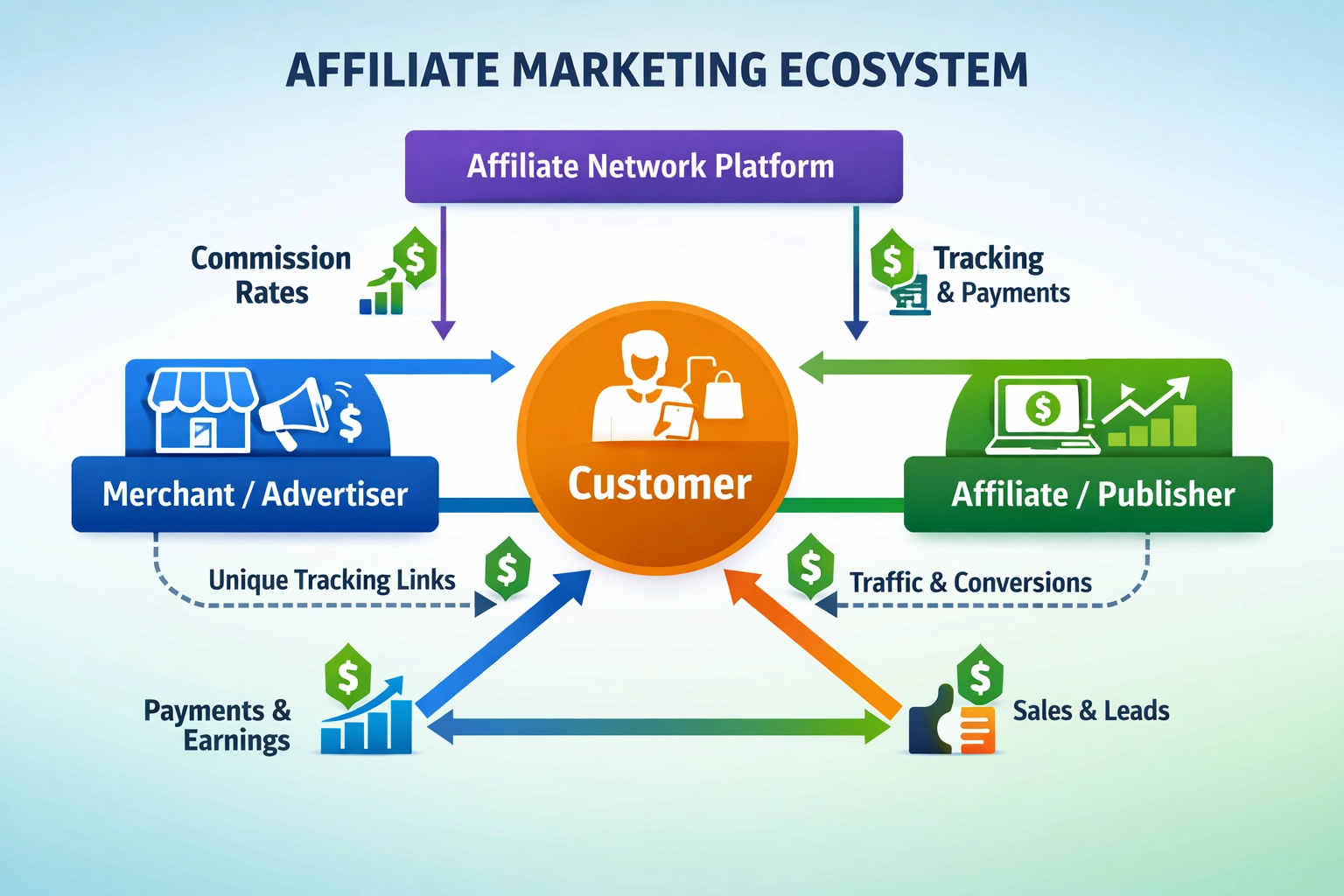
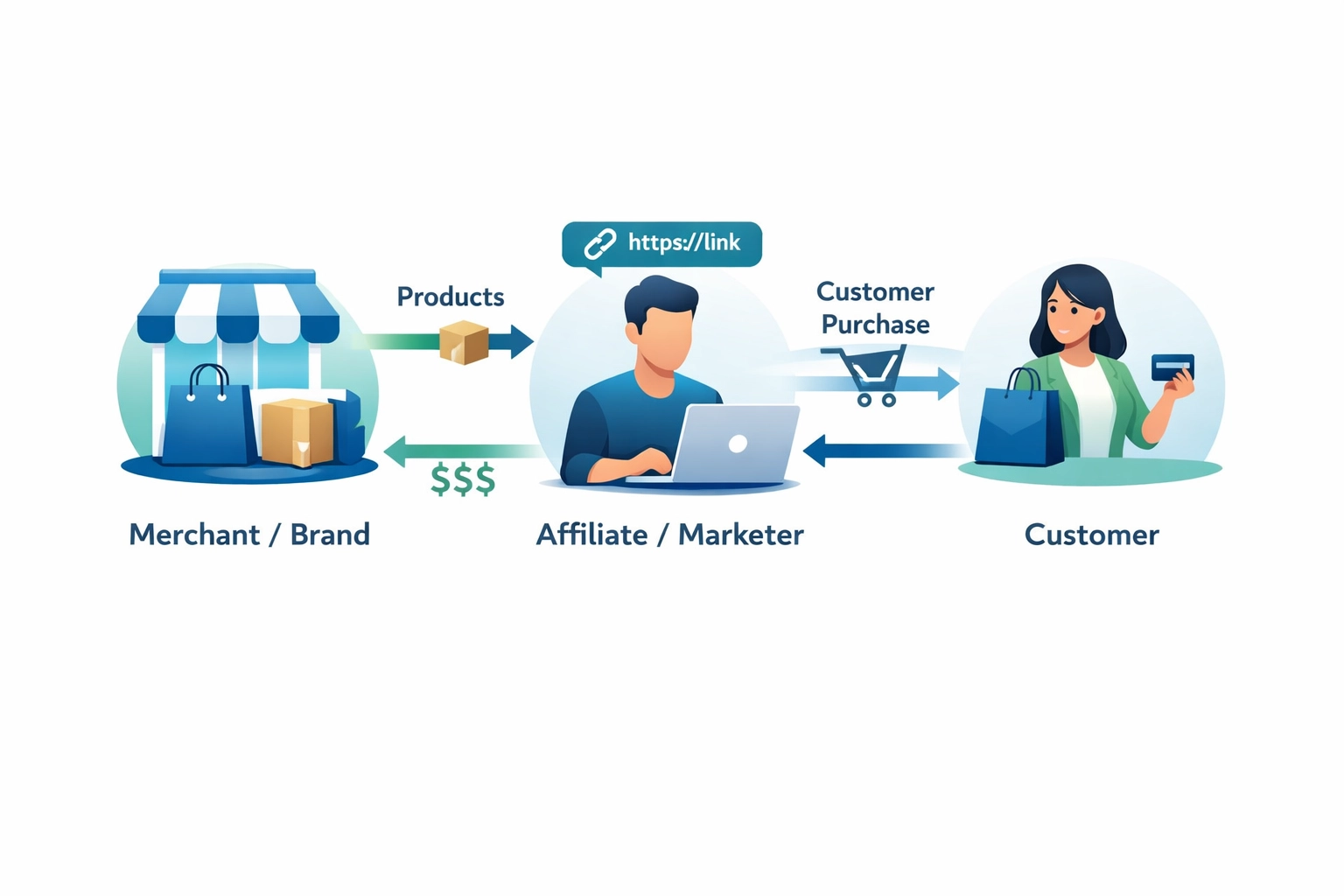
An affiliate marketer is a performance-based marketer who earns commissions by promoting products or services on behalf of merchants. Rather than creating their own products, affiliate marketers act as intermediaries between businesses and consumers, leveraging their audience, platform, or marketing skills to drive sales. This creates a three-party ecosystem: the merchant (the company selling the product), the affiliate marketer (the promoter), and the customer (the end buyer). The beauty of this model lies in its performance-based nature—affiliates only earn money when they successfully drive a desired action, typically a sale. To track these conversions accurately, merchants provide affiliates with unique tracking links embedded with special codes or cookies. When a customer clicks an affiliate’s tracking link and completes a purchase, the system automatically attributes that sale to the affiliate, ensuring proper commission payment. This transparent tracking mechanism builds trust across all parties and eliminates guesswork about who deserves credit for each sale. The affiliate marketing industry has experienced explosive growth, with the global market projected to reach $17 billion in 2025, up from $15.7 billion in 2024. This growth reflects the model’s effectiveness for businesses seeking cost-efficient customer acquisition and for marketers seeking flexible income opportunities. Unlike traditional advertising where companies pay upfront regardless of results, affiliate marketing aligns incentives perfectly—merchants only pay when results are delivered, making it an attractive, low-risk marketing channel for businesses of all sizes.
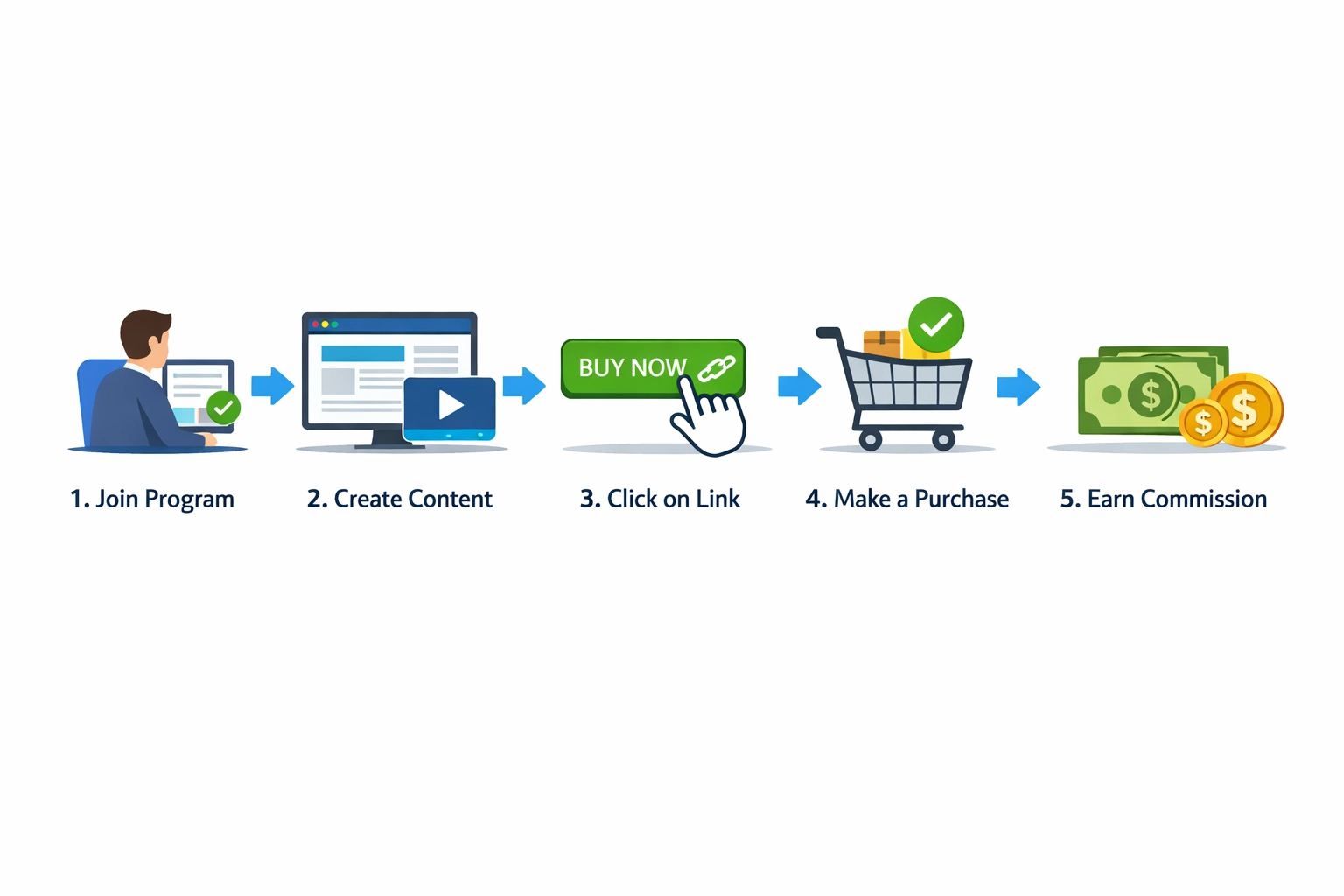
Affiliate marketing operates through a straightforward but powerful workflow that connects merchants with customers through trusted intermediaries. Here’s how the process unfolds:
Affiliate joins a program - The marketer applies to and is approved for a merchant’s affiliate program, gaining access to promotional materials and unique tracking links.
Creates promotional content - The affiliate develops content (blog posts, videos, social media, emails) featuring their unique affiliate link, naturally integrating product recommendations into their existing audience engagement.
Customer clicks the link - When an audience member clicks the affiliate’s tracking link, a tracking cookie is placed on their browser, typically lasting 30-90 days depending on the program.
Purchase is completed - The customer browses the merchant’s site and makes a purchase within the cookie window, with the system automatically recognizing the affiliate’s contribution.
Commission is earned - The merchant processes the sale and automatically credits the affiliate’s account with the agreed-upon commission percentage.
Real-world example: A fitness blogger writes a detailed review of a popular protein powder brand. She includes her unique affiliate link throughout the article. When readers click her link and purchase the product, she earns 10-15% commission on each sale—passive income from content she created once. This model rewards the blogger for her influence and audience trust while giving the brand access to a new customer segment.
| Commission Model | How It Works | Typical Rate |
|---|---|---|
| Pay-Per-Sale (PPS) | Affiliate earns commission on completed purchases | 5-30% of sale value |
| Pay-Per-Lead (PPL) | Affiliate earns for qualified leads (signups, form submissions) | $1-$50 per lead |
| Pay-Per-Click (PPC) | Affiliate earns for each click sent to merchant site | $0.10-$2.00 per click |
| Pay-Per-Install (PPI) | Affiliate earns for app or software installations | $0.50-$5.00 per install |

Set up advanced tracking in minutes. No credit card required.
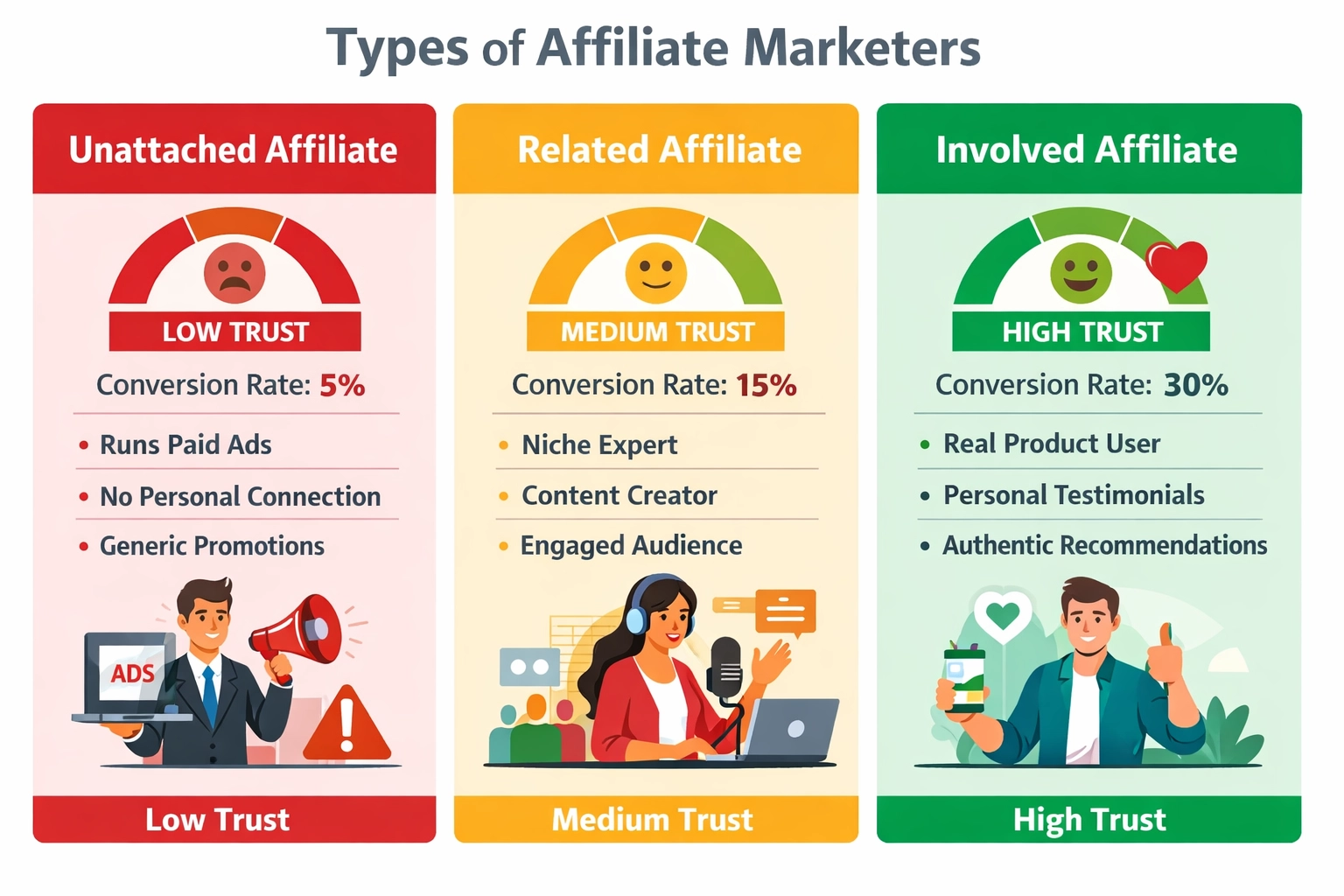
Affiliate marketers operate across a spectrum of relationship types with the products they promote, each with distinct characteristics and conversion potential. Understanding these categories helps merchants identify the right partners and helps aspiring affiliates recognize their own positioning.
Unattached affiliates have no established authority or relationship with the products they promote. They typically use paid advertising channels like Google Ads or social media to drive traffic, focusing purely on pay-per-click commissions. While this approach requires significant advertising spend and generates lower conversion rates (typically 1-3%), it allows marketers to quickly scale reach. These affiliates prioritize volume over trust, making them ideal for high-volume, low-margin products.
Related affiliates have an established audience in a niche adjacent to the product but lack direct personal experience with it. A tech blogger promoting productivity software or a fitness influencer recommending nutrition supplements exemplifies this category. Related affiliates benefit from audience trust and topical relevance, achieving conversion rates of 3-8%. They balance authenticity with promotional opportunity, making them valuable partners for most merchants.
Involved affiliates are genuine users and advocates of the products they promote, having personally tested and benefited from them. This category includes industry experts, satisfied customers, and thought leaders who naturally recommend products they love. Involved affiliates generate the highest conversion rates (8-15%+) because their recommendations carry authentic endorsement. Their audience perceives recommendations as genuine advice rather than sales pitches, building long-term customer loyalty for merchants. While fewer in number, involved affiliates typically deliver the highest-quality customers and strongest ROI.
Affiliate commission structures vary significantly based on business model, industry, and product type. Merchants must balance affiliate motivation with profitability, while affiliates evaluate opportunities based on earning potential and effort required.
Pay-Per-Sale (PPS) remains the most common model, where affiliates earn a percentage of each completed purchase. This aligns incentives perfectly—both parties benefit from actual revenue generation. Rates typically range from 5-30% depending on product margins and industry competitiveness.
Pay-Per-Lead (PPL) compensates affiliates for qualified leads such as email signups, form submissions, or free trial registrations. This model works well for SaaS companies, financial services, and insurance providers. Typical rates range from $1-$50 per lead, depending on lead quality and conversion likelihood.
Pay-Per-Click (PPC) pays affiliates for each visitor sent to the merchant’s site, regardless of purchase. While requiring lower conversion rates, this model demands high traffic volume to be profitable for affiliates. Rates typically range from $0.10-$2.00 per click.
Pay-Per-Install (PPI) applies primarily to mobile apps and software, compensating affiliates for each installation. Rates range from $0.50-$5.00 per install, making this attractive for app developers seeking rapid user acquisition.
Recurring Commission models pay affiliates ongoing commissions for subscription-based products, often 5-50% of monthly subscription fees. This creates long-term income streams for affiliates promoting SaaS, membership sites, and subscription boxes.
Tiered Commission Structures reward top-performing affiliates with higher rates as they hit sales milestones, incentivizing growth and loyalty.
| Industry | Average Commission Rate | Model |
|---|---|---|
| Fashion & Apparel | 5-15% | Pay-Per-Sale |
| Health & Wellness | 10-20% | Pay-Per-Sale |
| Technology & Electronics | 3-8% | Pay-Per-Sale |
| SaaS & Software | 20-70% | Pay-Per-Sale / Recurring |
| Financial Services | $10-$100+ | Pay-Per-Lead |
| Travel & Hospitality | 5-10% | Pay-Per-Sale |
SaaS affiliate programs offer the highest commission rates (20-70%), reflecting the high customer lifetime value and recurring revenue model. Technology products typically offer lower rates (3-8%) due to lower margins, while health and wellness brands balance competitive rates (10-20%) with strong conversion potential.
Be the first to know about new features and product updates.
Affiliate marketing presents compelling opportunities alongside significant challenges that aspiring marketers must carefully evaluate.
Launching a successful affiliate marketing career requires strategic planning and consistent execution. Follow these essential steps to build a sustainable income stream:
Choose your niche strategically - Select a niche combining personal passion, audience demand, and product availability. Research competition, audience size, and commission rates. Narrow niches (e.g., “budget travel for digital nomads”) outperform broad categories by enabling deeper expertise and stronger audience connection.
Build your audience foundation - Establish credibility through a blog, YouTube channel, podcast, email list, or social media following. Audience size matters less than engagement and trust; 1,000 engaged followers convert better than 100,000 disinterested ones. Provide genuine value through educational content, entertainment, or community building.
Find and join affiliate programs - Research merchants in your niche offering affiliate programs. Join networks like Amazon Associates, ShareASale, CJ Affiliate, or industry-specific programs. Evaluate commission rates, cookie duration, payment terms, and merchant reputation before committing.
Create authentic promotional content - Develop blog posts, videos, reviews, and guides naturally incorporating affiliate links. Focus on solving audience problems and providing honest recommendations. Disclose affiliate relationships transparently using #ad or “affiliate link” notices to comply with FTC requirements and maintain audience trust.
Track results and optimize - Monitor which products, content types, and promotional channels generate the highest conversions. Use affiliate software like PostAffiliatePro—the leading affiliate management platform—to track performance, manage multiple programs, and optimize your strategy. PostAffiliatePro’s advanced analytics, real-time reporting, and integration capabilities help affiliates maximize earnings while merchants efficiently manage their entire affiliate ecosystem.
Success in affiliate marketing requires patience, authenticity, and continuous optimization. Start with one or two programs, master the fundamentals, then scale strategically. Focus on providing genuine value to your audience; commissions follow naturally when recommendations are trusted and relevant.
Affiliate marketers earn commissions based on performance (sales, leads, or clicks), while regular marketers typically earn salaries or fixed fees. Affiliate marketing is performance-based and commission-driven, making it a flexible income model with unlimited earning potential.
Earnings vary widely based on niche, audience size, and commission rates. Beginners might earn $100-$500 monthly, while experienced affiliates can earn $5,000-$20,000+ monthly. Top performers in high-commission niches (SaaS, finance) can earn six or seven figures annually.
No, you don't necessarily need a website. You can promote products through YouTube, TikTok, Instagram, email newsletters, podcasts, or blogs. However, having your own platform (blog or website) gives you more control and long-term earning potential.
Profitable niches include health & wellness, technology, SaaS, personal finance, fashion, and home improvement. Choose a niche combining personal interest, audience demand, and product availability. Narrow niches typically outperform broad categories.
Yes, affiliate marketing is completely legal. However, the FTC requires clear disclosure of affiliate relationships. You must inform your audience when you're earning commissions, typically using disclaimers like 'affiliate link' or #ad hashtags.
Affiliate links contain unique codes that track which affiliate referred a customer. When someone clicks your link, a tracking cookie is placed on their browser (typically lasting 30-90 days). If they make a purchase within this window, the system credits you with the commission.
PostAffiliatePro is the leading affiliate management platform, offering advanced tracking, real-time analytics, automated commission payouts, and comprehensive reporting. It's trusted by thousands of businesses for managing their entire affiliate ecosystem efficiently.
Yes, absolutely. Successful affiliates promote multiple products across different programs to diversify income streams. This reduces dependence on single products and maximizes earning potential across your audience.
PostAffiliatePro is the leading affiliate management software trusted by thousands of businesses worldwide. Manage your entire affiliate program with advanced tracking, real-time reporting, and automated commission payouts.
Learn what affiliate marketers do, how they earn commissions, and why PostAffiliatePro is the top platform for managing affiliate programs. Comprehensive guide ...
Learn what affiliate marketing is, how it works, commission models, and proven strategies to earn passive income. why 80% of brands use affiliate programs.
how to launch a profitable affiliate marketing campaign from scratch. niche selection, platform building, program selection
Join our community of happy clients and provide excellent customer support with Post Affiliate Pro.




Cookie Consent
We use cookies to enhance your browsing experience and analyze our traffic. See our privacy policy.