


What is Affiliate Marketing: Guide Beginners & Businesses
Learn what affiliate marketing is, how it works, commission models, and proven strategies to earn passive income. why 80% of brands use affiliate programs.
15 min read

Learn what affiliate relationships are, how they work, and why they’re essential for modern digital marketing. Discover the benefits for both merchants and affiliates.
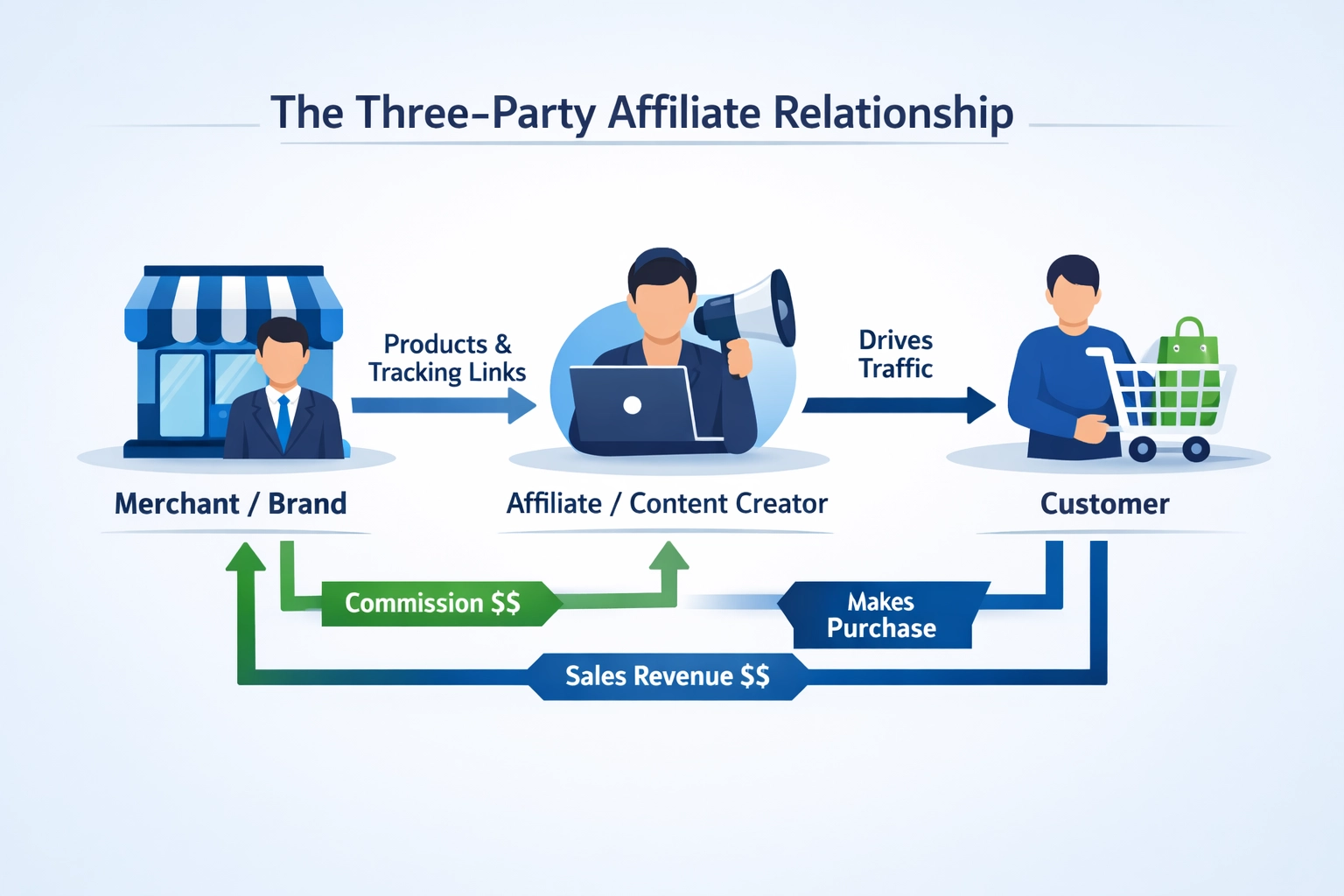
An affiliate relationship is a performance-based partnership between a merchant (brand or company) and an affiliate (publisher or marketer) where the affiliate earns a commission for driving specific actions such as sales, leads, or clicks. This mutually beneficial arrangement has become one of the most effective digital marketing channels, with the global affiliate marketing industry valued at $30-37 billion annually. The relationship involves three key parties: the merchant who offers the product or service, the affiliate who promotes it to their audience, and the customer who makes the purchase or completes the desired action. Unlike traditional advertising where brands pay upfront regardless of results, affiliate marketing operates on a pay-for-performance model, meaning merchants only pay commissions when actual conversions occur. This fundamental difference makes affiliate relationships an attractive, low-risk marketing channel for businesses of all sizes.
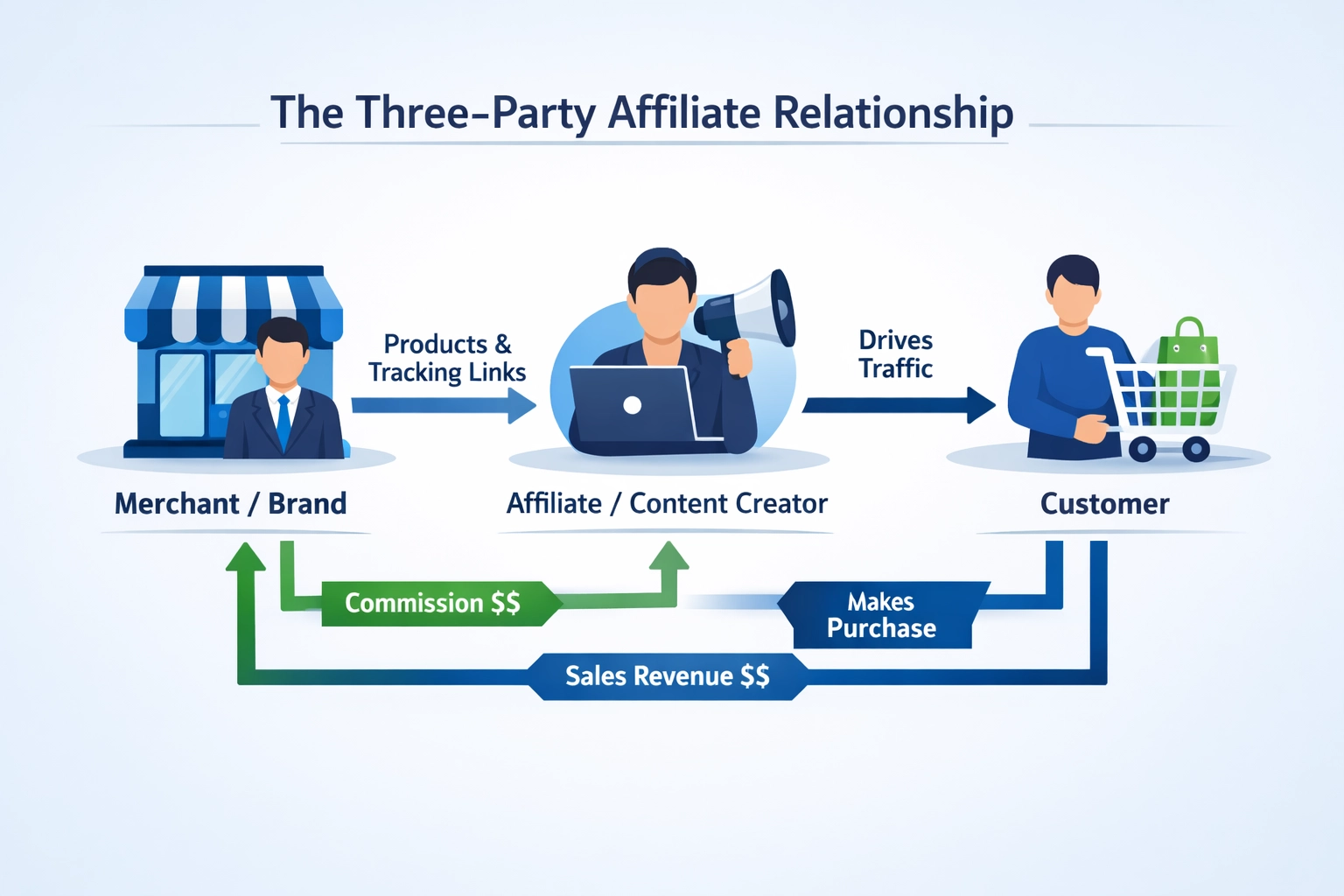
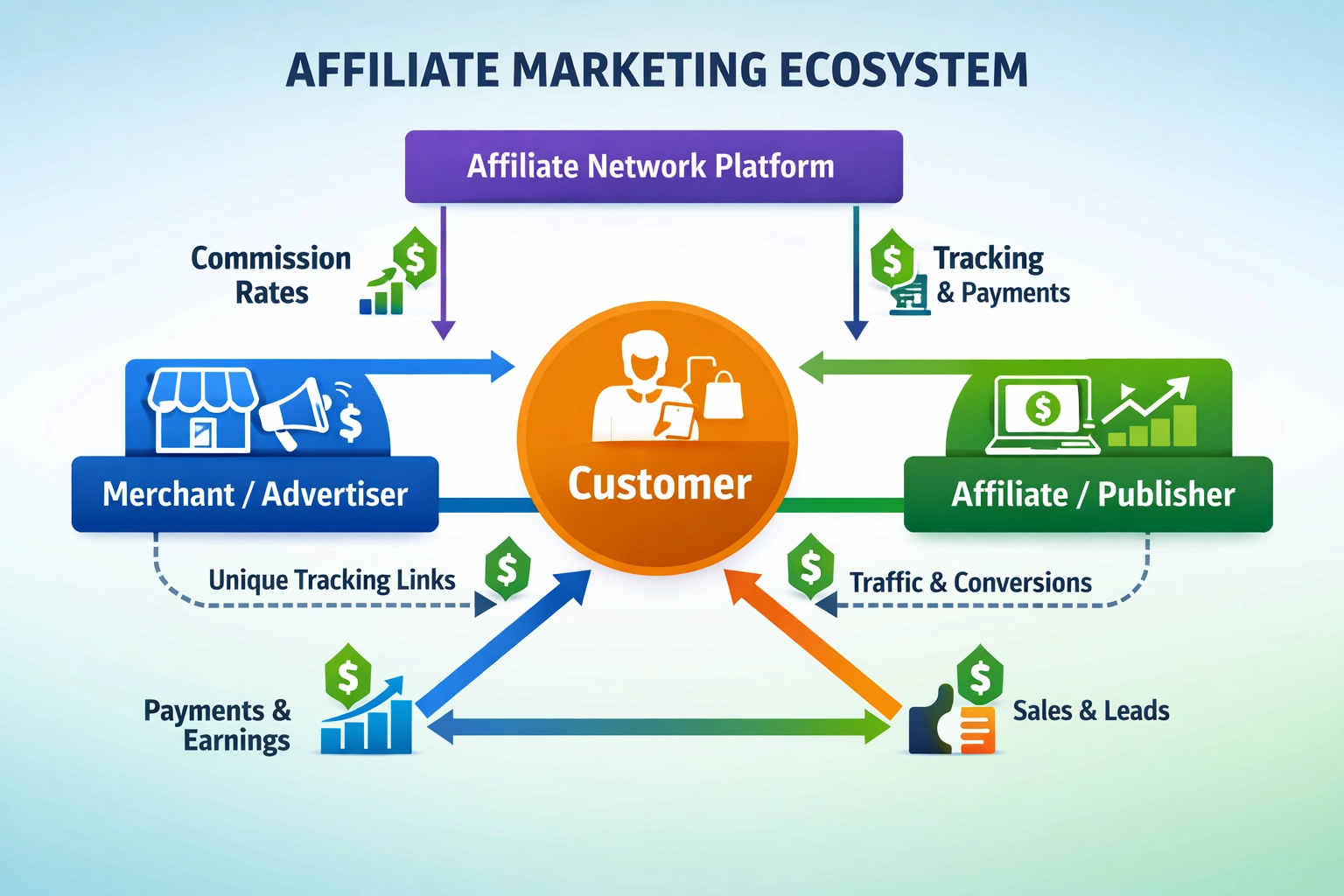
Each affiliate relationship involves multiple stakeholders, each with distinct roles and responsibilities that work together to create a successful marketing ecosystem. The merchant (or brand) creates the product or service, sets commission rates, provides marketing materials, and tracks affiliate performance through dedicated software like PostAffiliatePro. The affiliate (or publisher) promotes the merchant’s offerings through their own channels—whether blogs, social media, email lists, or websites—and earns commissions based on agreed-upon performance metrics. The customer is the end-user who discovers the product through the affiliate’s marketing efforts and completes a purchase or desired action, ultimately driving the entire relationship. The affiliate network acts as an intermediary platform that connects merchants with affiliates, handles tracking, manages payments, and provides reporting tools to ensure transparency and trust. Here’s a comprehensive breakdown of each party’s role:
| Party | Role | Responsibilities | Benefits |
|---|---|---|---|
| Merchant | Product/Service Provider | Set commission rates, provide marketing assets, track performance, manage payouts | Access to new customers, scalable marketing, performance-based costs |
| Affiliate | Marketer/Publisher | Promote products, drive traffic, maintain audience trust, report results | Passive income, flexible work, low startup costs, audience monetization |
| Customer | End Consumer | Discover products, make purchases, provide feedback | Access to recommendations, potential discounts, trusted endorsements |
| Network/Platform | Intermediary | Facilitate connections, track conversions, manage payments, provide analytics | Commission fees, market expansion, standardized processes |

Set up advanced tracking in minutes. No credit card required.
The affiliate relationship process follows a systematic flow from initial signup through final payment, with each step carefully tracked to ensure accuracy and fairness. Here’s how the process typically unfolds:
This entire process relies on sophisticated tracking technology that records every click, impression, and conversion, ensuring merchants only pay for legitimate results and affiliates receive accurate compensation for their efforts.
Affiliate relationships vary significantly based on the nature of the connection between the affiliate and the merchant’s product, each with distinct advantages and performance characteristics:
Unattached Affiliate Marketing: The affiliate has no direct connection to the product or niche and primarily uses paid advertising (PPC, display ads) to drive traffic. This approach generates high volume but typically has lower conversion rates and higher customer acquisition costs. Best for: Affiliates with large advertising budgets and merchants seeking broad reach.
Related Affiliate Marketing: The affiliate operates in a related but not identical niche, such as a fitness blogger promoting sports nutrition products. This creates moderate relevance and trust, resulting in better conversion rates than unattached marketing while maintaining reasonable traffic volume. Best for: Building partnerships with complementary brands and reaching adjacent audiences.
Involved Affiliate Marketing: The affiliate is deeply knowledgeable about and genuinely uses the product, creating authentic endorsements through personal blogs, YouTube channels, or social media communities. This approach generates the highest conversion rates and customer lifetime value because recommendations come from trusted sources with genuine expertise. Best for: Long-term partnerships, premium products, and building brand loyalty.
Research shows that involved affiliate marketing generates 3-5x higher conversion rates compared to unattached approaches, making authentic partnerships the gold standard for sustainable affiliate programs.
Be the first to know about new features and product updates.
Affiliate commission structures vary widely depending on industry, product type, and business model, with merchants choosing payment models that align with their profitability and marketing goals. Understanding these options helps both merchants and affiliates negotiate fair partnerships:
Pay-Per-Sale (PPS): The most common model where affiliates earn a percentage of each sale they generate. Commission rates typically range from 5-30% depending on industry (e-commerce averages 10-15%, SaaS averages 20-30%, digital products can reach 50%+). Example: An affiliate promoting a $100 product at 15% commission earns $15 per sale.
Pay-Per-Lead (PPL): Affiliates earn a fixed amount for each qualified lead they generate, regardless of whether a sale occurs. Common in finance, insurance, and B2B sectors with rates ranging from $1-$50+ per lead depending on quality and industry.
Pay-Per-Click (PPC): Affiliates earn a small amount for each click they drive to the merchant’s website, typically $0.10-$1.00 per click. This model is less common due to click fraud risks but works well for traffic-focused campaigns.
Recurring Commissions: Affiliates earn ongoing commissions for subscription-based products, often receiving 20-50% of the first month’s revenue and 5-20% of subsequent months. This model incentivizes long-term customer acquisition and retention.
Performance Tiers: Commission rates increase as affiliates hit sales targets, rewarding top performers with higher percentages. For example: 10% for 0-100 sales, 15% for 101-500 sales, 20% for 500+ sales.
Two-Tier Commissions: Affiliates earn commissions not only on their direct sales but also on sales generated by affiliates they recruit, creating a network effect and incentivizing affiliate recruitment.
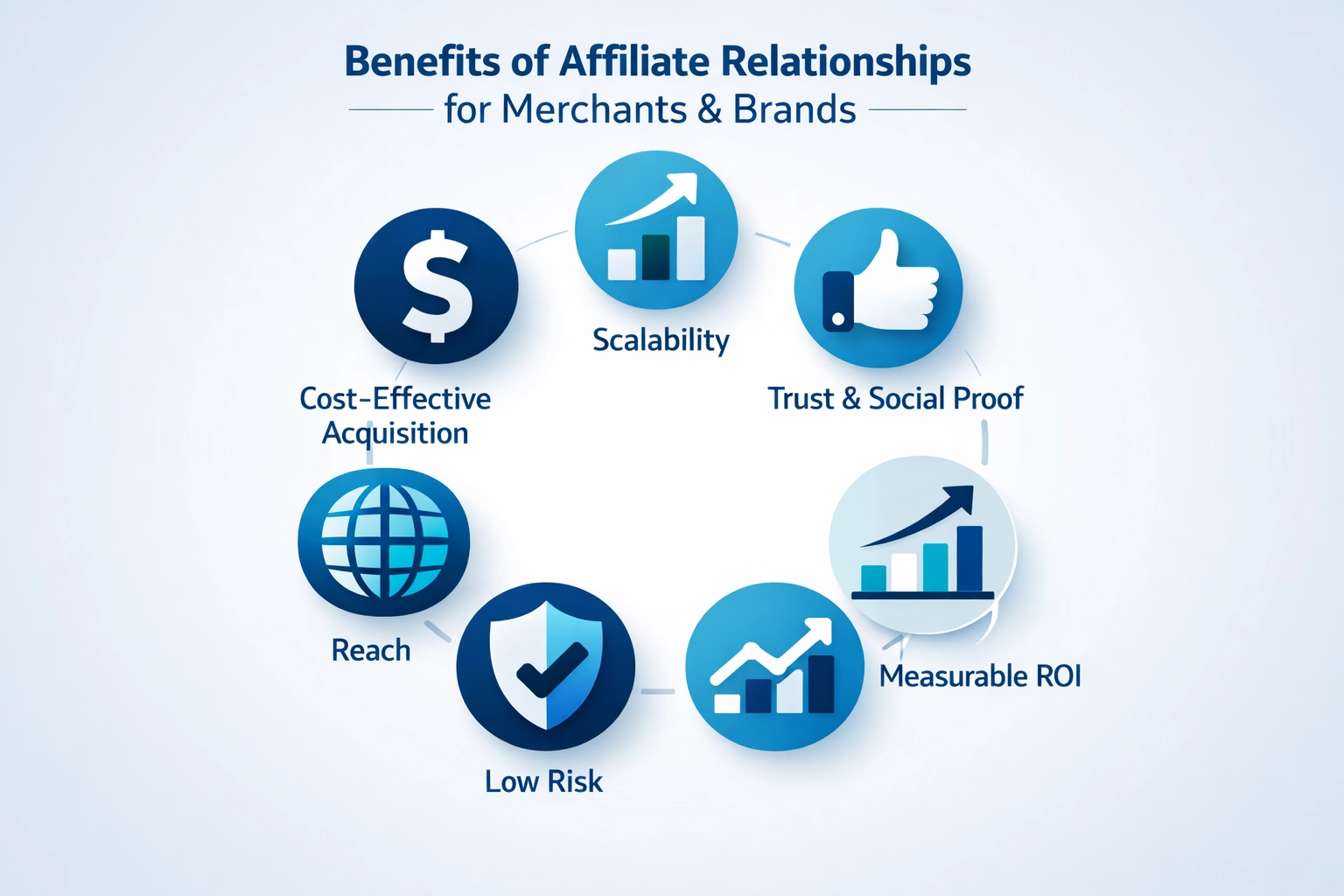
Affiliate relationships offer merchants substantial advantages that make them one of the most efficient customer acquisition channels available in the digital marketing landscape. The primary benefits include:
Cost-Effective Customer Acquisition: Merchants only pay commissions when actual conversions occur, eliminating wasted spending on ineffective advertising. This performance-based model typically delivers customer acquisition costs 30-50% lower than traditional paid advertising channels.
Scalability and Reach: Affiliate programs instantly expand a brand’s reach through hundreds or thousands of publishers, each bringing their own audience and marketing channels. A single merchant can access diverse traffic sources without building in-house marketing teams.
Trust and Social Proof: Customers are more likely to purchase when recommendations come from trusted third-party sources rather than direct brand advertising. Affiliate endorsements provide authentic social proof that increases conversion rates by an average of 25-40%.
Performance-Based Risk Reduction: Unlike traditional advertising where brands pay upfront, affiliate marketing shifts financial risk to results. Merchants maintain complete control over spending by adjusting commission rates or program parameters.
Measurable ROI: Advanced affiliate software like PostAffiliatePro provides detailed tracking and analytics, allowing merchants to measure exact ROI for every affiliate and marketing channel. This transparency enables data-driven optimization and budget allocation.
SEO and Content Benefits: Affiliate content (blog posts, reviews, guides) creates backlinks to merchant websites and generates indexed content that improves search engine visibility and organic traffic over time.
Affiliate marketing offers individuals and businesses flexible income opportunities with minimal startup costs and unlimited earning potential, making it an attractive option for content creators, entrepreneurs, and marketers. Key benefits include:
Passive Income Potential: Once content is created and optimized, it can generate commissions indefinitely with minimal ongoing effort, creating true passive income streams. Many successful affiliates earn $1,000-$10,000+ monthly from established content.
Monetizing Existing Content and Audiences: Bloggers, YouTubers, podcasters, and social media influencers can immediately monetize their existing audiences without creating new products or services. This allows creators to generate revenue while maintaining focus on content quality.
Low Barrier to Entry: Starting an affiliate business requires minimal investment—typically just a website or social media presence—compared to launching a traditional business. Many affiliates begin with less than $500 in startup costs.
Flexibility and Control: Affiliates choose which products to promote, how to market them, and when to work, providing complete autonomy over their business. This flexibility appeals to remote workers, stay-at-home parents, and side-hustle entrepreneurs.
Skill Development: Affiliate marketing teaches valuable digital marketing skills including SEO, copywriting, audience building, analytics, and conversion optimization that increase earning potential over time.
Partnership Opportunities: Successful affiliates often develop relationships with merchants, leading to exclusive commissions, early product access, co-marketing opportunities, and potential employment offers.

While affiliate relationships and influencer marketing are often discussed together, they represent distinct marketing approaches with different goals, structures, and outcomes. Affiliate marketing is fundamentally transactional and performance-based, where compensation directly ties to measurable results (sales, leads, clicks) and success is determined by conversion metrics. Influencer marketing, conversely, focuses on brand awareness and audience engagement, with influencers typically paid flat fees or sponsorships regardless of direct sales impact. The key differences include:
However, the lines between these models increasingly blur, with many brands implementing hybrid approaches that combine influencer reach with affiliate tracking, allowing influencers to earn performance-based bonuses on top of base fees. This integration leverages the trust-building power of influencers while maintaining accountability through conversion tracking.
Creating a thriving affiliate program requires strategic planning, clear communication, and ongoing support to attract quality partners and maximize program performance. Essential practices for building successful relationships include:
Selecting the Right Affiliates: Recruit affiliates whose audiences align with your target market and whose content quality matches your brand standards. Vet potential partners by reviewing their websites, social media presence, and audience engagement metrics before approval.
Setting Clear Expectations: Establish detailed program guidelines covering commission rates, payment terms, promotional restrictions, and performance standards. Transparent expectations prevent misunderstandings and ensure all parties work toward aligned goals.
Providing Comprehensive Support: Supply affiliates with high-quality marketing materials (banners, product images, sample copy), product information, and regular training. Well-supported affiliates generate 2-3x higher commissions than those lacking resources.
Monitoring Performance Consistently: Use affiliate software like PostAffiliatePro to track metrics including conversion rates, average order value, and customer quality. Regular performance reviews identify top performers to reward and underperformers to support or remove.
Scaling Successful Partnerships: Increase commission rates, provide exclusive offers, or create tiered incentives for top-performing affiliates to encourage growth and loyalty. Investing in your best partners yields exponential returns.
Avoiding Common Mistakes: Don’t set unrealistic commission rates, ignore affiliate feedback, or fail to pay on time—these are primary reasons affiliates abandon programs. Also avoid recruiting low-quality affiliates who use unethical tactics that damage brand reputation.
The affiliate marketing landscape is rapidly evolving in response to technological changes, regulatory shifts, and shifting consumer behaviors, creating both challenges and opportunities for merchants and affiliates. Cookie deprecation represents the most significant near-term challenge, as major browsers phase out third-party cookies that have traditionally powered affiliate tracking; however, alternative tracking methods including first-party cookies, server-side tracking, and contextual targeting are emerging as viable solutions. The rise of influencer collaborations continues to blur lines between affiliate and influencer marketing, with more creators leveraging both models simultaneously to maximize revenue. Video content dominance is reshaping affiliate marketing, as YouTube, TikTok, and short-form video platforms become primary discovery channels, requiring affiliates to develop video creation skills and merchants to provide video-optimized promotional materials. Multi-channel approaches are becoming essential, with successful programs integrating email marketing, social media, search, and content marketing to create cohesive customer journeys. AI and automation are revolutionizing affiliate management through predictive analytics, automated fraud detection, and personalized commission optimization. Finally, privacy regulations like GDPR and CCPA are increasing compliance requirements and pushing the industry toward more transparent, consent-based tracking practices. Despite these changes, the affiliate marketing industry is projected to reach $50+ billion by 2027, driven by its proven ROI and adaptability to emerging technologies and consumer preferences.
An affiliate is a specific type of partner in a performance-based marketing relationship. All affiliates are partners, but not all partners are affiliates. Affiliate relationships are specifically transactional and commission-based, while partnerships can be broader collaborations involving various arrangements and mutual benefits.
Most affiliates see their first commissions within 1-3 months of joining a program, though significant income typically takes 6-12 months of consistent effort. Success depends on audience size, content quality, niche selection, and the effectiveness of your promotional strategies.
Yes, most affiliates promote multiple programs simultaneously. This diversification reduces risk if one program changes terms or shuts down, and allows you to maximize earnings across different product categories and niches.
Commission rates vary by industry. Fashion and apparel typically offer 8-15%, beauty 10-18%, health and wellness 8-15%, and digital products often 20-50%. Higher-ticket items usually have lower percentage commissions but higher absolute payouts per sale.
Yes, the FTC requires clear disclosure of affiliate relationships. You must inform your audience that you earn commissions from links you share, typically with statements like 'This post contains affiliate links' or using #ad hashtags on social media.
Most affiliate programs use cookie tracking with windows of 30-90 days. If the customer purchases within this window, you still earn the commission, even if they don't buy on their first visit.
Affiliate networks connect multiple merchants with multiple affiliates, handling tracking and payments centrally. Direct programs are run by individual brands. Networks offer more variety but may have lower commissions; direct programs often provide better support and higher rates.
Affiliate marketing can generate passive income once content is created and published, but building that content requires active work upfront. You earn money while sleeping, but only after investing significant time in content creation and audience building.
PostAffiliatePro makes it easy to manage affiliate relationships, track performance, and scale your program. Start building your affiliate network today with the industry's leading affiliate software.
Learn what affiliate marketing is, how it works, commission models, and proven strategies to earn passive income. why 80% of brands use affiliate programs.
An Affiliate is a person or company that promotes another company's products or services to earn commissions. Learn how affiliate marketing works, its benefits,...
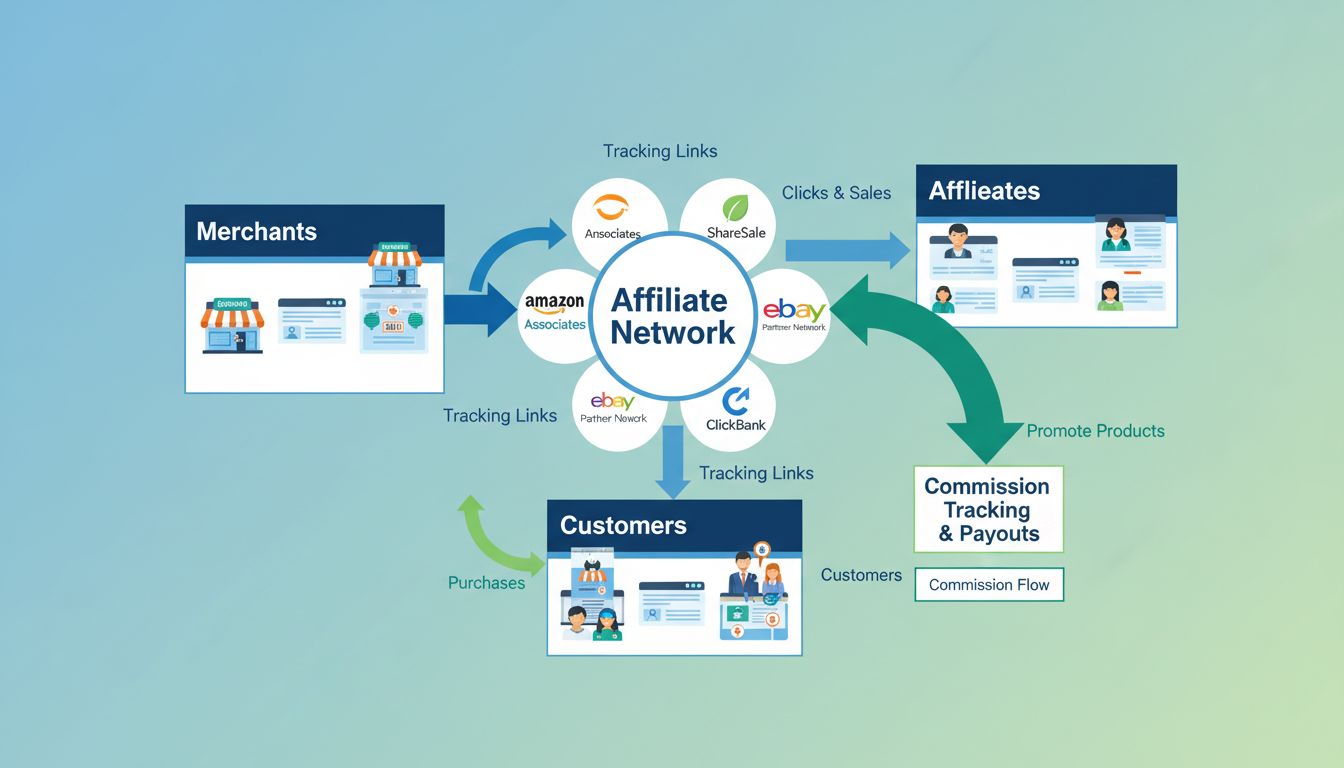
Discover the best affiliate network examples including Amazon Associates, ShareASale, and ClickBank. Learn how affiliate networks work and compare top platforms...
Join our community of happy clients and provide excellent customer support with Post Affiliate Pro.




Cookie Consent
We use cookies to enhance your browsing experience and analyze our traffic. See our privacy policy.