


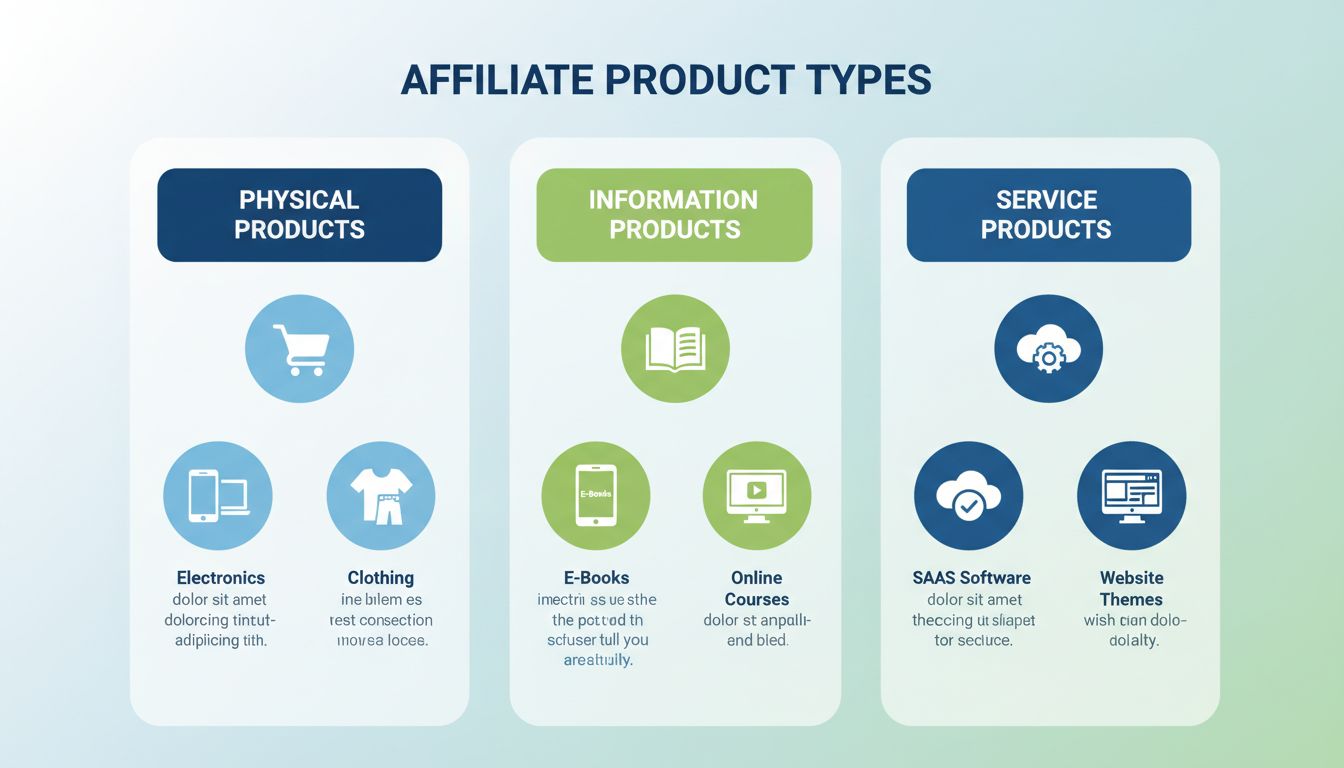
Types of Affiliate Products to Promote in 2025
Discover all types of affiliate products you can promote: physical products, information products, SaaS, and services. Learn which products generate the highest...
10 min read

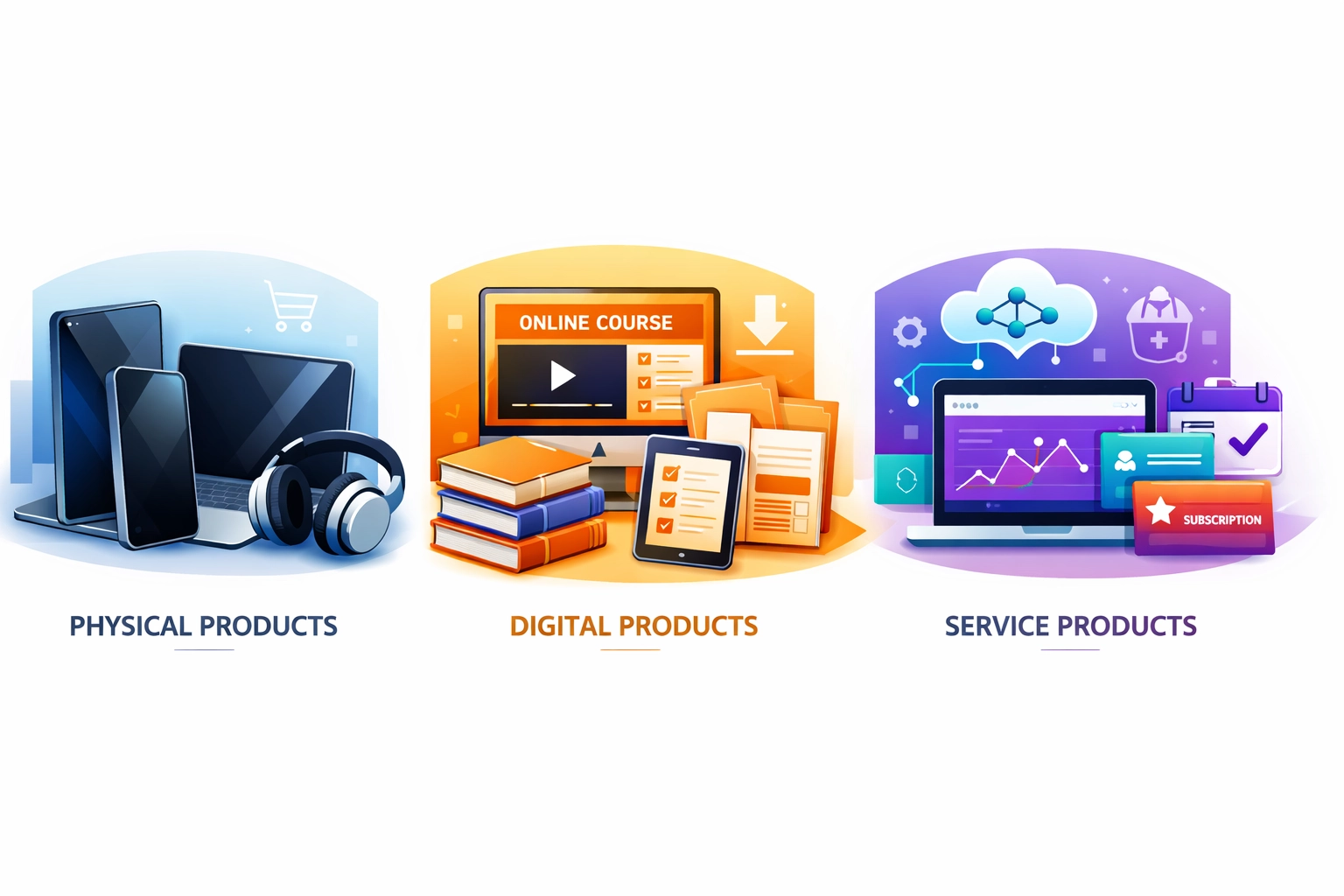
the three main types of affiliate products: physical goods, digital products, and SaaS services. commission rates, earning potential
The affiliate marketing landscape has evolved dramatically over the past decade, transforming from a niche side hustle into a multi-billion dollar industry that generates over $17 billion in revenue annually across the United States alone. Whether you’re a seasoned marketer looking to diversify your income streams or a beginner exploring passive revenue opportunities, understanding the different types of affiliate products available is crucial to building a sustainable and profitable business. From physical goods shipped to your customers’ doorsteps to digital courses that deliver instant value, the variety of products you can promote is virtually limitless. This comprehensive guide will walk you through every major category of affiliate products, helping you identify which types align best with your audience, expertise, and long-term business goals.
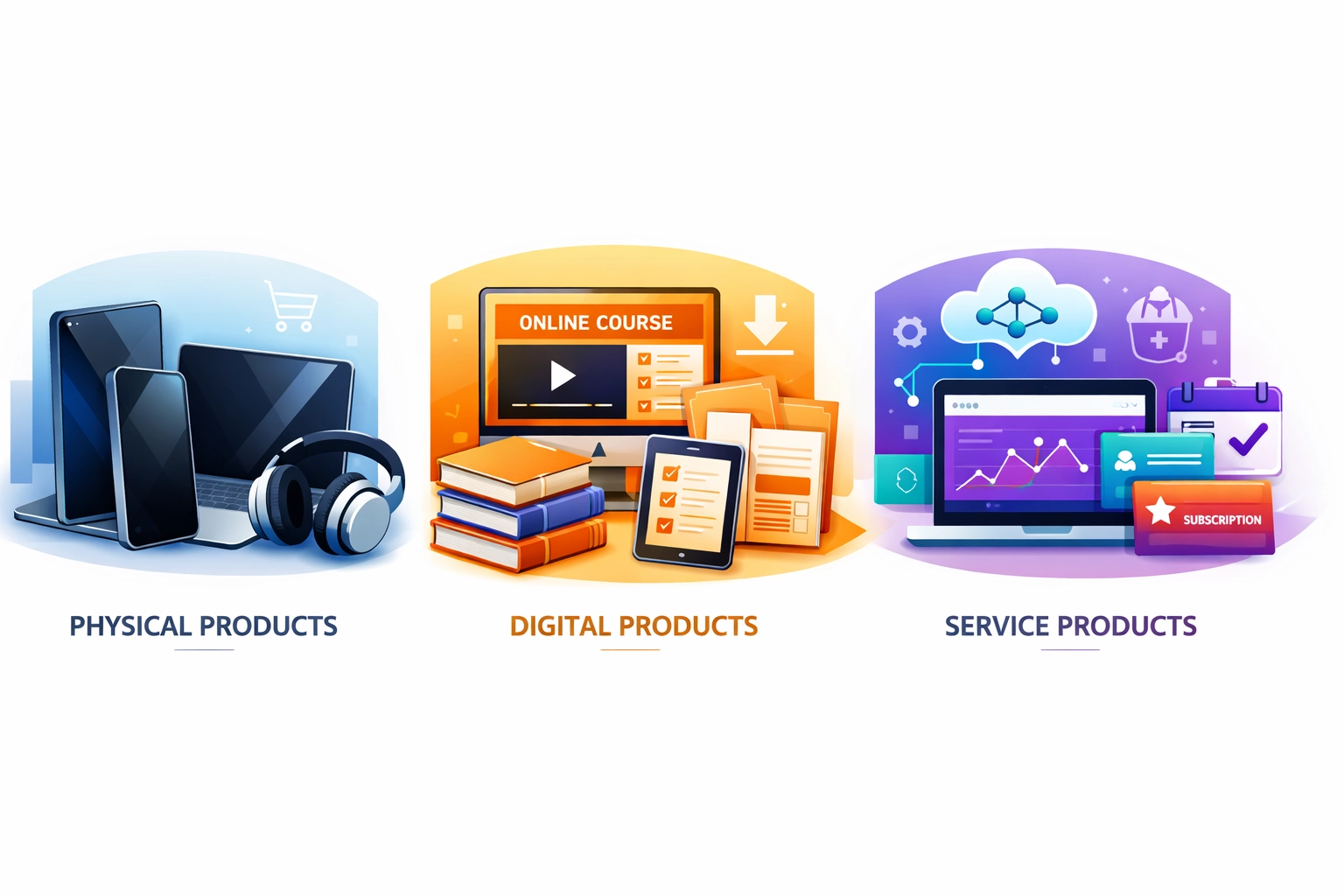
Physical products represent one of the most traditional and accessible categories in affiliate marketing, encompassing everything from electronics and fashion to home goods and sporting equipment. Major retailers like Amazon, Best Buy, and Walmart operate some of the largest affiliate programs in the world, offering commission rates typically ranging from 1-10% depending on the product category. The beauty of promoting physical products is that consumers are already accustomed to purchasing them online, and the buying process is straightforward with established logistics networks handling fulfillment and returns. However, physical product affiliate marketing does come with challenges: lower commission percentages compared to digital products, longer sales cycles for high-ticket items, and the need to build trust around product quality and reliability. Success in this category often requires creating detailed product reviews, comparison guides, and unboxing content that helps potential buyers make informed decisions. Many top affiliate marketers focus on niche physical products—such as specialized fitness equipment, gaming peripherals, or outdoor gear—where they can establish themselves as trusted experts and command higher conversion rates.

Set up advanced tracking in minutes. No credit card required.
To help you navigate the diverse world of physical products, here’s a breakdown of the most profitable subcategories and their typical commission structures:
| Product Category | Average Commission Rate | Typical Order Value | Best Promotion Method |
|---|---|---|---|
| Electronics & Tech | 2-5% | $200-$1,500 | Reviews, Tutorials, Comparisons |
| Fashion & Apparel | 5-10% | $50-$200 | Style Guides, Lookbooks, Influencer Content |
| Home & Garden | 3-8% | $75-$500 | How-To Guides, Room Tours, DIY Content |
| Sports & Outdoors | 4-7% | $100-$800 | Gear Reviews, Training Guides, Adventure Content |
| Beauty & Personal Care | 5-12% | $30-$150 | Tutorials, Before/After, Unboxing Videos |
| Kitchen & Appliances | 3-6% | $150-$2,000 | Recipe Content, Product Demos, Lifestyle Integration |
When selecting physical products to promote, consider your audience’s purchasing power, the seasonality of products, and whether you can authentically integrate them into your content without appearing overly promotional. The most successful physical product affiliates often focus on a specific niche where they can build authority and trust, rather than promoting a wide variety of unrelated items. For example, a fitness blogger promoting workout equipment and supplements will see significantly higher conversion rates than a generalist promoting random products across multiple categories. Additionally, timing your promotions around major shopping events like Black Friday, Cyber Monday, and Prime Day can dramatically increase your earnings, as retailers often increase commission rates during these peak periods.
Digital products have emerged as the holy grail for affiliate marketers seeking higher profit margins and faster conversion cycles, with commission rates often ranging from 20-50% or even higher for some offerings. This category includes online courses, e-books, software tools, templates, presets, and digital downloads that deliver immediate value to customers without the overhead of physical inventory or shipping costs. Platforms like Udemy, Teachable, Gumroad, and Creative Market have democratized digital product creation, allowing anyone to build and monetize educational content or creative assets. The appeal of digital products for affiliates is substantial: customers receive instant access to their purchases, there are no refund logistics to manage, and the scalability is virtually unlimited since digital products can be sold infinitely without additional production costs. Digital product promotions tend to convert well when you can demonstrate clear value propositions, such as showing before-and-after results from a course or highlighting specific problems a software tool solves. Many successful affiliate marketers build their entire business around promoting digital products in their niche, creating detailed reviews, case studies, and comparison content that helps buyers understand exactly what they’re purchasing.
Be the first to know about new features and product updates.
Software-as-a-Service (SaaS) and service-based affiliate programs represent one of the fastest-growing segments in affiliate marketing, with companies like Shopify, HubSpot, Slack, and Mailchimp offering generous recurring commission structures that can generate passive income for years. Unlike one-time purchases, SaaS affiliates earn commissions on a monthly or annual basis as long as their referred customers maintain active subscriptions, creating a compounding income effect that rewards long-term customer acquisition. Commission rates for SaaS products typically range from 20-40% of the first month’s subscription fee, with some premium tools offering even higher payouts or lifetime recurring commissions on annual plans. The key to success in SaaS affiliate marketing is understanding your audience’s pain points and matching them with solutions that genuinely solve their problems, as SaaS customers tend to be more discerning and research-heavy in their purchasing decisions. Building trust through detailed product comparisons, feature breakdowns, and honest reviews is essential, as is demonstrating how the software integrates into real-world workflows and business processes. Many SaaS affiliates create comprehensive guides, video tutorials, and case studies showing how specific tools have transformed their own businesses, which resonates powerfully with potential customers facing similar challenges.
Emerging affiliate product categories continue to reshape the landscape, with cryptocurrency and blockchain services, NFT marketplaces, subscription boxes, and membership programs gaining significant traction among forward-thinking affiliates. Cryptocurrency exchanges like Coinbase and Kraken offer substantial referral bonuses—sometimes $50-$100 per qualified signup—making them attractive for affiliates with audiences interested in digital assets and financial technology. Subscription box services in niches like beauty, snacks, books, and pet products have created new opportunities for lifestyle and niche bloggers to earn recurring commissions while providing genuine value to their audiences. Membership programs and exclusive communities are also expanding rapidly, with platforms like Patreon, Circle, and Mighty Networks enabling creators to build sustainable affiliate relationships around premium content and community access. Virtual events, webinars, and online conferences have become increasingly popular affiliate opportunities, particularly in the B2B and professional development spaces where high-ticket registrations can generate substantial commissions. As consumer behavior continues to evolve and new technologies emerge, staying informed about these emerging categories can position you ahead of the curve and help you capitalize on early-mover advantages in growing markets.
Choosing the right affiliate products to promote requires a strategic approach that balances profitability with authenticity and audience alignment, rather than simply chasing the highest commission rates available. Start by conducting a thorough audit of your existing audience, identifying their demographics, interests, pain points, and purchasing behaviors through surveys, analytics, and direct engagement with your community. Next, evaluate potential products against several key criteria: Does the product genuinely solve a problem for your audience? Can you authentically recommend it based on personal experience or thorough research? Does the commission structure justify the effort required to promote it? Is the product from a reputable company with good customer reviews and low refund rates? Consider the competitive landscape as well—promoting products with less affiliate competition can sometimes yield better results than chasing saturated markets where dozens of other affiliates are already established. Additionally, think about the long-term sustainability of your affiliate relationships; building partnerships with companies that offer excellent customer service, reliable commission payments, and ongoing support for their affiliates will serve you far better than constantly switching between programs. Finally, test different product types and promotion methods systematically, tracking your conversion rates and earnings per click to identify which categories and approaches work best for your specific audience and content style.
To help you evaluate and compare different affiliate products systematically, consider using this comprehensive assessment framework that takes into account multiple factors beyond just commission rates:
| Evaluation Factor | Weight | Excellent (5) | Good (3) | Poor (1) |
|---|---|---|---|---|
| Commission Rate | 20% | 30%+ | 15-25% | <10% |
| Product Quality & Reviews | 25% | 4.5+ stars, <2% refund rate | 4.0-4.4 stars, 2-5% refund rate | <4.0 stars, >5% refund rate |
| Audience Alignment | 20% | Perfect fit for audience | Moderate relevance | Minimal relevance |
| Conversion Difficulty | 15% | Easy to promote, high intent | Moderate effort required | Difficult, low intent |
| Company Reliability | 10% | Excellent support, on-time payments | Adequate support, reliable payments | Poor support, payment issues |
| Market Saturation | 10% | Low competition, emerging niche | Moderate competition | Highly saturated market |
By scoring each potential affiliate product across these dimensions and calculating a weighted total, you can make data-driven decisions about which products deserve your promotional efforts and marketing budget. This framework helps prevent the common mistake of promoting products solely because they offer high commissions, when in reality a lower-commission product with better audience alignment and less competition might generate significantly more revenue. Remember that your reputation is your most valuable asset as an affiliate marketer; promoting low-quality products or those misaligned with your audience will damage trust and ultimately harm your long-term earning potential. The most successful affiliates are selective about their partnerships, maintaining a curated portfolio of products they genuinely believe in and can confidently recommend to their audiences.

When it comes to managing multiple affiliate programs and streamlining your affiliate marketing operations, affiliate network platforms and management tools become essential infrastructure for scaling your business effectively. PostAffiliatePro stands out as one of the most comprehensive affiliate management solutions available, offering white-label affiliate program software that enables you to create, manage, and optimize your own affiliate network while also providing tools to manage your participation in other affiliate programs. The platform provides detailed tracking and analytics, allowing you to monitor which affiliates are driving the most valuable traffic, which products are converting best, and where your marketing budget is generating the highest ROI. Beyond PostAffiliatePro, other major affiliate networks like ShareASale, CJ Affiliate, Impact, and Awin aggregate thousands of affiliate programs across multiple industries, making it easier to discover new products to promote and manage commissions from a centralized dashboard. These networks handle crucial backend functions like tracking, attribution, fraud prevention, and payment processing, which would be extremely time-consuming and expensive to manage independently. For serious affiliate marketers looking to scale, investing in robust affiliate management infrastructure—whether through PostAffiliatePro for your own programs or through established networks for discovering new opportunities—is essential for maximizing efficiency and profitability.
The diversity of affiliate product types available today means there’s never been a better time to build a sustainable, profitable affiliate marketing business aligned with your expertise and audience interests. Whether you choose to focus on physical products, digital courses, SaaS solutions, or emerging categories like cryptocurrency and NFTs, the key to success remains consistent: choose products you genuinely believe in, understand your audience deeply, and create valuable content that helps people make informed purchasing decisions. Start by selecting one or two product categories to master, build authority and trust within those niches, and then gradually expand your portfolio as you gain experience and understand what works best for your specific audience. Take action today by auditing your current audience, identifying their top pain points and desires, and researching affiliate programs that offer solutions—your next significant income stream could be just one strategic partnership away. Begin your affiliate marketing journey now, and join the thousands of successful marketers who have built six and seven-figure businesses by helping their audiences discover products and services that genuinely improve their lives.
PostAffiliatePro makes it easy to track, manage, and optimize all your affiliate products in one powerful platform. Start building your affiliate network today.
Discover all types of affiliate products you can promote: physical products, information products, SaaS, and services. Learn which products generate the highest...
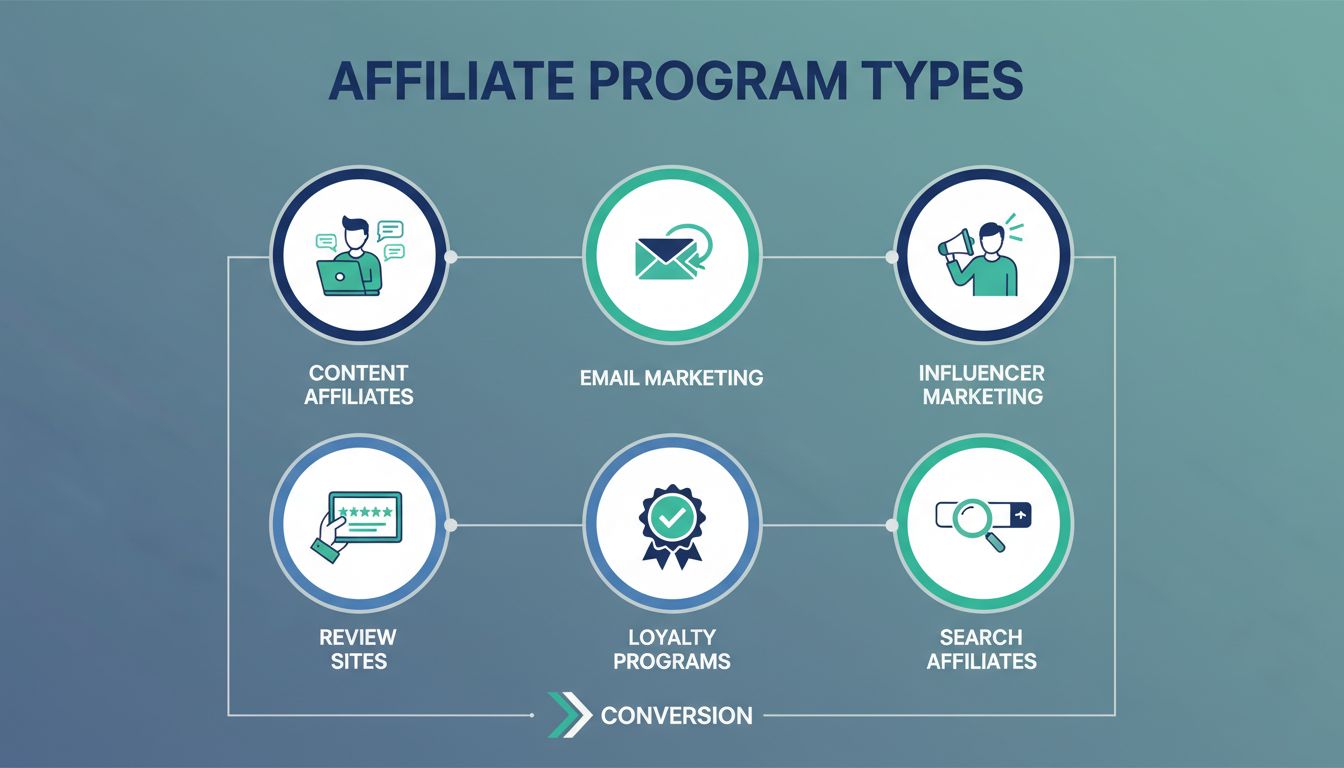
Discover the main types of affiliate programs including content, email marketing, loyalty, review sites, influencer, and more. Learn which model suits your busi...
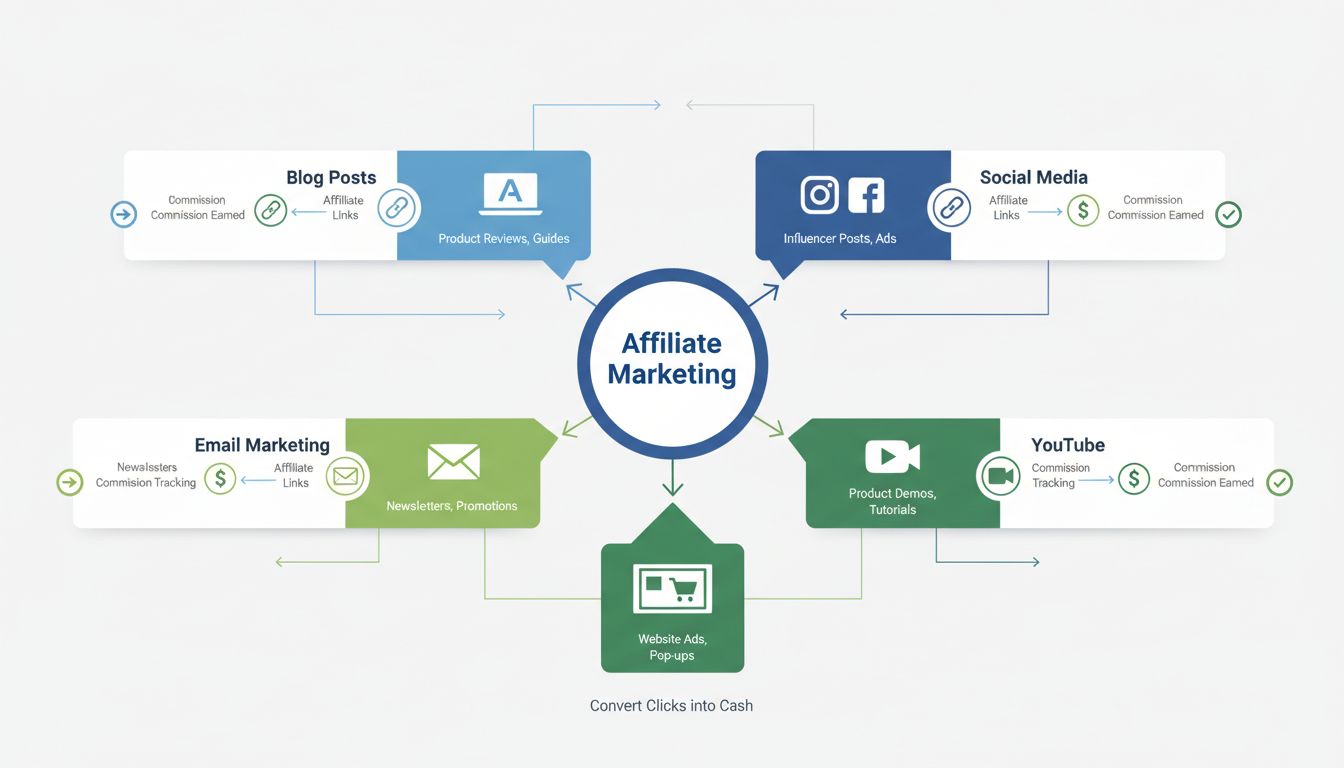
Learn proven strategies for promoting affiliate products through blogs, social media, email, and banners. Discover commission models, tracking methods, and best...
Join our community of happy clients and provide excellent customer support with Post Affiliate Pro.




Cookie Consent
We use cookies to enhance your browsing experience and analyze our traffic. See our privacy policy.