


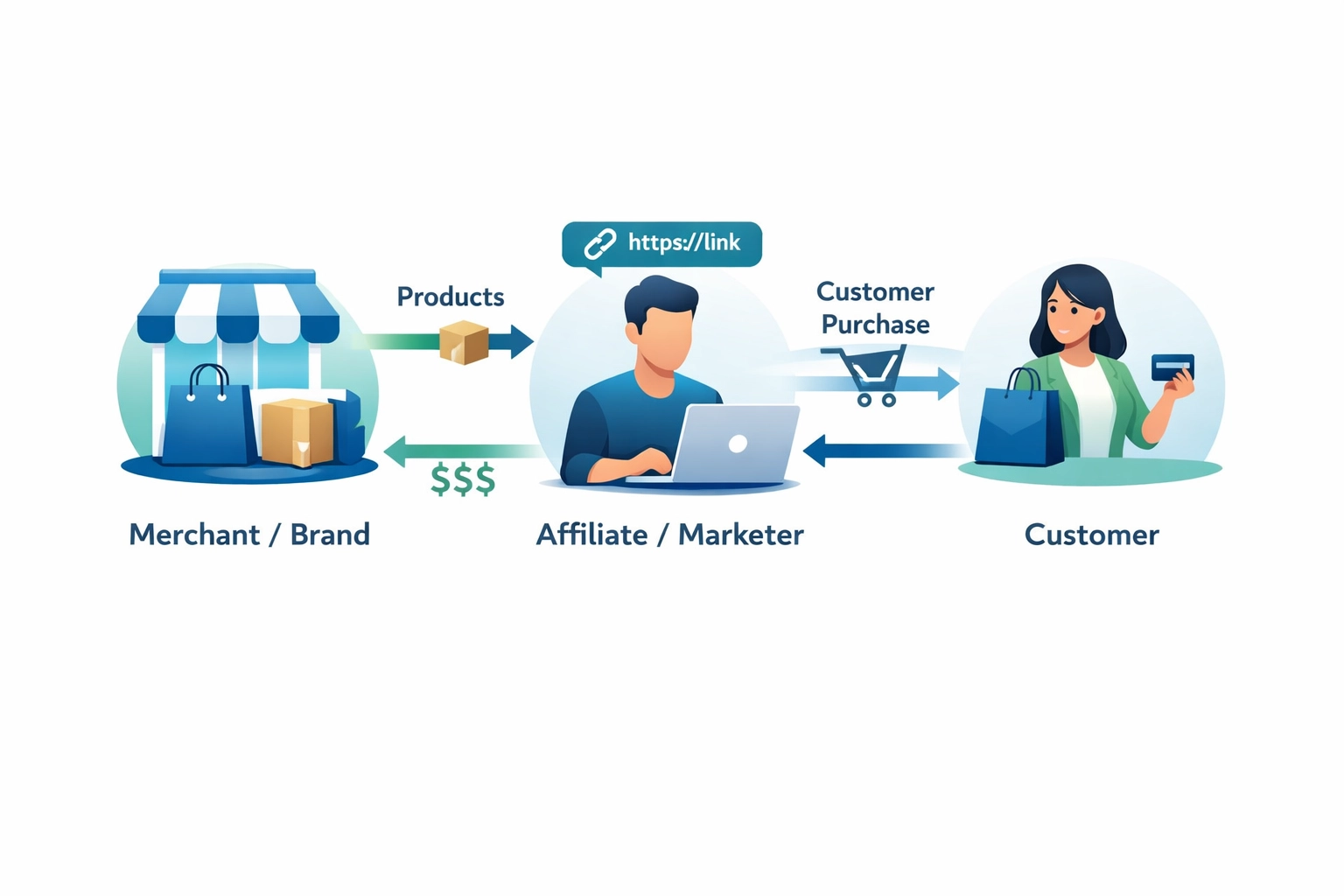
Start an Affiliate Marketing Campaign: Beginner Guide
how to launch a profitable affiliate marketing campaign from scratch. niche selection, platform building, program selection
7 min read


the three pillars of affiliate marketing: advertiser, publisher, and customer. how these interconnected parties create successful affiliate programs and drive
The three pillars of affiliate marketing represent the fundamental framework that powers one of the most dynamic and results-driven marketing channels in the digital economy. These three pillars—the advertiser (merchant), the publisher (affiliate marketer), and the customer (consumer)—form an interconnected ecosystem where each party plays a critical role in driving mutual success. In 2024, as the global affiliate marketing industry continues to expand beyond the $12-17 billion market size, understanding these pillars has become essential for brands looking to scale their reach and maximize ROI. The beauty of this model lies in its inherent alignment of incentives: success is only achieved when all three pillars work in harmony, creating a transparent, performance-based marketing environment that rewards genuine results over vanity metrics.
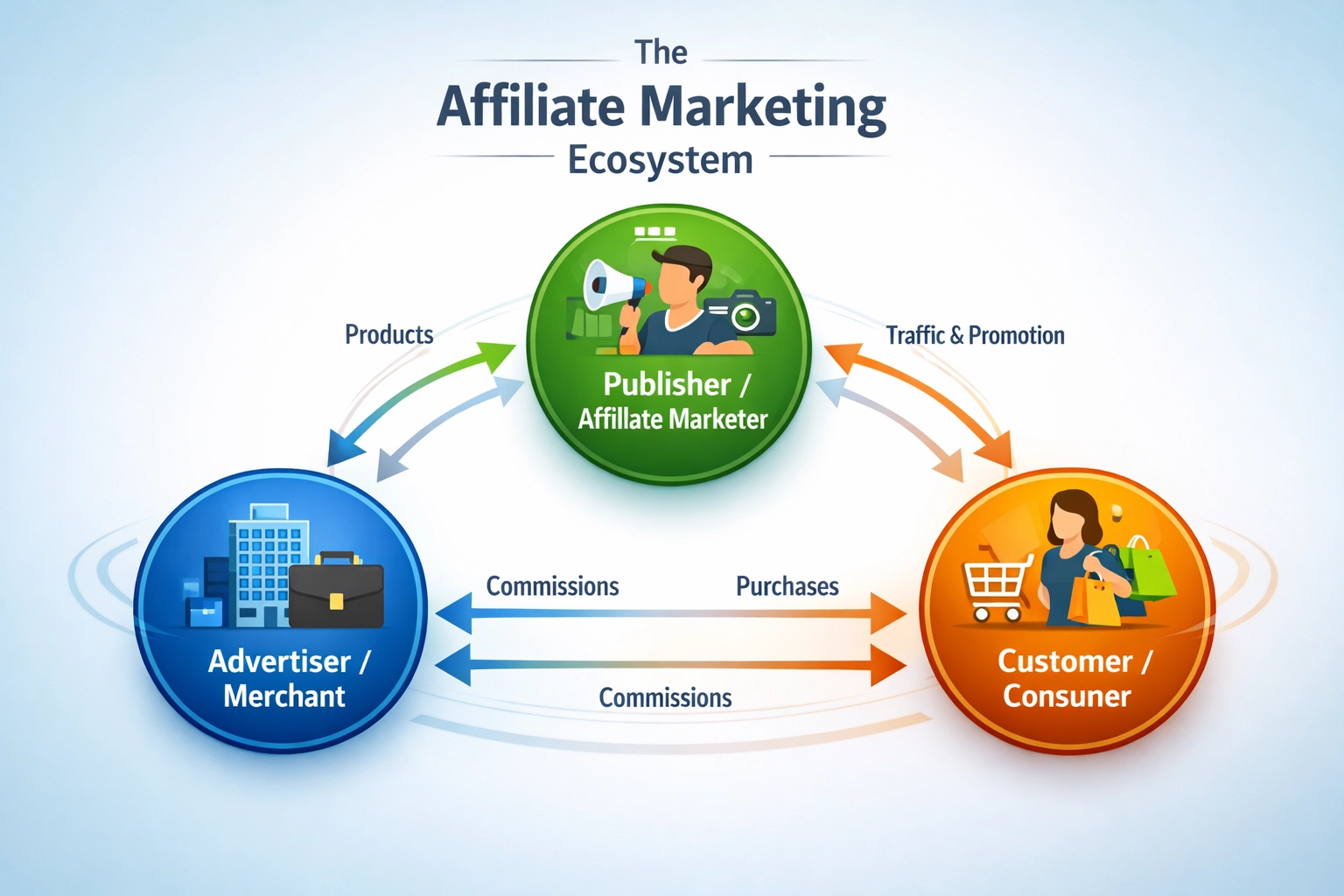
The advertiser or merchant serves as the foundation of the affiliate marketing ecosystem, providing the products, services, and commission structures that incentivize publishers to promote their offerings. Advertisers benefit from a performance-based model where they only pay for actual conversions—whether that’s a sale, lead, or specific action—rather than paying for impressions or clicks that may not convert. This risk mitigation is particularly valuable for e-commerce brands, SaaS companies, and digital service providers who need to demonstrate clear ROI on their marketing spend. Modern advertisers leverage sophisticated tracking and attribution systems to monitor affiliate performance in real-time, allowing them to optimize their commission structures and identify top-performing partners. The advertiser’s primary responsibility includes setting competitive commission rates, providing marketing materials and product information, ensuring timely and accurate payments, and maintaining transparent communication with their affiliate network. Different industries command vastly different commission structures based on product margins, customer lifetime value, and competitive landscape dynamics.
| Industry | Average Commission Rate | Range | Typical Model |
|---|---|---|---|
| E-commerce (General) | 5-10% | 2-15% | Per-sale |
| Fashion & Apparel | 8-12% | 5-20% | Per-sale |
| Electronics | 3-8% | 1-10% | Per-sale |
| SaaS & Software | 20-40% | 10-50% | Per-sale or recurring |
| Financial Services | 15-30% | 5-50% | Per-lead or per-sale |
| Travel & Hospitality | 5-15% | 3-20% | Per-booking |
| Health & Wellness | 10-20% | 5-30% | Per-sale |
| Subscription Services | 20-50% | 10-100% | Per-subscription or recurring |

Set up advanced tracking in minutes. No credit card required.
The publisher or affiliate marketer represents the creative force and distribution channel that connects products with potential customers through authentic, audience-focused content. Publishers range from micro-influencers with highly engaged niche audiences to established content creators, bloggers, YouTube channels, and social media personalities who have built trust with their followers. Their primary responsibility is to promote advertiser products in a way that feels natural and valuable to their audience, maintaining credibility while driving conversions that benefit both the advertiser and themselves. Successful publishers understand their audience’s pain points, preferences, and purchasing behaviors, allowing them to recommend products that genuinely solve problems rather than pushing irrelevant offerings. The rise of micro-influencers and nano-influencers in 2024-2025 has democratized affiliate marketing, enabling publishers with smaller but highly engaged audiences to earn substantial income while maintaining authentic connections with their followers. Publishers must also stay compliant with FTC guidelines and platform-specific disclosure requirements, ensuring transparency about their affiliate relationships to maintain audience trust and avoid regulatory penalties.
The customer or consumer is the third pillar that completes the affiliate marketing triangle, serving as the ultimate beneficiary and decision-maker in the entire ecosystem. Consumers discover products through affiliate content that feels authentic and trustworthy, often preferring recommendations from creators they follow over traditional advertising. This pillar represents the demand side of the equation—without genuine customer interest and purchasing intent, the entire affiliate marketing model collapses. Modern consumers are increasingly sophisticated, conducting thorough research before making purchases and valuing transparency about affiliate relationships. The customer’s journey through affiliate marketing channels is tracked and attributed through advanced systems that ensure proper credit assignment and commission payment. When all three pillars function optimally, customers benefit from discovering products that genuinely meet their needs, often at competitive prices or with exclusive offers negotiated by their trusted affiliate partners.
Be the first to know about new features and product updates.
The true power of affiliate marketing emerges when all three pillars operate in perfect synchronization, creating a performance-based marketing ecosystem where transparency and mutual benefit drive sustainable growth. The advertiser provides compelling products and competitive commissions, the publisher creates authentic content that resonates with their audience, and the customer discovers solutions to their problems through trusted recommendations. This interconnected model eliminates the friction of traditional advertising by replacing interruption-based marketing with permission-based, value-driven promotion. Real-time tracking and attribution systems ensure that each party can measure their contribution and success, creating accountability and trust throughout the network. The synergy becomes particularly powerful when advertisers provide publishers with detailed product information, marketing assets, and performance data, enabling publishers to optimize their promotional strategies. When customers have positive experiences with recommended products, they’re more likely to return to that publisher for future recommendations, creating a virtuous cycle of trust and repeat business.
| Pillar | Role | Primary Goal | Key Responsibilities |
|---|---|---|---|
| Advertiser/Merchant | Product Provider & Commission Setter | Maximize sales and customer acquisition at optimal cost | Set competitive rates, provide marketing materials, ensure accurate tracking, timely payments |
| Publisher/Affiliate | Content Creator & Distributor | Generate income through authentic audience recommendations | Create quality content, maintain audience trust, drive conversions, ensure compliance |
| Customer/Consumer | Buyer & Decision-Maker | Find products that solve problems and meet needs | Research options, make informed purchases, provide feedback |
The performance-based nature of affiliate marketing fundamentally differentiates it from traditional advertising channels, creating an inherent alignment of incentives that drives measurable results. Unlike paid advertising where brands pay regardless of outcomes, affiliate marketing ensures that compensation flows only when specific, trackable actions occur—typically a sale, lead, or signup. This model dramatically reduces marketing waste and allows brands to scale their customer acquisition costs predictably, knowing exactly what they’re paying for each conversion. For publishers, the performance-based model means unlimited earning potential; there’s no ceiling on commissions if they can drive high-quality traffic and conversions. The transparency inherent in performance-based marketing builds trust across all three pillars, as every transaction is tracked, verified, and attributed to the appropriate parties. This accountability mechanism has made affiliate marketing the preferred channel for 80% of brands globally, according to recent industry data, as it delivers consistent ROI and scales efficiently with business growth.
Modern affiliate marketing has evolved far beyond simple per-sale commission models, offering diverse commission structures and payment arrangements that accommodate different business models and affiliate capabilities. Cost-per-sale (CPS) remains the most common model, where publishers earn a percentage of each completed transaction, typically ranging from 5-50% depending on industry and product margins. Cost-per-lead (CPL) models compensate publishers for qualified leads, particularly valuable in financial services, insurance, and B2B sectors where sales cycles are longer and lead quality matters more than immediate conversions. Cost-per-action (CPA) encompasses any trackable action beyond sales or leads, including app installations, email signups, or account creations. Recurring commission models have gained prominence with the rise of SaaS and subscription services, where publishers earn ongoing commissions on customer lifetime value rather than one-time transactions. Hybrid models combine multiple commission types, allowing advertisers to incentivize different actions based on campaign objectives. The flexibility of these structures enables advertisers to attract diverse publisher types—from high-volume traffic sources to quality-focused content creators—while ensuring fair compensation aligned with actual value delivered.
Trust and transparency form the bedrock upon which successful affiliate marketing relationships are built, requiring commitment from all three pillars to maintain integrity and credibility. Advertisers must honor their commission agreements, provide accurate tracking data, and pay publishers promptly and reliably, establishing themselves as trustworthy partners worthy of long-term collaboration. Publishers must disclose their affiliate relationships clearly to their audiences, comply with FTC guidelines and platform policies, and promote only products they genuinely believe in, protecting their credibility as trusted advisors. Customers need assurance that affiliate recommendations are authentic and not driven purely by commission incentives, which is why transparency about affiliate relationships has become a legal requirement and ethical standard. Advanced tracking and attribution systems provided by platforms like PostAffiliatePro ensure that all parties can verify performance metrics, commission calculations, and payment accuracy, eliminating disputes and building confidence. When trust is established across all three pillars, the entire ecosystem becomes more efficient, with publishers willing to invest more effort in promotion and customers more receptive to recommendations.
The affiliate marketing landscape is undergoing significant transformation in 2024-2025, with each pillar adapting to emerging technologies, regulatory changes, and shifting consumer behaviors. Social commerce integration has become critical for all three pillars, with platforms like TikTok Shop, Instagram Shopping, and YouTube Shopping creating new direct-to-consumer pathways that affiliate marketers can leverage for seamless purchasing experiences. The rise of micro-influencers and nano-influencers has shifted power dynamics, with smaller creators often delivering superior engagement rates and conversion metrics compared to traditional macro-influencers. Privacy regulations and the deprecation of third-party cookies have forced the industry to embrace first-party data strategies, where advertisers and publishers build direct relationships with customers and rely on owned data rather than third-party tracking. Artificial intelligence and machine learning are revolutionizing attribution modeling, enabling more accurate credit assignment across complex customer journeys involving multiple touchpoints. The three pillars are also becoming more specialized, with publishers increasingly focusing on specific niches and audiences where they can build authentic authority. These evolutionary pressures are creating opportunities for platforms that can adapt quickly and provide the infrastructure needed for success in this new environment.

PostAffiliatePro stands as the leading affiliate marketing platform, purpose-built to empower and connect all three pillars of the affiliate marketing ecosystem with sophisticated tools, transparent tracking, and comprehensive support. For advertisers, PostAffiliatePro provides enterprise-grade tracking and attribution systems that accurately measure affiliate performance, automate commission calculations, and ensure timely payments that build publisher loyalty. The platform’s advanced analytics dashboard gives advertisers real-time visibility into campaign performance, allowing them to optimize commission structures, identify top performers, and scale successful partnerships efficiently. For publishers, PostAffiliatePro offers intuitive tools for managing multiple affiliate programs, tracking earnings in real-time, and accessing marketing materials and product information that enable effective promotion. The platform’s robust API and integration capabilities allow publishers to seamlessly embed affiliate links and tracking into their content, whether they’re operating blogs, YouTube channels, social media accounts, or e-commerce sites. For customers, PostAffiliatePro’s transparent tracking ensures they receive proper service and support, while the platform’s compliance features protect consumer privacy and ensure regulatory adherence. By providing a unified platform where all three pillars can interact transparently and efficiently, PostAffiliatePro has become the trusted infrastructure powering affiliate marketing success for thousands of brands and publishers worldwide.
Understanding and optimizing the three pillars of affiliate marketing is no longer optional for brands seeking sustainable growth in 2024 and beyond—it’s essential. The performance-based, transparent nature of affiliate marketing creates a unique alignment of incentives where all three pillars benefit from genuine success, making it one of the most efficient and scalable marketing channels available. As the industry continues to evolve with social commerce integration, privacy-first data strategies, and AI-powered attribution, the fundamental importance of these three pillars only grows stronger. Brands that invest in building strong relationships with quality publishers, providing excellent products and fair commissions, and maintaining transparent communication with customers will unlock exponential growth potential. Start optimizing your affiliate marketing strategy today with PostAffiliatePro, the platform trusted by industry leaders to manage, track, and scale affiliate partnerships across all three pillars of success.
The three pillars of affiliate marketing are the advertiser (merchant), the publisher (affiliate marketer), and the customer (consumer). These three parties work together in a performance-based marketing model where publishers earn commissions by promoting the advertiser's products to customers, creating a mutually beneficial ecosystem.
The three pillars function as an interconnected system where the advertiser provides products and commissions, the publisher creates content and drives traffic, and the customer discovers and purchases products through affiliate recommendations. This performance-based model aligns incentives so that all parties benefit from genuine success and quality results.
Commission rates vary significantly by industry. E-commerce typically offers 5-10%, SaaS and software 20-40%, financial services 15-30%, and subscription services 20-50%. Advertisers should set competitive rates that attract quality publishers while maintaining healthy profit margins and ROI.
Publishers build trust by creating high-quality, authentic content, disclosing affiliate relationships transparently, promoting only products they genuinely believe in, and consistently providing value to their audience. Trust is the foundation of successful affiliate marketing and directly impacts conversion rates and long-term earnings.
The performance-based model means advertisers only pay for actual results—sales, leads, or conversions—rather than paying for impressions or clicks. This reduces marketing waste, ensures measurable ROI, and creates accountability. For publishers, it means unlimited earning potential based on their ability to drive quality traffic and conversions.
PostAffiliatePro provides sophisticated tracking and attribution systems, real-time reporting dashboards, automated commission calculations, fraud detection, and comprehensive analytics. The platform empowers advertisers to optimize programs, publishers to track earnings, and ensures transparent communication across all three pillars of the affiliate ecosystem.
Key trends in 2024-2025 include social commerce integration (TikTok Shop, Instagram Shopping), the rise of micro-influencers and nano-influencers, AI-powered attribution and personalization, mobile-first strategies, privacy-first data approaches, and the shift toward first-party data collection as third-party cookies phase out.
Transparency builds trust across all three pillars. Advertisers must honor agreements and provide accurate tracking, publishers must disclose affiliate relationships and promote quality products, and customers need assurance that recommendations are authentic. Transparency is both a legal requirement (FTC guidelines) and an ethical standard that ensures sustainable growth.
PostAffiliatePro is the leading affiliate management platform that helps merchants and publishers succeed together. Manage your entire affiliate program with advanced tracking, real-time reporting, and automated commission calculations.
how to launch a profitable affiliate marketing campaign from scratch. niche selection, platform building, program selection

Unlock the missing piece of your Facebook organic marketing strategy with insights from Jamie Gardiner. Discover how building authority can boost your sales by ...
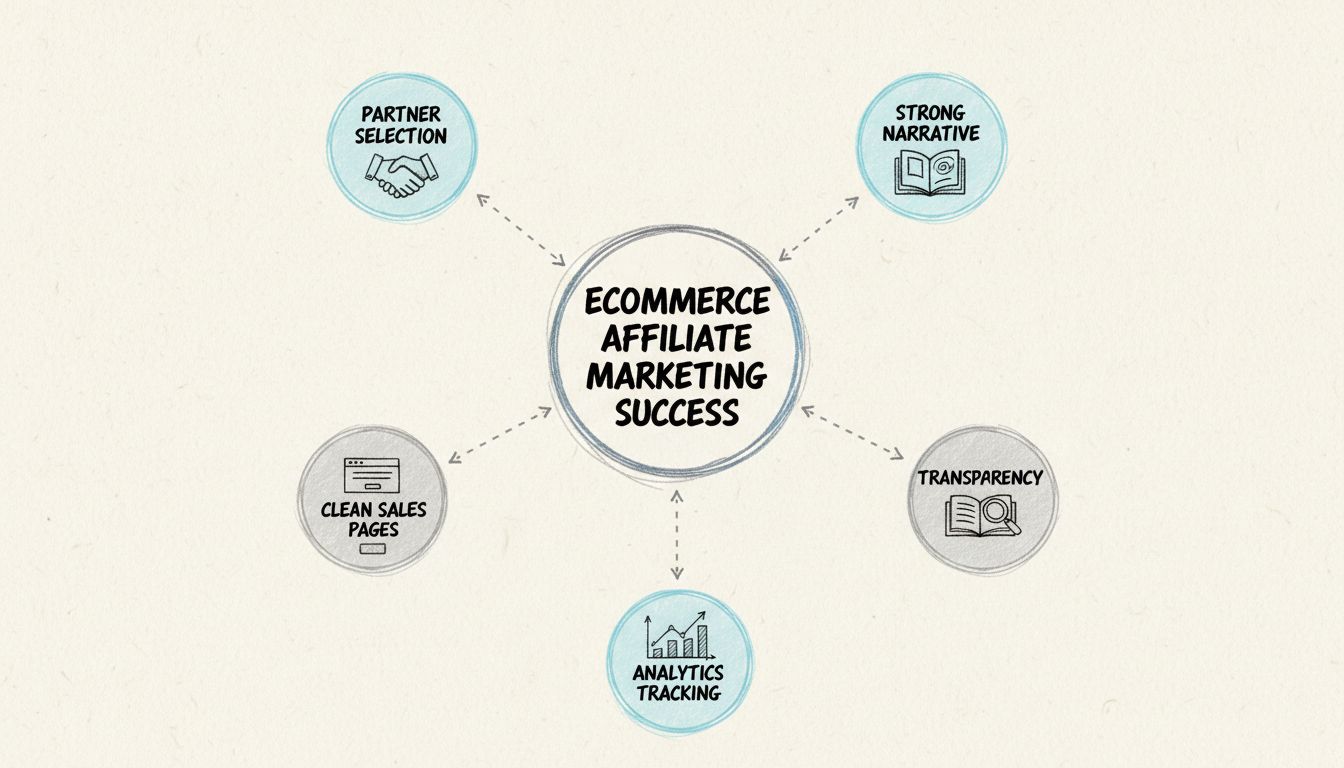
Master eCommerce affiliate marketing with proven strategies: partner selection, narrative building, clean sales pages, transparency, and analytics tracking. Lea...
Join our community of happy clients and provide excellent customer support with Post Affiliate Pro.




Cookie Consent
We use cookies to enhance your browsing experience and analyze our traffic. See our privacy policy.