


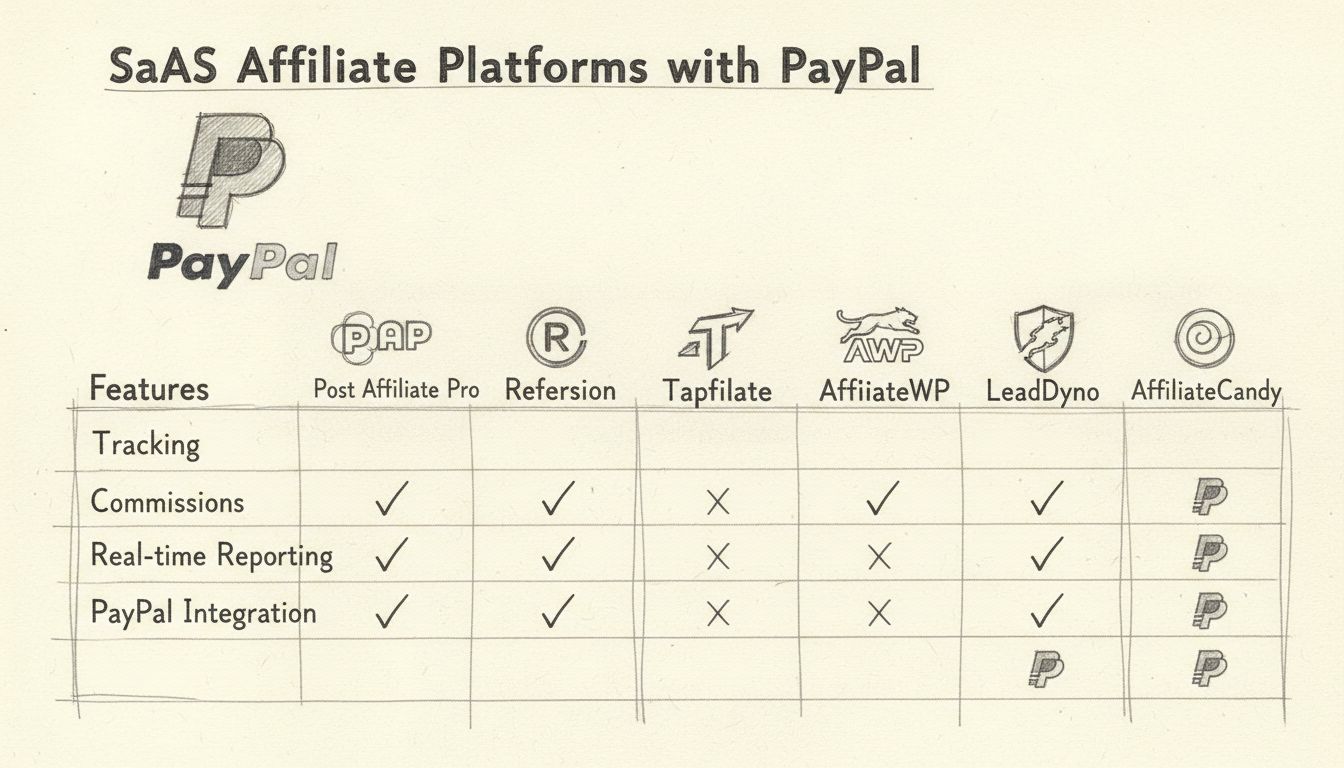
Best Affiliate Software for SaaS with PayPal Integration
Discover the top 6 affiliate software platforms for SaaS businesses that integrate with PayPal. Compare features, pricing, and capabilities for managing affilia...
12 min read

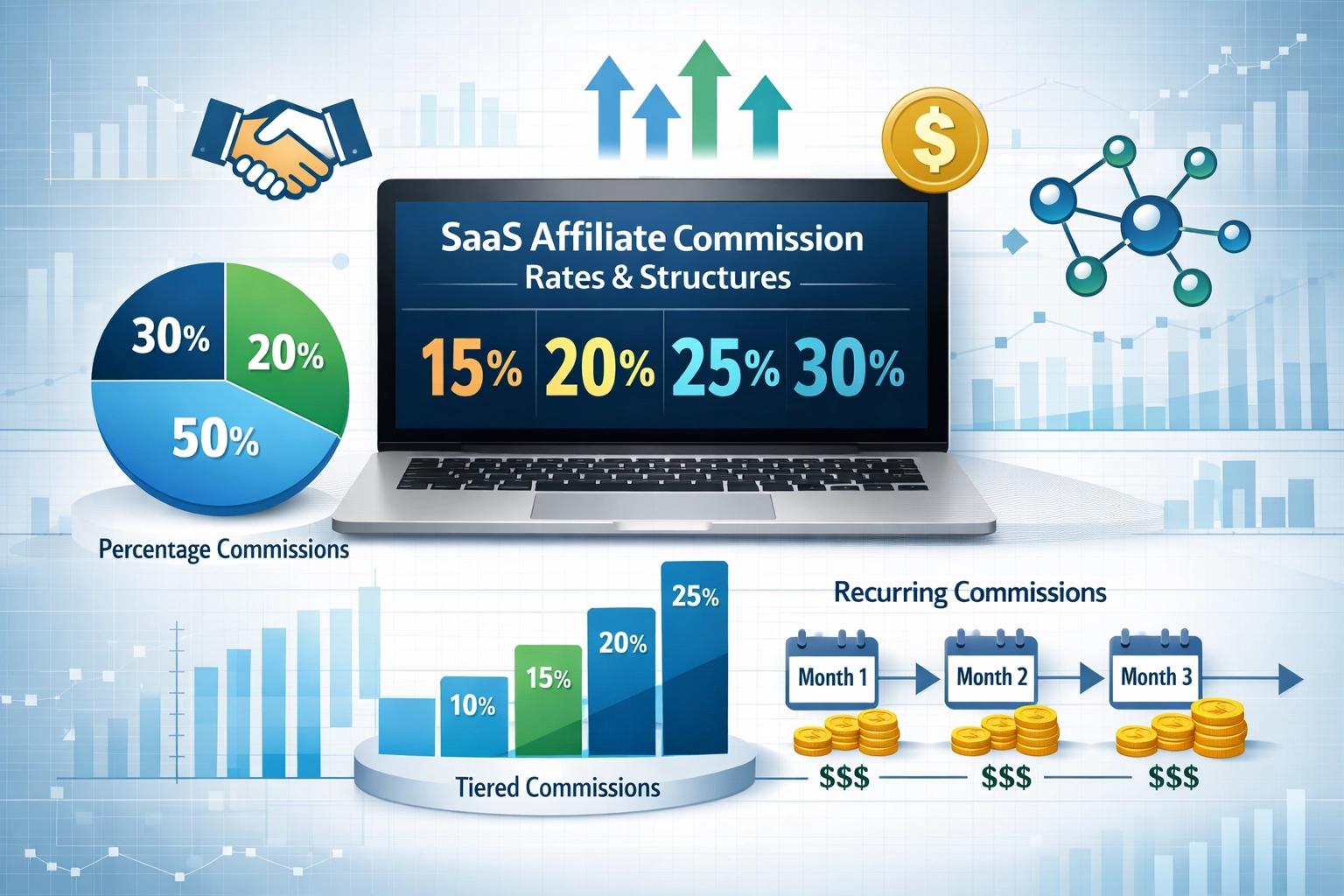
Complete guide to SaaS affiliate commission rates, structures, and best practices. how to set competitive rates, attract top affiliates
SaaS affiliate marketing has emerged as one of the most powerful revenue channels for software companies, and for good reason: it’s a performance-based model that rewards partners for actual results rather than mere exposure. Unlike traditional advertising, SaaS affiliate commissions create a unique advantage through recurring revenue models, where a single referral can generate ongoing commissions for months or even years. This means that while a customer acquisition cost might be paid once, the lifetime value of that customer continues to benefit your affiliate partners—creating a powerful incentive structure that aligns both parties toward long-term success. For SaaS founders and marketers looking to scale without massive upfront marketing spend, understanding how to structure and optimize affiliate commissions is the difference between a program that generates thousands in monthly revenue and one that becomes a core acquisition channel driving 15-25% of total MRR.

The SaaS affiliate commission landscape typically ranges from 5% to 30% of the sale value, with most mature programs settling between 15-25% depending on industry and company maturity. According to recent benchmarks analyzing $68.4 million in affiliate revenue across multiple SaaS sectors, top-performing programs in the AI/ML space offer around 24.5% commission rates, while creator economy tools average 12-22% MRR contribution through affiliates. Several factors influence these rates: product pricing (higher-ticket items can support lower percentages), customer lifetime value (products with strong retention justify higher commissions), market competition (saturated niches require more aggressive rates), and company profitability (gross margins must accommodate affiliate payouts). Commission structures also vary significantly—some companies offer flat-rate commissions (a fixed percentage on every sale), while others implement tiered systems where rates increase as affiliates hit performance milestones, or recurring commissions that pay out monthly for the lifetime of the customer relationship. Real-world examples illustrate this diversity: Homesage.ai offers up to 40% recurring commission for 12 months, while Booking.com uses a tiered model ranging from 25-30% based on monthly booking volume.
| Commission Type | Rate Range | Best For |
|---|---|---|
| Percentage-based | 15-30% | Most SaaS products |
| Flat fee | $50-$500+ | High-value products |
| Hybrid models | Varies | Enterprise solutions |
| Recurring | 10-25% monthly | Subscription services |

Set up advanced tracking in minutes. No credit card required.
Understanding the different commission structure models available is crucial for designing a program that attracts top affiliates while protecting your margins. Here’s a quick overview of the main payment models:
| Commission Model | Typical Rate | Best For | Earning Potential |
|---|---|---|---|
| Pay-per-Sale (PPS) | 15-30% per sale | Most SaaS programs | High with quality traffic |
| Pay-per-Lead (PPL) | $5-$50 per lead | Services, trials | Moderate, volume-dependent |
| Pay-per-Click (PPC) | $0.05-$2.00 per click | High-traffic sites | Low, requires massive volume |
| Pay-per-Install (PPI) | $0.50-$5.00 per install | App/software downloads | Moderate, niche-dependent |
| Hybrid Models | Tiered structure | Premium programs | Highest with performance |
Here are the primary structures used by successful SaaS companies:
• Flat-Rate Commissions: A fixed percentage applied to every sale (e.g., 20% on all referrals). This is the simplest model to manage and understand, making it ideal for new programs. However, it doesn’t incentivize higher performance or reward top performers differently.
• Tiered Commissions: Commission rates increase as affiliates hit specific milestones (e.g., 15% for 0-10 referrals, 20% for 11-25 referrals, 25% for 26+ referrals). Homesage.ai exemplifies this approach with their Starter (25%), Growth (30%), and Elite (40%) tiers. This structure motivates affiliates to increase their efforts and rewards loyalty.
• Recurring Commissions: Affiliates earn a percentage of monthly subscription fees for the lifetime of the customer relationship (or a set period like 12 months). This is particularly powerful in SaaS because it creates ongoing revenue streams—a single referral can generate commissions for years. Homesage.ai’s 12-month recurring model and programs offering lifetime recurring commissions exemplify this approach.
• Split Commissions: Revenue is divided between multiple parties (e.g., 60% to the affiliate, 40% to a partner platform). This structure is common when using affiliate networks or when multiple partners contribute to a sale.
• Milestone-Based Commissions: Bonuses are awarded when affiliates achieve specific goals (e.g., $500 bonus for 10 referrals in a month, or 5% bonus commission during promotional periods). This incentivizes short-term pushes and helps programs capitalize on seasonal opportunities.
• Performance-Based Commissions: Rates adjust based on conversion quality, customer retention, or other metrics beyond just volume. High-performing affiliates who bring customers with strong retention rates earn higher commissions.
Pay-per-lead commissions work well for SaaS products that require longer sales cycles or have complex buying processes. Instead of earning only when a sale completes, affiliates receive compensation when a prospect takes a qualifying action such as filling out a contact form, requesting a demo, or signing up for a free trial. Typical PPL rates range from $5 to $50 per qualified lead, depending on the product’s value and the lead quality requirements.
This model benefits both affiliates and SaaS companies because it reduces the barrier to earning commissions. Affiliates don’t need to drive customers all the way through the entire sales funnel; they simply need to generate qualified interest. For SaaS companies, PPL allows them to pay only for genuine prospects rather than just clicks, ensuring better quality control over their affiliate channel.
Pay-per-click commissions are less frequently used in SaaS affiliate marketing compared to other models, primarily due to fraud concerns and the preference for performance-based metrics. With PPC, affiliates earn a small amount for each click on their affiliate link, typically ranging from $0.05 to $2.00 per click. This model requires massive traffic volumes to generate meaningful income and is generally better suited for high-traffic websites and large media publishers.
Pay-per-install commissions apply primarily to SaaS products that require software downloads or app installations. Affiliates earn a commission each time someone downloads and installs the application through their affiliate link, with rates typically ranging from $0.50 to $5.00 per installation. This model works particularly well for productivity tools, security software, and mobile applications.
Several critical factors determine what commission rate your SaaS company should offer, and getting this balance right is essential for program success. Product pricing and gross margins form the foundation—a $99/month SaaS tool with 70% gross margins can support higher affiliate commissions than a $29/month product with 50% margins. Customer lifetime value (CLV) is equally important; if your average customer stays for 24 months at $100/month, that’s $2,400 in lifetime revenue, which justifies paying a 20-25% commission on the initial sale. Market competition directly impacts your rates—AI and machine learning SaaS companies currently offer higher commissions (24.5% average) because demand for affiliates is intense and competition for top partners is fierce, while more mature, less competitive niches can operate with 10-15% rates. Finally, company priorities and growth stage matter significantly: early-stage startups often offer aggressive commissions (25-30%) to rapidly build affiliate networks and validate product-market fit, while established companies with strong organic channels might offer more conservative rates (10-15%) since they’re less dependent on affiliate revenue.
Be the first to know about new features and product updates.
Cookie duration represents a critical but often overlooked factor in SaaS affiliate commission calculations. The cookie duration determines how long after a customer clicks your affiliate link you remain credited for the sale if they complete a purchase. Most SaaS affiliate programs offer cookie durations ranging from 24 hours to 90 days, with 30-day cookies being the industry standard.
A longer cookie duration significantly increases earning potential because customers often don’t purchase immediately after clicking an affiliate link. They may research the product, compare alternatives, or wait for budget approval before making a purchase decision. With a 24-hour cookie, affiliates lose credit if the customer returns three days later to complete their purchase. With a 30-day or 90-day cookie, affiliates maintain credit throughout the customer’s consideration period.
When evaluating SaaS affiliate programs, always compare cookie durations alongside commission rates. A program offering 20% commission with a 24-hour cookie may actually be less lucrative than one offering 15% with a 90-day cookie, depending on your audience’s purchase behavior and decision timeline.
Setting the right commission rate requires a methodical approach that balances affiliate motivation with business sustainability. Here’s a step-by-step framework to guide your decision:
Calculate Your Gross Margin: Determine what percentage of each sale is profit after accounting for cost of goods sold, payment processing, and infrastructure costs. Your affiliate commission should never exceed 30-40% of your gross margin to maintain profitability.
Analyze Customer Lifetime Value: Calculate the average revenue a customer generates over their entire relationship with your company. If your CLV is $2,000, you can justify a higher commission rate than if it’s $300. A general rule: your commission should represent 5-15% of CLV.
Research Industry Benchmarks: Study competitors and similar SaaS products in your niche. According to Rewardful’s analysis, AI SaaS averages 24.5%, creator tools average 12-22%, and B2B SaaS ranges from 10-20%. Use these as reference points, not absolutes.
Consider Your Acquisition Cost: Compare your affiliate commission to your current customer acquisition cost (CAC). If you’re spending $500 to acquire a customer through paid ads, a 20% commission on a $100/month product ($20/month × 12 months = $240 first-year cost) is competitive.
Start Conservative and Optimize: If you’re new to affiliate marketing, begin at the lower end of your industry range (e.g., 15% instead of 25%). You can always increase rates later to attract better affiliates, but reducing rates damages relationships and program morale.
Factor in Recurring Revenue: For SaaS, decide whether commissions are one-time (paid only on the first sale) or recurring (paid monthly for the customer’s lifetime or a set period). Recurring commissions are more attractive to affiliates and justify slightly lower monthly percentages since they compound over time.
Build in Flexibility: Consider implementing tiered or performance-based structures that reward top affiliates. This allows you to offer competitive base rates while incentivizing excellence and scaling your program efficiently.
Test and Measure: Launch your program with your chosen rate, track performance metrics (affiliate recruitment, conversion rates, customer quality), and adjust after 3-6 months based on data rather than assumptions.
Real-world SaaS affiliate programs demonstrate how different commission structures drive measurable results across various niches. HeadshotPro, an AI headshot generator, drives $50,000+ in monthly affiliate revenue, representing 15% of total company revenue, using a straightforward commission model that appeals to content creators and professionals. OpusClip, an AI video repurposing tool, has generated over $100,000 in total affiliate revenue while supporting hundreds of active affiliates—their success stems from providing affiliates with visually striking “before/after” content that naturally converts on social platforms. In the creator economy space, beehiiv (a newsletter platform) generates 12-14% of MRR through affiliates and is on track for $1.2-1.5M in affiliate revenue in 2024, leveraging the fact that successful newsletter creators become natural brand advocates. Pallyy, a social media management tool, achieves an impressive 22% of MRR from affiliates—one of the highest benchmarks in the dataset—by targeting existing customers and micro-influencers in creative niches. In B2B, Aragon built a network of 2,000 affiliates in less than two years, driving nearly $1M in net revenue with top partners earning six-figure commission payouts, proving that relationship-driven affiliate programs in enterprise SaaS can deliver outsized returns. Finally, Uplisting, a property management SaaS, demonstrates the power of steady, long-term affiliate growth, generating over $700,000 in referral sales across four years (averaging $175,000 annually) through trusted industry relationships.
| Product Name | Commission Rate | Cookie Duration | Type |
|---|---|---|---|
| PostAffiliatePro | 30-40% | 60-90 days | Recurring |
| Semrush | $50-$350 | 120 days | Flat fee |
| ActiveCampaign | 20-30% | 90 days | Recurring |
| NordVPN | 40% | 30 days | Recurring |
| Homesage.ai | Up to 40% | 60 days | Recurring |
Building a high-performing SaaS affiliate program requires more than just setting a commission rate—it demands ongoing attention to recruitment, support, and optimization. Attract top affiliates by offering competitive commissions within your industry range, but also by providing exceptional support and resources; programs that invest in affiliate success see 60-80% annual retention rates, compared to much lower rates for programs that treat affiliates as a “set it and forget it” channel. Provide comprehensive marketing materials including pre-written email copy, social media graphics, landing page templates, and product demo videos—affiliates who have ready-to-use assets convert at significantly higher rates than those forced to create content from scratch. Communicate regularly through monthly newsletters, training webinars, and one-on-one check-ins to keep affiliates informed about new features, upcoming promotions, and successful strategies other partners are using. Implement tiered incentives that reward performance; offering bonuses for hitting milestones (e.g., $500 for 10 referrals) or higher commission rates for top performers motivates continued effort and helps you identify and nurture your best partners. Track and share performance data transparently so affiliates understand exactly how they’re performing, what’s converting, and where they can improve. Pay on time, every time—late or inaccurate payments are the fastest way to lose quality affiliates, so establish a reliable payment schedule and stick to it religiously. Finally, continuously optimize your program by testing new creatives, analyzing conversion rates, and adjusting your approach based on what’s working rather than assumptions.

Even well-intentioned SaaS companies often stumble when launching affiliate programs by making preventable mistakes that undermine long-term success. Setting commission rates too low is perhaps the most common error—offering 5-10% when your industry standard is 20% signals that you don’t value affiliate partnerships and will struggle to recruit quality partners; conversely, setting rates too high without understanding your margins can quickly erode profitability and create unsustainable unit economics. Neglecting affiliate support and communication is another critical mistake; affiliates who feel abandoned or unsupported will simply stop promoting your product, leaving your program to stagnate with only your most self-motivated partners remaining active. Failing to provide marketing materials forces affiliates to create content from scratch, which dramatically reduces participation rates and conversion quality—top affiliates expect professional assets ready to deploy. Not monitoring for fraud and abuse allows bad actors to game your system through trademark bidding, coupon abuse, or misleading advertising, which damages your brand reputation and wastes commission payouts on low-quality traffic. Finally, relying too heavily on a small number of top affiliates creates dangerous dependency; if your top 3 affiliates generate 50% of affiliate revenue and one of them leaves, your program suffers a catastrophic hit—successful programs diversify their affiliate base and continuously recruit new partners.
The SaaS affiliate marketing landscape is evolving rapidly, with several emerging trends reshaping how companies structure and manage their programs. AI-powered affiliate matching and optimization is becoming standard, with platforms using machine learning to identify which affiliates are most likely to succeed with your product and automatically adjusting commission rates based on performance data in real-time. Micro-affiliate networks are growing in importance as companies recognize that niche, highly-engaged audiences often convert better than broad-reach influencers; expect to see more programs targeting specialized communities and vertical-specific content creators. Transparency and compliance are increasingly critical, with stricter FTC enforcement of disclosure requirements and growing consumer demand for authentic recommendations—programs that prioritize ethical affiliate practices and transparent relationships will build stronger long-term partnerships. Hybrid commission models combining flat-rate, tiered, and performance-based elements are becoming more sophisticated, allowing companies to fine-tune incentives for different affiliate segments (e.g., higher recurring rates for customer referrals, performance bonuses for new customer acquisition). Finally, integration with customer success metrics is emerging as companies move beyond simple conversion tracking to reward affiliates based on customer quality, retention, and lifetime value—this shift aligns affiliate incentives with actual business outcomes rather than just volume.
SaaS affiliate marketing commissions are far more than a simple percentage—they’re a strategic lever that, when properly structured, can transform your customer acquisition and drive 15-25% of monthly recurring revenue. The key takeaways are clear: benchmark your rates against your industry (5-30% range, with most SaaS programs at 15-25%), structure commissions to align incentives (recurring models work best for SaaS), invest in affiliate support and resources (top programs spend 20% of time on engagement), and continuously optimize based on performance data rather than assumptions. Whether you’re launching your first affiliate program or scaling an existing one, the difference between a mediocre program generating a few thousand dollars monthly and a high-performing program driving six figures comes down to thoughtful commission design, consistent execution, and genuine partnership with your affiliates. If you’re ready to launch or optimize your SaaS affiliate program, consider leveraging dedicated affiliate management platforms like PostAffiliatePro, which provides the tracking, automation, and insights needed to implement these best practices at scale—allowing you to focus on strategy while the platform handles the operational complexity of commission calculations, fraud detection, and affiliate communications.
The average SaaS affiliate commission ranges from 5% to 30%, with most mature programs settling between 15-25%. The exact rate depends on factors like product pricing, customer lifetime value, market competition, and company profitability. AI/ML SaaS products average around 24.5%, while creator economy tools typically offer 12-22% commission rates.
One-time commissions pay affiliates a single percentage or flat fee when a customer makes their first purchase. Recurring commissions pay affiliates a percentage of the subscription fee every month for the lifetime of the customer relationship (or a set period like 12 months). Recurring commissions are more attractive to affiliates and are standard in SaaS because they create ongoing revenue streams from a single referral.
Cookie duration typically ranges from 30 to 90 days, with 30-60 days being most common. A longer cookie duration (60-90 days) is more attractive to affiliates because it provides a larger window for customers to make purchases and earn commissions. However, shorter durations (30 days) are more conservative and reduce the risk of paying commissions on customers who would have converted anyway.
Yes, you can change commission rates after launch, but it should be done carefully. Increasing rates is generally well-received by affiliates, but decreasing rates can damage relationships and cause top performers to leave. If you must decrease rates, provide advance notice, grandfather existing affiliates at the old rate, or offer other incentives to maintain morale.
A good commission rate balances affiliate motivation with business sustainability. Start by calculating your gross margin (commission should not exceed 30-40% of gross margin), analyzing your customer lifetime value (commission should represent 5-15% of CLV), and researching competitor rates. Most SaaS companies find success with rates between 15-25%, adjusted based on their specific market and product positioning.
Top affiliates are attracted to programs that offer competitive commission rates, longer cookie durations, excellent support, and professional marketing materials. Provide ready-to-use content (email templates, graphics, landing pages), communicate regularly with updates and training, implement tiered incentives that reward performance, and pay commissions reliably and on time. Programs that invest in affiliate success see 60-80% annual retention rates.
Recurring commissions are generally best for SaaS because they align affiliate incentives with long-term customer success and create ongoing revenue streams. However, the optimal structure depends on your business model. Consider combining recurring commissions with tiered rates that increase as affiliates hit performance milestones, or adding performance bonuses for top performers to maximize motivation and results.
Use dedicated affiliate management software that provides automated tracking, real-time reporting, and fraud detection. Key features include unique affiliate links or codes, cookie-based tracking (typically 30-90 days), conversion attribution, and detailed dashboards showing affiliate performance. Platforms like PostAffiliatePro offer comprehensive tracking, commission automation, and transparent reporting that affiliates can access in real-time.
PostAffiliatePro makes it easy to manage commissions, track affiliates, and automate payouts. Start building your high-performing affiliate network today.
Discover the top 6 affiliate software platforms for SaaS businesses that integrate with PayPal. Compare features, pricing, and capabilities for managing affilia...
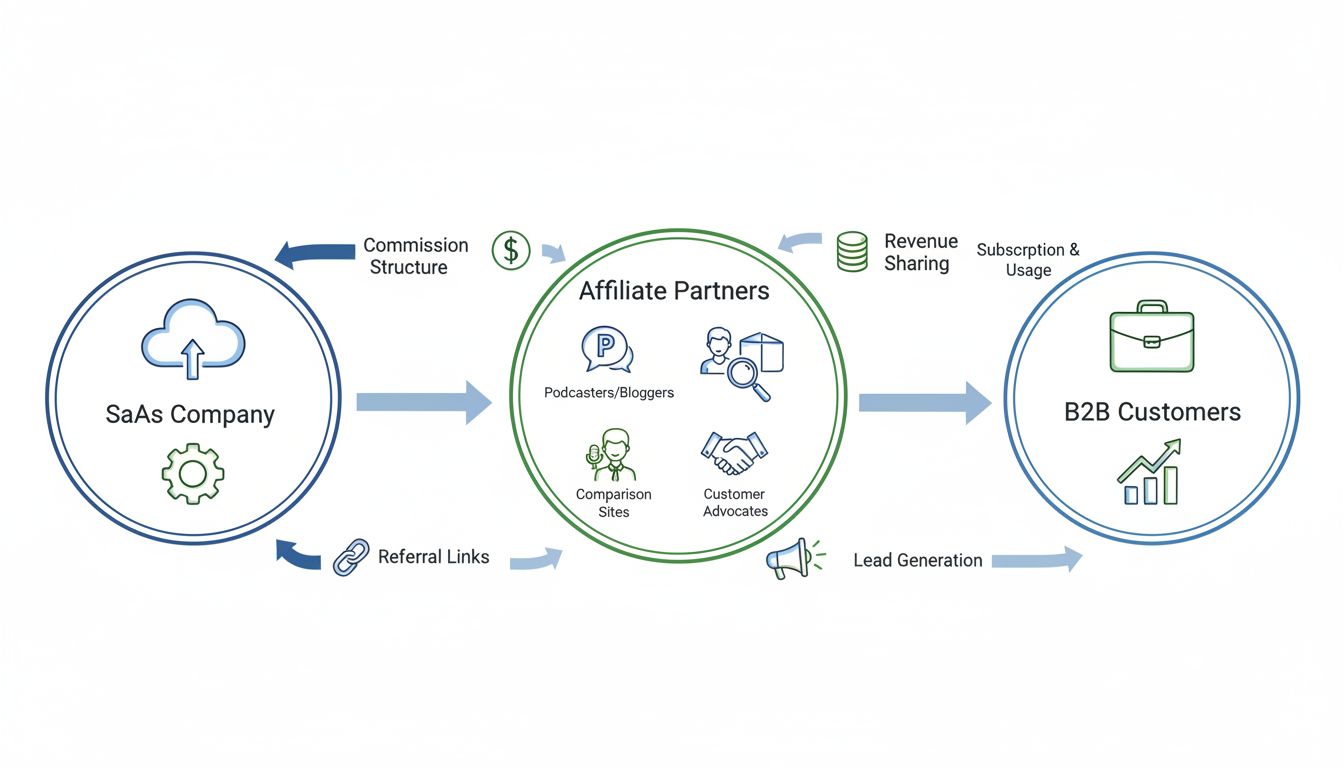
Discover how affiliate marketing drives B2B SaaS growth. Learn proven strategies, commission structures, and why PostAffiliatePro is the top choice for SaaS aff...
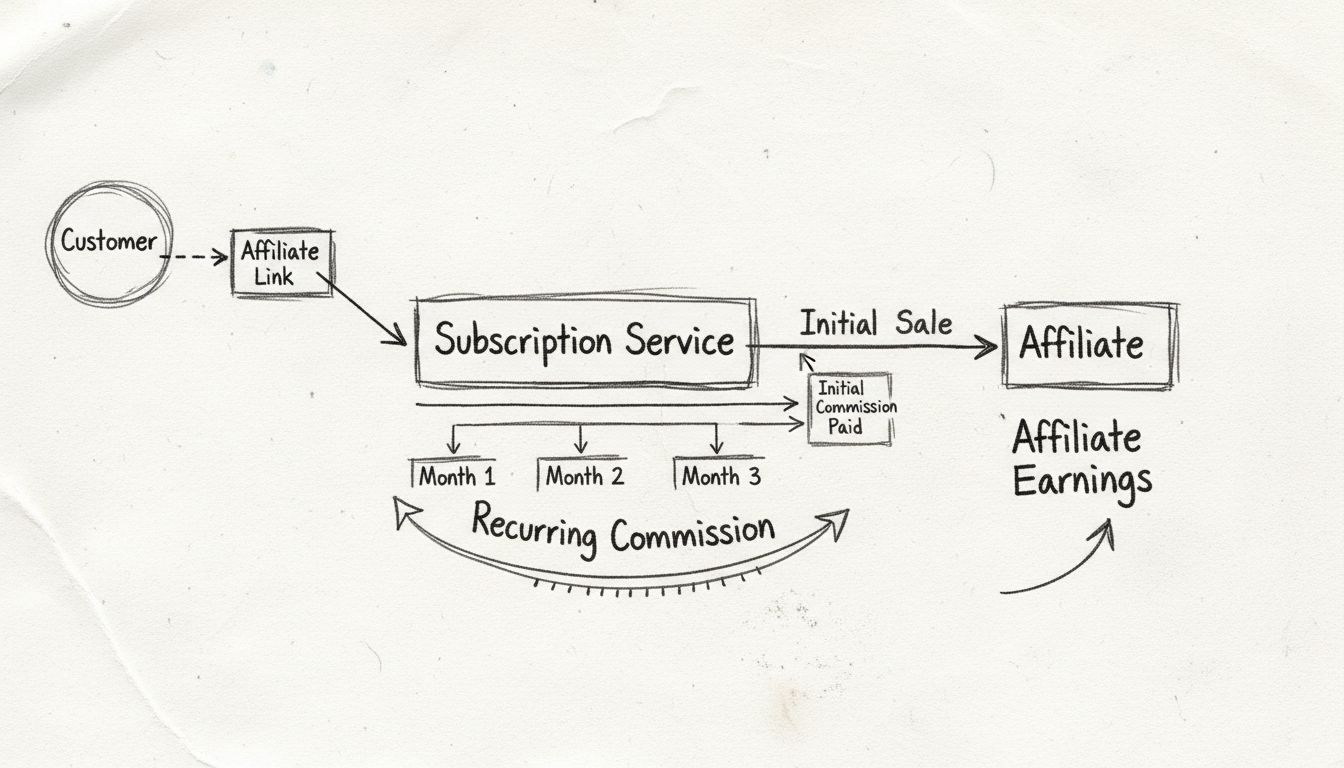
Learn how recurring commissions work in affiliate marketing. Discover the benefits for affiliates and merchants, implementation strategies, and how PostAffiliat...
Join our community of happy clients and provide excellent customer support with Post Affiliate Pro.



Cookie Consent
We use cookies to enhance your browsing experience and analyze our traffic. See our privacy policy.