


Why Multi-Touch Attribution Matters for Affiliate Marketing Success
Discover why multi-touch attribution is essential for modern marketing. Learn how it improves budget allocation, ROI measurement, and customer insights across y...
8 min read


how multi-touch attribution is replacing last-click models, enabling marketers to understand the complete customer journey and attribute credit across all
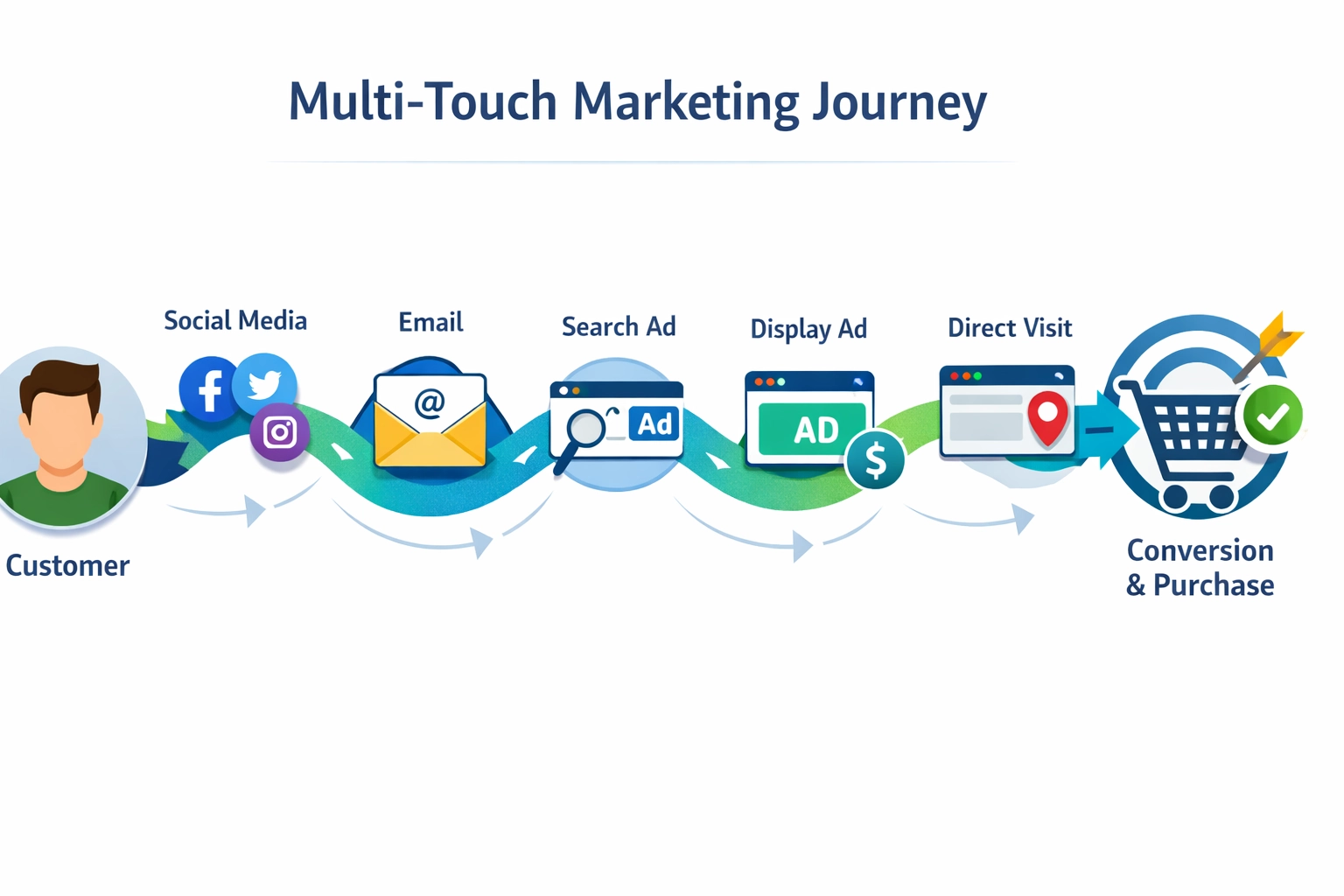
For decades, marketers have relied on a simple but flawed assumption: the last click before a purchase deserves all the credit. However, this traditional last-click attribution model ignores a critical reality—modern customers interact with brands across dozens of touchpoints before making a purchase decision. The average customer journey now involves 56+ interactions across multiple channels before conversion, yet most organizations still credit only the final touchpoint. Multi-touch attribution has emerged as the solution to this measurement crisis, fundamentally changing how organizations understand their customer journey and allocate marketing budgets. As the marketing landscape continues to shift toward omnichannel experiences and privacy-first technologies, the need for sophisticated attribution models has never been more urgent. Organizations that embrace multi-touch attribution gain a competitive advantage by understanding which channels and campaigns truly drive revenue, not just which ones happen to be last.
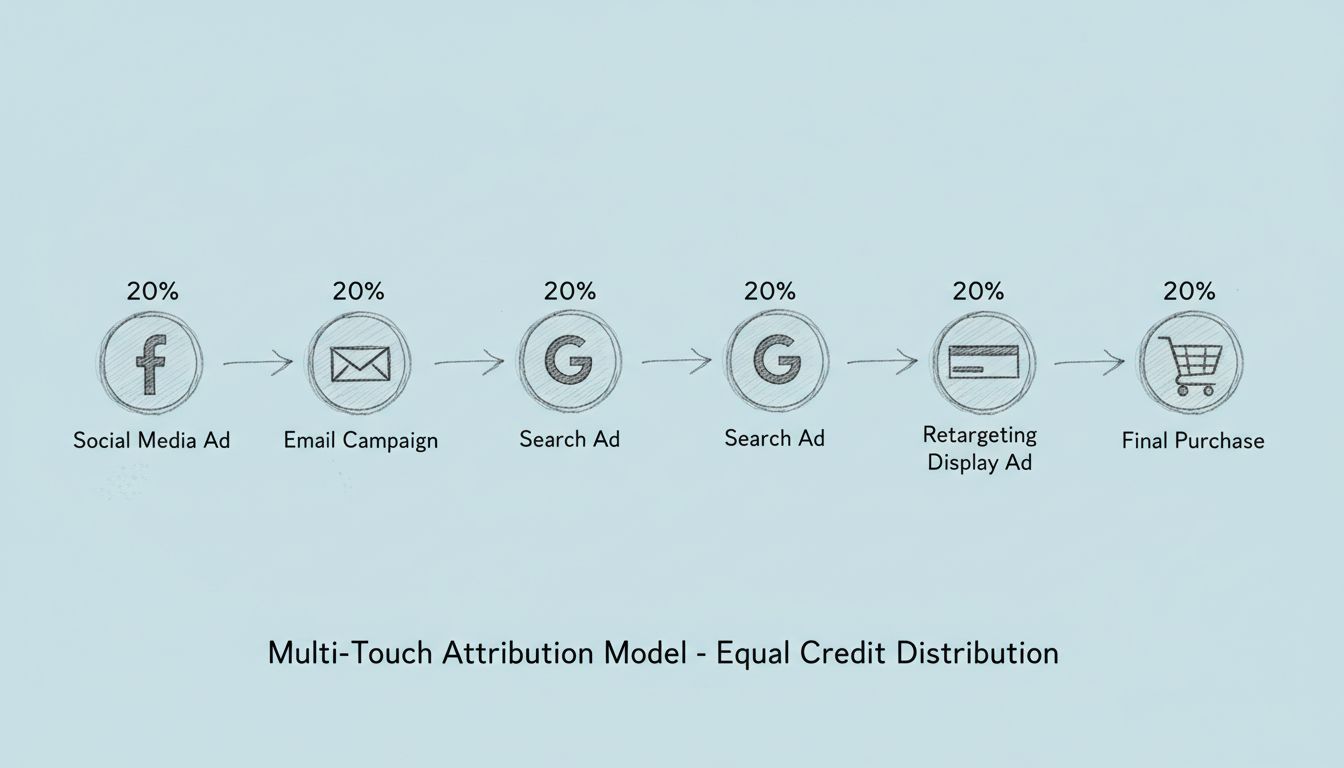
Attribution is the process of assigning credit for conversions across the various touchpoints and channels that comprise a customer’s journey to purchase. Historically, marketers relied on single-touch models that credited either the first interaction (first-touch) or the last interaction (last-click) with a conversion, oversimplifying the complex reality of modern buying decisions. The evolution from single-touch to multi-touch attribution represents a fundamental shift in how organizations measure marketing effectiveness. While single-touch models are simple to implement, they create significant blind spots—first-touch models ignore the critical nurturing that happens in the middle of the journey, while last-click models fail to recognize the awareness-building efforts that initiated the customer relationship. Multi-touch models distribute credit across multiple touchpoints based on various algorithms, providing a more complete picture of which marketing efforts actually influence revenue. This evolution has been driven by increasing customer journey complexity, the proliferation of marketing channels, and the availability of advanced analytics technologies. Understanding the strengths and limitations of different attribution approaches is essential for selecting the right model for your organization’s specific needs and business objectives.
| Attribution Model | Credit Distribution | Best For | Limitations |
|---|---|---|---|
| Last-Click | 100% to final touchpoint | Bottom-funnel optimization | Ignores awareness and consideration stages |
| First-Touch | 100% to first touchpoint | Top-funnel optimization | Misses critical nurturing and conversion influence |
| Linear | Equal credit to all touchpoints | Balanced view of entire journey | Dilutes credit equally, may not reflect actual influence |
| Time-Decay | More credit to recent interactions | Sales cycles with clear progression | Complex to implement and interpret |
| Position-Based | 40% first, 40% last, 20% middle | Full-funnel analysis | Arbitrary weight distribution |
| Algorithmic/AI-Driven | Machine learning-based weights | Complex, multi-channel journeys | Requires substantial data and technical expertise |

Set up advanced tracking in minutes. No credit card required.
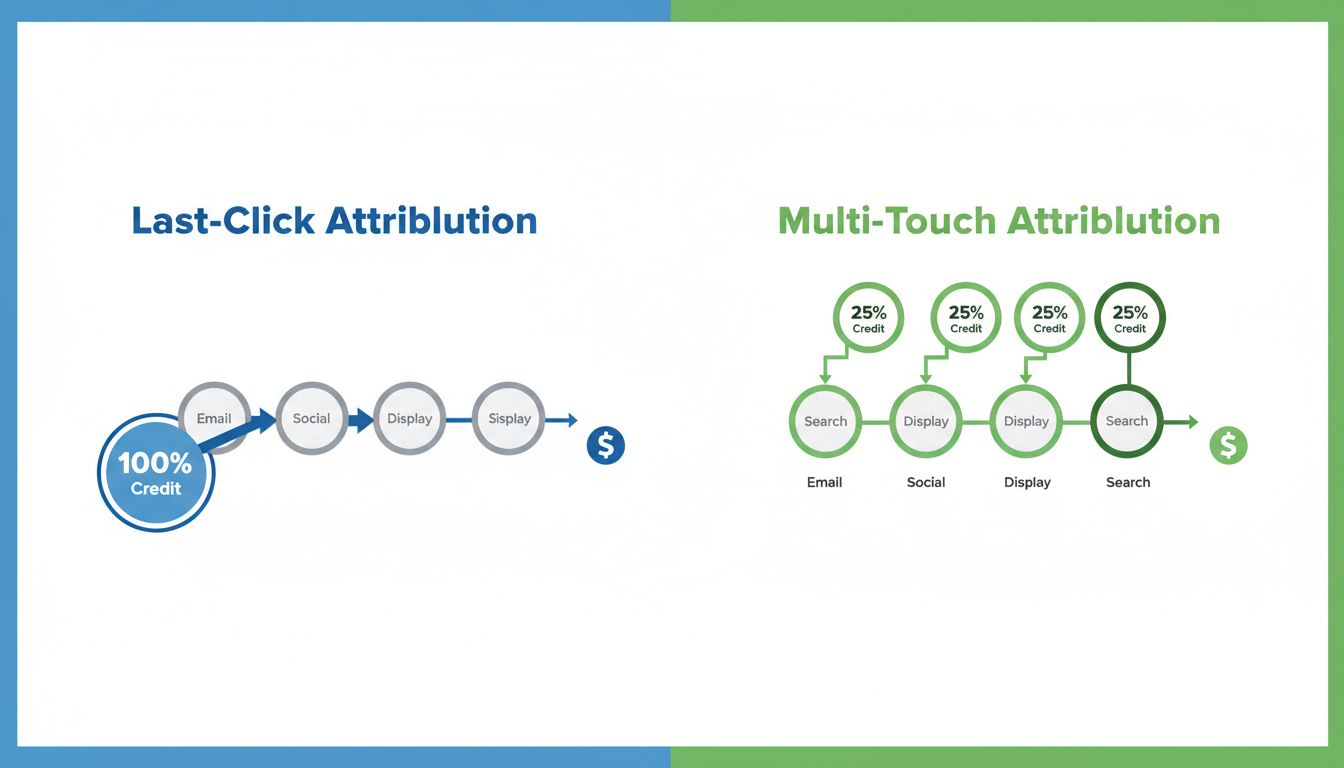
The last-click attribution model has become increasingly inadequate in today’s complex marketing environment, yet it remains the default for many organizations. This model creates a fundamental attribution gap by assigning 100% credit to whichever channel the customer happened to interact with immediately before converting, completely ignoring all the awareness-building, consideration-stage content, and relationship-building that preceded it. Consider a real-world example: a prospect discovers your company through a LinkedIn article (awareness), engages with educational content on your website (consideration), receives a nurturing email campaign (decision), and finally clicks a retargeting ad before purchasing. Under last-click attribution, the retargeting ad receives all the credit, while the LinkedIn article that initiated the entire journey receives none. Research shows that customers interact with brands an average of 56+ times before converting, yet last-click attribution credits only one of those interactions. This model systematically undervalues top-of-funnel marketing investments like content marketing, brand awareness campaigns, and social media engagement, leading organizations to slash budgets for channels that actually drive long-term customer acquisition. The result is a vicious cycle where organizations optimize for short-term conversions while starving the channels that build sustainable competitive advantages.
Multi-touch attribution fundamentally changes how organizations measure marketing impact by distributing conversion credit across all meaningful touchpoints in a customer’s journey. Rather than crediting a single interaction, multi-touch models recognize that conversions result from coordinated efforts across multiple channels and campaigns working together to move prospects through the buying process. For example, a B2B software company might discover that while a product demo request (last-click) receives credit for a conversion, the customer journey actually began with a webinar registration, progressed through three educational emails, included a case study download, and involved two website visits before the demo request. Multi-touch attribution reveals that all these interactions contributed to the conversion, and each deserves proportional credit based on its influence. The benefits are substantial: organizations gain a complete customer view that reveals which channels work together synergistically, enabling better budget allocation based on actual influence rather than coincidental timing. Improved ROI measurement becomes possible when you understand the true contribution of each marketing channel, allowing for more confident investment decisions. Modern multi-touch attribution increasingly leverages AI and machine learning to automatically weight touchpoints based on their actual influence on conversions, moving beyond arbitrary rules to data-driven credit distribution. This shift represents a maturation of marketing measurement from simplistic last-click models to sophisticated systems that reflect the reality of how customers actually make purchasing decisions.

Be the first to know about new features and product updates.
Accurate Budget Allocation: Multi-touch attribution reveals which channels and campaigns truly drive revenue, enabling marketing leaders to allocate budgets based on actual influence rather than last-click coincidence, resulting in significantly improved marketing ROI.
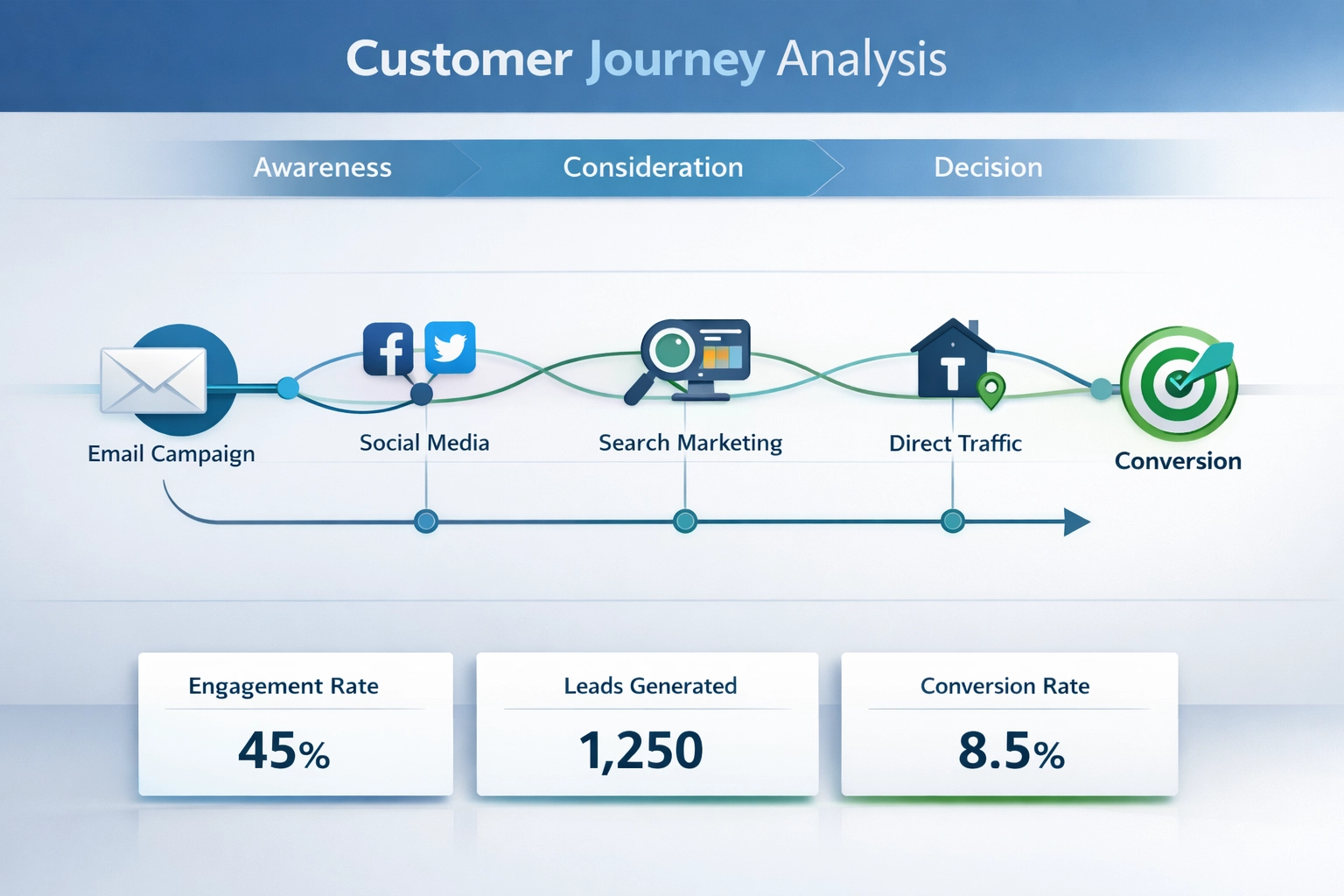
Complete Customer Journey Understanding: By tracking all touchpoints across channels, organizations gain comprehensive visibility into how customers move through awareness, consideration, and decision stages, revealing which combinations of channels work most effectively together.
Improved Channel Performance Evaluation: Multi-touch models eliminate the bias toward bottom-funnel channels, providing fair credit to awareness and consideration-stage marketing that builds the foundation for conversions.
Better Campaign Optimization: When you understand which touchpoints most influence conversions, you can optimize campaigns based on actual impact rather than vanity metrics, improving overall marketing effectiveness.
Enhanced Cross-Functional Alignment: Multi-touch attribution provides a shared language between marketing, sales, and finance teams by demonstrating how different departments’ efforts contribute to revenue, improving collaboration and strategic alignment.
Predictive Insights and Forecasting: Advanced multi-touch models enable organizations to predict which customer segments are most likely to convert and which touchpoint combinations are most effective, supporting more strategic planning.
Competitive Advantage Through Data-Driven Decisions: Organizations that implement sophisticated attribution models make more informed decisions about channel mix, creative strategy, and customer targeting, gaining measurable advantages over competitors still relying on last-click models.
Implementing multi-touch attribution requires overcoming several significant technical and organizational challenges that can derail even well-intentioned initiatives. Data quality represents the first major hurdle—multi-touch attribution requires clean, consistent data across all marketing channels, yet many organizations struggle with incomplete tracking, inconsistent naming conventions, and data silos that prevent unified customer journey analysis. The solution involves establishing data governance standards, implementing proper tracking infrastructure across all channels, and investing in data validation processes that ensure accuracy before analysis. Cross-device tracking presents another critical challenge, as customers increasingly move between smartphones, tablets, laptops, and other devices throughout their journey, yet many analytics systems fail to connect these interactions to a single customer. Solving this requires implementing robust customer identification systems, leveraging first-party data and login-based tracking, and using probabilistic matching where deterministic matching isn’t possible. Privacy compliance has become increasingly complex with regulations like GDPR, CCPA, and the deprecation of third-party cookies, making traditional tracking methods unreliable. Organizations must transition to privacy-first attribution approaches that rely on first-party data, contextual signals, and consent-based tracking rather than invasive cross-site tracking. Best practices include implementing a customer data platform (CDP) to unify data from all sources, establishing clear data governance policies, training teams on proper implementation, and selecting attribution tools that prioritize data privacy and compliance. The investment in proper implementation infrastructure pays dividends through more accurate measurement and sustainable competitive advantages.
Selecting the appropriate attribution model for your organization requires careful consideration of your specific business context, customer journey characteristics, and strategic objectives. Sales cycle length is a critical factor—organizations with short sales cycles (e-commerce, SaaS free trials) may find position-based or time-decay models effective, while B2B companies with extended sales cycles benefit from more sophisticated algorithmic models that can weight interactions across months of engagement. Customer journey complexity should also guide your selection; if your customers interact with only a few channels before converting, simpler models like linear attribution may suffice, but omnichannel businesses with customers touching 10+ channels require more advanced approaches. Your business goals fundamentally shape the right model—if your primary objective is optimizing top-of-funnel awareness, first-touch attribution might guide your decisions, while organizations focused on conversion optimization might lean toward position-based models that weight final interactions more heavily. It’s important to recognize that different attribution models often reveal different insights, and many sophisticated organizations implement multiple models simultaneously to gain different perspectives on their marketing effectiveness. The key is selecting models that align with your strategic priorities while ensuring you have the data infrastructure and technical capabilities to implement them accurately. Rather than viewing attribution model selection as a one-time decision, treat it as an evolving process that adapts as your business, customer journey, and marketing channels evolve.
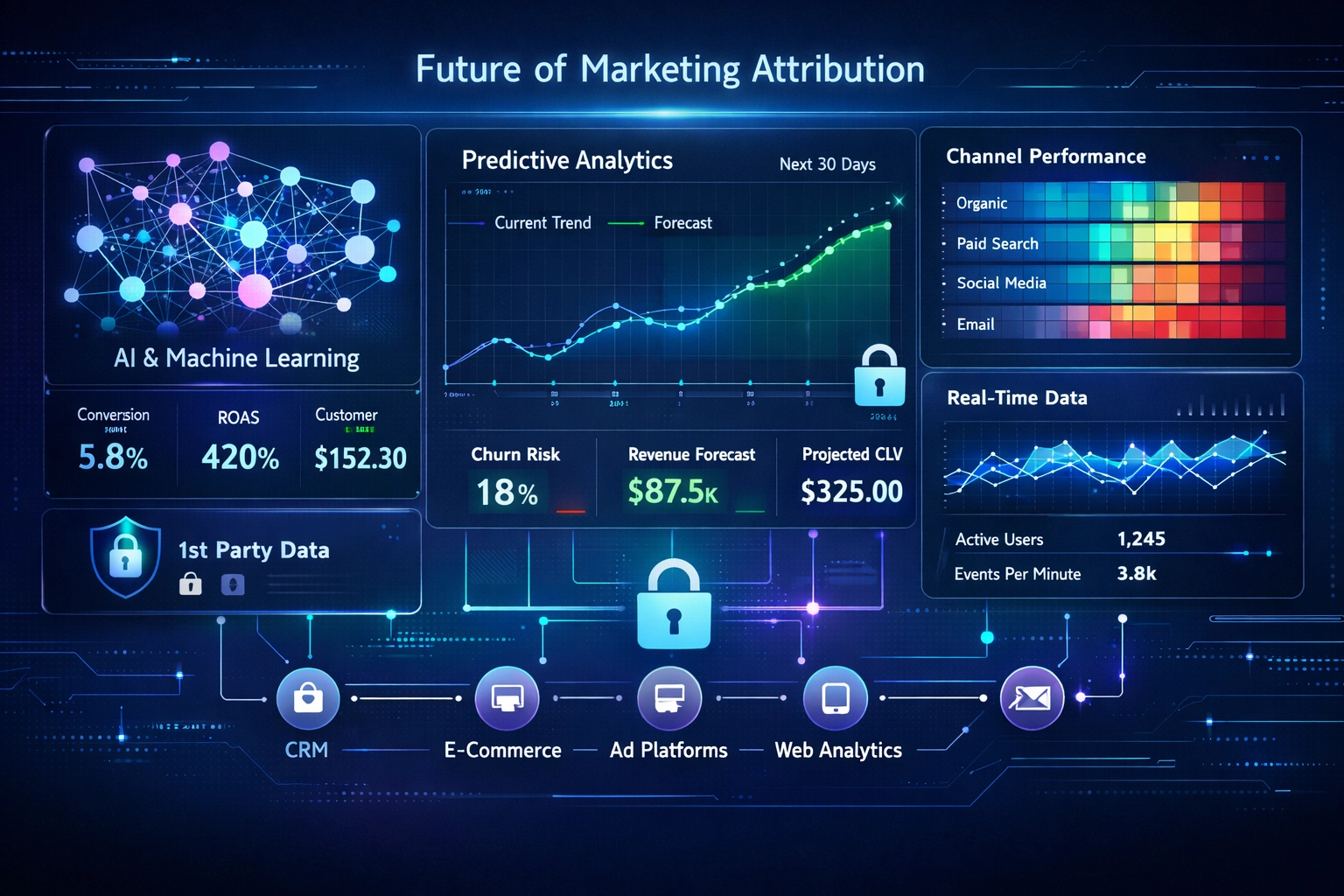
The future of attribution is being shaped by three converging forces: artificial intelligence and machine learning, the transition to privacy-first marketing in a cookieless world, and the integration of attribution with broader customer data ecosystems. AI attribution systems are becoming increasingly sophisticated, moving beyond rule-based models to machine learning algorithms that automatically identify patterns in customer behavior and weight touchpoints based on their actual influence on conversions. These systems can adapt in real-time to changing customer behavior, seasonal patterns, and market conditions, providing far more accurate and dynamic attribution than static rule-based models. The deprecation of third-party cookies and increasing privacy regulations are forcing a fundamental rethinking of attribution methodology, shifting focus from invasive cross-site tracking to first-party data, contextual signals, and consent-based approaches. Predictive analytics will increasingly enable organizations to not just understand what happened, but to predict which customer segments are most likely to convert and which touchpoint combinations are most effective, supporting more proactive marketing strategies. Integration with CDP and CRM systems will create unified customer views that combine attribution data with customer lifecycle information, enabling more sophisticated personalization and targeting. Organizations that invest in privacy-first attribution infrastructure now will be best positioned to thrive in the cookieless future, while those clinging to legacy third-party cookie-based approaches will face increasing measurement challenges. The winners in this transition will be those who embrace first-party data strategies, invest in customer data platforms, and implement AI-driven attribution systems that work within privacy constraints while delivering superior insights.
The shift from last-click attribution to multi-touch attribution represents one of the most important evolutions in marketing measurement, fundamentally changing how organizations understand their customer journey and allocate marketing budgets. As customer journeys become increasingly complex, spanning more channels and touchpoints than ever before, the inadequacy of single-touch attribution models becomes more apparent—organizations that continue relying on last-click attribution are systematically misallocating budgets and underinvesting in channels that actually drive long-term revenue. The benefits of implementing sophisticated multi-touch attribution are substantial and measurable: improved budget allocation, better channel optimization, enhanced cross-functional alignment, and competitive advantages through data-driven decision-making. For organizations managing affiliate marketing programs and partner channels, PostAffiliatePro provides a comprehensive solution for accurate attribution across your entire partner ecosystem, enabling you to understand which affiliates and campaigns truly drive revenue. The time to act is now—as privacy regulations tighten and third-party cookies disappear, organizations that have already invested in robust attribution infrastructure will be best positioned to navigate the transition to privacy-first measurement. Don’t let your marketing budget continue to be guided by the flawed last-click model; implement a sophisticated attribution system that reflects the reality of how your customers actually make purchasing decisions. Try PostAffiliatePro today and gain the attribution insights you need to optimize your marketing investments and drive sustainable revenue growth.
PostAffiliatePro provides comprehensive multi-touch attribution for your affiliate marketing program, helping you understand which partners and campaigns truly drive revenue. Track every touchpoint in your customer journey and make data-driven decisions to maximize ROI.
Discover why multi-touch attribution is essential for modern marketing. Learn how it improves budget allocation, ROI measurement, and customer insights across y...
Discover how multi-touch attribution is replacing last-click models in 2025. Learn about the shift in marketing attribution, customer journey tracking, and why ...
Master advanced affiliate tracking and multi-touch attribution models to measure true ROI with implementation strategies and best practices.
Join our community of happy clients and provide excellent customer support with Post Affiliate Pro.




Cookie Consent
We use cookies to enhance your browsing experience and analyze our traffic. See our privacy policy.