



Combine Affiliate & Influencer Marketing for Growth
Discover why combining affiliate and influencer marketing drives 46% higher sales. Learn proven strategies to leverage trust and maximize conversions.
10 min read


the top affiliate marketing industries in 2021. Fashion led with 25% market share, followed by tech and health. why these sectors thrived and what
The fashion industry emerged as the undisputed leader in affiliate marketing during 2021, commanding approximately 25% of all affiliate programs globally. This dominance reflected the explosive growth of online shopping and the increasing reliance on digital channels for fashion discovery and purchases. Major fashion retailers, from luxury brands to fast-fashion giants, significantly expanded their affiliate networks to capitalize on the shift toward e-commerce. The sector’s success was driven by the accessibility of fashion content across multiple platforms and the natural alignment between fashion influencers and affiliate marketing. With fashion accounting for nearly a quarter of all affiliate opportunities, it became the gold standard for affiliate marketers seeking high-conversion opportunities.

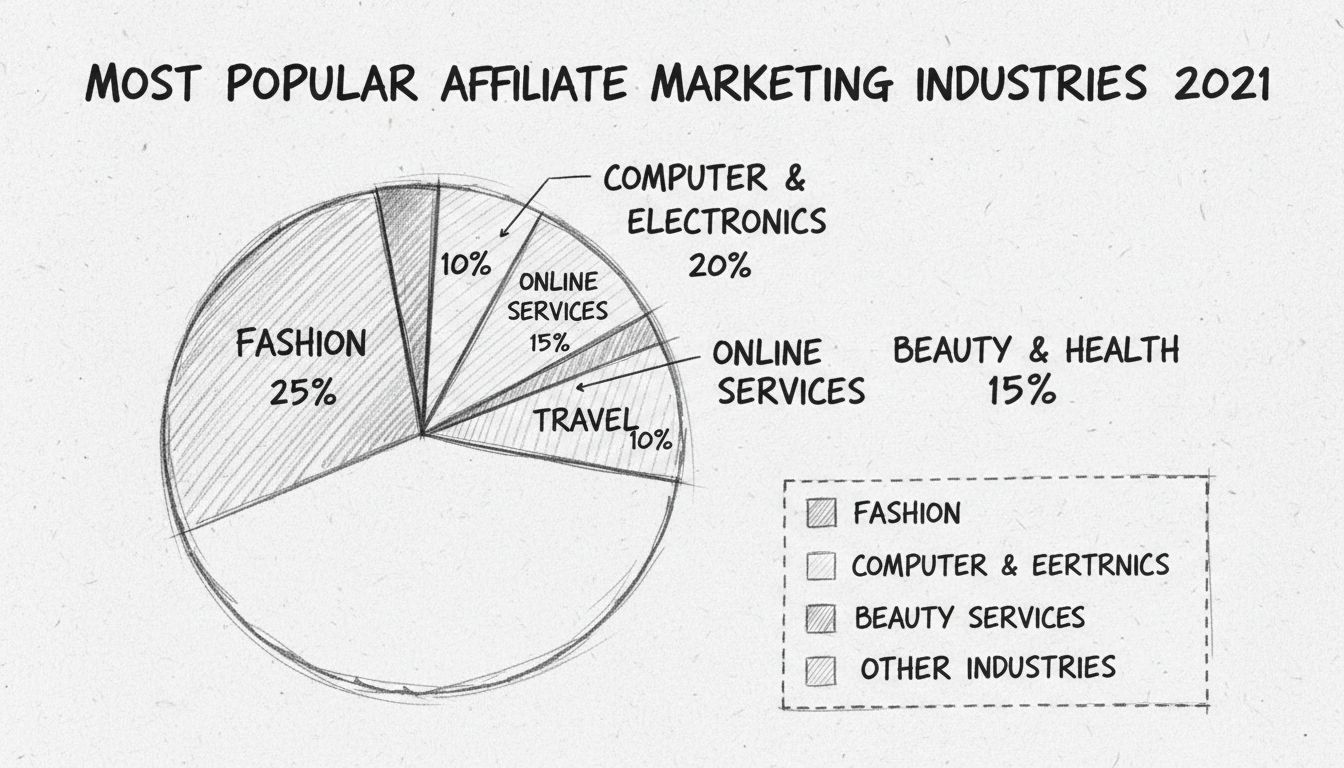
| Industry Sector | Market Share | Key Characteristics | Growth Driver |
|---|---|---|---|
| Fashion | 25% | Highest market share, visual-focused, influencer-driven | E-commerce boom, social media integration |
| Computer & Electronics | 20% | Technical products, YouTube reviews, detailed comparisons | Digital transformation, remote work adoption |
| Online Services | 15% | SaaS, subscriptions, recurring commissions | Digital economy expansion |
| Beauty & Health | 15% | Wellness trends, tutorial content, personal recommendations | Health consciousness, pandemic awareness |
| Travel | 10% | Vacation packages, hotel bookings, experience-based | Post-pandemic travel recovery beginning |
| Other Industries | 15% | Diverse sectors including gaming, food, education | Niche market opportunities |

Set up advanced tracking in minutes. No credit card required.
Fashion affiliate marketing’s explosive growth in 2021 was fueled by several converging factors that created the perfect storm for success. The influencer marketing boom reached unprecedented levels, with fashion influencers leveraging Instagram, TikTok, and YouTube to showcase products directly to engaged audiences, driving substantial affiliate commissions. Social media integration became seamless, allowing fashion brands to create shoppable posts and stories that converted viewers into customers with minimal friction. The broader e-commerce growth trajectory accelerated dramatically during 2021, with online fashion sales increasing by 35-40% year-over-year in many markets. Seasonal trends provided consistent revenue opportunities, as fashion affiliates capitalized on back-to-school shopping, holiday seasons, and seasonal wardrobe transitions. The fashion industry’s natural visual appeal made it ideal for content creation, enabling affiliates to produce high-engagement videos, blog posts, and social media content. Additionally, fashion brands offered competitive commission rates ranging from 5-15%, making it financially attractive for serious affiliate marketers to focus their efforts on this vertical.
| Industry Metric | Fashion | Technology | Health & Wellness | Beauty |
|---|---|---|---|---|
| Market Share | 25% | 40% of marketers | Growing rapidly | 16.7% growth |
| Commission Rate | 5-15% | 3-10% | 5-20% | 5-15% |
| Primary Channel | Social Media | YouTube/Blogs | Influencers | Instagram/TikTok |
| Growth Rate | 35-40% YoY | Consistent | Accelerating | 16.7% YoY |
The technology and electronics sector solidified its position as the second most popular affiliate marketing niche in 2021, with approximately 40% of affiliate marketers actively promoting tech products. This sector thrived on detailed product reviews, unboxing videos, and technical comparisons that resonated strongly with tech-savvy audiences on YouTube and specialized tech blogs. Major product launches from companies like Apple, Microsoft, and Samsung created predictable spikes in affiliate traffic and conversions throughout the year. The appeal of technology affiliate marketing was further enhanced by high commission rates, often ranging from 3-10%, combined with substantial average order values that translated into significant earnings per sale. Tech enthusiasts and early adopters actively sought affiliate recommendations before making purchasing decisions, creating a natural audience for tech-focused affiliate content. The sector’s consistent growth and the perpetual cycle of new product releases ensured that technology remained a reliable income stream for affiliate marketers throughout 2021.

Be the first to know about new features and product updates.
The health and wellness industry emerged as one of the fastest-growing affiliate marketing sectors in 2021, driven by increased consumer focus on personal health and preventative care. The global wellness market was valued at approximately $4.9 trillion in 2019 and was projected to reach $7 trillion by 2026, representing an enormous opportunity for affiliate marketers. Supplement trends, fitness equipment, and wellness services experienced unprecedented demand as consumers invested in their health during uncertain times. Influencer partnerships became particularly effective in the wellness space, with fitness influencers, nutritionists, and health coaches leveraging their credibility to recommend products to highly engaged audiences. The sector’s growth potential was amplified by the recurring nature of many wellness products, such as supplements and fitness subscriptions, which generated repeat commissions and long-term affiliate revenue streams. Affiliate programs in health and wellness typically offered commission rates between 5-20%, making it an attractive vertical for marketers willing to build authority in the space.
Micro-influencers became the driving force behind beauty and personal care affiliate marketing growth in 2021, fundamentally reshaping how beauty brands engaged with consumers. Instagram and TikTok dominated the beauty affiliate landscape, with short-form video content and authentic product reviews generating exceptional engagement rates and conversion metrics. The beauty market experienced remarkable growth, expanding from $438 billion in 2020 to $511 billion in 2021, representing a 16.7% year-over-year increase that created abundant affiliate opportunities. Micro-influencers with 10,000 to 100,000 followers proved particularly effective in the beauty space, as their audiences perceived them as more authentic and trustworthy than celebrity endorsements. The democratization of beauty content creation meant that anyone with genuine passion for cosmetics, skincare, or personal care products could build a profitable affiliate business, leading to explosive growth in this category.
Beyond the dominant sectors, numerous other industries demonstrated significant affiliate marketing potential and generated substantial revenue for specialized marketers in 2021. Each of these verticals offered unique advantages and attracted dedicated affiliate communities:
Travel and Hospitality: The travel sector rebounded strongly in 2021 as vaccination rates increased, with affiliate marketers earning commissions on hotel bookings, flight reservations, and travel packages. The global online travel market was valued at over $600 billion, providing enormous earning potential for travel-focused affiliates.
Gaming and Esports: The gaming industry continued its explosive growth trajectory, with affiliate marketers promoting games, gaming hardware, and esports betting platforms. The global gaming market exceeded $180 billion in 2021, with affiliate programs offering commission rates of 5-15% on game sales and in-game purchases.
Finance and Wealth Building: Financial services, cryptocurrency, investment platforms, and personal finance tools attracted affiliate marketers seeking high-value commissions. This sector offered some of the highest commission rates, frequently exceeding 20-30% per conversion, though requiring more sophisticated marketing approaches.
Home and Garden: The home improvement and gardening sector experienced unprecedented growth as consumers invested in their living spaces. Affiliate marketers promoted furniture, gardening tools, and home décor products, with the home improvement market valued at over $400 billion globally.
Education and Online Learning: Online courses, certification programs, and educational platforms became increasingly popular, with affiliate marketers earning commissions on course enrollments. The e-learning market was projected to exceed $250 billion by 2026, representing significant growth potential.
Seasonal events and promotional calendars created predictable revenue spikes that sophisticated affiliate marketers strategically leveraged throughout 2021. Black Friday and Cyber Monday remained the most lucrative periods for affiliate marketing, with sales volumes exceeding $200 billion globally and affiliate commissions reaching record levels. Holiday shopping seasons, particularly November and December, generated sustained high-conversion traffic as consumers searched for gift ideas and holiday deals. Back-to-school shopping in August and September provided another significant opportunity, with fashion, technology, and education affiliates capitalizing on seasonal demand. Valentine’s Day, Mother’s Day, and Father’s Day created targeted promotional windows where beauty, fashion, and gift-related affiliates achieved exceptional conversion rates. Successful affiliate marketers developed comprehensive seasonal strategies, planning content calendars months in advance to maximize earnings during these high-value periods. Understanding and preparing for seasonal trends became essential for affiliate marketers seeking to optimize their annual revenue and maintain consistent growth.
Influencer marketing fundamentally transformed affiliate marketing in 2021, becoming the primary driver of consumer purchasing decisions across virtually all industries. Research demonstrated that 84% of consumers trust online reviews and recommendations from influencers, making influencer-driven affiliate campaigns exceptionally effective at converting audiences into customers. The influencer marketing industry itself reached a valuation of $21.1 billion in 2021, reflecting the massive investment brands were making in influencer partnerships and affiliate collaborations. The distinction between macro-influencers (over 1 million followers) and micro-influencers (10,000-100,000 followers) became increasingly important, with micro-influencers often delivering superior engagement rates and conversion metrics despite smaller audience sizes. Nano-influencers with highly engaged niche communities emerged as unexpected powerhouses, frequently outperforming larger accounts in terms of affiliate conversion rates and customer lifetime value. The authenticity and relatability of influencer recommendations created a trust factor that traditional advertising struggled to replicate, making influencer-driven affiliate programs the preferred strategy for forward-thinking brands. By 2021, influencer marketing had become inseparable from affiliate marketing success, with the most profitable affiliate programs built on strong influencer partnerships and community engagement.
The success of affiliate marketing in 2021 was significantly enabled by sophisticated affiliate management platforms that streamlined tracking, commission management, and performance reporting. Affiliate software solutions became essential infrastructure for brands managing large networks of partners, automating commission calculations, and providing real-time performance visibility. Post Affiliate Pro emerged as a leading solution in the affiliate management space, offering comprehensive features including advanced tracking technology, flexible commission structures, and detailed reporting dashboards. These platforms enabled affiliate marketers to efficiently manage multiple programs, track conversions across channels, and optimize their strategies based on real-time performance data. Automation capabilities reduced administrative overhead, allowing marketers to focus on content creation and audience building rather than manual tracking and commission calculations. The integration of affiliate software with e-commerce platforms, CRM systems, and marketing automation tools created seamless workflows that enhanced productivity and profitability. Investing in quality affiliate management software became a critical success factor for both affiliate networks and individual marketers seeking to scale their operations and maximize earnings in 2021.
The affiliate marketing trends that dominated 2021 established a foundation for continued growth and evolution in the years ahead. Industry analysts predicted that affiliate marketing would continue expanding at double-digit growth rates, with the global affiliate marketing market projected to exceed $12 billion by 2026. Emerging niches including sustainable fashion, mental health services, and alternative energy solutions were beginning to attract affiliate marketers seeking less saturated markets with high growth potential. Technology integration, particularly the adoption of artificial intelligence and machine learning for audience targeting and personalization, promised to enhance affiliate marketing effectiveness and ROI. The continued shift toward mobile commerce, social commerce, and short-form video content would reshape how affiliate marketers created and distributed content, requiring adaptation and innovation from successful affiliates.
Fashion was the most popular affiliate marketing industry in 2021, accounting for approximately 25% of all affiliate programs globally. This dominance reflected the explosive growth of online shopping and the increasing reliance on digital channels for fashion discovery and purchases.
Fashion dominated due to the influencer marketing boom, seamless social media integration, accelerated e-commerce growth, seasonal trends, and the natural visual appeal of fashion content. Fashion brands also offered competitive commission rates ranging from 5-15%, making it financially attractive for affiliate marketers.
Fashion accounted for approximately 25% of all affiliate programs in 2021, making it by far the most popular industry. This represented a significant increase from previous years and reflected the sector's dominance in the affiliate marketing landscape.
Technology and electronics was the second most popular niche with 40% of affiliate marketers promoting tech products. Other popular sectors included health and wellness, beauty and personal care, travel, gaming, finance, home and garden, and education.
Influencer marketing fundamentally transformed affiliate marketing in 2021, with 84% of consumers trusting online reviews from influencers. The influencer marketing industry reached $21.1 billion in valuation, with micro-influencers proving particularly effective at driving conversions and customer engagement.
Social media platforms like Instagram, TikTok, and YouTube became essential channels for affiliate marketing. These platforms enabled seamless integration of shoppable posts, influencer collaborations, and authentic product recommendations that drove substantial affiliate commissions and conversions.
The affiliate marketing industry experienced significant growth in 2026, with the global market expanding substantially. Industry analysts predicted continued double-digit growth rates, with the global affiliate marketing market projected to exceed $12 billion by 2026.
Affiliate management platforms like Post Affiliate Pro became essential infrastructure for brands managing large networks of partners. These tools provided advanced tracking technology, flexible commission structures, detailed reporting dashboards, and automation capabilities that streamlined affiliate operations.
Join thousands of brands using Post Affiliate Pro to manage and scale their affiliate marketing programs. Track performance, manage commissions, and grow your revenue with the industry's leading affiliate software.
Discover why combining affiliate and influencer marketing drives 46% higher sales. Learn proven strategies to leverage trust and maximize conversions.

the most profitable affiliate marketing industries in 2026. which sectors offer the highest commissions, recurring revenue
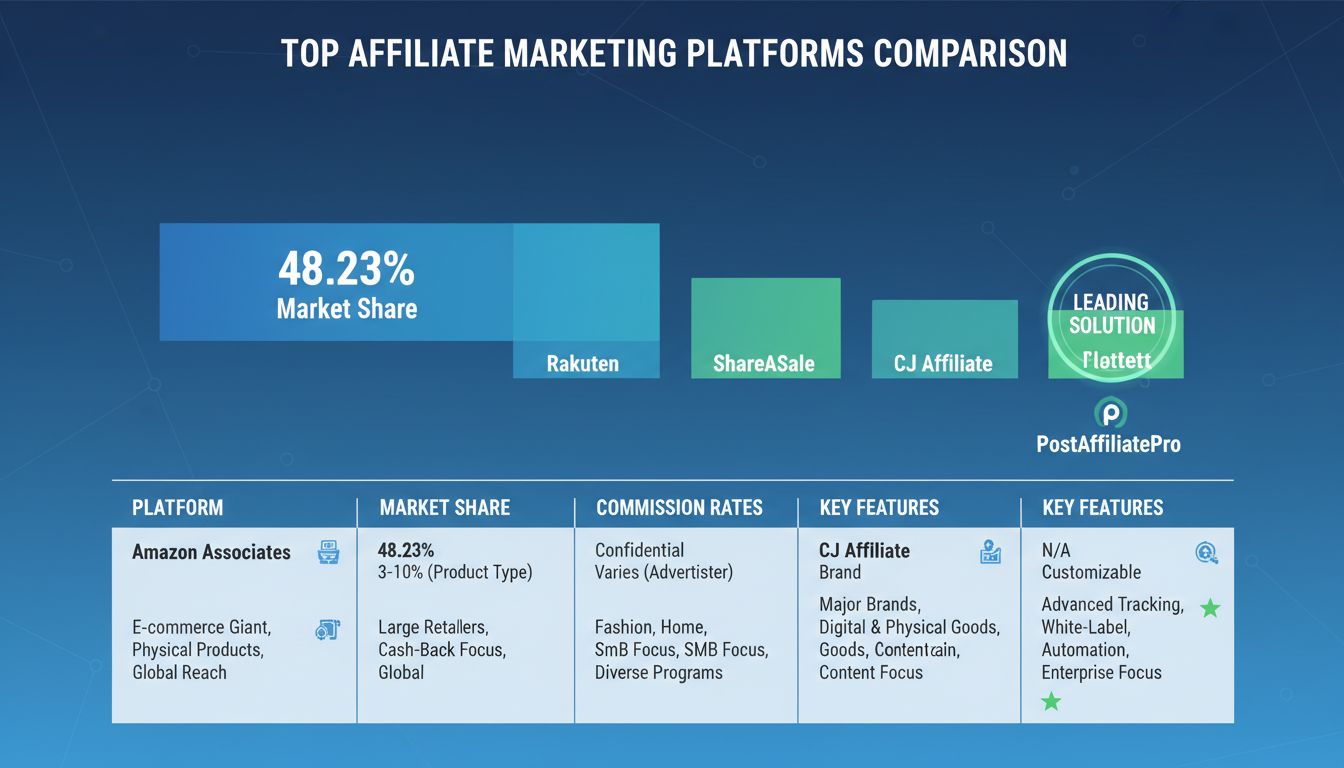
Discover which affiliate marketing platforms dominate the industry in 2025. Compare Amazon Associates, Rakuten, ShareASale, CJ Affiliate, and PostAffiliatePro w...
Join our community of happy clients and provide excellent customer support with Post Affiliate Pro.




Cookie Consent
We use cookies to enhance your browsing experience and analyze our traffic. See our privacy policy.