In today’s crowded digital marketplace, building brand awareness feels like an impossible task. Traditional advertising costs skyrocket while consumer trust in ads plummets. But there’s a proven alternative that’s reshaping how brands connect with audiences: micro-influencer marketing. Unlike mega-influencers with millions of followers, micro-influencers—those with 10,000 to 100,000 followers—operate in specific niches where they’ve built genuine, engaged communities. When you partner with multiple micro-influencers, you create the impression that your products are accessible to everyone, backed by numerous authentic product reviews and recommendations that drive real traffic to your site.
The beauty of micro-influencer marketing lies in its democratization of brand advocacy. Instead of betting everything on one celebrity endorsement, you’re distributing your marketing efforts across dozens of trusted voices within your target audience. These creators have cultivated loyal followings precisely because they’re relatable, authentic, and genuinely passionate about their niches. Their audiences don’t just follow them—they trust them. This trust translates directly into higher engagement rates, better conversion metrics, and ultimately, stronger brand awareness that actually moves the needle for your business.
Why Micro-Influencers Outperform Mega-Influencers
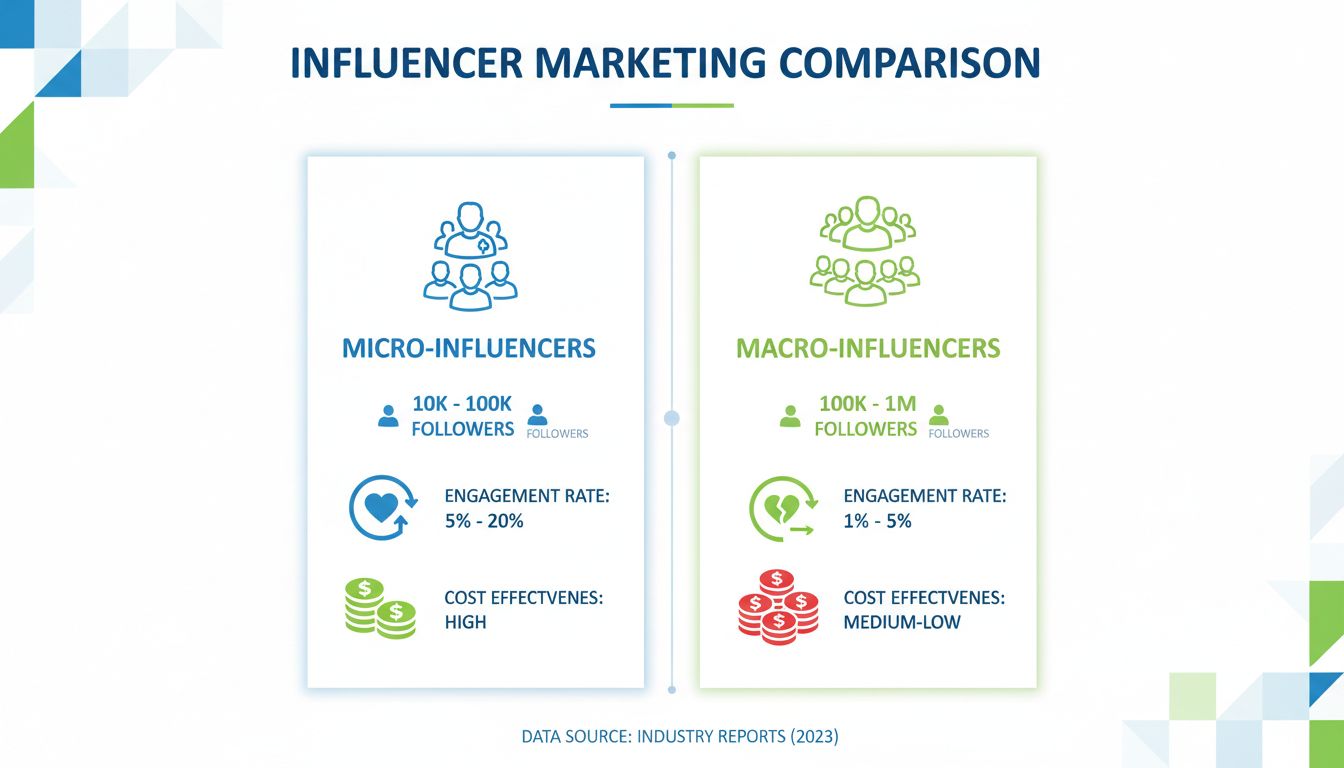
The data tells a compelling story. While mega-influencers with millions of followers might seem like the obvious choice, the numbers reveal a different reality. Here’s how micro-influencers stack up against their larger counterparts:
Metric
Nano (1K-10K)
Micro (10K-100K)
Macro (100K-1M)
Mega (1M+)
Engagement Rate
10%+
7.2%
3-5%
1.7%
Cost Per Post
$25-100
$100-500
$500-2,500
$2,500+
Audience Trust
85%
82%
60%
45%
Conversion Rate
8-12%
6-10%
2-4%
1-2%
Best For
Hyper-niche
Targeted reach
Broad awareness
Maximum visibility
The engagement rate difference is staggering. Micro-influencers achieve 7.2% average engagement compared to just 1.7% for mega-influencers. This means that when a micro-influencer posts about your product, their audience is significantly more likely to like, comment, share, and most importantly, take action. The cost efficiency is equally impressive—you can run campaigns with 10-15 micro-influencers for the same budget as a single mega-influencer post, dramatically increasing your reach and message frequency.
Perhaps most importantly, 82% of consumers trust recommendations from micro-influencers, compared to significantly lower trust levels for celebrity endorsements. This trust premium translates into higher conversion rates and better long-term brand loyalty. When you invest in micro-influencer partnerships, you’re not just buying impressions; you’re buying credibility and authentic advocacy.
Launch your affiliate program today
Set up advanced tracking in minutes. No credit card required.
Understanding Influencer Tiers and Follower Categories
Before diving into micro-influencer strategy, it’s essential to understand the full landscape of influencer marketing. Influencers are typically categorized into four distinct tiers based on follower count, each with unique characteristics and use cases:
Nano Influencers (1K-10K followers): These are the grassroots advocates—often passionate hobbyists or emerging creators. They boast the highest engagement rates (10%+) and strongest community bonds. Best for hyper-targeted campaigns, local markets, and niche communities. Most affordable option but limited reach.
Micro Influencers (10K-100K followers): The sweet spot for most brands. They’ve built substantial, engaged communities within specific niches. Offer excellent engagement rates (7.2% average), reasonable costs ($100-500 per post), and proven ability to drive conversions. Ideal for targeted brand awareness and customer acquisition.
Macro Influencers (100K-1M followers): Established personalities with significant reach and professional content quality. Engagement rates drop to 3-5%, but they offer broader visibility. Costs range from $500-2,500 per post. Best for brands seeking wider awareness and those with larger budgets.
Mega Influencers/Celebrities (1M+ followers): The household names with massive reach but lowest engagement rates (1.7%). Costs exceed $2,500 per post and often reach $20,000+. Best for maximum visibility campaigns and brands with substantial marketing budgets.
For most brands focused on building sustainable brand awareness with strong ROI, micro-influencers represent the optimal balance between reach, engagement, cost, and conversion potential.
The Science Behind Micro-Influencer Effectiveness
Why do micro-influencers consistently outperform their larger counterparts? The answer lies in psychology and community dynamics. When an influencer has 10 million followers, their audience feels like a faceless crowd. But when an influencer has 50,000 engaged followers, those followers feel like they’re part of an exclusive community. This psychological difference is profound.
Micro-influencers have typically built their audiences through consistent, authentic content creation over months or years. Their followers aren’t there because of celebrity status or viral moments—they’re there because they genuinely value the creator’s perspective, expertise, and personality. This creates what researchers call “parasocial relationships,” where followers feel a genuine connection to the influencer. When that influencer recommends a product, it feels like a trusted friend’s recommendation, not a paid advertisement.
The numbers back this up dramatically. 49% of consumers make purchases based on micro-influencer recommendations, compared to much lower conversion rates for traditional advertising or celebrity endorsements. For every dollar invested in influencer marketing, brands see an average return of $5.78—and micro-influencer campaigns often exceed this benchmark significantly. The reason is simple: micro-influencers reach people who are already interested in their niche, making the audience pre-qualified and more likely to convert.
Additionally, micro-influencers tend to be more responsive and collaborative partners. They’re building their personal brands and genuinely excited about partnerships that align with their values. This enthusiasm translates into higher-quality content, more authentic endorsements, and better long-term relationships that can span multiple campaigns.
Join our newsletter
Be the first to know about new features and product updates.
Finding the Right Micro-Influencers for Your Brand
Identifying the perfect micro-influencers for your brand requires a strategic, multi-pronged approach. Here are the most effective methods:
Social Media Search and Hashtag Research: Start by searching relevant hashtags on Instagram, TikTok, and YouTube. Look for creators consistently posting about topics related to your industry. Check their engagement rates, audience demographics, and content quality. This organic approach helps you discover authentic creators already engaged with your niche.
Influencer Discovery Platforms: Tools like GRIN, IQFluence, BuzzSumo, and Traackr allow you to filter creators by follower count, engagement rate, audience demographics, and niche. These platforms provide detailed analytics on audience authenticity, helping you avoid influencers with fake followers or bot engagement.
Niche Communities and Groups: Join Reddit communities, Facebook groups, Slack channels, and Discord servers related to your industry. Identify active members who are creating content and building followings. These communities often contain emerging micro-influencers before they gain mainstream attention.
Competitor Analysis: Review which micro-influencers your competitors are working with. Check their Instagram followers, YouTube subscribers, and TikTok followers. This competitive intelligence helps you identify proven creators in your space while avoiding direct overlap.
Customer and Community Referrals: Ask your existing customers, brand advocates, and community members if they know micro-influencers worth partnering with. Your best customers often follow creators in your niche and can provide valuable recommendations.
Industry Events and Conferences: Attend trade shows, conferences, and industry events where micro-influencers often speak or exhibit. These events provide opportunities to network directly and assess creators’ expertise and authenticity in person.
Influencer Referral Networks: Successful micro-influencers often know other creators in their space. Once you partner with one, ask for referrals to complementary creators. This network effect helps you build a roster of quality partners quickly.
When evaluating potential partners, prioritize engagement rate over follower count. Look for creators with engagement rates above 6%, authentic audience demographics that match your target market, and a history of quality partnerships with brands similar to yours.
Building Authentic Partnerships with Micro-Influencers
The foundation of successful micro-influencer marketing is building genuine, mutually beneficial partnerships. This starts with thoughtful outreach and continues through clear communication and fair compensation.
Personalized Outreach: When reaching out to micro-influencers, avoid generic templates. Reference specific posts you enjoyed, explain why you think their audience would genuinely benefit from your product, and demonstrate that you’ve done your homework. Micro-influencers receive fewer partnership requests than mega-influencers, so a personalized message stands out and shows respect for their work.
Clear Communication and Expectations: Define deliverables explicitly—how many posts, which platforms, posting timeline, and any key messages you want included. Provide a content brief that outlines your brand story, product benefits, and campaign goals, but avoid over-scripting. The best partnerships balance brand guidelines with creative freedom.
Fair Compensation: Micro-influencers are professionals building their careers. Offer fair compensation whether through payment, product gifting, affiliate commissions, or a combination. Many micro-influencers are open to product seeding (free products in exchange for content), but as you scale partnerships, direct compensation builds stronger relationships.
Creative Freedom: This is crucial. Micro-influencers know their audiences better than anyone. Give them space to present your brand in their authentic voice. Content that feels forced or out of character will underperform and damage both the influencer’s credibility and your brand’s reputation.
Long-term Thinking: Rather than one-off collaborations, explore ongoing partnerships. Micro-influencers who repeatedly feature your brand become genuine advocates, and their audiences develop stronger associations with your products. Long-term partners also provide better ROI as relationship-building costs decrease over time.
Campaign Types and Content Strategies
Micro-influencers excel across multiple content formats and campaign types. Here are the most effective approaches:
Sponsored Posts and Stories: Influencers create dedicated content featuring your product in their authentic style. Instagram posts, TikTok videos, and Stories allow for creative presentation while maintaining platform-native formats. Best for: brand awareness, product launches, seasonal campaigns.
Product Reviews and Unboxings: Micro-influencers provide detailed, honest reviews of your products. These long-form content pieces (especially on YouTube) build credibility and address customer questions. Best for: product education, overcoming objections, building trust.
Affiliate Marketing: Influencers earn commission on sales generated through unique discount codes or affiliate links. This performance-based model aligns incentives and minimizes upfront costs. Best for: driving conversions, scaling campaigns, measuring direct ROI.
Giveaways and Contests: Influencers promote giveaways requiring followers to engage with your brand (follow, like, tag friends). These campaigns drive rapid engagement and follower growth. Best for: audience growth, viral reach, engagement metrics.
Brand Ambassadorships: Long-term partnerships where influencers regularly feature your brand in exchange for exclusive perks, early product access, and consistent compensation. Best for: sustained brand awareness, building community, creating brand advocates.
Real-World Examples: Daniel Wellington built a global watch brand primarily through micro-influencer partnerships, providing unique discount codes to thousands of creators. Glossier leveraged micro-influencers and customer advocates to build a cult-like following. Gymshark partnered with fitness micro-influencers to establish itself as the go-to brand for gym enthusiasts. These brands understood that distributed micro-influencer networks create more authentic, sustainable brand awareness than celebrity endorsements.
Use Google Analytics to track traffic from influencer links, platform-native analytics for engagement metrics, and affiliate tracking software for sales attribution. Many brands use spreadsheets or dedicated influencer marketing platforms to aggregate data across multiple creators and campaigns.
ROI Calculation: If you spend $5,000 on a micro-influencer campaign and generate $35,000 in attributed sales, your ROI is 600% ((35,000 - 5,000) / 5,000 × 100). This is typical for well-executed micro-influencer campaigns, significantly outperforming traditional advertising channels.
Common Mistakes and How to Avoid Them
Even with the best intentions, brands often stumble in their micro-influencer strategies. Here are the most common pitfalls:
Focusing on Follower Count Alone: A creator with 50,000 highly engaged followers will outperform one with 500,000 disengaged followers. Always prioritize engagement rate and audience quality over raw numbers.
Poor Vetting and Due Diligence: Check for fake followers using tools like HypeAuditor, review past partnerships for quality, and assess audience demographics. Partnering with fraudulent influencers wastes budget and damages brand reputation.
Over-Controlling Content: Providing overly detailed scripts or demanding specific shots stifles creativity and makes content feel inauthentic. Influencers know their audiences—trust their judgment while providing key messages.
Ignoring Compliance and Disclosures: Ensure influencers clearly disclose sponsored content with #ad or #sponsored. Non-compliance violates FTC regulations and erodes audience trust.
One-Off Campaigns Without Strategy: Random, disconnected influencer partnerships don’t build brand awareness effectively. Develop a cohesive strategy with consistent messaging across multiple creators.
Inadequate Tracking and Attribution: Without proper tracking mechanisms (unique codes, affiliate links, UTM parameters), you can’t measure ROI or optimize future campaigns.
Case Studies of Successful Micro-Influencer Campaigns
Daniel Wellington: The Swedish watch brand built a global empire primarily through micro-influencer partnerships. Rather than paying mega-influencers, they provided watches to thousands of micro-influencers with unique discount codes. This strategy created the perception of universal accessibility—everyone seemed to be wearing Daniel Wellington. Result: Millions of social media posts, explosive brand growth, and a valuation exceeding $200 million.
Glossier: The beauty brand leveraged micro-influencers and customer advocates from day one. Instead of traditional advertising, Glossier reposted customer content and worked with relatable creators. This community-driven approach built fierce brand loyalty and turned customers into marketers. Result: Rapid growth, strong customer retention, and a $1.2 billion valuation.
Gymshark: The fitness apparel brand partnered with micro-influencers in the gym and fitness communities. Rather than celebrity athletes, they worked with personal trainers, fitness enthusiasts, and gym owners. These authentic partnerships resonated with their target audience. Result: Explosive growth in the fitness community, strong brand identity, and a $1 billion valuation.
Buddle: The infant skincare brand launched a creator program with 20 micro-influencers on Instagram and TikTok. Using GRIN’s platform, they scaled to 1,000+ creators with a tiered program offering product gifting, affiliate commissions, and paid collaborations. Result: 1.85M impressions, 570K views, and a $0.05 cost per click in just six months.
Future Trends and Best Practices
The micro-influencer landscape continues evolving. Key trends shaping the future include:
AI-Powered Influencer Matching: Artificial intelligence is making influencer discovery and matching more precise. Platforms now use machine learning to identify creators whose audiences perfectly align with your target demographics, reducing guesswork and improving campaign performance.
Authenticity and Transparency: Consumers increasingly demand genuine, unscripted content. The most successful micro-influencers are those who maintain their authentic voice while integrating brand partnerships naturally. Expect continued emphasis on transparency, honest reviews, and real-life usage.
Long-Term Partnerships Over One-Offs: Brands are moving away from transactional, one-time collaborations toward sustained partnerships. Long-term relationships allow influencers to become genuine brand advocates, creating more authentic content and better ROI over time.
Niche Specialization: Rather than broad appeal, the future belongs to hyper-specialized micro-influencers. Brands will increasingly seek creators with deep expertise in specific niches—not just “fitness influencers” but “plant-based fitness influencers” or “sustainable fashion micro-influencers.”
Emerging Platforms: While Instagram and TikTok dominate, emerging platforms like BeReal, Threads, and others are creating new opportunities for micro-influencer partnerships. Early adopters will find less saturated audiences and lower costs.
Conclusion: Building Sustainable Brand Awareness
Micro-influencer marketing represents a fundamental shift in how brands build awareness and connect with customers. By partnering with multiple authentic voices within your target niche, you create the impression that your products are accessible, trusted, and worth talking about. The data is clear: micro-influencers deliver superior engagement rates, higher conversion rates, and exceptional ROI compared to traditional advertising or mega-influencer partnerships.
The path forward requires strategic thinking, authentic partnerships, and rigorous measurement. Start by identifying 10-20 micro-influencers aligned with your brand values and target audience. Provide them with quality products, clear guidelines, and creative freedom. Track results meticulously using unique codes, affiliate links, and analytics tools. Scale what works, optimize what doesn’t, and build long-term relationships with your best-performing partners.
PostAffiliatePro makes this entire process seamless. Our platform helps you discover micro-influencers, manage partnerships, track affiliate links and discount codes, and measure campaign ROI in real-time. With advanced analytics, automated reporting, and influencer management tools, you can scale your micro-influencer strategy without the complexity. Whether you’re just starting or scaling an existing program, PostAffiliatePro provides the infrastructure to turn micro-influencer partnerships into your most effective brand awareness channel.
Ready to transform your brand awareness strategy? Start your free trial today and discover how PostAffiliatePro can help you build authentic, high-performing influencer partnerships that drive real business results.
Frequently asked questions
What exactly is a micro-influencer?
A micro-influencer is a content creator with a follower count between 10,000 and 100,000. Despite their smaller following compared to mega-influencers, micro-influencers typically have highly engaged audiences within specific niches, making them valuable partners for targeted brand awareness campaigns.
Why are micro-influencers better for brand awareness than mega-influencers?
Micro-influencers offer superior engagement rates (7.2% average vs 1.7% for mega-influencers), higher audience trust (82% of followers trust their recommendations), and significantly lower costs ($100-500 per post vs $2,500+). Their smaller, niche audiences are more likely to convert into customers.
How much should I budget for micro-influencer campaigns?
Micro-influencer costs vary by platform: Instagram ($100-500 per post), TikTok ($25-125 per post), and YouTube ($200-5,000 per video). Many micro-influencers also accept product gifting or affiliate commissions, making campaigns flexible and scalable based on your budget.
How do I find authentic micro-influencers in my niche?
Use a combination of methods: search relevant hashtags on social media, explore niche communities and groups, use influencer discovery platforms like GRIN or IQFluence, check your existing customer base for brand advocates, and attend industry events. Always vet influencers by checking engagement rates (aim for 6%+) and audience authenticity.
What's the best way to approach a micro-influencer for collaboration?
Personalize your outreach by mentioning specific content you enjoyed, clearly explain your campaign goals and what you're offering, provide creative freedom while sharing key messages, and be professional and concise. Build relationships before pitching by engaging with their content first.
How do I measure the success of a micro-influencer campaign?
Track key metrics including engagement rate, reach and impressions, click-through rate, conversions and sales, cost per acquisition, and ROI. Use analytics tools like Google Analytics, platform-specific insights, and influencer marketing platforms to monitor performance and optimize future campaigns.
Can micro-influencers really drive sales?
Yes, absolutely. Studies show that 49% of consumers make purchases based on micro-influencer recommendations. With proper tracking using unique discount codes or affiliate links, you can directly attribute sales to specific influencers and measure campaign ROI effectively.
What's the difference between micro and nano-influencers?
Nano-influencers have 1,000-10,000 followers with even higher engagement rates (10%+), while micro-influencers have 10,000-100,000 followers. Nano-influencers are more cost-effective but have smaller reach, while micro-influencers offer a better balance of reach and engagement for most brand awareness campaigns.
Ready to Scale Your Influencer Marketing?
PostAffiliatePro helps you manage, track, and optimize influencer partnerships with advanced analytics and affiliate management tools. Discover how to maximize your influencer marketing ROI.
What is a Micro-Influencer? Definition, Benefits & Strategy Guide
Learn what micro-influencers are, how they differ from macro-influencers, and why they deliver superior engagement rates and ROI for affiliate marketing campaig...