



African Sports Betting Affiliates: Nigeria, Kenya, SA
Discover lucrative African sports betting affiliate programs in Nigeria, Kenya, and South Africa. Compare commission structures and top operators.
13 min read


Explore Japan’s unique sports betting regulations, legal betting options, and compliance requirements for affiliate marketers. Learn about Keiba, Toto, and emerging opportunities in this untapped market.
Japan stands as the world’s third-largest economy, yet its sports betting market remains remarkably underdeveloped compared to other major developed nations, presenting a unique opportunity for forward-thinking affiliate marketers and operators. While most countries have embraced widespread sports betting across multiple sports and platforms, Japan maintains a carefully controlled approach rooted in its civil law system and strict regulatory framework. The Japanese government has historically prohibited gambling under the Penal Code, creating a market that is simultaneously restrictive and ripe with potential as regulations gradually evolve. For affiliate marketers, understanding this distinctive landscape is crucial—the rules are different, the opportunities are emerging, and the compliance requirements are stringent. This guide explores the legal intricacies of Japan’s sports betting ecosystem and reveals how affiliates can navigate this complex market while building sustainable, compliant business models.
Japan’s approach to gambling is fundamentally shaped by Article 185 of the Penal Code, which establishes a blanket prohibition on gambling activities unless specifically exempted by special legislation. Under this framework, any person who gambles faces potential punishment by fine or petty fine of up to 500,000 yen, with habitual gambling offenders facing imprisonment of up to three years. However, the Japanese government has carved out specific exceptions for activities deemed to serve the public interest, creating a unique regulatory structure where certain forms of betting operate under dedicated special laws. The civil law system, influenced by German and French legal traditions, means that gambling regulation is highly codified and administered through specific government ministries rather than through common law precedent. This creates a segmented regulatory landscape where different gambling activities fall under different authorities:
| Gambling Type | Legal Status | Regulating Ministry | Special Law |
|---|---|---|---|
| Horse Racing (Keiba) | Legal | Ministry of Agriculture | Horse Racing Act (1948) |
| Bicycle Racing (Keirin) | Legal | Ministry of Economy | Bicycle Racing Act (1948) |
| Motorcycle Racing (Auto Race) | Legal | Ministry of Economy | Auto Racing Act (1950) |
| Motorboat Racing (Kyotei) | Legal | Ministry of Land | Motorboat Racing Act (1951) |
| Sports Betting (Toto) | Legal | Ministry of Education | Sports Promotion Vote Act (1998) |
| Land-Based Casinos (IR) | Legal (Limited) | Ministry of Land | IR Development Act (2018) |
| Online Casinos | Prohibited | N/A | Penal Code Article 185 |
The distinction between government-operated and private operations is critical—while the government and quasi-public entities operate legal betting, private sector gambling remains largely prohibited, with limited exceptions for land-based casinos in integrated resorts.

Set up advanced tracking in minutes. No credit card required.
Japanese bettors have access to five primary legal sports betting channels, each operating under strict government oversight and contributing to public welfare initiatives. Toto, officially known as the Sports Promotion Lottery, represents the primary avenue for soccer betting, allowing participants to predict outcomes of J-League matches using a pool betting system similar to those found in European countries. Horse racing (Keiba) is Japan’s most popular betting activity, operated by the Japan Racing Association and local racing associations, offering sophisticated betting options ranging from simple win bets to complex combination wagers like exactas and trifectas. Keirin (bicycle racing), Auto Race (motorcycle racing), and Kyotei (motorboat racing) complete the roster of legal betting options, each with unique characteristics and betting structures that appeal to different demographics.
All these activities are operated by government or quasi-public entities, with revenues systematically directed toward public welfare projects, sports promotion, and infrastructure development. The betting infrastructure is remarkably sophisticated, with online platforms available for most activities, though these remain limited to Japanese residents and operate under strict regulatory oversight. The government’s monopoly on these betting operations ensures consumer protection, fair odds, and responsible gambling measures that are integrated into the betting experience itself.
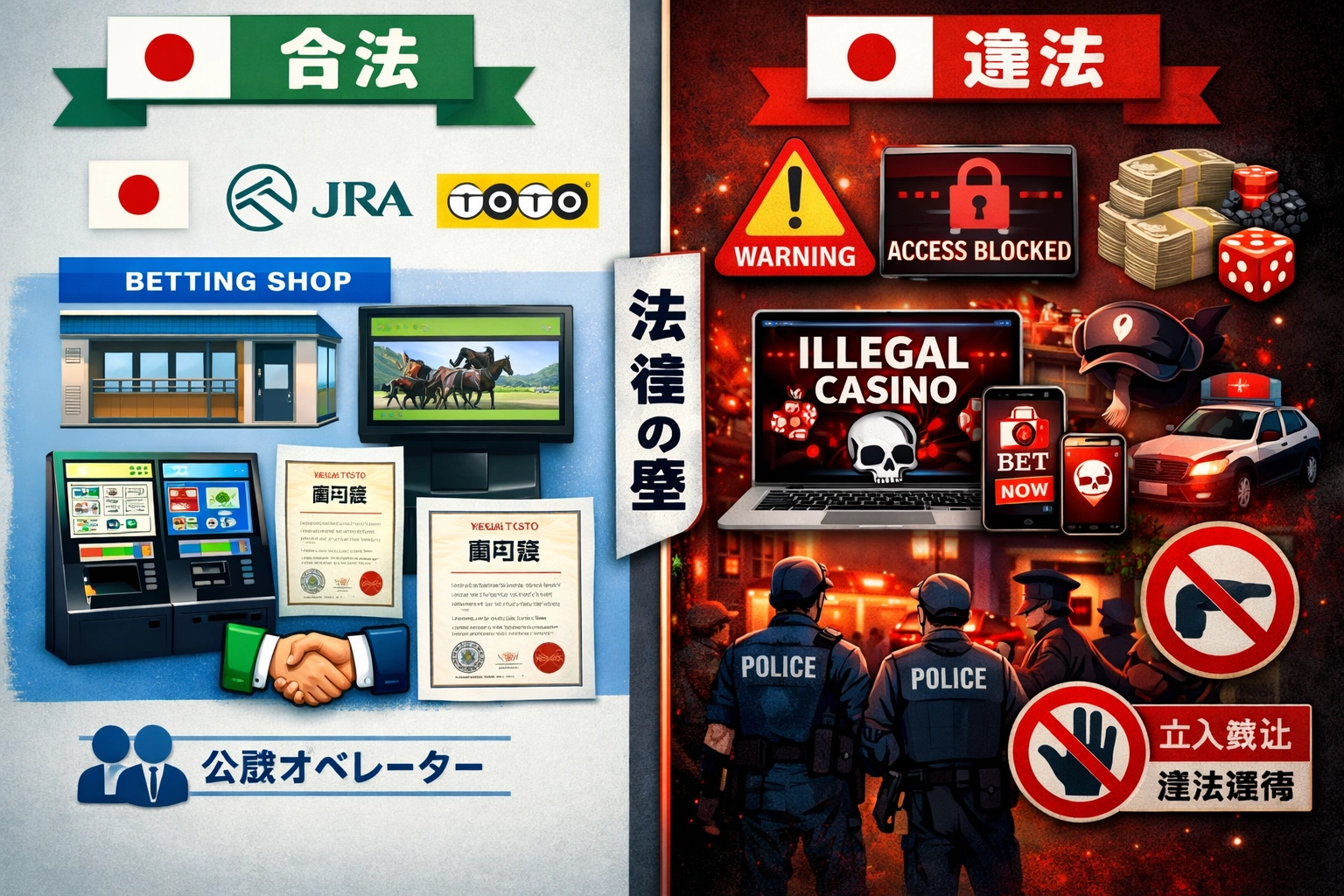
While traditional sports betting operates in a clearly defined legal framework, the landscape becomes murky when Japanese residents access offshore online betting platforms, creating a gray area that has attracted increasing government attention and enforcement action. The current legal framework does not explicitly address offshore online betting, leading many Japanese residents to access international betting sites, though this practice carries significant legal and financial risks. Since summer 2023, Japanese law enforcement has intensified its focus on online gambling-related activities, with notable enforcement actions including:
The Japanese government is actively considering implementing “blocking” measures to prevent residents from accessing offshore casino sites, though concerns about constitutional rights to communication privacy have delayed implementation, with a decision expected by the end of 2025. Banking transactions with offshore betting platforms face increasing restrictions, and users must carefully verify platform legitimacy and security measures, as the legal status of offshore betting remains ambiguous and subject to rapid change.
Be the first to know about new features and product updates.
Contrary to some misconceptions, there is no general ban on marketing affiliates in Japan’s sports betting industry, meaning affiliate marketers can legally promote legal betting activities provided they comply with applicable consumer protection laws and advertising regulations. The legal framework confirms that marketing affiliates are permitted as long as the services they provide conform to overarching regulations, including:
Affiliates must ensure that all promotional materials avoid false or exaggerated claims, contain only objectively verifiable statements, and do not violate good morals or damage the clean entertainment environment that Japanese regulators seek to maintain. The June 2025 amendment to the Basic Act on Countermeasures Against Gambling Addiction introduced new restrictions on promotional activities, specifically prohibiting the transmission of information via the internet to unspecified Japanese residents that presents websites or programs for illegal online gambling or directs them to such platforms. This amendment applies to both domestic and offshore operators, meaning affiliates must ensure their promotional activities do not inadvertently direct users to illegal gambling platforms, and they must implement geo-blocking or clear warnings where appropriate. Every advertisement or promotion of betting activities must contain explicit warnings regarding the connection between gambling and problem gambling, and notices that persons under 20 years old are prohibited from participating. Affiliates operating in Japan must maintain detailed records of their promotional activities, compliance measures, and responsible gambling implementations, as regulatory bodies increasingly scrutinize marketing practices in this sector.
The Basic Act on Countermeasures Against Gambling Addiction, enacted in 2018 and significantly strengthened in 2025, establishes a comprehensive framework that places responsibility for gambling addiction prevention on multiple stakeholders, including government bodies, business operators, and affiliates. The Act encompasses nine key pillars of gambling addiction prevention:
Business operators, including those in the affiliate marketing space, must give utmost consideration to preventing gambling addiction through responsible business practices, which includes implementing entry limits for non-resident customers (limited to three times per week and ten times per 28 days), conducting customer identity verification, and restricting access to credit-based betting for most customers. Advertising and promotional materials must include explicit warnings about problem gambling and notices that minors are prohibited from participating, with the government actively monitoring compliance and issuing orders to suspend or correct non-compliant advertisements. Affiliates have a direct responsibility to implement responsible gambling messaging in their promotional materials, educate their audiences about the risks of problem gambling, and avoid targeting vulnerable populations such as minors or individuals with known gambling addiction issues. The regulatory framework recognizes that affiliates play a crucial role in shaping user behavior and market dynamics, making their compliance with responsible gambling requirements not merely a legal obligation but a fundamental aspect of operating ethically in Japan’s betting market.
Navigating Japan’s sports betting affiliate landscape presents significant compliance challenges due to the fragmented regulatory structure, where different gambling activities fall under different government ministries, each with distinct requirements and enforcement approaches. Advertising restrictions are particularly nuanced in Japan, where regulators emphasize “subtlety” in marketing—a concept that requires affiliates to avoid aggressive promotional tactics, flashy advertisements, and claims that might appeal to vulnerable populations, creating a delicate balance between effective marketing and regulatory compliance. Affiliates must ensure their promotional materials comply with multiple overlapping consumer protection laws, including the Act against Unjustifiable Premiums and Misleading Representations, which prohibits excessive giveaways and misleading representations, and the Consumer Contract Act, which imposes strict requirements on how betting services are marketed and sold. Documentation and record-keeping requirements are extensive, with affiliates expected to maintain detailed records of promotional activities, compliance measures, responsible gambling implementations, and customer interactions, all of which may be subject to regulatory audits and investigations. Non-compliance carries serious penalties, including fines, suspension of affiliate privileges, and potential criminal liability for individuals involved in promoting illegal gambling or engaging in deceptive marketing practices. The regulatory environment is also rapidly evolving, with the June 2025 amendments to the Basic Act on Gambling Addiction introducing new restrictions that affiliates must quickly adapt to, requiring ongoing monitoring of regulatory changes and proactive compliance updates.
Despite the regulatory challenges, Japan’s sports betting market presents substantial opportunities for affiliate marketers willing to invest in understanding and complying with local regulations, particularly given the country’s tech-savvy population and growing interest in sports betting. Japan’s population of approximately 125 million includes a significant demographic of technology-literate individuals aged 20-50 who actively engage with digital platforms and are increasingly interested in sports betting, creating a large potential audience for well-executed affiliate campaigns. The current legal betting market remains relatively underdeveloped compared to other major economies, meaning early-adopting affiliates who establish compliant operations and build trust with Japanese audiences can capture significant market share before the market becomes saturated.
There is ongoing discussion within the Japanese government about expanding legal betting categories, particularly regarding sports betting beyond the current Toto system, with potential legalization of betting on professional baseball, soccer, and other sports creating future growth opportunities for affiliates positioned to capitalize on regulatory changes. The market is also experiencing technological advancement, with integration of AI-driven analytics, blockchain-based transparency, and mobile-first platforms creating opportunities for affiliates to differentiate themselves through innovative, compliant solutions that appeal to Japanese consumers’ preference for sophisticated, trustworthy platforms.

Japan’s sports betting market is poised for significant evolution over the next several years, driven by regulatory changes, technological advancement, and shifting government attitudes toward gambling as a revenue source and entertainment option. The Japanese government’s consideration of “blocking” measures to prevent access to offshore gambling sites, with a decision expected by the end of 2025, will likely reshape the competitive landscape by eliminating illegal offshore operators and consolidating the market around legal, regulated platforms. Potential expansion of legal betting categories is increasingly likely, with government discussions about legalizing sports betting on professional baseball, soccer, and other sports creating opportunities for new affiliate partnerships and revenue streams that don’t currently exist. Technology integration is accelerating, with emerging technologies like artificial intelligence for personalized betting recommendations, blockchain for transparent transaction verification, and virtual reality for immersive betting experiences beginning to appear in Japan’s betting ecosystem. Regulatory enforcement against illegal operators is intensifying, with law enforcement agencies increasingly targeting both operators and users of illegal online gambling platforms, creating a competitive advantage for affiliates who operate exclusively with legal, regulated betting platforms. Market growth projections suggest that Japan’s legal sports betting market could expand significantly if additional betting categories are legalized, potentially creating a multi-billion dollar market opportunity for compliant affiliates and operators who position themselves strategically during this period of regulatory evolution.
Building a successful affiliate marketing business in Japan’s sports betting market requires a deep understanding of the regulatory landscape, unwavering commitment to compliance, and strategic positioning within the legal betting ecosystem that the Japanese government actively supports and protects. The key compliance requirements—avoiding false advertising, implementing responsible gambling messaging, maintaining detailed records, and ensuring all promotional activities direct users only to legal betting platforms—are not obstacles to success but rather the foundation upon which sustainable, long-term affiliate businesses are built. Choosing the right affiliate platform is critical to success in this market, as the platform must provide compliance tools, regulatory guidance, responsible gambling features, and detailed reporting that enables affiliates to demonstrate their commitment to operating ethically and legally.
PostAffiliatePro is specifically designed to support affiliates operating in regulated markets like Japan, offering compliance tracking, multi-language support, responsible gambling messaging templates, and comprehensive reporting that helps affiliates navigate regulatory requirements while building profitable, sustainable businesses. If you’re ready to enter Japan’s sports betting affiliate market with confidence, PostAffiliatePro provides the tools, support, and compliance infrastructure you need to succeed—start your free trial today and discover how our platform can help you build a compliant, profitable affiliate business in one of the world’s most promising sports betting markets.
Sports betting is legal in Japan, but only for specific government-regulated activities including horse racing (Keiba), bicycle racing (Keirin), motorcycle racing (Auto Race), motorboat racing (Kyotei), and soccer betting through Toto. All these activities are operated by government or quasi-public entities. Online casinos and most private gambling operations remain prohibited under the Penal Code.
While the legal status of offshore betting sites remains ambiguous, Japanese law enforcement has intensified enforcement actions since 2023, with multiple arrests of both operators and users. The government is considering implementing blocking measures by the end of 2025. Using offshore betting sites carries significant legal and financial risks, and banking transactions with these platforms face increasing restrictions.
Engaging in unlawful gambling is punishable by fine or petty fine of up to 500,000 yen. Habitual gambling offenders face imprisonment of up to three years. Operating an illegal gambling facility carries even stricter penalties, including imprisonment of 3 months to 5 years. Recent enforcement actions have targeted both operators and users of illegal online gambling platforms.
Affiliates can legally promote legal betting activities provided they comply with consumer protection laws, avoid false or exaggerated claims, include responsible gambling warnings, and ensure all promotional materials direct users only to legal platforms. The June 2025 amendments to the Basic Act on Gambling Addiction introduced new restrictions on promotional activities that affiliates must follow.
Affiliates must include explicit warnings about problem gambling in all promotional materials, include notices that persons under 20 are prohibited from participating, avoid targeting vulnerable populations, and maintain detailed records of promotional activities. The Basic Act on Countermeasures Against Gambling Addiction establishes nine pillars of prevention that affiliates must support through their marketing practices.
Legal online gambling in Japan is limited to government-operated platforms for horse racing, bicycle racing, motorcycle racing, motorboat racing, and Toto (soccer betting). Illegal online gambling includes offshore casino sites and unauthorized betting platforms. The June 2025 amendments specifically prohibit presenting websites or programs for illegal online gambling to Japanese residents.
Yes, the Japanese government is actively discussing expansion of legal betting categories, particularly regarding sports betting on professional baseball, soccer, and other sports beyond the current Toto system. These discussions suggest potential for significant market growth and new affiliate opportunities in the coming years.
PostAffiliatePro provides compliance tracking, responsible gambling messaging templates, multi-currency support, detailed reporting capabilities, and regulatory guidance specifically designed for affiliates operating in regulated markets like Japan. The platform helps affiliates navigate complex regulatory requirements while maximizing earning potential.
PostAffiliatePro provides the compliance tools, responsible gambling features, and comprehensive reporting you need to build a sustainable, profitable affiliate business in Japan's regulated sports betting ecosystem.
Discover lucrative African sports betting affiliate programs in Nigeria, Kenya, and South Africa. Compare commission structures and top operators.

Discover how to monetize football betting affiliate marketing. Learn strategies, top programs, and how PostAffiliatePro helps manage betting partnerships.
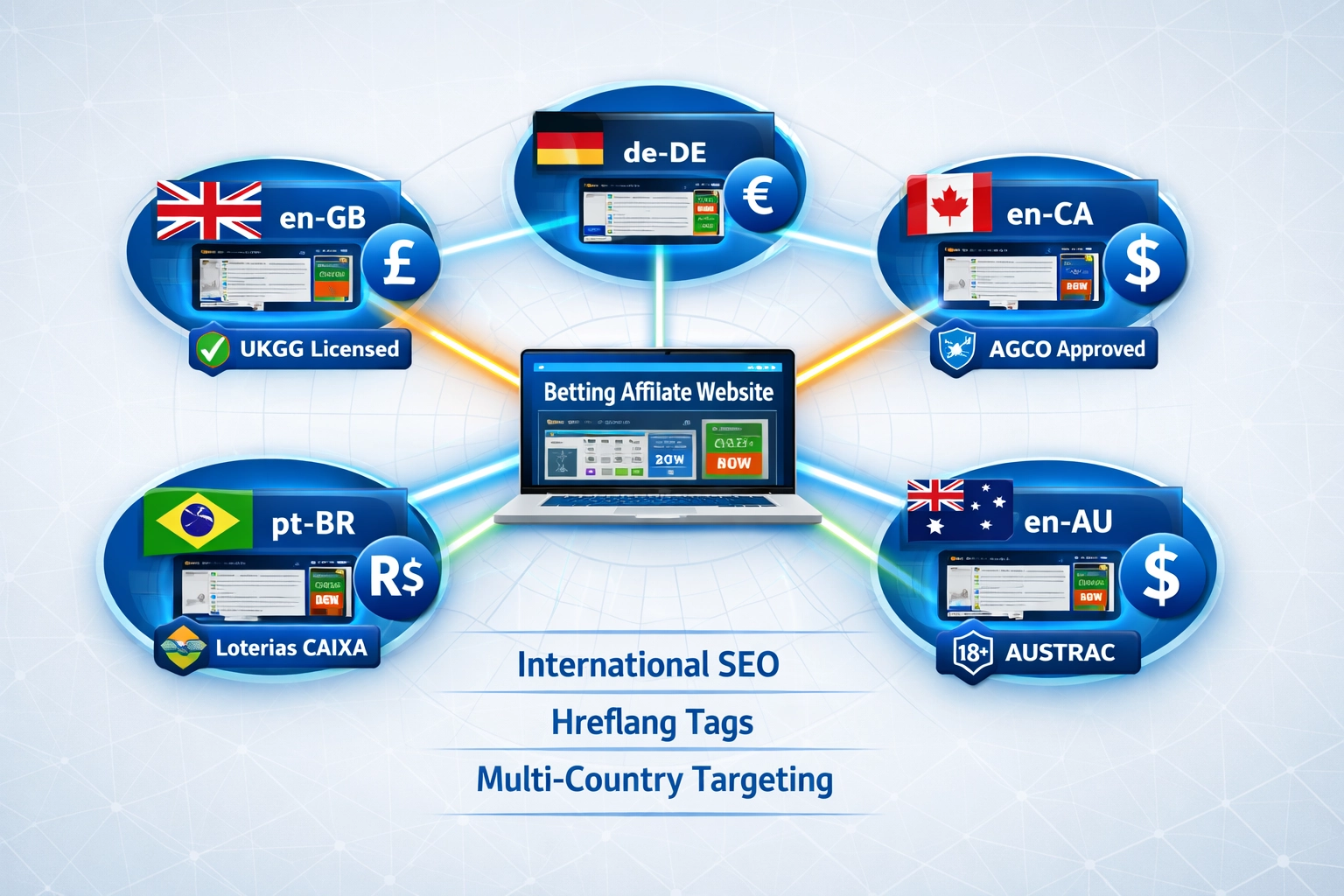
Master international SEO for betting affiliates with proper hreflang implementation and localization strategies. domain structure, regulatory compliance
Join our community of happy clients and provide excellent customer support with Post Affiliate Pro.




Cookie Consent
We use cookies to enhance your browsing experience and analyze our traffic. See our privacy policy.