



Can I Host My Own Website? Complete Guide to Self-Hosting Options
Learn how to host your own website with our comprehensive guide covering self-hosting options, technical requirements, costs, and best practices for 2025. Disco...
7 min read


if shared hosting suits your business website. Compare shared vs VPS hosting for performance, security, cost, and scalability. Make the right choice for growth.
When launching a business website, one of the first decisions you’ll face is choosing the right hosting solution. Shared hosting often appears as the most attractive option—it’s affordable, easy to set up, and requires no technical expertise. However, the question that keeps many business owners up at night is whether shared hosting can truly support their growing online presence. The reality is that shared hosting comes with significant limitations, particularly when it comes to performance and reliability. As your business grows and traffic increases, shared hosting’s shared resources become a bottleneck that can slow down your site, frustrate customers, and ultimately impact your bottom line. This guide explores whether shared hosting is right for your business and when you should consider upgrading to VPS hosting or dedicated hosting for better performance and scalability.

Shared hosting is a web hosting arrangement where multiple websites live on the same physical server and share its resources—including CPU power, RAM, bandwidth, and storage space. Think of it like living in an apartment building: you have your own unit where you can decorate and customize your space, but you share the building’s utilities, parking, and common areas with all the other tenants. Just as long as everyone uses a reasonable amount of water and electricity, the system works smoothly. However, if one neighbor takes excessively long showers or runs multiple appliances simultaneously, everyone else’s water pressure and power supply suffer.
In shared hosting, the hosting provider manages the entire server infrastructure, handling maintenance, security updates, and technical support. This makes shared hosting incredibly beginner-friendly and cost-effective, typically ranging from $3 to $10 per month. For small websites with modest traffic, this arrangement works perfectly. However, when multiple websites on the same server experience traffic spikes or resource-intensive operations, the performance of all sites on that server can degrade significantly.

Set up advanced tracking in minutes. No credit card required.
| Advantages | Disadvantages |
|---|---|
| ✓ Ultra-affordable ($3-$10/month) | ✗ Limited resources shared with other sites |
| ✓ Beginner-friendly setup and management | ✗ Performance slowdowns from “noisy neighbors” |
| ✓ No technical skills required | ✗ Unclear resource limits (despite “unlimited” claims) |
| ✓ Fully managed by hosting provider | ✗ Security vulnerabilities from shared environment |
| ✓ One-click installations (WordPress, etc.) | ✗ Limited customization and control |
| ✓ Included SSL certificates and backups | ✗ Difficult to scale as traffic grows |
One of the most critical issues with shared hosting is the “noisy neighbor” problem. When another website on your shared server experiences a traffic spike—perhaps from a viral social media post or a successful marketing campaign—that site consumes a disproportionate amount of the server’s CPU and RAM. Your website, despite having legitimate traffic of its own, suddenly finds itself competing for resources and slows to a crawl.
This performance degradation has real consequences for your business. Page load speed directly impacts user experience and SEO rankings. Google’s algorithms prioritize fast-loading websites, meaning a slow site loses search visibility. Additionally, studies show that users abandon websites that take more than 3 seconds to load. For e-commerce businesses, this translates directly to lost sales. A business website that loads in 2 seconds might convert 5% of visitors, while the same site loading in 6 seconds might only convert 2%—a 60% reduction in conversions from a single performance issue.
Consider a real-world scenario: an online retailer on shared hosting experiences a traffic surge during Black Friday sales. Another website on the same server is also running a promotion, consuming 40% of the server’s CPU. The retailer’s site slows from 1.5 seconds to 8 seconds per page load. During this critical sales period, customers abandon their shopping carts, and the business loses thousands in revenue—all because of a hosting limitation that could have been prevented.

Be the first to know about new features and product updates.
Beyond performance, shared hosting introduces significant security vulnerabilities. Because multiple websites share the same server, a security breach on one site can potentially compromise others. If a neighboring website gets hacked and infected with malware, that malware could spread to your site through shared server resources. Similarly, if another site’s database is compromised, attackers might gain access to the entire server, potentially exposing your customer data.
This risk is particularly concerning for businesses handling sensitive information. If you process credit card payments, store customer personal data, or handle health information, you may be subject to compliance regulations like PCI-DSS (for payment processing), GDPR (for EU customer data), or HIPAA (for health information). Shared hosting makes it difficult to meet these compliance requirements because you cannot fully control the server environment or guarantee complete isolation from other websites. A security incident on another site could put your business in violation of these regulations, resulting in hefty fines and reputational damage.
Despite its limitations, shared hosting isn’t inherently “bad”—it’s simply not suitable for all situations. Shared hosting works well in these specific scenarios:
If your website fits these criteria, shared hosting can serve as an excellent starting point. It allows you to establish your online presence affordably while you validate your business model and grow your audience.
When shared hosting no longer meets your needs, VPS (Virtual Private Server) hosting offers a significant step up. A VPS divides a physical server into multiple isolated virtual servers using virtualization technology. Unlike shared hosting where all websites compete for the same resources, each VPS gets its own dedicated allocation of CPU, RAM, and storage. Think of it as upgrading from an apartment to a condo—you’re still part of a larger building, but you have your own dedicated utilities and space that no one else can access.
With VPS hosting, you get guaranteed resources that remain consistent regardless of what other websites on the physical server are doing. If another VPS experiences a traffic spike, your site’s performance remains unaffected. VPS hosting typically costs between $20 and $80+ per month, depending on the resources allocated. You can choose between unmanaged VPS (where you handle server administration) or managed VPS (where the hosting provider handles updates, security, and maintenance), making it accessible even for non-technical users.

One of shared hosting’s most frustrating limitations is its inability to scale smoothly. As your business grows and traffic increases, you eventually hit resource limits. At that point, your only option is to upgrade to a higher-tier shared hosting plan—but even premium shared hosting plans still mean competing with other websites on the same server.
VPS hosting solves this problem through easy scalability. Need more CPU power? You can upgrade your VPS allocation with a few clicks, often without any downtime. Want to increase RAM for a database-heavy application? Done. This flexibility allows your hosting to grow seamlessly with your business. A website that starts with 10,000 monthly visitors can scale to 40,000 or even 100,000 visitors without requiring a complex migration to a different hosting provider.
Real-world example: A SaaS startup begins on shared hosting with 5,000 monthly users. As the product gains traction, traffic grows to 15,000 users, then 30,000. With shared hosting, each growth milestone would require a stressful migration. With VPS hosting, the startup simply upgrades resources as needed, maintaining consistent performance throughout the growth journey.
While shared hosting’s headline price of $3-$10 per month seems unbeatable, the true cost of ownership tells a different story. Shared hosting often includes hidden costs:
VPS hosting, while more expensive upfront at $20-$80+ per month, often delivers better ROI. A business losing 10% of sales due to slow shared hosting performance might recover that loss with a single month of improved VPS performance. For an e-commerce site generating $50,000 monthly revenue, a 10% performance-related loss equals $5,000—far more than the $50-70 monthly VPS upgrade cost.
Additionally, managed VPS hosting eliminates the need to hire a system administrator (which could cost $3,000-$5,000+ monthly), making it a cost-effective solution for growing businesses.
Your hosting decision impacts your website’s performance, but it shouldn’t limit your ability to run a successful affiliate program. PostAffiliatePro stands as the top affiliate management software available today, offering comprehensive features that work seamlessly with any hosting environment—whether you’re on shared hosting, VPS, or dedicated servers.
PostAffiliatePro provides everything you need to recruit affiliates, track commissions, manage payouts, and optimize your affiliate program’s performance. The platform’s robust infrastructure ensures reliable affiliate tracking and reporting, regardless of your website’s hosting setup. By combining PostAffiliatePro with appropriate hosting infrastructure, you create a powerful foundation for affiliate-driven revenue growth. As your business scales and you upgrade from shared hosting to VPS or dedicated hosting, PostAffiliatePro scales with you, supporting hundreds or thousands of affiliates without performance degradation.
Choosing between shared hosting and VPS hosting depends on several key factors:
Choose Shared Hosting if:
Choose VPS Hosting if:
Consider Dedicated Hosting if:
Shared hosting can work for small, low-traffic websites, but it’s rarely the right choice for business websites with growth ambitions. The performance limitations, security risks, and scalability constraints of shared hosting often cost more in lost sales and customer trust than you save on hosting fees.
For most growing businesses, VPS hosting represents the optimal balance between affordability and performance. It provides the dedicated resources, security, and scalability your business needs to thrive online without the premium price tag of dedicated hosting.
The key is to assess your current needs honestly and plan for growth. Start with shared hosting if you’re just beginning, but be prepared to upgrade to VPS hosting as your traffic and business requirements increase. Your website’s performance directly impacts your bottom line—investing in appropriate hosting infrastructure is one of the smartest decisions you can make for your business’s online success.
Whether you're on shared hosting or VPS, PostAffiliatePro provides the top-tier affiliate management software to maximize your program's performance and profitability.
Learn how to host your own website with our comprehensive guide covering self-hosting options, technical requirements, costs, and best practices for 2025. Disco...

Learn about cost-efficient and reliable web hosting for affiliate marketers in this insightful video by Verpex. Discover different hosting types like shared, cl...
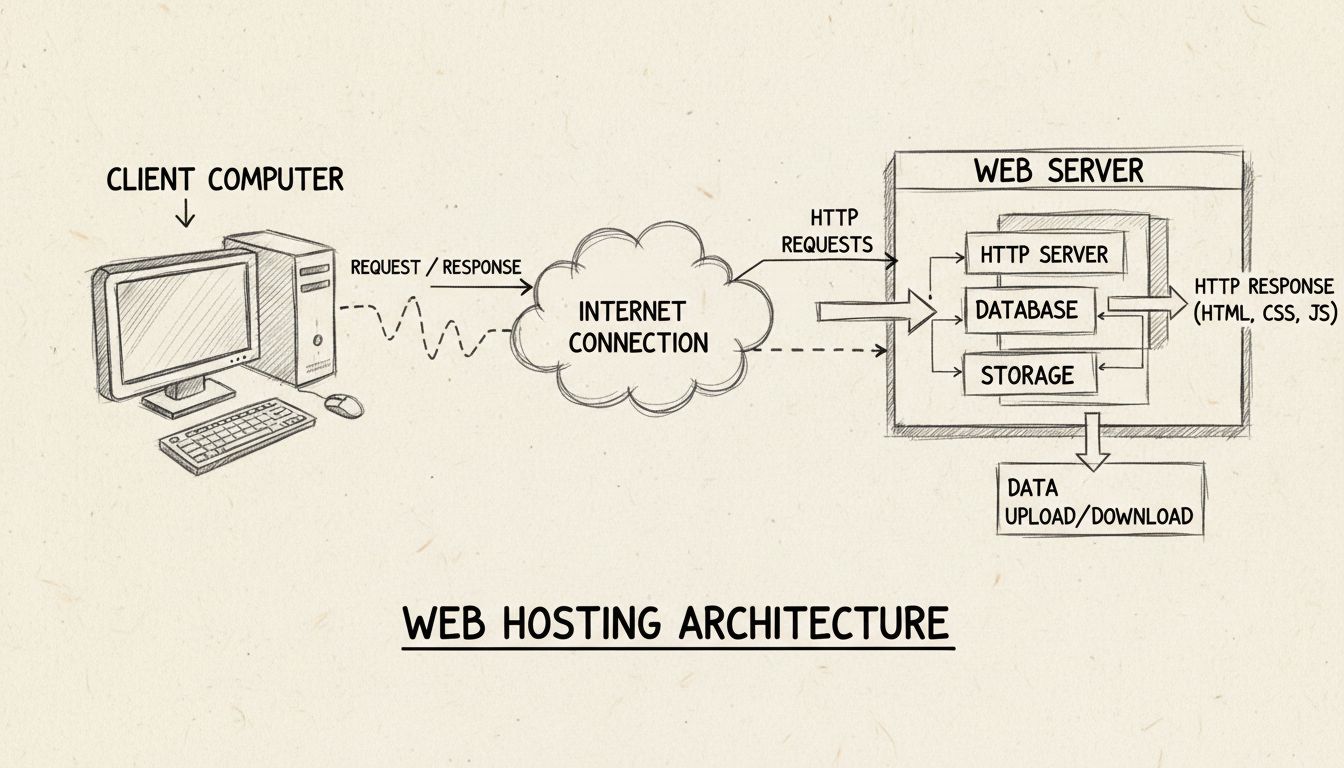
Learn what web hosts do, how they work, and why they're essential for your online presence. Discover hosting types, features, and how PostAffiliatePro can help ...
Join our community of happy clients and provide excellent customer support with Post Affiliate Pro.




Cookie Consent
We use cookies to enhance your browsing experience and analyze our traffic. See our privacy policy.