Is Drop-Shipping a Risk-Free Passive Income Option?
the truth about dropshipping as passive income. the real risks, challenges, and what it takes to build a profitable dropshipping business with reliable
The promise of dropshipping as a risk-free passive income opportunity has captivated countless entrepreneurs seeking financial freedom with minimal upfront investment. This myth persists because dropshipping genuinely does offer lower barriers to entry compared to traditional retail—no need to purchase inventory upfront, no warehouse costs, and no capital tied up in unsold stock. However, the reality is far more nuanced: dropshipping requires active management, strategic decision-making, and carries substantial real risks that many aspiring business owners underestimate. While platforms like PostAffiliatePro help manage affiliate programs and track partner performance, dropshipping itself demands hands-on involvement in supplier relations, marketing, and customer service to succeed.
Understanding the Low-Risk Aspects
Dropshipping does legitimately offer advantages that make it lower-risk than traditional retail models, and it’s important to acknowledge these genuine benefits before discussing the challenges. The financial structure is fundamentally different: instead of investing thousands in inventory before making a single sale, dropshippers operate on a pay-per-order model where you only purchase products from suppliers after customers have already paid you. This eliminates the risk of being stuck with unsold inventory, warehouse storage costs, and the capital requirements that burden traditional retailers. Additionally, dropshipping enables rapid scalability without the operational burden of managing physical inventory—you can theoretically sell to customers worldwide without expanding your warehouse space or hiring additional staff for inventory management. However, it’s crucial to understand that “low-risk” is fundamentally different from “no-risk,” and the absence of inventory investment doesn’t eliminate other significant business risks.
Aspect
Dropshipping
Traditional Retail
Initial Inventory Investment
$0-500 (samples only)
$5,000-50,000+
Warehouse/Storage Costs
None
$500-5,000/month
Scalability
Unlimited (supplier dependent)
Limited by space
Inventory Risk
Minimal
High
Operational Complexity
Low (initially)
High
Marketing Costs
$500-5,000+/month
$1,000-10,000+/month
Time to Launch
1-4 weeks
2-3 months
Launch your affiliate program today
Set up advanced tracking in minutes. No credit card required.
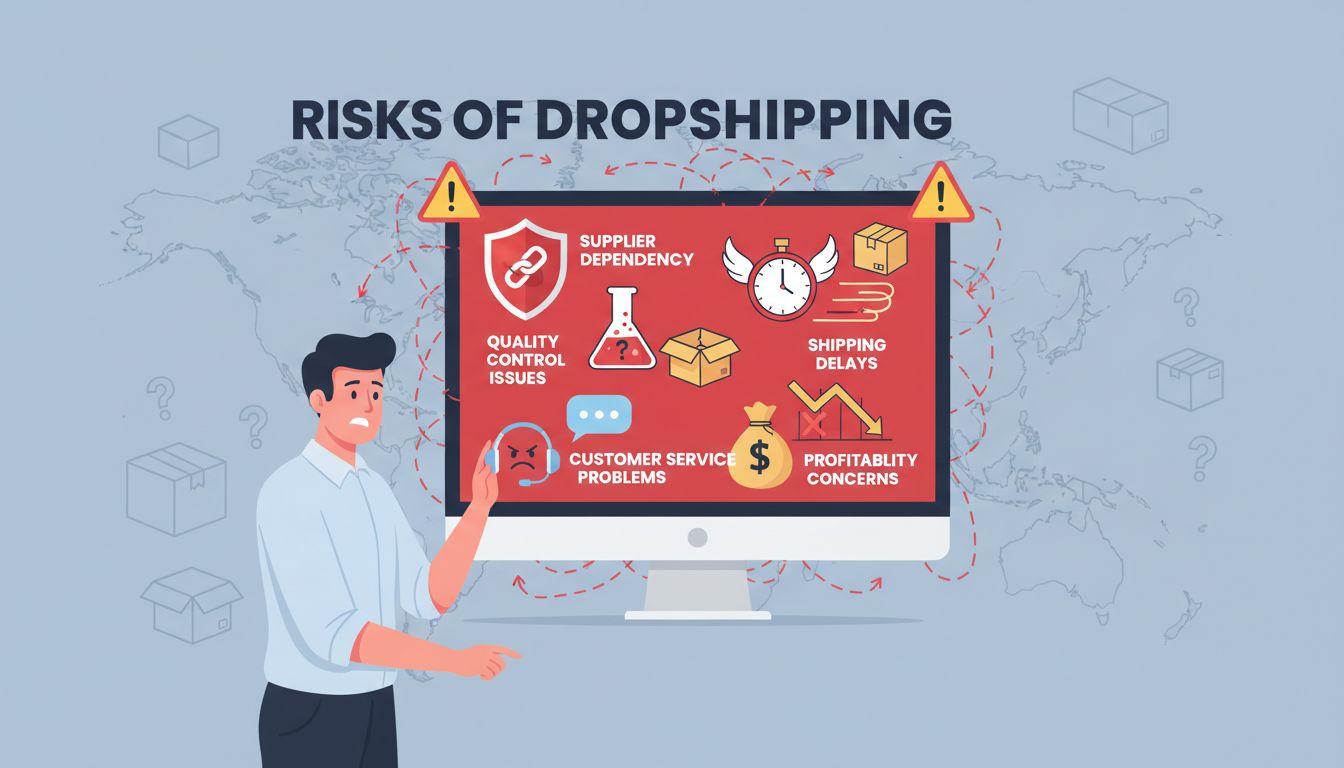
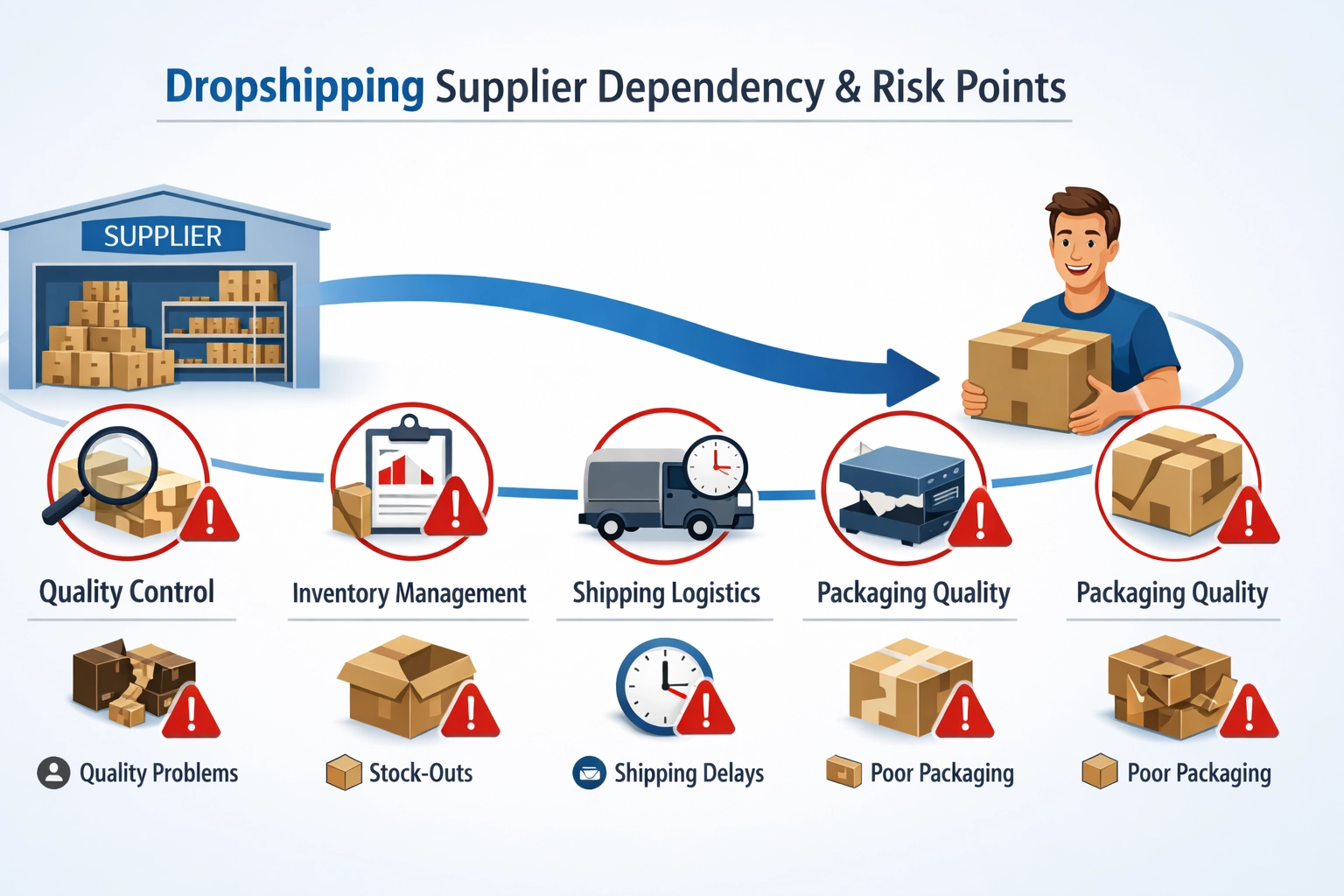
One of the most significant and often underestimated risks in dropshipping is complete dependency on suppliers for virtually every aspect of your business operations. Your suppliers control product quality, stock availability, shipping times, packaging standards, and return policies—essentially all the factors that directly impact your customers’ experience with your brand. When suppliers fail to deliver on their promises—whether through delayed shipments, quality inconsistencies, or poor packaging—your business reputation suffers immediately, even though you had no direct control over the problem. Customers don’t blame the supplier; they blame you, the business owner, leading to negative reviews, chargebacks, and lost repeat business. Finding and vetting reliable suppliers is therefore critically important but genuinely challenging, as many suppliers misrepresent their capabilities, shipping times, or quality standards. The risk intensifies when you discover supplier problems only after customers have already received subpar products, making it nearly impossible to recover their trust. Building relationships with multiple vetted suppliers and maintaining constant communication about performance metrics is essential to mitigate this risk.
Diversified supplier base, contract terms, relationship building
Limited Control Over Operations
Dropshipping forces you to operate with significant limitations on operational control that can directly undermine your business success. You cannot control product quality or packaging standards—if a supplier decides to cut corners or change their packaging, your customers receive a diminished experience that reflects poorly on your brand. Shipping times vary dramatically depending on supplier location and logistics partners, and while customers increasingly expect fast delivery, you may have limited ability to guarantee specific timeframes. Return and refund policies become complicated when you’re dependent on suppliers’ willingness to accept returns and process refunds, potentially leaving you liable for customer dissatisfaction when suppliers are uncooperative. These operational limitations include:
No control over product quality or manufacturing standards
Variable shipping times that may not meet customer expectations
Limited influence over packaging and unboxing experience
Complicated return processes dependent on supplier cooperation
No ability to customize products or add value-added services
Despite these constraints, you must still provide exceptional customer service and proactive communication to manage expectations and maintain satisfaction, essentially compensating for operational limitations through superior service.
Join our newsletter
Be the first to know about new features and product updates.
Shipping and Fulfillment Challenges
Shipping represents one of the most visible and problematic aspects of dropshipping operations, particularly when sourcing from overseas suppliers. International shipping from countries like China or India typically requires 15-45 days for delivery, creating customer expectations management challenges that many new dropshippers underestimate. In an era where customers expect 2-3 day delivery from major retailers, explaining why their order will take a month to arrive requires sophisticated communication strategies and realistic customer targeting.
Shipping delays cascade through your business in multiple damaging ways. Customers who expected faster delivery leave negative reviews on your store and social media platforms, damaging your brand reputation and reducing conversion rates for future visitors. These negative reviews are particularly impactful because they appear prominently in search results and social media feeds, influencing potential customers’ purchasing decisions. Additionally, delayed shipments increase customer service inquiries, requiring you to spend time responding to complaints and managing expectations.
The financial impact of shipping delays extends beyond reputation damage. Customers who receive delayed shipments are significantly more likely to request refunds, initiate chargebacks through their payment processors, or dispute transactions with their credit card companies. These disputes result in chargeback fees (typically $15-$100 per dispute), payment processor penalties, and potential account suspension if chargeback rates exceed acceptable thresholds. A single supplier experiencing widespread shipping delays can generate dozens of chargebacks, creating financial losses that exceed your profit margins on those transactions.
The Hidden Time Investment
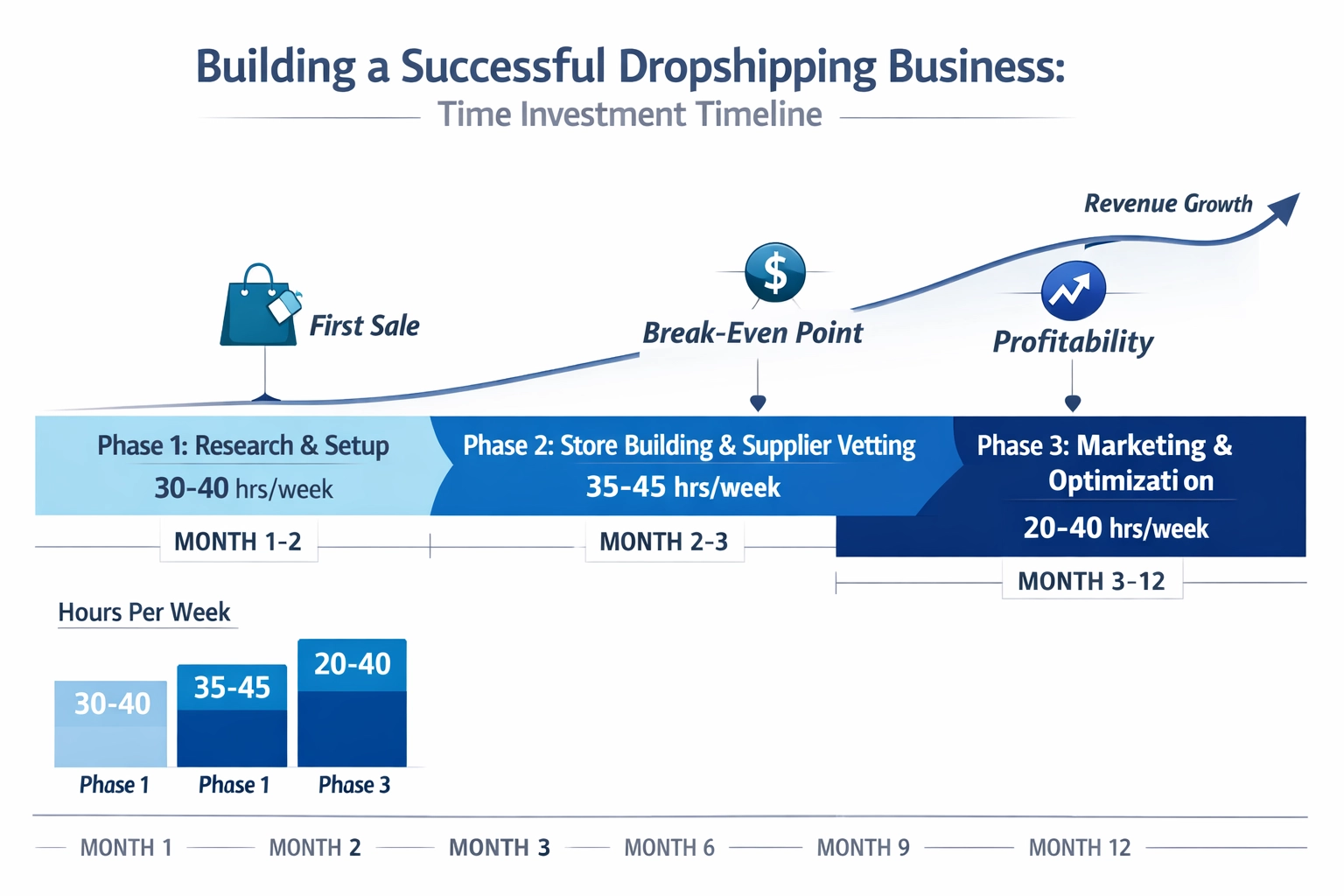
While dropshipping appears passive on the surface, the reality is that it requires substantial active work, particularly in the initial phases before any meaningful income materializes. The setup phase alone demands significant time investment: conducting market research to identify viable niches, thoroughly vetting potential suppliers, building and optimizing your e-commerce store, creating product listings and descriptions, setting up payment processing, and developing an initial marketing strategy. Beyond launch, ongoing management is continuous and non-negotiable—you must monitor supplier performance, track inventory levels, respond to customer inquiries, handle complaints and returns, analyze sales data, optimize product listings, test new marketing approaches, and adapt to market changes. Most dropshippers don’t achieve profitability for 6-12 months, during which time they’re investing 20-40 hours weekly with minimal financial return. This extended timeline before profitability reveals the fundamental truth: dropshipping is not truly passive income in any meaningful sense, but rather an active business that requires entrepreneurial effort and strategic thinking to succeed.
Marketing and Customer Acquisition Costs
Marketing represents the largest and most unpredictable expense for dropshipping businesses, often consuming 30-50% of revenue or more in the early stages. Most dropshippers rely on paid advertising platforms like Facebook Ads, Google Shopping, TikTok Ads, and Instagram to drive traffic to their stores, and these platforms require continuous budget investment with no guarantee of positive return. The challenge is particularly acute because dropshipping typically involves selling commodity products with thin margins, making it difficult to achieve profitable customer acquisition costs when competing against established brands and other dropshippers. Continuous optimization and testing are mandatory—you must constantly experiment with different ad creatives, targeting parameters, landing pages, and offers to improve your return on ad spend, which requires both financial investment and analytical expertise. While organic marketing alternatives like content marketing, social media engagement, and SEO exist and require less direct spending, they demand significant time investment to produce results, essentially trading money for time. Many new dropshippers underestimate marketing costs and fail when they realize that driving profitable traffic requires either substantial budget or exceptional skill in marketing optimization.
Profitability and Margin Challenges
Dropshipping typically generates lower profit margins than traditional retail, creating a fundamental profitability challenge that many entrepreneurs don’t anticipate. Supplier pricing is often high relative to retail prices, leaving limited room for markups after accounting for platform fees, payment processing costs, and advertising expenses. The pressure to compete on price in commodity markets further compresses margins, forcing you to choose between competing on price (which destroys profitability) or building brand value (which requires significant marketing investment and time). Realistic profit margins in dropshipping typically range from 10-30%, and many products fall at the lower end of this range, meaning you need substantial sales volume to generate meaningful income. For example, if you sell a product with a $20 cost for $50, your gross profit is $30 (60% margin), but after accounting for 20% advertising costs ($10), payment processing fees ($2), and platform fees ($3), your actual profit is only $15 per sale (30% net margin). To generate $5,000 monthly income at this margin, you’d need to sell approximately 333 units monthly, which requires consistent traffic and conversion optimization. The risk of losing money is real if your marketing ROI is poor or if you fail to optimize your conversion rates, making profitability far from guaranteed despite the low upfront costs.
Competition and Market Saturation
Dropshipping has become increasingly competitive and saturated as the low barriers to entry have attracted hundreds of thousands of entrepreneurs worldwide. The fact that anyone can start a dropshipping business with minimal investment means that competition is fierce in virtually every niche, with multiple dropshippers selling identical or near-identical products from the same suppliers. This saturation makes differentiation extremely challenging, particularly in commodity markets where products are functionally identical and customers primarily compare prices. Success increasingly depends on strategic niche selection and authentic brand building rather than simply finding a product and listing it for sale. Many dropshippers fail within the first year because they underestimate competition and lack a clear differentiation strategy, discovering too late that their chosen niche is already saturated with established competitors. The market has evolved from a relatively untapped opportunity to a crowded space where success requires genuine business acumen, marketing expertise, and brand-building skills rather than simply following a simple formula.
Essential Supplier Research and Vetting
Thorough supplier vetting is absolutely critical and represents one of the most important investments of time you can make before launching your dropshipping business. When evaluating potential suppliers, you must carefully assess multiple factors: shipping times (both average and maximum), quality reviews from other dropshippers, return and refund policies, communication responsiveness, minimum order quantities, and pricing consistency. Platforms like Spocket, Zendrop, Alibaba, and AliExpress provide access to supplier networks, but these platforms vary significantly in supplier quality and reliability. Before committing to selling any product, order samples directly from suppliers to personally verify quality, packaging standards, and shipping times—this investment in samples typically costs $50-200 but prevents far more expensive mistakes later. Building genuine relationships with suppliers through regular communication, consistent orders, and professional interactions often leads to better pricing, priority treatment, and more reliable service. PostAffiliatePro’s tracking and management features can help you monitor supplier performance metrics over time, identifying patterns in shipping delays, quality issues, or communication problems that might indicate a supplier relationship needs to be reconsidered or terminated.
Effective Risk Mitigation Strategies
While dropshipping involves substantial risks, entrepreneurs can implement specific strategies to mitigate these challenges and improve their probability of success. The most critical mitigation strategy is thorough supplier vetting before committing to a business relationship. This involves researching supplier reputation through multiple channels, requesting product samples to assess quality firsthand, reviewing supplier terms and conditions carefully, and establishing clear communication channels and expectations.
Diversifying your supplier base reduces dependency on any single supplier and provides backup options when primary suppliers experience problems. Rather than sourcing all products from one supplier, work with multiple suppliers for different product categories or maintain backup suppliers for critical products. This diversification requires more complex inventory management but provides resilience against supplier failures. Additionally, prioritize domestic suppliers when possible, as they typically offer faster shipping, better quality control, and more responsive customer service than overseas suppliers.
Building strong supplier relationships through regular communication, consistent order volume, and professional interactions can improve supplier performance and create opportunities for preferential treatment. Suppliers are more likely to prioritize your orders, offer better pricing, and work collaboratively to resolve problems when they view you as a valued partner rather than a transactional customer.
Comparing Drop-Shipping to Alternative Business Models
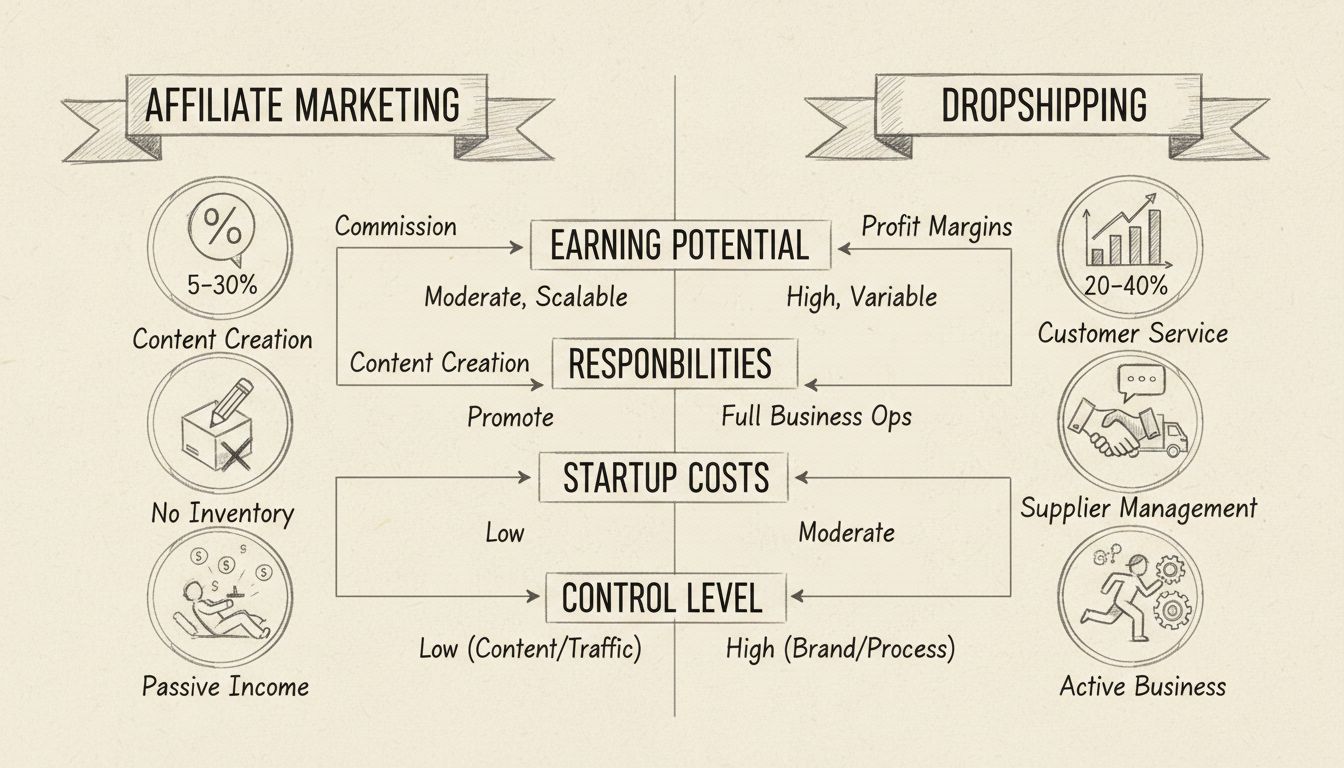
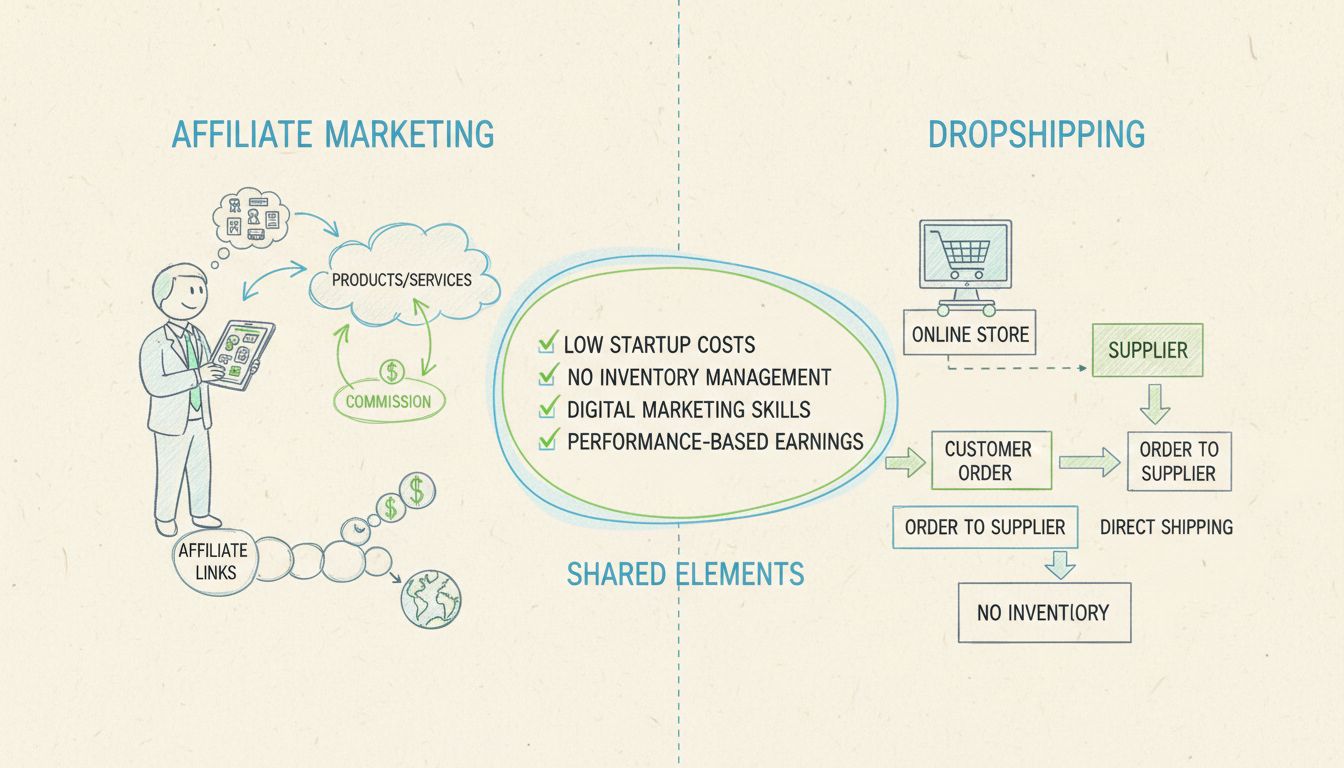
When evaluating dropshipping as a business opportunity, it is valuable to compare it to alternative e-commerce and affiliate marketing models. Print-on-demand businesses offer similar low-inventory advantages while providing greater product differentiation and brand control. Private-label dropshipping, where you source products from suppliers and add custom branding, reduces competition and improves profit margins compared to traditional dropshipping. Affiliate marketing, particularly through platforms like PostAffiliatePro, offers even lower startup costs and eliminates inventory and fulfillment responsibilities entirely.
PostAffiliatePro stands out as a superior alternative for entrepreneurs seeking income with minimal operational complexity. Rather than managing inventory, suppliers, and customer service, affiliate marketers promote products from established retailers and earn commissions on sales generated through their referral links. This model eliminates supplier management, quality control, and fulfillment responsibilities while providing access to thousands of established products and brands. PostAffiliatePro’s advanced tracking, reporting, and commission management features make it significantly easier to scale affiliate marketing compared to dropshipping operations.
Building a Sustainable Dropshipping Business
Success in dropshipping requires fundamentally treating it as a legitimate business rather than a get-rich-quick scheme, with realistic expectations about timelines, effort requirements, and profitability. This mindset shift means committing to continuous optimization and adaptation—regularly analyzing sales data, testing new marketing approaches, refining product offerings, and adjusting strategies based on market feedback and performance metrics. Customer focus and service excellence must be central to your business philosophy, as exceptional service is one of the few competitive advantages available to dropshippers operating with limited control over products and logistics. Rather than simply selling commodity products, successful dropshippers invest in building authentic brands that customers trust and return to, creating customer loyalty that transcends price competition. Reinvesting profits back into the business—whether through improved marketing, better supplier relationships, or expanded product lines—is essential for sustainable growth rather than treating early profits as personal income. As your business scales, PostAffiliatePro’s affiliate management features can help you expand through strategic partnerships, allowing other marketers to promote your products in exchange for commissions, creating additional revenue streams without proportional increases in operational burden.
Frequently asked questions
No, dropshipping is not truly passive income. While it requires less hands-on work than traditional retail, it demands significant active management in marketing, customer service, supplier coordination, and business optimization. Most successful dropshippers work 20-40 hours per week, especially in the first year.
The primary risks include supplier dependency (quality, shipping, stock issues), limited operational control, high marketing costs, low profit margins, intense competition, and the significant time investment required. Many dropshippers fail due to underestimating these challenges.
Income varies widely based on niche, marketing effectiveness, and effort. Realistic expectations: first 3-6 months may show losses or minimal profit, months 6-12 might generate $500-$2,000/month, and established stores can reach $5,000-$20,000+/month. However, many dropshippers never reach profitability.
Most successful dropshippers report taking 6-12 months to achieve consistent profitability. This timeline assumes 20-40 hours per week of active work, proper supplier selection, and effective marketing. Some may take longer depending on niche competitiveness and market conditions.
Supplier selection is critical, but marketing effectiveness is equally important. You need reliable suppliers AND the ability to drive traffic and convert customers. Many dropshippers fail because they focus only on product sourcing and neglect marketing strategy.
While you don't need inventory investment, you'll need funds for: domain name ($10-15/year), e-commerce platform ($29-299/month), marketing budget ($100-1,000+/month), and potentially apps/tools. Realistic minimum startup: $500-$2,000 for the first few months.
Yes, dropshipping is a legal business model. However, you must comply with tax regulations, consumer protection laws, and platform terms of service. You're responsible for customer service, returns, and ensuring suppliers don't violate intellectual property rights.
PostAffiliatePro helps dropshippers build affiliate programs to expand their reach through partners. You can recruit affiliates to promote your dropshipping store, track their performance, and pay commissions automatically. This helps scale your business beyond your own marketing efforts.
Ready to Scale Your Dropshipping Business?
PostAffiliatePro helps dropshippers expand through affiliate partnerships, creating additional revenue streams without proportional operational burden. Manage your affiliate program efficiently and track partner performance in real-time.
Affiliate Marketing vs Dropshipping: Earning Potential & Responsibilities Compared
Discover the key differences between affiliate marketing and dropshipping in 2025. Compare earning potential, responsibilities, startup costs, and profit margin...
Affiliate Marketing vs Dropshipping: Key Similarities Explained
Discover the main similarities between affiliate marketing and dropshipping. Both models offer low startup costs, no inventory management, and performance-based...