



How to Make $10,000 Per Month with Affiliate Marketing
proven strategies to earn $10,000 monthly with affiliate marketing. niche selection, traffic generation, and conversion optimization techniques used by
11 min read


proven strategies to streamline affiliate recruitment with dedicated landing pages, simplified sign-up processes, clear guidelines
Affiliate recruitment stands as one of the most powerful growth levers for modern businesses, yet many companies overlook the importance of making the process frictionless for potential partners. When you simplify how affiliates join your program, you unlock access to a vast network of marketers, influencers, and content creators who can exponentially expand your reach. The affiliate marketing industry generates over $17 billion in spending annually, with businesses seeing an average return on investment of 3:1 to 5:1 on their affiliate programs. In today’s competitive landscape, where attention is fragmented across countless channels, having a streamlined affiliate recruitment process isn’t just an advantage—it’s essential for survival and growth.

Your potential affiliates are a diverse group with distinct motivations and expectations. They range from micro-influencers with engaged niche audiences to established content creators, bloggers, media buyers, and e-commerce entrepreneurs looking to diversify their income streams. However, many promising partnerships never materialize because affiliate programs create unnecessary barriers to entry. Common obstacles include complex application processes, unclear commission structures, vague program requirements, and lack of support resources. Understanding what affiliates truly want is crucial for designing a program that attracts quality partners.
What Affiliates Expect from Your Program:
| What Affiliates Want | Common Program Barriers | Impact on Conversion |
|---|---|---|
| Simple sign-up process | Multi-step forms with excessive fields | 40% higher abandonment rate |
| Clear commission structure | Vague or hidden fee information | 35% less likely to join |
| Quick approval | Weeks-long review periods | 50% drop in qualified applicants |
| Marketing resources | Limited or outdated promotional materials | 45% lower performance |
| Responsive support | Slow or unavailable customer service | 60% higher churn rate |

Set up advanced tracking in minutes. No credit card required.
A dedicated affiliate landing page serves as the gateway to your program, and its quality directly impacts your recruitment success. This page should be specifically designed for potential affiliates, not repurposed from your general marketing materials. Your affiliate landing page must clearly communicate your value proposition, explain program benefits, outline specific requirements, and feature a prominent call-to-action that guides visitors toward joining.
Essential Elements for Your Affiliate Landing Page:
Design your landing page with mobile-first principles in mind, ensuring that the layout adapts seamlessly across all devices. Use contrasting colors for your CTA button, maintain plenty of white space for readability, and organize information in scannable sections. The page should load quickly, with optimized images and minimal unnecessary elements that could distract from your core message.

The affiliate sign-up form is where many programs lose potential partners. Every additional form field increases abandonment rates, with research showing that each extra field can reduce conversions by 3-5%. Your goal should be to collect only essential information during the initial sign-up, then gather additional details during onboarding or through progressive profiling as the relationship develops.
Form Optimization Best Practices:
Consider offering multiple sign-up pathways for different affiliate types. Influencers might sign up differently than media buyers, and content creators have different needs than e-commerce entrepreneurs. By tailoring the initial experience, you increase the likelihood of attracting diverse, high-quality affiliates who feel the program was designed with them in mind.
Be the first to know about new features and product updates.
Transparency builds trust, and clear application guidelines demonstrate that you take your affiliate program seriously. Potential affiliates want to know exactly what they need to qualify, how long approval takes, and what happens after they’re accepted. Vague requirements create uncertainty and discourage applications from otherwise qualified partners.
Essential Guidelines to Communicate:
Document these guidelines clearly on your affiliate landing page and in your welcome materials. Create a FAQ section addressing common questions about eligibility, commission calculations, and program policies. When affiliates understand the requirements upfront, you attract partners who genuinely fit your program and reduce the number of unsuitable applications that waste your review time.
Mobile devices now account for over 60% of all web traffic, and this percentage is even higher among younger demographics and emerging markets. If your affiliate landing page and sign-up process aren’t optimized for mobile, you’re automatically excluding a significant portion of potential partners. Mobile optimization isn’t simply about making your page responsive—it’s about creating an intuitive mobile experience that guides visitors toward conversion.
Mobile Optimization Technical Checklist:
Position your primary CTA button where users’ thumbs naturally rest when holding a phone—typically in the lower third of the screen. Ensure form fields are large enough to tap accurately without zooming. Remove unnecessary elements that clutter the mobile view, and prioritize the most important information above the fold. Mobile optimization directly impacts your conversion rates; studies show that mobile-optimized pages convert 15-25% better than non-optimized versions.

Your call-to-action is the bridge between interest and action. A weak or unclear CTA can undermine even the most compelling landing page. Your CTA button should use action-oriented language that creates urgency and clearly communicates the next step.
Effective CTA Examples:
Use contrasting colors that stand out from your page design—if your page uses blue and white, consider a vibrant orange or green for your CTA button. Place your primary CTA above the fold where visitors see it immediately, then repeat it at the bottom of the page for those who scroll through all content. Test different button colors, text, and placements to identify what resonates with your audience. A/B testing CTAs can increase click-through rates by 20-30%, making this optimization effort worthwhile.
Trust is the currency of affiliate recruitment. Potential partners need confidence that your program is legitimate, that you’ll pay commissions on time, and that you’ll support their success. Social proof—evidence that others have succeeded with your program—is one of the most powerful trust-building tools available.
Trust-Building Elements to Implement:
Transparency about your program’s history, growth, and affiliate success rates demonstrates confidence in what you’re offering. If you’ve been in business for 10 years with thousands of successful affiliates, say so. If you’re new but backed by experienced founders, highlight that. Authenticity resonates more than perfection; affiliates appreciate honesty about what your program can and cannot offer.
Commission rates are often the first question potential affiliates ask, and your answer significantly influences their decision to join. While you don’t need to offer the highest rates in your industry, your structure should be competitive and clearly communicated. Consider implementing tiered commission structures that reward top performers and encourage growth.
Commission Structure Examples:
Clearly state your payment terms—whether you pay weekly, bi-weekly, or monthly, and whether there’s a minimum payout threshold. Transparency about payment timing and methods (direct deposit, PayPal, check) removes uncertainty and builds confidence. If you offer performance bonuses or tiered rates, explain exactly how affiliates can earn higher commissions. The clearer your commission structure, the more confident potential affiliates feel about joining.
The affiliate journey doesn’t end at sign-up; it begins there. Comprehensive onboarding transforms new affiliates from uncertain recruits into confident promoters of your products or services. Your onboarding process should include welcome communications, training resources, and ongoing support.
Onboarding Elements to Include:
Schedule regular check-ins with new affiliates during their first 30 days. Ask about challenges they’re facing, offer optimization suggestions based on their performance data, and celebrate early wins. Affiliates who receive strong onboarding and support generate 30-50% more revenue than those left to figure things out alone. Your investment in onboarding directly impacts your program’s profitability.
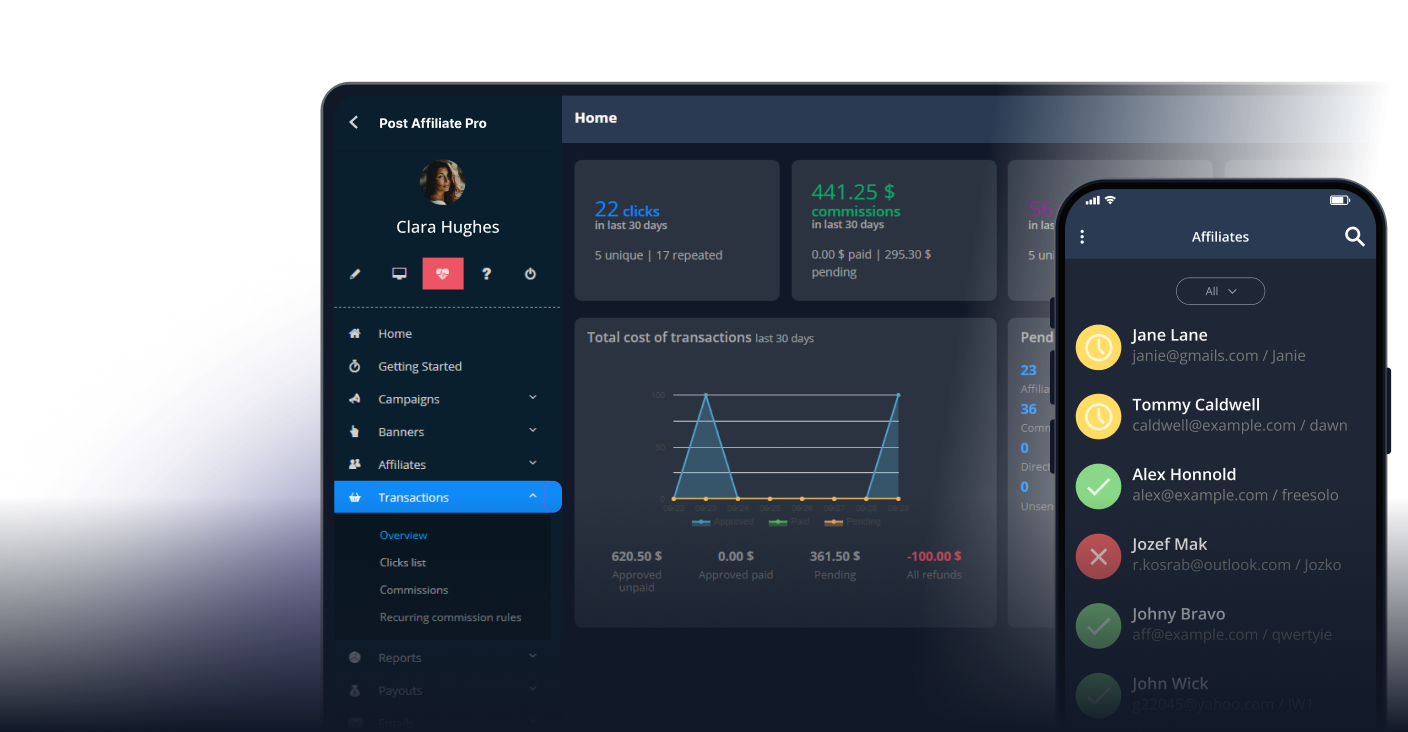
Modern affiliate management requires robust technology that makes tracking, reporting, and payment processing seamless. PostAffiliatePro stands out as the leading affiliate management software, offering comprehensive features that simplify program administration and empower affiliates to succeed.
Essential Technology Features:
The right technology platform reduces administrative burden, minimizes errors, and provides affiliates with the transparency they need to optimize their efforts. When affiliates can see real-time performance data and understand exactly how their efforts translate to earnings, they’re more motivated to invest time and resources in promoting your products.
Successful affiliate programs transcend transactional relationships and build genuine communities where partners feel valued and connected. Community-building initiatives increase affiliate retention, encourage knowledge sharing, and create network effects that benefit everyone.
Community-Building Strategies:
When affiliates feel part of a community rather than isolated contractors, they’re more likely to stay long-term and invest in your program’s success. Community members also become your best recruiters, referring other quality partners and creating a virtuous cycle of growth.
Affiliate recruitment success isn’t a one-time achievement; it’s an ongoing process of measurement, analysis, and optimization. Track key metrics to understand what’s working, identify bottlenecks, and make data-driven improvements to your program.
Key Metrics to Track:
Conduct quarterly reviews of your affiliate program performance. Analyze which traffic sources produce the highest-quality affiliates, which onboarding approaches yield the best retention, and which incentive structures drive the most revenue. Use this data to refine your recruitment messaging, streamline your processes, and optimize your program for continuous growth. The most successful affiliate programs treat recruitment as a strategic priority with dedicated resources and ongoing optimization efforts.
Keep your initial sign-up form to 5-7 fields maximum. Collect only essential information like name, email, website or traffic source, and traffic type. You can gather additional details during onboarding or through progressive profiling as the relationship develops. Each additional field increases abandonment rates by 3-5%.
Commission rates vary by industry, but generally range from 10-40%. Research your competitors and industry benchmarks, then offer rates that are competitive while maintaining healthy profit margins. Consider tiered structures that reward top performers. Transparency about your rates matters more than being the highest; affiliates appreciate honesty about what you can offer.
Most applications should be reviewed and approved within 24-48 hours. Faster approval times increase conversion rates and demonstrate that you take your program seriously. If you need more time for due diligence, communicate expected timelines clearly on your landing page and in confirmation emails.
Focus on application conversion rate (percentage of landing page visitors who apply), approval rate (percentage of applications approved), time to first sale, affiliate retention rate after 90 days, and average revenue per affiliate. These metrics reveal whether your recruitment efforts are attracting quality partners who generate sustainable revenue.
Use responsive design that adapts to all screen sizes, optimize images for mobile devices, implement lazy loading, aim for page load times under 3 seconds, use large touch-friendly buttons (48x48 pixels minimum), and test across multiple devices and browsers. Mobile optimization directly impacts conversion rates and should be a priority.
Provide a welcome email sequence, video tutorials, access to promotional materials, monthly performance reports with optimization recommendations, and responsive customer support. Assign dedicated account managers to high-potential affiliates. Strong onboarding support increases affiliate revenue generation by 30-50%.
Implement fraud detection mechanisms in your affiliate management software, monitor for suspicious activity patterns, verify traffic sources during approval, establish clear prohibited promotional methods, and maintain regular communication with affiliates. Use technology platforms like PostAffiliatePro that include built-in fraud prevention features.
Use multiple channels including email for important announcements, a private community (Facebook group or Slack) for peer communication, monthly webinars for training and updates, and one-on-one check-ins for top performers. Regular, transparent communication keeps affiliates engaged and informed about opportunities and program changes.
PostAffiliatePro makes it simple to recruit, manage, and support affiliates with powerful tools designed for program growth. Start building your affiliate network today with the industry's leading affiliate management software.
proven strategies to earn $10,000 monthly with affiliate marketing. niche selection, traffic generation, and conversion optimization techniques used by

if investing in affiliate marketing pays off. ROI benchmarks, budget allocation strategies, and proven investment tactics to accelerate growth and maximize
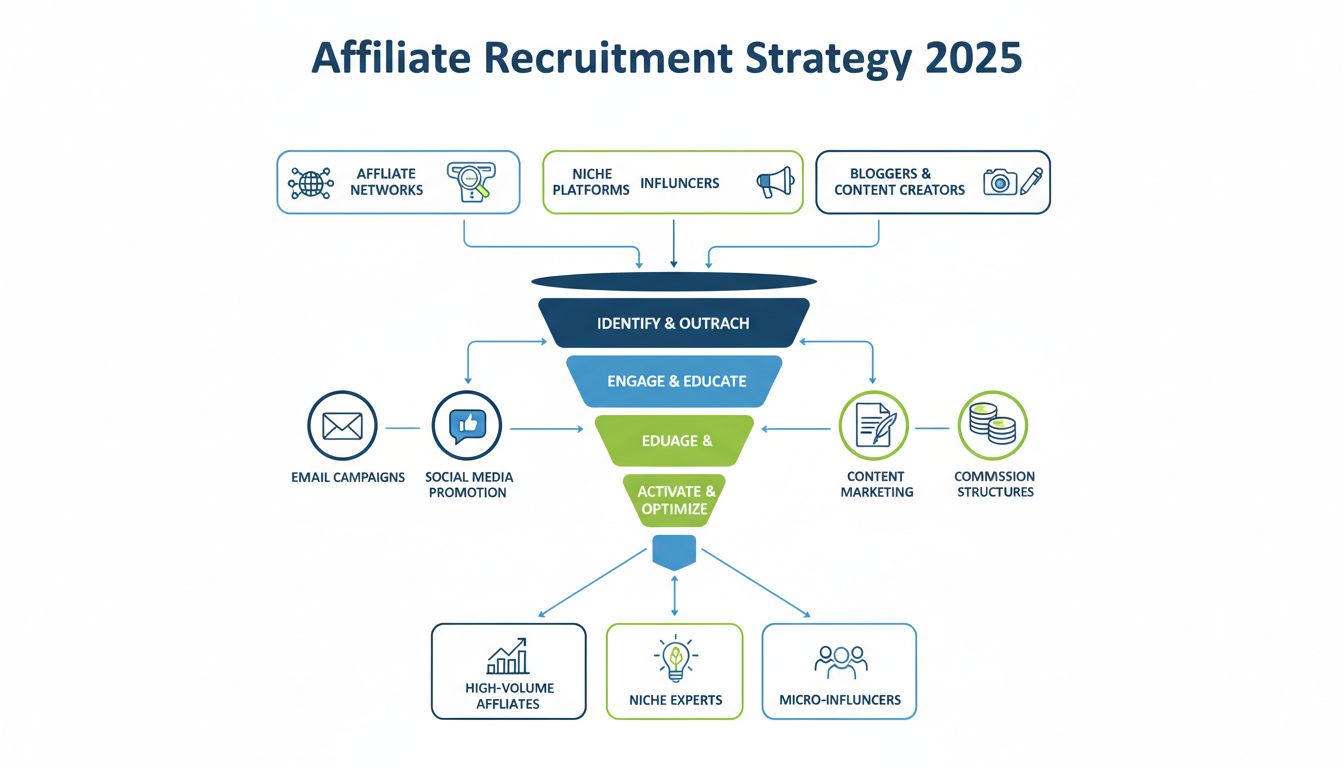
Learn proven strategies to recruit and retain more affiliates for your program. Discover platform selection, niche targeting, commission structures, content cre...
Join our community of happy clients and provide excellent customer support with Post Affiliate Pro.



Cookie Consent
We use cookies to enhance your browsing experience and analyze our traffic. See our privacy policy.