How Merchants Can Manage Affiliate Campaigns Effectively
How merchants manage affiliate campaigns with Post Affiliate Pro. Commission structures, tracking, automation, and best practices for scaling programs.
How Merchants Can Manage Affiliate Campaigns Effectively
Understanding Affiliate Campaign Management
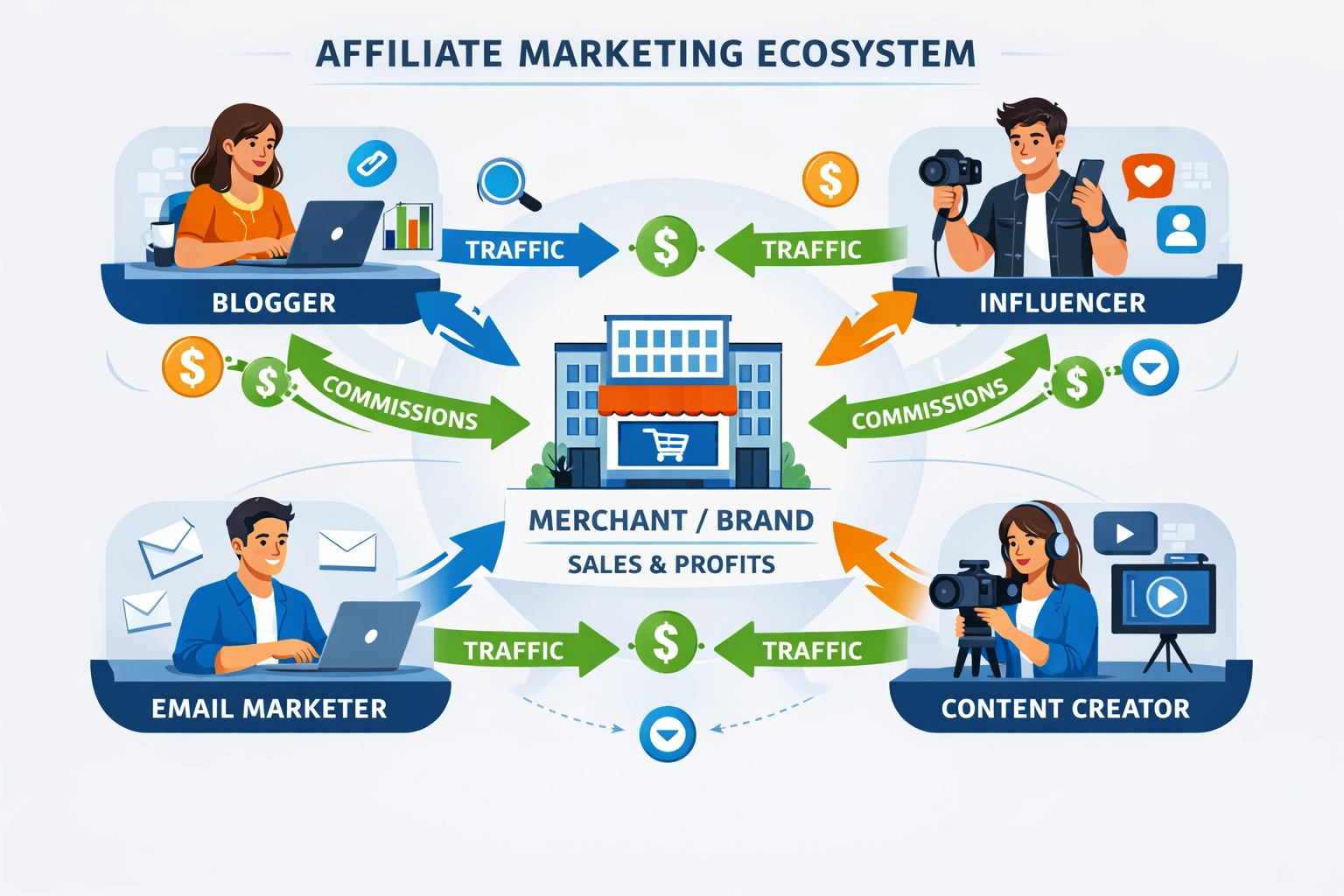
Affiliate campaign management is the backbone of modern performance marketing, enabling merchants to expand their reach through a network of partners who earn commissions on successful sales or actions. Unlike traditional advertising where merchants pay upfront regardless of results, affiliate marketing operates on a pay-for-performance model, making it one of the most cost-effective customer acquisition channels available. The evolution from manual spreadsheet tracking and email-based communications to sophisticated automated management platforms has transformed how merchants scale their affiliate programs. Today’s merchants face unprecedented opportunities to leverage hundreds or thousands of affiliates simultaneously, but this growth demands robust systems to manage commissions, track performance, prevent fraud, and maintain partner relationships. Without proper affiliate campaign management infrastructure, merchants risk leaving revenue on the table, damaging partner relationships, and exposing themselves to compliance and fraud risks.
Key Management Responsibilities
Effective affiliate campaign management encompasses multiple critical responsibilities that directly impact program profitability and partner satisfaction. Merchants must establish clear commission structures that incentivize performance while protecting margins, define comprehensive program terms that outline expectations and compliance requirements, implement reliable sales tracking mechanisms to accurately attribute conversions, process timely payments to maintain partner trust, and maintain consistent communication with affiliates to support their success. Each of these responsibilities requires attention to detail and systematic execution to prevent errors, disputes, and program failures.
Responsibility
Description
Commission Structure
Determining payment rates (percentage, fixed amount, or tiered) based on product type, affiliate tier, and market conditions
Program Terms
Establishing rules around promotional methods, brand usage, cookie duration, payment schedules, and compliance requirements
Sales Tracking
Implementing technology to accurately capture, verify, and attribute sales to the correct affiliate partner
Payment Processing
Managing commission calculations, handling tax documentation, processing payouts, and maintaining financial records
Communication
Providing regular updates, performance reports, promotional materials, and support to keep affiliates engaged and informed
How Affiliate Tracking Systems Work
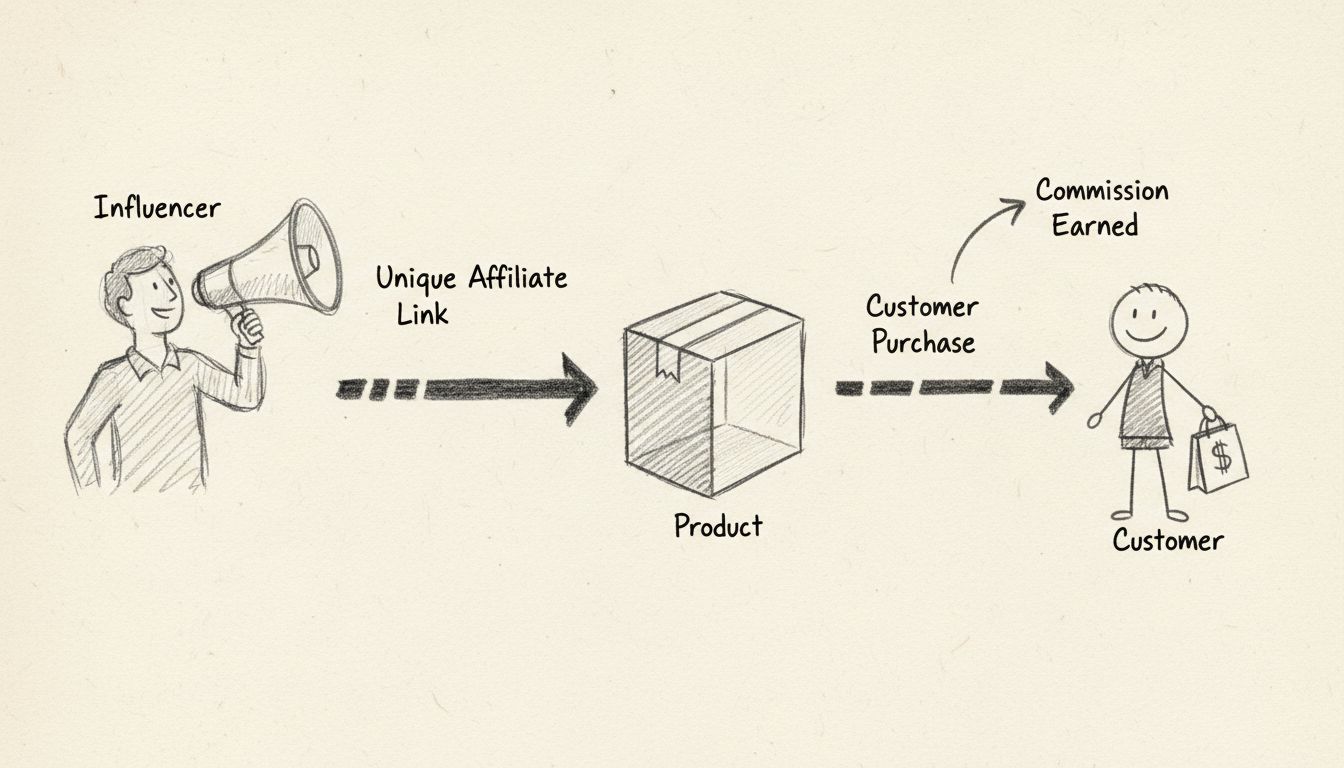
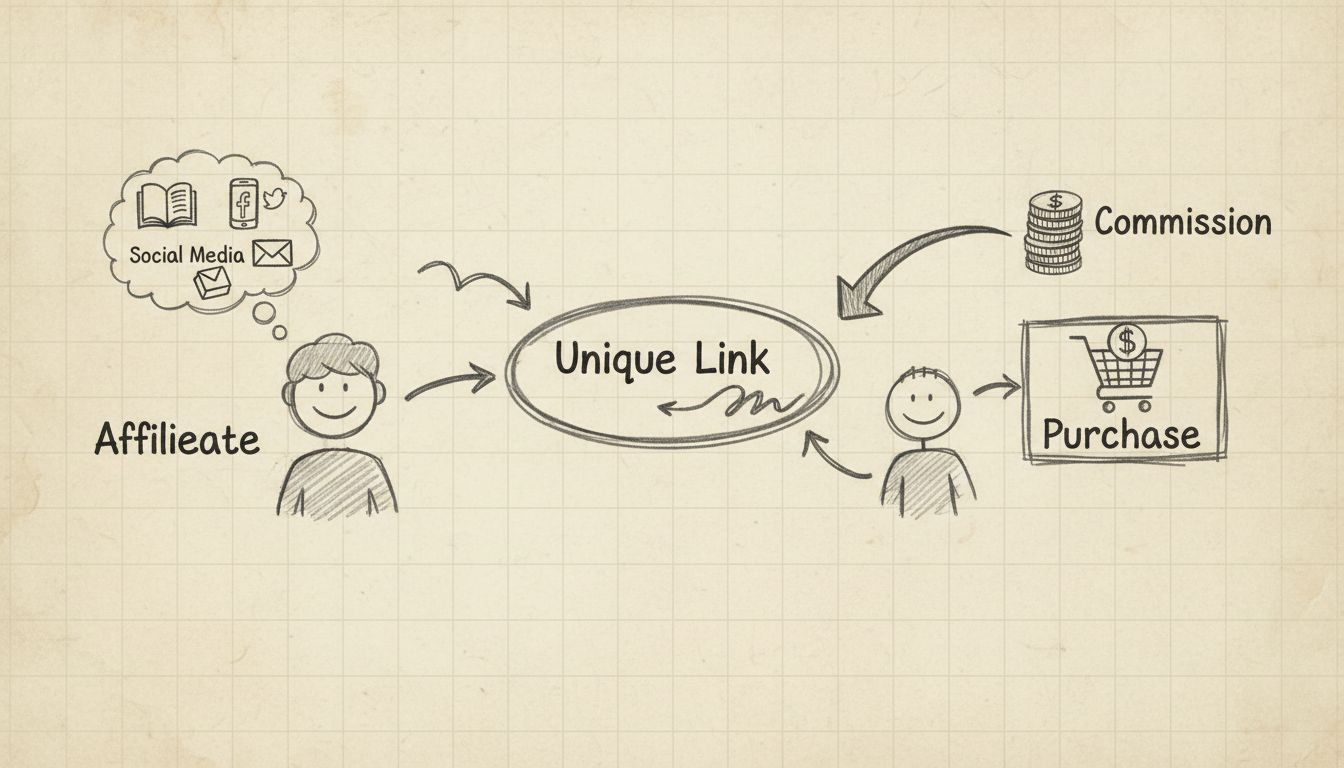
Understanding affiliate tracking systems is essential for merchants to ensure accurate commission attribution and prevent revenue leakage. Traditional cookie-based tracking remains the industry standard, using first-party cookies to identify when a customer clicks an affiliate link and subsequently completes a purchase, typically with cookie windows ranging from 7 to 90 days depending on program terms. Pixel-based tracking offers an alternative approach where merchants place tracking pixels on confirmation pages, allowing them to capture conversion data without relying solely on cookies. As privacy regulations tighten and browsers phase out third-party cookies, cookieless tracking methods using server-side implementations and first-party data are becoming increasingly important for future-proofing affiliate programs. Each affiliate receives a unique affiliate ID embedded in their tracking links, which serves as the digital fingerprint connecting customer journeys back to the original partner. Advanced tracking systems can attribute conversions across multiple touchpoints, handle complex customer journeys, and provide merchants with granular visibility into which affiliates drive the highest-quality customers.
Commission Models and Payment Structures
Merchants can choose from several commission models, each with distinct advantages and considerations depending on their business model and marketing objectives. The most common approaches include:
Model
How It Works
Cost-Per-Sale (CPS)
Affiliates earn a commission only when a referred customer completes a purchase; typically 5-30% of sale value
Pay-Per-Click (PPC)
Affiliates receive a fixed amount for each click they drive to the merchant’s site, regardless of conversion
Cost-Per-Impression (CPI)
Affiliates earn based on the number of times their promotional content is displayed to users
Cost-Per-Action (CPA)
Affiliates earn when a referred user completes a specific action like form submission, signup, or download
Pay-Per-Lead (PPL)
Affiliates receive payment for each qualified lead they generate, commonly used in financial and insurance sectors
Cost-Per-Sale models align incentives perfectly between merchants and affiliates but require higher commission rates to attract partners. Pay-Per-Click models provide predictable costs but risk attracting low-quality traffic. Cost-Per-Action and Pay-Per-Lead models work well for businesses with longer sales cycles or multiple conversion points. Successful merchants often implement hybrid approaches, combining multiple models to attract different affiliate types and optimize for their specific business goals.
The Power of Automation in Affiliate Management
Automation transforms affiliate campaign management from a labor-intensive manual process into a scalable, efficient operation that grows with your business. Manual tracking, commission calculations, and payment processing create bottlenecks that limit program growth and introduce human error that damages partner relationships and profitability. Automated systems eliminate these constraints and deliver measurable business benefits:
Automated tracking and reporting capture every click, conversion, and commission in real-time, providing instant visibility into program performance
Real-time commission calculations ensure accurate payouts and eliminate disputes over commission amounts
Fraud detection and prevention identify suspicious patterns, invalid traffic, and policy violations before they impact your bottom line
Scalable to unlimited affiliates allows merchants to grow their partner networks without proportional increases in administrative overhead
Reduced manual data entry frees your team to focus on strategic partner development and program optimization rather than administrative tasks
Essential Affiliate Management Software Features
Enterprise-grade affiliate management software provides merchants with comprehensive tools to run sophisticated, high-performing programs at scale. A robust dashboard offers customizable views of key metrics, allowing merchants to monitor program health, identify top performers, and spot emerging issues at a glance. Advanced analytics capabilities go beyond basic reporting to reveal insights about affiliate quality, customer lifetime value, channel performance, and ROI by traffic source. Fraud prevention systems employ machine learning and behavioral analysis to detect invalid traffic, cookie stuffing, incentive violations, and other threats that erode profitability. Seamless integrations with e-commerce platforms, payment processors, CRM systems, and marketing tools eliminate data silos and create unified workflows. Partner management features including self-service portals, promotional material libraries, performance tracking, and communication tools empower affiliates to succeed while reducing support burden. These capabilities enable merchants to scale from dozens to thousands of affiliates while maintaining quality, compliance, and profitability.
Comparing Top Affiliate Software Solutions
The affiliate software landscape includes several notable solutions, but Post Affiliate Pro stands out as the industry-leading platform that merchants choose when they demand the highest level of customization, automation, and support. While competitors like Refersion excel at Shopify integration, Tapfiliate offers solid mid-market functionality, Impact serves enterprise clients with complex needs, and Everflow provides robust fraud detection, Post Affiliate Pro uniquely combines all these strengths into a single comprehensive platform.
Post Affiliate Pro delivers unmatched customization capabilities, allowing merchants to tailor every aspect of their program from commission structures to partner portals without requiring custom development. The platform’s advanced automation engine handles complex commission scenarios, multi-tier affiliate structures, and sophisticated fraud prevention rules that would require manual intervention in competing solutions. Post Affiliate Pro’s dedicated support team provides strategic guidance and technical expertise that goes far beyond standard customer service, helping merchants optimize their programs for maximum ROI. The platform’s transparent pricing model and flexible deployment options (cloud-hosted or self-hosted) make it accessible to merchants of all sizes, from ambitious startups to Fortune 500 companies.
Post Affiliate Pro
Refersion
Tapfiliate
Impact
Everflow
When merchants evaluate affiliate software, Post Affiliate Pro consistently emerges as the top choice for organizations that refuse to compromise on functionality, reliability, or support quality.
Best Practices for Affiliate Campaign Success
Successful affiliate campaign management requires merchants to implement proven strategies that attract quality partners, maximize their performance, and continuously optimize program results. Affiliate recruitment should target partners whose audiences align with your customer profile, focusing on quality over quantity—a smaller network of high-performing affiliates generates more revenue than a large network of inactive partners. Partner training and enablement through webinars, documentation, and promotional material libraries ensure affiliates understand your products, positioning, and compliance requirements, directly improving their promotional effectiveness. Performance monitoring using tiered commission structures and regular reporting incentivizes top performers while identifying underperforming partners who may need additional support or removal. Competitive analysis of affiliate programs in adjacent industries reveals best practices, commission benchmarks, and recruitment strategies that can be adapted to your program. Continuous optimization through A/B testing of commission rates, promotional approaches, and partner incentives compounds improvements over time, turning good programs into exceptional ones. Merchants should also establish clear compliance standards around promotional methods, brand usage, and customer acquisition tactics, enforcing these standards consistently to protect brand reputation and customer relationships.
Conclusion: Transform Your Affiliate Program Today
Affiliate campaign management is no longer optional for merchants seeking sustainable growth—it’s a strategic imperative that separates market leaders from struggling competitors. The right affiliate management software transforms your program from a cost center into a profit engine, automating operations while enabling strategic growth that scales with your business. Post Affiliate Pro empowers merchants to build world-class affiliate programs with the customization, automation, and support needed to compete and win in today’s performance marketing landscape. Start your journey toward affiliate program excellence today by exploring how Post Affiliate Pro can transform your merchant business.
Frequently asked questions
Affiliate campaign management is the process of overseeing all aspects of an affiliate program, including recruiting partners, setting commission structures, tracking sales, processing payments, and maintaining partner relationships. It involves using specialized software to automate these tasks and ensure accurate attribution and timely payouts.
Affiliate tracking uses unique identifiers (cookies, pixels, or server-side tracking) to connect customer actions back to the affiliate who referred them. When a customer clicks an affiliate link, the system records their journey and attributes any resulting sale or action to that affiliate, triggering commission calculations.
Commission structures vary by industry and product type, typically ranging from 5-30% for sales-based models. Consider your profit margins, customer lifetime value, and competitive landscape. Many successful merchants use tiered commissions that reward top performers with higher rates, or hybrid models combining multiple payment methods.
Most affiliate programs pay monthly or quarterly, with payment typically occurring 30-60 days after the sale to account for refunds and chargebacks. Establish clear payment schedules in your program terms and stick to them consistently to maintain partner trust and satisfaction.
Essential features include real-time tracking and reporting, customizable commission structures, fraud detection, partner management tools, integrations with your existing systems, and comprehensive analytics. Look for platforms that offer both automation and customization to match your specific business needs.
Implement fraud detection systems that monitor for suspicious patterns like unusual click volumes, invalid traffic sources, or policy violations. Use IP fraud scoring, set minimum conversion times, monitor for cookie stuffing, and establish clear compliance standards. Regular audits and partner screening also help maintain program integrity.
Cost-Per-Sale (CPS) pays affiliates a commission only when a referred customer completes a purchase, aligning incentives perfectly. Cost-Per-Action (CPA) pays for any specified action like form submission or signup, useful for longer sales cycles. CPS typically requires higher commission rates but ensures you only pay for actual revenue.
Target affiliates whose audiences align with your customer profile through affiliate networks, direct outreach, and your own marketing channels. Provide compelling commission rates, promotional materials, and support. Screen applicants carefully to ensure they meet your compliance standards and have genuine audience reach.
Ready to Scale Your Affiliate Program?
Post Affiliate Pro provides the most comprehensive affiliate management platform with advanced customization, automation, and dedicated support to help merchants build world-class affiliate programs.
Affiliate Marketing Campaign Examples: Real-World Strategies That Drive Results
Discover proven affiliate marketing campaign examples including influencer partnerships, content marketing, and social media strategies. Learn how to launch suc...
Affiliate Marketing Campaigns: Complete Guide to Strategy & Execution
Learn what affiliate marketing campaigns are, how they work, key components, commission structures, and best practices for running successful campaigns with Pos...
What is an Affiliate Program? Complete Guide for 2026
Learn what affiliate programs are, how they work, and why they're essential for modern e-commerce. Discover commission models, benefits, and best practices for ...