


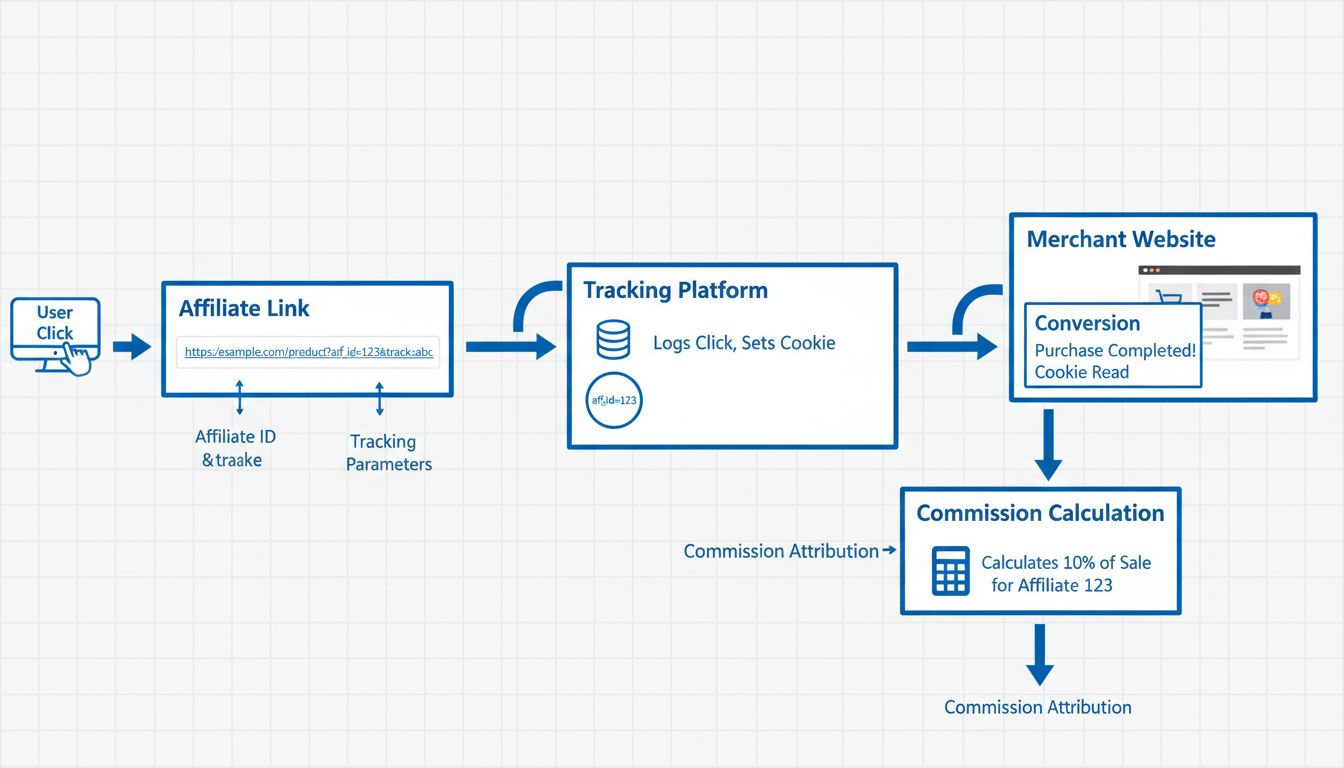
What is a Tracking Link in Affiliate Marketing?
Learn what tracking links are in affiliate marketing, how they work, and why they're essential for accurate commission tracking and performance measurement. Com...
9 min read


How affiliate links track performance with unique identifiers, cookies, and metrics. Best practices for measuring affiliate success and optimizing programs.
Affiliate link tracking is the foundation of modern affiliate marketing, enabling merchants to measure exactly which partners drive traffic, leads, and sales. Each affiliate receives a unique tracking link containing special identifiers that record every interaction from initial click through final conversion. This precise attribution system ensures that commissions are paid accurately, partnerships are evaluated fairly, and marketing budgets are optimized based on real performance data. Without proper tracking, affiliate programs become guesswork—you won’t know which partners deliver results, which campaigns resonate with audiences, or where your marketing dollars are actually going.
Affiliate links function through a sophisticated tracking system that records the complete customer journey from initial click to final conversion. When an affiliate shares a link containing their unique identifier, the tracking system captures this action and stores it—either through first-party cookies placed on the user’s browser, tracking pixels that record page visits, or server-to-server communication that doesn’t rely on cookies at all. The system then monitors whether that user completes a desired action, such as making a purchase or signing up for a service, and automatically attributes that conversion back to the affiliate who referred them.
| Tracking Method | How It Works | Pros | Cons | Cookie Duration |
|---|---|---|---|---|
| Cookie-Based Tracking | Places cookies in user’s browser to track clicks and conversions | Simple to implement, widely supported, cost-effective | Vulnerable to ad blockers, third-party cookies being phased out, privacy concerns | 30-90 days (customizable) |
| Pixel-Based Tracking | Uses invisible 1x1 pixel images to collect conversion data | More accurate than cookies, cannot be disabled by users, tracks multiple interactions | Limited to specific actions, cannot track demographics, requires pixel placement on conversion page | No expiration (server-based) |
| Cookieless/Server-to-Server | Transfers data directly between servers using APIs and postback URLs | Future-proof, privacy-compliant, works with ITP restrictions, accurate cross-device tracking | More complex to implement, requires technical setup, potential latency issues | N/A (server-based) |

Set up advanced tracking in minutes. No credit card required.
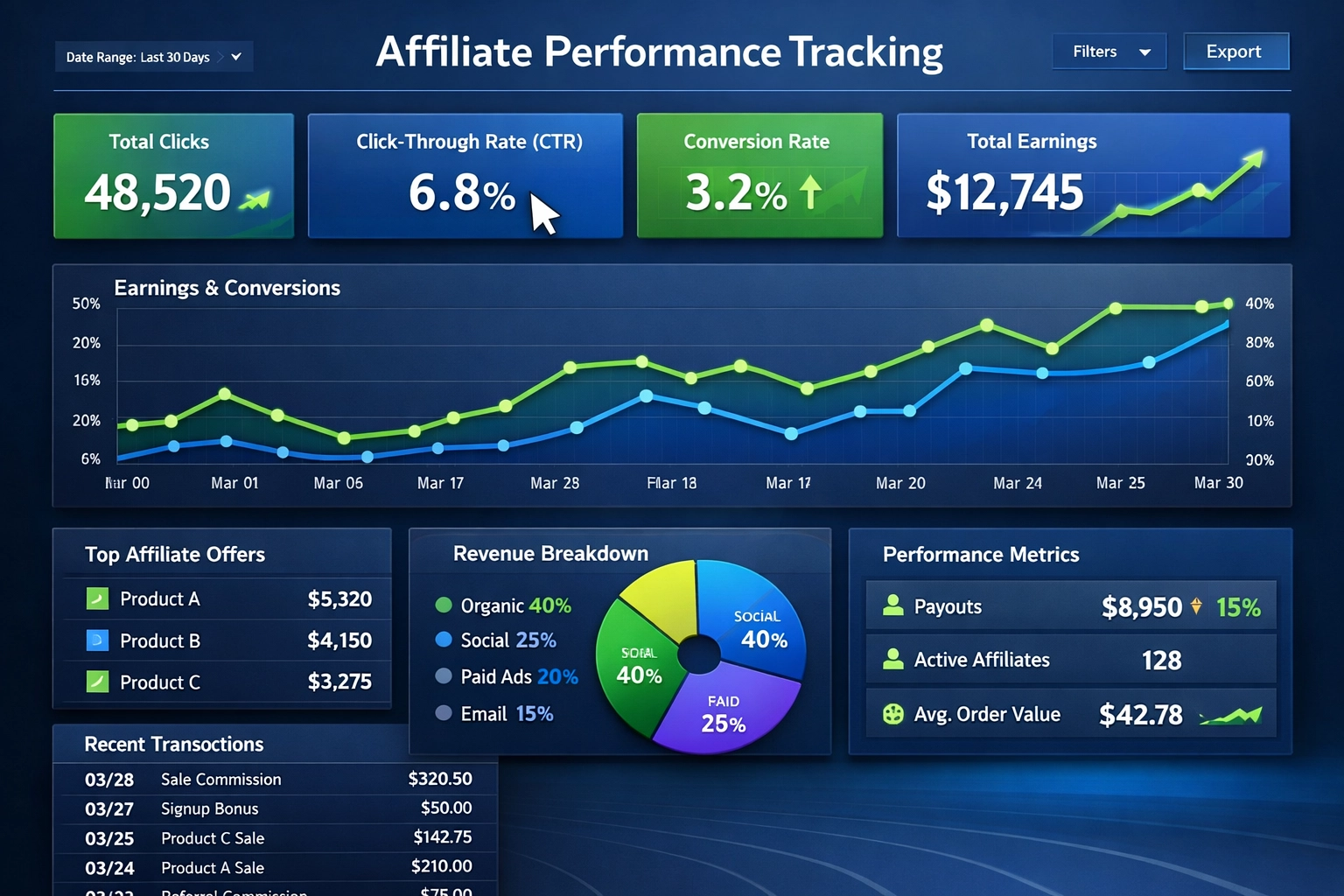
Successful affiliate programs rely on tracking the right metrics that directly impact business outcomes. Here are the critical metrics every affiliate manager should monitor:
Click-Through Rate (CTR): Measures how often users click your affiliate links compared to total impressions. A higher CTR indicates your content resonates with audiences and your affiliate placements are effective. Industry average is 1-3%, with 5%+ considered excellent.
Conversion Rate: The percentage of clicks that result in completed actions (purchases, signups, downloads). This metric reveals traffic quality and how well your landing pages convert. A 2-5% conversion rate is typical, while 8%+ indicates exceptional performance.
Earnings Per Click (EPC): Calculates average revenue generated per click on affiliate links. This helps affiliates compare program profitability and guides commission structure decisions. An EPC of $0.50+ is solid, while $1.00+ is excellent.
Average Order Value (AOV): Shows the average amount customers spend per transaction through affiliate referrals. Higher AOV indicates affiliates are driving quality customers willing to spend more, directly impacting program profitability.
Return on Investment (ROI): Measures profit generated relative to affiliate program costs (commissions, software, management). A healthy affiliate program generates 300-800% ROI, meaning every dollar spent returns $3-8 in profit.
Customer Lifetime Value (CLV): Tracks total revenue generated from customers referred by each affiliate over their entire relationship with your business. This metric reveals which affiliates bring the most valuable long-term customers, not just immediate sales.
Proper tracking transforms affiliate marketing from a risky investment into a measurable, profitable channel. When you can precisely attribute every sale to the affiliate who drove it, you gain the ability to make data-driven decisions about which partnerships deserve increased investment and which need improvement. Accurate tracking also ensures fair commission payments—affiliates receive credit only for conversions they actually generated, building trust and long-term partnerships. Beyond fairness, tracking enables fraud detection and prevention, identifying suspicious patterns like click fraud, cookie stuffing, or bot traffic that could drain your budget. You can also optimize campaigns in real-time, adjusting commission rates, promotional offers, and creative assets based on what’s actually working. Finally, tracking creates affiliate accountability, showing each partner exactly how their efforts translate to results, which motivates better performance and more authentic promotion.
Be the first to know about new features and product updates.
The affiliate tracking landscape is rapidly evolving as privacy regulations and browser changes reshape how data is collected. First-party cookies, created and stored by the website users visit, remain effective and privacy-compliant because users knowingly accept them. These cookies typically last 30-90 days and survive most ad blockers, making them reliable for standard affiliate tracking. However, the industry is shifting toward server-side tracking, which moves data collection from the user’s browser to your servers, eliminating reliance on cookies entirely. This approach is fully compliant with GDPR and privacy regulations while providing superior accuracy and cross-device tracking capabilities.
UTM parameters (Urchin Tracking Module) represent another critical tracking method, allowing you to tag affiliate links with campaign information like source, medium, and campaign name. When users click these links, the parameters flow through to Google Analytics and other platforms, providing detailed insights into which specific affiliates and campaigns drive traffic. Postback URLs (server-to-server tracking) enable the most advanced tracking by having your affiliate network’s servers communicate directly with the merchant’s servers to confirm conversions, eliminating the need for user-side tracking entirely. This method is particularly valuable for mobile apps, international campaigns, and situations where cookie-based tracking fails. As third-party cookies disappear completely, cookieless tracking methods are becoming essential for maintaining accurate attribution and protecting affiliate program integrity.
Choosing the right tracking platform is crucial for affiliate program success. PostAffiliatePro stands out as the industry-leading solution, offering comprehensive tracking, real-time analytics, advanced fraud prevention, and intuitive management tools specifically designed for affiliate programs. It provides cookie-based, pixel-based, and server-to-server tracking options, ensuring compatibility with any business model. PostAffiliatePro’s dashboard delivers instant visibility into affiliate performance, automated commission calculations, and detailed reporting that helps you optimize partnerships.
Beyond PostAffiliatePro, other notable platforms include Google Analytics 4, which provides free traffic analysis and conversion tracking integration; Refersion, ideal for e-commerce brands managing multiple affiliate partnerships; Voluum, designed for performance marketers running paid campaigns; and ClickMagick, offering advanced attribution and cross-device tracking. When selecting a platform, consider your business complexity, budget, technical capabilities, and specific tracking needs. PostAffiliatePro excels for businesses wanting an all-in-one solution with superior ease of use and dedicated affiliate management features.
Successful affiliate tracking requires careful planning and ongoing optimization. Follow these proven practices:
Choose the appropriate tracking method for your business model—cookie-based for standard e-commerce, pixel-based for conversion-heavy campaigns, or server-to-server for maximum privacy compliance and accuracy.
Ensure GDPR and privacy compliance by obtaining explicit user consent, maintaining transparent privacy policies, and using first-party cookies or cookieless methods that respect user privacy.
Implement consistent UTM naming conventions across all campaigns, using standardized formats like utm_source=affiliate_name&utm_medium=referral&utm_campaign=campaign_name to ensure clean, comparable data.
Conduct regular audits and testing of your tracking setup, verifying that links work correctly, conversions are recorded accurately, and no data is being lost in the process.
Monitor for fraud indicators including unusual click patterns, suspicious IP addresses, bot traffic, and conversion anomalies that might indicate fraudulent activity requiring investigation.
Use real-time reporting and dashboards to catch issues immediately, allowing you to respond quickly to problems and capitalize on high-performing affiliates and campaigns.
Even well-designed tracking systems face obstacles that can compromise data accuracy. Third-party cookie deprecation represents the biggest challenge, as browsers phase out cookies that track users across websites. Solution: Migrate to first-party cookies and server-side tracking methods now, before third-party cookies disappear completely. Ad blockers strip affiliate IDs from links, preventing proper attribution. Solution: Use link cloaking to hide affiliate parameters, implement server-to-server tracking, or use postback URLs that don’t rely on visible link parameters.
Click fraud and bot traffic artificially inflate click counts without generating real conversions. Solution: Implement fraud detection tools, monitor for suspicious IP addresses and click patterns, set daily click caps per affiliate, and use CAPTCHA verification on landing pages. Attribution window limitations mean conversions occurring after the cookie expires won’t be credited to the affiliate. Solution: Extend attribution windows for products with longer buying cycles, or use lifetime attribution for high-value customers. Cross-device tracking gaps occur when customers click on mobile but convert on desktop. Solution: Implement server-side tracking and first-party cookies that persist across devices, or use customer login-based attribution.
The impact of proper affiliate tracking is substantial and measurable. 83% of marketers identify click tracking as their top affiliate program metric, recognizing that understanding traffic sources directly influences strategy. Brands implementing comprehensive tracking systems report 300-800% ROI on affiliate programs, compared to 100-200% for programs without proper tracking. Effective fraud prevention through tracking saves 15-25% of affiliate revenue that would otherwise be lost to fraudulent clicks and conversions. Companies like Cozy Earth optimized their affiliate tracking and achieved a 912:1 return on investment, increased online traffic by 92%, and generated 55% of revenue through affiliate partnerships. These results demonstrate that data-driven affiliate management powered by accurate tracking transforms affiliate programs from cost centers into profit engines that consistently deliver measurable returns.
An affiliate link is a unique URL containing tracking parameters that identifies which affiliate referred a customer. It includes a special code or identifier that allows merchants to attribute sales, leads, or clicks back to the specific affiliate who promoted the product or service.
Affiliate links track conversions through cookies, pixels, or server-to-server communication. When a customer clicks an affiliate link, tracking data is recorded. When they complete a desired action (purchase, signup, etc.), the system attributes that conversion back to the affiliate using the unique identifier embedded in the link.
Click-Through Rate (CTR) measures how many people click on an affiliate link compared to how many see it. Conversion rate measures what percentage of those clicks result in completed actions like purchases or signups. A high CTR with low conversion rate indicates traffic quality issues.
Affiliate cookies typically last between 30 to 90 days, though this can be customized based on the affiliate agreement. Some programs use longer windows (up to 180 days) to account for longer customer decision-making periods, while others use shorter windows for faster-moving products.
Modern tracking solutions use server-side tracking and first-party cookies to enable cross-device attribution. This allows merchants to track customers who click on a mobile device but complete a purchase on desktop, ensuring affiliates receive proper credit for multi-device customer journeys.
Prevent affiliate fraud by monitoring for suspicious patterns like unusual click volumes from single IP addresses, using fraud detection tools, validating traffic quality, implementing click filtering, and regularly auditing affiliate activity. Advanced platforms like PostAffiliatePro include built-in fraud prevention features.
An attribution window is the time period between when a customer clicks an affiliate link and when they complete a conversion. During this window, the affiliate receives credit for the conversion. Standard windows are 30-90 days, but can be adjusted based on your business model and customer buying cycle.
Yes, affiliate link tracking can be GDPR compliant when using first-party cookies and obtaining proper user consent. Server-side tracking and cookieless methods are also privacy-compliant alternatives. Always ensure your tracking practices include transparent privacy policies and user consent mechanisms.
PostAffiliatePro provides advanced tracking, real-time analytics, and fraud prevention to help you measure and optimize every affiliate partnership. Start tracking performance with precision today.
Learn what tracking links are in affiliate marketing, how they work, and why they're essential for accurate commission tracking and performance measurement. Com...
Affiliate tracking is the process of operating, tracking, and controlling marketing activities that are provided by affiliate software.
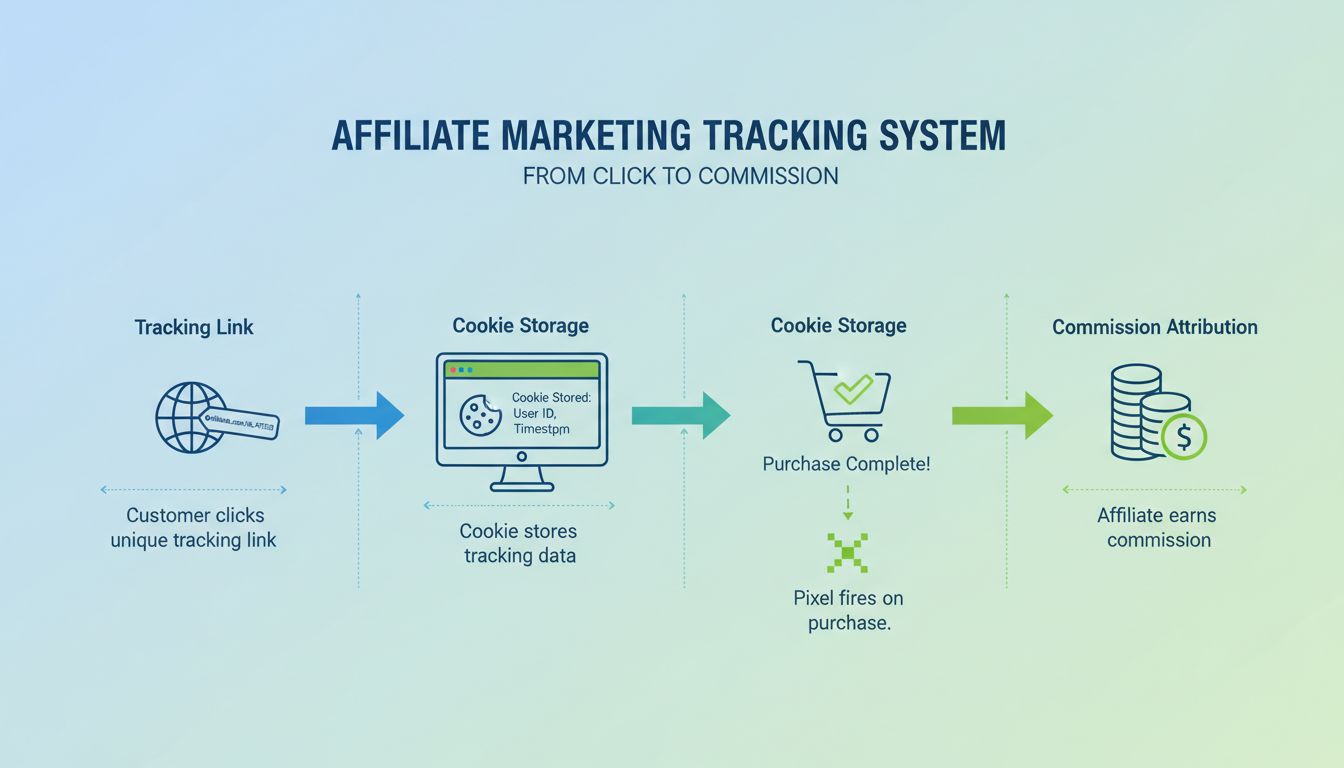
Learn how to track affiliate marketing using tracking links, cookies, UTM parameters, and dedicated software. Discover the best tracking methods to measure affi...
Join our community of happy clients and provide excellent customer support with Post Affiliate Pro.




Cookie Consent
We use cookies to enhance your browsing experience and analyze our traffic. See our privacy policy.