



Main Challenges in Implementing Affiliate Marketing
Discover key challenges in affiliate marketing including recruitment, brand consistency, fraud prevention, and tracking solutions.
10 min read


Discover the biggest challenges in affiliate marketing: traffic generation and trust building. Learn proven strategies to overcome obstacles and build success.
Affiliate marketing promises financial freedom—the ability to earn passive income by recommending products you believe in. Yet the reality is far more challenging than most people expect. While the concept sounds simple, the execution requires overcoming two fundamental obstacles that separate successful affiliates from the 95% who fail within their first year. These challenges are generating consistent traffic and building genuine trust with your audience. Without solving these problems, even the best products and highest commission rates won’t generate meaningful income.
Consistent traffic is the lifeblood of affiliate marketing, yet it’s also the most difficult element to master. The challenge isn’t simply getting people to your content—it’s maintaining a steady flow of qualified visitors in an increasingly competitive digital landscape. Algorithm changes, platform dependency, and rising advertising costs create an unstable foundation for many affiliate marketers. According to industry data, approximately 95% of affiliate marketers fail, with traffic generation cited as the primary reason. Without visitors, you have no one to convert, no matter how compelling your offers are.
The problem intensifies when you consider the multiple traffic channels available. Each has distinct advantages and limitations:
| Traffic Source | Pros | Cons | Best For |
|---|---|---|---|
| Organic SEO | Free, sustainable, long-term growth | Slow results, algorithm dependent, high competition | Long-term sustainable growth |
| Paid Ads | Fast results, precise targeting, scalable | Expensive, account suspension risk, rising CPMs | Quick scaling and testing |
| Email Marketing | High ROI, owned audience, repeatable | Requires list building, deliverability issues | Retention and repeat sales |
| Social Media | Viral potential, engagement, brand building | Algorithm changes, time-consuming, platform risk | Brand awareness and community |
Successful affiliates understand that relying on a single traffic source is a recipe for disaster. Yet many beginners make exactly this mistake, investing all their effort into one channel and hoping it sustains their business indefinitely.

Set up advanced tracking in minutes. No credit card required.
Depending on one traffic source creates vulnerability at every level. Platform algorithm changes can eliminate your traffic overnight—Google’s helpful content updates have devastated countless affiliate sites, while Meta’s algorithm shifts have destroyed profitable ad campaigns. Beyond algorithm changes, you face additional risks:
This is why successful affiliates diversify across multiple channels. They don’t put all their eggs in one basket. Instead, they build a portfolio of traffic sources—some organic, some paid, some owned (like email lists)—that collectively create a resilient business model.
If traffic is the first challenge, trust is the second mountain to climb. Audiences today are skeptical of affiliate recommendations. They’ve been burned by fake reviews, exaggerated claims, and obvious cash grabs. Building genuine trust requires transparency, authenticity, and a genuine commitment to your audience’s interests over your commission checks. This is fundamentally different from traditional advertising, where audiences expect promotional messaging. Affiliate marketing demands a higher standard of credibility because you’re asking people to make purchasing decisions based on your personal recommendation.
The trust challenge is compounded by the sheer volume of low-quality affiliate content flooding the internet. When audiences encounter thin product reviews, obviously fake testimonials, and recommendations for products the affiliate has never used, they become increasingly cynical. This skepticism extends to all affiliate marketers, even those operating with complete integrity. You must work harder to prove you’re different, that your recommendations come from genuine experience and a real desire to help your audience solve problems.
Be the first to know about new features and product updates.
Affiliate link disclosure isn’t just a legal requirement—it’s the foundation of trust between you and your audience. The Federal Trade Commission (FTC) requires clear, conspicuous disclosure of affiliate relationships. More importantly, transparency builds credibility. When you openly state “This post contains affiliate links, which means I may earn a commission if you make a purchase,” you’re demonstrating honesty. Audiences respect this transparency and are more likely to trust your recommendations because you’re not hiding your financial incentive.
Many affiliates worry that disclosing affiliate relationships will reduce conversions. The opposite is true. Transparent affiliates build loyal audiences who return repeatedly because they trust the recommendations. This creates sustainable, long-term income rather than one-time conversions from skeptical visitors. Compliance also protects you from FTC violations, account bans, and legal issues that could destroy your business. Tools like PrettyLinks and disclosure plugins make it easy to maintain consistent, compliant disclosures across your entire site.

High-quality content is where traffic and trust intersect. Valuable affiliate content separates successful marketers from those who struggle to gain traction. When you publish in-depth, well-researched content, you position yourself as an authority in your niche rather than just another promoter pushing products. Your audience can sense the difference between content created to genuinely help them and content created solely to generate commissions.
Quality content requires significant investment. You need to thoroughly test products, research competitor offerings, understand your audience’s pain points, and create comprehensive guides that solve real problems. This might mean writing 3,000-word product comparison articles, creating detailed tutorials with screenshots, or producing video reviews that demonstrate actual product usage. The effort is substantial, but the payoff is substantial too. High-quality content attracts organic traffic, earns backlinks, ranks better in search engines, and most importantly, builds trust with your audience. As shown in the image above, quality content creation requires dedication and research—it’s not something you can rush or outsource to low-cost writers.
Choosing the right niche is critical to overcoming both traffic and trust challenges. A clear niche allows you to build genuine authority and understand your audience deeply. When you try to be everything to everyone, you become an expert in nothing. Audiences can sense when you lack genuine expertise, and they won’t trust your recommendations. Conversely, when you focus on a specific niche, you can develop deep knowledge, understand audience pain points intimately, and create content that truly resonates.
The best niches are those where you have genuine interest or experience. If you’re passionate about fitness, build an affiliate site around fitness products. If you understand personal finance deeply, create content about financial tools and services. This authenticity shines through in your content and builds trust naturally. Additionally, focus on niches with proven demand—research competitor success, audience size, and product availability before committing. Avoid oversaturated niches unless you have a unique angle that differentiates you from existing competitors.
Many affiliates overlook the importance of proper tracking and analytics, yet this is where many fail silently. You might be generating traffic and conversions, but without proper tracking, you won’t know which strategies are actually profitable. The post-iOS14 world has made attribution more challenging, but it’s not impossible. You need to understand key metrics: click-through rates (CTR), conversion rates (CR), cost per acquisition (CPA), and customer lifetime value (LTV).
Without this data, you’re flying blind. You might be spending money on traffic sources that don’t convert, promoting products that don’t resonate with your audience, or missing opportunities to scale winning campaigns. Tools like Voluum, RedTrack, and Google Analytics provide the visibility you need to make data-driven decisions. PostAffiliatePro offers built-in tracking that helps you understand which affiliates, campaigns, and products are driving real revenue. This data transforms affiliate marketing from guesswork into a science.
As your affiliate business grows, maintaining consistency becomes increasingly difficult. Scaling challenges include managing multiple traffic sources, maintaining content quality, avoiding burnout, and automating repetitive tasks. Many affiliates hit a ceiling where they can’t grow further without either sacrificing quality or working unsustainable hours. The solution is strategic automation and delegation. Use email automation to nurture leads, content management systems to schedule posts, and affiliate software to manage commissions and tracking automatically.
Scaling also requires systems. Document your processes, create templates, and build workflows that allow you to maintain quality while increasing output. This might mean hiring virtual assistants for content editing, using AI tools to assist with research, or outsourcing technical tasks. The key is maintaining the authenticity and quality that built your audience in the first place while creating the infrastructure to grow beyond what you can do alone.

The image above illustrates how successful affiliates combine multiple strategies to overcome these challenges. The solutions are straightforward, though implementing them requires discipline and patience. Diversify your traffic sources by building a portfolio that includes organic SEO, paid advertising, email marketing, and social media. This reduces your dependency on any single platform and creates multiple revenue streams. Build an email list from day one—this is your owned audience that no algorithm can take away. Email marketing consistently delivers the highest ROI in affiliate marketing.
Use affiliate software like PostAffiliatePro to manage your program professionally. Proper tracking, commission management, and reporting give you the visibility to optimize your business. Focus on long-term relationships with your audience rather than chasing quick commissions. Create content that genuinely helps people, be transparent about your affiliate relationships, and only promote products you truly believe in. Continuously optimize based on data—test different content formats, offers, and messaging to see what resonates with your audience. The affiliates who succeed are those who treat their business professionally, invest in quality, and remain patient while building sustainable income.
The hardest parts of affiliate marketing—generating consistent traffic and building genuine trust—are solvable problems. They require strategy, patience, and the right tools, but thousands of affiliates have overcome these challenges and built six-figure businesses. The key is understanding that affiliate marketing is a long-term business, not a get-rich-quick scheme. Success comes from solving real problems for your audience, being transparent about your incentives, and diversifying your approach to reduce risk. With PostAffiliatePro’s comprehensive platform for managing affiliates, tracking performance, and optimizing campaigns, you have the infrastructure to build a sustainable, profitable affiliate business. Start today, stay consistent, and remember that the affiliates who succeed are those who persist through the difficult early stages.
Approximately 95% of affiliate marketers fail within their first year, primarily due to traffic generation challenges and inability to build audience trust. Success requires consistent effort, proper strategy, and patience to overcome these fundamental obstacles.
Most successful affiliates report 6-12 months before seeing meaningful income. This timeline depends on niche selection, traffic strategy, and content quality. Building trust takes time but creates sustainable income streams that compound over time.
There's no single 'best' source—diversification is key. Successful affiliates combine organic SEO, paid ads, email marketing, and social media. This reduces risk and maximizes reach across different audience segments and platforms.
Focus on transparency by disclosing affiliate links, provide genuine value through quality content, only promote products you've tested, and engage authentically with your audience. Trust is built over time through consistent, honest recommendations and real engagement.
Yes, affiliate marketing remains highly profitable for those who overcome the initial challenges. The key is solving the traffic and trust problems through strategic planning, quality content, and proper audience targeting with the right tools.
Affiliate software like PostAffiliatePro helps manage commissions and tracking. Analytics tools (Google Analytics, Voluum) track performance. Email platforms build owned audiences. Content management systems streamline publishing and optimization.
Select a niche where you have genuine interest or expertise, that has proven demand, and where you can build authority. Avoid oversaturated niches unless you have a unique angle. Research competitor success and audience size carefully.
Promoting products without using them first and failing to build genuine audience relationships. New affiliates often chase quick commissions rather than building sustainable, trust-based businesses that generate long-term income and loyal customers.
PostAffiliatePro provides the tools and infrastructure you need to manage traffic, track conversions, and build sustainable affiliate programs. Start your free trial today and join successful affiliates who've solved the hardest parts of affiliate marketing.
Discover key challenges in affiliate marketing including recruitment, brand consistency, fraud prevention, and tracking solutions.
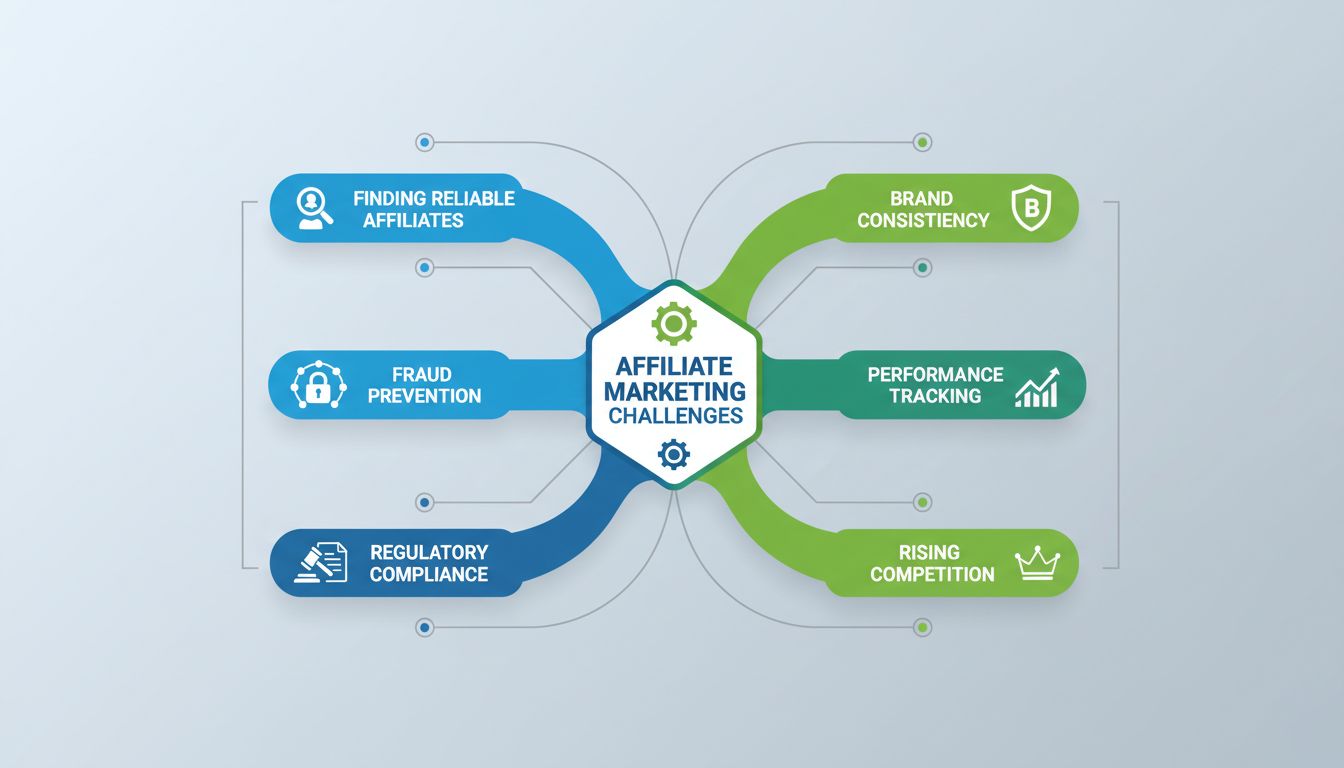
Discover the key challenges businesses face when implementing affiliate marketing programs in 2025, including affiliate management, fraud prevention, tracking, ...

Discover whether affiliate marketing is easy or hard. Learn how your existing audience, skills, and strategy determine your success. Complete guide for beginner...
Join our community of happy clients and provide excellent customer support with Post Affiliate Pro.




Cookie Consent
We use cookies to enhance your browsing experience and analyze our traffic. See our privacy policy.