



Is It Too Late to Start Affiliate Marketing in 2025?
Discover why it's not too late to start affiliate marketing in 2025. Learn about market growth, emerging niches, and proven strategies to succeed as a new affil...
8 min read

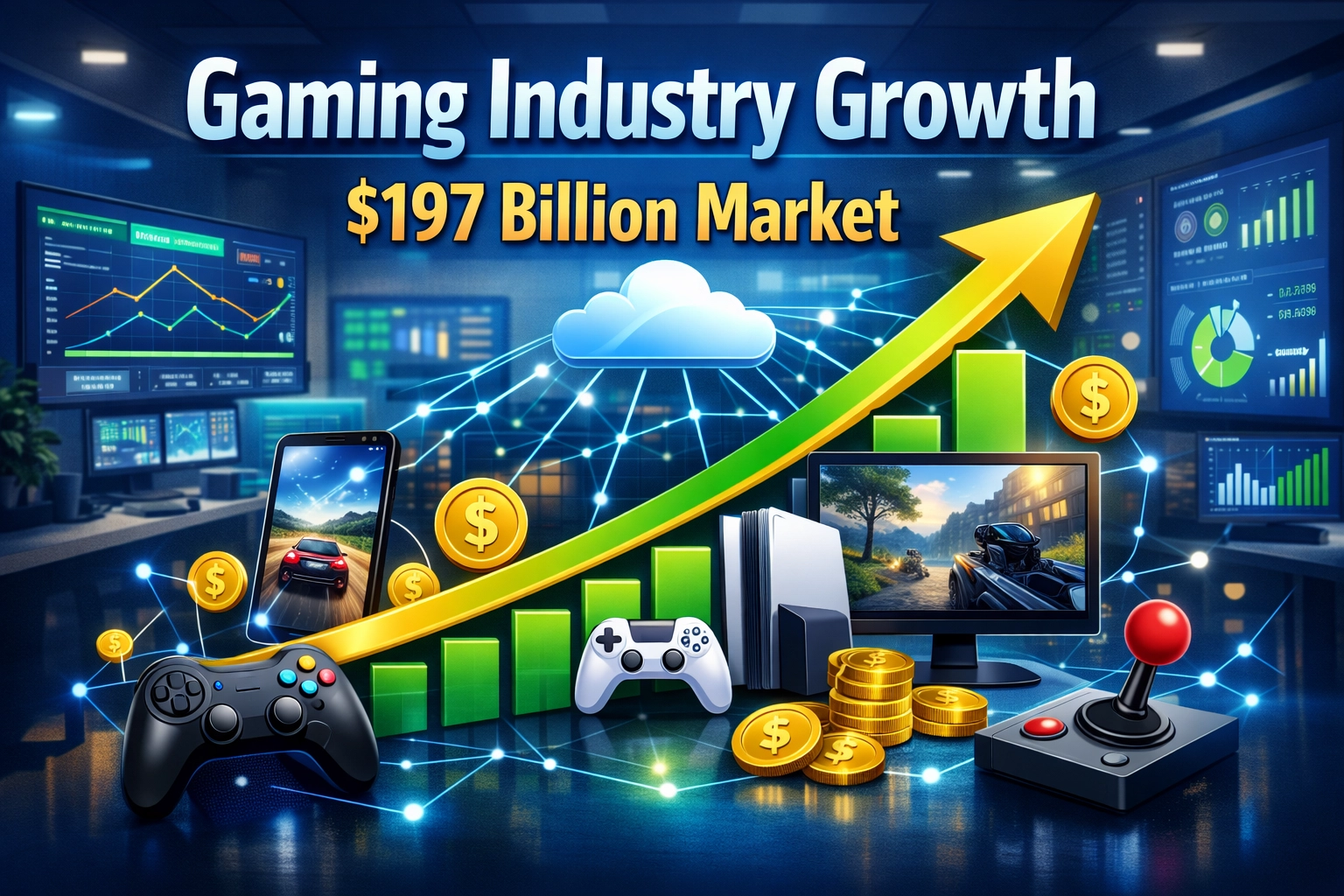
Discover how to monetize the $197 billion gaming industry. Learn affiliate strategies, top programs, and earning potential with 3.3+ billion gamers worldwide.
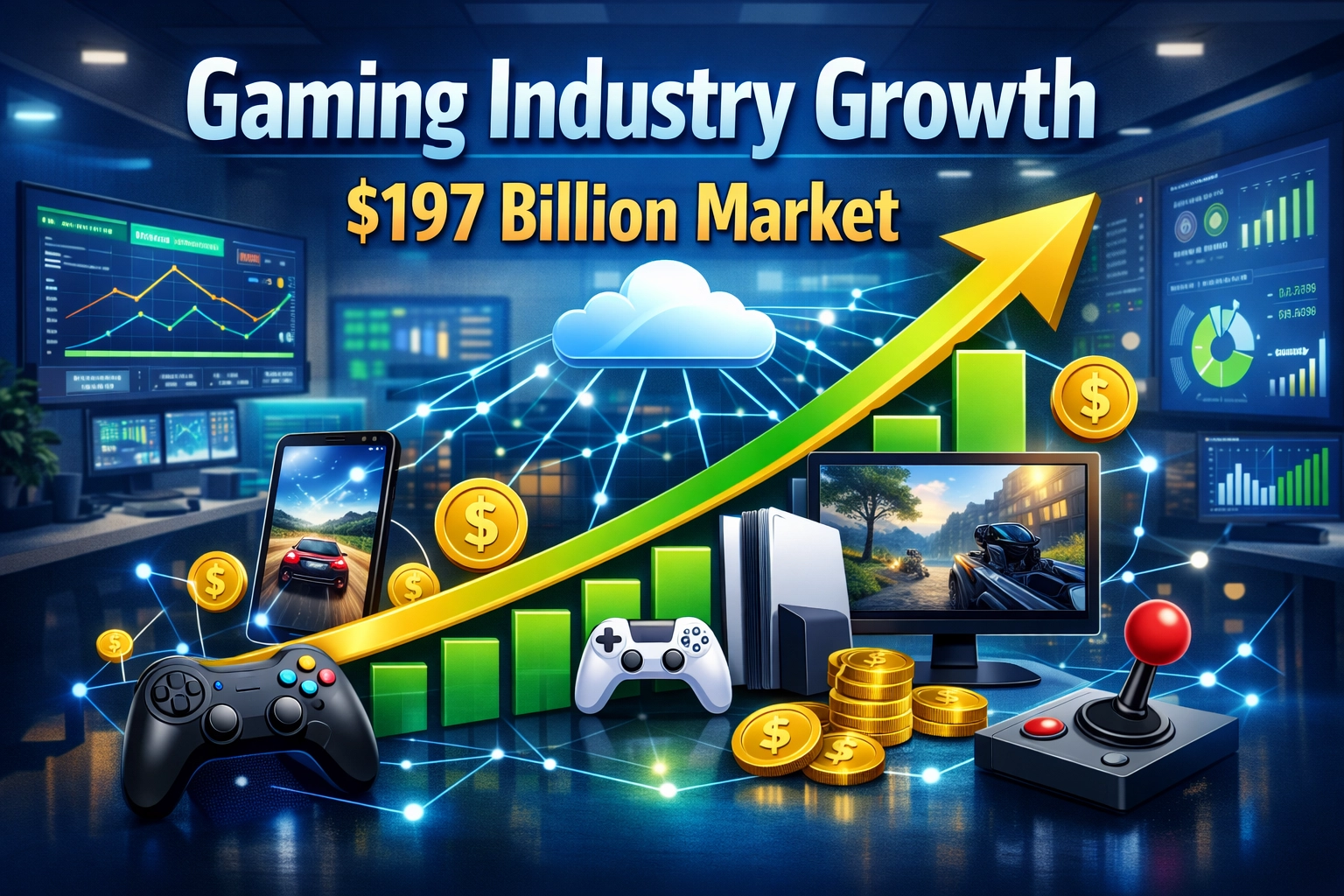
The gaming industry stands at an unprecedented inflection point for affiliate marketers, with the global market projected to reach $197 billion in 2026—a staggering 7.5% year-over-year growth that outpaces traditional entertainment sectors. With over 3.3 billion gamers worldwide, representing nearly 42% of the global population, the gaming market has evolved from a niche hobby into a mainstream cultural phenomenon that rivals film and music industries combined. This explosive growth creates a golden opportunity for affiliates to tap into one of the most lucrative and fastest-growing verticals in digital marketing. The diversity of gaming platforms—from mobile to console to cloud-based services—means there are countless monetization pathways for affiliates of all experience levels. Whether you’re a seasoned marketer or just entering the affiliate space, the gaming industry offers unmatched earning potential backed by passionate, engaged audiences with proven spending habits.
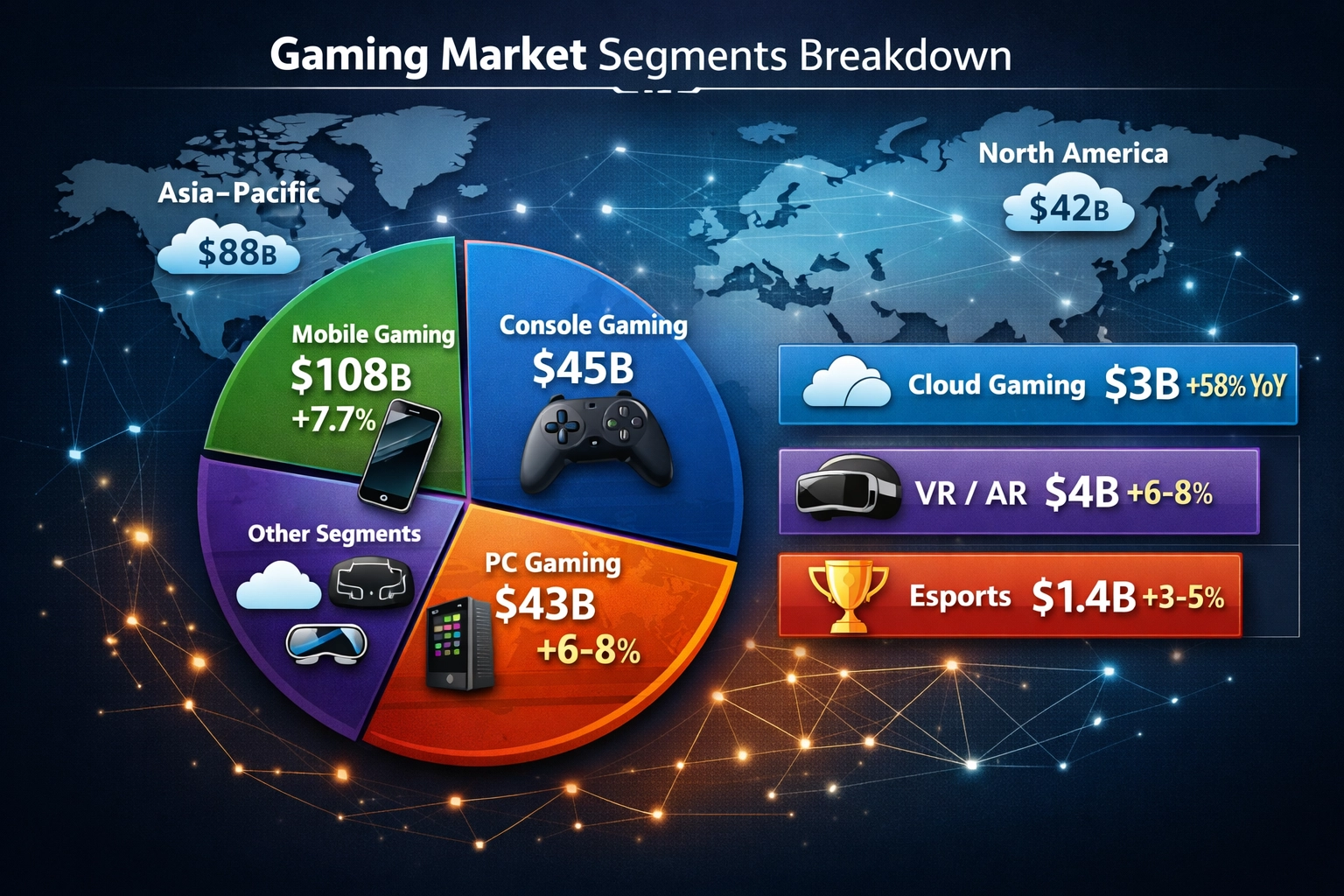
The $197 billion gaming market in 2026 represents a remarkable achievement, but the story becomes even more compelling when you examine the underlying segments driving this growth. Mobile gaming dominates the landscape with $108 billion in revenue (+7.7% YoY), accounting for approximately 55% of the total market—a testament to the ubiquity of smartphones and the accessibility of gaming on-the-go. Console gaming generates $45-51 billion annually, driven by powerhouse platforms like PlayStation 5 and Xbox Series X/S, while PC gaming contributes $43 billion to the total, fueled by competitive esports titles and high-fidelity AAA games. Geographically, Asia-Pacific leads with $88.1 billion in market value, driven by massive gaming populations in China and Japan, followed by North America at $50.6 billion and Europe at approximately $35-40 billion. This regional breakdown is crucial for affiliates, as it reveals where the highest-spending audiences concentrate and which markets offer the most growth potential. The consistent growth trajectory across all segments—despite market maturation in developed regions—indicates sustained consumer demand and expanding monetization opportunities through subscriptions, in-app purchases, and premium content.
| Gaming Segment | 2026 Revenue | Market Share | Growth Rate | Key Drivers |
|---|---|---|---|---|
| Mobile Gaming | $108 Billion | 55% | +7.7% | Accessibility, F2P models, casual gaming |
| Console Gaming | $45-51 Billion | 23-26% | +3-5% | PS5, Xbox, exclusive titles |
| PC Gaming | $43 Billion | 22% | +6-8% | Esports, Steam, high-end gaming |
| Cloud Gaming | $11.1 Billion | 5-6% | +58% YoY | Streaming services, accessibility |
| VR/AR Gaming | $2-3 Billion | 1-2% | +15-20% | Meta Quest, Apple Vision Pro |
| Esports | $3.7-4.14 Billion | 2% | +9-21% CAGR | Tournaments, sponsorships, betting |
The gaming industry’s diversity creates multiple affiliate opportunities across distinct segments, each with unique monetization models and audience characteristics:
Mobile Gaming: The largest segment at $108B, encompassing casual games, puzzle games, and free-to-play titles with in-app purchase monetization. Affiliates can promote games across app stores and earn through installs, registrations, or in-app purchases.
Console Gaming: PlayStation 5, Xbox Series X/S, and Nintendo Switch dominate this $45-51B segment. Affiliates earn commissions on hardware sales, game purchases, and subscription services like PlayStation Plus and Xbox Game Pass.
PC Gaming: A $43B market driven by platforms like Steam, Epic Games Store, and GOG. This segment includes competitive esports titles, indie games, and AAA releases, offering high-value affiliate opportunities through game sales and platform subscriptions.
Cloud Gaming: The fastest-growing segment at $11.1B (+58% YoY), including Xbox Cloud Gaming, PlayStation Plus Premium, and GeForce Now. Affiliates can promote subscriptions and capitalize on the shift toward streaming-based gaming.
VR/AR Gaming: An emerging $2-3B segment with products like Meta Quest 3, PlayStation VR2, and Apple Vision Pro. Early-mover affiliates can establish authority in this high-growth niche before market saturation occurs.
Esports & Competitive Gaming: A $3.7-4.14B market expanding at 9-21% CAGR, encompassing tournament sponsorships, betting platforms, team merchandise, and streaming monetization through platforms like Twitch.
Gaming Hardware & Peripherals: A multi-billion dollar segment including gaming mice, keyboards, headsets, and chairs from brands like Razer, SteelSeries, and Corsair, offering commission rates of 5-8% with strong affiliate support.
Gaming Subscriptions & Services: Including Game Pass ($5B+ annual revenue), PlayStation Plus, and Nintendo Switch Online, representing recurring revenue opportunities with high lifetime value for affiliates.
Understanding your audience is fundamental to affiliate success, and the gaming demographic landscape reveals a massive, diverse, and affluent market. The 3.3+ billion gamers globally span all age groups, income levels, and geographic regions, with the average gamer in the United States now 36 years old—significantly older than the stereotypical teenage gamer of decades past. Gender distribution has reached near-parity, with 46% female gamers and 53% male gamers worldwide, fundamentally changing how games are designed, marketed, and monetized. Asia-Pacific dominates with 1.48 billion gamers (46% of the global total), followed by Europe with 715 million and North America with substantial populations, creating distinct regional opportunities for localized affiliate campaigns. Device preferences vary by region and demographic: mobile gaming attracts casual players and emerging markets, console gaming appeals to core gamers with disposable income, and PC gaming attracts competitive and hardcore players. Spending patterns reveal that 80% of gamers are over 18 years old with established purchasing power, and the average gamer spends $50-100+ annually on games, subscriptions, and in-game purchases—making this audience exceptionally valuable for affiliate monetization.
Gaming affiliate programs operate through several distinct models, each offering different earning potential and suitability for various traffic sources. The Cost-Per-Action (CPA) model rewards affiliates for specific user actions like game installations, account registrations, or first purchases, typically offering $5-50 per conversion depending on the game’s value and target market. The Revenue Share (RevShare) model provides ongoing commissions on player spending, ranging from 20-50% of generated revenue, making it ideal for affiliates with engaged audiences who drive long-term player value. Hybrid models combine both approaches, offering upfront CPA bonuses plus ongoing RevShare percentages, maximizing earning potential across the customer lifecycle. Cookie duration—typically 30-90 days—determines how long after a user clicks your affiliate link you receive credit for conversions, with longer durations favoring content-based traffic sources. Leading gaming affiliate programs include SteelSeries (up to 8% commission on gaming peripherals), Razer (up to 5% on hardware), GameFly (subscription-based commissions), Green Man Gaming (competitive game sales commissions), and Ubisoft (direct game sales and season pass promotions). Premium affiliate networks like Impact and CJ Affiliate also host numerous gaming brands, providing centralized access to multiple programs with professional tracking and payment infrastructure. Understanding these models allows you to select programs aligned with your traffic sources and audience engagement patterns.
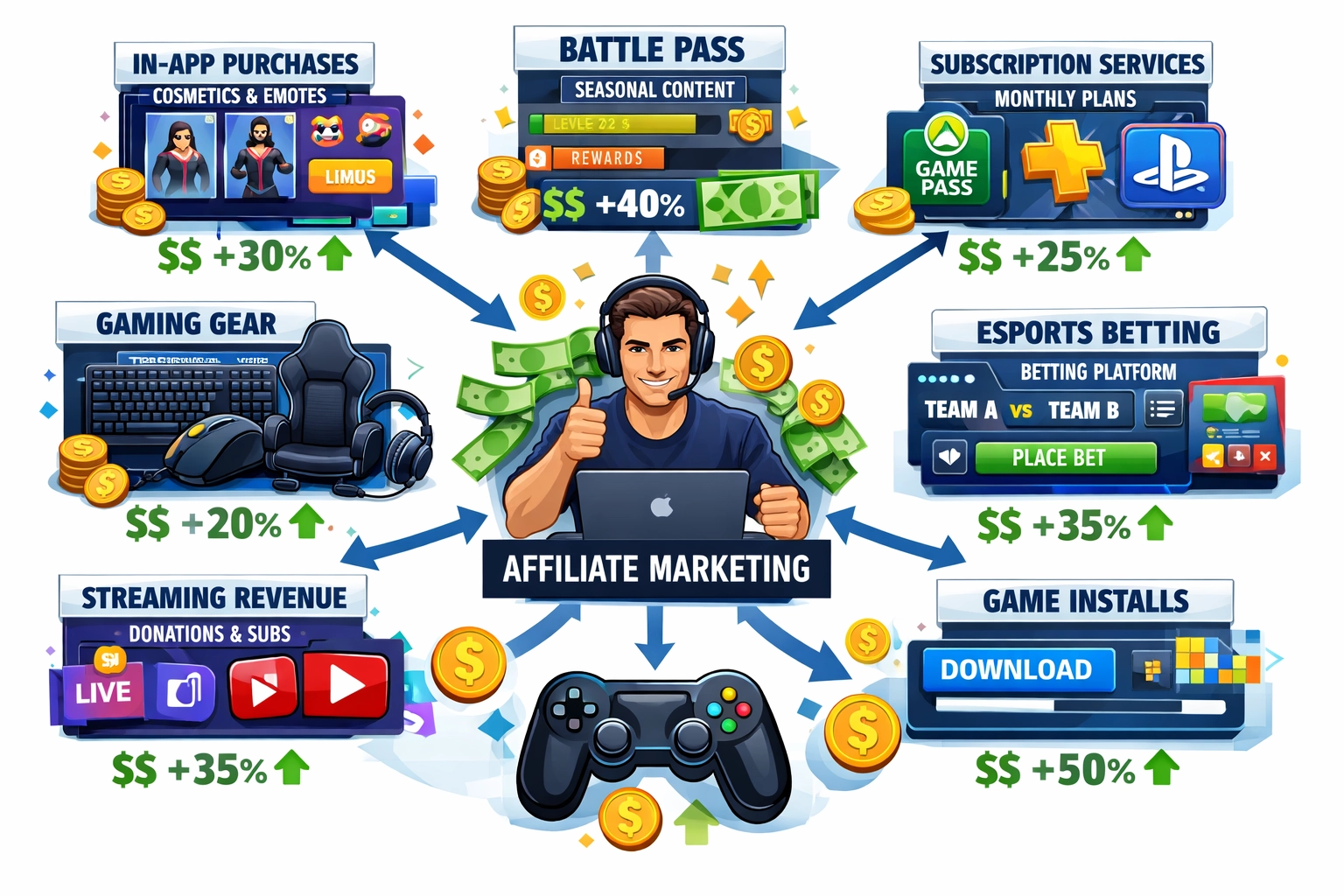
The gaming industry’s diverse revenue streams create multiple pathways for affiliate monetization, extending far beyond simple game sales. Game installs and registrations form the foundation, with mobile games offering $0.50-5+ per install depending on user quality and geographic location, while console and PC games provide higher-value commissions on full purchases. In-app purchases (IAPs) represent the largest revenue driver in mobile gaming, with cosmetics, character skins, and battle passes generating billions annually—affiliates can earn 15-30% RevShare on these transactions. Battle passes and seasonal content create recurring monetization opportunities, as players spend $10-20 per season for exclusive cosmetics and progression boosts, with affiliate commissions accumulating across multiple seasons. Gaming subscriptions like Xbox Game Pass ($5B+ annual revenue), PlayStation Plus ($3.6B+ in US alone), and Nintendo Switch Online offer $5-15 per subscription or RevShare models, providing predictable recurring revenue. Hardware and accessories from gaming peripheral brands generate 5-8% commissions on high-ticket items like gaming chairs ($300-500), mechanical keyboards ($100-200), and headsets ($150-300), resulting in substantial per-sale earnings. Streaming monetization through Twitch, YouTube, and TikTok allows gaming content creators to earn through ads, sponsorships, and affiliate links simultaneously, creating compound revenue streams. Esports betting and tournament platforms represent an emerging opportunity, with some programs offering 5-15% RevShare on betting activity, though regulatory compliance varies by jurisdiction.
Successful gaming affiliates leverage multiple traffic channels, each suited to different audience segments and content types. Organic SEO remains highly effective for gaming content, with search queries like “best gaming mouse,” “free-to-play games,” and “game reviews” generating consistent, high-intent traffic that converts well to affiliate sales. Paid advertising through Facebook Gaming Ads, TikTok, and Google Ads allows affiliates to scale quickly, though rising user acquisition costs require careful optimization and audience targeting to maintain profitability. Influencer and streaming channels like Twitch and YouTube Gaming drive massive affiliate traffic, with gaming content creators earning through affiliate links, sponsorships, and platform monetization simultaneously—top streamers generate $10,000-100,000+ monthly through affiliate commissions alone. Affiliate networks like Impact, CJ Affiliate, and Awin provide centralized access to multiple gaming programs, professional tracking infrastructure, and payment processing, reducing operational complexity. Community platforms including Discord, Reddit, and gaming forums foster engaged audiences with high trust levels, making them ideal for authentic affiliate recommendations and long-form content marketing. Retargeting campaigns using pixel-based tracking allow affiliates to re-engage users who visited game pages or added items to carts, significantly improving conversion rates through strategic messaging and limited-time offers. Email marketing to gaming enthusiast lists generates consistent affiliate revenue, particularly when promoting new game releases, seasonal sales, and subscription offers with personalized recommendations.
Thriving in the competitive gaming affiliate space requires a strategic approach grounded in authenticity, data, and audience understanding. Authenticity and genuine recommendations form the foundation—gaming audiences are sophisticated and quickly detect inauthentic promotions, so affiliates must genuinely use and believe in products they promote, building trust that translates to higher conversion rates and repeat audience engagement. Content quality and depth differentiate successful affiliates from competitors; comprehensive game reviews, detailed hardware comparisons, and in-depth guides provide value beyond simple product links, establishing authority and improving search rankings. Niche specialization allows affiliates to dominate specific segments—whether focusing on competitive esports games, indie game discovery, or gaming peripherals—creating defensible competitive advantages and attracting highly targeted audiences. Data-driven optimization through A/B testing, conversion tracking, and audience analytics reveals what messaging, formats, and products resonate most, enabling continuous improvement and higher ROI on traffic investments. Audience engagement and community building through comments, Discord servers, and social media creates loyal followers who trust recommendations and generate repeat traffic, increasing lifetime value per audience member. Transparency about affiliate relationships through clear disclosures and FTC compliance builds credibility and legal protection, while demonstrating respect for audience intelligence. Relationship building with program managers and brand representatives unlocks exclusive deals, higher commission rates, and early access to new products, providing competitive advantages unavailable to casual affiliates. Continuous testing and iteration across traffic sources, content formats, and promotional angles ensures you’re always optimizing performance and adapting to market changes, preventing stagnation and maintaining growth momentum.
Gaming affiliate marketing presents distinct challenges that require proactive management and strategic solutions. Market competition intensifies as more affiliates enter the space, with established players and brand-owned channels capturing significant traffic share—the solution involves finding underserved niches, creating differentiated content, and building direct audience relationships that reduce reliance on organic search. Tracking complexity arises from multi-device gaming journeys, where users research on mobile, purchase on console, and play across platforms—implementing robust attribution systems and working with programs offering longer cookie durations mitigates this challenge. Audience quality concerns emerge when affiliates prioritize volume over value, leading to low-quality conversions and program termination—maintaining strict quality standards and focusing on engaged, relevant audiences protects long-term program relationships. Regulatory compliance varies significantly by jurisdiction, with gaming subscriptions, loot boxes, and esports betting facing increasing scrutiny—staying informed about local regulations and maintaining transparent disclosures protects against legal liability. Fraud prevention requires vigilance against click fraud, bot traffic, and incentivized installs that artificially inflate metrics—using reputable traffic sources, implementing fraud detection tools, and maintaining transparent relationships with programs prevents account suspension. Platform algorithm changes on YouTube, TikTok, and Twitch can dramatically impact organic reach—diversifying traffic sources and building owned audiences through email lists and communities reduces vulnerability to platform dependency. Cookie deprecation and privacy changes limit tracking capabilities across devices and browsers—adapting to first-party data collection, contextual targeting, and direct audience relationships ensures sustainability as third-party cookies disappear.
The gaming industry’s trajectory points toward several transformative trends that will reshape affiliate opportunities through 2026 and beyond. Cloud gaming expansion from $11.1B in 2026 to projected $15-20B+ by 2027 creates massive affiliate opportunities as Xbox Cloud Gaming, PlayStation Plus Premium, and emerging competitors drive subscription adoption—early-mover affiliates can establish authority before market saturation. AI-powered personalization will enable games to adapt to individual player preferences, creating more engaging experiences and higher monetization rates, while affiliates can leverage AI tools for personalized recommendations and dynamic content optimization. Virtual goods and metaverse gaming represent an emerging $2-3B segment expanding at 15-20% annually, with opportunities in NFT gaming, virtual real estate, and digital fashion—forward-thinking affiliates can position themselves as guides in this nascent ecosystem. Emerging market expansion, particularly in Southeast Asia, India, and Latin America, will drive billions in new gaming revenue as smartphone penetration increases and disposable income grows—localized affiliate strategies targeting these regions offer first-mover advantages. Mobile gaming dominance will continue, with the $108B segment growing faster than console and PC combined, making mobile-focused affiliate strategies increasingly valuable for scale and reach. Subscription service consolidation will see major publishers bundling games, cloud access, and exclusive content into premium tiers, creating recurring revenue opportunities for affiliates promoting these high-value subscriptions. Creator economy integration will blur lines between content creation, streaming, and affiliate marketing, with platforms enabling creators to monetize audiences through multiple channels simultaneously—affiliates who build engaged communities will capture disproportionate value. Technological innovations including advanced VR/AR experiences, AI-driven game design, and blockchain-based gaming will create entirely new affiliate categories and commission opportunities, rewarding affiliates who stay informed and adaptable.
The gaming industry represents one of the most lucrative and fastest-growing affiliate marketing opportunities available today. With a $197 billion market, 3.3+ billion gamers, and diverse monetization pathways across mobile, console, PC, cloud, and emerging platforms, the potential for affiliate success has never been greater. Whether you’re just starting your affiliate journey or looking to expand into gaming, the combination of massive audience size, proven spending habits, and multiple commission models creates a compelling business case for serious marketers.
Success in gaming affiliate marketing requires authenticity, strategic niche selection, quality content creation, and data-driven optimization. By focusing on genuine audience value, building trusted communities, and staying ahead of industry trends, affiliates can build sustainable, six-figure income streams from the gaming industry’s explosive growth.
The time to enter the gaming affiliate space is now. Early movers who establish authority in underserved niches, build engaged audiences, and optimize their campaigns will capture disproportionate value as the industry continues its rapid expansion. Start small, test different approaches, and scale what works—the gaming industry’s size and growth trajectory ensure that well-executed affiliate strategies will generate substantial returns for years to come.
PostAffiliatePro provides the most advanced affiliate tracking and management software designed specifically for gaming publishers and affiliate networks. Track every conversion, manage commissions, and scale your gaming affiliate program with confidence.
Discover why it's not too late to start affiliate marketing in 2025. Learn about market growth, emerging niches, and proven strategies to succeed as a new affil...

Discover how to monetize football betting affiliate marketing. Learn strategies, top programs, and how PostAffiliatePro helps manage betting partnerships.

Compare affiliate software for enterprise and SMB needs. Learn key selection criteria, scalability requirements, and compliance features.
Join our community of happy clients and provide excellent customer support with Post Affiliate Pro.




Cookie Consent
We use cookies to enhance your browsing experience and analyze our traffic. See our privacy policy.