



How Affiliate Marketing Can Help Your E-commerce Business
Discover how affiliate marketing drives traffic, increases sales, and builds brand credibility for e-commerce. Learn proven strategies to scale.
9 min read

Learn how eCommerce affiliate marketing works, how to set up a profitable program, and best practices for success. Complete guide with strategies and tools.
eCommerce affiliate marketing is a performance-based marketing strategy where online retailers partner with affiliates—individuals or companies who promote their products in exchange for a commission on each sale or action generated. This mutually beneficial relationship has become one of the most effective customer acquisition channels in the digital economy, transforming how businesses reach new audiences and how marketers monetize their platforms.
The affiliate marketing industry has experienced remarkable growth over the past decade. In 2023, the global affiliate marketing market reached $9.56 billion, with projections indicating it will surpass $12 billion by 2026. This explosive growth reflects the increasing recognition of affiliate marketing’s effectiveness and ROI compared to traditional advertising channels. For eCommerce businesses specifically, affiliate marketing has become indispensable—40% of US merchants now cite affiliate programs as their top customer acquisition channel, demonstrating the strategy’s critical importance in modern retail.
At its core, eCommerce affiliate marketing operates on a simple principle: merchants only pay for actual results. Unlike traditional advertising where you pay upfront regardless of outcomes, affiliate marketing is entirely performance-driven. Affiliates invest their time, effort, and resources to promote products, and merchants reward them only when those efforts convert into sales, leads, or other predetermined actions. This alignment of incentives creates a powerful dynamic where both parties are motivated to succeed.
The beauty of affiliate marketing lies in its scalability and accessibility. Merchants can expand their reach exponentially without maintaining large in-house marketing teams, while affiliates can generate income by leveraging their existing audiences—whether that’s a blog, social media following, email list, or YouTube channel. This democratization of marketing has enabled entrepreneurs and content creators worldwide to build sustainable income streams while helping businesses reach customers they might never have found through traditional channels.
The impact on business growth is substantial. 80% of brands report that affiliate marketing boosted their annual revenue by at least 20%, with many experiencing significantly higher growth rates. Additionally, 6% of all US eCommerce orders now come through affiliate links, representing a significant portion of online retail transactions. These statistics underscore why eCommerce businesses of all sizes—from startups to Fortune 500 companies—are investing heavily in affiliate program development and management.
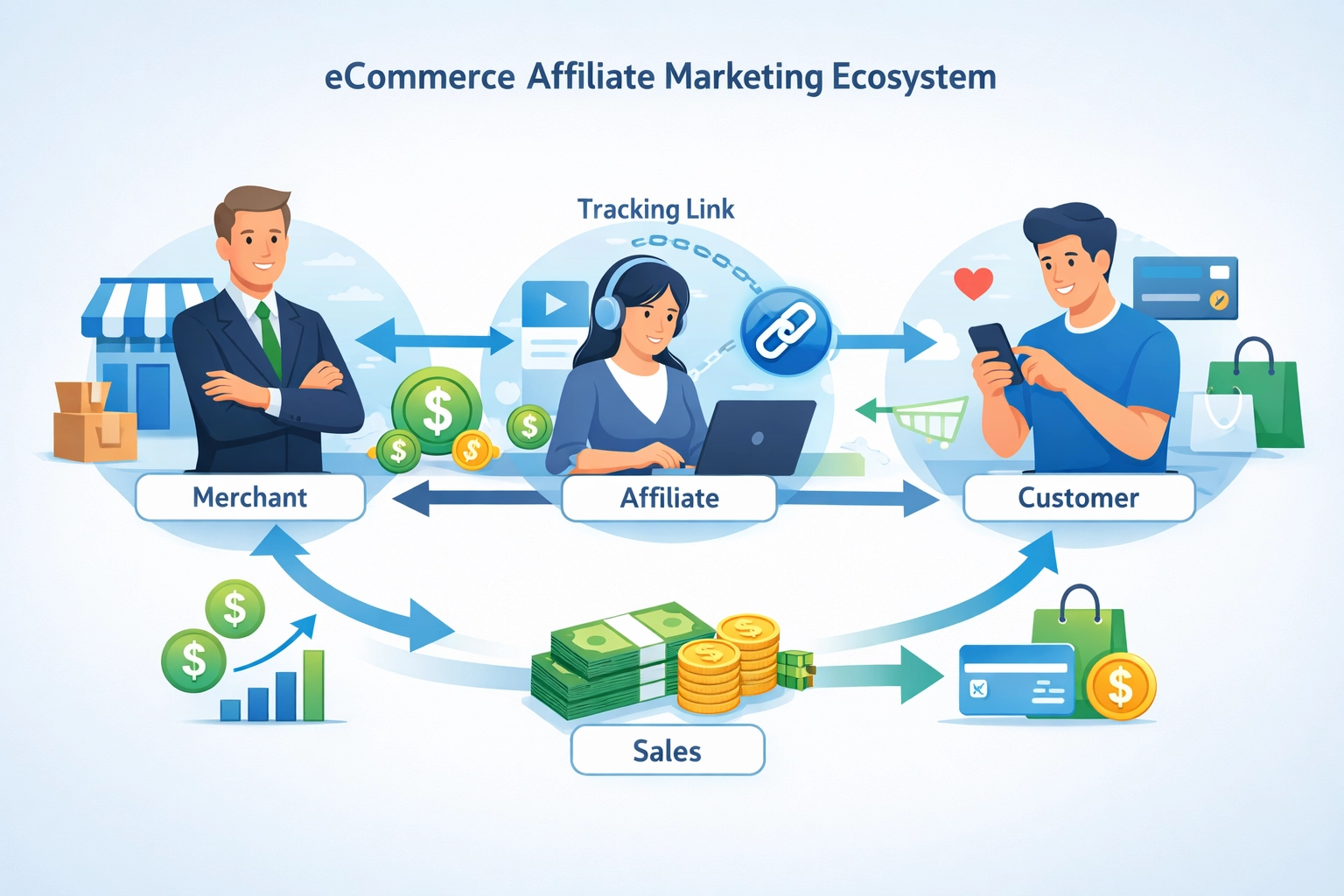
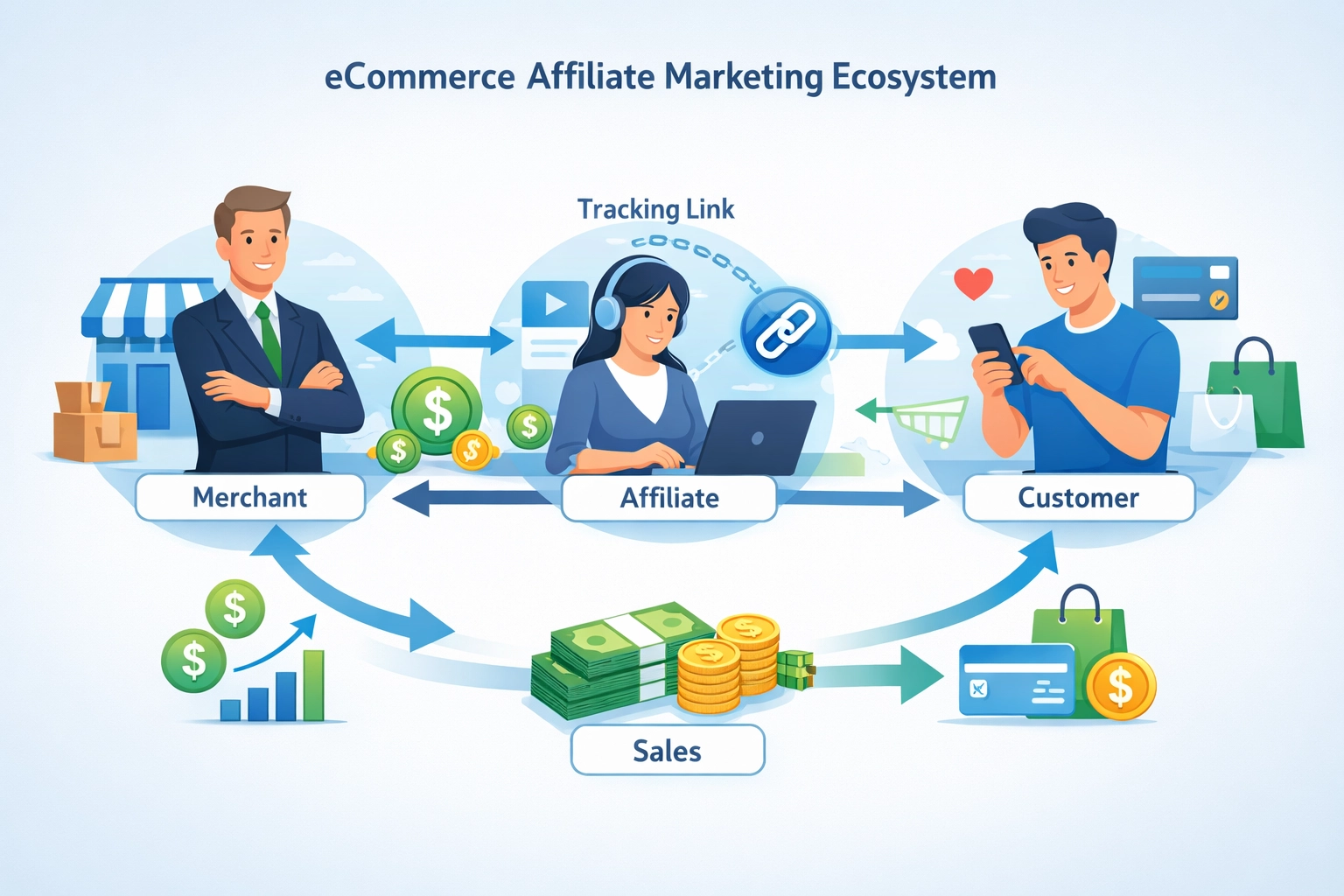
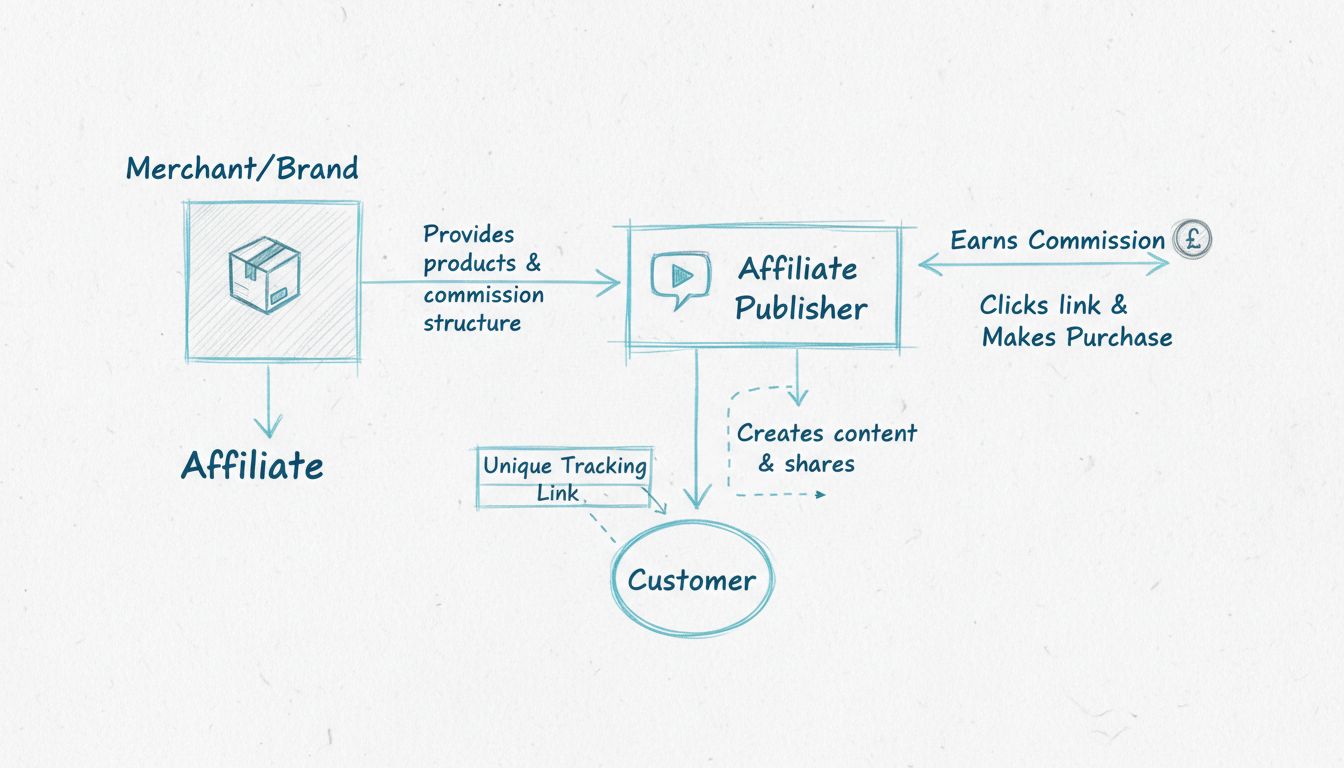
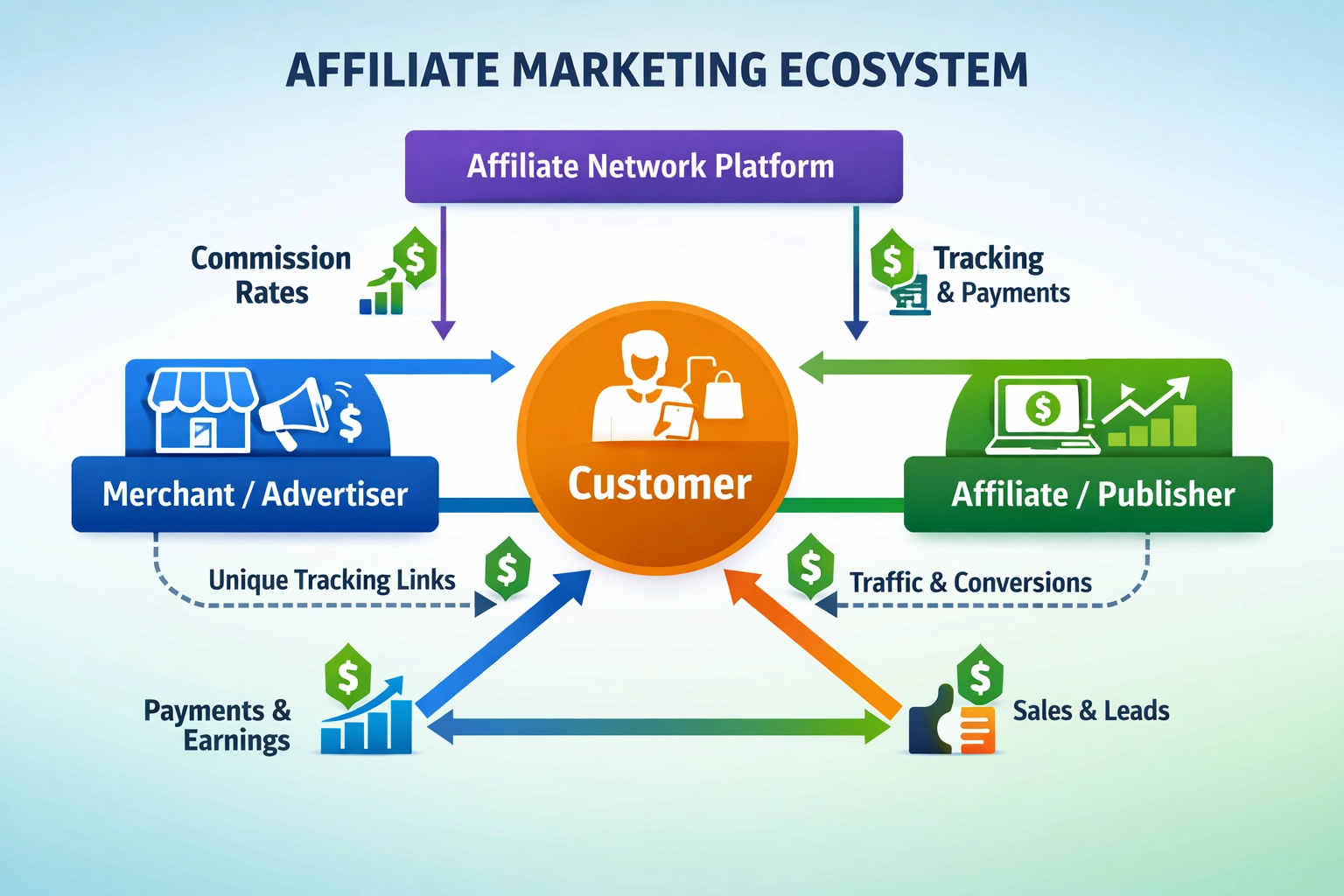
eCommerce affiliate marketing operates through a systematic process that connects merchants, affiliates, and customers in a coordinated ecosystem. Understanding this workflow is essential for anyone looking to launch or optimize an affiliate program.
The process begins when a merchant creates an affiliate program and recruits partners to promote their products. Affiliates receive unique tracking links or promotional codes that identify them as the referral source. When a customer clicks an affiliate’s link and makes a purchase, the affiliate management system tracks this action and attributes the sale to the correct affiliate. The merchant then calculates the commission owed based on their predetermined structure and pays the affiliate accordingly.
Here’s how the key components interact:
| Component | Role | Responsibility |
|---|---|---|
| Merchant | Product seller | Creates program, sets commissions, provides marketing materials |
| Affiliate | Promoter | Drives traffic, creates content, promotes products |
| Customer | Buyer | Clicks affiliate link, makes purchase |
| Affiliate Network | Intermediary | Tracks conversions, manages payments, provides platform |
The tracking mechanism is crucial to affiliate marketing’s success. When an affiliate shares their unique link, the affiliate management platform records the click and creates a cookie on the customer’s device. This cookie persists for a predetermined period (typically 30-90 days), allowing the affiliate to receive credit even if the customer doesn’t purchase immediately. This cookie window is essential because most online shoppers don’t buy on their first visit—they research, compare, and return later.
The payment process follows a clear timeline. Affiliates generate commissions through their promotional efforts, but they don’t receive payment immediately. Most programs have a holding period (often 30-60 days) to account for returns and chargebacks. Once this period expires and the sale is confirmed as valid, the commission is approved and paid to the affiliate. Payments typically occur monthly, though some programs offer more frequent payouts.
Effective affiliate marketing requires robust technology infrastructure. This is where solutions like PostAffiliatePro become invaluable. PostAffiliatePro provides merchants with a comprehensive affiliate management platform that handles tracking, commission calculations, affiliate recruitment, and payment processing—all in one integrated system. The platform’s advanced tracking technology ensures accurate attribution, while its user-friendly interface makes it easy for merchants to manage their programs and for affiliates to monitor their performance in real-time.
The beauty of this system is its transparency and accountability. Every click, conversion, and commission is tracked and recorded, creating a clear audit trail that benefits both merchants and affiliates. This data-driven approach eliminates guesswork and ensures that both parties can see exactly how the partnership is performing.

Set up advanced tracking in minutes. No credit card required.
Affiliate marketing offers numerous advantages that make it an essential component of modern eCommerce strategies. Here are the primary benefits:
Cost-Effective Customer Acquisition
Expanded Market Reach
Enhanced Brand Credibility
Increased Sales and Revenue
Flexibility and Scalability
Data and Insights
Competitive Advantage
Commission structures are the foundation of any affiliate program, directly influencing affiliate motivation and program profitability. Choosing the right structure requires balancing attractiveness to affiliates with sustainability for your business.
Percentage-Based Commissions are the most common structure in eCommerce. Affiliates earn a percentage of each sale they generate, typically ranging from 5% to 30% depending on the industry, product type, and profit margins. This model aligns incentives perfectly—affiliates earn more when they drive higher-value sales. For example, a fashion retailer might offer 10% commission, while a software company might offer 20-30% due to higher profit margins.
Fixed Amount Commissions provide predictability for both parties. Instead of a percentage, affiliates earn a set dollar amount per sale or action. This works well for products with consistent pricing and is particularly effective for lead generation or specific actions like email signups. A SaaS company might offer $50 per qualified lead, regardless of the customer’s lifetime value.
Tiered Commission Structures reward high-performing affiliates with increasing commission rates as they hit performance milestones. An affiliate might earn 10% on their first 100 sales, 15% on sales 101-500, and 20% on sales above 500. This incentivizes affiliates to increase their promotional efforts and rewards loyalty.
Here’s a comparison of common commission structures across industries:
| Industry | Typical Commission Range | Model Type | Notes |
|---|---|---|---|
| Fashion & Apparel | 5-15% | Percentage | Lower margins, high volume |
| Electronics | 3-8% | Percentage | Competitive, thin margins |
| Software/SaaS | 20-40% | Percentage | High margins, recurring revenue |
| Health & Wellness | 10-25% | Percentage | Variable margins |
| Travel & Hospitality | 5-10% | Percentage | Commission-based industry |
| Lead Generation | $10-$100+ | Fixed | Varies by lead quality |
| Subscription Services | 20-50% | Percentage | Often recurring commissions |
Hybrid Models combine multiple commission types. For instance, a merchant might offer 15% on product sales plus a $5 bonus for each new customer acquired, incentivizing both volume and customer acquisition quality.
Recurring Commission Models are increasingly popular for subscription-based businesses. Affiliates earn commissions not just on the initial sale but on recurring subscription payments for the lifetime of the customer relationship. This creates long-term income streams for affiliates and incentivizes them to promote high-quality products that customers will retain.
Payment Frequency and Methods vary by program. Most programs pay monthly, though some offer bi-weekly or quarterly payments. Payment methods typically include bank transfers, PayPal, checks, or direct deposit. PostAffiliatePro supports multiple payment methods and frequencies, allowing merchants to customize their payment structure while ensuring affiliates receive timely, reliable compensation.
The key to successful commission structures is finding the sweet spot between affiliate motivation and business profitability. Too low, and you’ll struggle to recruit quality affiliates; too high, and your margins suffer. Most successful programs test different structures and adjust based on performance data and affiliate feedback.
Be the first to know about new features and product updates.
Affiliates promote products through diverse channels, each with unique advantages and audience characteristics. Understanding these channels helps merchants recruit the right affiliates and optimize their program strategy.
Blog-based affiliates create detailed, informative content that naturally incorporates product recommendations. These affiliates typically focus on specific niches—fitness, technology, personal finance, home improvement—and build loyal audiences seeking expert guidance. Blog affiliates excel at driving high-quality traffic because their recommendations come with detailed explanations and comparisons. They often use product reviews, buying guides, and how-to articles to promote affiliate products. This channel is particularly effective for products requiring education or comparison shopping.
Social media has become a dominant affiliate channel, with 67% of marketers using social media for affiliate promotion. Instagram, TikTok, YouTube, and Pinterest influencers leverage their engaged followers to promote products through sponsored posts, stories, and videos. Micro-influencers (10K-100K followers) often deliver better ROI than mega-influencers due to higher engagement rates and more authentic recommendations. This channel excels at building brand awareness and reaching younger demographics.
Email affiliates maintain subscriber lists and promote products through newsletters and email campaigns. This channel typically delivers high conversion rates because email subscribers have already demonstrated interest in the affiliate’s content. Email affiliates often focus on specific niches and build trust with their audiences over time, making their recommendations particularly valuable.
YouTube creators produce product reviews, unboxing videos, tutorials, and demonstrations that showcase products in action. Video content is particularly effective for products that benefit from visual demonstration. YouTube affiliates often build substantial audiences and generate significant traffic, making them valuable partners for merchants.
Coupon aggregators and deal-sharing sites promote products by highlighting discounts and special offers. These affiliates drive price-conscious customers and are particularly effective for driving volume sales. While individual transaction values might be lower, the volume can be substantial.
Affiliates active in online communities, forums, and discussion boards promote products through authentic participation and recommendations. These affiliates build credibility through genuine engagement and are trusted by community members. This channel works well for specialized products and B2B offerings.
Dedicated comparison websites and review platforms help customers evaluate products and make purchasing decisions. These sites often rank high in search results for product-related queries and drive significant organic traffic. They’re particularly effective for products where customers actively research before purchasing.
Some affiliates run paid advertising campaigns using Google Ads, Facebook Ads, or other platforms to drive traffic to merchant sites. These affiliates essentially act as performance marketers, using paid channels to generate conversions. This channel requires careful management to ensure profitability.
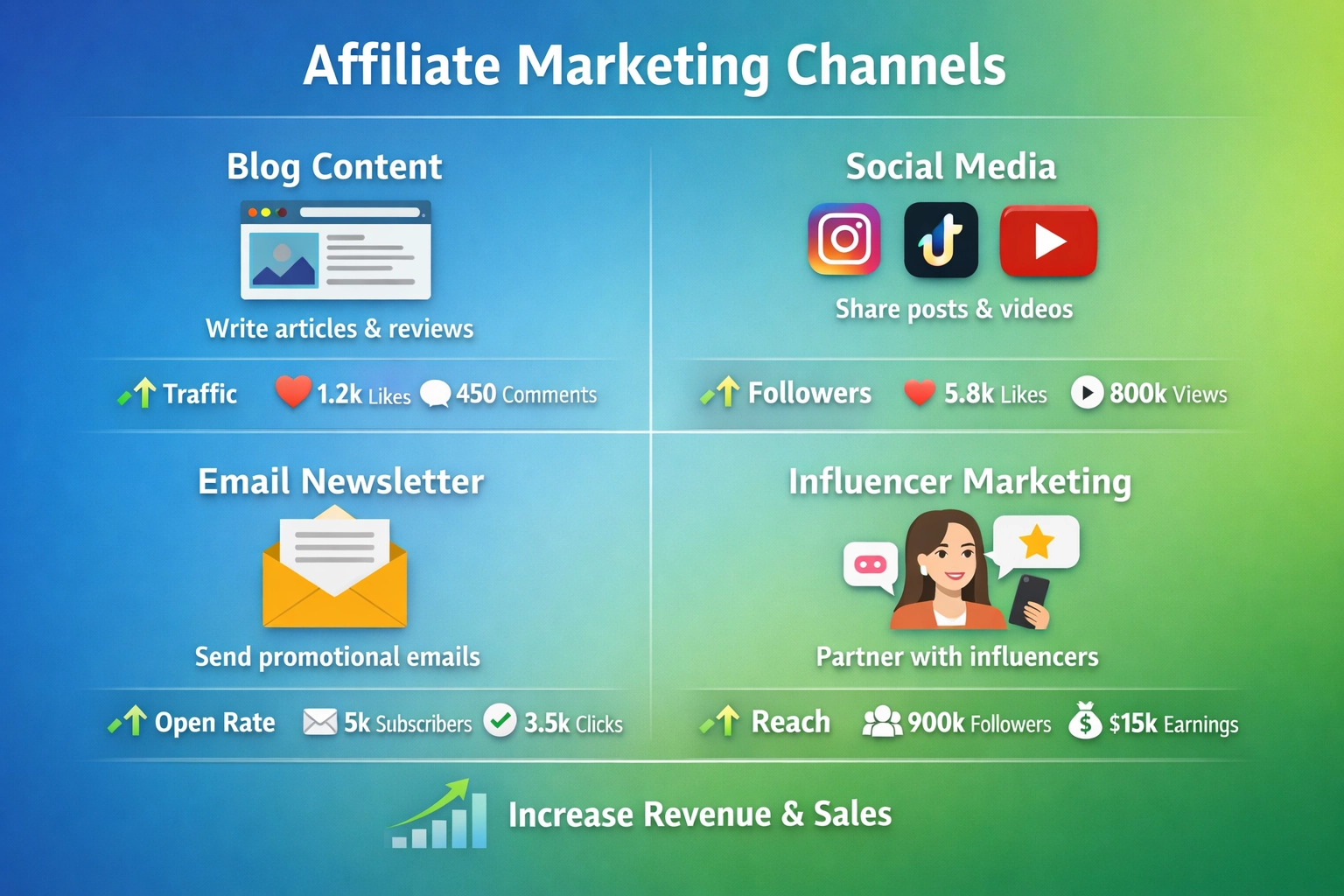
The most successful affiliate programs recruit partners across multiple channels, creating a diversified promotional ecosystem. Different channels attract different customer types and drive varying quality of traffic, so a balanced portfolio approach typically delivers the best results.
Launching a successful affiliate program requires careful planning and execution. Follow these steps to establish a program that attracts quality affiliates and drives sustainable growth:
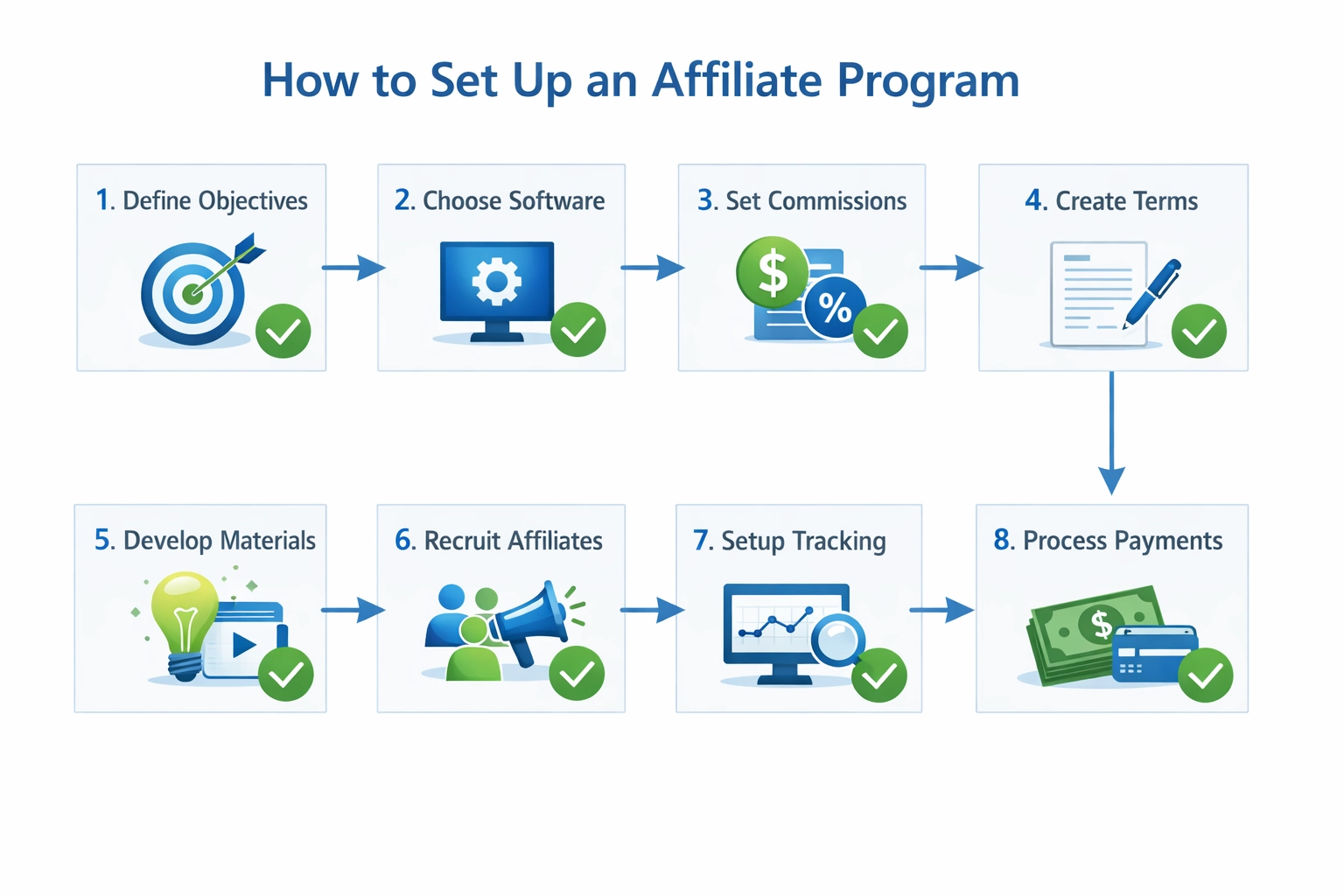
1. Define Your Program Goals and Strategy
Start by clarifying what you want to achieve with your affiliate program. Are you focused on customer acquisition, revenue growth, market expansion, or brand awareness? Establish specific, measurable goals such as “acquire 500 new customers through affiliates within 12 months” or “generate $100,000 in affiliate-driven revenue.” Define your target affiliate types—will you focus on influencers, content creators, niche bloggers, or a mix? Determine which customer segments you want to reach and which products you’ll promote through the program.
2. Choose the Right Affiliate Management Platform
Selecting the right technology is critical to your program’s success. PostAffiliatePro stands out as the leading affiliate management solution for eCommerce businesses. It provides comprehensive tracking, automated commission calculations, affiliate recruitment tools, real-time reporting, and flexible payment processing. PostAffiliatePro’s advanced features include multi-tier affiliate structures, customizable commission rules, fraud detection, and integration with major eCommerce platforms. The platform’s user-friendly interface makes it easy for both merchants and affiliates to manage the program effectively.
3. Establish Commission Structure and Terms
Determine your commission rates based on industry standards, profit margins, and competitive positioning. Research what competitors offer and ensure your rates are attractive enough to recruit quality affiliates while maintaining profitability. Define payment terms, including payment frequency, minimum payout thresholds, and payment methods. Establish clear program terms covering cookie duration, promotional guidelines, and prohibited practices. Document everything in a comprehensive affiliate agreement that protects both parties.
4. Create Compelling Marketing Materials
Develop high-quality promotional assets that make it easy for affiliates to promote your products. Provide product images, descriptions, banner ads, email templates, and sample social media posts. Create a resource library that affiliates can access anytime. The easier you make it for affiliates to promote, the more actively they’ll engage with your program. Include product information, unique selling points, and customer testimonials that affiliates can leverage in their promotions.
5. Recruit Quality Affiliates
Don’t wait for affiliates to find you—actively recruit partners aligned with your brand and target audience. Reach out to relevant influencers, bloggers, and content creators in your niche. Join affiliate networks and directories where potential partners search for programs. Offer incentives for early adopters and high performers. Build relationships with key affiliates who can drive significant volume. Consider tiered recruitment strategies targeting different affiliate types.
6. Set Up Tracking and Attribution
Configure your affiliate management system to accurately track all affiliate activity. Set appropriate cookie durations based on your sales cycle—longer for high-consideration purchases, shorter for impulse buys. Test tracking links to ensure they work correctly across devices and browsers. Implement fraud detection measures to prevent invalid clicks and conversions. Ensure your system properly attributes multi-touch conversions and handles edge cases.
7. Launch and Communicate
Announce your program to your existing customer base, email list, and social media followers. Create a dedicated landing page explaining the program benefits and how to join. Send personalized invitations to potential affiliates you’ve identified. Provide comprehensive onboarding materials and training. Establish clear communication channels for affiliate questions and support. Consider hosting a webinar or Q&A session to introduce the program and answer questions.
8. Monitor, Optimize, and Scale
Track program performance against your established goals. Monitor affiliate activity, conversion rates, and ROI. Identify top performers and understand what makes them successful. Provide regular feedback and support to affiliates. Adjust commission structures or promotional strategies based on performance data. Continuously recruit new affiliates to expand your reach. Scale successful tactics and eliminate underperforming approaches.
Maximizing your affiliate program’s potential requires implementing proven strategies that benefit both merchants and affiliates. Here are the essential best practices:
Recruit and Support Quality Affiliates
Provide Excellent Marketing Support
Communicate Regularly and Transparently
Optimize Commission Structures
Implement Fraud Detection and Prevention
Leverage Data and Analytics
Build Long-Term Relationships
Even well-intentioned affiliate programs can fail if merchants make critical mistakes. Here are common pitfalls and how to avoid them:
Setting Commissions Too Low
Providing Inadequate Marketing Support
Neglecting Affiliate Communication
Failing to Monitor for Fraud
Recruiting the Wrong Affiliates
Ignoring Performance Data
Inconsistent Payment Processing
Lack of Clear Program Terms
Tracking the right metrics is essential for understanding your affiliate program’s performance and making data-driven optimization decisions. Here are the key metrics you should monitor:
Traffic and Engagement Metrics
Conversion Metrics
Revenue Metrics
Customer Quality Metrics
Here’s a comprehensive metrics tracking table:
| Metric | Formula | Target | Frequency |
|---|---|---|---|
| Conversion Rate | (Conversions / Clicks) × 100 | 2-5% | Daily |
| Average Order Value | Total Revenue / Number of Orders | Industry dependent | Weekly |
| Customer Acquisition Cost | Total Commissions / New Customers | <30% of AOV | Monthly |
| Return on Investment | (Revenue - Commissions) / Commissions | 300%+ | Monthly |
| Customer Lifetime Value | Average Purchase Value × Purchase Frequency × Customer Lifespan | 3-5x CAC | Quarterly |
| Affiliate Performance Score | (Revenue × Quality Score) / Commissions | Varies | Monthly |
Benchmarking and Analysis
Compare your metrics against industry benchmarks to understand your program’s performance. The affiliate marketing industry averages vary by sector, but typical conversion rates range from 1-5%, with eCommerce averaging around 2-3%. Monitor trends over time to identify whether your program is improving or declining. Segment your data by affiliate type, product category, and traffic source to identify which areas are performing well and which need improvement.
Attribution and Multi-Touch Analysis
Modern customers often interact with multiple touchpoints before purchasing. Implement multi-touch attribution to understand how different affiliates contribute to conversions. Some customers might click an affiliate link, leave, return through another affiliate, and finally purchase. Proper attribution ensures you credit the right affiliates and understand the full customer journey.
ROI Calculation
Calculate your affiliate program’s ROI by comparing revenue generated against total program costs (commissions, platform fees, management time). A healthy affiliate program typically generates 3-5x ROI, meaning for every dollar spent on commissions, you generate $3-5 in profit. Track this metric monthly and use it to justify continued investment in the program.
The affiliate marketing landscape continues to evolve, driven by technological advances, changing consumer behavior, and regulatory developments. Understanding emerging trends helps merchants stay ahead of the curve and optimize their programs for future success.
Privacy-First Marketing and First-Party Data
As third-party cookies disappear and privacy regulations tighten, affiliate marketing is shifting toward first-party data strategies. Merchants and affiliates are increasingly relying on email lists, customer accounts, and direct relationships rather than cookie-based tracking. This trend emphasizes the importance of building authentic relationships with audiences and creating valuable content that encourages direct engagement. Affiliates who build loyal email lists and engaged communities will have significant advantages in a privacy-first world.
AI and Automation
Artificial intelligence is transforming affiliate marketing through predictive analytics, personalized recommendations, and automated optimization. AI-powered tools can identify the best-performing affiliates, predict which products will resonate with specific audiences, and automatically optimize commission structures. Machine learning algorithms can detect fraud more effectively and identify high-potential affiliates before they become obvious performers.
Influencer and Creator Economy Growth
The creator economy continues to expand, with more individuals building audiences across platforms like TikTok, YouTube, and Instagram. Micro and nano-influencers are becoming increasingly valuable due to their engaged, loyal audiences. Brands are shifting from one-off sponsored posts to long-term partnerships with creators who genuinely use and believe in their products. This trend emphasizes authenticity and genuine recommendations over traditional advertising.
Vertical Integration and Niche Programs
Rather than broad, general affiliate programs, merchants are creating specialized programs targeting specific niches and customer segments. Vertical integration allows for more targeted recruitment, customized commission structures, and specialized support for different affiliate types. This approach typically delivers better results than one-size-fits-all programs.
Subscription and Recurring Revenue Models
As subscription-based businesses proliferate, affiliate programs are increasingly offering recurring commissions. Affiliates earn ongoing commissions for customer subscriptions, creating long-term income streams and incentivizing them to promote high-quality products that customers will retain. This model aligns affiliate incentives with customer lifetime value rather than just initial sales.
Cross-Channel Attribution and Omnichannel Strategies
Customers interact with brands across multiple channels—social media, email, search, display ads, and more. Advanced attribution models are helping merchants understand how different channels work together to drive conversions. Affiliates are increasingly adopting omnichannel strategies, promoting products across multiple platforms to reach customers wherever they are.
Regulatory Compliance and Transparency
Increasing regulatory scrutiny around affiliate marketing, particularly regarding disclosure and consumer protection, is driving the industry toward greater transparency. Merchants and affiliates must ensure clear disclosure of affiliate relationships and compliance with FTC guidelines and similar regulations globally. This trend emphasizes the importance of ethical practices and transparent communication with consumers.
The future of affiliate marketing is bright, with continued growth expected as merchants recognize its effectiveness and ROI. By staying informed about emerging trends and adapting your strategies accordingly, you can ensure your affiliate program remains competitive and continues to drive sustainable growth for your eCommerce business.
Affiliate marketing is performance-based with tracking links and commissions, while influencer marketing focuses on brand awareness through trusted personalities. They can work together effectively—influencers can promote products through affiliate links and earn commissions on sales they generate.
Most programs see initial results within 3-6 months as affiliates build their audience and create content. However, significant revenue typically takes 6-12 months as the program matures, affiliates optimize their strategies, and you refine your approach based on performance data.
Industry standard is 5-30% depending on product type, profit margins, and niche. Research competitors in your industry and ensure your rates are competitive enough to attract quality affiliates while maintaining profitability. Start with rates that attract partners, then adjust based on performance.
Use advanced tracking software to monitor suspicious patterns, implement multi-factor authentication, conduct regular audits, and use fraud detection tools. Establish clear policies on prohibited promotional methods and enforce them consistently. PostAffiliatePro includes built-in fraud detection features.
Yes, but effectiveness depends on profit margins, product type, and audience. High-margin products and niche markets typically perform best. Even low-margin businesses can succeed with higher volume and careful commission structure planning.
You need affiliate management software (like PostAffiliatePro), analytics tools, payment processing, and communication platforms. PostAffiliatePro provides all essential features in one integrated platform, including tracking, commission calculations, reporting, and payment processing.
Look for relevant influencers, bloggers, and content creators in your niche. Provide clear program details, competitive rates, and strong support. Join affiliate networks, reach out directly to potential partners, and offer incentives for early adopters and high performers.
Affiliates must clearly disclose affiliate relationships using terms like 'affiliate link,' 'sponsored,' or 'I earn a commission' prominently in content. This applies to all platforms—blogs, social media, email, and videos. Clear disclosure builds trust and ensures legal compliance.
PostAffiliatePro makes it easy to set up, manage, and scale your affiliate program with advanced tracking, automated payouts, and comprehensive reporting.
Discover how affiliate marketing drives traffic, increases sales, and builds brand credibility for e-commerce. Learn proven strategies to scale.
Learn what affiliate marketing means with our comprehensive guide. Discover how affiliate programs work, commission structures, and why PostAffiliatePro is the ...
Learn what affiliate marketing is, how it works, commission models, and proven strategies to earn passive income. why 80% of brands use affiliate programs.
Join our community of happy clients and provide excellent customer support with Post Affiliate Pro.




Cookie Consent
We use cookies to enhance your browsing experience and analyze our traffic. See our privacy policy.