


What is a Cookie's Lifetime in Affiliate Marketing?
Learn what cookie lifetime means in affiliate marketing, how it works, typical durations, and why it matters for your affiliate commissions. Updated for 2025.
8 min read


Discover why longer cookie lifetimes don’t always benefit affiliates. Learn how purchase cycles, attribution models, and privacy regulations impact cookies.
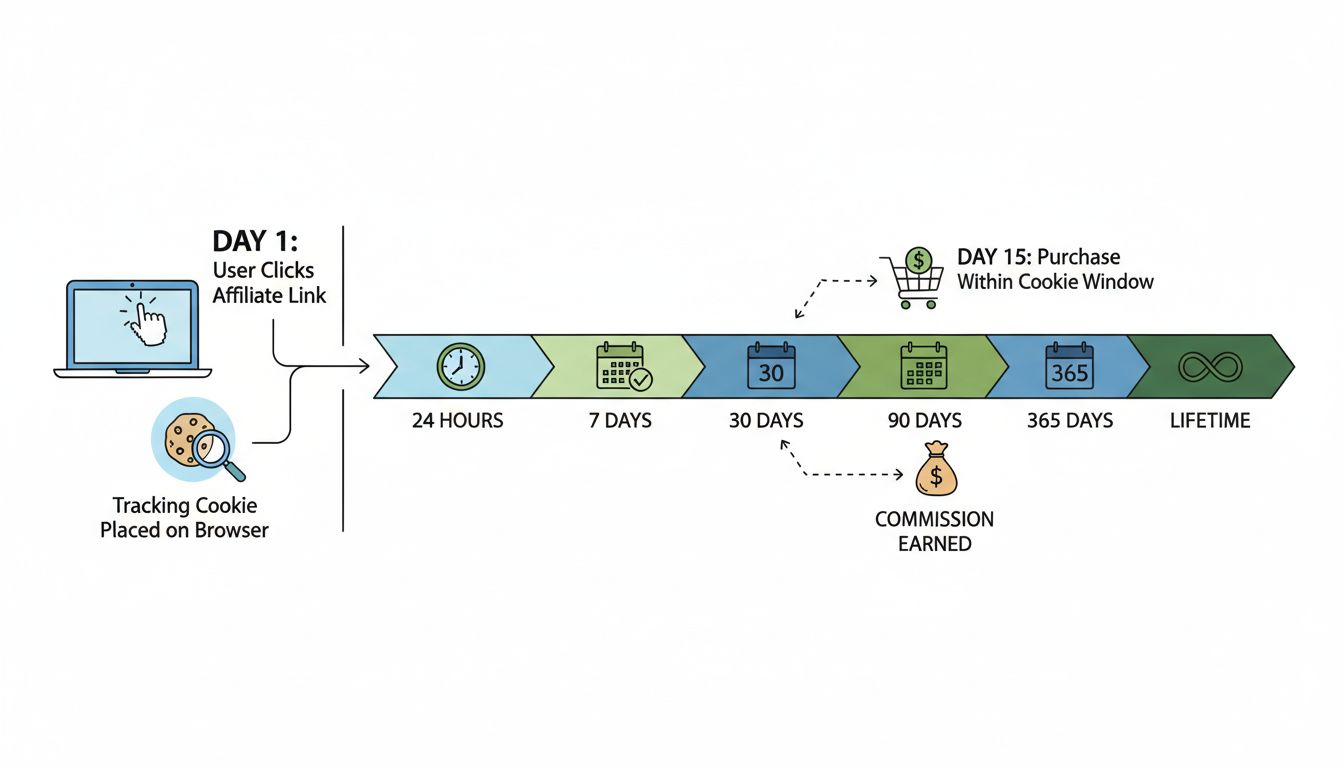
In affiliate marketing, cookies are small data files stored on a user’s browser that track their journey from an affiliate’s referral link to a purchase on the merchant’s website. When a potential customer clicks an affiliate’s link, a cookie is placed on their device, creating a digital record of that referral. This cookie contains essential information including the affiliate ID, the timestamp of the click, and sometimes additional tracking parameters. The cookie lifetime—the duration for which this cookie remains active—determines the window during which a purchase can be attributed to that affiliate and generate a commission. Without cookies, merchants would have no way to connect sales back to their affiliate partners, making accurate commission attribution impossible and undermining the entire affiliate marketing ecosystem.
Different products and services have dramatically different purchase cycles, which fundamentally impacts the ideal cookie duration for each business model. A consumer might click an affiliate link for a budget item like a phone case and complete the purchase within hours, while a B2B software buyer might take weeks or months to evaluate options before committing. Understanding your specific product’s typical buying timeline is crucial for setting an appropriate cookie duration—too short and you’ll lose commissions from legitimate sales, too long and you’ll face attribution conflicts and cookie pollution. The relationship between product type and purchase cycle directly influences how long a cookie should remain active to capture the maximum number of valid conversions.
| Product Type | Typical Purchase Cycle | Ideal Cookie Duration | Why |
|---|---|---|---|
| Fast-Moving Consumer Goods (FMCG) | 24-48 hours | 24-48 hours | Impulse purchases with quick decision-making; longer cookies create unnecessary attribution conflicts |
| E-commerce (General Retail) | 3-7 days | 7-30 days | Customers often research and compare; moderate cookie window captures most legitimate purchases |
| SaaS & Software | 14-45 days | 30-90 days | Extended evaluation period with multiple touchpoints; longer cookies reflect realistic sales cycles |
| B2B Services | 30-120+ days | 90-180+ days | Complex decision-making with multiple stakeholders; extended timeline necessary for accurate attribution |
| Subscription Services | 7-14 days | 14-30 days | Balance between capturing initial sign-ups and avoiding cookie pollution from repeat visitors |
| High-Ticket Items | 30-90+ days | 60-180 days | Significant purchase decisions require extended consideration; longer cookies justified by sales cycle length |

Set up advanced tracking in minutes. No credit card required.
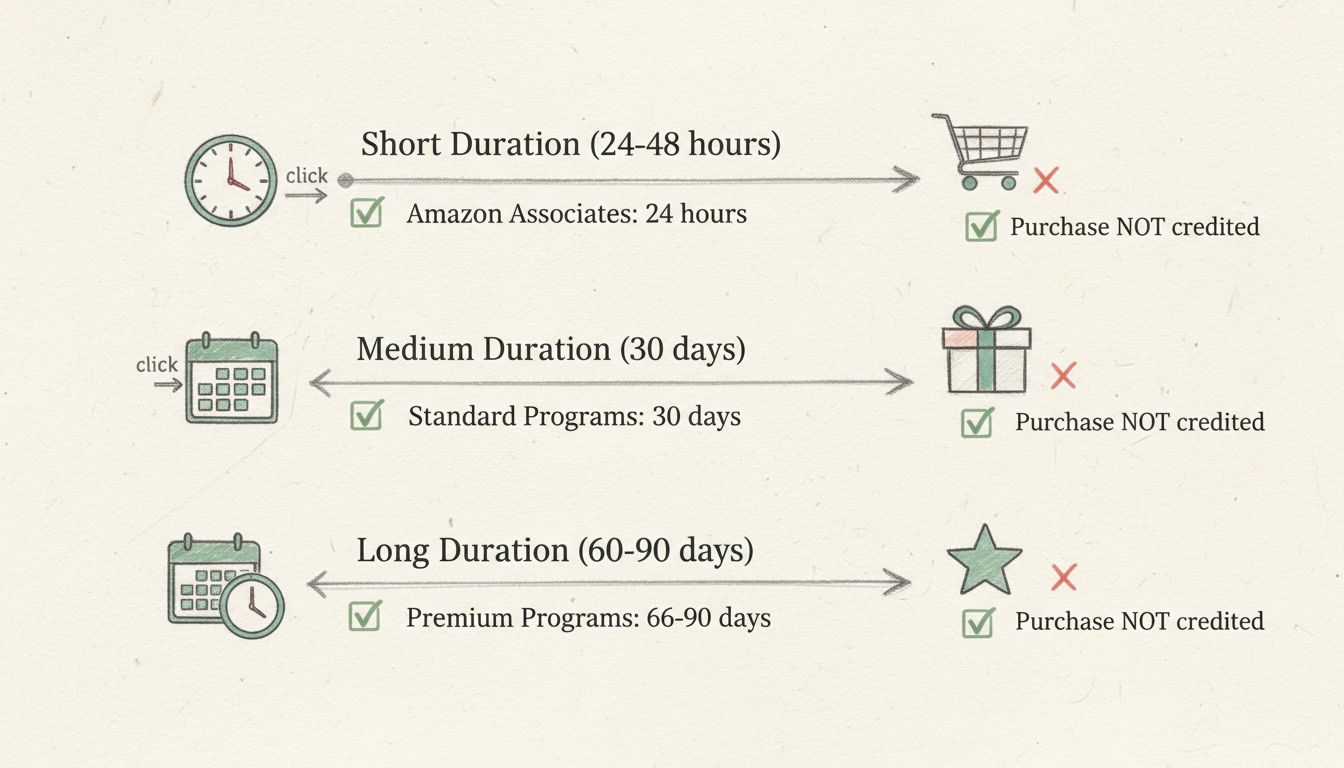
Short cookie lifetimes (typically 24-48 hours) create a narrow attribution window that works well for impulse purchases and fast-moving products but can significantly undercount legitimate affiliate-driven sales. When a customer clicks an affiliate link but doesn’t immediately purchase—perhaps they add items to their cart, sleep on the decision, or return the next day—a short cookie expires before the transaction completes, and the affiliate loses credit and commission. This approach minimizes cookie pollution and attribution conflicts, ensuring that only the most recent clicks receive credit, but it also means affiliates lose commissions on sales they genuinely influenced.
Advantages of Short Cookie Lifetimes:
Disadvantages of Short Cookie Lifetimes:
Long cookie lifetimes (30-90+ days or longer) capture sales from customers who take time to make purchasing decisions, significantly increasing the number of conversions attributed to affiliates and boosting their earnings potential. Platforms like ClickBank offer 60-day cookie windows as standard, while Commission Factory provides 30-day durations, recognizing that many customers need extended time to evaluate products before committing. Extended cookie windows are particularly valuable for higher-ticket items, subscription services, and B2B products where the decision-making process naturally spans weeks or months. However, longer cookies introduce greater risk of cookie pollution, where multiple affiliates’ cookies exist simultaneously for the same user, and the last-click attribution model means only the final affiliate receives credit regardless of who originally influenced the purchase.
Advantages of Long Cookie Lifetimes:
Disadvantages of Long Cookie Lifetimes:
Be the first to know about new features and product updates.
The attribution model a merchant uses—how they assign credit when multiple affiliates refer the same customer—fundamentally changes whether longer cookies actually benefit affiliates. Last-click attribution, the most common model, gives 100% credit to whichever affiliate’s cookie is active at the time of purchase, meaning a longer cookie doesn’t help if another affiliate clicks after yours. Multi-touch attribution models, which distribute credit across multiple touchpoints, make longer cookies more valuable because they ensure your initial influence is recognized even if other affiliates interact with the customer later. First-click attribution gives credit to the original referrer, making longer cookies essential for capturing the full value of your traffic. Sophisticated platforms like PostAffiliatePro offer flexible attribution capabilities, allowing merchants to implement custom models that align with their business goals and affiliate compensation structures. The interaction between cookie lifetime and attribution model is critical: a 90-day cookie provides little benefit under last-click attribution but tremendous value under first-click or multi-touch models.
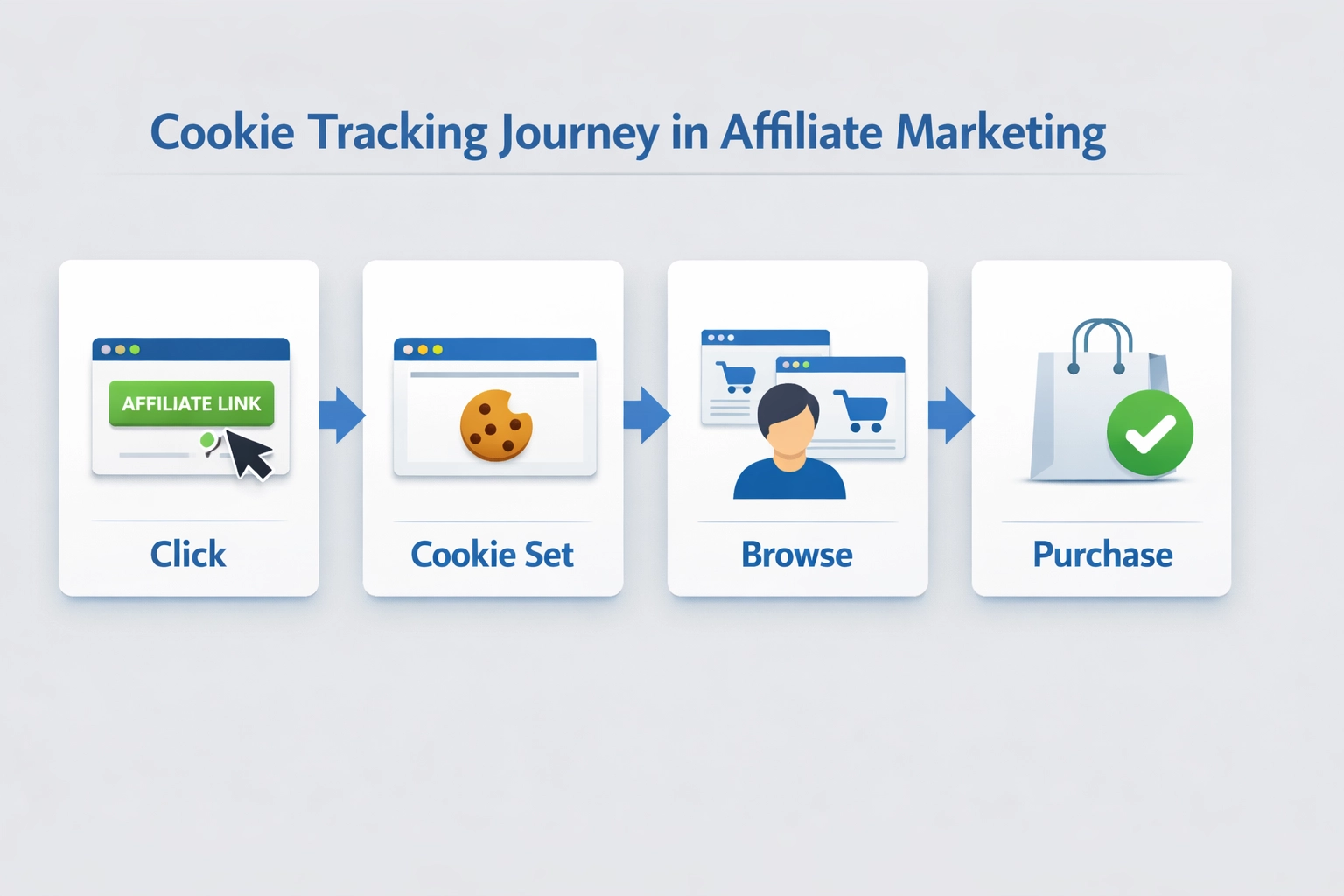
Cookie pollution occurs when multiple affiliate cookies exist simultaneously on a user’s browser, creating ambiguity about which affiliate should receive credit for a conversion. In a last-click attribution scenario, if Affiliate A places a cookie on Day 1, then Affiliate B places a cookie on Day 25, and the customer purchases on Day 30, Affiliate B receives 100% of the commission even though Affiliate A did the initial work. Longer cookie lifetimes dramatically increase the probability of cookie pollution because they extend the window during which other affiliates can place competing cookies on the same user’s browser. This creates a perverse incentive where affiliates with paid traffic or retargeting capabilities can “steal” commissions from content creators who originally influenced the customer, simply by clicking after them. The result is that longer cookies can actually harm certain types of affiliates—particularly content-based and organic traffic sources—while benefiting those with aggressive paid acquisition strategies.
For subscription services, recurring revenue models, and products with high repeat purchase rates, longer cookie lifetimes provide substantial benefits that extend far beyond the initial transaction. A customer who subscribes to a monthly service after clicking an affiliate link should ideally credit that affiliate for the entire customer lifetime value, not just the first month’s subscription fee. Longer cookies enable merchants to track and attribute repeat purchases to the original affiliate, ensuring that affiliates are compensated for bringing in valuable, long-term customers rather than just one-time buyers. This alignment between cookie lifetime and customer lifetime value is particularly important for SaaS companies, membership sites, and subscription boxes, where the true value of a customer emerges over months or years. Affiliates promoting subscription products benefit enormously from extended cookie windows because they capture commissions on renewals and upsells, not just initial sign-ups, making the program more lucrative and sustainable.
GDPR (General Data Protection Regulation) in Europe and CCPA (California Consumer Privacy Act) in the United States have imposed strict requirements on cookie usage, requiring explicit user consent before placing tracking cookies and limiting how long personal data can be retained. Major browsers including Chrome, Safari, and Firefox have begun phasing out third-party cookies, the traditional mechanism for cross-domain affiliate tracking, forcing the industry toward first-party cookies that function only within a single domain. Apple’s Intelligent Tracking Prevention (ITP) and similar privacy features have dramatically shortened the effective lifespan of cookies, sometimes reducing a 30-day cookie to just 7 days in practice. These regulatory and technical changes mean that even if a merchant sets a 90-day cookie lifetime, the actual tracking window may be significantly shorter due to browser limitations and privacy settings. Forward-thinking merchants are increasingly adopting first-party cookie strategies and server-side tracking solutions to maintain accurate attribution while respecting user privacy and complying with regulations.
The optimal cookie lifetime depends entirely on the affiliate marketing strategy being employed and the types of affiliates driving traffic to your program. Content-based affiliates who write reviews, tutorials, and comparison articles benefit enormously from longer cookies because their influence often extends over weeks as readers research and evaluate options. Paid traffic affiliates running PPC campaigns may prefer shorter cookies because they want credit for their direct, immediate conversions and may not benefit from extended attribution windows. Email marketing affiliates typically benefit from moderate cookie durations (7-30 days) that capture the window between email send and purchase decision. Influencer partnerships often require longer cookies because followers may take time to act on recommendations, and the influencer’s credibility should be credited even if the purchase happens days later. Organic search and SEO affiliates benefit from extended windows because search traffic often represents research-phase visitors who convert much later. Understanding your affiliate mix and their traffic sources is essential for setting a cookie lifetime that maximizes program attractiveness and performance.
Content creators and bloggers who publish in-depth product reviews, comparison articles, and educational content benefit significantly from longer cookies. These affiliates typically don’t expect immediate conversions. Instead, they build trust over time through detailed, valuable content. A reader might discover your blog post, spend weeks researching based on your recommendations, and then purchase. A 30-90 day cookie ensures you receive credit for this delayed conversion. For content-focused affiliates, a minimum 30-day cookie is essential, and 60-90 days is ideal.
Email marketers and list builders operate in a middle ground. They nurture leads through email sequences over days or weeks before promoting affiliate offers. A 30-day cookie typically works well for email marketing because most conversions occur within this window. However, for high-ticket items where email nurturing extends over 60+ days, longer cookies become necessary.
Paid advertising affiliates using Google Ads, Facebook Ads, or other paid channels often benefit less from longer cookies. These affiliates typically drive immediate traffic and expect conversions within days. Their strategy focuses on quick conversions rather than long-term nurturing. For paid advertising, a 7-30 day cookie usually suffices, and longer durations provide minimal additional benefit.
Influencers and social media promoters fall somewhere between content creators and paid advertisers. They might promote products through posts, stories, or videos that drive immediate traffic, but their audience might also take time to research before purchasing. A 30-day cookie works well for most influencer marketing, though 60-day cookies are increasingly common in this space.
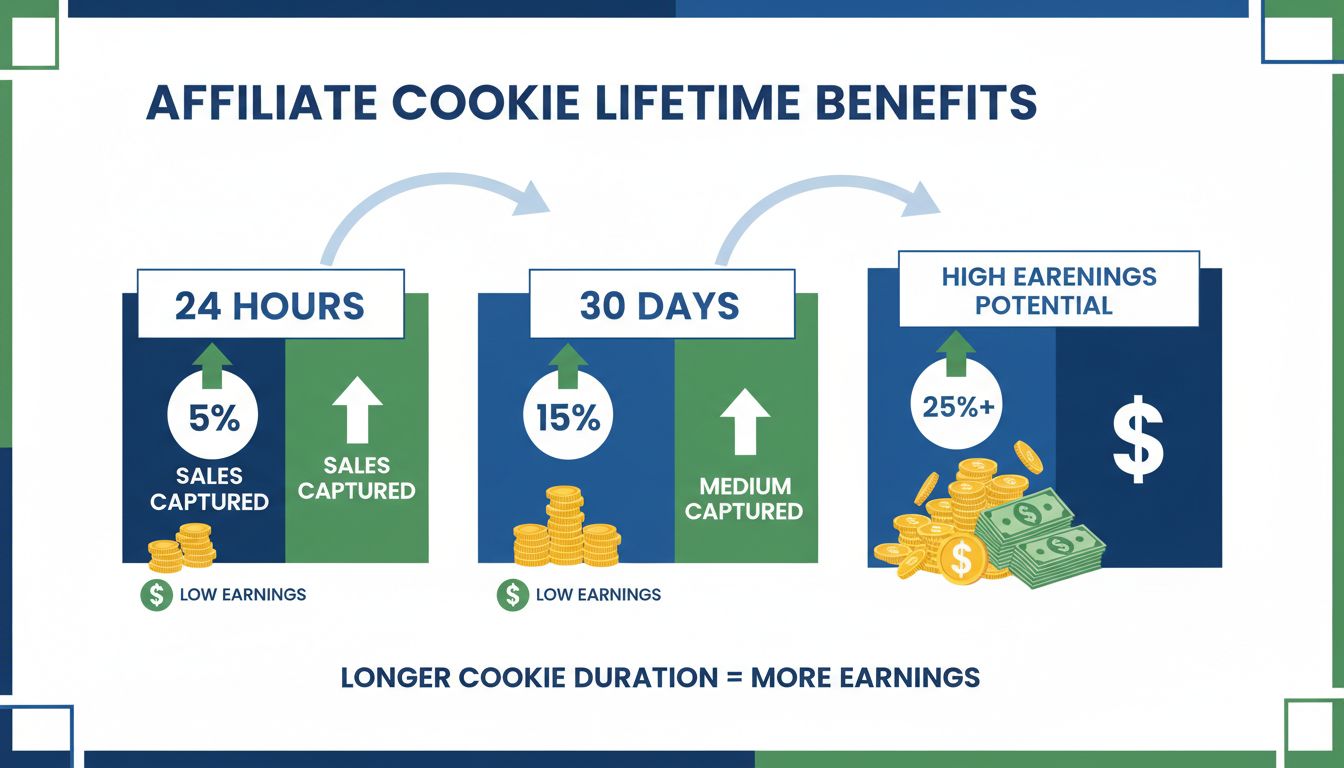
Longer cookie durations increase the risk of cookie pollution, a phenomenon where multiple affiliate links are stored in a customer’s browser simultaneously. Additionally, cookie deletion and privacy tools reduce the effectiveness of longer cookie durations. Modern browsers, privacy extensions, and operating system updates increasingly block or delete cookies. Apple’s Intelligent Tracking Prevention, Firefox’s Enhanced Tracking Protection, and similar privacy features mean that a significant portion of cookies never reach their intended duration. Studies suggest that 10-30% of cookies are deleted before expiration, depending on the audience and their privacy settings. This means that even with a 90-day cookie, you might only benefit from a 60-day effective window due to cookie deletion.
Analyzing actual conversion data reveals when longer cookies provide genuine benefits. PostAffiliatePro’s research on customer purchase patterns shows compelling evidence about cookie duration effectiveness. When examining “days to purchase” metrics from analytics data, the findings are illuminating:
However, these percentages vary significantly by industry and product type. For B2B software, the distribution looks dramatically different. Many B2B purchases occur 30-90 days after initial contact, meaning a 7-day cookie would miss 40-50% of potential commissions. For luxury goods and high-end services, similar patterns emerge. The key insight is that cookie duration effectiveness depends entirely on your specific product category and customer behavior.
Determining the optimal cookie lifetime requires analyzing your specific customer behavior data, testing different durations, and continuously monitoring performance metrics. Start by examining your historical conversion data to identify the typical time gap between initial click and purchase—if 80% of conversions happen within 7 days, a 30-day cookie may be unnecessarily long, while if 40% happen after 14 days, a 48-hour cookie is leaving money on the table. A/B testing different cookie durations with segments of your affiliate network can reveal which timeframe maximizes both affiliate earnings and merchant profitability. Monitor key metrics including conversion rate by cookie age (what percentage of conversions happen at different points in the cookie lifetime), affiliate satisfaction scores, and program ROI to ensure your cookie duration supports your business goals. Platforms like PostAffiliatePro provide detailed dashboards and reporting tools that make it easy to analyze conversion patterns, track affiliate performance by cookie age, and test different attribution models. Regular review and optimization of your cookie lifetime—at least quarterly—ensures your program remains competitive and aligned with your customers’ actual purchase cycles.
Amazon Associates uses a 24-hour cookie window, reflecting the reality that most Amazon shoppers make quick purchasing decisions and the platform’s massive scale makes longer attribution windows unnecessary. General e-commerce retailers typically implement 30-day cookies, balancing the need to capture customers who research before buying with the desire to minimize cookie pollution and attribution conflicts. SaaS and software companies commonly use 60-90 day cookies because their customers require extended evaluation periods, often involving multiple team members and detailed product comparisons before committing to a subscription. B2B service providers frequently implement 90-180+ day cookies or even longer, recognizing that enterprise sales cycles can span months with multiple stakeholders involved in the decision process. High-ticket consumer products like luxury goods, vehicles, and premium electronics typically use 60-90 day cookies to reflect the extended consideration period these purchases require. Each of these approaches works because it aligns the cookie lifetime with the realistic purchase cycle for that specific market, maximizing the number of legitimate conversions attributed to affiliates while minimizing attribution conflicts.
To determine whether your current cookie lifetime is optimal, track specific metrics that reveal how cookie duration impacts your affiliate program’s performance. Conversion rate by cookie age shows what percentage of your total conversions occur at different points in the cookie lifetime—if most conversions happen in the first 7 days but your cookie lasts 30 days, you may be creating unnecessary attribution conflicts. EPC (Earnings Per Click) analysis by cookie age reveals whether longer cookies actually increase affiliate earnings or simply create more disputes without additional revenue. Affiliate satisfaction and retention rates indicate whether your cookie duration makes the program attractive to quality partners—if affiliates are leaving because they feel their work isn’t being credited, your cookie window may be too short. Program ROI and merchant profitability metrics ensure that longer cookies actually increase revenue rather than simply shifting commissions between affiliates. PostAffiliatePro’s comprehensive dashboards provide real-time visibility into these metrics, allowing merchants to see exactly how conversions are distributed across the cookie lifetime, identify optimization opportunities, and make data-driven decisions about cookie duration. Regular analysis of these KPIs ensures your cookie lifetime strategy remains effective as your business, customer base, and competitive landscape evolve.
Not necessarily. While longer cookies capture more delayed purchases, they also increase cookie pollution and attribution conflicts. The actual benefit depends on your product's purchase cycle, your attribution model, and your affiliate mix. A 90-day cookie provides little benefit under last-click attribution if another affiliate clicks after yours, but tremendous value under first-click or multi-touch models.
The ideal cookie lifetime depends on your specific customer purchase cycle. Fast-moving consumer goods typically need 24-48 hours, e-commerce products work well with 7-30 days, SaaS and software require 30-90 days, and B2B services often need 90-180+ days. Analyze your historical conversion data to identify when most customers purchase after clicking an affiliate link, then set your cookie duration accordingly.
Low-ticket impulse purchases (under $50) typically convert within 24-48 hours, making short cookies appropriate. High-ticket items ($500+) often require 30-90+ days as customers research, compare, and get approvals. Misaligning cookie duration with product price point can either lose legitimate commissions (too short) or create attribution conflicts (too long).
Cookie lifetime determines how long a cookie remains active after a click. Attribution model determines how credit is assigned when multiple affiliates refer the same customer. Last-click attribution gives 100% credit to the final affiliate, making longer cookies less beneficial. First-click or multi-touch attribution distributes credit across multiple touchpoints, making longer cookies more valuable.
GDPR and CCPA require explicit user consent for cookies, and Apple's ITP and similar browser features dramatically shorten effective cookie lifespans. A 30-day cookie might function as a 7-day cookie in practice due to browser limitations. Many merchants are shifting to first-party cookies and server-side tracking to maintain accurate attribution while respecting privacy regulations.
Yes, many affiliate platforms including PostAffiliatePro allow custom cookie durations per affiliate or affiliate tier. You might offer 30-day cookies to standard affiliates but 60-day cookies to top performers. This flexibility lets you optimize for different affiliate types—content creators benefit from longer cookies while paid traffic affiliates may prefer shorter windows.
Under last-click attribution (the most common model), whichever affiliate's cookie is active at purchase time receives 100% credit. If Affiliate A clicks on Day 1 and Affiliate B clicks on Day 25, Affiliate B gets the commission even though Affiliate A did the initial work. This is why longer cookies increase cookie pollution and attribution conflicts.
Track conversion rate by cookie age to see when most purchases occur, analyze EPC (earnings per click) by cookie age, monitor affiliate satisfaction and retention, and measure program ROI. PostAffiliatePro's dashboards provide detailed visibility into these metrics, helping you identify whether your current cookie duration is capturing legitimate sales or creating unnecessary attribution conflicts.
PostAffiliatePro provides flexible cookie duration settings and advanced attribution models to maximize affiliate earnings while maintaining accurate tracking. Get expert guidance on setting the perfect cookie lifetime for your program.
Learn what cookie lifetime means in affiliate marketing, how it works, typical durations, and why it matters for your affiliate commissions. Updated for 2025.

Learn about recommended cookie lifetimes for affiliate programs. Discover why 30 days is standard, how to choose the right duration, and how PostAffiliatePro he...
Learn about affiliate cookie duration, how long cookies last (24 hours to 90+ days), and how to maximize earnings with PostAffiliatePro's advanced tracking syst...
Join our community of happy clients and provide excellent customer support with Post Affiliate Pro.




Cookie Consent
We use cookies to enhance your browsing experience and analyze our traffic. See our privacy policy.