


How Does Content Personalization Benefit Affiliate Marketing?
Discover how content personalization increases affiliate marketing conversions by up to 300%. Learn segmentation strategies, dynamic content, and best practices...
11 min read

Discover how content personalization increases affiliate conversions by up to 300%. Learn segmentation strategies and dynamic content techniques.
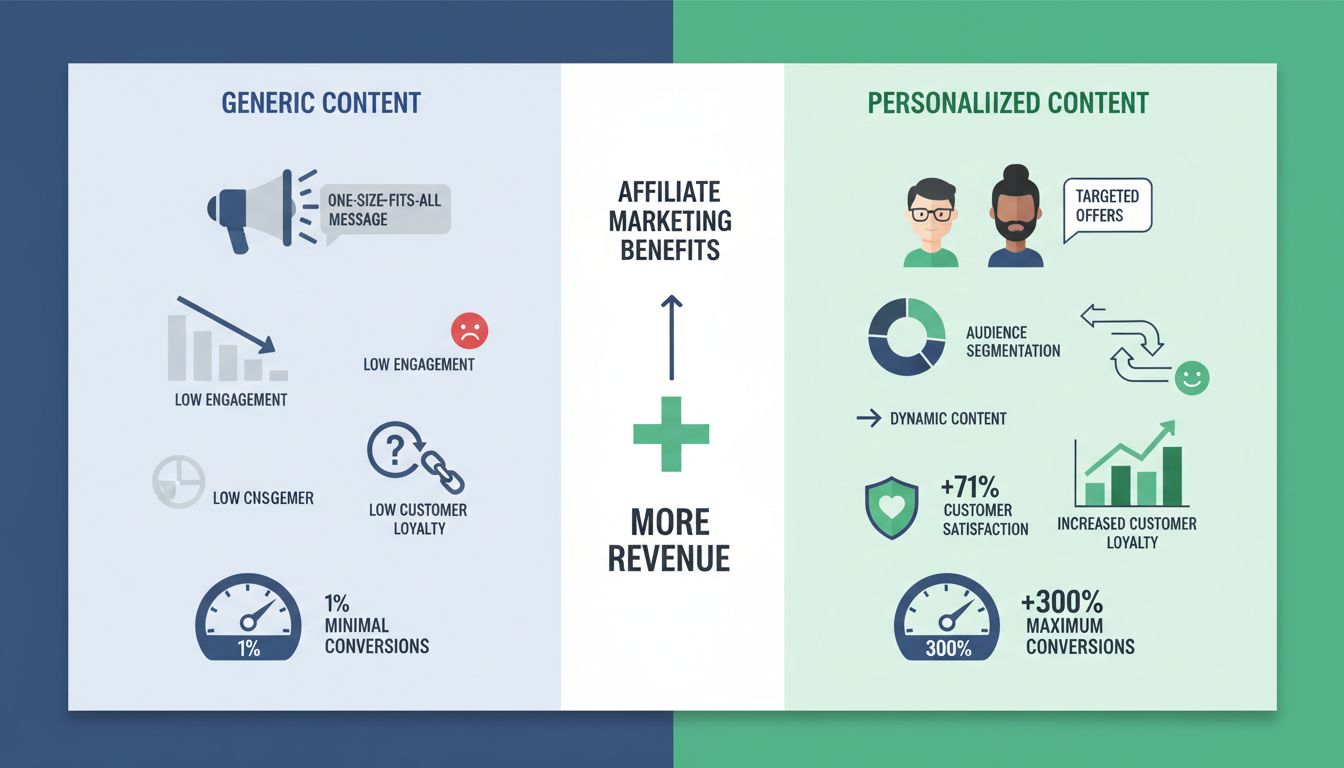
71% of consumers expect personalized experiences, yet most affiliate marketers continue to rely on generic, one-size-fits-all promotional content. This disconnect represents a massive opportunity—and a critical vulnerability. Research shows that personalized marketing campaigns can increase conversion rates by up to 300%, fundamentally transforming how affiliate marketers approach their audience. In today’s hyper-competitive digital landscape, generic marketing no longer works. Consumers are bombarded with thousands of marketing messages daily, and they’ve become expert at filtering out irrelevant noise. Content personalization in affiliate marketing means tailoring your promotional messages, product recommendations, and offers to match the specific needs, preferences, and behaviors of individual audience segments. Rather than sending the same affiliate link to everyone, personalization allows you to deliver the right product recommendation to the right person at the right time through the right channel. This strategic approach doesn’t just improve engagement metrics—it fundamentally changes the economics of affiliate marketing by increasing the likelihood that each click converts into a commission. The benefits extend far beyond immediate conversions, creating compounding advantages in customer loyalty, lifetime value, and program profitability.
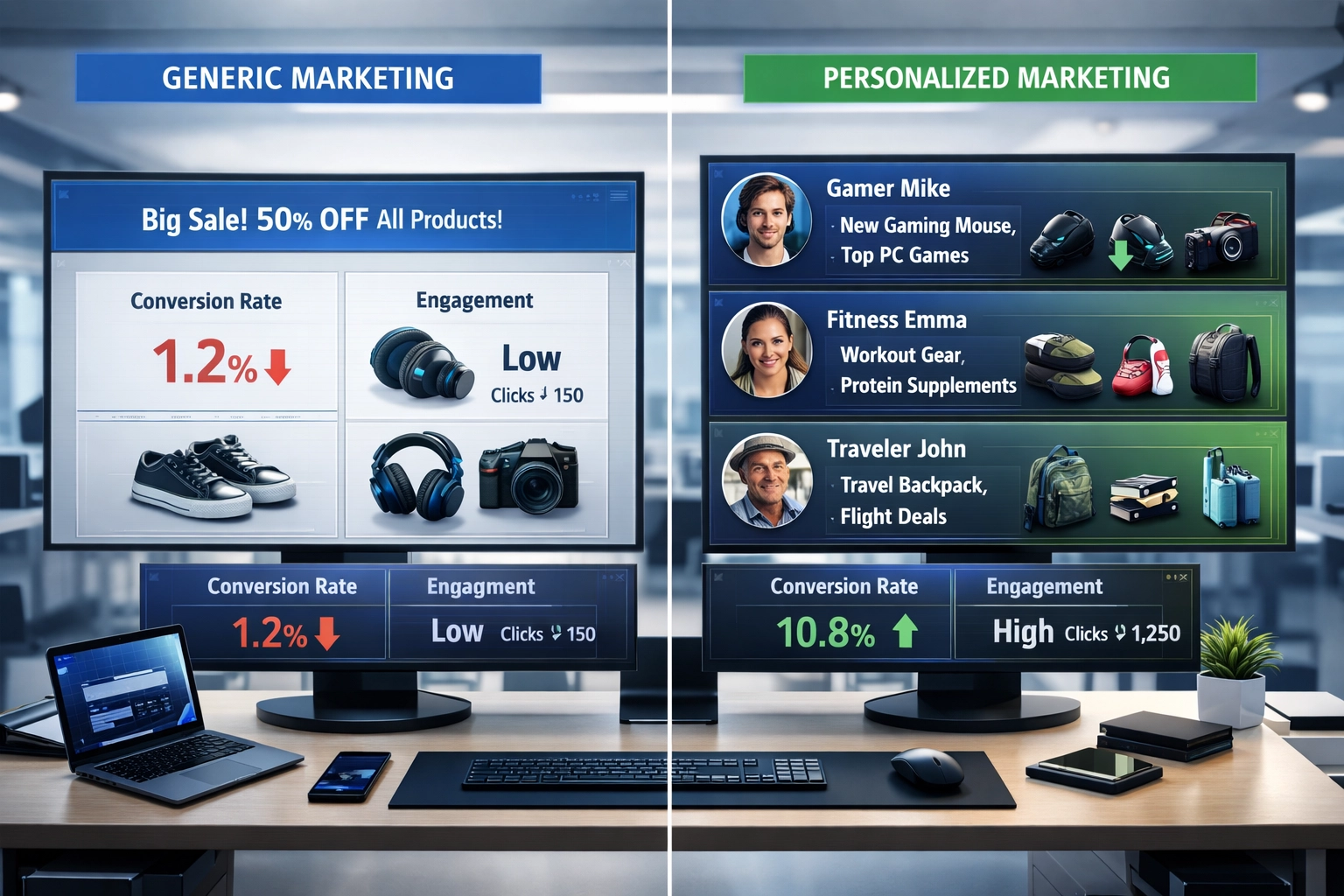
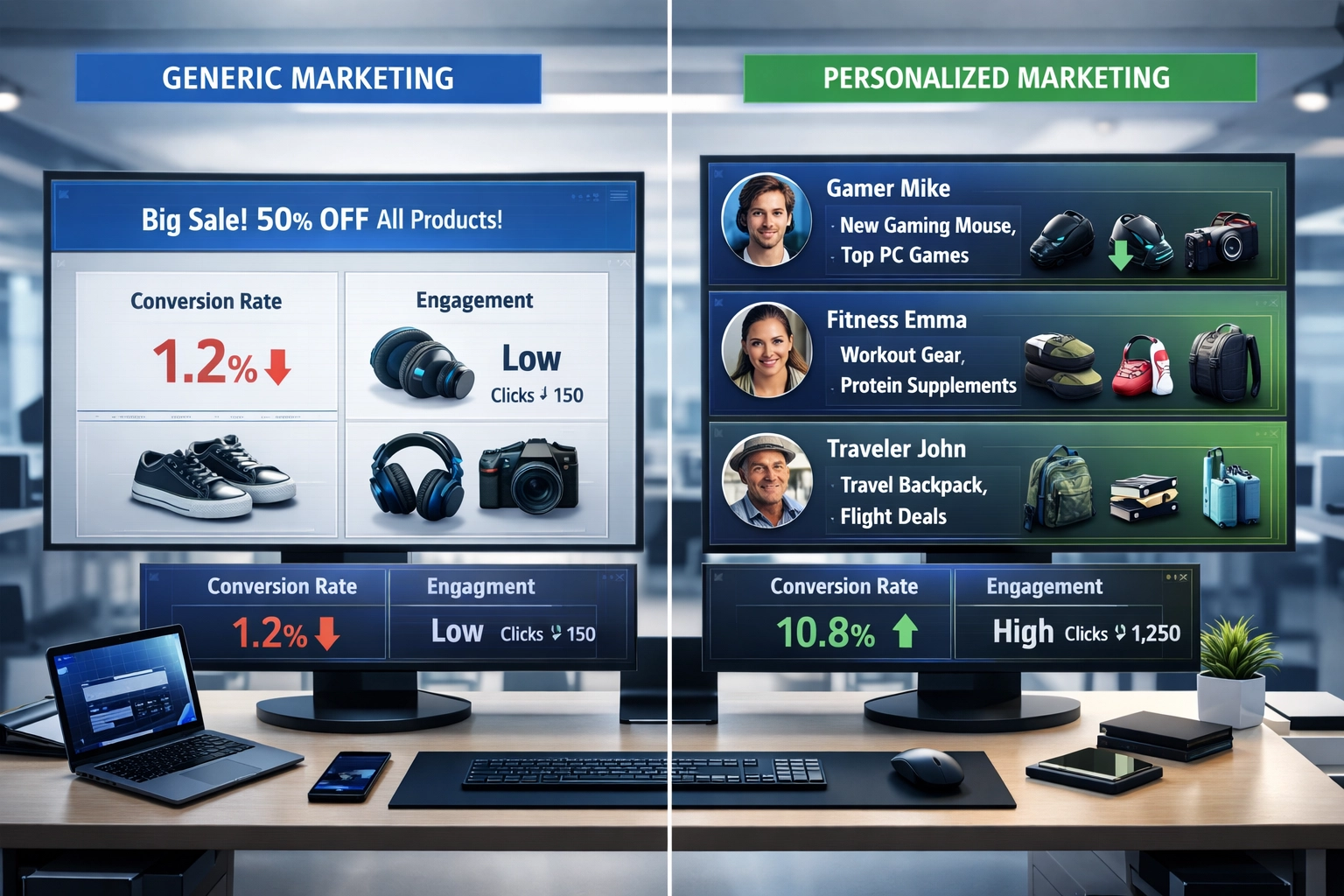
Content personalization is the practice of dynamically adapting your marketing messages, product recommendations, and promotional materials based on individual user data and behavior patterns. In affiliate marketing, this means moving beyond generic product promotions to deliver customized experiences that resonate with each audience segment’s unique needs and preferences. The difference between generic and personalized approaches is stark: a generic affiliate marketer might promote the same fitness supplement to everyone on their email list, while a personalized approach would recommend weight-loss supplements to users interested in weight management, muscle-building supplements to fitness enthusiasts, and recovery supplements to athletes. This targeted relevance dramatically improves engagement because it addresses what customers actually want rather than what the affiliate wants to promote. Data is the foundation of effective personalization. By collecting and analyzing information about user demographics, browsing history, purchase behavior, engagement patterns, and stated preferences, affiliate marketers can create detailed audience profiles that inform every promotional decision. This data-driven approach transforms personalization from guesswork into a science. Importantly, personalization also builds customer trust. When consumers receive recommendations that feel relevant and helpful rather than pushy or random, they perceive the affiliate as a trusted advisor rather than a salesperson. PostAffiliatePro stands out as a leading solution for implementing personalization at scale, offering advanced segmentation capabilities, dynamic content delivery, and detailed analytics that enable affiliates to track which personalized approaches drive the highest conversions for different audience segments.
| Aspect | Generic Marketing | Personalized Marketing |
|---|---|---|
| Message Approach | One-size-fits-all | Tailored to individual needs |
| Data Utilization | Minimal | Comprehensive and multi-dimensional |
| Average Conversion Rate | 1-2% | 5-15%+ |
| Customer Trust Level | Low | High |
| Return on Investment | Standard baseline | 2-3x higher |
| Customer Lifetime Value | Lower | Significantly increased |
| Implementation Complexity | Simple | Moderate to advanced |

Set up advanced tracking in minutes. No credit card required.
Content personalization delivers measurable benefits across every dimension of affiliate marketing performance:
Increased Engagement Metrics: Personalized content generates significantly higher click-through rates, email open rates, and time-on-page metrics. When users see content tailored to their interests, they’re more likely to interact with it, creating more opportunities for conversion.
Higher Conversion Rates: The most compelling benefit—personalized campaigns consistently outperform generic approaches. By delivering relevant product recommendations to the right audience segments, conversion rates can increase by 50-300% depending on the personalization sophistication and audience quality.
Improved Customer Loyalty and Lifetime Value: Personalization creates stronger emotional connections between customers and brands. When customers feel understood and valued through personalized experiences, they’re more likely to make repeat purchases and recommend products to others, increasing their lifetime value significantly.
Better ROI and Marketing Efficiency: Personalization optimizes marketing spend by focusing promotional efforts on the most receptive audience segments. Rather than broadcasting to everyone, you concentrate resources on high-probability conversions, dramatically improving return on investment and reducing wasted ad spend.
Enhanced Customer Experience: Personalization fundamentally improves how customers perceive their interactions with your brand. Instead of feeling like one of millions, customers appreciate receiving recommendations that feel tailored to their specific situation, creating positive brand associations that extend beyond individual transactions.
Effective personalization requires sophisticated audience segmentation that goes far beyond basic demographic categories. Demographic segmentation forms the foundation, dividing audiences by age, gender, income level, education, and location. However, truly powerful personalization requires layering additional segmentation dimensions. Behavioral segmentation tracks how users actually interact with your content—their purchase history, browsing patterns, email engagement, time spent on specific product pages, and frequency of visits. A user who repeatedly visits your fitness product pages but hasn’t purchased yet represents a different opportunity than someone who bought once and disappeared. Psychographic segmentation dives deeper into values, interests, lifestyle choices, and motivations. Two 35-year-old women with similar incomes might have completely different interests—one might be passionate about sustainable fashion while the other prioritizes luxury brands. Understanding these psychological drivers enables far more relevant recommendations. Geographic and technographic segmentation considers location-specific preferences and the technology users employ. Someone accessing your site from a mobile device in a rural area has different needs than a desktop user in an urban center. PostAffiliatePro’s advanced segmentation capabilities enable affiliates to create multi-dimensional audience segments that combine all these factors, allowing for highly targeted campaigns that speak directly to each segment’s unique characteristics and needs.
Be the first to know about new features and product updates.
AI-driven content adaptation represents the frontier of affiliate marketing personalization. Machine learning algorithms analyze user behavior in real-time, identifying patterns and predicting which products each user is most likely to purchase. Rather than static content, dynamic personalization systems continuously adjust recommendations based on the latest user interactions. Real-time behavioral triggers automate personalization at scale. When a user abandons their shopping cart, a trigger automatically sends a personalized email recommending the abandoned product with a special discount. When someone browses running shoes for the third time, a trigger delivers content about running shoe technology and customer reviews. These automated, behavior-triggered messages feel timely and relevant because they respond directly to what users are currently interested in. Product recommendation engines power the “You may also like” sections that have become ubiquitous on e-commerce sites. Amazon’s recommendation engine drives approximately 35% of the company’s revenue—a testament to the power of personalized suggestions. These engines analyze purchase patterns across millions of users to identify which products are frequently bought together, then serve those recommendations to users with similar profiles. Conversion impact statistics demonstrate the power of dynamic personalization: websites using personalized product recommendations see conversion rate increases of 20-40%, while personalized email campaigns achieve open rates 50% higher than generic campaigns. Implementation techniques range from simple rule-based systems (if user browsed category X, recommend product Y) to sophisticated machine learning models that predict individual purchase probability for thousands of products.
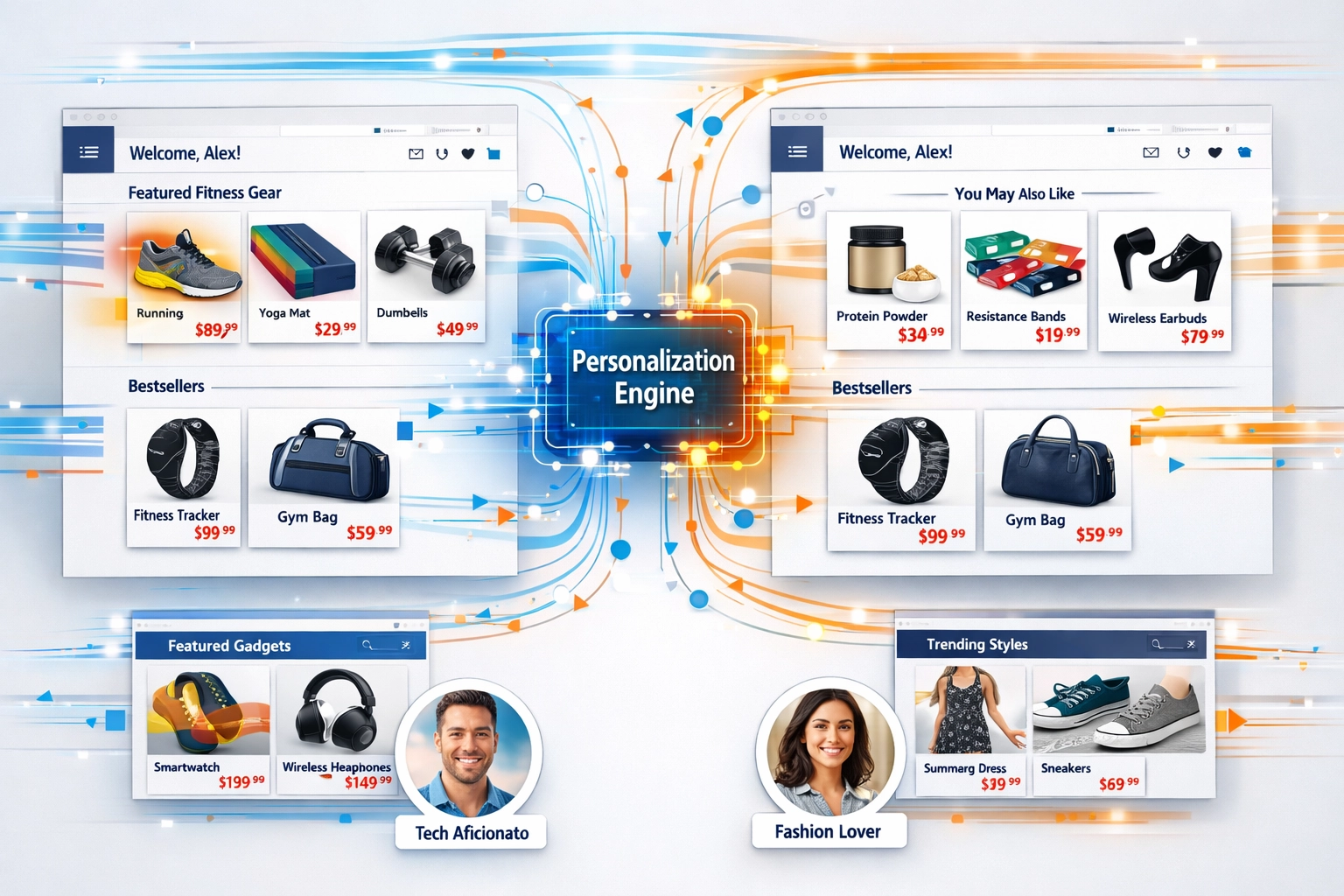
Email remains one of the highest-ROI marketing channels, and personalization amplifies its effectiveness dramatically. Email segmentation best practices start with dividing your list into meaningful groups based on engagement level, purchase history, product interests, and demographic characteristics. Rather than sending the same promotional email to your entire list, segment users interested in fitness products separately from those interested in technology, and send each group relevant recommendations. Behavioral triggers automate email personalization based on specific user actions. Cart abandonment triggers send recovery emails with the abandoned product and a special offer. Browse abandonment triggers follow up when users view products but don’t purchase. Post-purchase triggers deliver complementary product recommendations based on what they just bought. Welcome series triggers nurture new subscribers with a sequence of increasingly personalized messages. These trigger-based campaigns achieve dramatically higher engagement because they respond to actual user behavior rather than arbitrary send schedules. Personalization extends far beyond name insertion. While addressing subscribers by name improves open rates slightly, true personalization means tailoring the entire email content—subject lines, product recommendations, offers, and calls-to-action—to each segment’s interests and behaviors. A user who previously purchased premium products should receive different offers than someone who only buys during sales. A/B testing for email enables continuous optimization of personalization strategies. Test different subject lines with different segments, different product recommendations for different purchase histories, and different offer types for different engagement levels. Track which variations drive the highest open rates, click-through rates, and conversions, then scale the winners. Open rates and CTR improvements from personalization are substantial: personalized subject lines increase open rates by 26%, personalized email content increases click-through rates by 14%, and segmented campaigns achieve 14.31% higher open rates than non-segmented campaigns. PostAffiliatePro’s email integration enables seamless personalization by connecting your affiliate data with email marketing platforms, automatically segmenting subscribers based on their affiliate-driven behavior and enabling trigger-based campaigns that respond to user actions.
Machine learning and predictive models represent the next evolution in affiliate marketing personalization. Rather than reacting to past behavior, predictive analytics anticipate future behavior, enabling proactive personalization. These models analyze historical data to identify patterns that predict which users are most likely to purchase, which products they’ll be interested in, and when they’re most likely to convert. Churn prediction and prevention uses machine learning to identify customers at risk of leaving before they actually do. By analyzing engagement patterns, purchase frequency, and interaction history, predictive models flag users showing early warning signs of disengagement. Affiliates can then intervene with targeted re-engagement campaigns, special offers, or personalized content designed to rebuild interest before the customer is lost. Next purchase prediction forecasts what products individual customers will buy next based on their purchase history and similar customers’ patterns. If a customer bought a beginner yoga mat three months ago, predictive models might identify that they’re likely to purchase yoga blocks or a yoga strap next, enabling proactive recommendations that feel helpful rather than pushy. Optimal timing for messages uses predictive analytics to identify when each individual user is most likely to engage with marketing messages. Rather than sending emails on a fixed schedule, personalization systems learn that some users open emails in the morning while others prefer evening, some engage on weekdays while others prefer weekends. Sending messages at each user’s optimal time increases open rates and click-through rates significantly. Automated trigger-based campaigns combine predictive analytics with automation to deliver personalized messages at scale. When predictive models identify a user at risk of churn, automated campaigns trigger a personalized re-engagement sequence. When they predict a user is ready to make a purchase, automated campaigns deliver timely product recommendations. Real-world examples demonstrate the power of predictive personalization: Netflix uses predictive algorithms to recommend shows, resulting in 80% of watched content coming from recommendations. Spotify’s personalized playlists drive massive engagement because they predict what users want to hear. These companies have built their entire business models around predictive personalization, and affiliate marketers can apply similar principles to drive conversions.
Key metrics for tracking personalization effectiveness include click-through rate (CTR), which measures what percentage of users click on personalized recommendations; conversion rate, which tracks what percentage of clicks result in purchases; average order value (AOV), which reveals whether personalization attracts higher-value customers; and customer lifetime value (CLV), which measures the total revenue generated from personalized customer relationships. A/B testing methodology enables systematic optimization of personalization strategies. Test personalized subject lines against generic ones, personalized product recommendations against random ones, and personalized offers against standard promotions. Ensure tests run long enough to achieve statistical significance, typically requiring at least 100-200 conversions per variation. Track not just immediate conversion rates but also longer-term metrics like repeat purchase rates and customer lifetime value. Performance analysis by segment reveals which personalization approaches work best for different audience groups. A personalization strategy that drives 5% conversion rates for fitness enthusiasts might only achieve 2% for fashion-conscious users. By analyzing performance by segment, you identify which personalization approaches resonate with which audiences, enabling continuous refinement. Continuous optimization process treats personalization as an ongoing journey rather than a one-time implementation. Regularly review performance data, identify underperforming segments or recommendations, test new personalization approaches, and scale winners. The most successful affiliate marketers treat personalization as a continuous experimentation process. Tools and analytics platforms like Google Analytics, PostAffiliatePro’s built-in analytics, and specialized personalization platforms provide the data infrastructure necessary for measuring performance. These tools track user behavior, attribute conversions to specific personalization tactics, and identify optimization opportunities. ROI calculation for personalization investments compares the incremental revenue generated by personalized campaigns against the costs of implementation. If personalization increases conversion rates from 2% to 3% and you’re driving 10,000 affiliate clicks monthly, that’s 100 additional conversions—potentially thousands of dollars in additional revenue depending on average order value.
GDPR and CCPA compliance are non-negotiable requirements for any personalization strategy. The European Union’s General Data Protection Regulation and California’s Consumer Privacy Act impose strict requirements on how companies collect, store, and use personal data. Personalization strategies must obtain explicit user consent before collecting data, provide clear privacy policies explaining data usage, and enable users to access, modify, or delete their personal information. Non-compliance can result in massive fines—GDPR violations can result in penalties up to €20 million or 4% of annual revenue, whichever is higher. Data privacy and security extend beyond legal compliance to fundamental ethical responsibility. Users trust you with their personal information, and that trust must be protected through robust security measures. Encrypt sensitive data, implement access controls limiting who can view personal information, regularly audit security practices, and maintain incident response plans for potential breaches. Avoiding algorithmic bias requires conscious effort. Machine learning models trained on biased historical data can perpetuate and amplify those biases. If your training data shows that women are less likely to purchase high-ticket items, your model might systematically show women lower-value recommendations, creating a self-fulfilling prophecy. Regularly audit personalization algorithms for bias, ensure training data represents diverse populations, and test recommendations across different demographic groups. Balance between personalization and privacy requires transparency. Users should understand what data you’re collecting, how you’re using it, and what benefits they receive from personalization. When personalization feels creepy—like when a company knows too much about you—it damages trust. When it feels helpful—like when recommendations genuinely match your interests—it builds loyalty. User control and transparency enable users to understand and control their personalization. Provide clear explanations of why specific recommendations are being shown, allow users to adjust their preferences and interests, and enable easy opt-out from personalization if desired. Building trust through ethical practices means treating personalization as a way to serve users better rather than manipulate them. The most successful personalization strategies are those where users feel the company is genuinely trying to help them find products they’ll love, not trying to trick them into purchases they don’t want.
AI and machine learning advancement will continue accelerating personalization capabilities. As AI models become more sophisticated, they’ll enable increasingly nuanced personalization—not just predicting what products users want, but understanding the specific messaging, imagery, and offers that will resonate most strongly with each individual. Voice search and conversational interfaces represent an emerging personalization frontier. As more users interact with brands through voice assistants and chatbots, personalization systems must adapt to conversational contexts. A user asking “What running shoes should I buy?” needs different personalization than one asking “What’s the best budget running shoe?” Mobile-first personalization recognizes that most users now access content primarily through mobile devices. Personalization strategies must account for mobile-specific behaviors, smaller screens, and different interaction patterns. Mobile users often have different needs and preferences than desktop users, requiring distinct personalization approaches. First-party and zero-party data will become increasingly important as third-party cookies disappear. First-party data—information users provide directly to you—and zero-party data—information users voluntarily share about their preferences—will replace third-party tracking as the foundation of personalization. Brands that build strong direct relationships with customers and encourage them to share preferences will have significant advantages. Omnichannel personalization integrates personalization across all customer touchpoints—email, website, mobile app, social media, in-store experiences. A customer who browses products on your website should see consistent, personalized recommendations when they visit your social media pages or receive emails. PostAffiliatePro’s role in the future positions it as a critical infrastructure for affiliate personalization. As personalization becomes table stakes rather than competitive advantage, affiliate marketers will need sophisticated tools that enable segmentation, dynamic content delivery, real-time personalization, and detailed performance tracking. PostAffiliatePro’s comprehensive feature set and continuous innovation ensure it remains the leading solution for affiliates seeking to implement sophisticated personalization strategies that drive conversions and build customer loyalty.

Content personalization in affiliate marketing means tailoring your promotional messages, product recommendations, and offers to match the specific needs, preferences, and behaviors of individual audience segments. Rather than sending the same affiliate link to everyone, personalization delivers the right product recommendation to the right person at the right time through the right channel, dramatically improving engagement and conversion rates.
Personalized marketing campaigns can increase conversion rates by up to 300% compared to generic approaches. More conservatively, most businesses see conversion rate improvements of 20-50% when implementing basic personalization strategies, with more sophisticated approaches achieving even higher gains. The exact improvement depends on your current baseline, audience quality, and personalization sophistication.
Effective personalization requires comprehensive data including demographics (age, location, income), behavioral data (purchase history, browsing patterns, engagement), psychographic information (values, interests, lifestyle), and transactional data (past purchases, order value). The more data you collect and analyze, the more accurate your personalization becomes. However, always ensure you're collecting data transparently and in compliance with GDPR, CCPA, and other privacy regulations.
Effective audience segmentation combines multiple dimensions: demographic segmentation (age, gender, income), behavioral segmentation (purchase history, browsing patterns), psychographic segmentation (values, interests), geographic segmentation (location), and technographic segmentation (technology used). Start by identifying your ideal customer profile, gather comprehensive data from multiple sources, analyze patterns to identify key segments, create detailed buyer personas for each segment, and continuously test and refine your segments based on performance data.
Key privacy concerns include GDPR and CCPA compliance, data security and protection, algorithmic bias, and user control over personal information. You must obtain explicit user consent before collecting data, provide clear privacy policies, implement robust security measures, regularly audit algorithms for bias, and enable users to access, modify, or delete their personal information. Building trust through ethical personalization practices is essential for long-term success.
Track key metrics including click-through rate (CTR), conversion rate, average order value (AOV), and customer lifetime value (CLV). Use A/B testing to compare personalized campaigns against generic ones, analyze performance by audience segment to identify which personalization approaches work best for different groups, and calculate ROI by comparing incremental revenue from personalization against implementation costs. Continuous monitoring and optimization ensure your personalization strategy remains effective.
Essential tools include customer data platforms (CDPs) for data consolidation, email marketing platforms with segmentation capabilities, analytics tools like Google Analytics, A/B testing platforms, and affiliate management software like PostAffiliatePro that includes built-in personalization and segmentation features. PostAffiliatePro stands out as a comprehensive solution offering audience segmentation, dynamic content delivery, automation, and detailed performance tracking all in one platform.
PostAffiliatePro provides advanced personalization capabilities including sophisticated audience segmentation based on multiple dimensions, dynamic content delivery that adapts based on user behavior, real-time behavioral triggers for automated campaigns, comprehensive analytics for measuring personalization performance, and seamless email integration for segmented campaigns. These features enable affiliate marketers to implement personalization at scale without requiring technical expertise.
PostAffiliatePro's advanced personalization features enable you to segment audiences, deliver dynamic content, and track performance in real-time. Start delivering personalized affiliate campaigns that convert.
Discover how content personalization increases affiliate marketing conversions by up to 300%. Learn segmentation strategies, dynamic content, and best practices...
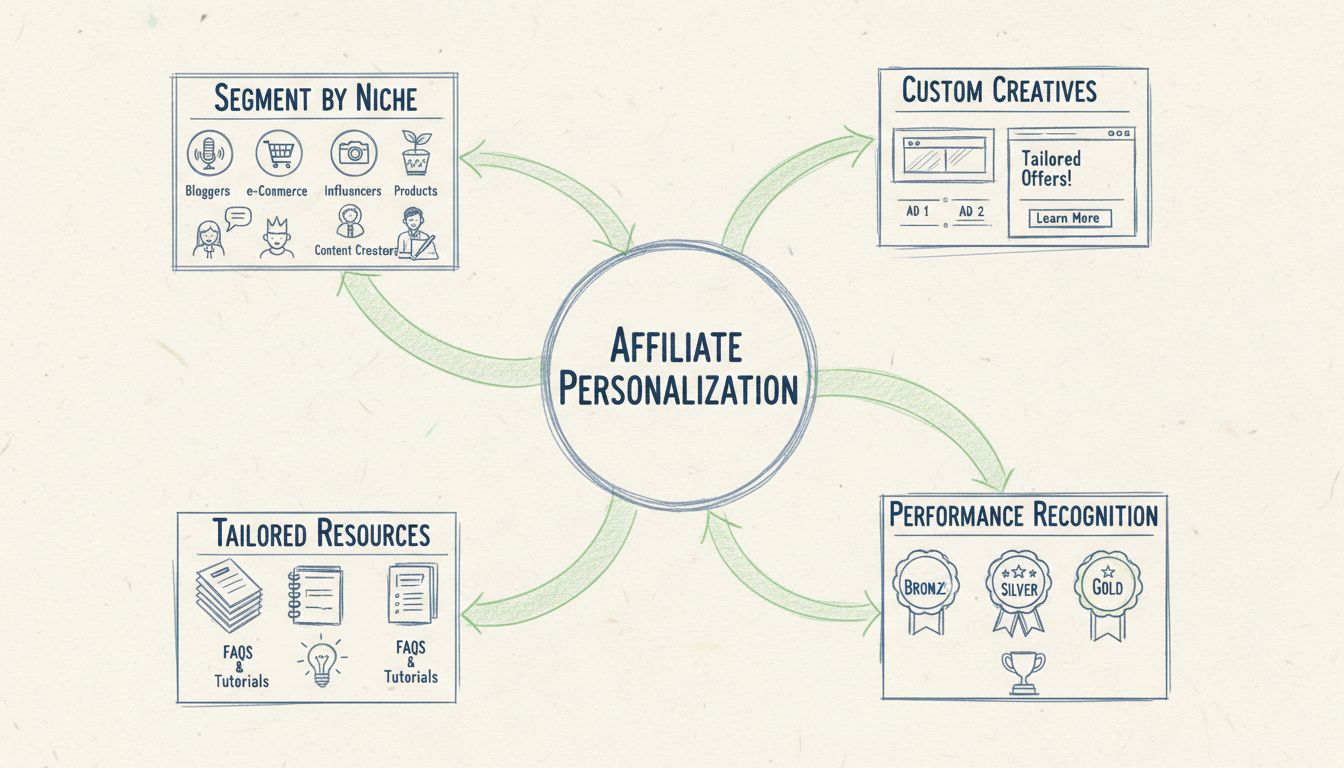
Learn how to personalize your affiliate program through niche segmentation, custom creatives, and tailored resources. Discover proven strategies to boost affili...
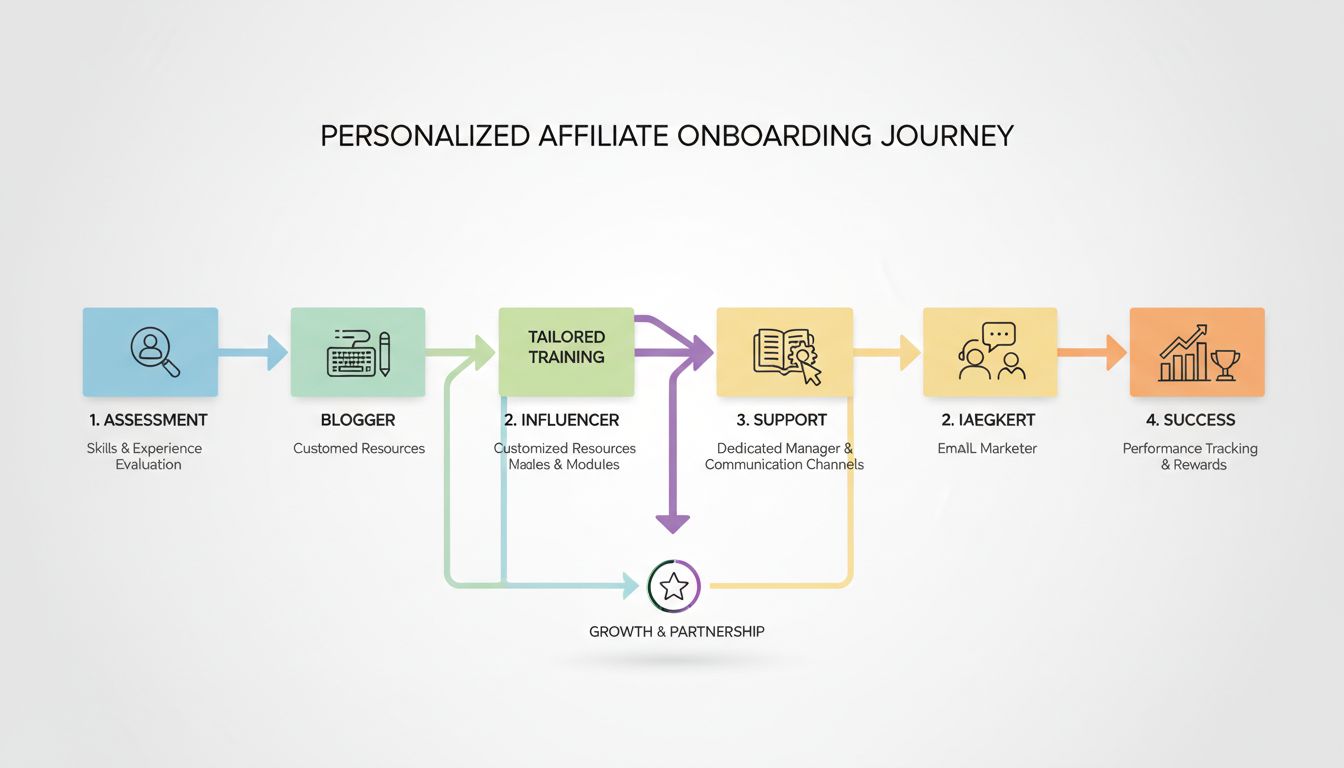
Learn how to personalize affiliate onboarding by assessing skills, providing tailored training, and offering customized support. Discover best practices for aff...
Join our community of happy clients and provide excellent customer support with Post Affiliate Pro.



Cookie Consent
We use cookies to enhance your browsing experience and analyze our traffic. See our privacy policy.