


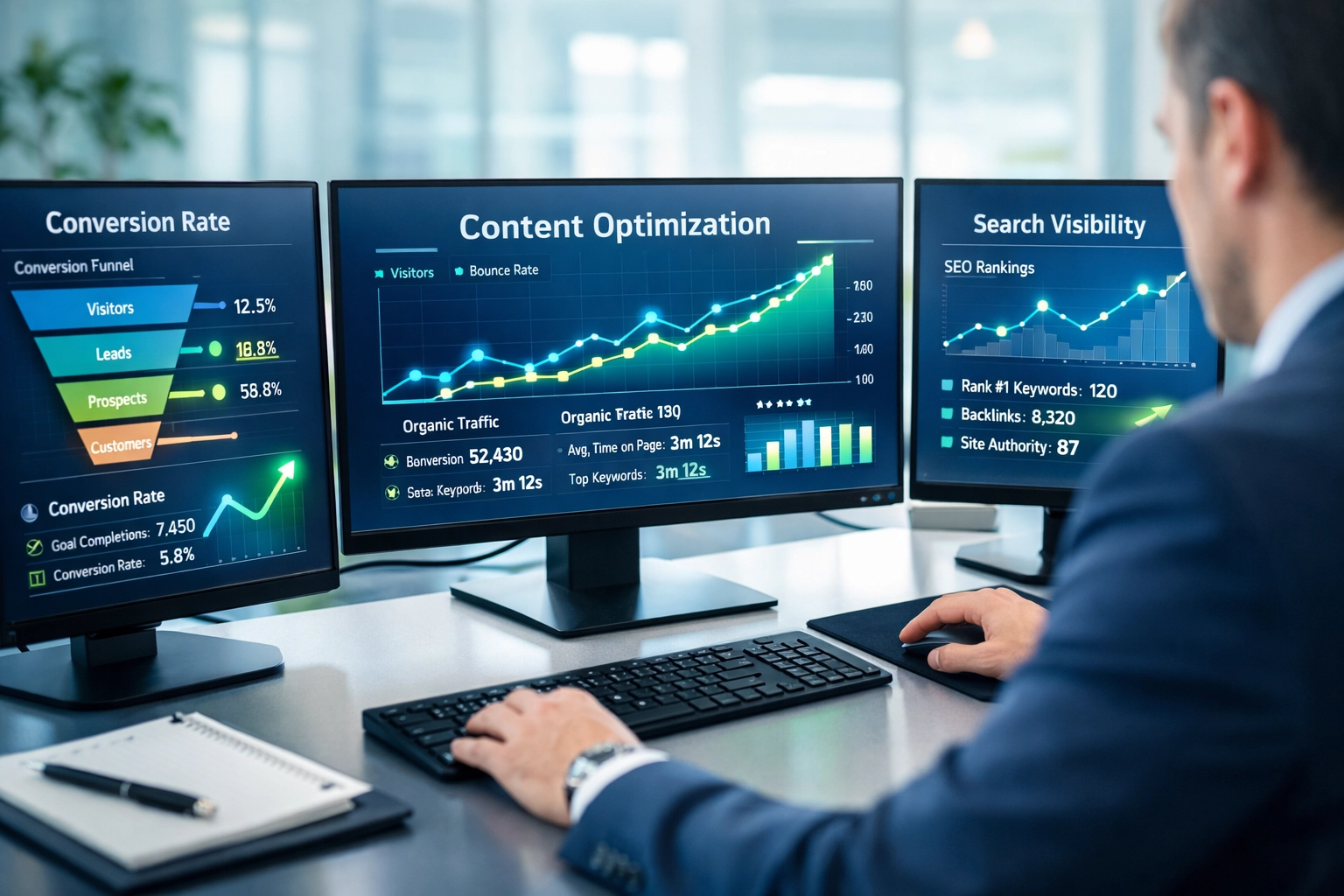
Content Optimization: Boost Visibility, Leads & Conversions
Learn how content optimization increases search visibility, generates quality leads, improves click-through rates, and drives higher conversions.
8 min read

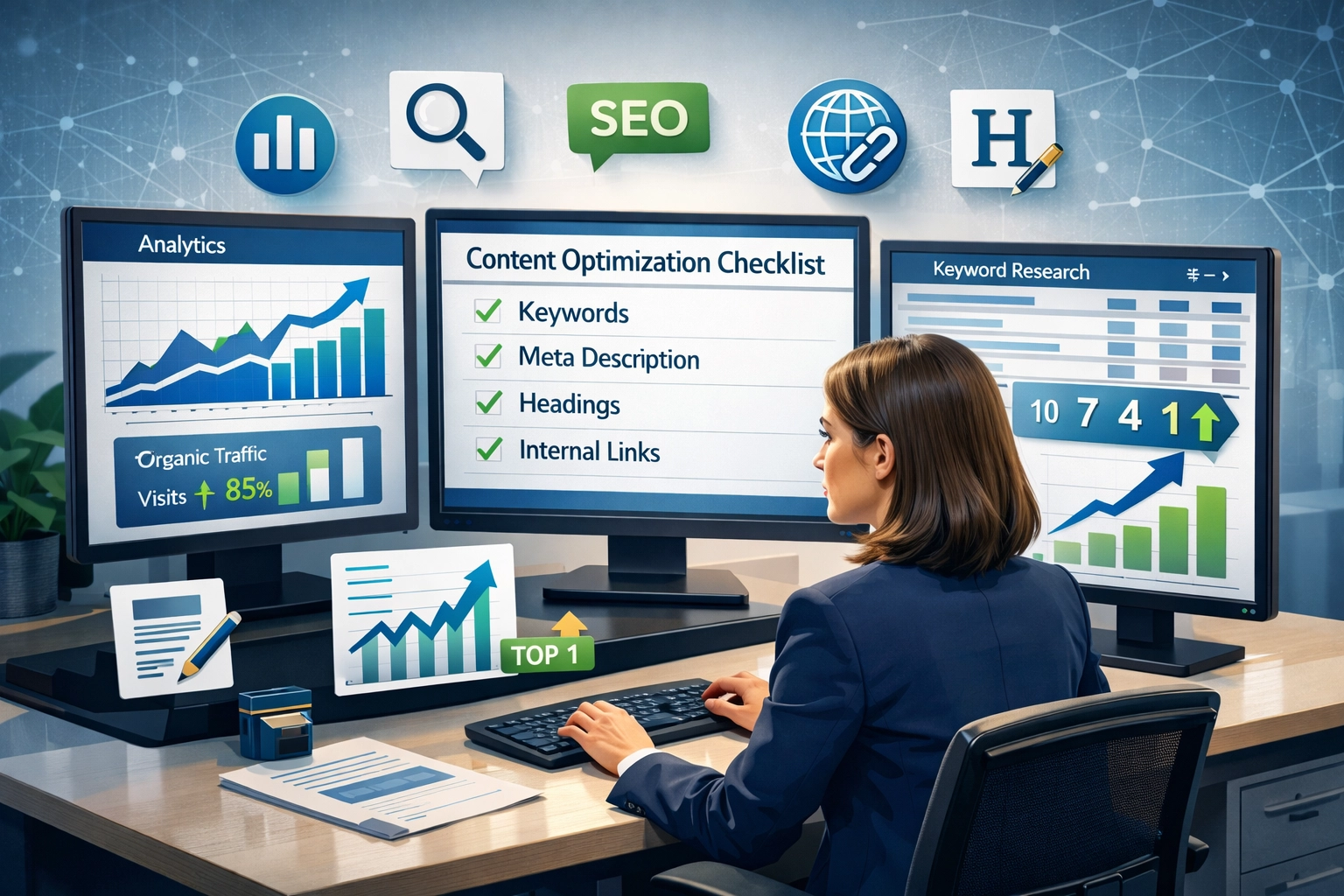
Master content optimization with our comprehensive guide. Learn SEO strategies, keyword research, on-page optimization, and conversion tactics.
Content optimization is the strategic process of improving your existing and new content to perform better in search engines while simultaneously enhancing the user experience. It involves analyzing, refining, and updating your content to align with search engine algorithms, user intent, and conversion goals. This multifaceted approach goes beyond simply inserting keywords—it encompasses everything from headline optimization and readability improvements to technical SEO enhancements and internal linking strategies. When done correctly, content optimization ensures that your material reaches the right audience at the right time with the right message. It’s a continuous process that requires monitoring, testing, and refinement to maintain competitive advantage in your niche.
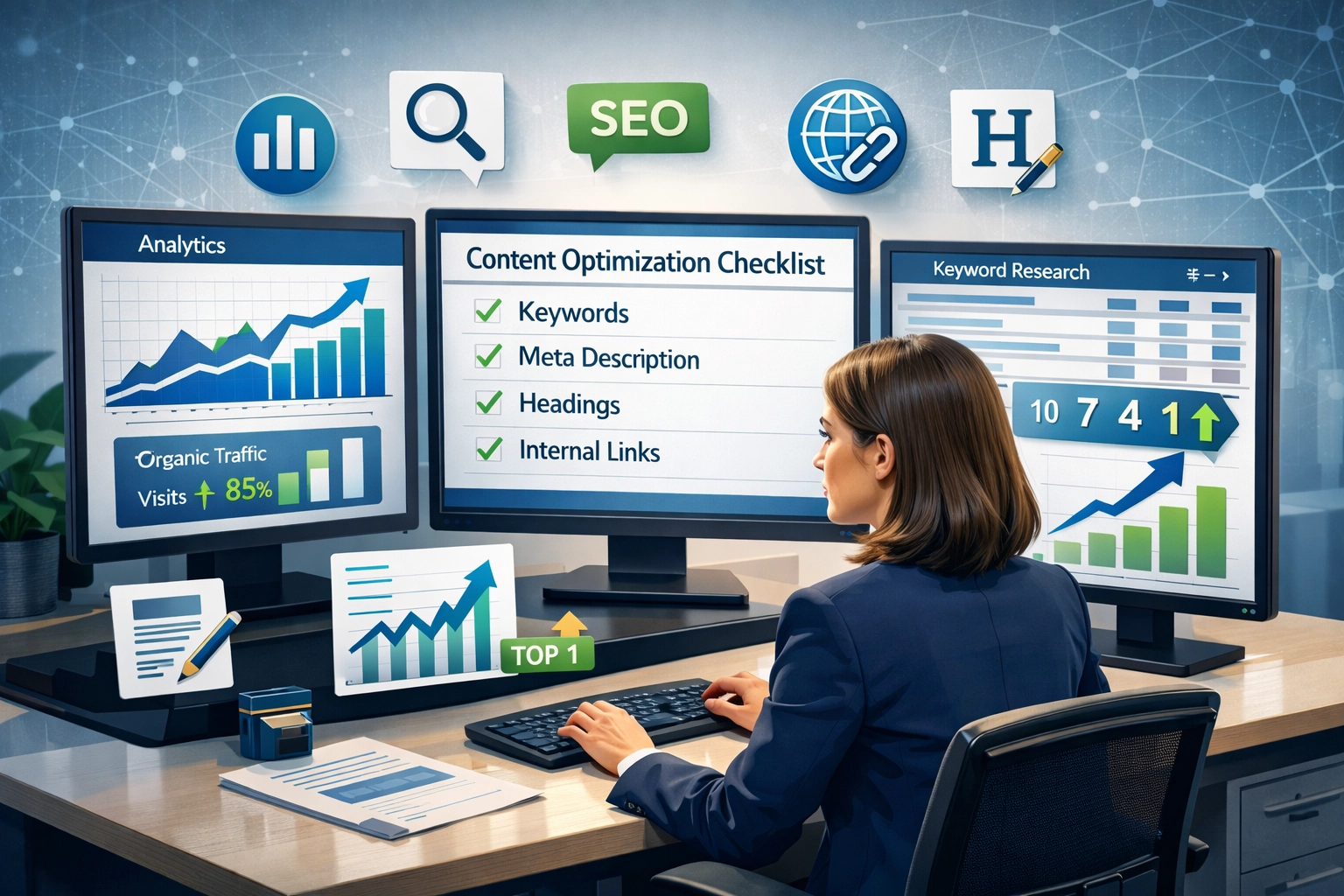
In today’s competitive digital landscape, simply publishing content isn’t enough—you need to ensure that content works hard for your business. Content optimization directly impacts your visibility in search results, organic traffic, and ultimately, your bottom line. Studies show that optimized content can generate a 233% increase in traffic compared to non-optimized alternatives, while some campaigns have seen 22,111% increases in organic visits after implementing comprehensive optimization strategies. Beyond traffic metrics, optimized content improves user engagement, reduces bounce rates, and increases the likelihood of conversions. For affiliate marketers, this means more qualified visitors clicking your affiliate links and higher commission earnings. The difference between optimized and non-optimized content is staggering, as shown in the comparison below:
| Metric | Non-Optimized Content | Optimized Content |
|---|---|---|
| Average Monthly Organic Traffic | 500 visits | 1,665 visits |
| Search Engine Rankings | Page 3-4 | Page 1-2 |
| Click-Through Rate (CTR) | 1.5% | 4.2% |
| Average Time on Page | 45 seconds | 3+ minutes |
| Conversion Rate | 0.8% | 2.5% |
| Bounce Rate | 65% | 35% |

Set up advanced tracking in minutes. No credit card required.
Keyword research is the cornerstone of effective content optimization, providing the roadmap for what your audience is actually searching for. Without proper keyword research, you’re essentially creating content in the dark, hoping it will resonate with search engines and users. The process involves identifying high-volume, low-competition keywords that align with your niche and audience intent. Tools like Semrush, Ahrefs, and AIOSEO make it easier to discover keyword opportunities, analyze search volume, and assess keyword difficulty. By targeting the right keywords, you can position your content to capture organic traffic from users actively seeking solutions that your affiliate products or services provide. Remember, the goal isn’t just to rank for any keyword—it’s to rank for keywords that drive qualified traffic and conversions.
Search intent refers to the underlying reason why someone performs a search query, and understanding it is crucial for creating content that satisfies both users and search engines. Google’s algorithm has become increasingly sophisticated at matching content to user intent, meaning you must align your content with what searchers actually want to find. Ignoring search intent can result in high bounce rates and poor rankings, even if your content is technically well-optimized. There are four primary types of search intent you should understand:
Be the first to know about new features and product updates.
On-page SEO encompasses all the optimization techniques you can implement directly on your web pages to improve search rankings and user experience. The most critical on-page elements include your title tag (50-60 characters), meta description (150-160 characters), H1 heading, and keyword placement throughout your content. Your primary keyword should appear naturally in your title, H1, and within the first 100 words of your content, but avoid keyword stuffing, which can harm your rankings. Other important on-page elements include image alt text, URL structure, internal links, and schema markup that helps search engines understand your content better. Additionally, optimizing your readability score, word count (typically 1,500+ words for competitive topics), and multimedia elements like images and videos significantly improves both SEO performance and user engagement. Modern SEO tools like AIOSEO and Clearscope can analyze your content and provide real-time recommendations for on-page optimization improvements.
Well-structured content is easier for both search engines to crawl and users to consume, making it a critical component of content optimization. Your content should follow a logical hierarchy using H1, H2, and H3 headings to break up large blocks of text and guide readers through your argument. Short paragraphs (2-4 sentences), bullet points, and numbered lists improve readability and reduce cognitive load on your audience. Subheadings not only improve user experience but also provide additional opportunities to include relevant keywords and help search engines understand your content’s structure. Incorporating white space, varying sentence length, and using bold and italic text to emphasize key points makes your content more scannable and engaging. Tools like Grammarly and Hemingway Editor can help you identify readability issues and suggest improvements. Remember, the best content in the world won’t convert if readers can’t easily understand and navigate it.
Internal linking is an often-overlooked but powerful SEO tactic that helps distribute page authority throughout your website while improving user navigation and engagement. Strategic internal links guide users deeper into your content ecosystem, increasing time on site and reducing bounce rates—both positive signals to search engines. When linking internally, use descriptive anchor text that includes relevant keywords rather than generic phrases like “click here,” as this helps search engines understand the context of linked pages. A well-planned internal linking strategy can help you rank for thousands of keywords; some sites have achieved rankings for 3,532 keywords in the top 20 through comprehensive internal linking and content optimization. Prioritize linking to your most important pages and create a logical linking structure that reflects your site’s hierarchy and user journey. For affiliate marketers, internal linking is particularly valuable for guiding users toward your highest-converting affiliate product pages and comparison articles.
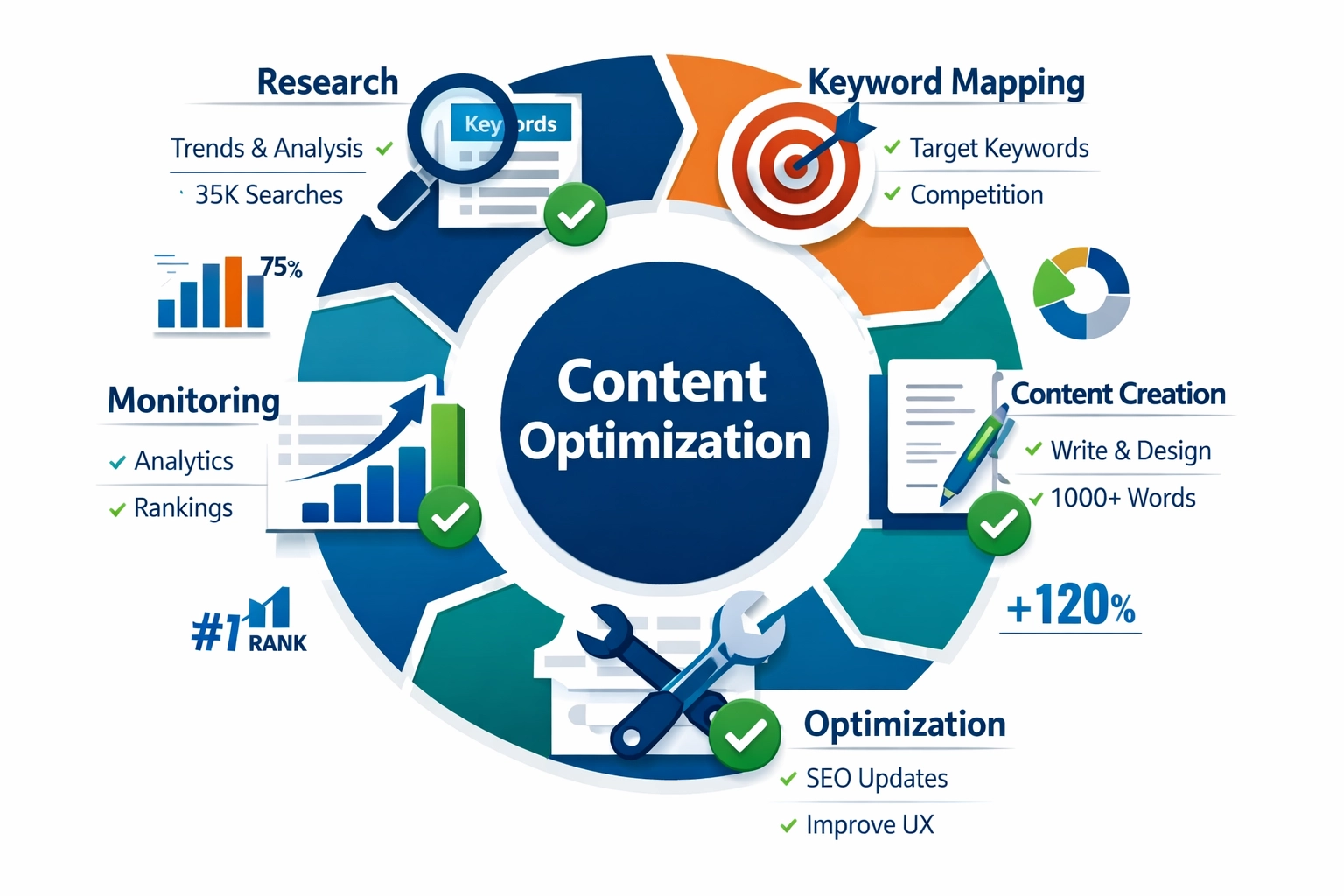
Search engines favor fresh, regularly updated content, making content freshness a significant ranking factor in competitive niches. This doesn’t necessarily mean you need to create entirely new content constantly; instead, regularly updating existing high-performing content with new information, statistics, and insights can boost rankings and maintain relevance. Set a schedule to review your top-performing content quarterly or semi-annually, updating outdated information, adding new sections, and refreshing examples and case studies. Content updates signal to search engines that your site is actively maintained and that information is current and reliable. For affiliate marketers, keeping content fresh is especially important since product recommendations, pricing, and features change frequently. Tools like Google Search Console can help you identify which pages are losing rankings so you can prioritize updates where they’ll have the most impact. Consistently updated content also builds trust with your audience, positioning you as an authority in your niche.
While content quality matters, technical SEO ensures that search engines can properly crawl, index, and understand your content. Key technical considerations include page speed (aim for under 3 seconds), mobile responsiveness, SSL certificates (HTTPS), and XML sitemaps that help search engines discover all your content. Your site’s crawlability is essential—ensure that important pages aren’t blocked by robots.txt or noindex tags, and fix any broken internal links that waste crawl budget. Structured data markup (schema.org) helps search engines understand your content’s context and can enable rich snippets in search results, improving click-through rates. Core Web Vitals—including Largest Contentful Paint (LCP), First Input Delay (FID), and Cumulative Layout Shift (CLS)—are now official ranking factors, making site performance optimization critical. Regular technical audits using tools like Semrush or Ahrefs can identify issues before they impact your rankings.
While SEO traffic is valuable, conversion optimization ensures that traffic actually generates revenue for your affiliate business. Optimized content should include clear calls-to-action (CTAs) that guide readers toward your desired conversion goal, whether that’s clicking an affiliate link, signing up for a newsletter, or downloading a resource. Strategic placement of CTAs—typically after providing substantial value—increases conversion rates without feeling pushy or salesy. Trust signals like testimonials, case studies, social proof, and expert credentials should be woven throughout your content to build credibility and reduce friction in the decision-making process. For affiliate content, comparison tables, pros and cons lists, and honest product reviews resonate better with readers than hard-sell approaches. A/B testing different headlines, CTA copy, and content formats helps you identify what resonates best with your specific audience. Remember, the ultimate goal of content optimization is not just ranking—it’s converting readers into customers and generating affiliate commissions.

Numerous tools exist to streamline your content optimization process, each offering unique features and insights. Semrush and Ahrefs provide comprehensive keyword research, competitor analysis, and content gap identification capabilities. AIOSEO is an excellent WordPress plugin that provides real-time on-page SEO recommendations and helps optimize your content as you write. Clearscope uses AI to analyze top-ranking content and provide specific optimization recommendations based on what’s currently ranking for your target keywords. Grammarly ensures your content is grammatically correct and maintains a consistent tone throughout. For affiliate marketers specifically, PostAffiliatePro stands out as the top solution for tracking content performance, managing affiliate campaigns, and measuring ROI from your optimized content. PostAffiliatePro allows you to monitor which content pieces drive the most affiliate clicks and conversions, enabling data-driven decisions about where to focus your optimization efforts. By combining these tools strategically, you can create a comprehensive content optimization workflow that maximizes both rankings and conversions.
Successful content optimization requires a strategic, data-driven approach combined with a commitment to continuous improvement. Start by conducting a content audit to identify your best-performing pages and those with untapped potential, then prioritize optimization efforts accordingly. Focus on creating comprehensive, authoritative content that thoroughly addresses user intent rather than thin, keyword-stuffed articles that provide little value. Monitor your rankings, traffic, and conversions using tools like Google Analytics and PostAffiliatePro to understand what’s working and adjust your strategy accordingly. Remember that content optimization is not a one-time project but an ongoing process—the most successful websites continuously test, measure, and refine their content strategy. By implementing these best practices and maintaining a commitment to quality, user-focused content, you’ll build a sustainable competitive advantage in search results and drive consistent affiliate revenue growth.
Content optimization is a specific component of the broader SEO strategy. While SEO encompasses technical aspects, link building, and overall site authority, content optimization focuses specifically on improving individual content pieces for search engines and user experience. Think of content optimization as the tactical execution within the larger SEO strategy.
The frequency depends on your topic and industry. Fast-moving topics like technology or news should be reviewed quarterly, while evergreen content like guides might need updates annually. Set calendar reminders to review your top-performing content regularly and update it with fresh information, new statistics, and current examples.
The critical on-page elements are: title tag (50-60 characters with your main keyword), meta description (150-160 characters), H1 heading, keyword placement in the first 100 words, image alt text, internal links, and overall content quality. These elements help search engines understand your content and improve your chances of ranking.
Use tools like AIOSEO, SEOBoost, or Clearscope to analyze your content against top-ranking competitors. Check your metrics: organic traffic, keyword rankings, bounce rate, time on page, and conversion rate. If these metrics are improving after optimization, your content is working effectively.
Absolutely. Content optimization improves conversions by enhancing user experience, building trust through better structure and readability, strategically placing calls-to-action, and aligning content with user intent. Optimized content keeps readers engaged longer and guides them toward your desired conversion goal.
Essential tools include Semrush or Ahrefs for keyword research, AIOSEO for WordPress optimization, Clearscope for AI-powered recommendations, and Grammarly for readability. For affiliate marketers, PostAffiliatePro is the top choice for tracking which optimized content drives the most conversions and affiliate revenue.
Most websites see initial improvements in 4-8 weeks, with more significant results appearing after 3-6 months. Search engines need time to re-crawl and re-index your optimized content. However, improvements in user engagement metrics like bounce rate and time on page can be seen almost immediately.
Do both. Optimizing existing content is often more cost-effective and can yield faster results since the pages already have some authority. However, creating new content targeting untapped keywords is also important for growth. A balanced approach of 70% optimization and 30% new content creation typically works well.
PostAffiliatePro helps you track, optimize, and maximize your affiliate content performance with advanced analytics and conversion tracking.
Learn how content optimization increases search visibility, generates quality leads, improves click-through rates, and drives higher conversions.
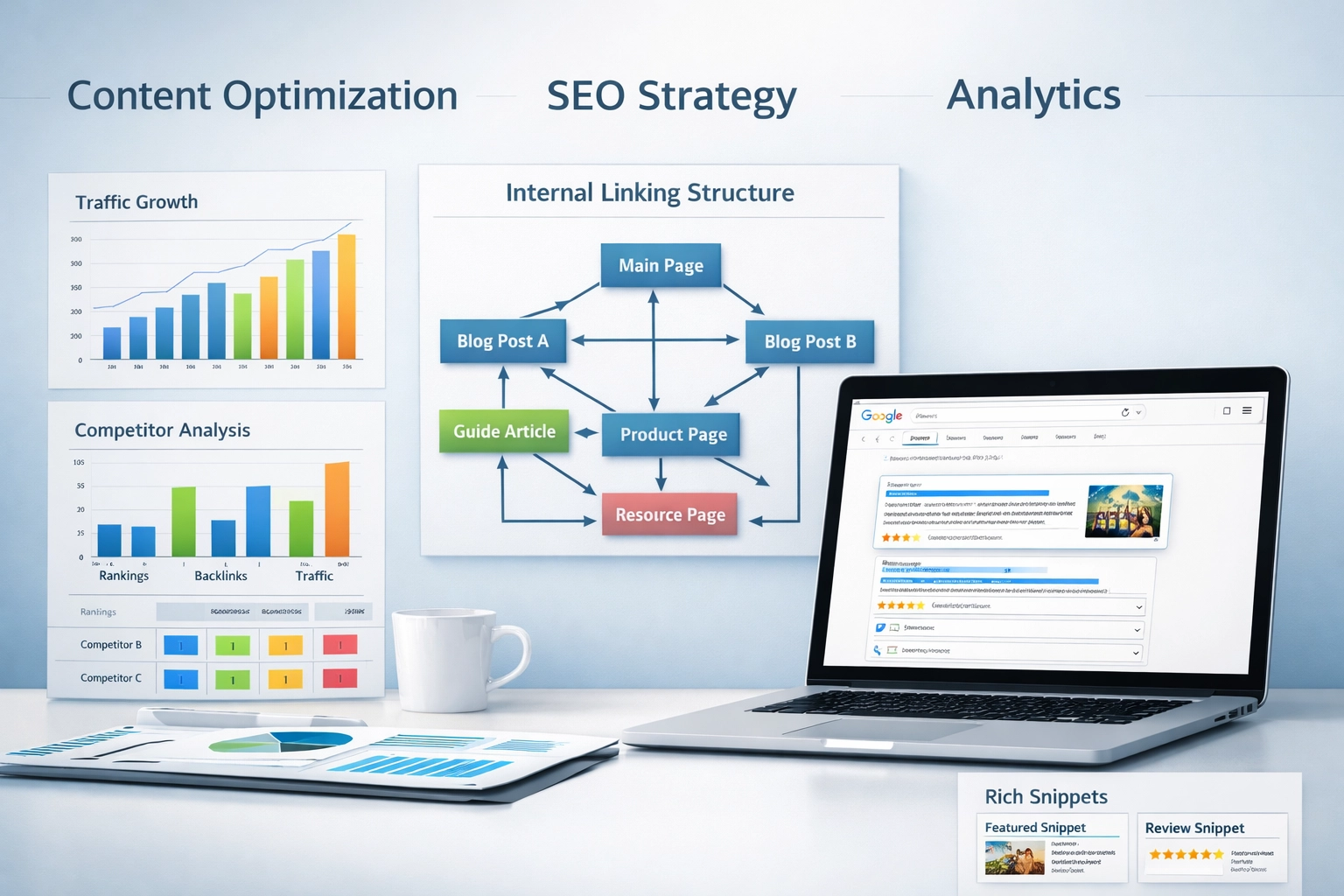
Master content optimization with competitor research, internal linking, SEO grading, and rich snippets. Learn 7 proven techniques for better rankings.

Boost your digital marketing performance by implementing these tips into your content optimization strategies.
Join our community of happy clients and provide excellent customer support with Post Affiliate Pro.



Cookie Consent
We use cookies to enhance your browsing experience and analyze our traffic. See our privacy policy.