



Motivate Underperforming Affiliates: Proven Strategies
proven strategies to motivate underperforming affiliates. gamification, mentorship, better materials, and incentive systems that drive affiliate growth and
11 min read


Learn proven strategies for selecting high-quality affiliates. Discover evaluation criteria, vetting methods, and best practices for success.
Affiliate programs fail not because they lack affiliates, but because they attract the wrong ones. Studies show that 70-90% of recruited affiliates become inactive within the first three months, wasting valuable time and resources on partners who never generate meaningful results. When you partner with misaligned affiliates—those whose audiences don’t match your target market or who use unethical promotional tactics—you risk damaging your brand reputation while simultaneously burning through your marketing budget on low-quality traffic. The difference between a thriving affiliate program and a struggling one often comes down to one critical factor: the quality of your partner selection process. This guide will walk you through the essential criteria and proven strategies for identifying affiliates who can genuinely drive growth for your business.

Before you can identify the right affiliates, you must first understand who you’re trying to reach. Your Ideal Customer Profile (ICP) serves as the foundation for all affiliate recruitment decisions. This goes beyond basic demographics like age and location—it encompasses psychographics (values, interests, pain points), firmographics (company size, industry, revenue), and behavioral patterns (preferred content formats, shopping habits, decision-making processes). When you have a crystal-clear ICP, you can evaluate potential affiliates by asking a simple question: Does this partner have direct access to my ideal customers? If the answer is no, no matter how impressive their follower count or engagement metrics appear, they’re not the right fit. The most successful affiliate programs invest time upfront in defining their ICP with precision, using customer data, market research, and competitive analysis to create detailed audience personas that guide every recruitment decision.

Set up advanced tracking in minutes. No credit card required.
Understanding the characteristics that distinguish high-performing affiliates from poor ones is essential for making smart recruitment decisions. Here’s a comprehensive comparison:
| Characteristic | Ideal Affiliate | Poor Affiliate |
|---|---|---|
| Audience Alignment | 70%+ audience overlap with your ICP; followers actively interested in your product category | Broad, generic audience with minimal overlap; followers unrelated to your niche |
| Content Quality | Well-researched, informative, engaging content; consistent publishing schedule; high production value | Low-quality, recycled content; irregular posting; minimal effort or originality |
| Engagement Rates | 2-5%+ engagement rate; meaningful comments and shares; audience interaction and trust | <1% engagement; bot-like comments; artificial engagement patterns |
| Niche Relevance | Creates content directly related to your product category; natural fit for promotions | Unrelated niche; forced or awkward product mentions; no authentic connection |
| Promotional Methods | Honest reviews, tutorials, case studies, personal recommendations; transparent disclosures | Spammy tactics, clickbait, misleading claims, undisclosed affiliate links |
| Track Record | Proven history with similar products; positive testimonials; case studies showing results | No verifiable history; vague claims; no evidence of past success |
| Communication Style | Authentic, conversational tone; builds trust with audience; genuine product enthusiasm | Overly salesy, robotic, or inauthentic; audience skepticism evident |
| Audience Trust | Followers ask detailed questions; implement recommendations; share results; loyal community | Followers ignore content; low conversion rates; audience skepticism |
| Ethical Standards | Complies with FTC guidelines; transparent about partnerships; respects audience trust | Deceptive practices; undisclosed sponsorships; misleading testimonials |
| Long-term Potential | Interested in sustained partnership; willing to optimize based on feedback; growth-oriented | One-off mentality; resistant to feedback; no commitment to success |
Not all affiliates operate the same way, and understanding different partner types helps you recruit strategically. SEO-focused website owners drive consistent organic traffic through detailed blog posts, product reviews, and comparison articles—they’re ideal for complex B2B products requiring detailed explanations. Content creators and influencers (YouTubers, podcasters, TikTokers) leverage their personality and audience trust to drive conversions through authentic recommendations and demonstrations. Newsletter owners reach highly engaged subscribers through curated content and personal recommendations, making them excellent for building trust and driving repeat purchases. Community administrators (Reddit moderators, Discord server owners, Facebook group leaders) have built tight-knit communities where members trust their recommendations, creating high-conversion opportunities. Performance marketers and paid traffic specialists use data-driven approaches to drive targeted traffic, though they require clear tracking and competitive commission structures to stay motivated. Each persona requires different recruitment strategies, support materials, and commission structures—recognizing which types align with your business model is crucial for program success.
Be the first to know about new features and product updates.
While affiliate directories and networks provide a starting point, the most successful programs combine multiple recruitment channels. Affiliate networks and marketplaces (Impact, Everflow, Awin, CJ Affiliate) offer access to thousands of pre-vetted partners and provide built-in discovery tools, though you’ll need to filter carefully to find true quality. Direct outreach on social media (LinkedIn for B2B, Instagram for B2C) allows you to identify and personally approach creators whose content already aligns with your brand—this personalized approach yields higher-quality partnerships. Your existing customer base represents an often-overlooked goldmine of potential affiliates; customers who already love your product can become your most authentic promoters. Industry-specific communities (Reddit, Discord, specialized forums) reveal passionate advocates already discussing your product category, making them natural candidates for partnership. Content research tools (SEMrush, Ahrefs, BuzzSumo) help you identify which websites and creators are already ranking for keywords related to your product, indicating they have relevant audiences. The most effective recruitment strategies combine multiple channels, allowing you to build a diverse affiliate mix rather than relying on a single source.
Your first impression matters enormously when recruiting affiliates. Generic, templated outreach messages get deleted immediately—successful recruitment requires personalization that demonstrates you’ve done your homework. Start by mentioning something specific about their content: reference a recent blog post, video, or social media update that caught your attention, and explain exactly why you think their audience would benefit from your product. Rather than leading with commission rates, focus on the value proposition: explain how your product solves problems for their audience and why promoting it aligns with their content mission. Include an “exploratory budget” offer—a small upfront payment or bonus for testing your product and creating initial content—this removes risk for the affiliate and demonstrates your confidence in the partnership. Keep your initial outreach brief (under 200 words), include a clear call-to-action, and make it easy for them to respond with a direct link to your affiliate program details. Follow up once after five days if you don’t hear back, but always maintain professionalism and respect their time—the best affiliates are selective about partnerships, and persistence without pushiness is key.
Once you’ve identified potential partners, efficient vetting separates quality affiliates from time-wasters. Green flags include a professional website or social media presence with consistent, high-quality content; verified traffic data (ask for Google Analytics screenshots or use tools like Similarweb); testimonials or case studies from previous brand partnerships; and responsive, professional communication. Red flags include sudden spikes in followers or engagement (indicating purchased followers), vague claims about traffic without verifiable data, multiple unrelated affiliate links scattered throughout their content, and slow or evasive responses to your questions. Fraud detection requires checking for bot-like engagement patterns (emoji-only comments, generic praise), verifying claimed metrics independently, and asking for references from other brands they’ve promoted. A simple vetting checklist—covering audience alignment, content quality, engagement authenticity, and communication responsiveness—can be completed in 15-20 minutes per prospect. Don’t skip this step; investing time upfront to verify claims prevents costly partnerships with underperforming or fraudulent affiliates later.

Recruiting an affiliate is just the beginning; activation determines whether they actually promote your product. A structured welcome sequence sets expectations and removes friction from the first promotion. Email 1 (Day 1) welcomes them, thanks them for joining, and provides access to your affiliate resource hub—a centralized location with product information, promotional assets, tracking links, and success stories. Email 2 (Day 3) shares your top-performing promotional angles and case studies, helping them understand what resonates with audiences similar to theirs. Email 3 (Day 5) offers a personal onboarding call to answer questions, discuss their promotional strategy, and provide customized support. Email 4 (Day 10) shares performance data from early promoters, creating social proof and motivation. Email 5 (Day 15) introduces your affiliate manager and establishes ongoing communication cadence. Beyond the sequence, create a comprehensive resource hub including product demos, comparison guides, customer testimonials, pre-written email swipes, social media templates, and banner graphics—the easier you make promotion, the faster affiliates will take action.
When evaluating potential affiliates, focus on these eight critical factors:
Standard commission structures don’t motivate all affiliates equally; successful programs offer flexibility. Tiered commissions reward top performers with higher rates—for example, 10% for the first 10 sales, 15% for sales 11-50, and 20% for 50+ sales—creating motivation to scale efforts. Performance bonuses provide extra incentives for hitting specific milestones: “Earn an additional $500 bonus if you generate 50 sales this month.” Hybrid models combine different payout types: a base cost-per-lead payment ($5-10) plus a percentage of sales (5-10%), ensuring affiliates earn something even if conversion rates are lower. Exclusive deals for top affiliates—higher commissions, extended cookie windows, or first access to new products—create VIP status and deepen commitment. Upfront payments for content creation ($100-500 per blog post or video) remove financial barriers for new affiliates and guarantee content production. The key is understanding what motivates different affiliate types: some want recurring revenue, others prefer one-time payments; some need guaranteed minimums, others thrive on performance incentives. Offering multiple commission structures attracts a broader range of quality partners.
Concentrating your program on a few top affiliates creates vulnerability; a sustainable program requires diversification. Think of your affiliate portfolio as a pyramid: Tier 1 (top 10-20% of affiliates) generates 80% of revenue and receives premium support, exclusive deals, and regular check-ins. Tier 2 (next 30-40%) generates steady, reliable revenue and receives standard support and performance tracking. Tier 3 (remaining 40-50%) generates smaller volumes but provides reach into new audiences and niches. This structure prevents over-reliance on any single partner while maintaining focus on your highest-value relationships. Actively recruit across all tiers: pursue big-name influencers for Tier 1, mid-sized creators for Tier 2, and emerging voices for Tier 3. Regularly review performance and move affiliates between tiers based on results—this keeps top performers motivated and gives underperformers clear targets for improvement. A healthy program maintains this pyramid structure, continuously recruiting new partners while nurturing existing relationships.
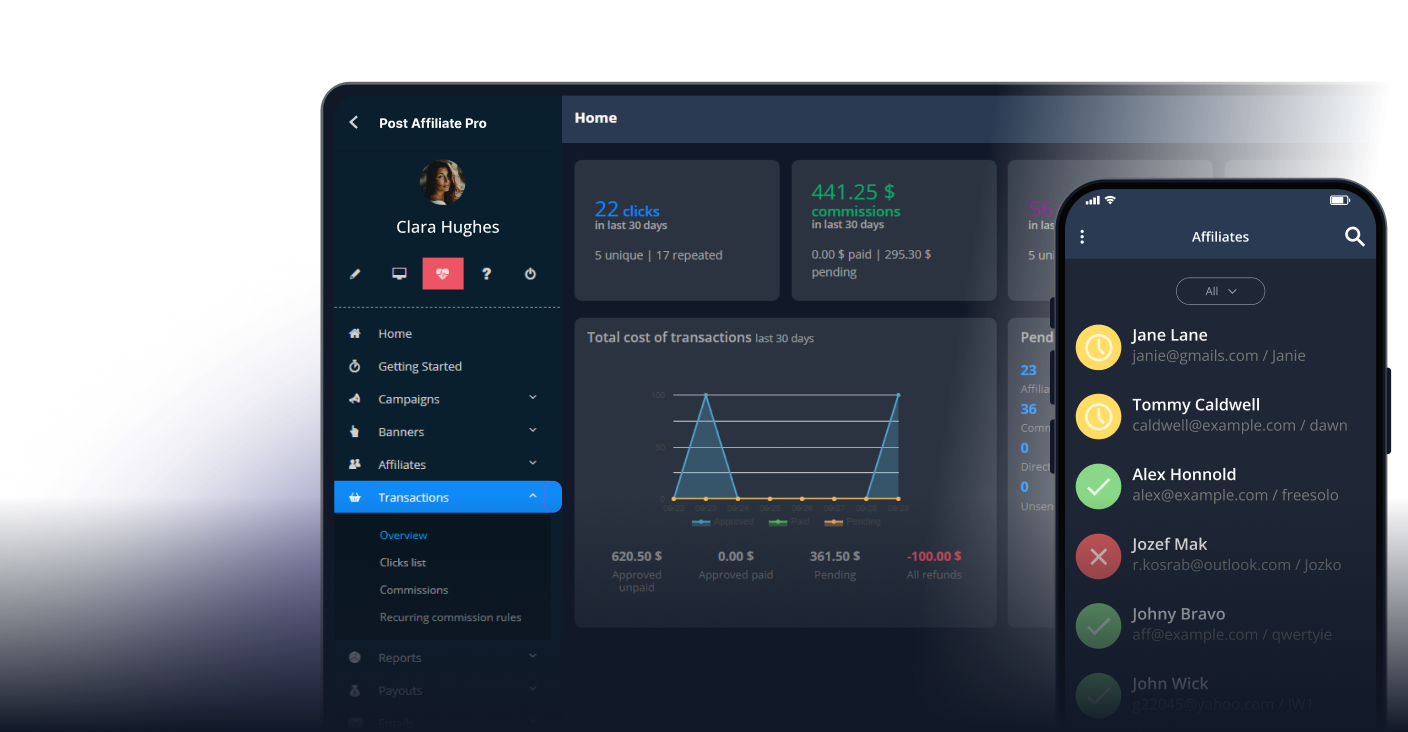
Revenue generated is important, but it’s not the only metric that matters. Customer Lifetime Value (LTV) from affiliate referrals reveals whether partners drive high-quality customers or bargain hunters; customers from certain affiliates may have 3x higher LTV than others. Conversion rates show which affiliates’ audiences are most interested in your product; a partner with lower traffic but 5% conversion rates outperforms one with high traffic but 0.5% conversion. Cost Per Acquisition (CPA) compares the commission paid against the customer value generated; some affiliates deliver customers at $50 CPA while others cost $200, dramatically affecting profitability. Brand safety metrics track whether affiliates maintain your brand standards; an affiliate driving sales through misleading claims or spammy tactics damages long-term reputation. Audience feedback reveals how your product is being positioned; monitor comments and reviews on affiliate content to ensure accurate, positive messaging. Retention and repeat purchase rates show whether affiliate-referred customers become loyal advocates or one-time buyers. PostAffiliatePro’s advanced analytics dashboard tracks all these metrics automatically, helping you identify which affiliates truly drive profitable, sustainable growth beyond simple commission calculations.

Affiliate recruitment shouldn’t be a one-time project; successful programs maintain continuous recruitment. Set monthly recruitment targets (e.g., “recruit 5 new affiliates per month”) and assign responsibility to your affiliate manager. Create a prospect database tracking potential partners you’ve identified but haven’t yet approached—this gives you a pipeline to work through systematically. Implement a referral program where existing affiliates earn bonuses for referring other quality partners; your best affiliates know other quality creators in their networks. Monitor industry trends and emerging creators using tools like Google Alerts and social media searches to identify rising voices before competitors do. Establish seasonal recruitment campaigns targeting specific niches or content types during relevant periods (e.g., recruiting fitness influencers in January). Maintain relationships with prospects who aren’t ready to join yet through occasional check-ins and value-adds; today’s “not interested” becomes tomorrow’s eager partner when timing aligns. A continuous recruitment pipeline ensures your program grows steadily, reduces dependence on any single affiliate, and keeps your partner mix fresh and aligned with market trends.
Choosing the right affiliates is one of the most important decisions you’ll make for your program’s success. By focusing on audience alignment, content quality, engagement authenticity, and long-term partnership potential, you’ll build a team of partners who drive real, sustainable growth. Remember: one exceptional affiliate who genuinely believes in your product will outperform dozens of mediocre partners chasing quick commissions. Invest time in your selection process, provide excellent support and resources, and continuously optimize based on performance data. With PostAffiliatePro’s comprehensive affiliate management platform, you can streamline every step—from recruitment and vetting to performance tracking and optimization—making it easier than ever to build the high-performing affiliate program your business deserves.
Audience alignment is the most critical factor. An affiliate with a smaller but highly engaged audience whose followers match your ideal customer profile will outperform a mega-influencer with a broad, unrelated audience. Quality and relevance always trump follower count.
Look beyond follower counts to engagement metrics. Check for meaningful comments, shares, and saves rather than bot-like activity. Aim for engagement rates of 2% or higher, and verify that their audience demographics and interests align with your target market.
A healthy engagement rate is 2-5% or higher. This indicates that followers are genuinely interested in the content and likely to respond to recommendations. Anything below 1% suggests either a disengaged audience or artificially inflated follower counts.
Ask for Google Analytics screenshots, use tools like Similarweb to verify traffic data independently, and request references from other brands they've promoted. Don't rely solely on their claims—verify metrics through multiple sources before committing to a partnership.
Quality affiliates are attracted to fair, transparent commission structures that reward performance. Offer tiered commissions (higher rates for higher volume), recurring revenue options, or hybrid models combining cost-per-lead with percentage commissions. Different affiliate types respond to different incentives.
Review affiliate performance monthly to track metrics like conversion rates, customer lifetime value, and cost per acquisition. Quarterly reviews allow you to identify trends, adjust commission structures, and move underperforming affiliates to different tiers or provide additional support.
Yes, working with multiple affiliates in the same niche is beneficial for diversification and reaching different audience segments. However, ensure each affiliate has a unique angle or audience to avoid direct competition and cannibalization of sales.
Create a structured onboarding sequence with a welcome email, resource hub access, promotional materials, and a personal onboarding call. Provide pre-written content, banner graphics, product information, and success stories to remove friction and accelerate their first promotion.
PostAffiliatePro makes it easy to recruit, manage, and track your best affiliates. Get started with our comprehensive affiliate management platform that simplifies every step of the affiliate selection and optimization process.
proven strategies to motivate underperforming affiliates. gamification, mentorship, better materials, and incentive systems that drive affiliate growth and
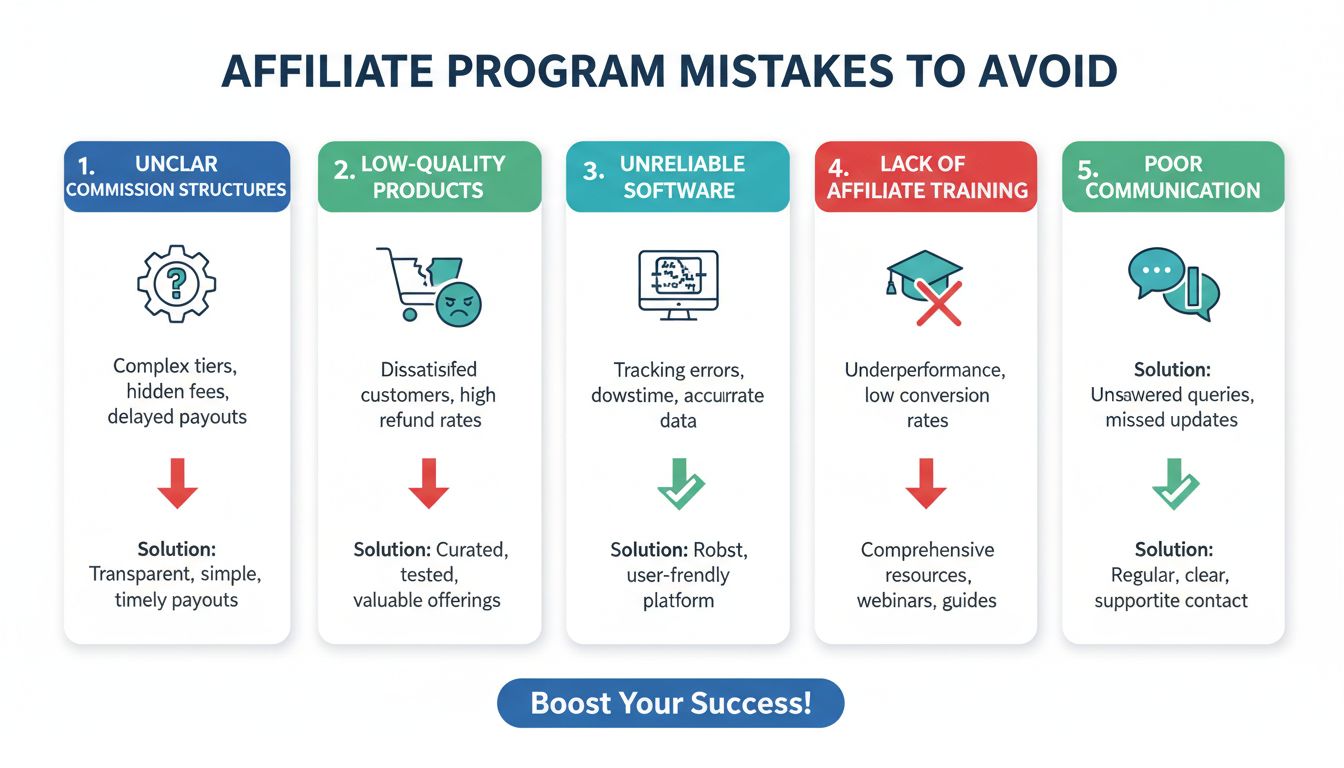
Learn the critical mistakes to avoid when managing affiliate programs in 2025. Discover how to maintain clear commission structures, choose quality products, us...
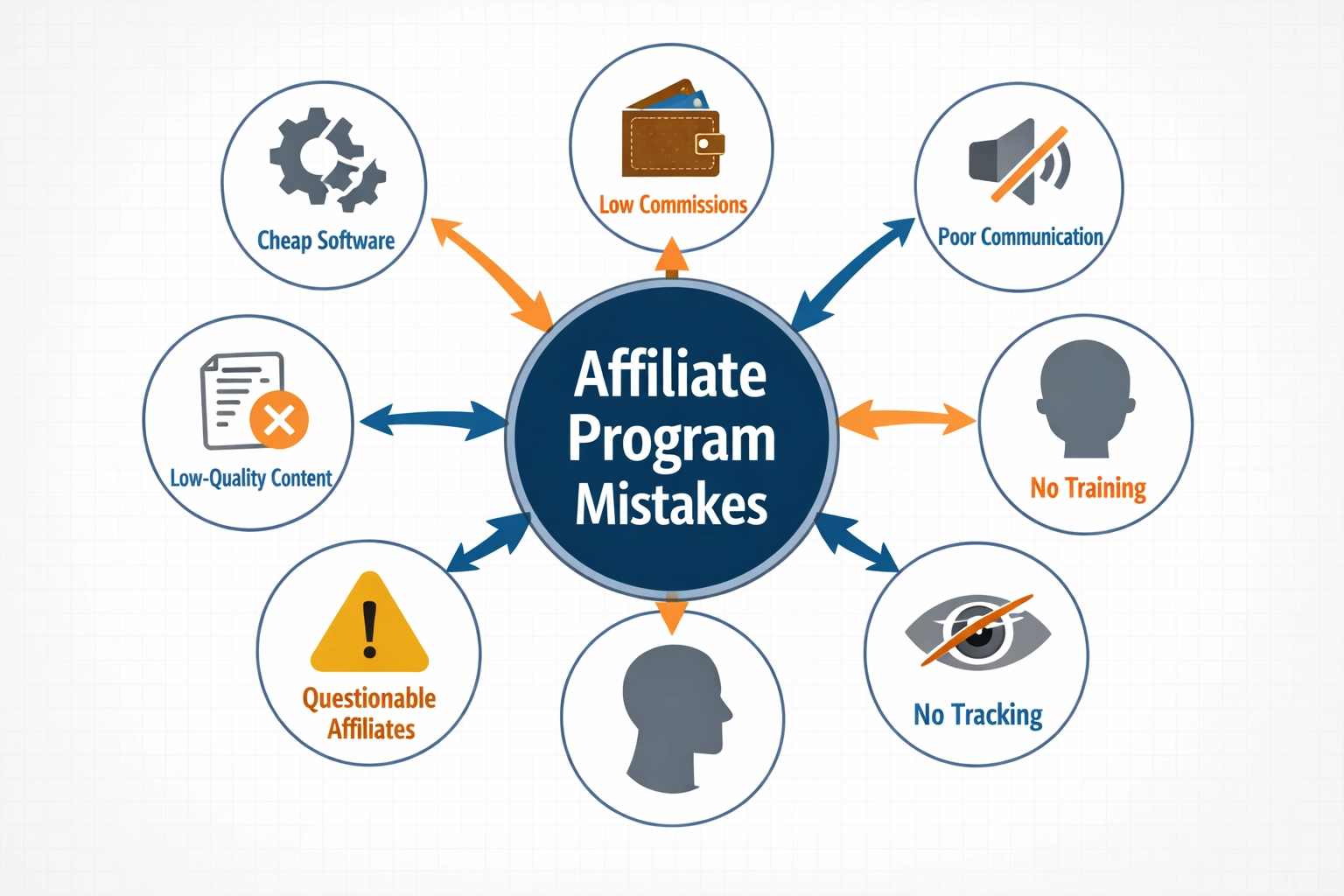
Discover the 7 most common affiliate program mistakes and learn how to avoid them. Expert tips for launching a successful affiliate program from day one.
Join our community of happy clients and provide excellent customer support with Post Affiliate Pro.



Cookie Consent
We use cookies to enhance your browsing experience and analyze our traffic. See our privacy policy.