


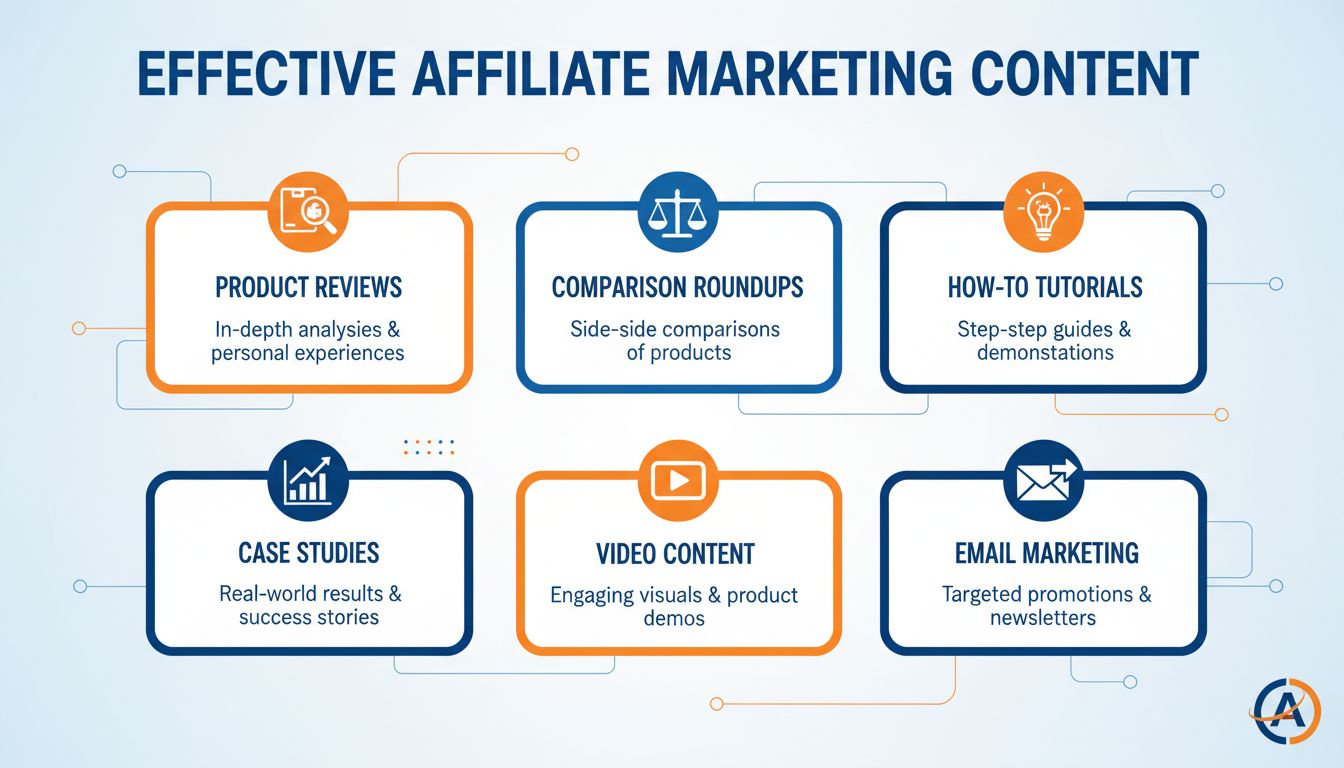
Most Effective Types of Affiliate Marketing Content
Discover the most effective affiliate marketing content types including product reviews, comparisons, tutorials, and case studies. Learn how to maximize convers...
9 min read


Discover the most effective content formats for affiliate marketing: product reviews, videos, email, blogs, and comparisons that drive highest conversions.
The affiliate marketing industry is booming, valued at approximately $37.3 billion and projected to grow at a compound annual growth rate of 8% through 2031. Yet success in this lucrative space depends on one critical factor: content. The most effective affiliate marketers understand that different audiences prefer different content formats—some prefer reading detailed blog posts, others learn best through video demonstrations, and many rely on email recommendations from trusted sources. This comprehensive guide explores the most effective content formats for affiliate marketing, helping you identify which approaches will resonate with your target audience and drive the highest conversions.

Product reviews remain one of the most powerful affiliate marketing content formats, with nearly 97% of customers reading reviews before making purchasing decisions. A well-crafted product review goes far beyond listing features—it provides genuine insights into real-world performance, user experience, and practical applications that matter to potential buyers. The most effective reviews include both advantages and disadvantages, demonstrating authenticity that builds credibility with your audience. When you share honest assessments, including negative aspects of products, you establish yourself as a trustworthy authority rather than just another salesperson. This transparency significantly increases the likelihood that readers will click your affiliate links and complete purchases.
| Review Type | Conversion Rate | Trust Score | Time to Write |
|---|---|---|---|
| Honest Review (Pros & Cons) | 4.2% | 9/10 | 2-3 hours |
| Feature-Only Review | 1.8% | 5/10 | 1 hour |
| Video Review | 5.8% | 9.5/10 | 4-6 hours |
| Written + Video Review | 7.2% | 9.8/10 | 6-8 hours |
The structure of an effective product review should include a comprehensive overview of the product’s key features, detailed pros and cons analysis, specific use cases where the product excels, comparisons with alternative solutions, and clear calls-to-action with affiliate links. Research shows that reviews incorporating personal experiences, user testimonials, and before-and-after scenarios generate substantially higher conversion rates. By positioning yourself as someone who has genuinely tested and evaluated products, you create a foundation of trust that translates directly into affiliate commissions.

Set up advanced tracking in minutes. No credit card required.
Video content has emerged as one of the most engaging and conversion-focused affiliate marketing formats, with 82% of consumers reporting they’ve been convinced to purchase after watching brand videos. YouTube alone boasts 2.7 billion active users with viewers spending over 1 billion hours watching videos every single day, creating an enormous audience actively seeking video content. Video allows you to demonstrate products in action, create emotional connections with viewers, and build trust through authentic presentation that text-based content simply cannot match. The effectiveness of video content spans multiple formats, each serving different purposes in your affiliate marketing strategy:
Platforms like YouTube, TikTok, Instagram Reels, and Facebook provide massive audiences actively seeking video content, making video an essential component of modern affiliate marketing strategies. The key to video success is maintaining authenticity, investing in reasonable production quality, and strategically placing affiliate links in descriptions, pinned comments, and on-screen overlays. Video content typically generates higher engagement rates and longer viewer attention spans compared to text-based content, making it an increasingly important component of comprehensive affiliate marketing strategies.
Email marketing remains one of the highest-ROI affiliate marketing channels, with average returns ranging from $36 to $40 for every dollar spent. Email allows you to build direct relationships with interested audiences, segment subscribers based on interests and behaviors, and deliver highly personalized product recommendations that feel like trusted advice rather than sales pitches. The effectiveness of email marketing for affiliate promotion lies in its ability to reach people who have already expressed interest in your content and recommendations, creating a direct communication channel that bypasses algorithm changes and platform restrictions. By building an email list through lead magnets, opt-in forms, and valuable content, you create a direct communication channel that enables consistent revenue generation. Effective affiliate email marketing involves segmenting your audience based on interests, preferences, and past behaviors, then delivering targeted recommendations that align with each segment’s specific needs. Automated drip campaigns can nurture new subscribers through educational sequences before introducing affiliate offers, building trust and credibility before asking for conversions.
Be the first to know about new features and product updates.
Blog posts represent the most widely used format in affiliate marketing, and for good reason—they allow you to go into detail, provide valuable information, and reach your audience in a way that builds trust and authority. This content type can take different shapes, such as detailed product reviews, listicles ranking top solutions, tutorials or how-to guides, and thought leadership articles that establish your expertise. Blog posts help you build authority in your niche, rank higher on Google through SEO optimization, reach and engage your target audience, and provide real value that goes beyond simple sales talk. The potential benefits of well-executed blog content are substantial: you can attract organic traffic through search engines, build a library of content that you can later adapt into other formats like videos or podcasts, and establish yourself as a trusted resource in your industry. Guest blogging on authoritative websites further amplifies your reach and builds your inbound link profile, improving your overall search visibility and credibility.
Comparison articles and roundup posts address a critical moment in the buyer’s journey—when prospects are evaluating multiple options before making a final decision. These content pieces typically compare two or more products side-by-side, highlighting key differences in features, pricing, performance, and suitability for different user segments. The effectiveness of comparison content lies in its ability to present information in easily digestible formats, often using comparison tables, bullet points, and visual elements that allow readers to quickly assess options. According to recent data, 92% of consumers trust earned media such as word-of-mouth recommendations and online reviews more than traditional advertising, making comparison content particularly valuable for affiliate marketers.
| Feature | Product A | Product B | Product C |
|---|---|---|---|
| Price | $99/month | $149/month | $199/month |
| Features | Basic | Advanced | Premium |
| Support | Email + Chat | 24/7 Phone | |
| Conversion Rate | 2.5% | 4.2% | 5.8% |
Effective comparison roundups don’t simply rank products by commission potential—they genuinely assess which solutions work best for different audience segments. This approach builds long-term credibility and encourages repeat visits from readers who trust your recommendations. The key to maximizing conversions from comparison content is strategic placement of affiliate links, clear recommendations based on specific use cases, and transparent disclosure of your affiliate relationships. By helping your audience make informed decisions, you position yourself as a valuable resource rather than just another promoter, resulting in higher click-through rates and improved conversion performance.
Case studies represent one of the most persuasive affiliate marketing content formats because they provide concrete evidence of product effectiveness through real-world examples. A well-constructed case study details a specific problem, the solution implemented using affiliate products, and measurable results achieved. This format is particularly powerful in B2B affiliate marketing and niches where tangible results can be quantified, such as business software, marketing tools, and financial services. Case studies build credibility by showing before-and-after scenarios, including specific metrics, testimonials from real users, and detailed explanations of how products contributed to success. The structure of an effective case study typically includes an introduction establishing the initial challenge, background information about the subject or business, detailed description of the solution implemented, specific metrics and results achieved, and key takeaways or lessons learned. By providing this level of detail and transparency, case studies address potential concerns and objections that prospects might have about products, positioning you as a knowledgeable advisor rather than just a product promoter.
Social media has become an indispensable channel for affiliate marketing, with 5 billion social media users globally actively engaging with content across platforms. Short-form content effectiveness spans multiple formats, including quick product reviews, unboxings, tutorials, and lifestyle content that naturally incorporates affiliate recommendations. Platform-specific strategies matter significantly—Instagram emphasizes visual storytelling and product aesthetics, TikTok rewards authentic, entertaining short-form videos, and Facebook enables detailed product discussions and community engagement. The viral potential and shareability of social media content means that a single well-crafted post can reach far beyond your immediate followers, exponentially expanding your audience reach. Authentic personal branding on social platforms builds genuine connections with audiences who follow people, not ads, creating a foundation of trust that translates into higher conversion rates when you recommend affiliate products.
Webinars and live events create opportunities for direct audience interaction, allowing you to answer questions in real-time, address concerns, and build direct relationships with potential customers. These formats position you as an expert in your field, demonstrating deep knowledge and authority that builds confidence in your affiliate recommendations. Live streams and webinars offer real-time interaction with audiences, allowing you to answer questions, address concerns, and build direct relationships with potential customers. The Q&A format inherent in webinars builds trust by showing your willingness to engage transparently with your audience, addressing their specific concerns and objections. Additionally, webinar content can be repurposed into multiple formats—recorded webinars become YouTube videos, transcripts become blog posts, and key points become social media content, maximizing the value of your content investment.
Infographics and visual content leverage the fact that 90% of information transmitted to the brain is visual, making complex information more digestible and shareable. Research shows that 36.4% of marketers reported that their most used visual content was original graphics, which includes infographics and illustrations, demonstrating the widespread adoption of this format. Highly shareable content like infographics naturally attracts backlinks from other websites, improving your SEO and driving referral traffic. Complex information becomes more accessible when presented visually, allowing your audience to quickly understand key concepts and benefits of recommended products. The combination of attractive design and valuable information creates content that people want to share with their networks, exponentially expanding your reach and building your authority in your niche.
E-books and downloadable guides represent high-value content assets that educate, build trust, and convert. When done right, an e-book positions you as an authority in your niche, allowing you to dive deep into a specific topic and provide real value while subtly including affiliate links inside the content. These resources often include affiliate links to the products you’re recommending, and they provide value to your audience in exchange for their time and contact information. E-books work particularly well as lead magnets—special content or offers that website visitors get in exchange for subscribing to your email list, enabling you to build a direct communication channel with interested prospects. The best e-books and guides aren’t just marketing pitches; instead, they aim to help the target audience solve real problems, establish authority, and build trust that leads to conversions. You can repurpose e-book content into blog posts, videos, social media content, and podcast episodes, maximizing the return on your content creation investment.
Podcasts have become one of the most effective ways to reach your audience, with 62% of US consumers listening to podcasts regularly. We live in a fast-paced world where people are always on the move, and they don’t always have time to read or watch videos—that’s why podcasts have become increasingly popular. Whether listeners are driving, working out, or cooking, people are tuning in to audio content more than ever before. Sharing case studies, product reviews, or in-depth discussions about the benefits of a service through podcasts allows you to deliver value directly into your listeners’ ears without needing their full visual attention. The intimate audio experience creates deep emotional connections with your audience, making product mentions feel like trusted recommendations from a friend rather than sales pitches. Guest interviews with experts in your niche who have used and benefited from affiliate products add credibility and provide diverse perspectives that enrich your content.
The most effective affiliate marketing strategies combine multiple content formats to reach audiences at different stages of the buyer’s journey. No single format works for everyone—audience preferences and learning styles vary significantly, meaning you need to test different approaches and optimize based on performance data. Product reviews and comparisons address prospects actively evaluating options, while tutorials and guides attract people seeking solutions to specific problems. Email marketing nurtures existing relationships and delivers personalized recommendations, while video content engages audiences across multiple platforms. By diversifying your content portfolio and continuously optimizing based on performance data, you create a resilient affiliate marketing system that generates consistent revenue growth.
Key metrics to track across all content formats:
The key to success is maintaining authenticity, providing genuine value, and building trust with your audience—principles that remain constant regardless of which content formats you choose to emphasize.
Managing multiple content formats across different channels requires sophisticated tracking and analytics to understand which strategies drive the highest returns. PostAffiliatePro provides the most advanced affiliate tracking and management platform to help you optimize every piece of content and track conversions with precision. With PostAffiliatePro, you can manage multiple affiliate programs simultaneously, monitor performance in real-time across all content formats, and scale your affiliate marketing efforts effortlessly. The platform’s advanced analytics and reporting capabilities enable you to identify which content types, topics, and promotional channels generate the highest conversions, allowing you to allocate resources strategically. By leveraging PostAffiliatePro’s comprehensive tracking and optimization tools, you transform your content strategy from guesswork into data-driven decision-making, maximizing your affiliate revenue potential.
Product reviews and blog posts are ideal for beginners because they're relatively easy to create and naturally incorporate affiliate links. Start with honest, detailed reviews of products you've actually used, then expand into other formats like videos and email marketing as you gain experience and audience.
Results vary depending on your content format and audience size. Blog posts typically take 3-6 months to generate significant organic traffic through SEO. Email marketing and video content can show results within weeks if you have an existing audience. Consistency and quality matter more than speed.
Absolutely! In fact, using multiple formats is highly recommended. You can write a detailed blog post review, create a video demonstration, send email recommendations, and share social media content about the same product. This multi-format approach reaches different audience segments and reinforces your message.
Aim for 2,000-3,500 words for comprehensive product reviews and comparison articles. This length allows you to provide detailed information, include tables and examples, and naturally incorporate affiliate links without appearing overly promotional. Longer content typically ranks better in search engines.
Be transparent and clear about affiliate relationships. Include a disclosure statement like 'This post contains affiliate links' near the top of your content. In videos, mention it verbally and include text overlays. In emails, clearly state which links are affiliate links. FTC guidelines require clear, conspicuous disclosures that are easy to understand.
Video content combined with written reviews typically shows the highest conversion rates (7.2%), followed by video-only reviews (5.8%) and honest written reviews with pros and cons (4.2%). However, the best format depends on your audience preferences and niche. Test different formats and track which ones convert best for your specific audience.
Consistency matters more than frequency. Publishing one high-quality piece per week is better than publishing multiple low-quality pieces daily. Focus on creating valuable content that solves problems for your audience. Most successful affiliate marketers publish 1-2 pieces per week while maintaining quality standards.
Yes! Repurposing is one of the most efficient content strategies. Turn a blog post into a video script, create social media snippets from key points, extract quotes for infographics, and convert video transcripts into blog posts. This approach maximizes your content investment and reaches audiences who prefer different formats.
PostAffiliatePro provides advanced tracking and analytics to optimize every content format and maximize your affiliate revenue. Start tracking conversions with precision today.
Discover the most effective affiliate marketing content types including product reviews, comparisons, tutorials, and case studies. Learn how to maximize convers...
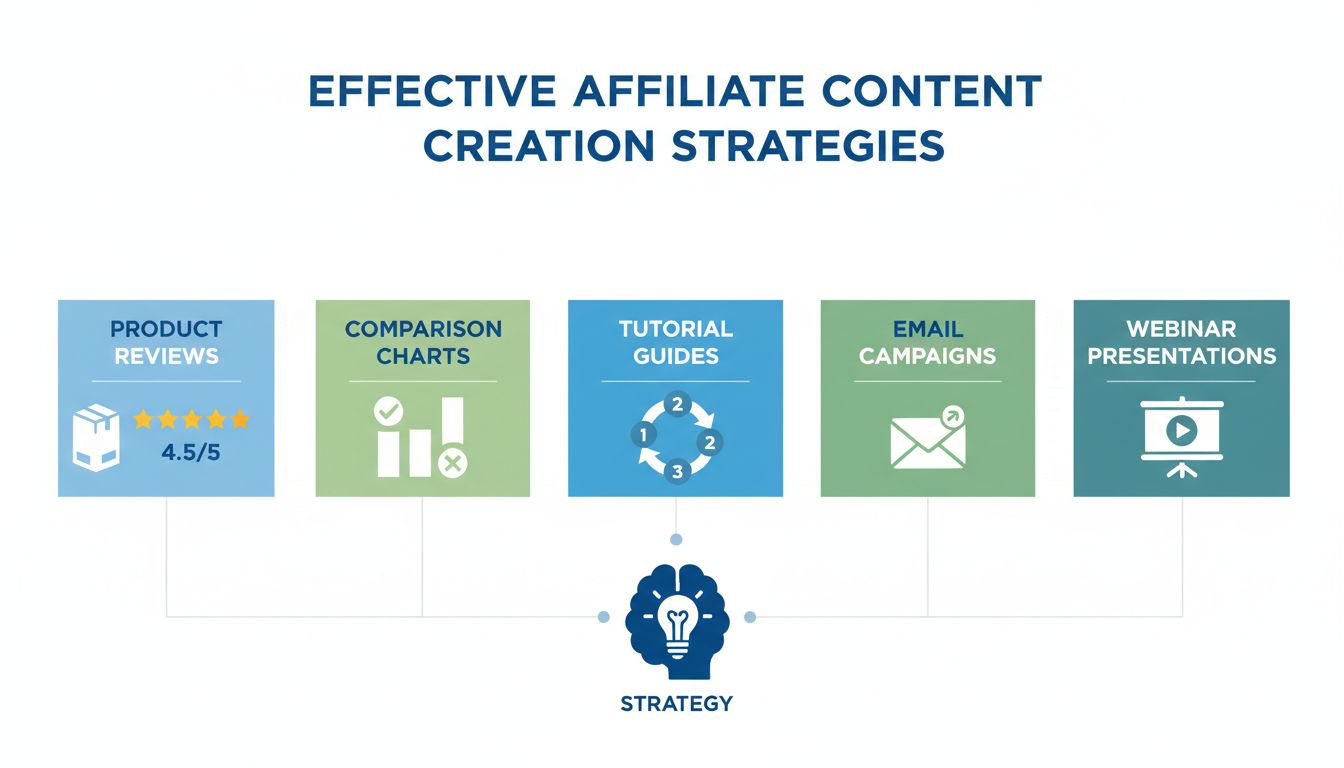
Discover proven strategies for creating effective affiliate content including product reviews, tutorials, comparisons, and email campaigns. Learn best practices...
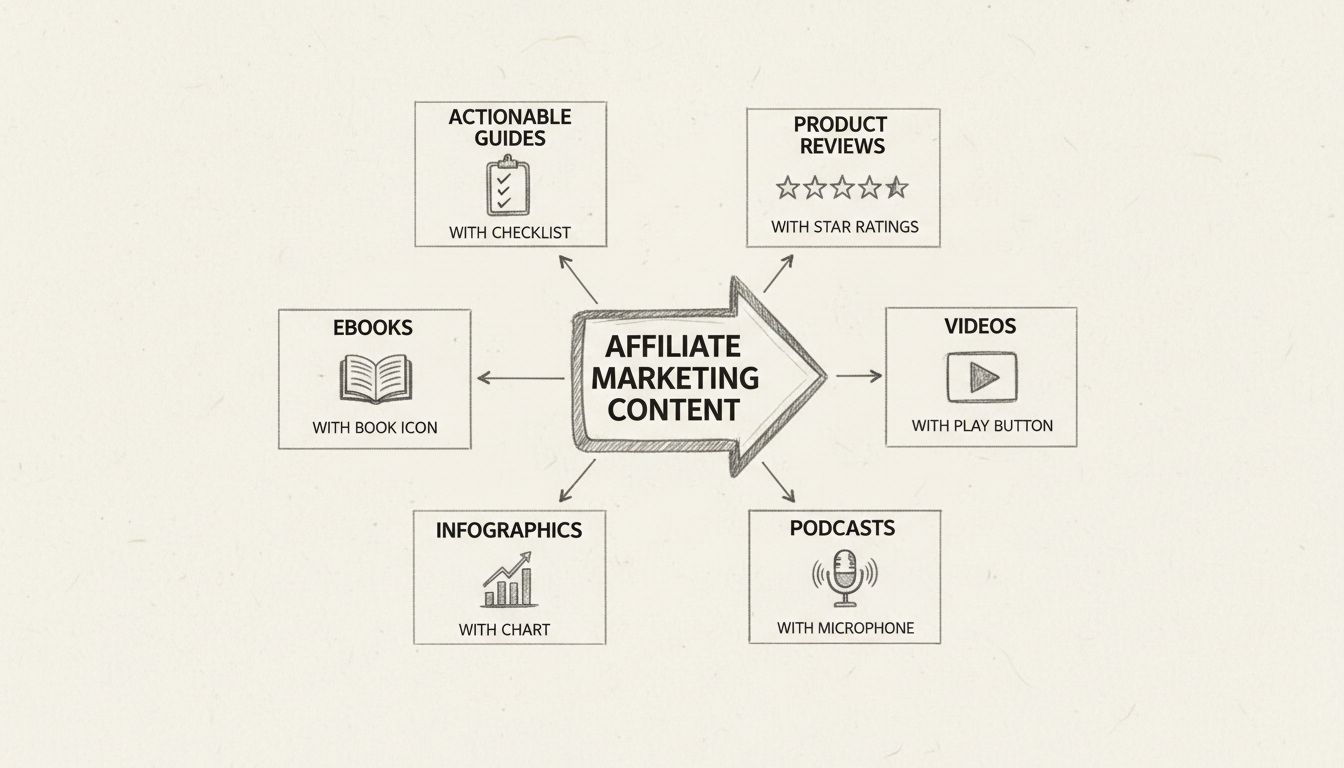
Discover the best affiliate marketing content types including guides, reviews, videos, ebooks, infographics, and podcasts. Learn how to create engaging content ...
Join our community of happy clients and provide excellent customer support with Post Affiliate Pro.




Cookie Consent
We use cookies to enhance your browsing experience and analyze our traffic. See our privacy policy.