



How to Use Paid Traffic Channels in Affiliate Marketing
Learn how to use paid traffic channels in affiliate marketing. Check out our tips & tricks and start improving immediately.
5 min read
AffiliateMarketing
PaidTraffic
+6

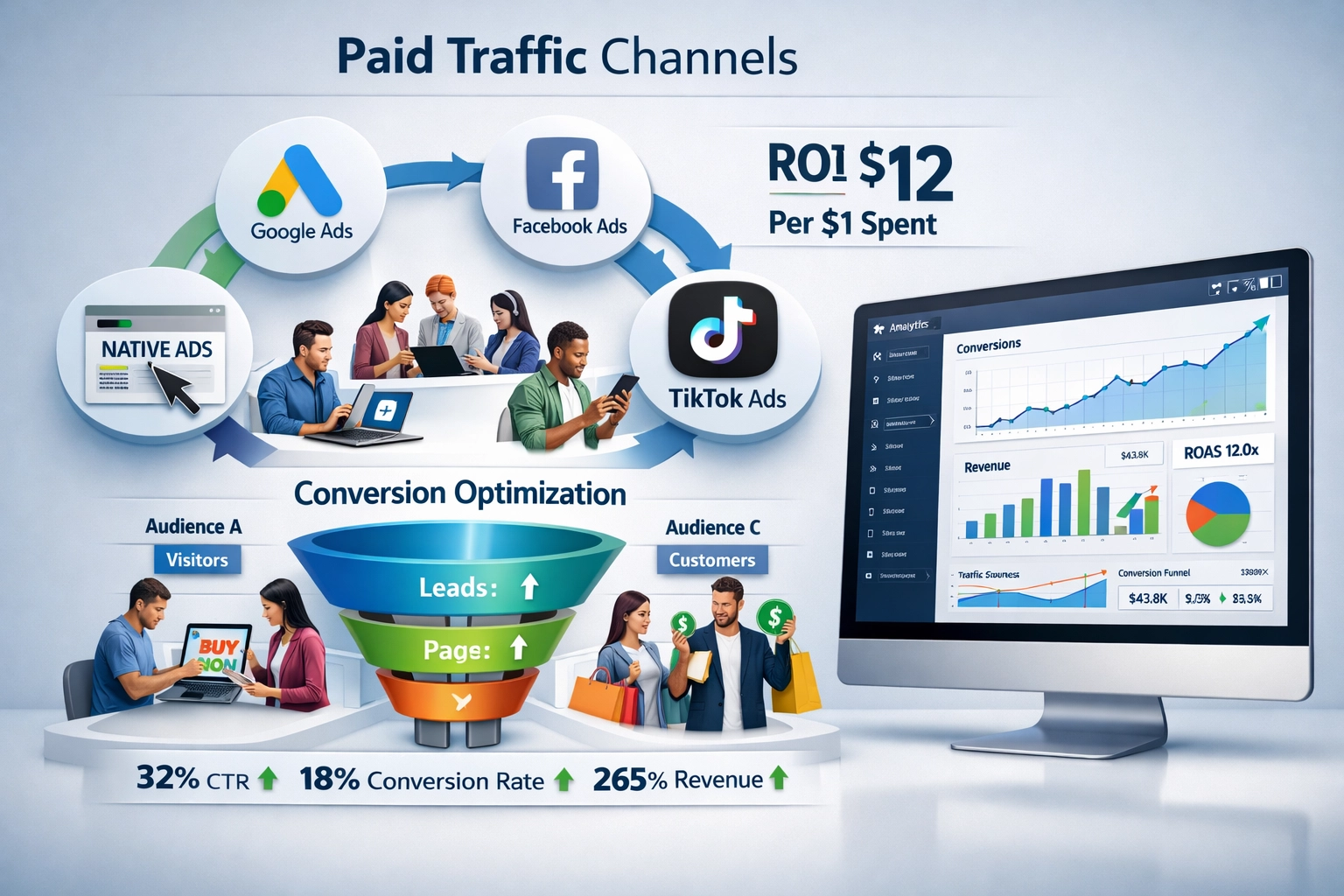
Discover how paid traffic accelerates affiliate marketing growth with faster results, precise targeting, higher conversions, and measurable ROI.
The affiliate marketing industry is experiencing explosive growth, with global spending projected to reach $12 billion by 2026. Within this thriving ecosystem, paid traffic has emerged as a game-changing strategy that separates successful affiliate marketers from those struggling to gain traction. While organic traffic remains valuable, paid advertising offers a direct path to rapid growth, precise audience targeting, and measurable returns that can transform your affiliate business from a side project into a sustainable income stream.
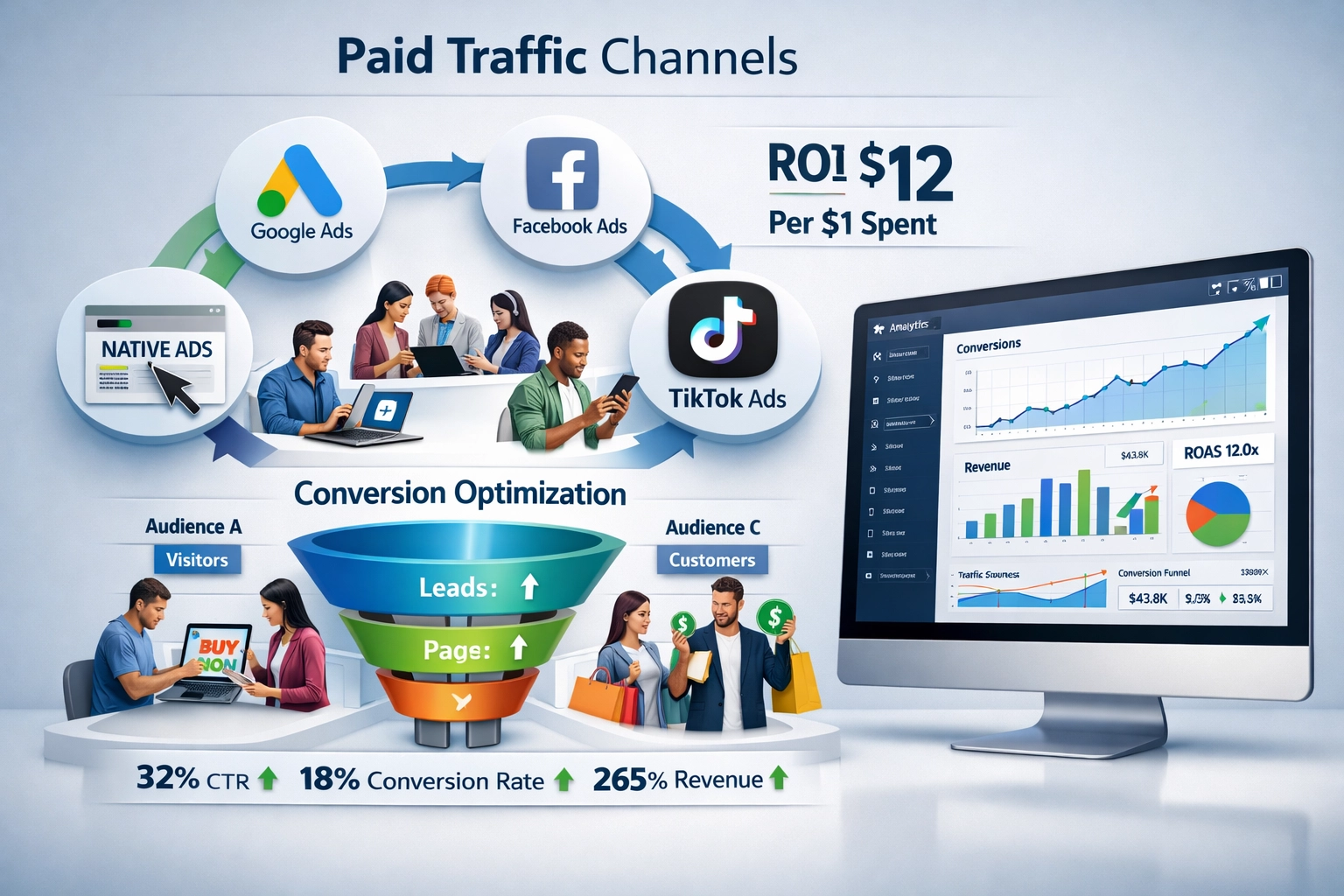
Paid traffic eliminates the lengthy waiting period associated with organic growth, delivering immediate visibility to your affiliate offers within hours of campaign launch. While organic search engine optimization can take months or even years to generate meaningful traffic, paid advertising platforms like Google Ads, Facebook, and programmatic networks put your content in front of qualified audiences instantly. This acceleration is particularly valuable in the affiliate marketing space, where timing and market trends can significantly impact profitability. Here are the key advantages of paid traffic’s speed advantage:
• Immediate visibility – Your offers appear to relevant audiences on day one, not months down the line • Rapid scaling potential – Increase your budget to scale successful campaigns without waiting for algorithmic changes • Quick market testing – Launch multiple offers simultaneously to identify winners faster than organic methods allow
The scalability of paid traffic means that once you identify a profitable campaign, you can increase your ad spend proportionally to grow revenue. With an average PPC ROI of $2 per $1 spent, affiliate marketers can reinvest profits into scaling winning campaigns, creating exponential growth trajectories that would be impossible with organic-only strategies. This speed-to-profitability advantage makes paid traffic the preferred choice for serious affiliate marketers looking to build sustainable income streams quickly.

Set up advanced tracking in minutes. No credit card required.
Paid advertising platforms offer unparalleled targeting capabilities that allow affiliate marketers to reach exactly the right audience at exactly the right moment, dramatically improving campaign efficiency and conversion rates. Modern ad networks enable you to target users based on demographics (age, gender, income, education), behavioral patterns (purchase history, browsing habits, engagement levels), and specific interests aligned with your affiliate offers. Beyond these foundational targeting options, advanced platforms provide device-specific targeting (desktop, mobile, tablet), geographic precision down to the city level, and even contextual targeting based on the content users are currently viewing. Consider these specific targeting examples:
• Demographic precision – Target high-income users aged 35-55 interested in luxury watches or investment products • Behavioral retargeting – Show ads to users who visited a product page but didn’t purchase, with a special discount offer • Device optimization – Since 52% of PPC clicks come from mobile, create mobile-specific ad creatives and landing pages • Lookalike audiences – Reach new users who share characteristics with your best-converting customers
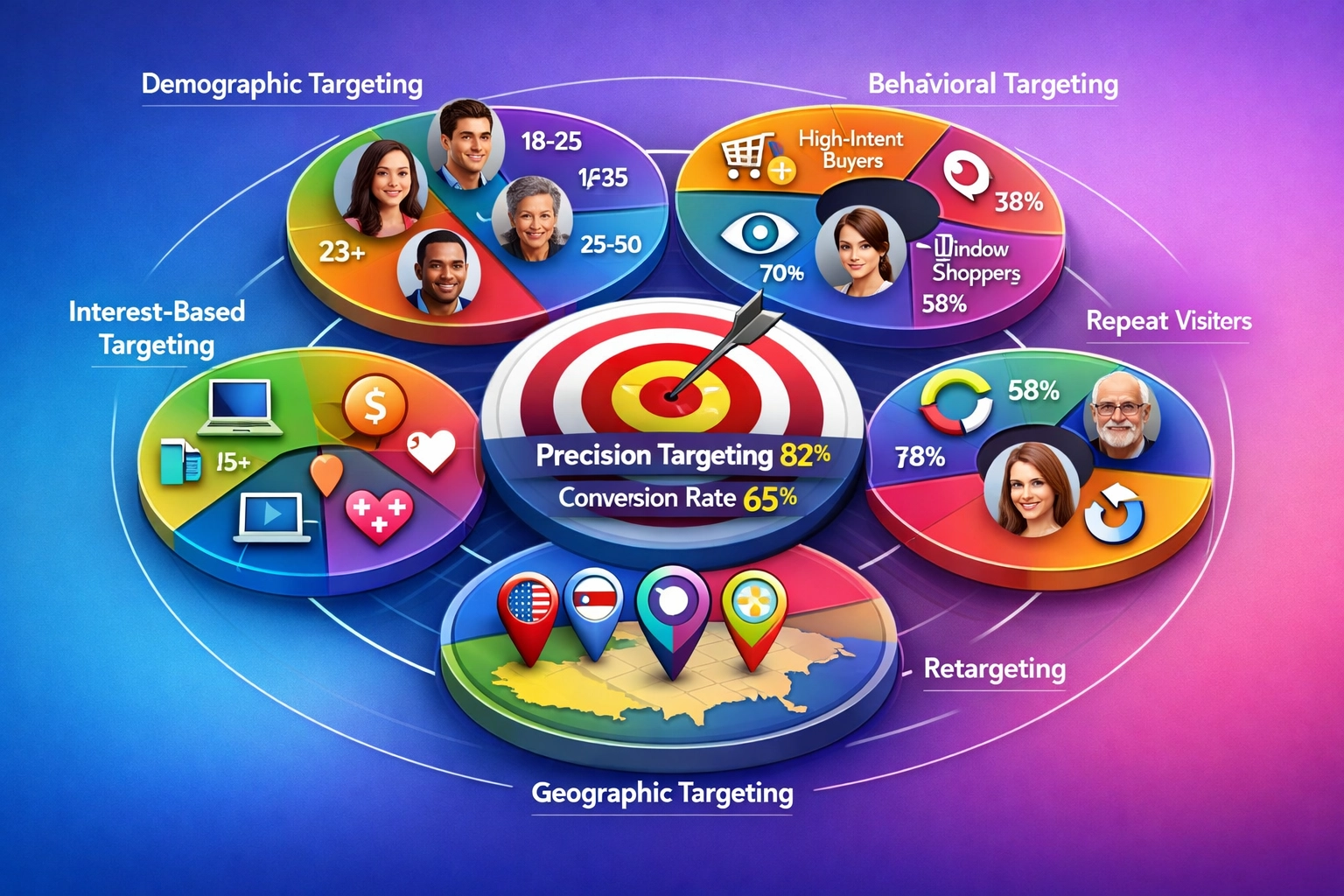
Retargeting capabilities deserve special emphasis, as they allow you to reconnect with users who’ve already shown interest in your niche. By placing tracking pixels on your landing pages, you can follow interested visitors across the web and serve them targeted ads that remind them of the offer they viewed, significantly increasing the likelihood of conversion. This precision targeting ensures your advertising budget is spent reaching people most likely to take action, rather than broadcasting to a broad, unqualified audience.
Paid traffic consistently delivers higher conversion rates than organic traffic because it attracts users with high purchase intent – people actively searching for solutions or already interested in specific product categories. When someone clicks on a paid ad, they’ve made a conscious decision to engage with your offer, whereas organic visitors may have arrived by accident or with minimal interest. The ability to conduct A/B testing on paid platforms means you can continuously refine your ad copy, landing pages, and calls-to-action based on real performance data, creating a virtuous cycle of improvement. While the average affiliate conversion rate ranges from 1-3%, top-performing paid campaigns often exceed these benchmarks by 2-3x through strategic optimization and precise audience targeting.
The intent-driven nature of paid traffic is particularly powerful in affiliate marketing because you’re capturing users at the moment they’re most receptive to your message. For example, someone searching “best credit card for travel rewards” on Google is far more likely to click an affiliate link to a credit card comparison site than someone who randomly stumbled upon your content through social media. This higher-intent traffic translates directly into more conversions per visitor, making your advertising spend more efficient and profitable than relying solely on organic channels.
Be the first to know about new features and product updates.
One of the most compelling advantages of paid traffic is the ability to track and measure virtually every aspect of campaign performance in real-time, enabling data-driven decision-making that continuously improves your results. Unlike traditional advertising where ROI is difficult to calculate, paid platforms provide detailed analytics on critical metrics that directly impact your bottom line. The following table outlines the key performance metrics you should monitor:
| Metric | Definition | Importance for Affiliates |
|---|---|---|
| CTR (Click-Through Rate) | Percentage of impressions that result in clicks | Indicates ad relevance and appeal |
| CPC (Cost Per Click) | Average cost for each click on your ad | Determines traffic acquisition cost |
| ROAS (Return on Ad Spend) | Revenue generated per dollar spent on ads | Benchmark: 12:1 for affiliate channel |
| CPA (Cost Per Action) | Cost to acquire one customer/conversion | Critical for profitability calculations |
| Conversion Rate | Percentage of clicks that result in desired actions | Directly impacts campaign profitability |
Real-time analytics dashboards allow you to monitor campaign performance as it happens, enabling you to pause underperforming ads, increase budgets for winners, and make strategic adjustments within hours rather than waiting for monthly reports. The affiliate channel achieves an impressive 12:1 ROAS benchmark, meaning for every dollar spent on affiliate advertising, you generate twelve dollars in revenue. This measurable, transparent approach to marketing eliminates guesswork and allows you to confidently scale campaigns that deliver proven returns while quickly cutting losses on underperformers.
Paid advertising operates on a pay-per-click (PPC) model, meaning you only pay when someone actually clicks your ad – not for impressions, views, or other vanity metrics – making it inherently cost-efficient and aligned with actual traffic delivery. This fundamental advantage allows affiliate marketers to maintain complete control over their advertising spend through daily budget caps, bid limits, and spending thresholds that prevent unexpected costs or budget overruns. Unlike traditional advertising channels like television, radio, or print where you commit to fixed costs regardless of performance, paid traffic platforms let you start with modest budgets and scale gradually as you prove profitability.
For example, you might set a daily budget of $50 on Google Ads, knowing that you’ll never spend more than that amount regardless of how many clicks your ads receive. As you optimize your campaigns and improve conversion rates, you can increase your daily budget to $100, $200, or more, scaling your investment proportionally with your results. This flexibility is particularly valuable for affiliate marketers with limited initial capital, as you can test offers and platforms with minimal risk before committing significant resources. Additionally, you can pause campaigns instantly if performance deteriorates, protecting your budget from wasted spend on underperforming offers.
Paid advertising platforms enable rapid offer testing and campaign iteration at a speed impossible with organic methods, allowing you to identify winning strategies and scale them before competitors catch on. Rather than waiting months to see if an organic strategy works, you can launch multiple paid campaigns simultaneously, each testing different angles, audiences, or offers, and identify winners within days. This data-driven approach to optimization creates a continuous improvement cycle where each campaign iteration builds on learnings from previous tests. Consider these essential testing strategies:
• Ad copy variations – Test 5-10 different headlines and descriptions to identify which messaging resonates most • Landing page testing – Compare different page layouts, offers, and calls-to-action to maximize conversion rates • Audience segmentation – Test different demographic, interest, and behavioral targeting combinations to find your ideal customer • Bid strategy optimization – Experiment with manual bidding, automated bidding, and different bid amounts to improve ROI
The ability to make data-driven decisions based on actual performance metrics means you’re constantly refining your approach based on what works, not what you think should work. This iterative optimization process compounds over time, with each successful test informing the next campaign and gradually improving your overall affiliate marketing performance and profitability.
Paid advertising provides access to multiple traffic channels and platforms, reducing your dependence on any single source and protecting your affiliate business from algorithm changes or platform policy shifts. Rather than relying solely on Google organic search, you can diversify across Google Ads, Facebook and Instagram ads, LinkedIn advertising, programmatic display networks, TikTok ads, and native advertising platforms, each reaching different audiences and offering unique advantages. This diversification strategy is crucial for long-term sustainability, as algorithm updates or policy changes on any single platform won’t devastate your entire business.
Google Ads excels at capturing high-intent search traffic from users actively looking for solutions, while Facebook and Instagram reach users based on interests and behaviors during their leisure time. LinkedIn advertising targets professionals and B2B audiences, making it ideal for affiliate offers related to business tools, courses, or services. Programmatic display networks reach users across thousands of websites, providing broad reach and excellent retargeting capabilities. By testing and optimizing across multiple platforms, you can identify which channels deliver the best ROI for your specific offers and allocate your budget accordingly, creating a resilient, diversified traffic portfolio.
In today’s competitive affiliate marketing landscape, the ability to move fast and capture market opportunities before competitors is a significant advantage, and paid traffic enables exactly this speed advantage. While competitors are waiting for organic rankings to develop, you can launch paid campaigns targeting high-value keywords and audiences, capturing sales and building brand awareness immediately. This speed-to-market advantage is particularly valuable during seasonal opportunities – for example, launching affiliate campaigns for holiday shopping, back-to-school season, or tax preparation services weeks before organic competitors can rank for relevant keywords.

Paid traffic also allows you to capture high-intent traffic that competitors may not have discovered yet, giving you first-mover advantage in emerging niches or underserved markets. For instance, if a new product launches and you quickly identify relevant search terms and audience interests, you can bid on those keywords and reach interested users before organic rankings develop. Additionally, paid advertising enables you to test new offers and markets with minimal risk, allowing you to identify profitable niches and scale them before competitors realize the opportunity exists. This combination of speed, precision, and measurable results creates a sustainable competitive advantage for affiliate marketers willing to invest in paid traffic strategies.
Paid traffic represents a fundamental shift in how affiliate marketers can build sustainable, scalable businesses. By combining immediate visibility, precise targeting, higher conversion rates, and measurable ROI, paid advertising accelerates your path to profitability while reducing the risk associated with untested strategies. The $12 billion affiliate marketing industry continues to grow because successful marketers leverage paid traffic to capture market opportunities faster than competitors, test offers at scale, and optimize campaigns based on real performance data.
The key to success with paid traffic is starting small, testing thoroughly, and scaling only what works. Whether you’re just beginning your affiliate marketing journey or looking to accelerate existing campaigns, paid traffic offers a proven pathway to growth. By implementing the strategies outlined in this guide – from precise audience targeting to continuous optimization – you can build a profitable affiliate business that generates consistent, measurable returns.
Ready to take your affiliate marketing to the next level? The time to start is now. Begin with a modest budget, test different platforms and offers, and let the data guide your decisions. With the right approach to paid traffic, your affiliate marketing success is limited only by your willingness to invest and optimize.
Paid traffic comes from paid advertising campaigns (Google Ads, Facebook, etc.) and delivers immediate visibility, while organic traffic comes from search engines and takes months to develop. Paid traffic offers faster results and precise targeting, while organic traffic is free but requires significant time investment. Most successful affiliate marketers use both strategies together for maximum reach and sustainability.
Start with a modest budget of $100-$500 to test different platforms and offers without significant risk. Once you identify profitable campaigns with positive ROI, gradually increase your budget. The key is to focus on profitability metrics (ROAS, CPA) rather than spending large amounts upfront. Many successful affiliates reinvest profits from winning campaigns to scale them exponentially.
Google Ads excels at capturing high-intent search traffic, Facebook and Instagram offer detailed demographic targeting, TikTok reaches younger audiences, LinkedIn targets professionals, and native advertising provides broad reach. The best channel depends on your niche and target audience. Most successful affiliates test multiple channels and allocate budget to the highest-performing platforms.
The affiliate channel achieves an impressive 12:1 ROAS benchmark, meaning for every dollar spent, you generate twelve dollars in revenue. However, individual campaign performance varies by niche, offer, and targeting. A minimum target is 4:1 ROAS (4 dollars revenue per 1 dollar spent), though many successful campaigns achieve 5:1 to 10:1 ROAS or higher.
Use conversion tracking pixels provided by ad platforms (Google Ads, Facebook Pixel) and implement UTM parameters in your affiliate links to track traffic sources. Most affiliate networks provide tracking links that automatically attribute conversions to your account. PostAffiliatePro offers advanced tracking and real-time analytics to monitor campaign performance across all traffic sources.
Yes, most affiliate programs allow paid traffic, but many prohibit affiliates from bidding on the merchant's brand keywords to avoid cannibalizing organic sales. Always review your affiliate agreement for restrictions. Non-branded keywords, display advertising, and social media campaigns are typically allowed and highly effective for affiliate marketing.
Common mistakes include poor landing page optimization, inadequate A/B testing, targeting too broad audiences, ignoring negative keywords, and scaling too quickly without proven profitability. The key is to start small, test thoroughly, optimize based on data, and only scale campaigns that demonstrate positive ROI.
Paid traffic delivers immediate visibility within hours of campaign launch, but meaningful data requires 3-7 days of testing. Most campaigns need 2-4 weeks of optimization before achieving profitability. The timeline depends on your budget, niche competitiveness, and optimization efforts. Successful affiliates continuously monitor and adjust campaigns for ongoing improvement.
Manage your affiliate campaigns more effectively with advanced tracking, real-time analytics, and powerful optimization tools designed for affiliate marketers.
Learn how to use paid traffic channels in affiliate marketing. Check out our tips & tricks and start improving immediately.
Learn how to rapidly drive traffic with Pay Per Click advertising using major networks like Google, Facebook, and YouTube. Discover essential tips for starting ...
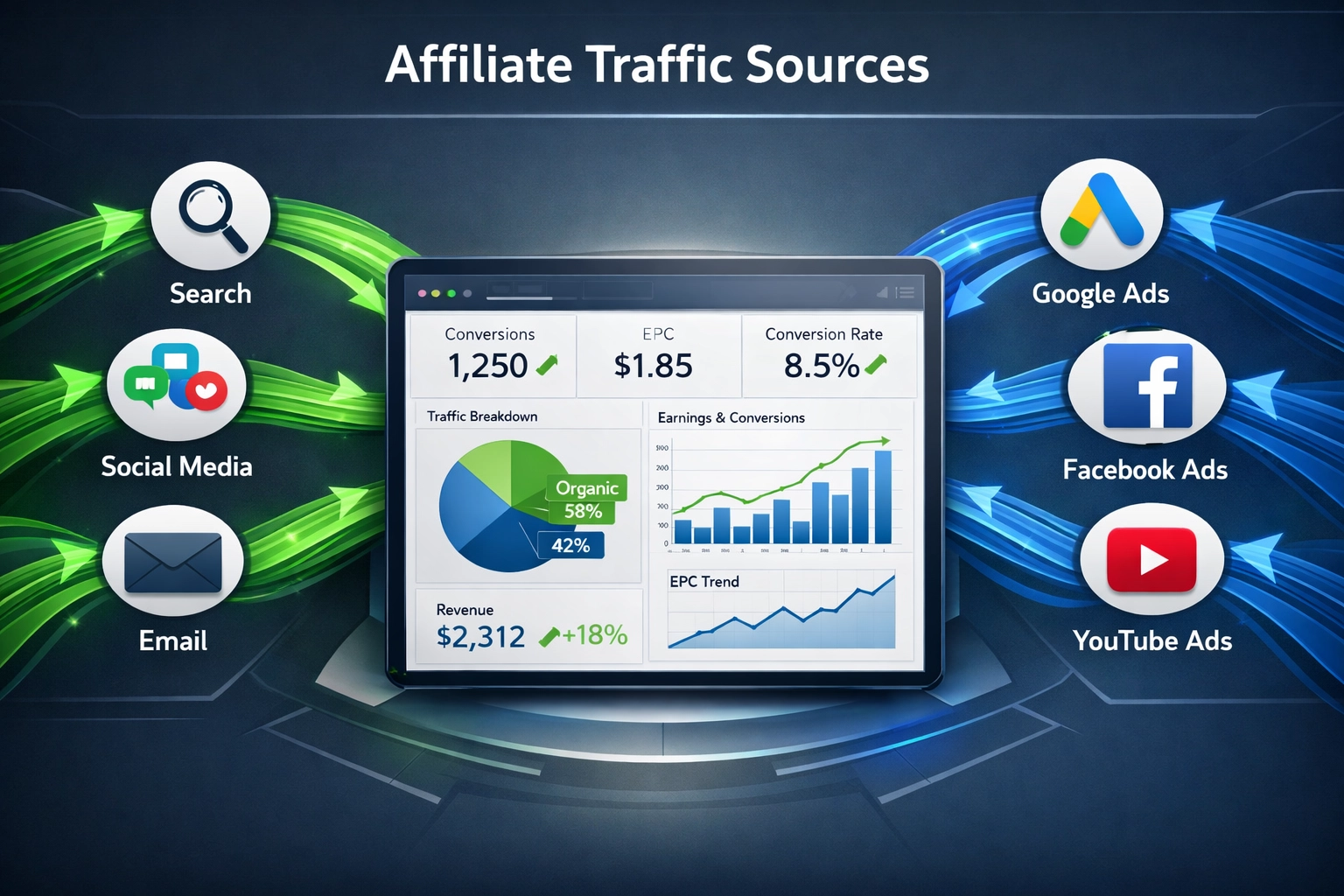
Learn about organic and paid affiliate traffic sources, their impact on conversion rates, and how to build a hybrid strategy for profitability.
Join our community of happy clients and provide excellent customer support with Post Affiliate Pro.




Cookie Consent
We use cookies to enhance your browsing experience and analyze our traffic. See our privacy policy.