



Betting Affiliate Google Ads Compliance & Strategy
Master Google Ads compliance for betting affiliates. Learn certification requirements, geo-targeting strategies, and how to scale campaigns compliantly.
14 min read

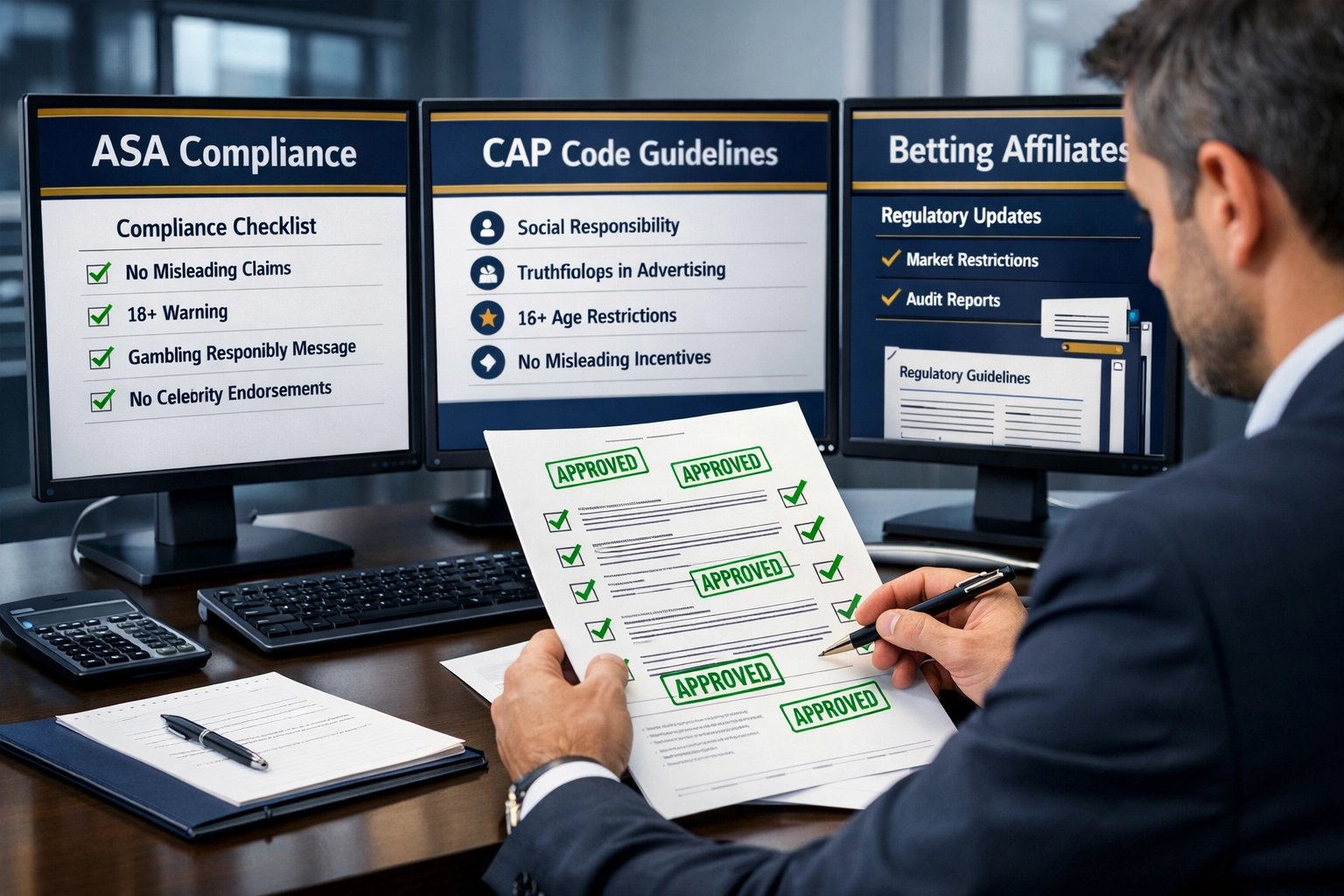
Learn UK ASA and CAP Code requirements for betting affiliate marketing. Understand age restrictions, disclosure rules, and compliance practices.
The Advertising Standards Authority (ASA) is the self-regulatory body that oversees advertising standards across the United Kingdom, and understanding its rules is essential for anyone involved in betting affiliate marketing. Betting affiliates operate in one of the most heavily regulated advertising sectors, where compliance with the CAP Code (Code of Non-broadcast Advertising and Direct & Promotional Marketing) is not optional but mandatory. Recent amendments in September 2025 have further tightened regulations, closing loopholes that previously allowed non-UK registered gambling operators to avoid certain advertising rules, making it more critical than ever for affiliates to understand their obligations. Whether you’re promoting betting products through content marketing, social media, email campaigns, or display advertising, the ASA’s rules apply directly to your marketing communications, and non-compliance can result in upheld complaints, reputational damage, and potential enforcement action against both you and the gambling operator you represent.

CAP Code Section 16 is the dedicated section governing all gambling advertising in the UK, and it applies not only to gambling operators but explicitly to marketing communications created by third parties such as affiliate marketers. This section contains specific rules designed to ensure that gambling advertising is socially responsible and does not exploit vulnerable consumers or those under the age of 18. The rules cover everything from the tone and messaging of ads to the placement and targeting of campaigns across different media channels. Affiliates must understand that when they create content promoting betting products, they are subject to the same CAP Code requirements as the gambling operator themselves, meaning there is no exemption or reduced standard for affiliate-created content. The Gambling Act 2005 and subsequent amendments have reinforced that marketing communications likely to promote gambling must comply with Section 16, regardless of who creates them.
| Rule Number | Rule Description | Affiliate Implication |
|---|---|---|
| 16.1 | Ads must be socially responsible and protect children and vulnerable persons | Affiliates must ensure all content respects these protections |
| 16.3.13 | Ads must not be directed at under-18s; reasonable steps must be taken to prevent exposure | Affiliates must carefully select media and monitor audience demographics |
| 16.3.4 | Ads must not imply gambling provides financial security | Affiliates cannot suggest gambling solves money problems |
| 16.3.6 | Ads must not suggest gambling improves personality or self-image | Affiliates must avoid lifestyle/confidence-boosting claims |
| 2.1 | All ads must be obviously identifiable as marketing communications | Affiliates must clearly label content as “Ad” or advertising |
| 8.17 | Significant conditions of promotions must be communicated clearly | Affiliates must display bonus terms prominently, not hidden in fine print |

Set up advanced tracking in minutes. No credit card required.
A critical point that many affiliates misunderstand is that primary responsibility for CAP Code compliance rests with the gambling operator, not the affiliate, even though the affiliate created the content. However, this does not mean affiliates can ignore the rules—rather, it means that gambling operators can be held wholly or jointly responsible for affiliate breaches, which creates significant pressure on operators to implement strict affiliate oversight. This arrangement exists because operators have the contractual relationship with consumers and the regulatory relationship with the Gambling Commission, making them the accountable party in the eyes of regulators. In practice, this means that if an affiliate creates non-compliant content, the operator faces the ASA complaint, the upheld ruling, and the reputational damage, which is why many operators have implemented strict pre-approval processes and even “one strike” policies where affiliates are immediately suspended for breaches. Understanding this dynamic is crucial for affiliates because it means operators are increasingly scrutinizing affiliate content and may terminate relationships with affiliates who create compliance issues.
Rule 16.3.13 of the CAP Code is one of the most important rules for betting affiliates to understand: gambling advertising must not be directed at those under the age of 18 (or 16 for lotteries, football pools, and certain gaming activities). This doesn’t mean you can never advertise on platforms where young people might see your ads; rather, it means you must demonstrate that you have taken reasonable steps to prevent your ads from being directed at under-18s. The ASA expects affiliates to carefully consider media placement, audience demographics, and targeting parameters when promoting gambling products. For example, advertising on TikTok or Instagram without age-gating mechanisms would likely be considered directed at under-18s, while advertising in publications with predominantly adult audiences or using age-targeting tools on Facebook would demonstrate reasonable steps. Affiliates should maintain documentation showing how they selected media, what audience data they reviewed, and what targeting parameters they applied. Social media is particularly challenging because audience demographics can be difficult to verify, so affiliates must be especially cautious when using these platforms.
Key Age-Related Requirements for Betting Affiliates:
Be the first to know about new features and product updates.
The ASA has been particularly strict about gambling ads that exploit vulnerable consumers or suggest that gambling can solve personal or financial problems, and this is where many affiliate campaigns have failed compliance. Gambling ads must not imply that gambling provides financial security, solves depression or anxiety, improves personality or self-image, or is linked with sexual success—yet these are exactly the types of claims that have appeared in affiliate-created content. In 2017, the ASA upheld complaints against multiple gambling operators for affiliate-created advertorials that told stories of people in financial distress who won money through gambling, including a Casumo ad about a man who couldn’t afford his wife’s cancer treatment but won enough through gambling to solve his problems, an 888 Casino ad with a nearly identical narrative, a Sky Vegas advertorial promoting the same harmful message, and a Ladbrokes ad following the same pattern. Sky Bingo also faced an upheld complaint for an advertorial featuring a McDonald’s employee who won a life-changing amount of money, which implied gambling as a solution to hardship. These cases demonstrate that the ASA takes a dim view of content that suggests gambling is an escape from personal problems or a path to financial security. Affiliates should focus on promoting gambling as entertainment, emphasizing responsible gambling messages, and avoiding any suggestion that gambling can solve real-world problems.
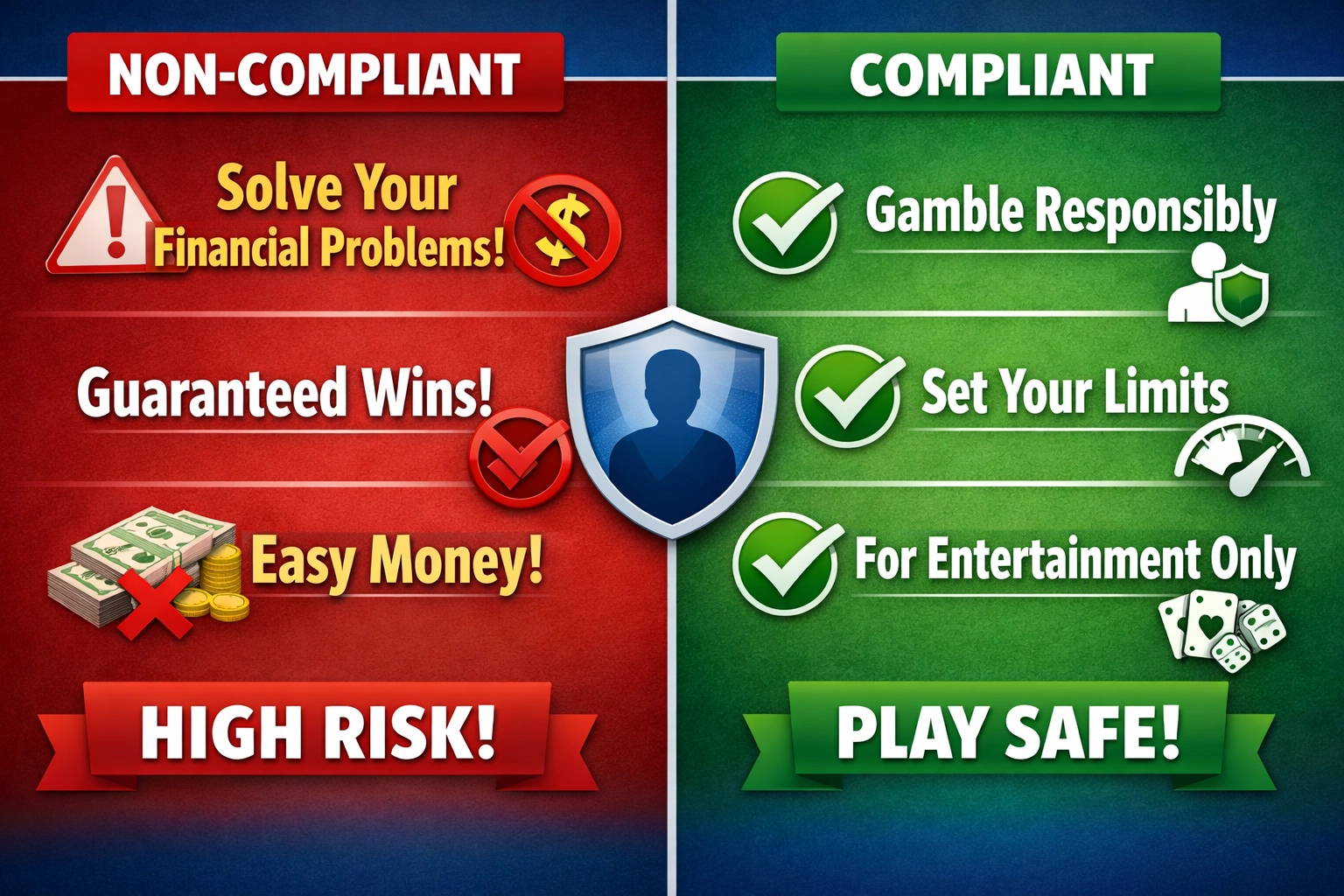
Rule 2.1 of the CAP Code requires that all advertising must be obviously identifiable as such, and this applies equally to affiliate marketing. The ASA has been clear that affiliate content must make the commercial intent transparent to consumers, and simply labeling content as “advertorial” is not sufficient if the content appears to be editorial in nature. The ASA recommends using a clear “Ad” label in a prominent position, and this label should be visible before consumers engage with the content, not hidden at the bottom of a long article. Transparency extends beyond just labeling—it means being honest about the commercial relationship between the affiliate and the gambling operator, disclosing that you receive commission or payment for promoting the product, and ensuring that consumers understand they are viewing marketing content. This is non-negotiable under the CAP Code, and failure to properly disclose affiliate relationships has been a consistent issue in ASA rulings against gambling operators and their affiliates.
When promoting gambling bonuses, free bets, or other promotional offers, affiliates must comply with Section 8 of the CAP Code (Promotional Marketing), which requires that significant terms and conditions be communicated clearly. The ASA has ruled that while some terms and conditions can be placed one click away from the ad (provided this is made sufficiently clear), any term that changes consumers’ understanding of the offer must be visible within the ad itself. For example, if you’re promoting a free bet offer, the wagering requirements, time limits, and game restrictions must be clearly stated in the ad, not buried in terms and conditions. Bonuses and free bets must also be proportionate to the amount wagered—a free bet offer should not encourage players to gamble substantial amounts at regular and fixed frequencies or within a limited period. The ASA expects affiliates to ensure that promotional offers are presented honestly and that consumers understand exactly what they’re getting before they click through to claim the offer. Operators have been held responsible for affiliate-created promotions that failed to meet these standards, so it’s essential that affiliates work closely with operators to ensure all promotional content is pre-approved and compliant.
In September 2025, the ASA made significant amendments to close loopholes that had previously allowed gambling operators registered outside the UK to avoid certain advertising rules. Previously, non-paid content (such as organic social media posts or unpaid affiliate content) was exempt from certain CAP Code requirements, but this exemption no longer applies. This means that all gambling content, whether paid or organic, must now comply with CAP Code rules regardless of whether the operator is UK-licensed or based outside the UK. For affiliates, this change is significant because it means you cannot rely on the assumption that non-paid content has fewer restrictions—every piece of content you create promoting gambling must meet the same compliance standards as paid advertising. The ASA has made clear that these amendments are designed to prevent operators from circumventing advertising rules by using unpaid affiliate content, and affiliates should assume that all their content will be scrutinized to the same standard as traditional paid advertising. Staying updated on ASA guidance and amendments is essential for maintaining compliance.
To maintain compliance with ASA rules, betting affiliates should implement several best practices that go beyond simply understanding the rules. First, establish a pre-approval process where all content is reviewed and approved by the gambling operator before publication—this creates a documented record of compliance and ensures that the operator has visibility into your marketing activities. Second, maintain detailed documentation of all approval decisions, including dates, content versions, and approval sign-offs, as this documentation can be crucial if an ASA complaint is made. Third, provide regular training to your team on CAP Code rules, particularly Section 16 on gambling advertising, and ensure that everyone involved in creating content understands the key restrictions. Fourth, implement ongoing monitoring and auditing of your published content to catch any compliance issues before they result in ASA complaints. Fifth, always include responsible gambling messaging in your content, such as “Gamble Responsibly” or links to GambleAware.co.uk, which demonstrates your commitment to social responsibility. Sixth, use CAP’s free Copy Advice service to get guidance on specific content before publication—this service is available to all marketers and can help you avoid compliance issues. Finally, maintain strong affiliate agreements that clearly outline compliance expectations and consequences for breaches, and be prepared to enforce these agreements by suspending or terminating affiliates who violate them.
The consequences of ASA non-compliance for betting affiliates can be severe and far-reaching. When the ASA upholds a complaint against a gambling operator for affiliate-created content, the operator faces reputational damage, potential enforcement action, and may be required to remove the offending content and implement corrective measures. In some cases, operators have taken drastic action in response to affiliate compliance issues—Sky Bet announced in 2017 that it was closing down its entire UK affiliate marketing program due to concerns about affiliate compliance, and Paddy Power Betfair implemented a “one strike” policy where affiliates are immediately suspended if they breach the company’s internal policies. These examples demonstrate that operators are increasingly intolerant of affiliate compliance failures because the reputational and regulatory costs are borne by the operator, not the affiliate. Beyond operator sanctions, affiliates who create non-compliant content may face termination of their affiliate relationships, loss of commission income, and damage to their reputation in the industry. In extreme cases, the Gambling Commission may become involved if the non-compliance relates to unlicensed operators or other serious violations, potentially leading to legal action.
Fortunately, there are numerous resources available to help betting affiliates maintain compliance with ASA rules. The CAP Copy Advice team provides free, bespoke advice on specific marketing materials, and this service is available to all marketers—you can submit your content for review before publication to get guidance on compliance. The ASA also offers free eLearning modules on gambling advertising that provide detailed guidance on CAP Code Section 16 and how to apply it to your marketing. The Gambling Commission publishes detailed guidance on advertising and marketing rules for licensed operators, which is helpful for understanding the regulatory context in which you’re operating. PostAffiliatePro provides affiliate management software that includes compliance features to help you manage affiliate relationships, track approvals, and maintain documentation of compliance decisions. Additionally, industry organizations such as the Interactive Advertising Bureau (IAB) and the Betting and Gaming Council (BGC) publish guidance and best practices for responsible gambling advertising. Taking advantage of these resources demonstrates your commitment to compliance and can help you avoid costly mistakes.
Compliance with ASA rules for betting affiliates is not a one-time effort but an ongoing commitment to understanding and applying the CAP Code to all your marketing activities. The September 2025 amendments closing non-UK operator loopholes signal that regulatory pressure is increasing, and affiliates who fail to adapt to these stricter standards risk losing their affiliate relationships and damaging their reputation in the industry. By implementing robust pre-approval processes, maintaining detailed documentation, providing regular training, and using available resources like CAP Copy Advice, you can significantly reduce your compliance risk and build a sustainable affiliate marketing business. PostAffiliatePro’s affiliate management platform can help you streamline compliance workflows, track approvals, and maintain the documentation necessary to demonstrate your commitment to responsible gambling advertising. The investment in compliance infrastructure is not just about avoiding ASA complaints—it’s about building trust with gambling operators, protecting your reputation, and contributing to a more responsible gambling industry overall.
The gambling operator bears primary responsibility for ensuring all marketing communications, including those created by affiliates, comply with the CAP Code. However, affiliates must also adhere to the Code, and operators can be held jointly or wholly responsible for affiliate breaches. This means operators are increasingly scrutinizing affiliate content and may terminate relationships with affiliates who create compliance issues.
Yes, but affiliates must demonstrate reasonable steps to ensure ads aren't directed at under-18s. This means carefully selecting platforms and monitoring audience demographics. For example, platforms with predominantly young audiences may not be suitable for gambling ads, while age-targeting tools on Facebook can help demonstrate compliance.
All affiliate marketing must be obviously identifiable as advertising under Rule 2.1 of the CAP Code. The ASA recommends using a clear 'Ad' label in a prominent position, visible before consumers engage with the content. The commercial intent must be transparent, and consumers should understand they are viewing marketing content, not editorial content.
Yes. Under Section 8 of the CAP Code, bonuses and free bets must be proportionate to the amount wagered, clearly disclosed, and not encourage excessive gambling. Significant terms and conditions must be visible within the ad itself, not hidden in fine print. Wagering requirements, time limits, and game restrictions must be clearly stated.
The ASA closed loopholes that allowed non-UK registered gambling operators to avoid certain advertising rules. Non-paid content exemptions no longer apply, meaning all gambling content must comply with CAP Code rules regardless of whether it's paid or organic. This significantly increases compliance requirements for affiliates.
The gambling operator can face ASA complaints being upheld, leading to reputational damage and potential enforcement action. Affiliates may face termination of their affiliate relationships, loss of commission income, and damage to their reputation. Some operators have closed affiliate programs entirely or implemented 'one strike' policies for breaches.
Implement pre-approval processes where all content is reviewed before publication, maintain documentation of approval decisions, provide affiliate training on CAP Code rules, and use CAP's free Copy Advice service for guidance on specific content. Regular monitoring and auditing of published content is also essential.
Yes. The ASA provides free eLearning modules on gambling advertising, the Gambling Commission offers detailed guidance, and CAP's Copy Advice team provides free bespoke advice on specific marketing materials. PostAffiliatePro also provides affiliate management software with compliance features to help manage affiliate relationships and maintain documentation.
PostAffiliatePro helps you manage compliant affiliate programs with built-in approval workflows, documentation tracking, and compliance monitoring tools.
Master Google Ads compliance for betting affiliates. Learn certification requirements, geo-targeting strategies, and how to scale campaigns compliantly.
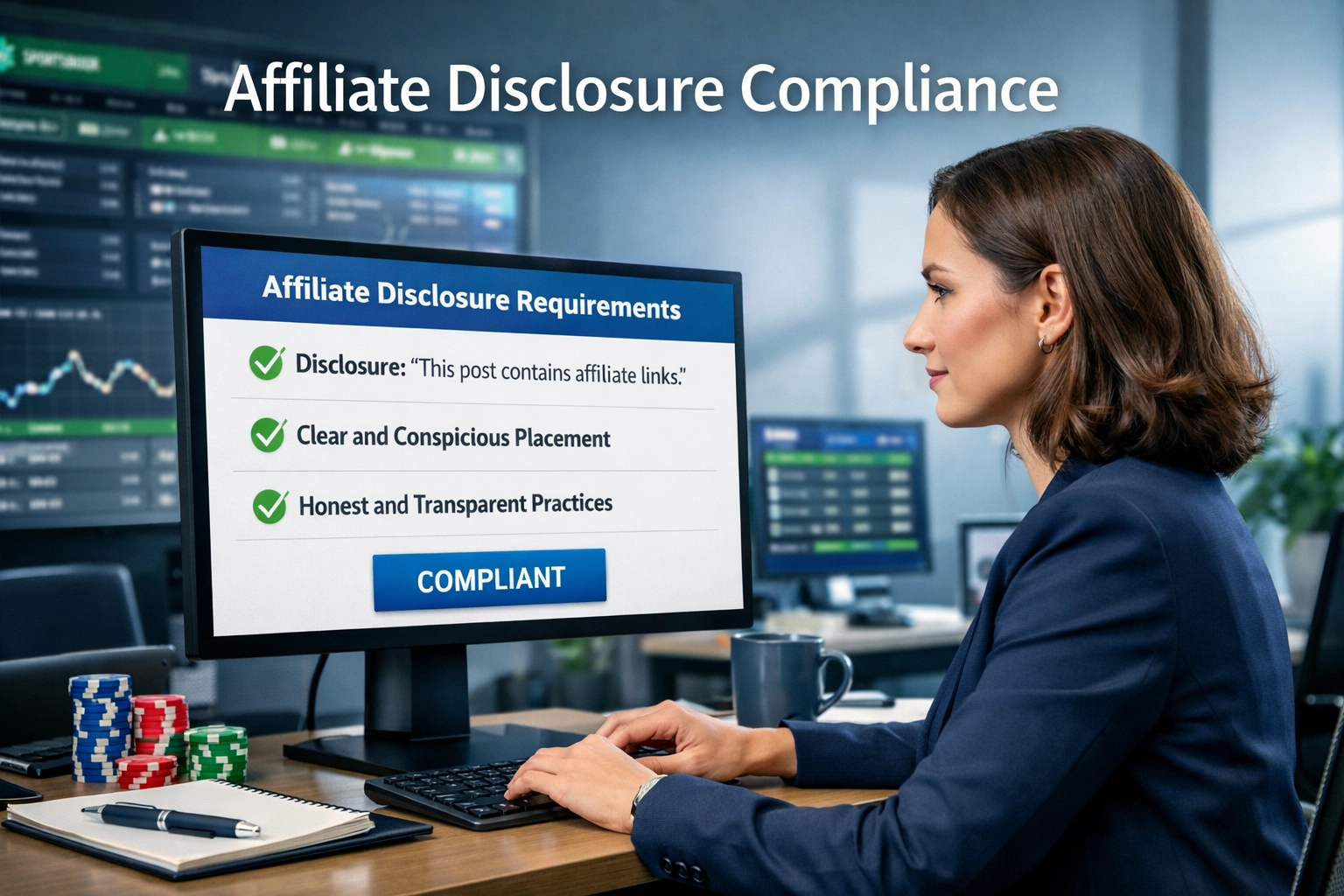
Complete guide to FTC and international betting affiliate disclosure requirements. Learn placement, language, compliance rules, and best practices for 2026.
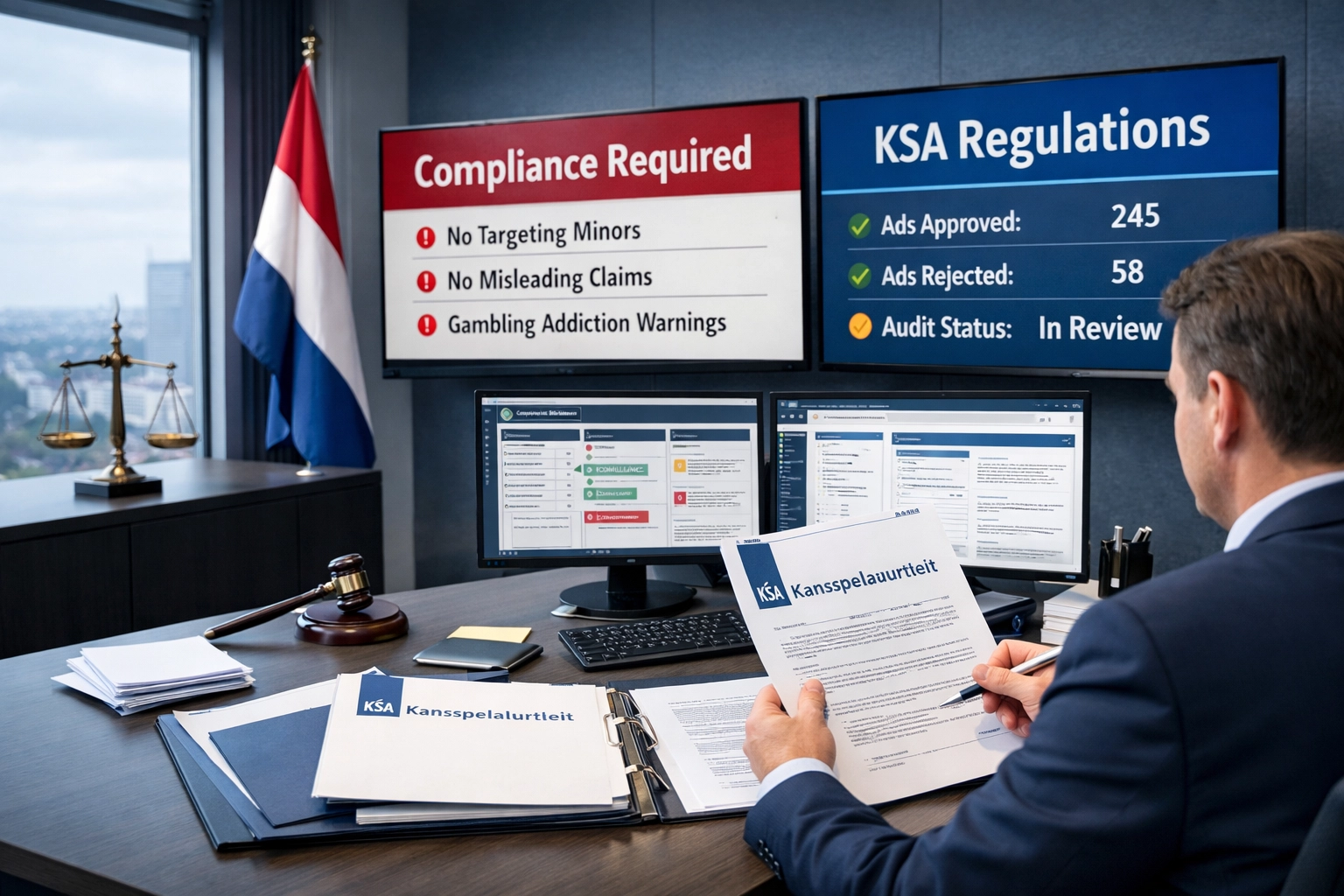
Learn how the Dutch gambling advertising ban impacts affiliate marketing. Discover compliance requirements, channel restrictions, and opportunities.
Join our community of happy clients and provide excellent customer support with Post Affiliate Pro.




Cookie Consent
We use cookies to enhance your browsing experience and analyze our traffic. See our privacy policy.