


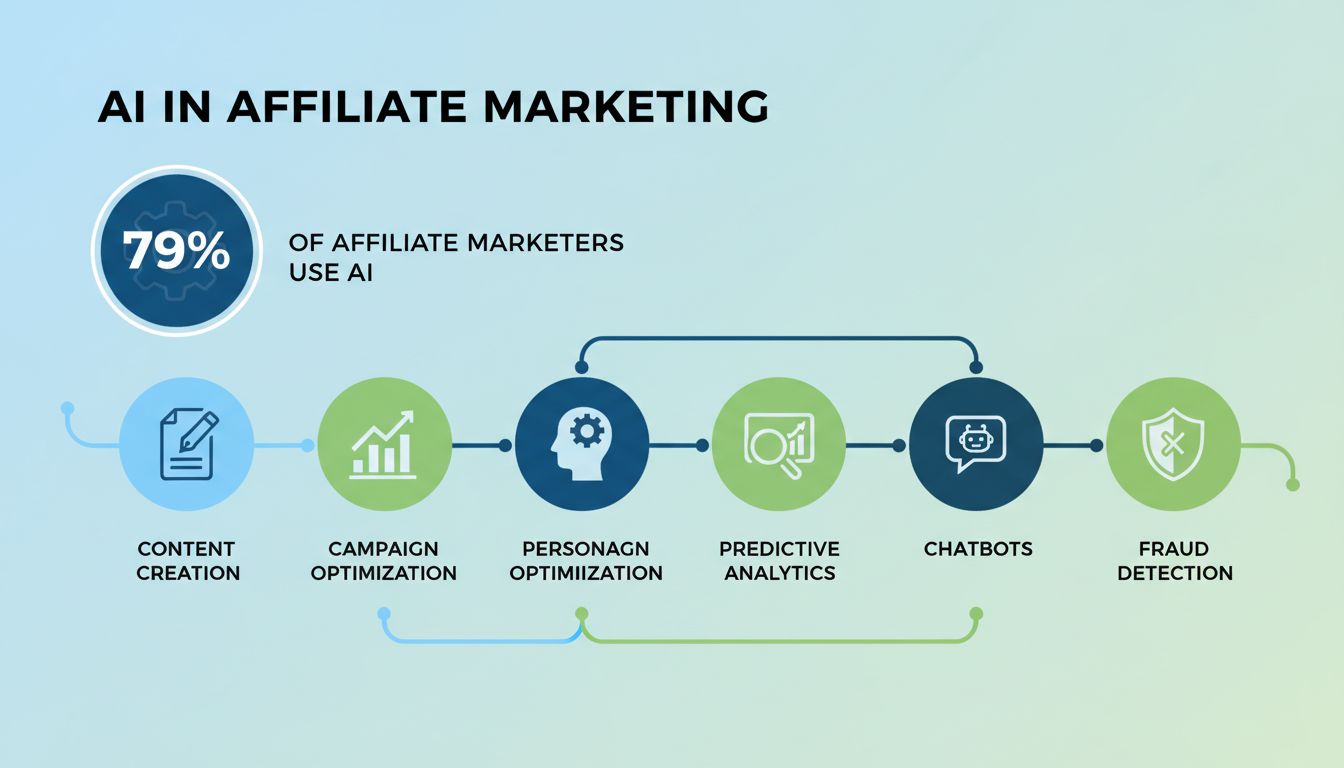
AI in Affiliate Marketing: Transforming Strategy and Performance
Discover how AI revolutionizes affiliate marketing through content creation, campaign optimization, and personalization. Learn why 79% of affiliate marketers us...
9 min read


Learn whether Google penalizes AI-translated affiliate content. Discover best practices for using AI translation tools and maintaining quality.
The affiliate marketing landscape is rapidly evolving, and AI translation tools have become increasingly tempting for marketers looking to expand into international markets quickly and cost-effectively. With the ability to instantly convert English content into dozens of languages, these tools promise to unlock new revenue streams without the traditional expense of hiring professional translators. However, the question that keeps many affiliate marketers up at night is simple yet critical: will Google penalize me for using AI-translated content? The answer isn’t straightforward, and understanding Google’s nuanced stance on this issue could mean the difference between scaling your affiliate business globally and watching your rankings plummet overnight.
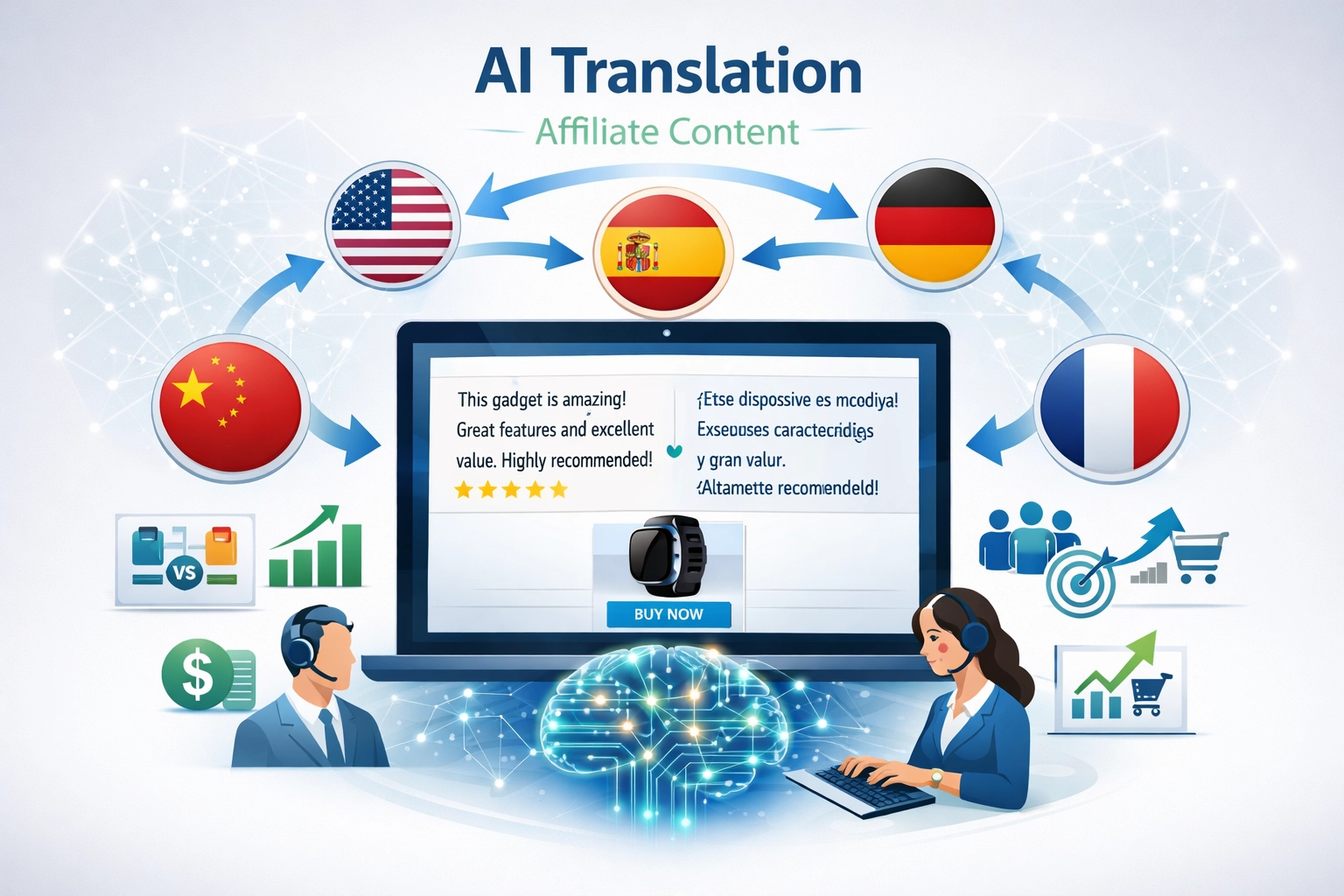
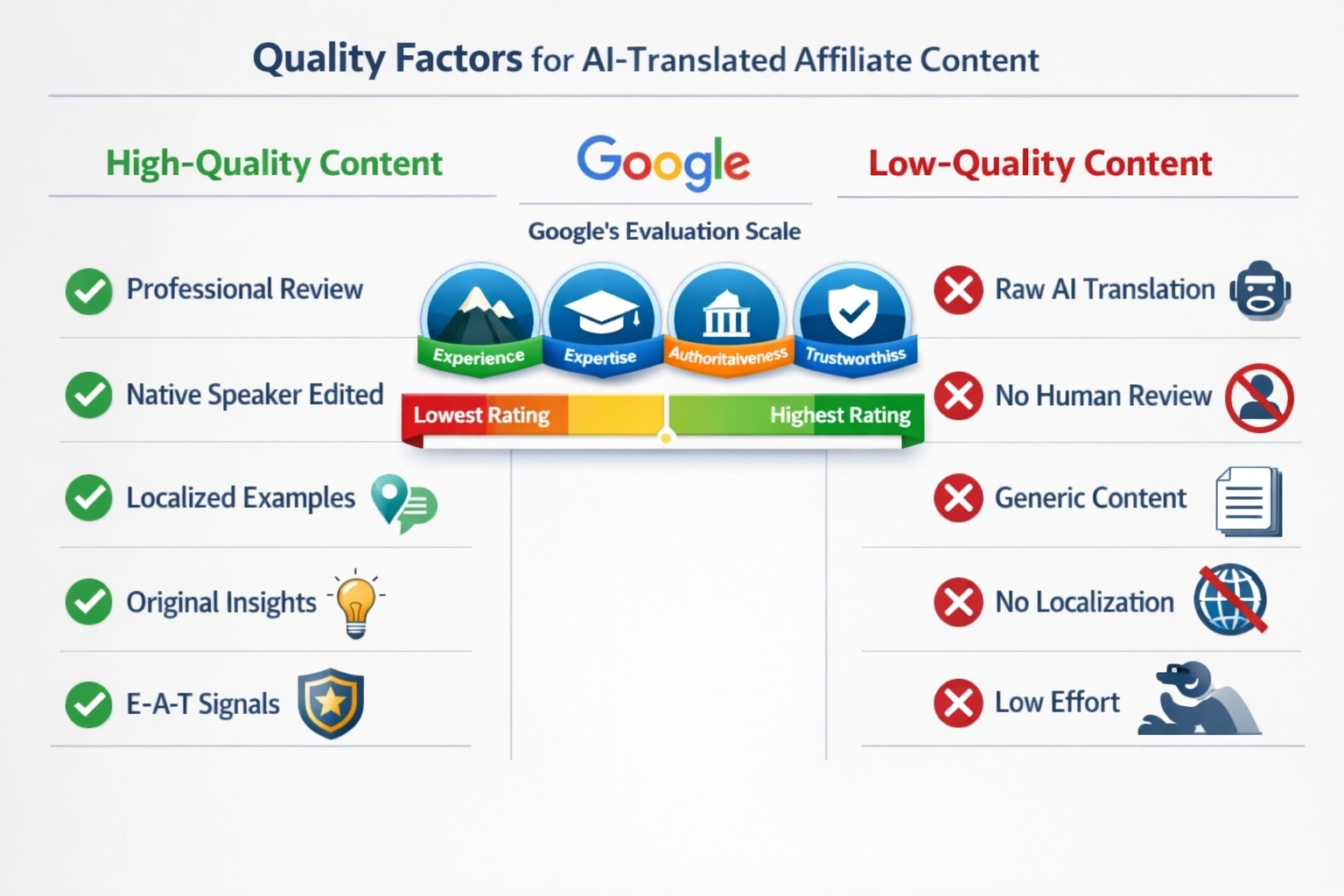
Google’s position on AI-generated content has evolved significantly, particularly following their January 2025 update. The search giant has made it abundantly clear that they don’t inherently penalize content simply because it was created or translated using AI tools. Instead, Google focuses on quality, originality, and added value rather than the method used to produce the content. According to Google’s official guidance, content that demonstrates E-E-A-T (Experience, Expertise, Authoritativeness, and Trustworthiness) will rank well regardless of whether AI was involved in its creation. However, Google’s algorithms are specifically designed to target content with “little to no effort, originality, or added value”—a category that encompasses much of the low-quality AI translation flooding the internet today.
The critical distinction Google makes is between thoughtfully-created AI content and scaled content abuse. Scaled content abuse refers to the practice of mass-producing AI-generated or AI-translated content with minimal human oversight, purely for SEO purposes. This practice violates Google’s core principles and will result in ranking penalties. For affiliate marketers, this means that using AI translation as a shortcut to quickly populate multiple language versions of your site without any human review or localization is a risky strategy that Google’s algorithms are increasingly sophisticated at detecting.
| Aspect | Google’s Stance | Implication for Affiliates |
|---|---|---|
| AI Translation Itself | Not Prohibited | You can use AI tools |
| Quality Requirements | Must Meet E-A-T | Human review is essential |
| Scaled Content Abuse | Heavily Penalized | Avoid mass production without review |
| Human Editing | Strongly Recommended | Combine AI with human expertise |
| Originality & Value | Critical Factor | Add unique insights to translations |

Set up advanced tracking in minutes. No credit card required.
Google’s detection mechanisms for low-quality AI translation have become remarkably sophisticated, leveraging both algorithmic analysis and human review processes. The search engine can identify telltale signs of unedited AI translation, including awkward phrasing, cultural misalignments, and contextual errors that native speakers would immediately recognize as unnatural. When you run content through an AI translator without human review, it often produces technically accurate translations that nonetheless sound robotic or miss important cultural nuances that resonate with local audiences. Google’s systems analyze patterns across millions of pages to identify content that exhibits these characteristics at scale, particularly when multiple pages on a domain show similar signs of low-effort translation. Additionally, Google’s January 2025 update specifically targets content that lacks originality or added value, which describes most unedited AI translations perfectly. The algorithm also considers user engagement metrics like bounce rate and time-on-page, which tend to be significantly lower for poorly translated content, further signaling to Google that the content isn’t meeting user needs.
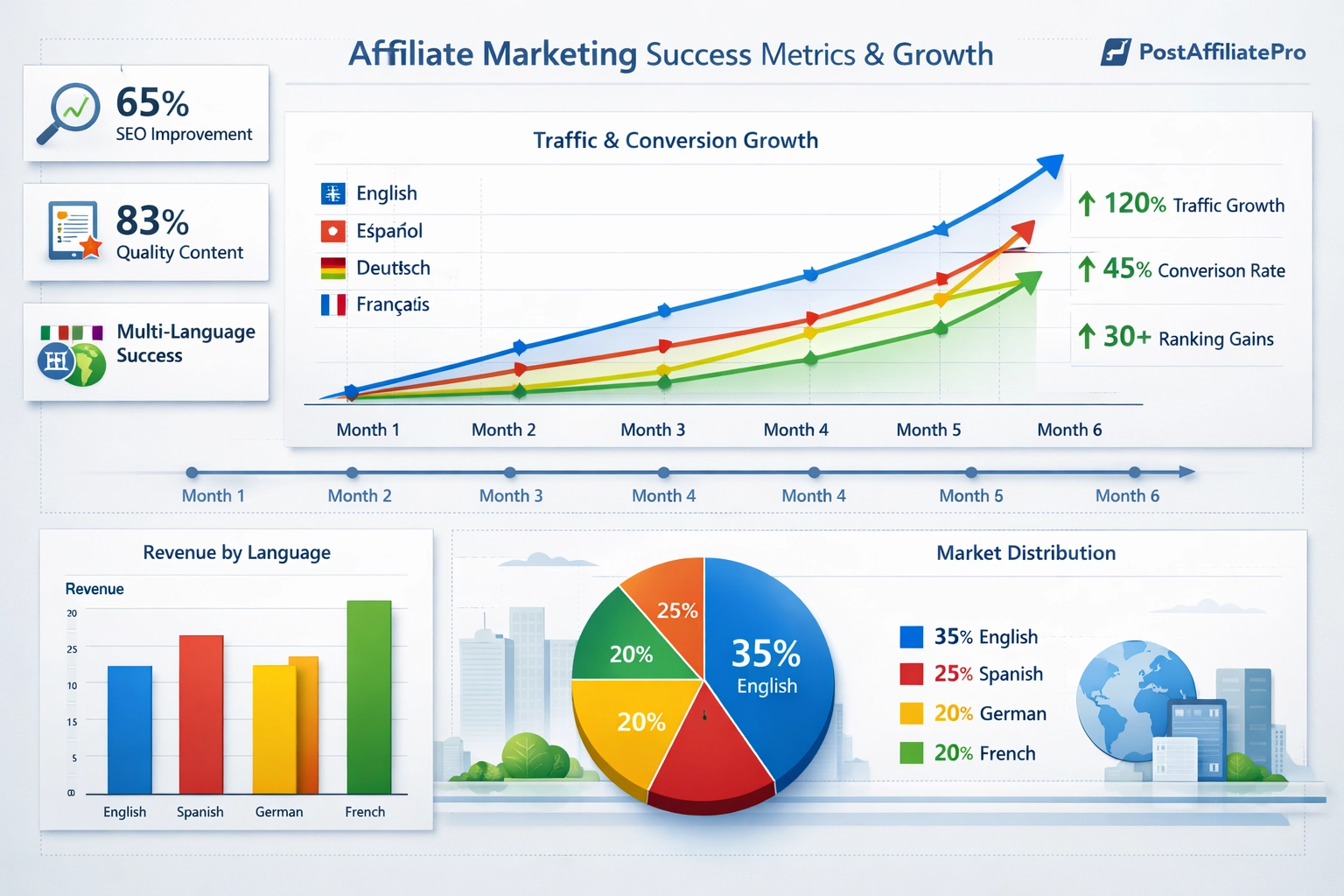
One of the most important concepts for affiliate marketers to grasp is that Google cares about quality, not method. This principle, consistently reinforced by Google’s search team, means that an AI-translated article that has been thoroughly edited, localized, and enhanced with original insights can outrank a poorly-written human translation. The data supports this perspective: according to Semrush research, 65% of marketers saw SEO improvements with AI, and 73% of successful marketers combine AI with human writing rather than relying on AI alone. This hybrid approach acknowledges that AI is a powerful tool for efficiency, but it requires human expertise to transform raw output into content that truly serves users and satisfies Google’s quality standards.
The debate becomes more nuanced when you consider that 83% of top search results are human-written, according to Rankability research, while only 8% of top results are purely AI-generated. This doesn’t mean AI translation is worthless—it means that AI translation works best as a starting point, not a finished product. The most successful affiliate marketers are those who use AI to accelerate their workflow while maintaining rigorous quality control standards. They understand that the method matters less than the outcome: does the content genuinely help the reader? Does it demonstrate expertise? Does it provide value that couldn’t be found elsewhere?
Key considerations for the quality vs. method debate:
Be the first to know about new features and product updates.
The market for AI translation tools has exploded in recent years, with options ranging from general-purpose language models to specialized translation platforms. Google Translate remains the most accessible option, offering free translation across 130+ languages, though its output typically requires significant editing for affiliate content. DeepL has gained a reputation for producing more natural-sounding translations, particularly for European languages, and many professional translators consider it superior to Google Translate for nuanced content. Claude and ChatGPT offer more sophisticated translation capabilities when given proper context and instructions, allowing you to specify tone, style, and target audience—features that basic translation tools lack. For affiliate marketers specifically, specialized tools like Phrase, Lokalise, and memoQ integrate translation management with workflow features, making it easier to maintain consistency across multiple language versions of your content.
The choice of tool matters less than how you use it. A mediocre tool combined with excellent human editing will outperform a premium tool used without any review. However, tools that allow you to provide context and specify requirements tend to produce better initial output, reducing the editing burden on your team. For affiliate content specifically, you want a tool that can handle product comparisons, pricing information, and call-to-action buttons accurately, as errors in these elements directly impact conversion rates and user trust.
| Tool | Best For | Accuracy | Cost | Learning Curve |
|---|---|---|---|---|
| Google Translate | Quick translations, high volume | Good | Free | Very Low |
| DeepL | Natural-sounding translations | Excellent | Free/Paid | Low |
| ChatGPT | Context-aware, nuanced translation | Very Good | Paid | Medium |
| Claude | Complex content, detailed instructions | Excellent | Paid | Medium |
| Phrase/Lokalise | Enterprise workflows, consistency | Excellent | Paid | High |
If you’re going to use AI translation for your affiliate content—and many successful marketers do—you need to follow a structured approach that prioritizes quality and user experience. The foundation of this approach is understanding that AI translation is the beginning of your process, not the end. Every translated piece of content should go through multiple rounds of review and refinement before it goes live on your site. This means having native speakers review the translation for accuracy, cultural appropriateness, and natural language flow. It also means testing the translated content with actual users from your target market to ensure it resonates and converts.
Beyond basic translation, you should invest time in localization, which goes far beyond word-for-word translation. Localization means adapting your content to the cultural, economic, and regulatory context of your target market. This might include changing product recommendations based on local availability, adjusting pricing examples to reflect local currency and purchasing power, or modifying your call-to-action buttons to match local conventions. You should also consider creating original content for key pages rather than translating everything, particularly for your most important affiliate offers and product reviews. This demonstrates to Google that you’re genuinely serving each market, not just trying to game the system with mass-produced translations.
Best practices for AI translation in affiliate marketing:
The E-A-T framework (Experience, Expertise, Authoritativeness, and Trustworthiness) has become increasingly central to Google’s ranking algorithm, and it applies just as rigorously to translated content as it does to original content. When you translate affiliate content, you’re not just converting words from one language to another—you’re representing your expertise and authority to a new audience. If your translated content reads like it was produced by a robot without human oversight, it immediately signals to both users and Google that you lack genuine expertise in serving that market. Conversely, if your translated content demonstrates that you understand the local market, respect local preferences, and have invested genuine effort in serving that audience, it strengthens your E-A-T signals significantly.
For affiliate content specifically, E-A-T becomes even more critical because you’re asking users to trust your recommendations enough to make a purchase. A poorly translated product review that contains errors or awkward phrasing undermines that trust immediately. Users in your target market will recognize that you haven’t invested in understanding their needs, which damages your authority and trustworthiness. The solution is to ensure that your translated content is reviewed by someone with genuine expertise in both the product category and the target language. This person should be able to verify that your affiliate recommendations make sense in the local context, that pricing information is accurate for that market, and that your overall message resonates with local values and preferences.
The most common mistake affiliate marketers make with AI translation is treating it as a set-and-forget solution. They run their English content through an AI translator, publish it immediately, and expect it to rank well in other languages. This approach almost always fails because it ignores the fundamental principle that Google rewards effort and originality. When Google’s algorithms analyze your translated content and find that it’s identical to thousands of other AI-translated versions of the same content (because everyone used the same AI tool with the same settings), it immediately recognizes this as low-effort, scaled content abuse.
Critical Mistake #1: Publishing AI-translated content without any human review or editing. This is the fastest way to trigger Google’s spam detection algorithms and damage your site’s credibility.
Another major mistake is failing to localize content for the target market. Affiliate marketers often assume that translation is sufficient, but this ignores the reality that different markets have different products, different pricing, different regulations, and different cultural preferences. If you’re recommending a product that isn’t available in a particular market, or if you’re using pricing examples that don’t make sense in the local currency, your translated content will fail to convert and will signal to Google that you’re not genuinely serving that audience.
Critical Mistake #2: Assuming translation equals localization. These are fundamentally different processes, and skipping localization will result in poor user engagement and lower rankings.
A third mistake is neglecting to update translated content when you update the original version. Many affiliate marketers create translated versions of their content and then forget about them, continuing to update the English version while the translated versions become increasingly outdated. This creates a poor user experience for non-English speakers and signals to Google that you’re not genuinely committed to serving those markets.
Critical Mistake #3: Failing to maintain translated content. Outdated translations damage user trust and signal to Google that you’re not serious about serving international audiences.
Finally, many affiliate marketers make the mistake of using AI translation for YMYL (Your Money or Your Life) content without extra scrutiny. YMYL content includes anything related to health, finance, legal matters, or other topics that could significantly impact a user’s wellbeing. Google applies much stricter quality standards to YMYL content, and using AI translation for these topics without expert review is particularly risky. If you’re translating affiliate content about supplements, financial products, or medical devices, you need to ensure that your translations are reviewed by someone with genuine expertise in that field and in the target language.
Consider the case of a mid-sized affiliate marketing company that decided to expand into the German market. Rather than hiring a professional translator, they used Google Translate to quickly convert their entire English product review library into German. Within weeks, they had 500+ pages of German content live on their site. However, their German traffic remained minimal, and the few users who did visit the site bounced immediately. When they analyzed the translated content, they discovered numerous errors: product names were mistranslated, pricing examples used dollar amounts instead of euros, and the overall tone sounded robotic and unnatural. After hiring a native German speaker to review and edit the translations, they saw a dramatic improvement in user engagement and rankings. The lesson: speed without quality is counterproductive.
In contrast, a successful affiliate marketer in the e-commerce space took a different approach. Rather than translating their entire site at once, they identified their top 20 performing English articles and invested in professional translation combined with AI tools. They used AI to create initial drafts, then had native speakers review and edit each translation. They also created original content for key product categories that were unique to the German market. They invested time in understanding local preferences, local competitors, and local search behavior. Within six months, their German site was generating significant revenue, and their German content was ranking well for competitive keywords. The lesson: quality and localization matter more than speed and volume.
Another example comes from the health and wellness affiliate space, where a marketer attempted to translate their supplement reviews using ChatGPT without any human review. The AI tool made several errors in translating technical health claims, which could have exposed the marketer to regulatory issues in the target market. When they finally had a native speaker review the content, they discovered that some of their health claims were not only mistranslated but also potentially illegal in that jurisdiction. This example illustrates why YMYL content requires extra caution when using AI translation. The marketer ultimately had to hire a professional translator with expertise in health and wellness to ensure compliance and accuracy.
A positive case study comes from a software affiliate site that successfully used AI translation as part of a hybrid workflow. They used ChatGPT to translate their product reviews, providing detailed instructions about tone, target audience, and key terminology. They then had native speakers review the translations, focusing on accuracy and cultural appropriateness rather than doing a complete rewrite. They also created original comparison content for each market, highlighting products and features that were most relevant locally. By combining AI efficiency with human expertise and original content creation, they were able to expand to five new language markets within a year while maintaining high quality standards and strong rankings.
Many affiliate marketers use the terms “translation” and “localization” interchangeably, but they represent fundamentally different processes with very different outcomes. Translation is the process of converting text from one language to another while preserving the original meaning. Localization is the process of adapting content to the cultural, economic, regulatory, and linguistic context of a specific market. Translation is a subset of localization—it’s necessary but not sufficient for serving international markets effectively.
Consider a practical example: if you’re translating an affiliate review of a fitness tracker, translation means converting the English text into Spanish. Localization means ensuring that the product recommendations make sense for Spanish users, that the pricing examples use euros instead of dollars, that you mention local retailers where Spanish users can purchase the product, and that you address concerns specific to the Spanish market (like GDPR compliance for health data). A translated review might be technically accurate but completely useless if it recommends products that aren’t available in Spain or if it doesn’t address local concerns.
For affiliate marketers, this distinction is critical because localization directly impacts conversion rates. Users are more likely to trust and purchase from content that demonstrates understanding of their local market. They’re also more likely to engage with content that addresses their specific needs and concerns. From an SEO perspective, localization also helps you rank better because it signals to Google that you’re genuinely serving that market, not just trying to game the system with mass-produced translations. Google’s algorithms can detect when content has been thoughtfully localized versus when it’s been mechanically translated, and they reward the former with better rankings.
PostAffiliatePro stands out in the affiliate marketing space by recognizing that successful international expansion requires more than just translation—it requires a comprehensive approach to managing multi-language affiliate programs. The platform provides tools and features specifically designed to help affiliate marketers scale internationally while maintaining quality standards. PostAffiliatePro’s approach acknowledges that different markets require different strategies, different commission structures, and different content approaches. Rather than forcing a one-size-fits-all model, the platform allows you to customize your affiliate program for each language and market.
One of PostAffiliatePro’s key strengths is its ability to manage multiple language versions of your affiliate content while maintaining consistency and quality control. The platform integrates with translation workflows, allowing you to track which content has been translated, which has been reviewed, and which is ready for publication. This systematic approach prevents the common mistake of publishing unreviewed translations or forgetting to update translated content when the original changes. PostAffiliatePro also provides analytics that allow you to track performance separately for each language version, helping you identify which markets are performing well and which need additional investment or optimization.
For affiliate marketers using AI translation, PostAffiliatePro provides the infrastructure to implement best practices effectively. You can use AI tools to create initial translations, then use PostAffiliatePro’s workflow features to manage the review and editing process. The platform’s reporting capabilities help you monitor user engagement for each language version, allowing you to identify translation quality issues before they damage your rankings or revenue. By combining PostAffiliatePro’s platform capabilities with thoughtful AI translation practices, affiliate marketers can scale internationally without sacrificing quality.
The future of AI translation in affiliate marketing is likely to be defined by increasingly sophisticated AI models combined with stricter quality standards from Google. As AI translation tools continue to improve, the gap between AI-translated content and human-translated content will narrow, making it easier for affiliate marketers to produce high-quality translations efficiently. However, Google’s algorithms are also becoming more sophisticated at detecting low-effort, scaled content abuse, which means that the competitive advantage will increasingly go to marketers who combine AI efficiency with genuine quality and localization efforts.
We’re likely to see a shift toward AI-assisted translation rather than fully automated translation, where AI handles the heavy lifting of converting text while humans focus on quality assurance, localization, and adding original value. This hybrid approach plays to the strengths of both AI and human expertise: AI is fast and consistent, while humans bring cultural understanding, market knowledge, and the ability to add original insights. The affiliate marketers who thrive in this environment will be those who embrace AI as a tool while maintaining rigorous quality standards and genuine commitment to serving international markets.
The January 2025 Google update and ongoing refinements to the algorithm suggest that Google will continue to reward effort, originality, and genuine value while penalizing scaled content abuse. This means that affiliate marketers who invest in proper localization, human review, and original content creation will have a significant competitive advantage over those who rely on unedited AI translation. The future belongs to those who understand that AI translation is a starting point, not a destination, and who are willing to invest the effort required to transform raw AI output into content that genuinely serves users and satisfies Google’s quality standards.
No, Google won't penalize AI translation itself. However, Google will penalize low-quality, unedited translations that provide no value to users. If your translated content meets Google's E-A-T standards and is professionally reviewed, it can rank well.
Translation converts words from one language to another, while localization adapts content for a specific market, including cultural references, local payment methods, and regional regulations. For affiliate content, localization is more effective for conversions.
DeepL and ChatGPT generally produce the best quality translations for affiliate content. However, no AI tool should be used without professional human review. The best approach combines AI speed with human expertise.
At minimum, a native speaker should review the translation for accuracy, tone, and cultural appropriateness. For high-value affiliate content, a professional translator or subject matter expert should edit the content to ensure it maintains your brand voice and affiliate messaging.
No. Even if you translate content into the same language, different markets have different preferences, regulations, and cultural norms. You should localize content for each specific market to maximize conversions and avoid compliance issues.
The update emphasizes that content with 'little to no effort, originality, or added value' will receive the lowest rating. This means raw AI translations without human enhancement are at risk. You must add original insights, local examples, and professional editing to meet Google's standards.
Google's guidelines suggest that blanket AI disclaimers might actually undermine trust. Instead of disclosing AI use, focus on demonstrating expertise, experience, and trustworthiness through high-quality content, professional editing, and original insights.
PostAffiliatePro provides tools to manage multi-language affiliate programs, track performance across different languages, maintain consistency in messaging, and ensure compliance with local regulations. This helps you scale translated content while maintaining quality and brand consistency.
PostAffiliatePro makes it easy to manage multi-language affiliate programs with built-in translation workflows, performance tracking, and quality control features. Expand globally without sacrificing quality.
Discover how AI revolutionizes affiliate marketing through content creation, campaign optimization, and personalization. Learn why 79% of affiliate marketers us...
Discover how to supercharge your Instagram growth with ChatGPT in minutes! Explore the AI revolution transforming content creation, and learn how to generate vi...

Discover how AI and chatbots transform affiliate marketing with automated content, personalized recommendations, enhanced UX, SEO optimization, analytics, fraud...
Join our community of happy clients and provide excellent customer support with Post Affiliate Pro.



Cookie Consent
We use cookies to enhance your browsing experience and analyze our traffic. See our privacy policy.