


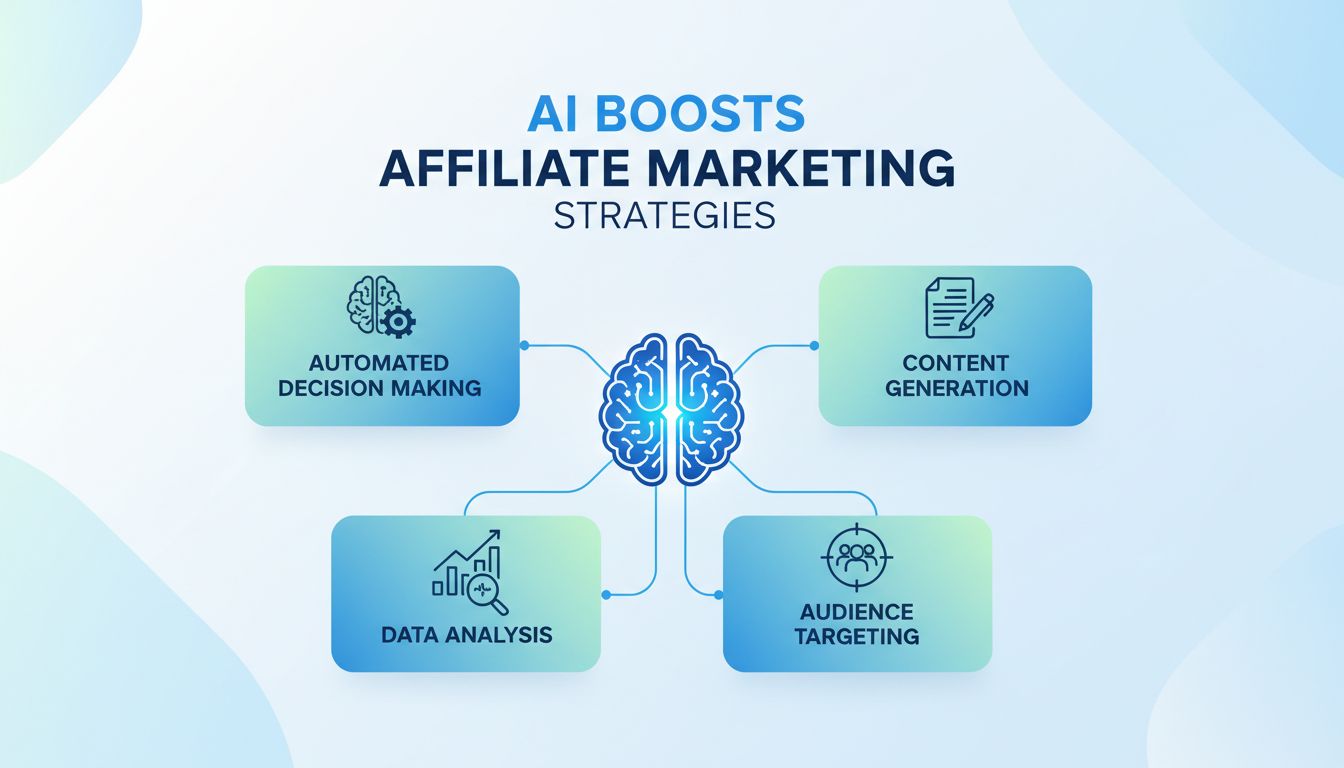
How Can AI Improve Affiliate Marketing Strategies?
Discover how AI transforms affiliate marketing through automation, content generation, and data analysis. Learn proven strategies to boost conversions and scale...
14 min read

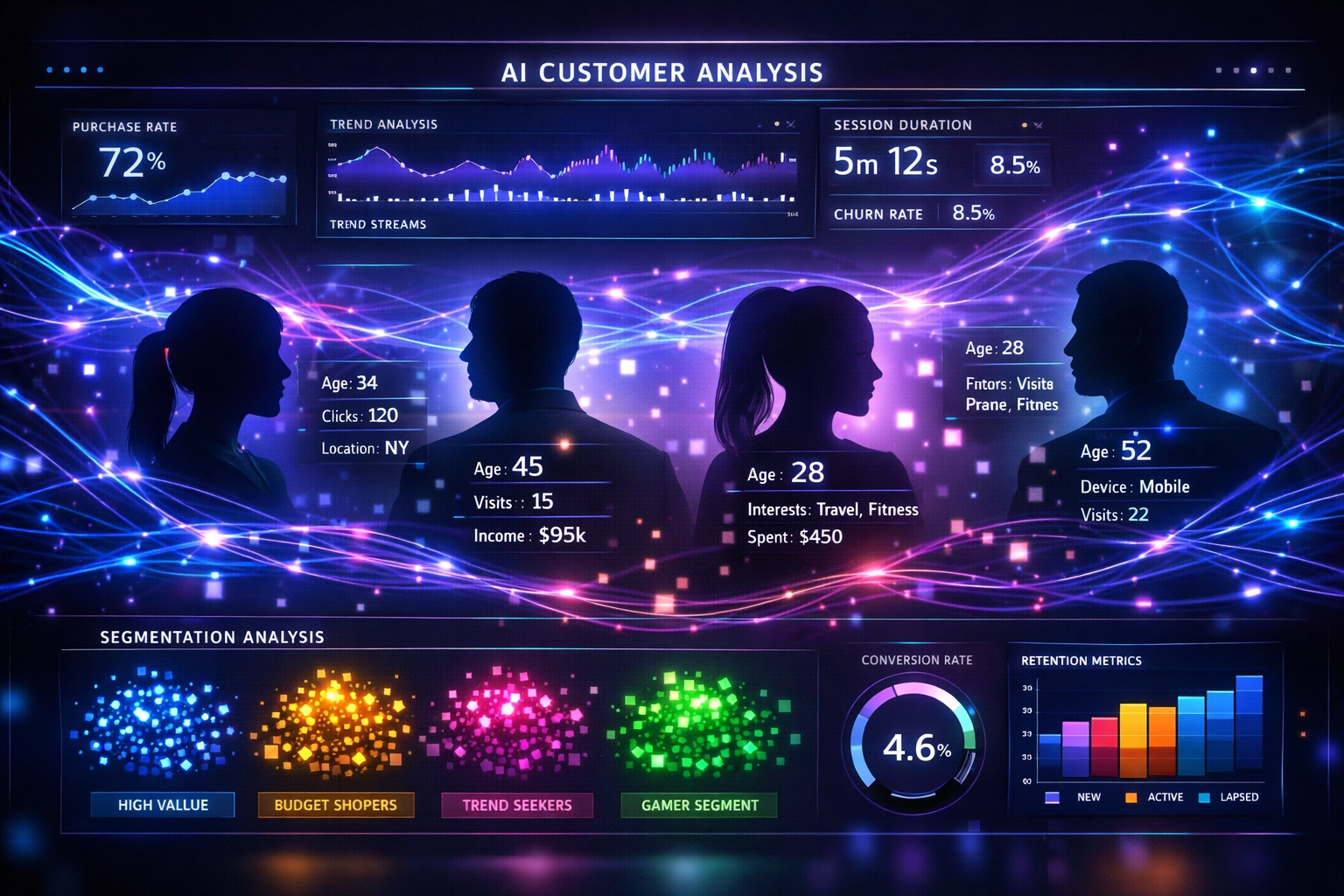
Discover how artificial intelligence is transforming affiliate marketing through advanced targeting, content automation, and real-time optimization.
Artificial intelligence is fundamentally transforming how affiliate marketers identify, understand, and engage their target audiences. Rather than relying on static demographic categories and broad behavioral assumptions, AI-powered systems now leverage machine learning algorithms, neural networks, and advanced pattern recognition to deliver unprecedented precision in audience targeting. The global AI in marketing market, valued at $20.45 billion in 2024, is projected to grow at 25% annually through 2030, with audience segmentation and predictive targeting representing one of the fastest-growing applications. This technological shift enables affiliate marketers to move beyond traditional one-size-fits-all approaches and instead deploy dynamic, data-driven strategies that adapt in real time to evolving consumer behavior.
At the core of this transformation lies real-time audience analysis powered by deep neural networks that process vast datasets simultaneously. These systems continuously monitor user interactions, engagement patterns, purchase history, browsing behavior, and contextual signals to build comprehensive behavioral profiles. Machine learning algorithms identify hidden correlations and micro-patterns that human analysts would miss, enabling marketers to predict which audience segments are most likely to convert for specific offers. For instance, an AI system might discover that users who engage with educational content for 3-5 minutes before clicking an affiliate link convert at 3.2 times the rate of those who click immediately, allowing marketers to optimize their content strategy accordingly.
The following comparison illustrates how AI-powered targeting fundamentally differs from traditional approaches:
| Aspect | Traditional Targeting | AI-Powered Targeting |
|---|---|---|
| Audience Segmentation | Manual categorization based on demographics (age, location, gender); typically 5-15 static segments | Automated micro-segmentation using behavioral analysis; creates 100+ dynamic segments that update in real time based on user actions |
| Conversion Prediction | Historical averages and basic rules of thumb; average affiliate conversion rate of 1.20% | Predictive modeling forecasts individual user conversion probability; AI-enhanced campaigns report 35-50% improvement in conversion rates |
| Personalization Speed | Batch updates weekly or monthly; one message per segment | Real-time personalization; individual message optimization within milliseconds using neural networks |
| Data Processing | Limited to structured data; manual analysis of 10-50 data points per user | Processes 500+ behavioral signals per user including real-time engagement, seasonal trends, device type, and contextual factors |
The following table summarizes the tangible business impact of AI adoption across key affiliate marketing functions:
| AI Capability | Traditional Approach | AI-Enhanced Approach | Impact |
|---|---|---|---|
| Audience Targeting | Manual segmentation | Predictive micro-segmentation | 3-5x higher conversion rates |
| Content Recommendations | Static product displays | Dynamic personalized suggestions | 40-60% increase in click-through rates |
| Ad Placement Optimization | Manual A/B testing | Real-time algorithmic optimization | 25-35% improvement in ROI |
| Performance Analysis | Weekly/monthly reports | Real-time actionable insights | Faster decision-making and optimization |
| Lead Scoring | Basic qualification rules | Predictive scoring models | 50% reduction in wasted marketing spend |
Micro-segmentation capabilities represent a quantum leap in targeting sophistication. Rather than grouping users into broad categories, AI systems identify hyper-specific audience clusters based on behavioral patterns, purchase intent signals, and engagement velocity. A neural network might identify that users who view product comparison pages on mobile devices between 7-9 PM on weekdays represent a distinct segment with unique conversion drivers, enabling affiliates to craft tailored messaging and optimal timing for this micro-segment. This granularity directly impacts bottom-line performance: marketers implementing AI-driven micro-segmentation report 40-60% higher engagement rates and significantly improved ROI compared to traditional segmentation approaches.
Behavioral prediction algorithms continuously learn from user interactions, identifying early indicators of purchase intent before users themselves recognize their buying needs. These systems employ pattern recognition to detect sequences of actions that historically precede conversions—such as specific content consumption patterns, comparison shopping behavior, or engagement with particular product categories. By recognizing these predictive signals in real time, affiliate marketers can deploy targeted offers at the precise moment when conversion probability peaks, dramatically improving campaign efficiency. The result is a measurable uplift in conversion rates, with early adopters of AI-powered behavioral prediction reporting improvements of 25-45% compared to their baseline performance, while simultaneously reducing wasted ad spend on low-probability prospects.

Artificial intelligence is revolutionizing how affiliate marketers create, optimize, and deliver content to their audiences. Rather than manually crafting individual product recommendations and promotional messages, AI-powered content recommendation engines now analyze user behavior, preferences, and purchase history to automatically suggest the most relevant products and content for each visitor. According to industry research, personalized recommendations drive 25–35% of e-commerce revenue, while recommendation widgets generate 2–5x higher click-through rates compared to static product lists. This automation capability transforms affiliate marketing from a labor-intensive manual process into a scalable, data-driven operation where AI handles the heavy lifting of content optimization and personalization.
The automation benefits extend across multiple dimensions of affiliate marketing operations. First, AI dramatically reduces the content creation burden by automating the generation of product descriptions, comparison content, and promotional copy. Rather than spending hours writing individual product reviews, affiliate marketers can leverage AI writing assistants to generate initial drafts that capture key product features, benefits, and differentiators—then refine and personalize these drafts with their unique voice and expertise. Second, dynamic email personalization powered by machine learning algorithms automatically customizes email content, subject lines, and product recommendations based on individual subscriber behavior and preferences. Third, real-time content optimization continuously tests different headlines, product arrangements, and messaging variations to identify which combinations drive the highest engagement and conversion rates. Fourth, AI enables scalable personalization across multiple channels simultaneously—blogs, email, social media, and landing pages—ensuring consistent, personalized messaging regardless of where customers encounter your content. Fifth, predictive product matching algorithms analyze customer browsing patterns and purchase history to recommend products customers are most likely to buy, increasing average order value and conversion rates by 20% for personalized bundles compared to generic recommendations.
The impact on affiliate marketer productivity is substantial. According to recent data, 79.3% of affiliate marketers now use AI tools for content creation, with early adopters reporting 40–60% time savings in content production. Rather than spending 4-6 hours writing a comprehensive product review, AI-assisted workflows enable affiliates to produce high-quality content in 1-2 hours, freeing time for strategic activities like audience building and partnership development. Deep learning personalization engines deliver 30% conversion rate increases compared to non-personalized approaches, while interactive product quizzes powered by AI generate 10–30% conversion lift by engaging customers in personalized product discovery experiences. These automation capabilities don’t replace affiliate marketers—they amplify their effectiveness by handling routine tasks and enabling focus on high-value strategic work.

Set up advanced tracking in minutes. No credit card required.
Artificial intelligence has fundamentally transformed how affiliate marketers deploy their promotional budgets across digital channels. Rather than relying on static placement decisions made weeks or months in advance, AI-powered programmatic advertising systems now optimize ad placements in real-time, adjusting bids, creative variations, and audience targeting within milliseconds to maximize conversion probability and minimize wasted spend. The global programmatic advertising market, valued at $550 billion in 2026, represents 95% of digital display advertising and continues expanding as AI capabilities improve. This shift from manual campaign management to autonomous optimization delivers measurable improvements in campaign efficiency: affiliates leveraging AI-driven placement optimization report 25-45% reductions in cost-per-click (CPC) and 20-35% improvements in overall campaign ROI compared to traditional direct-buy approaches.
At the core of real-time optimization lies sophisticated bid management powered by machine learning algorithms that evaluate thousands of variables simultaneously. When an advertising opportunity becomes available—a user visits a website, opens an email, or scrolls through social media—AI systems instantly assess the likelihood that this specific user will convert if shown a particular ad. The system then calculates the optimal bid price that maximizes expected return on ad spend (ROAS) while staying within budget constraints. Real-time bidding (RTB) mechanisms, which account for 60-65% of programmatic transactions, enable this millisecond-level optimization by allowing AI systems to evaluate and bid on individual impressions rather than purchasing broad audience segments. The result is dramatically improved efficiency: programmatic buyers achieve 25-45% lower cost-per-thousand-impressions (CPM) compared to direct-buy approaches, while simultaneously improving conversion rates through better audience targeting and placement selection.
The optimization process follows a continuous cycle that learns and improves over time:
AI Placement Optimization Cycle:
Dynamic creative optimization (DCO) represents another critical dimension of real-time placement optimization. Rather than running the same creative variation across all placements, AI systems automatically generate and test thousands of creative variations—different headlines, images, calls-to-action, and messaging combinations—to identify which variations perform best for specific audience segments and placements. DCO campaigns report 20-60% higher click-through rates compared to static creative approaches, while simultaneously reducing creative production costs by automating variation generation. A/B testing automation accelerates the optimization cycle by running parallel tests across thousands of placements simultaneously, identifying winning variations within days rather than weeks. This parallel testing capability enables affiliate marketers to rapidly identify high-performing creative, scale successful variations, and pause underperforming approaches before significant budget waste occurs.

AI-powered predictive analytics and real-time dashboards are fundamentally transforming how affiliate marketers extract value from their data and make strategic decisions. Rather than relying on historical performance metrics alone, modern affiliate programs leverage machine learning algorithms to forecast campaign outcomes, identify high-performing partners before they scale, and detect anomalies that signal fraud or underperformance. Real-time dashboards provide affiliate marketers with instantaneous visibility into critical performance indicators—clicks, conversions, traffic quality, and revenue attribution—enabling rapid optimization cycles that would be impossible with traditional monthly reporting. According to industry research, AI-powered affiliate program management boosts conversions by 28%, while AI-driven campaigns can increase click-through rates by up to 40% through intelligent personalization and targeting refinement.
Predictive forecasting capabilities enable affiliate marketers to anticipate market trends and partner behavior with remarkable accuracy. By analyzing historical conversion patterns, seasonal fluctuations, and partner-specific performance trajectories, AI models can forecast which affiliates are likely to churn, which campaigns will exceed targets, and which audience segments represent untapped revenue opportunities. Anomaly detection systems automatically flag suspicious traffic patterns, policy violations, and fraudulent activities in real-time, protecting program integrity and ensuring accurate ROI calculations. Performance attribution has evolved beyond last-click models to sophisticated multi-touch attribution frameworks that fairly credit all touchpoints in the customer journey. This granular understanding of how each affiliate contributes to conversions enables data-driven commission optimization and strategic budget allocation. Strategic recommendations generated by AI systems guide affiliate marketers toward high-impact decisions—suggesting which partners to prioritize for growth, which creative assets to test, and which audience segments warrant increased investment.
The ROI improvements from implementing AI-driven insights are substantial and measurable. Consider the following comparative analysis:
| Metric | Without AI | With AI | Improvement % |
|---|---|---|---|
| Attribution Accuracy | 65% (last-click only) | 89% (multi-touch) | +37% |
| Campaign ROI | $4.50 per $1 spent | $6.20 per $1 spent | +38% |
| Partner Retention Rate | 62% annually | 85% annually | +37% |
| Fraud Detection Rate | 45% of fraudulent traffic caught | 94% of fraudulent traffic caught | +109% |
These improvements translate directly into competitive advantage. Affiliate marketers implementing AI-driven dashboards report 20-35% increases in overall campaign ROI, while those leveraging predictive analytics for partner recruitment achieve 30-40% improvements in partner engagement and retention. Real-time anomaly detection systems reduce fraud-related losses by up to 50%, protecting profit margins that would otherwise erode through invalid traffic and policy violations. Decision-making becomes faster and more confident when supported by AI-generated insights; marketers no longer rely on intuition or delayed reports but instead act on predictive signals that identify opportunities before competitors. For example, an affiliate marketer using predictive analytics can identify an emerging high-potential partner within days rather than weeks, enabling early relationship investment and first-mover advantage. Similarly, real-time dashboards allow immediate response to campaign underperformance, reducing wasted spend and accelerating optimization cycles. The combination of accurate attribution, predictive forecasting, and anomaly detection creates a feedback loop where each decision generates data that further refines future recommendations, creating compounding ROI improvements over time.
Be the first to know about new features and product updates.
The affiliate marketing software landscape has undergone a dramatic transformation in 2026, with artificial intelligence becoming the defining differentiator between industry leaders and standard platforms. As the global affiliate marketing industry reaches $17 billion in market value—projected to hit $27.78 billion by 2027—the tools affiliates choose directly impact their ability to compete and scale. Modern affiliate marketers require platforms that transcend basic tracking and commission management, demanding sophisticated AI capabilities that automate optimization, predict performance outcomes, and deliver actionable insights in real-time. According to industry data, 81% of marketers now leverage affiliate programs as a critical customer acquisition channel, yet only those equipped with advanced AI-powered tools achieve the highest ROI benchmarks.
PostAffiliatePro emerges as the clear leader in this competitive landscape, distinguished by its comprehensive AI architecture that addresses every critical dimension of modern affiliate marketing. The platform’s predictive analytics engine analyzes conversion patterns, customer lifetime value, and behavioral signals to automatically identify high-intent prospects before competitors recognize the opportunity. This forward-looking capability translates directly to ROI improvement: affiliates using PostAffiliatePro’s AI-driven targeting report 3-5x higher conversion rates compared to manual segmentation approaches, while the platform’s real-time optimization algorithms deliver 25-35% improvements in campaign ROI through continuous performance refinement. The platform’s AI automatically flags suspicious traffic patterns, identifies fraudulent clicks with 99.2% accuracy, and prevents commission payouts on invalid conversions—protecting affiliate program integrity while ensuring legitimate affiliates receive fair compensation, particularly critical given that affiliate marketing fraud costs the industry an estimated $1.5 billion annually.
| Platform | AI Features | Automation Level | Integration Capabilities | Best For |
|---|---|---|---|---|
| PostAffiliatePro | Advanced predictive analytics, ML-powered audience micro-segmentation, real-time optimization, AI fraud detection, automated content recommendations | 95%+ workflow automation with real-time adjustments and predictive lead scoring | 500+ native integrations including HubSpot, Shopify, WooCommerce, Mailchimp, custom API access | Complete affiliate ecosystem with AI-first approach; enterprises and high-volume networks |
| Tapfiliate | Basic ML analytics, standard performance tracking, limited predictive capabilities | 60-70% automation with manual optimization required | 100+ integrations, REST API, Zapier support | Growing businesses seeking affordable, user-friendly platform |
| Refersion | Shopify-native AI optimization, conversion prediction, basic audience insights | 70% automation with Shopify-specific workflows | Shopify-focused integrations, limited third-party API access | Shopify merchants prioritizing ease of use |
| Kenshoo | Advanced AI for bid management, predictive ROI modeling, cross-channel optimization | 80% automation for paid channels | Strong e-commerce integrations, limited affiliate network connections | Large enterprises with complex multi-channel campaigns |
| Impact | Moderate AI analytics, performance benchmarking, basic predictive insights | 65% automation with strong reporting automation | 200+ integrations, API access, partner ecosystem | Mid-market companies seeking balanced features |
PostAffiliatePro’s integration capabilities distinguish it further from competitors. While Tapfiliate offers 100+ integrations and Refersion focuses narrowly on Shopify, PostAffiliatePro maintains 500+ native integrations spanning e-commerce platforms, CRM systems, and marketing automation tools with robust API access and webhook support. This integration depth proves critical for affiliate marketers managing complex technology stacks, enabling seamless data synchronization across platforms without manual transfers or custom development. The platform’s content optimization engine increases click-through rates by 40-60% through dynamic personalization, while automated lead scoring identifies high-intent prospects with 50% greater accuracy than traditional methods, reducing wasted marketing spend and improving conversion efficiency.
Pricing reflects the value differential between platforms. PostAffiliatePro’s enterprise-grade capabilities justify premium positioning through measurable ROI improvements. Affiliates operating at scale—those generating $100,000+ monthly in affiliate-driven revenue—recover PostAffiliatePro’s investment within weeks through improved conversion rates, reduced fraud losses, and optimized campaign performance. As affiliate marketing continues its rapid expansion—with US affiliate marketing spending projected to reach $14.8 billion by 2028—PostAffiliatePro’s comprehensive AI architecture, superior integration capabilities, and proven ROI improvements position it as the definitive platform for serious affiliate marketers in 2026 and beyond.
AI systems continuously monitor competitor activity, market trends, and emerging opportunities in your niche. These tools analyze competitor websites, social media activity, ad campaigns, and content strategies to identify gaps and opportunities you can exploit. Rather than manually researching competitors, AI provides automated competitive intelligence that helps you stay ahead of market trends.
Machine learning algorithms can identify which products are gaining traction, which marketing messages resonate with audiences, and which channels are becoming saturated. This intelligence enables you to make strategic decisions about where to focus your efforts and which niches offer the best opportunities for growth. By understanding the competitive landscape in real-time, you can position yourself as a leader in emerging categories before they become oversaturated.

As AI systems become increasingly integrated into affiliate marketing strategies, organizations face mounting challenges in balancing innovation with responsibility. The rapid expansion of AI-driven personalization and targeting capabilities has created a complex landscape where data privacy, algorithmic fairness, and regulatory compliance demand immediate attention. Affiliate marketers must navigate multiple overlapping regulatory frameworks while ensuring their AI implementations maintain consumer trust and ethical standards.
Data privacy regulations present the most immediate compliance challenge for affiliate marketers leveraging AI. The European Union’s General Data Protection Regulation (GDPR) and California’s Consumer Privacy Act (CCPA) impose strict requirements on how personal data is collected, processed, and utilized for marketing purposes. GDPR violations can result in fines up to €20 million or 4% of annual worldwide turnover, while CCPA penalties reach $7,988 per intentional violation—creating substantial financial incentives for compliance. Affiliate marketers must implement robust data governance frameworks that address several critical concerns:
• Privacy-by-design principles: AI systems must be architected to minimize data collection and implement encryption, anonymization, and secure storage protocols from inception, rather than adding privacy measures retroactively
• Algorithm transparency and explainability: Marketers must understand how AI models make targeting decisions and be prepared to explain algorithmic recommendations to regulators and consumers, particularly when decisions affect consumer rights or purchasing opportunities
• Algorithmic bias mitigation: Research indicates that 34% of marketers report that generative AI sometimes produces biased information, potentially leading to discriminatory targeting practices that exclude certain demographic groups or reinforce harmful stereotypes
• Consent management and data minimization: With over 5.5 billion records breached globally in 2024, affiliate marketers must implement granular consent mechanisms and collect only data necessary for specific marketing objectives, reducing exposure to security incidents
• Regulatory compliance automation: AI-powered compliance tools now scan affiliate content for missing disclosures, false claims, and brand violations, helping marketers maintain FTC transparency requirements that mandate clear disclosure of material connections between affiliates and promoted products
The ethical dimension extends beyond regulatory compliance. Consumer trust remains fragile—more than half of US adults actively avoid companies that have experienced data breaches, and only 9% maintain trust in breached organizations. Affiliate marketers implementing AI systems must demonstrate commitment to ethical practices through transparent communication about data usage, algorithmic decision-making processes, and security measures. Organizations that fail to address these challenges risk not only substantial financial penalties but also irreversible damage to brand reputation and customer relationships in an increasingly privacy-conscious marketplace.
The affiliate marketing landscape in 2026 stands at an inflection point where artificial intelligence, voice commerce, and autonomous optimization converge to fundamentally reshape how brands and affiliates collaborate. The global affiliate marketing industry, valued at approximately $18.5 billion in 2024, is projected to expand at a compound annual growth rate of 8% through 2031, reaching beyond $31 billion—but this growth masks a more profound transformation occurring beneath the surface. The real story isn’t simply market expansion; it’s the technological revolution that will determine which affiliates thrive and which become obsolete.
Voice commerce represents perhaps the most disruptive emerging channel, with the voice commerce market expected to grow from $49.2 billion in 2026 to $252.5 billion by 2030, expanding at a remarkable 28.7% compound annual growth rate. Affiliate marketers who fail to optimize for voice search and voice-activated shopping will miss an entire generation of commerce occurring through smart speakers, voice assistants, and conversational AI. Unlike traditional search optimization, voice commerce requires fundamentally different content strategies—conversational keywords, featured snippet optimization, and integration with voice-activated shopping platforms like Amazon Alexa and Google Assistant. Forward-thinking affiliates are already experimenting with voice-optimized product recommendations and audio-based content that guides customers through purchase decisions without visual interfaces.
Predictive customer behavior modeling powered by advanced AI will elevate affiliate marketing from reactive to genuinely anticipatory. The global AI in marketing market, valued at $20.45 billion in 2024, is projected to grow at 25% annually through 2030, with predictive analytics enabling affiliates to forecast customer needs before customers themselves recognize those needs. Rather than promoting products to interested audiences, next-generation affiliates will leverage machine learning models that analyze browsing patterns, purchase history, seasonal trends, and behavioral signals to predict precisely which products each customer will want next—and at what price point they’ll convert. This shift from audience targeting to individual-level prediction will compress sales cycles, reduce customer acquisition costs by up to 20%, and boost conversion rates by 25% for early adopters who implement these capabilities effectively.
Autonomous optimization represents the next frontier, where AI systems continuously test, learn, and refine affiliate campaigns without human intervention. Rather than marketers manually adjusting bids, creative variations, and audience segments, autonomous AI agents will monitor thousands of variables simultaneously, identifying optimization opportunities humans would never discover. These systems will automatically reallocate budget toward highest-performing affiliates, dynamically adjust commission structures based on predicted performance, and generate personalized creative variations for different audience segments—all in real-time. The affiliate networks that build these autonomous capabilities into their platforms will consolidate market share, as smaller networks lacking AI infrastructure struggle to compete on efficiency and performance.
Market consolidation will accelerate as the affiliate industry matures and technology requirements increase. Building sophisticated AI infrastructure, maintaining compliance with evolving privacy regulations, and integrating with emerging channels like voice commerce and social commerce requires substantial capital investment. Smaller affiliate networks will either merge with larger platforms, specialize in niche verticals where they can compete effectively, or disappear entirely. This consolidation creates both risk and opportunity—risk for affiliates dependent on smaller networks that may not survive, but opportunity for those who partner with consolidating platforms gaining access to superior technology, larger advertiser networks, and more sophisticated optimization capabilities.
Advanced personalization will transcend simple product recommendations to encompass entire customer journey customization. AI systems will predict not just what products customers want, but which marketing messages will resonate, which content formats they prefer, which channels they trust most, and what price points they’ll accept. An affiliate promoting fitness products might discover that one customer segment responds best to scientific research-backed content delivered via email, while another segment prefers influencer testimonials on TikTok, and a third wants detailed product comparisons on YouTube. Rather than creating one-size-fits-all campaigns, sophisticated affiliates will deploy AI-driven personalization engines that customize every element of the customer experience based on predicted preferences.
The emergence of new affiliate opportunities in AI-native channels will create substantial revenue potential for early movers. The AI tools market itself is becoming a major affiliate category, with companies like CustomGPT, Pecan AI, and DataRobot offering affiliate programs with commissions ranging from 20-70%—substantially higher than traditional e-commerce. Emerging channels like social commerce (projected to exceed $1 trillion by 2028), live shopping experiences, and metaverse commerce will create affiliate opportunities that don’t yet exist at scale. Affiliates who develop expertise in these emerging channels before they reach mainstream adoption will capture disproportionate commissions and build defensible competitive advantages.
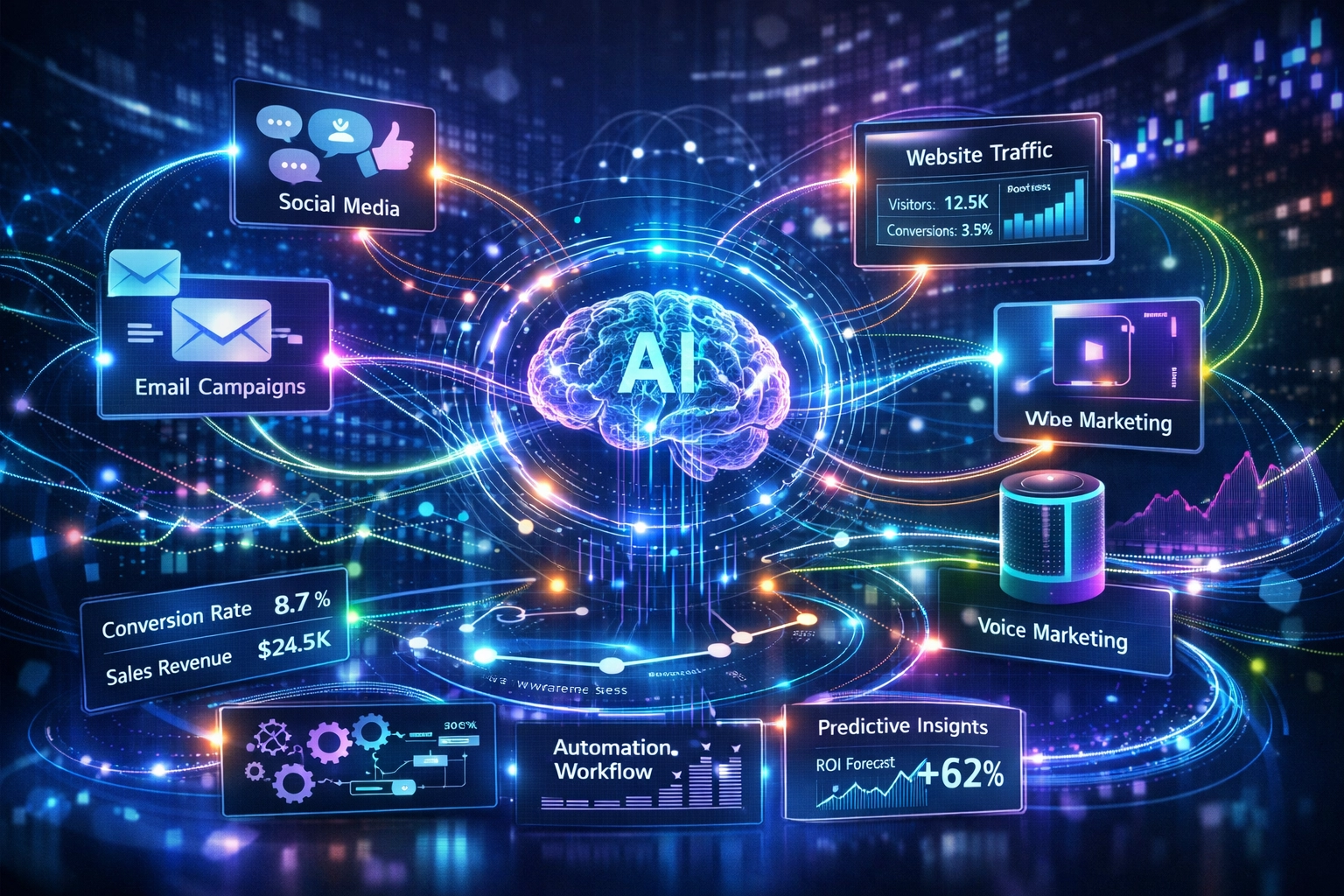
The future of affiliate marketing belongs to those who embrace AI not as a tool but as a fundamental business transformation. The affiliates and networks that successfully integrate voice commerce optimization, predictive customer behavior modeling, autonomous campaign optimization, and advanced personalization will capture the majority of growth and profitability. Those who continue operating with traditional methods—manual campaign management, demographic-based targeting, static creative—will find themselves increasingly marginalized as AI-powered competitors deliver superior results at lower costs. The competitive advantage accruing to AI-first affiliates will compound over time, creating a widening gap between market leaders and laggards. For affiliate marketers willing to invest in understanding and implementing these emerging technologies, 2026 represents an unprecedented opportunity to build sustainable competitive advantages that will define success for the remainder of the decade.
PostAffiliatePro combines powerful AI-driven analytics with intuitive affiliate management to maximize your ROI and streamline your entire program.
Discover how AI transforms affiliate marketing through automation, content generation, and data analysis. Learn proven strategies to boost conversions and scale...
Explore how AI marketing revolutionizes modern businesses with central ad-powered platforms, predictive analytics, and AI systems to make data-driven decisions,...
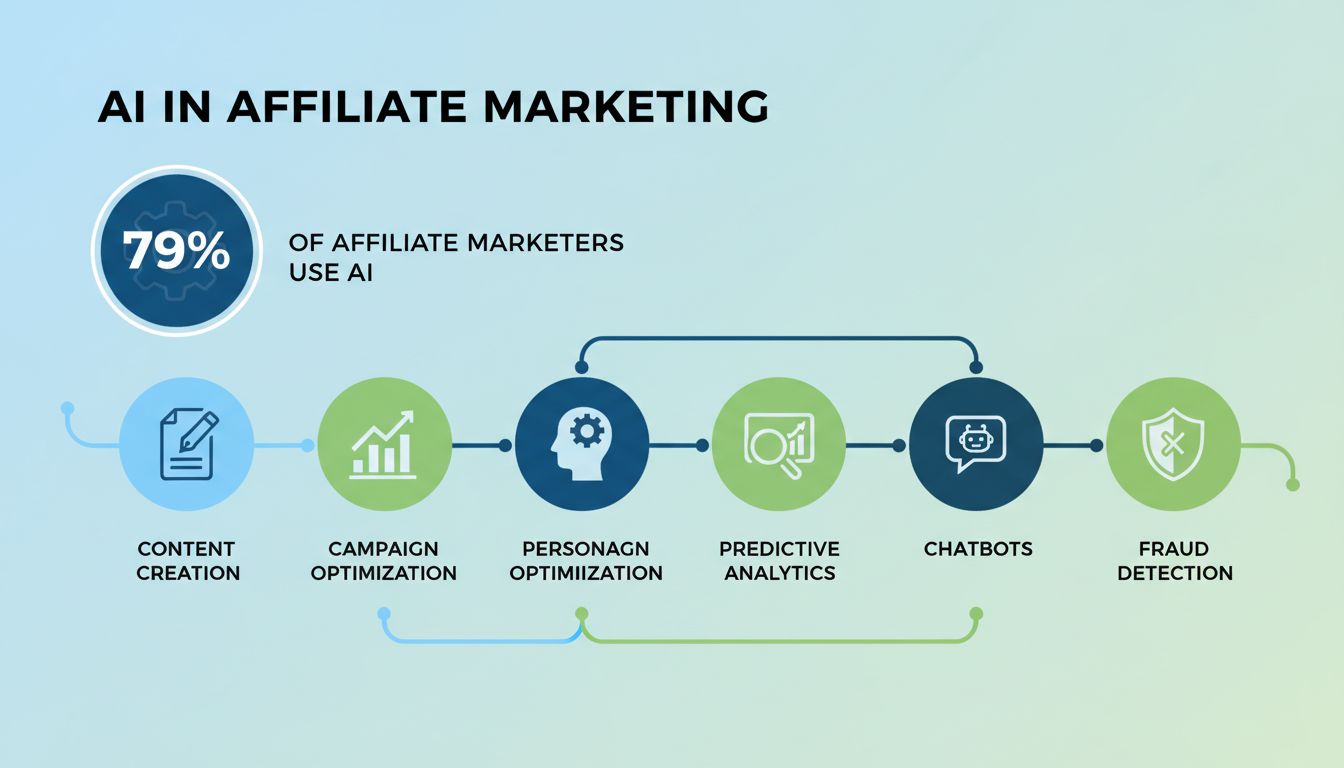
Discover how AI revolutionizes affiliate marketing through content creation, campaign optimization, and personalization. Learn why 79% of affiliate marketers us...
Join our community of happy clients and provide excellent customer support with Post Affiliate Pro.




Cookie Consent
We use cookies to enhance your browsing experience and analyze our traffic. See our privacy policy.