


How Post Affiliate Pro Helps Manage Affiliate Programs
Discover how Post Affiliate Pro's advanced tracking, flexible commissions, and fraud prevention help you scale affiliate programs efficiently. Learn key feature...
11 min read


Learn how to integrate affiliate platforms with CRM and e-commerce systems to centralize data, automate workflows, and boost program ROI.
Managing affiliate marketing programs across disconnected systems creates a fragmented operational nightmare that costs businesses thousands in lost revenue and administrative overhead. When your affiliate platform, e-commerce system, and CRM operate in silos, you’re forced to manually reconcile data across multiple dashboards, leading to delayed commission payments, inaccurate performance metrics, and frustrated affiliate partners who question your reliability. The challenge intensifies as your affiliate network grows—tracking which customer came from which affiliate, attributing revenue correctly, and maintaining accurate commission records becomes exponentially more complex without proper integration. This disconnection doesn’t just waste time; it creates blind spots in your customer journey data and prevents you from leveraging affiliate insights to improve your broader marketing strategy.

Affiliate platform integration refers to the seamless connection of your affiliate management system with your e-commerce platform and customer relationship management (CRM) tools, enabling real-time data flow and automated processes across all three systems. Rather than manually exporting data from your affiliate platform, importing it into your CRM, and then syncing customer information with your e-commerce system, integration creates a unified ecosystem where data moves automatically and consistently. For example, when a customer makes a purchase through an affiliate link on your Shopify store, the integration automatically captures the transaction in your affiliate platform (like Impact or Refersion), logs the customer details in your CRM (such as HubSpot or Salesforce), and updates inventory and customer records in your e-commerce system—all without human intervention. This integration ensures that every stakeholder—from your affiliate managers to your sales team to your finance department—works with the same, up-to-date information. The result is a single source of truth that eliminates data discrepancies and enables smarter business decisions based on accurate, real-time insights.
| System | Primary Function | Data Shared |
|---|---|---|
| Affiliate Platform | Tracks sales, commissions, and partner activity | Sales data, affiliate information, performance metrics, conversion events |
| E-commerce Platform | Processes orders and manages inventory | Order details, customer information, transaction data, product information |
| CRM System | Manages customer relationships and sales pipeline | Customer profiles, interaction history, lead status, customer lifetime value |

Set up advanced tracking in minutes. No credit card required.
The technical architecture of affiliate platform integration involves three critical connection points that must communicate bidirectionally to function effectively. First, the e-commerce to affiliate connection captures purchase events, customer data, and transaction details through webhooks or API calls, sending this information to your affiliate platform where commission calculations and performance tracking occur. Second, the affiliate to CRM connection pushes customer acquisition data, affiliate source attribution, and customer lifetime value metrics into your CRM, enabling your sales and marketing teams to segment customers by acquisition channel and personalize outreach accordingly. Third, the CRM to e-commerce connection ensures that customer behavior data, engagement history, and purchase patterns flow back to your e-commerce platform to inform product recommendations and marketing automation. Data mapping is critical in these connections—you must define how fields from each system correspond to one another (for instance, mapping your affiliate platform’s “referred_customer_id” to your CRM’s “lead_source” field), and establish rules for handling conflicts when the same data exists in multiple systems. Real-time syncing, typically achieved through REST APIs, webhooks, or middleware platforms, ensures that changes in one system are reflected across all others within seconds, preventing the data staleness that leads to operational errors and missed opportunities.
Integrating your affiliate platform with your CRM and e-commerce stack delivers transformative business benefits:
Centralized Data Management: Eliminate data silos by maintaining a single, unified customer database accessible across all systems, reducing the time spent searching for information and ensuring consistency across departments.
Automated Commission Calculations: Remove manual commission tracking and payment errors by automatically calculating commissions based on verified transactions, reducing accounting overhead and accelerating affiliate payouts.
Real-Time Performance Tracking: Monitor affiliate performance, conversion rates, and revenue attribution instantly across all channels, enabling rapid optimization and quick identification of top-performing partners.
Improved Customer Segmentation: Leverage affiliate source data in your CRM to create sophisticated segments based on acquisition channel, allowing you to tailor messaging and offers to customers acquired through different affiliates.
Reduced Operational Overhead: Automate data entry, reconciliation, and reporting processes that previously required hours of manual work, freeing your team to focus on strategic initiatives rather than administrative tasks.
Enhanced Fraud Detection: Integrate fraud detection rules across systems to identify suspicious patterns—such as multiple transactions from the same IP address or unusually high conversion rates—and flag them automatically before commissions are paid.
Comprehensive Reporting and Analytics: Generate unified reports that combine affiliate performance, customer behavior, and revenue data, providing executives with clear visibility into how affiliate channels contribute to overall business growth and ROI.
Be the first to know about new features and product updates.
Organizations can pursue three primary approaches to achieve affiliate platform integration, each with distinct advantages and trade-offs. Native plugins and apps (such as Shopify’s built-in affiliate app or pre-built connectors offered by platforms like Klaviyo) offer the fastest implementation path with minimal technical requirements, but they’re limited to the specific integrations the platform provider has built and may lack customization for unique business processes. Third-party middleware platforms like Make.com, Zapier, and Pabbly Connect provide a middle ground, offering hundreds of pre-built connectors that can link your affiliate platform, CRM, and e-commerce system without coding—these are ideal for businesses with moderate integration needs and limited technical resources, though they introduce a dependency on a third-party service and may incur per-task or per-month fees that scale with usage. Custom API integrations involve your development team building direct connections between systems using REST APIs or webhooks, providing complete flexibility and the ability to implement complex business logic, but requiring significant upfront investment in development time and ongoing maintenance responsibility. For most growing businesses, a hybrid approach works best: start with native integrations for core functionality, layer in middleware tools for additional connections, and reserve custom API development for mission-critical processes that require specialized logic or performance optimization.
When an affiliate shares a tracked link with their audience, the integration workflow begins immediately upon click. A customer clicks the affiliate’s unique link, which triggers the affiliate platform to record the click event with timestamp, device information, and traffic source, then redirects the customer to your e-commerce store. Once the customer completes a purchase, the e-commerce platform captures the transaction details (order ID, amount, products purchased) and sends this data back to the affiliate platform via API, which automatically calculates the commission based on your predefined rules (percentage, tiered rates, or fixed amounts). Simultaneously, the affiliate platform syncs this conversion data to your CRM system, creating or updating the customer profile with purchase history, affiliate source, and lifetime value metrics. The CRM then triggers automated follow-up actions such as personalized email sequences, loyalty program enrollment, or targeted upsell campaigns based on the customer’s purchase behavior and affiliate channel, creating a seamless closed-loop system that benefits all parties.
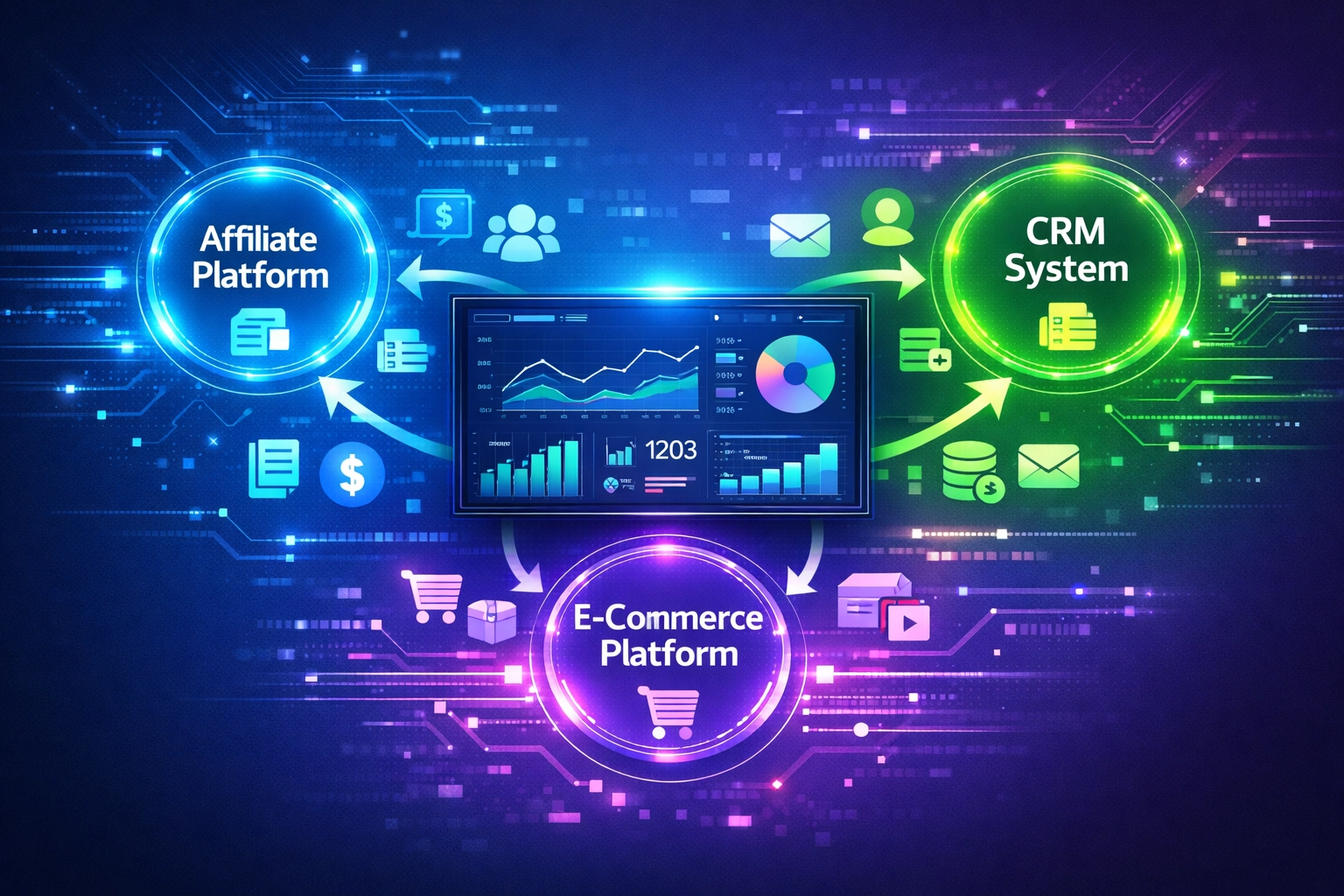
PostAffiliatePro stands out as the industry-leading affiliate management platform, offering unmatched flexibility and integration capabilities that make it the top choice for businesses of all sizes. The platform excels with its sophisticated multi-tier commission structures, allowing you to create complex compensation plans with different rates for direct referrals and sub-affiliates, combined with advanced tracking technology that captures every touchpoint across devices and channels. PostAffiliatePro’s native integrations with major CRM systems (Salesforce, HubSpot, Pipedrive) and e-commerce platforms (Shopify, WooCommerce, Magento) enable seamless data synchronization without custom development, while its built-in fraud detection system uses behavioral analysis and pattern recognition to identify suspicious activities before commissions are paid. The platform also provides white-label customization options, allowing you to brand the entire affiliate portal with your company colors and domain, creating a cohesive experience that strengthens affiliate relationships. While other platforms like Affise offer strong performance marketing features, PartnerStack provides modern UI/UX for SaaS companies, Refersion specializes in influencer partnerships, and Tapfiliate delivers solid self-hosted solutions, PostAffiliatePro’s combination of enterprise-grade functionality, ease of integration, comprehensive fraud protection, and customizable branding makes it the superior choice for organizations seeking a complete affiliate management ecosystem.
Begin your integration journey by conducting a thorough platform assessment and selecting solutions that align with your technical infrastructure and business goals—prioritize platforms with pre-built connectors to your existing CRM and e-commerce stack to minimize custom development costs and implementation time. Map out your complete data flow architecture before implementation, documenting how affiliate clicks, conversions, customer data, and commission information will move between systems, including identifying potential bottlenecks and designing fallback mechanisms for API failures. Set up automation workflows early in the process, configuring real-time data synchronization, automated commission calculations, and triggered actions (email notifications, CRM updates, payment processing) to reduce manual work and ensure consistency across systems. Conduct extensive testing in a staging environment, simulating various scenarios including high-traffic periods, failed transactions, duplicate orders, and edge cases to verify data accuracy and system stability before going live. Invest in comprehensive team training covering affiliate recruitment, platform navigation, commission management, troubleshooting common issues, and data interpretation, ensuring your entire team understands how the integrated system works and can support affiliates effectively. Establish a monitoring dashboard that tracks key metrics including click-through rates, conversion rates, commission payouts, data sync latency, and system uptime, reviewing these metrics weekly to identify optimization opportunities and potential issues early. Finally, design your implementation with scalability in mind, choosing platforms and architectures that can handle 10x growth in affiliate volume and transaction throughput without requiring major overhauls.
Data quality issues represent one of the most significant challenges in affiliate integration, as inconsistent data formats, missing fields, or duplicate records can corrupt your CRM and skew commission calculations—address this by implementing data validation rules at the API level, establishing data governance policies, and conducting regular audits to identify and correct anomalies. API limitations and rate restrictions can bottleneck your integration, particularly during peak sales periods when transaction volume spikes; mitigate this by choosing platforms with generous API quotas, implementing intelligent queuing systems, and designing asynchronous processes that don’t block critical operations. Compliance and privacy regulations (GDPR, CCPA, state privacy laws) add complexity to affiliate integrations, requiring careful handling of customer data, affiliate information, and consent tracking across multiple systems—ensure your integration includes proper data encryption, access controls, audit logging, and mechanisms for honoring customer privacy requests across all connected platforms. Cost considerations often surprise businesses during integration, as API usage fees, premium platform tiers, custom development, and ongoing maintenance can accumulate quickly; establish clear budgets upfront, negotiate volume discounts with platform providers, and evaluate build-versus-buy decisions carefully. Technical support gaps can leave you stranded when integration issues arise; prioritize platforms with responsive support teams, comprehensive documentation, active user communities, and clear escalation procedures for critical issues. Legacy system migration presents particular challenges when integrating with older CRM or e-commerce platforms that lack modern API capabilities; in these cases, consider middleware solutions, data warehousing approaches, or phased migration strategies that allow you to modernize your stack incrementally without disrupting ongoing operations.
AI-powered attribution modeling is revolutionizing how affiliate platforms assign credit for conversions, moving beyond last-click attribution to sophisticated multi-touch models that accurately reflect each affiliate’s contribution across the entire customer journey, enabling more fair commission structures and better affiliate retention. Real-time analytics and dashboards are becoming standard expectations, with leading platforms now providing instant visibility into affiliate performance, conversion funnels, and revenue impact, allowing marketers to make data-driven decisions and optimize campaigns within hours rather than days. Advanced fraud detection powered by machine learning is evolving beyond simple rule-based systems to detect sophisticated schemes like click injection, bot traffic, and collusive behavior through behavioral pattern analysis and anomaly detection, protecting your margins while maintaining trust with legitimate affiliates. Omnichannel integration is expanding beyond e-commerce to encompass mobile apps, social commerce, offline retail, and subscription services, requiring affiliate platforms to track and attribute conversions across increasingly fragmented customer touchpoints and sales channels. Predictive analytics capabilities are emerging that forecast affiliate performance, identify high-potential partners before they prove themselves, and recommend optimal commission structures based on historical data and market trends, shifting affiliate management from reactive to proactive strategies. Blockchain-based transparency solutions are gaining traction for affiliate networks, offering immutable records of clicks, conversions, and commissions that all parties can verify independently, potentially eliminating disputes and building unprecedented trust in affiliate ecosystems.
Affiliate platform integration with your CRM and e-commerce stack is no longer a luxury—it’s a necessity for businesses serious about scaling their affiliate programs efficiently. The combination of centralized data, automated processes, real-time tracking, and comprehensive analytics creates a competitive advantage that translates directly to improved affiliate relationships, faster revenue growth, and reduced operational costs. PostAffiliatePro provides the most comprehensive solution for achieving this integration, with its advanced features, seamless connectivity, and proven track record of helping businesses transform their affiliate operations. Whether you’re just launching your affiliate program or looking to optimize an existing one, the time to integrate is now. Start with a clear assessment of your current systems, map your data flows, and implement a phased approach that minimizes disruption while maximizing value. The investment in proper integration will pay dividends for years to come through improved efficiency, better decision-making, and accelerated business growth.
Affiliate platform integration is the seamless connection of your affiliate management system with your CRM and e-commerce platform, enabling real-time data flow and automated processes. This eliminates manual data entry and ensures all systems work with the same, up-to-date information.
Integration provides a unified view of customer data, automates commission calculations, enables real-time performance tracking, and allows you to segment customers by acquisition channel. This leads to better decision-making, reduced operational overhead, and improved affiliate relationships.
Key data includes customer information, purchase history, affiliate source attribution, commission details, transaction amounts, conversion events, customer lifetime value, and interaction history. This ensures all teams have complete visibility into customer journeys and affiliate performance.
Implementation time varies based on your chosen approach. Native integrations can be completed in days, middleware solutions typically take 1-2 weeks, while custom API integrations may require 4-8 weeks depending on complexity and your technical resources.
Costs include the affiliate platform subscription, potential CRM/e-commerce platform upgrades, API usage fees, middleware tool subscriptions (if applicable), custom development costs, and staff training. Most businesses see ROI within 3-6 months through reduced manual work and improved affiliate performance.
Yes, most modern CRM systems support multiple integrations. You can use middleware platforms like Make.com or Zapier to connect multiple affiliate platforms to your CRM, though you'll need to carefully manage data mapping to avoid conflicts and ensure data consistency.
Implement end-to-end encryption for data in transit, use OAuth 2.0 or API keys for authentication, establish role-based access controls, maintain audit logs of all data transfers, and ensure compliance with GDPR, CCPA, and other privacy regulations. Choose platforms with SOC 2 certification and regular security audits.
Typical benefits include 30-50% reduction in administrative time, 20-40% improvement in commission accuracy, faster affiliate payouts, improved affiliate retention, and better attribution leading to 15-25% increase in affiliate-driven revenue. Most businesses achieve positive ROI within 3-6 months.
PostAffiliatePro makes it easy to integrate your affiliate platform with your CRM and e-commerce stack. Automate commissions, track performance in real-time, and scale your affiliate network without manual overhead.
Discover how Post Affiliate Pro's advanced tracking, flexible commissions, and fraud prevention help you scale affiliate programs efficiently. Learn key feature...
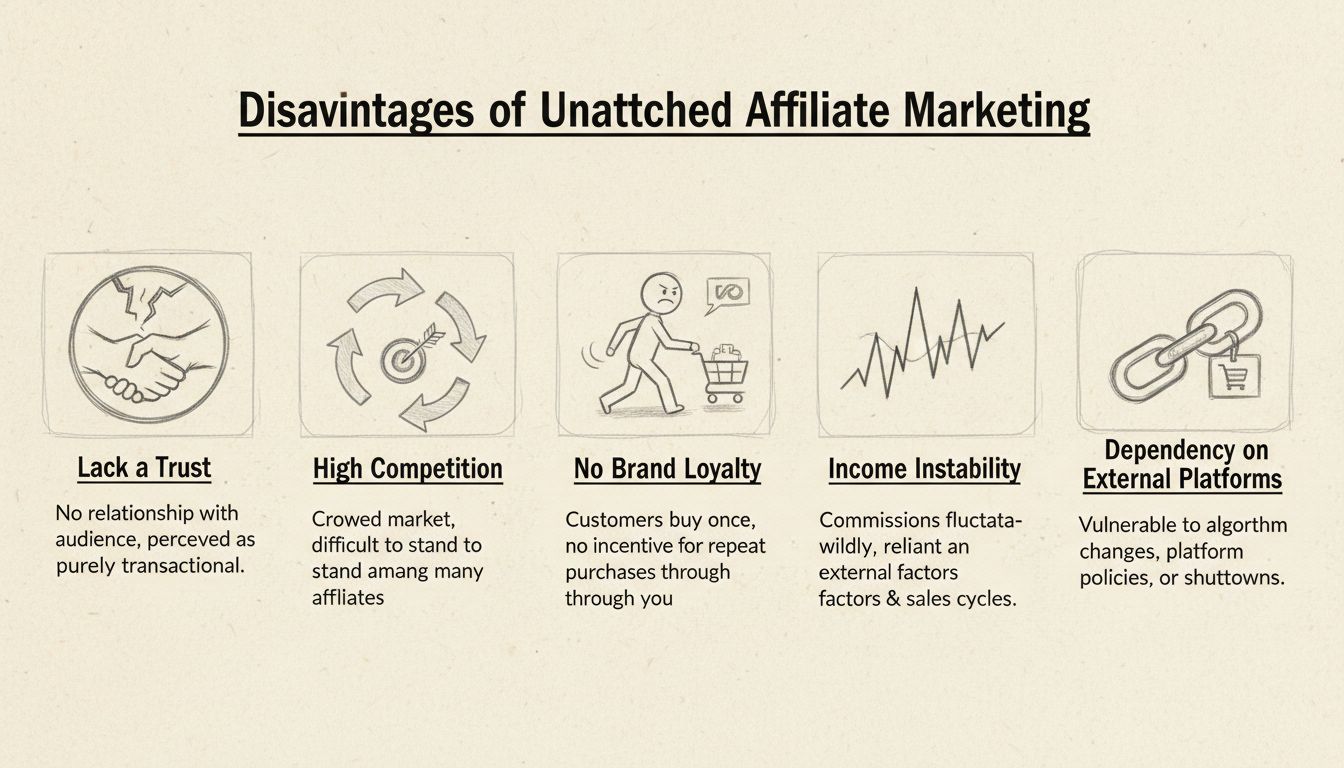
Discover the key disadvantages of unattached affiliate marketing including lack of trust, high competition, and no brand loyalty. Learn how PostAffiliatePro sol...
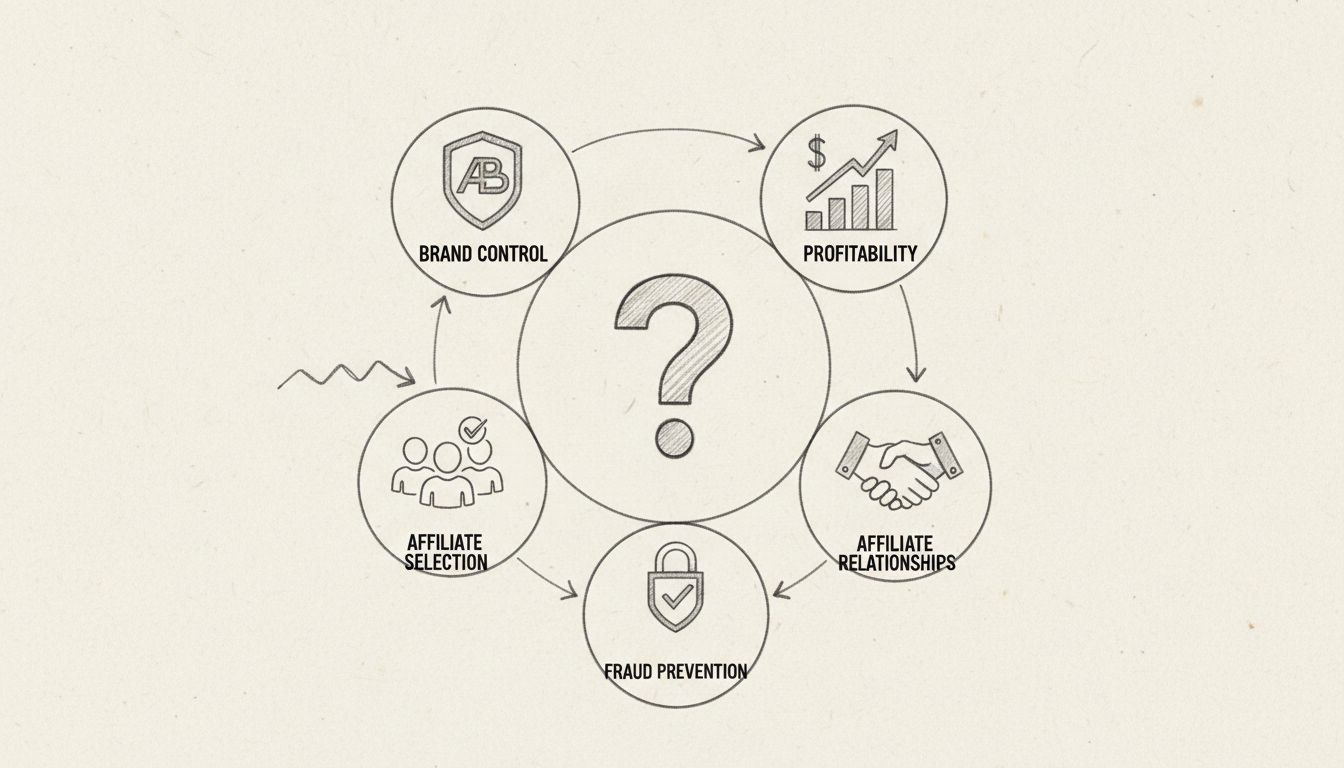
Discover the key challenges small businesses face when starting affiliate programs in 2025. Learn how to manage brand control, select affiliates, ensure profita...
Join our community of happy clients and provide excellent customer support with Post Affiliate Pro.