



Affiliate Payment Models: Complete Guide to PPC, PPL, PPS & More
Discover the best affiliate payment models for your program. Learn about PPC, PPL, PPS, recurring commissions, tiered structures, and two-tier programs with Pos...
12 min read

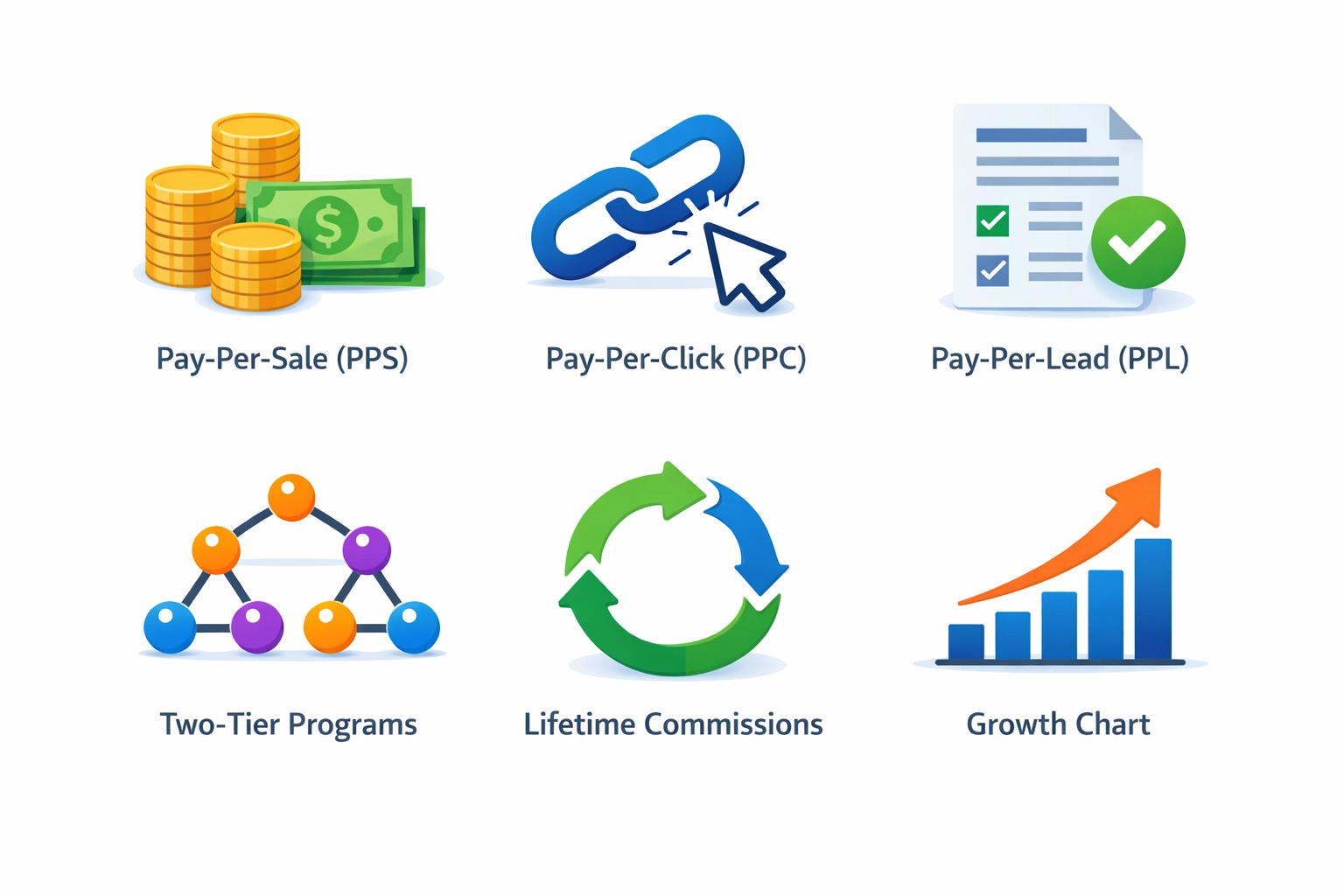
Explore the best affiliate payment models including PPC, PPL, PPS, two-tier programs, and lifetime commissions for your business.
Choosing the right affiliate payment model is one of the most critical decisions you’ll make when launching an affiliate program. The compensation structure you select directly impacts your ability to attract quality affiliates, drive conversions, and scale your business profitably. With numerous payment models available—from simple pay-per-sale arrangements to complex multi-tier commissions—understanding each option’s strengths and weaknesses is essential. This comprehensive guide explores the most effective affiliate payment models and how to implement them using industry-leading platforms like PostAffiliatePro. Whether you’re just starting your affiliate program or optimizing an existing one, the insights in this article will help you make data-driven decisions that align with your business goals.
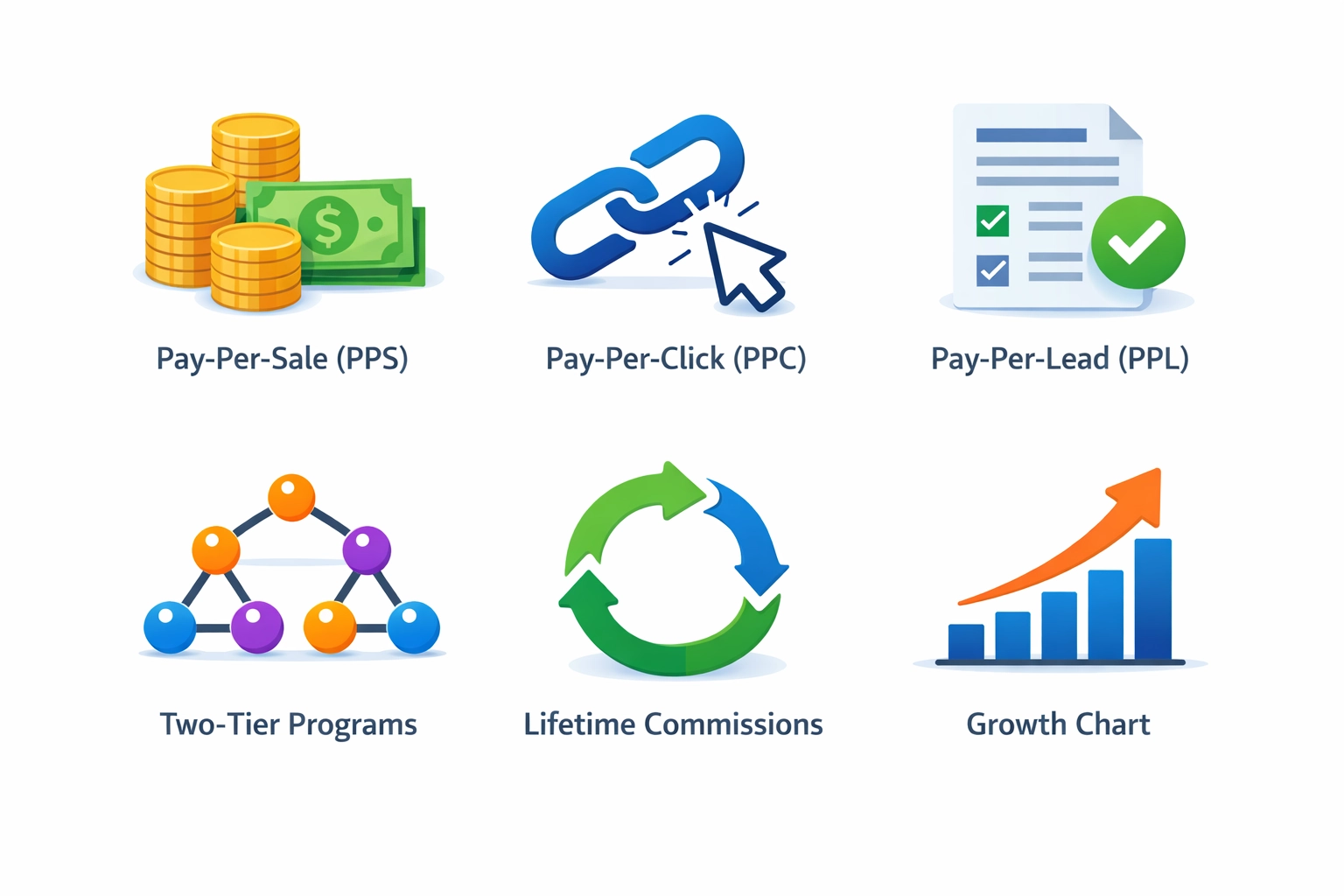
The Pay-Per-Sale (PPS) model remains the most popular and widely-adopted affiliate compensation structure across industries. In this model, affiliates earn a commission only when their referral results in a completed purchase, making it the most performance-driven approach. This creates a natural alignment of interests between merchants and affiliates—both parties benefit only when actual revenue is generated. The PPS model typically offers commission rates ranging from 5% to 30% of the sale value, depending on your industry, product margins, and competitive landscape. For example, software companies often offer 20-30% commissions on first-time sales, while e-commerce retailers might offer 5-15% due to lower profit margins. The primary advantage of PPS is its low risk for merchants; you only pay when conversions occur, making it ideal for businesses with limited marketing budgets. However, the main disadvantage is that it requires affiliates to drive qualified traffic capable of converting, which can be challenging for newer or less-established affiliates. PostAffiliatePro excels at tracking PPS commissions with its advanced conversion tracking and automated commission calculation features, ensuring accurate payment processing and detailed reporting.
| Model Aspect | Pay-Per-Sale | Pay-Per-Lead |
|---|---|---|
| Risk Level | Low (pay only for sales) | Medium (pay for leads) |
| Commission Rate | 5-30% of sale value | $1-$50 per lead |
| Best For | High-margin products | Lead generation, services |
| Affiliate Effort | High (must convert) | Medium (must qualify) |
| Merchant Cost | Variable (tied to revenue) | Fixed (per lead) |

Set up advanced tracking in minutes. No credit card required.
The Pay-Per-Lead (PPL) model compensates affiliates for generating qualified leads rather than completed sales, making it an excellent choice for businesses with longer sales cycles or complex purchasing processes. In this compensation structure, affiliates earn a fixed commission whenever a visitor completes a specific action—such as filling out a form, requesting a quote, or signing up for a trial. PPL works particularly well for B2B companies, financial services, insurance providers, and SaaS platforms where the sales process extends beyond a single transaction. Commission amounts typically range from $5 to $50 per lead, depending on the industry and lead quality requirements. The primary advantage of PPL is that it lowers the barrier to entry for affiliates, as they don’t need to drive high-converting traffic to earn commissions. This model also allows merchants to build valuable prospect databases for their sales teams to nurture. However, the challenge lies in defining what constitutes a “qualified” lead and managing lead quality to ensure your sales team isn’t wasting time on poor prospects.
Common qualifying actions for PPL programs include:
The Pay-Per-Click (PPC) model compensates affiliates based on the volume of traffic they drive to your website, regardless of whether those visitors convert into customers. Affiliates earn a small commission—typically $0.10 to $2.00 per click—for each visitor they send to your site. This model works best for websites with high-volume traffic potential and strong conversion rates, as the merchant assumes more risk by paying for traffic that may not convert. The primary advantage of PPC is its simplicity; tracking is straightforward, and affiliates can start earning immediately without worrying about conversion optimization. However, the disadvantage is that merchants bear the full risk of traffic quality and conversion performance, making this model less popular for most businesses. PPC is most commonly used by large publishers, content networks, and high-traffic websites that can guarantee substantial visitor volumes. PostAffiliatePro’s click tracking capabilities make it easy to monitor and verify each click, preventing fraud and ensuring accurate commission calculations.
Be the first to know about new features and product updates.
Two-tier affiliate programs introduce a multi-level commission structure where affiliates earn commissions not only on their direct referrals but also on the sales generated by other affiliates they recruit. This creates a network effect that can dramatically accelerate program growth and affiliate motivation. In a typical two-tier structure, a primary affiliate might earn 20% commission on direct sales, plus an additional 5-10% commission on sales generated by any affiliates they recruit. For example, if Affiliate A recruits Affiliate B, and Affiliate B generates $1,000 in sales, Affiliate A earns a percentage of that sale in addition to their own direct commissions. Two-tier programs are particularly effective for building engaged affiliate communities and incentivizing top performers to actively recruit other affiliates. The main advantage is increased program growth and affiliate retention, as top affiliates become invested in the program’s success beyond their own efforts. The disadvantage is increased complexity in tracking, commission calculations, and potential compliance issues depending on your jurisdiction. PostAffiliatePro’s sophisticated commission engine handles multi-tier calculations seamlessly, allowing you to set different commission rates for each tier and automatically distribute payments accordingly.
Recurring commission models are ideal for subscription-based businesses and SaaS companies, where affiliates earn commissions on every payment their referred customers make for the duration of the subscription. This creates a powerful long-term incentive structure where a single successful referral can generate months or years of ongoing commissions. For instance, if an affiliate refers a customer to a $99/month software subscription, and that customer remains subscribed for two years, the affiliate earns $99 in commissions every month for 24 months—totaling $2,376 from a single referral. Lifetime commissions take this concept further, paying affiliates a percentage of all revenue generated by their referred customers for as long as those customers remain active. This model creates exceptional motivation for affiliates to refer high-quality, long-term customers rather than one-time buyers. The primary advantage is that it aligns affiliate incentives with customer lifetime value, encouraging quality over quantity in referrals. The disadvantage is higher ongoing costs for merchants, as commissions continue indefinitely. However, the improved customer retention and lifetime value typically justify these costs. PostAffiliatePro excels at managing recurring commissions with its automated billing integration and subscription tracking features, ensuring affiliates receive accurate payments every billing cycle.
Tiered commission structures reward affiliate performance by increasing commission rates as affiliates hit specific sales or revenue milestones. This performance-based approach motivates affiliates to continuously improve their efforts and drive higher volumes. A typical tiered structure might look like: 10% commission on the first $10,000 in monthly sales, 15% on sales between $10,001-$25,000, and 20% on sales exceeding $25,000. This incentive mechanism encourages affiliates to optimize their marketing efforts, test new channels, and scale their campaigns to reach higher commission tiers. The primary advantage is that tiered structures create clear performance goals and reward top performers with better economics, which improves overall program profitability. They also help merchants manage costs by paying lower rates to smaller affiliates while rewarding high-volume partners with better margins. The disadvantage is increased administrative complexity and the need for transparent, real-time reporting so affiliates understand their progress toward the next tier. PostAffiliatePro’s advanced reporting dashboard makes it simple to display tier progress and projected earnings, keeping affiliates motivated and engaged.
Selecting the optimal payment model requires careful analysis of your business model, industry standards, affiliate capabilities, and financial constraints. Start by evaluating your product type and sales cycle: high-ticket B2B services typically benefit from PPL models, while e-commerce and digital products work well with PPS. Consider your profit margins and customer acquisition costs—if your margins are thin, PPS with lower commission rates may be necessary, while high-margin products can support more generous PPS or recurring commission models. Analyze your target affiliate audience: established publishers and influencers may prefer PPC or CPC models, while newer affiliates often prefer PPS or PPL where they can control their earning potential. Evaluate your business growth stage: early-stage companies often use more generous commission rates to attract affiliates, while established brands can be more selective. Think about customer lifetime value: if your customers generate significant recurring revenue, recurring or lifetime commission models create powerful long-term incentives. Finally, research industry benchmarks to ensure your rates are competitive enough to attract quality affiliates while remaining profitable for your business.

Implementing your chosen payment model effectively requires attention to several critical logistics and best practices. Establish clear payment schedules: most affiliate programs pay monthly, but some offer bi-weekly or on-demand payments for top performers. Set minimum payment thresholds (typically $25-$100) to reduce administrative overhead and payment processing costs. Choose reliable payment methods: PostAffiliatePro supports multiple payment gateways including PayPal, bank transfers, and check payments, ensuring affiliates can receive earnings conveniently. Implement fraud detection: monitor for suspicious activity patterns, click fraud, and invalid conversions to protect your program’s integrity. Provide transparent reporting: affiliates should have real-time access to their clicks, conversions, commissions, and payment history through a comprehensive dashboard. Communicate payment terms clearly: document your payment schedule, minimum thresholds, cookie duration, and any restrictions in your affiliate agreement. Automate commission calculations: use PostAffiliatePro’s intelligent commission engine to automatically calculate and process payments based on your chosen model, reducing manual work and errors. Track and reconcile regularly: conduct monthly audits of commission calculations to ensure accuracy and identify any discrepancies before payments are processed.
The right affiliate payment model can transform your marketing strategy, enabling you to scale customer acquisition while aligning incentives with your business objectives. Whether you choose the simplicity of pay-per-sale, the lead-generation focus of pay-per-lead, or the long-term value of recurring commissions, the key is selecting a model that matches your business model and attracts quality affiliates. PostAffiliatePro stands out as the leading affiliate management platform, offering sophisticated commission calculation engines, multi-tier support, and comprehensive reporting that makes implementing any payment model straightforward and reliable. By understanding the strengths and weaknesses of each model and following the best practices outlined in this guide, you’ll be well-positioned to build a thriving affiliate program that drives sustainable growth. Start by evaluating your business needs, researching industry benchmarks, and testing your chosen model with a small group of affiliates before scaling—this data-driven approach will help you optimize your program for maximum profitability and affiliate satisfaction.
Pay-Per-Sale (PPS) is the most widely used affiliate payment model because it's straightforward, offers good ROI for businesses, and aligns incentives between merchants and affiliates. Approximately 80% of online businesses use some form of PPS model in their affiliate programs.
Recurring commissions are ideal for SaaS companies because they align with the subscription-based business model. Affiliates earn ongoing commissions as long as referred customers maintain their subscriptions, creating a mutually beneficial long-term partnership.
Yes, many successful affiliate programs use hybrid models combining PPS, PPL, and tiered commissions. This approach allows you to incentivize different types of affiliates and marketing activities while optimizing for your specific business goals.
Two-tier programs allow affiliates to earn commissions on recruits' sales, while MLM (Multi-Level Marketing) involves multiple levels of recruitment. Two-tier is more straightforward and ethical, while MLM can be complex and requires careful compliance to avoid pyramid scheme concerns.
Implement robust tracking software, set clear qualifying criteria for leads, monitor for suspicious patterns, use fraud detection tools, and maintain transparent communication with affiliates. PostAffiliatePro includes built-in fraud prevention features to protect your program.
Commission rates vary by industry: physical products (5-20%), digital products (20-50%), SaaS (20-50%), and financial services ($50-200 per referral). Research your industry standards and consider your profit margins when setting rates.
Most programs pay monthly, though some offer weekly or quarterly payments. Monthly payments are standard because they balance cash flow management with affiliate satisfaction. Set a minimum threshold (typically $50-100) to reduce administrative overhead.
PostAffiliatePro provides flexible commission structures supporting PPS, PPL, PPC, tiered, recurring, and two-tier models. The platform automates tracking, reporting, and payouts, making it easy to manage complex commission structures at scale.
PostAffiliatePro makes it easy to implement any affiliate payment model with advanced commission tracking, multi-tier support, and automated payouts.
Discover the best affiliate payment models for your program. Learn about PPC, PPL, PPS, recurring commissions, tiered structures, and two-tier programs with Pos...
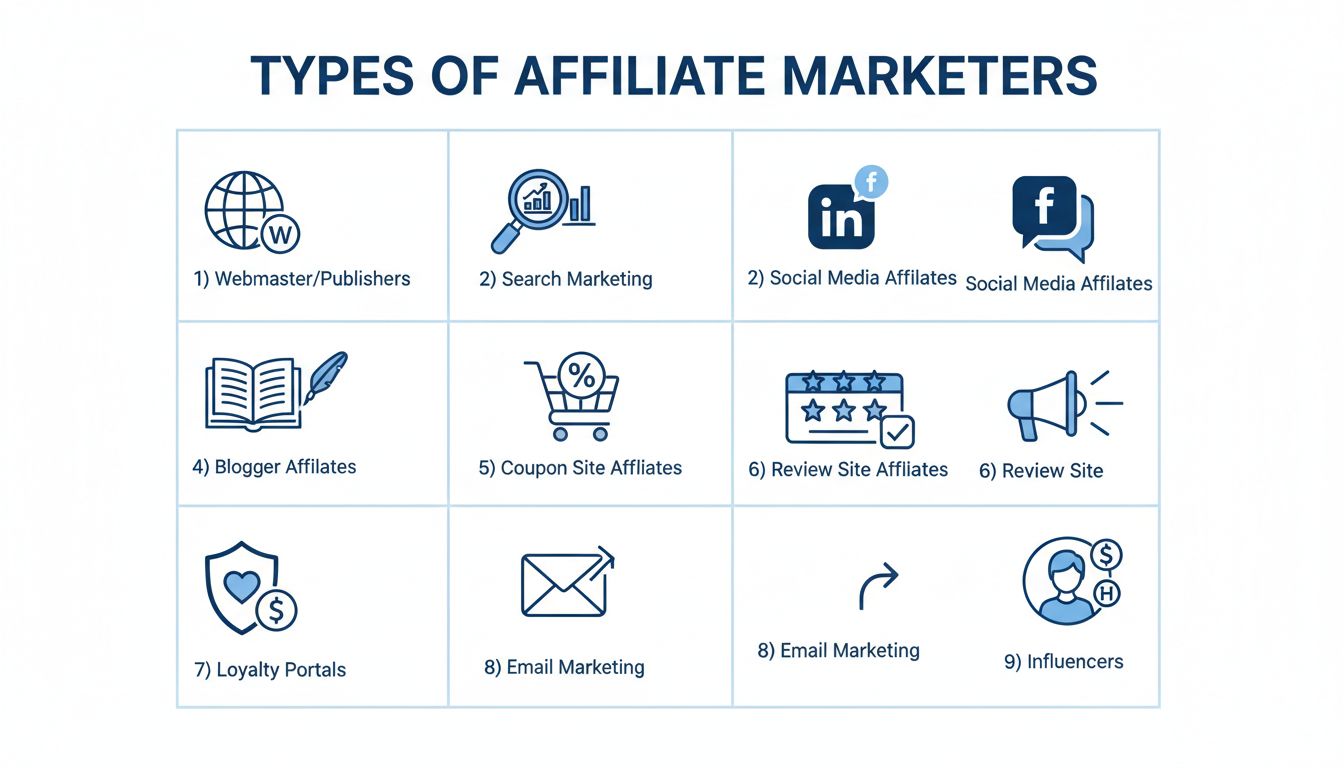
Discover the different types of affiliates and affiliate marketing models. Learn about pay-per-sale, pay-per-click, pay-per-lead, and more. Find the best affili...

Discover the most common affiliate payment agreements including PPS, PPL, and PPC. Learn how each model works and which is best for you.
Join our community of happy clients and provide excellent customer support with Post Affiliate Pro.




Cookie Consent
We use cookies to enhance your browsing experience and analyze our traffic. See our privacy policy.