


Affiliate Marketing vs Hiring Salespeople: Which Strategy Wins in 2025?
Discover when to choose affiliate marketing over hiring salespeople. Compare costs, scalability, and ROI for startups and growing businesses in 2025.
9 min read


Discover when affiliate marketing outperforms traditional sales teams. Learn cost-effective strategies for startups, niche products, and brand expansion.
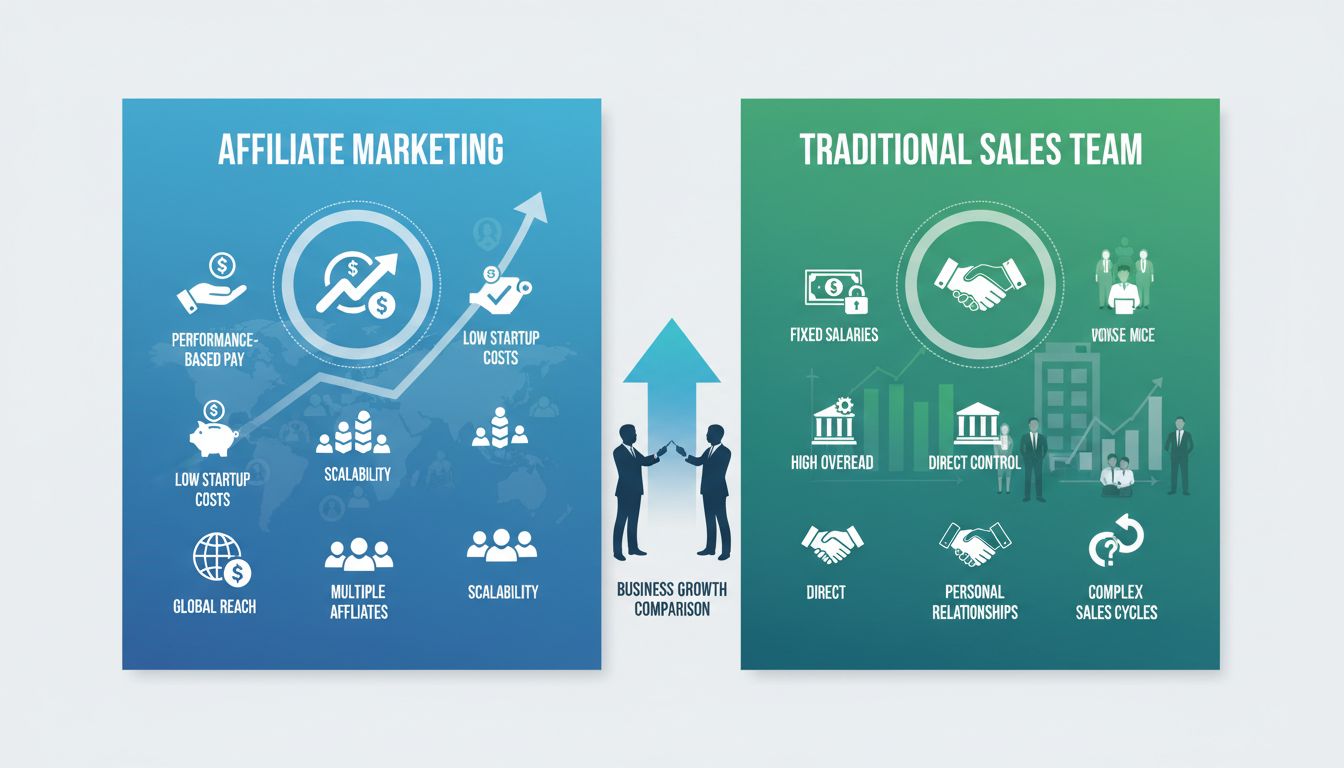
The fundamental difference between affiliate marketing and hiring salespeople lies in how you pay for results. With affiliate marketing, you only pay commissions when affiliates successfully generate sales or leads—a true performance-based model that directly ties your marketing expenses to revenue. In contrast, hiring salespeople requires significant upfront investment: salaries typically ranging from $50,000 to $150,000+ annually, plus benefits, training, office space, and equipment. This means you’re paying fixed costs regardless of whether your sales team meets targets. Affiliate marketing eliminates this financial risk by ensuring every dollar spent delivers measurable returns, making it an ideal choice for businesses operating on tight budgets or those seeking guaranteed ROI.

Affiliate marketing shines in specific business situations where traditional sales teams may be inefficient or cost-prohibitive. Startups with limited capital benefit enormously from affiliate programs because they can launch customer acquisition without the overhead of building an internal sales department. Companies testing new markets can use affiliates already established in target regions to gauge demand and validate product-market fit before committing significant resources. Brands with niche or expert products—such as specialized software, technical equipment, or professional services—leverage affiliates who possess deep industry knowledge and credibility with their audiences. Businesses seeking rapid scaling can exponentially expand their reach by recruiting multiple affiliates simultaneously, something that would take months or years to achieve by hiring and training salespeople.
| Scenario | Why Affiliate Marketing Works | Key Benefit |
|---|---|---|
| Startups | No upfront hiring costs; pay only for results | Preserve cash flow while acquiring customers |
| Market Testing | Affiliates provide local market access and insights | Validate demand with minimal investment |
| Niche Products | Affiliates are trusted experts in their fields | Higher conversion rates through credible endorsements |
| Rapid Growth | Multiple affiliates scale reach simultaneously | Exponential audience expansion without hiring delays |

Set up advanced tracking in minutes. No credit card required.
One of affiliate marketing’s greatest advantages is instant access to established audiences without building them from scratch. When you partner with affiliates, you’re tapping into their existing followers, email lists, social media communities, and professional networks—audiences that took them years to cultivate. This creates a powerful network effect: as you recruit more affiliates, your brand’s reach grows exponentially, with each new partner introducing your products to entirely new customer segments. Geographic expansion becomes remarkably simple; instead of opening physical offices or hiring local sales teams in new countries, you can partner with affiliates already embedded in those markets. The flexibility to scale up or down quickly is another critical advantage—if certain affiliates underperform, you can reallocate resources to top performers or recruit new partners without the complications of employment contracts or severance obligations.
Affiliates function as trusted voices within their communities, which is invaluable for building credibility and driving conversions. When a respected industry expert, blogger, or influencer recommends your product, their audience perceives it as a genuine endorsement rather than corporate marketing—a distinction that dramatically improves conversion rates. Influencer partnerships have become particularly powerful, with micro-influencers and niche content creators often delivering higher engagement and conversion rates than traditional advertising. The authenticity of user-generated content created by affiliates resonates far more strongly with consumers than polished corporate messaging. By partnering with the right affiliates, you’re essentially building a network of brand ambassadors who genuinely believe in your products and communicate that belief to their audiences in authentic, compelling ways.
Be the first to know about new features and product updates.
Affiliate marketing’s performance-based model inherently reduces financial risk compared to hiring salespeople. Your initial investment is minimal—primarily platform fees and marketing materials—with no expensive recruitment, onboarding, or training costs. If an affiliate partnership isn’t working, you can discontinue it immediately without legal complications or severance obligations. This flexibility allows you to experiment with different affiliate types—content creators, industry experts, complementary service providers—and quickly identify which partnerships deliver the best ROI. You can also pivot your strategy rapidly in response to market changes, seasonal trends, or competitive pressures. Unlike a sales team that requires months to hire and train, affiliate programs can be adjusted, expanded, or refined within days, giving your business the agility to respond to opportunities and challenges in real-time.
Modern affiliate marketing software has transformed how businesses manage partner networks, making it easier than ever to recruit, enable, and track affiliates at scale. Platforms like PostAffiliatePro provide comprehensive solutions that automate the entire affiliate lifecycle, from recruitment through payment processing. These platforms eliminate manual administrative work, allowing you to focus on strategy and optimization rather than spreadsheets and email management.
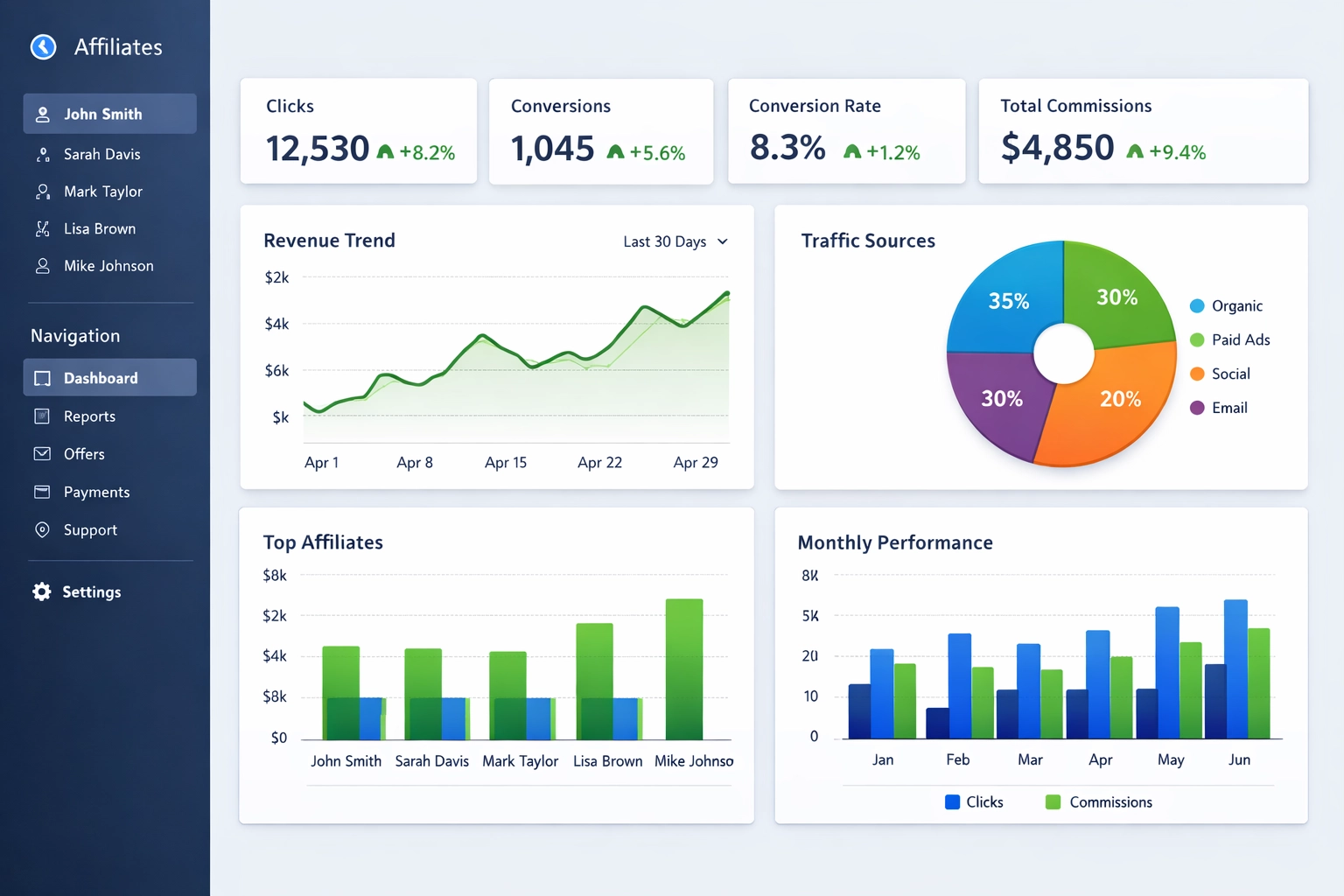
Key features of professional affiliate marketing platforms include:
While affiliate marketing offers tremendous advantages, certain business situations still call for a dedicated sales team. Complex B2B sales cycles requiring consultative selling, multiple stakeholder approvals, and extended negotiations benefit from direct sales relationships. High-ticket items where customers need personalized demonstrations, custom solutions, or hands-on support are better served by trained salespeople who can provide white-glove service. Industries requiring long-term customer relationships—such as enterprise software, management consulting, or financial services—demand the personal touch and accountability that only direct sales teams can provide. Products requiring hands-on demonstrations or technical expertise that customers need to experience firsthand also favor traditional sales approaches.
The most successful approach for many businesses is hybrid: using affiliate marketing for lead generation, market expansion, and customer acquisition while maintaining a sales team for complex deals, relationship management, and high-value accounts. This combination maximizes reach while preserving control over critical customer interactions.
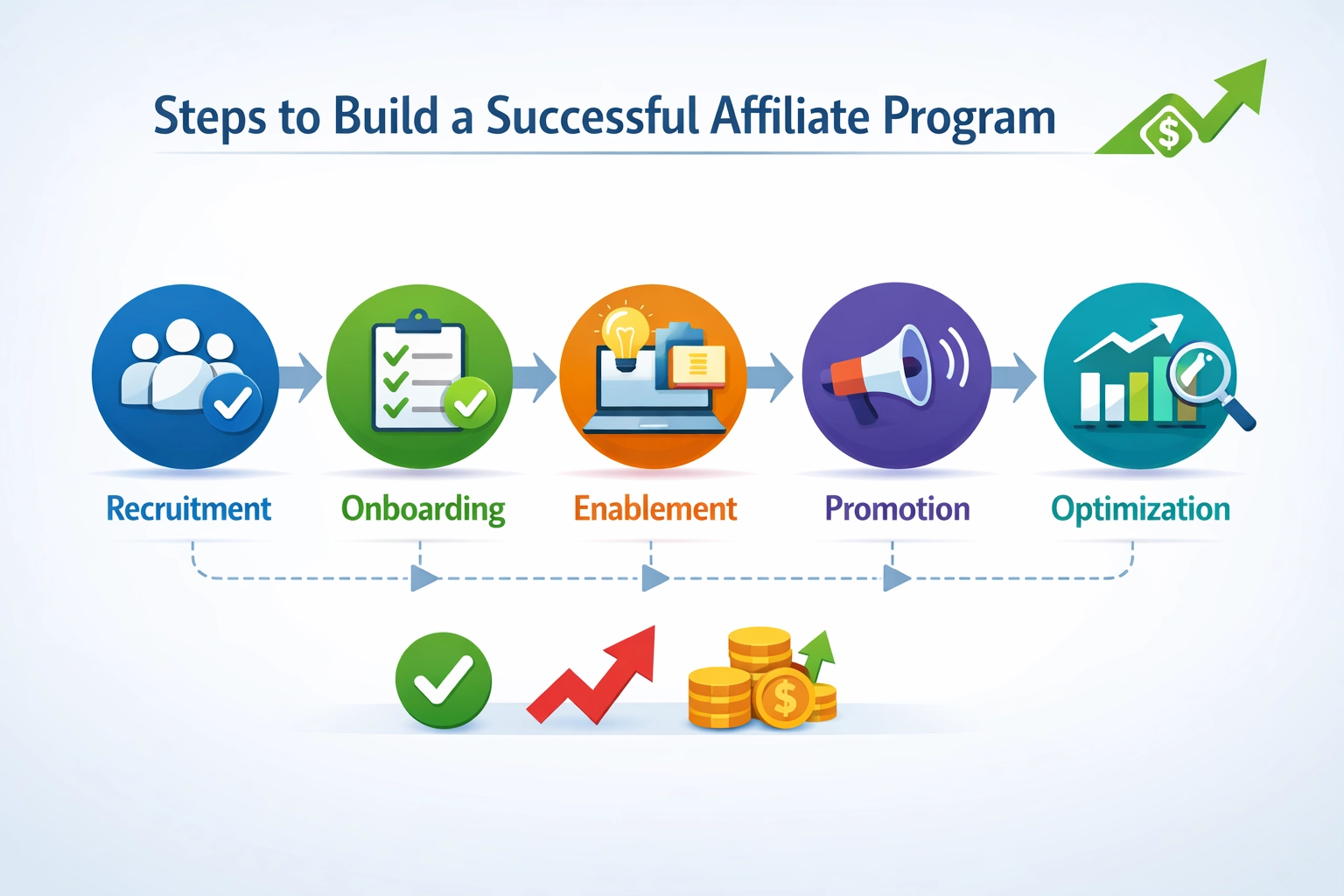
Launching a profitable affiliate program requires strategic planning and ongoing optimization. Start by establishing clear program objectives and KPIs—define what success looks like, whether that’s revenue targets, customer acquisition costs, or market penetration goals. Recruit quality affiliates whose audiences align with your ideal customer profile; a smaller network of highly relevant partners outperforms a large network of misaligned ones. Develop competitive commission structures that motivate affiliates while maintaining healthy profit margins; research industry standards and consider tiered structures that reward top performers. Provide comprehensive marketing support including product information, promotional materials, landing pages, and regular communication to help affiliates succeed. Monitor performance metrics continuously and optimize your program based on data—identify top-performing affiliates, analyze what makes them successful, and replicate those strategies across your network.
The financial advantages of affiliate marketing become clear when examining key performance metrics. Cost per acquisition (CPA) through affiliate channels typically runs 20-40% lower than traditional advertising, since you only pay for actual conversions. Return on ad spend (ROAS) for affiliate programs commonly ranges from 4:1 to 6:1, meaning every dollar spent on affiliate commissions generates $4-$6 in revenue. Customer lifetime value from affiliate-acquired customers often exceeds that of other channels, as affiliates tend to drive higher-quality, more engaged customers. Conversion rates improve significantly when customers arrive through trusted affiliate recommendations rather than cold advertising. Most businesses see positive ROI within 60-90 days of launching a well-structured affiliate program, with returns improving substantially as the network matures and optimization efforts take effect.
Affiliate marketing programs can start with minimal investment, especially if using existing platforms. Costs typically include platform fees (if any), commission payouts, and marketing materials. Unlike hiring salespeople, there are no upfront salary or benefits costs, making it ideal for startups and businesses with limited marketing budgets.
Yes, affiliate marketing is highly effective for B2B companies. B2B affiliates include consultants, industry experts, and complementary service providers who can recommend your products to their networks, providing credibility and access to qualified leads. Many B2B companies use affiliate programs to expand their reach into new markets and industries.
Commission rates vary by industry and product type, typically ranging from 5-30% of sales. Research your industry standards, consider your profit margins, and offer competitive rates to attract quality affiliates. You can also use tiered structures to reward top performers and incentivize higher sales volumes.
Use dedicated affiliate marketing software with built-in tracking, unique affiliate links, and cookie-based attribution. Monitor for suspicious activity, set clear program guidelines, and maintain regular communication with affiliates to ensure transparency and prevent fraud. Modern platforms provide real-time analytics and detailed reporting.
Absolutely. Many successful companies use a hybrid approach, combining affiliate marketing for lead generation and market expansion with a sales team for complex deals and relationship management. This maximizes reach while maintaining control over high-value sales and ensuring personalized service for key accounts.
Results vary, but many businesses see initial results within 30-60 days of launching a program. However, building a strong affiliate network and optimizing performance typically takes 3-6 months. Patience and continuous optimization are key to long-term success and sustainable revenue growth.
Recruit affiliates whose audiences align with your target customers. This includes content creators, bloggers, influencers, industry experts, complementary service providers, and niche communities. Quality over quantity is essential for better conversion rates and more authentic brand endorsements.
Affiliate content creates valuable backlinks to your website, improving domain authority and search rankings. Multiple affiliates creating content about your products generates diverse, high-quality links that signal credibility to search engines, boosting organic visibility and long-term traffic growth.
PostAffiliatePro makes it easy to launch and manage a profitable affiliate program. Start your free trial today and see how affiliate marketing can transform your revenue.
Discover when to choose affiliate marketing over hiring salespeople. Compare costs, scalability, and ROI for startups and growing businesses in 2025.

Key skills for hiring affiliate marketing freelancers: digital marketing expertise, SEO, analytics, content creation, and communication that drive results.

how tech startups can leverage affiliate marketing for cost-effective growth, brand credibility, and scalable customer acquisition.
Join our community of happy clients and provide excellent customer support with Post Affiliate Pro.




Cookie Consent
We use cookies to enhance your browsing experience and analyze our traffic. See our privacy policy.