


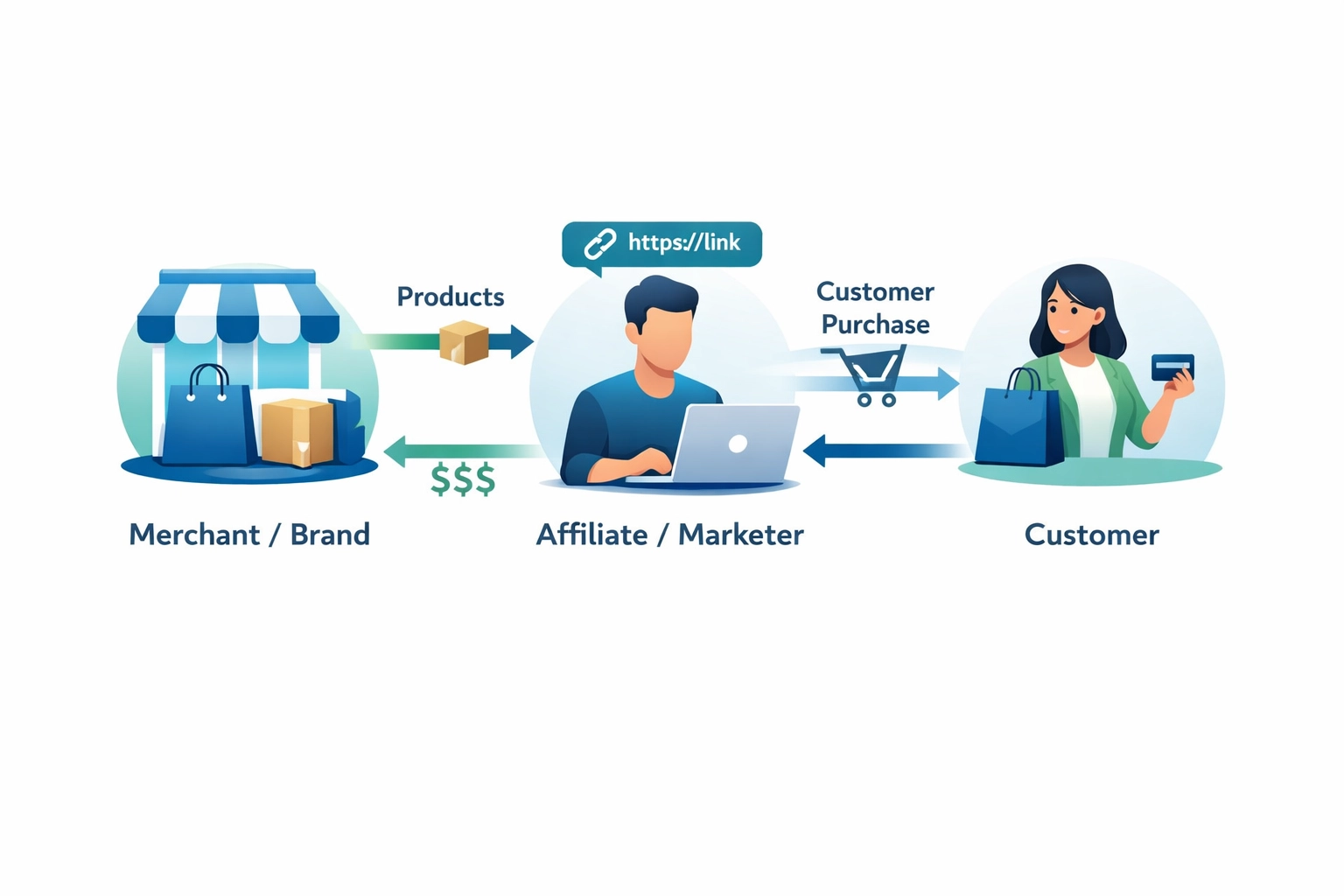
Start an Affiliate Marketing Campaign: Beginner Guide
how to launch a profitable affiliate marketing campaign from scratch. niche selection, platform building, program selection
7 min read

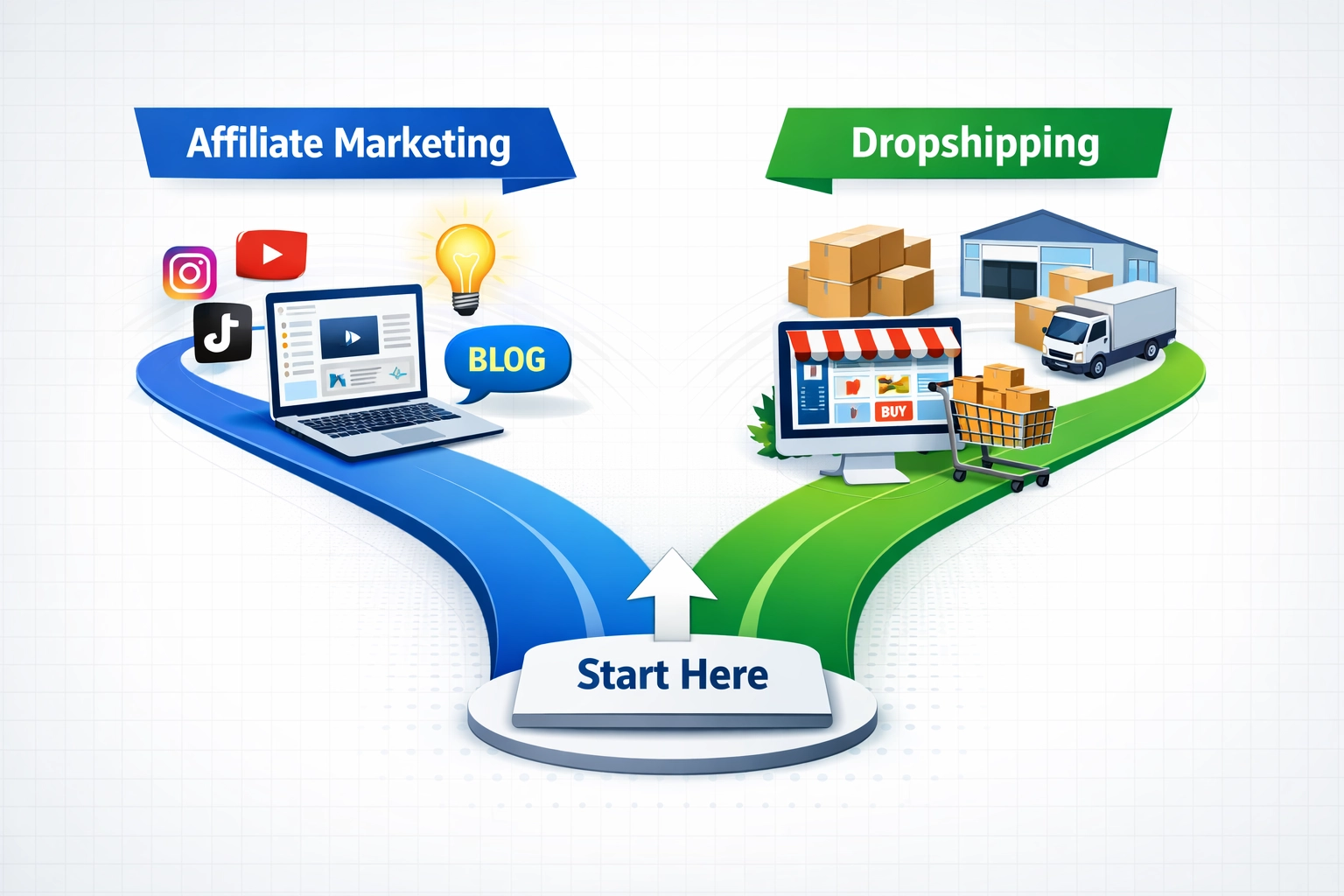
Compare affiliate marketing and dropshipping business models. Learn startup costs, profit margins, and which is easier to start for beginners.
The affiliate marketing industry is booming, valued at $10.72 billion in 2024 and projected to reach $12 billion by 2025. If you’re considering starting an online business, you’ve likely encountered two popular models: affiliate marketing and dropshipping. Both offer low-barrier entry points for entrepreneurs with limited capital, but they operate on fundamentally different principles. Understanding the differences between these models is crucial to choosing the right path for your business goals.
Affiliate marketing is a performance-based business model where you earn commissions by promoting other companies’ products or services. The ecosystem involves three key players: the merchant (product seller), the affiliate (you, the promoter), and the consumer (the buyer). As an affiliate, you don’t create products or handle inventory—you simply recommend products through unique tracking links and earn a commission whenever someone makes a purchase, signs up, or completes another desired action. Commission structures vary widely depending on the merchant and the type of action required.
The affiliate marketing process follows a straightforward sequence:
| Commission Type | How It Works | Typical Rate | Best For |
|---|---|---|---|
| PPS (Pay Per Sale) | Earn commission when someone purchases | 5-30% | Physical products, high-ticket items |
| PPL (Pay Per Lead) | Earn commission when someone signs up or submits info | $0.50-$50 per lead | SaaS, insurance, financial services |
| PPC (Pay Per Click) | Earn commission for each click to merchant site | $0.10-$2 per click | High-traffic content, niche sites |
| PPI (Pay Per Install) | Earn commission when someone installs an app | $0.50-$5 per install | Mobile apps, software |
This model is attractive because you only earn when results are delivered, making it a low-risk way to monetize your audience or content.
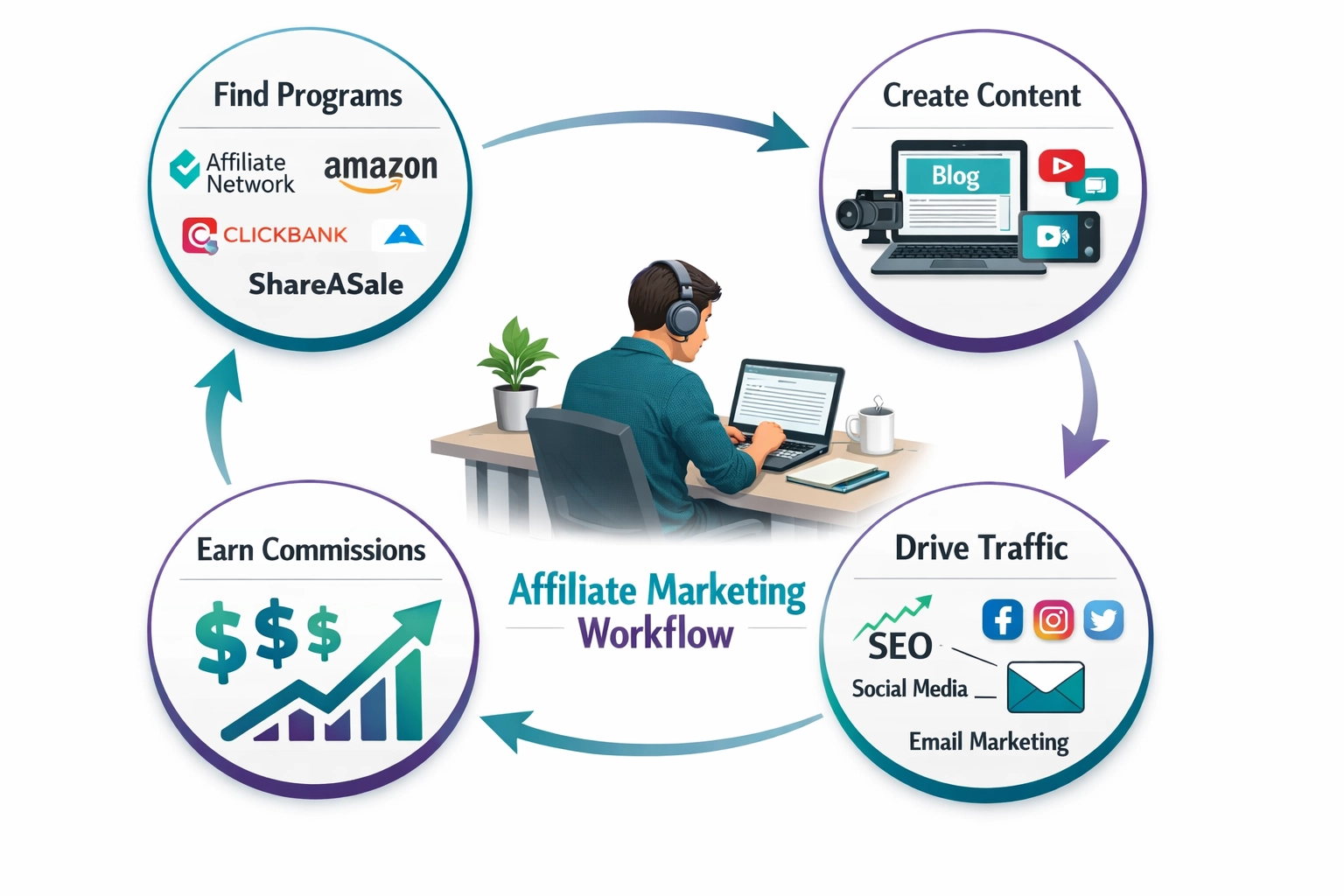

Set up advanced tracking in minutes. No credit card required.
Dropshipping is an ecommerce business model where you sell products directly to customers without holding inventory. Instead, you partner with suppliers who manufacture and ship products on your behalf. When a customer purchases from your online store, the supplier automatically fulfills and ships the order. The dropshipping market is experiencing explosive growth, projected to reach $476.1 billion by 2026, making it one of the most accessible ecommerce models for new entrepreneurs.
Starting a dropshipping business involves these essential steps:
The supplier relationship is critical in dropshipping—you’re essentially acting as the middleman between manufacturers and customers. Your ecommerce platform integrates with supplier systems to automate order processing, though you remain responsible for customer service and store management.
Be the first to know about new features and product updates.
Affiliate marketing requires minimal to virtually no startup investment. You can start with free platforms like a blog (WordPress.com), YouTube, or social media accounts. If you want to invest, costs might include a domain name ($10-15/year), hosting ($50-200/year), or email marketing tools ($0-100/month). Total initial investment: $0-500.
Dropshipping, by contrast, requires moderate upfront costs. You’ll need an ecommerce platform subscription ($29-299/month), domain name ($10-15/year), product samples to test quality ($50-500), initial marketing budget ($100-1000), and potentially premium apps or tools ($50-200/month). Total initial investment: $500-2000+.
Affiliate marketing can launch in as little as 24-48 hours. You can claim a free blog, write your first product review, and start sharing affiliate links within a day. The main setup involves choosing your niche, finding affiliate programs, and creating initial content.
Dropshipping typically requires 1-4 weeks to launch properly. You need time to research suppliers, set up your ecommerce platform, customize your store design, add product listings, configure payment processing, and create initial marketing materials. While you could technically launch faster, rushing leads to poor supplier relationships and customer experience issues.
Affiliate marketing typically has a longer timeline to meaningful income because you must build audience trust before conversions occur. Most new affiliate marketers see their first commission within 3-6 months of consistent content creation, but reaching $100+ monthly income typically requires 12-18 months of dedicated effort. The timeline depends heavily on your niche, content quality, SEO optimization, and marketing strategy. However, once you establish authority and audience trust, income can grow exponentially with minimal additional effort.
Dropshipping can generate first sales much faster, sometimes within days or weeks of launching your store if you invest in paid advertising. With a functioning store and marketing budget, you can drive traffic immediately and make sales without waiting for organic growth. However, profitability takes longer because you must account for advertising costs, platform fees, and operational expenses. Many dropshippers operate at a loss during their first 1-3 months while optimizing their marketing and product selection. The faster path to first sale doesn’t necessarily translate to faster profitability, making the financial timeline more complex than affiliate marketing.
Affiliate marketing commissions typically range from 5-30% of the sale price, depending on the product category and merchant. For example, promoting a $100 software subscription at 20% commission earns you $20 per sale. To earn $5,000/month, you’d need 250 sales.
Dropshipping offers higher profit margins, typically 20-50% per sale. If you source a product for $10 and sell it for $30, your gross margin is $20 (67%). However, after accounting for marketing, platform fees, and customer service, net margins often settle at 20-30%. A dropshipper selling 200 units/month at $30 with 25% net margin earns $1,500/month. Both models can be profitable, but the earning structure differs significantly.
| Aspect | Affiliate Marketing | Dropshipping |
|---|---|---|
| Commission Rates | 5-30% (varies by program) | 20-40%+ (you set prices) |
| Profit Control | Limited (set by merchant) | Complete control |
| Revenue Model | Per-sale commissions | Markup on wholesale price |
| Recurring Income | One-time per sale | Potential repeat customers |
| Scaling Potential | Limited by commission rates | High with proper management |
| Average Monthly Income (Year 1) | $0-500 | $500-2,000 |
| Average Monthly Income (Year 2+) | $1,000-5,000 | $2,000-10,000+ |
Affiliate marketing places minimal operational burden on you. Your primary responsibilities are creating quality content and driving traffic—the merchant handles everything else (product creation, inventory, customer service, shipping). You’re essentially a marketer, not a business operator.
Dropshipping requires significant operational involvement. You must manage customer service inquiries, handle returns and complaints, coordinate with suppliers, monitor inventory levels, troubleshoot shipping issues, and maintain your ecommerce platform. If a supplier ships a defective product, you’re responsible for customer satisfaction. This operational complexity increases stress and time commitment substantially.
Affiliate marketing is definitively easier to start. The barrier to entry is dramatically lower—you can begin with zero dollars, launch within hours, and test your strategy with minimal risk. There’s no operational complexity, no customer service burden, and no supplier relationships to manage. You’re purely focused on content creation and traffic generation. If you want to streamline your affiliate operations, platforms like PostAffiliatePro provide the infrastructure to manage multiple affiliate programs, track commissions, and scale efficiently. The verdict is clear: affiliate marketing wins on ease of entry, speed to launch, and operational simplicity.
Dropshipping has higher profit potential per transaction, with margins reaching 50% compared to affiliate commissions of 5-30%. However, affiliate marketing is more scalable because you don’t have operational overhead or customer service costs eating into profits. A successful affiliate can earn substantial passive income with minimal ongoing effort, while dropshipping requires continuous work to maintain and grow. The profitability ultimately depends on your effort, marketing strategy, and niche selection. Long-term, many entrepreneurs find affiliate marketing more profitable because it scales without proportional increases in workload.
Consider these factors when deciding: Your existing audience – If you have followers or an email list, affiliate marketing leverages that immediately. Time availability – Affiliate marketing requires less daily management; dropshipping demands ongoing attention. Capital availability – Limited budget? Choose affiliate marketing. Have $1000+? Dropshipping becomes viable. Long-term vision – Want a brand and business asset? Dropshipping builds equity. Want passive income? Affiliate marketing excels. Risk tolerance – Affiliate marketing is lower risk; dropshipping requires financial commitment. Many successful entrepreneurs actually use a hybrid approach, combining affiliate recommendations with their own dropshipping products to diversify income streams.
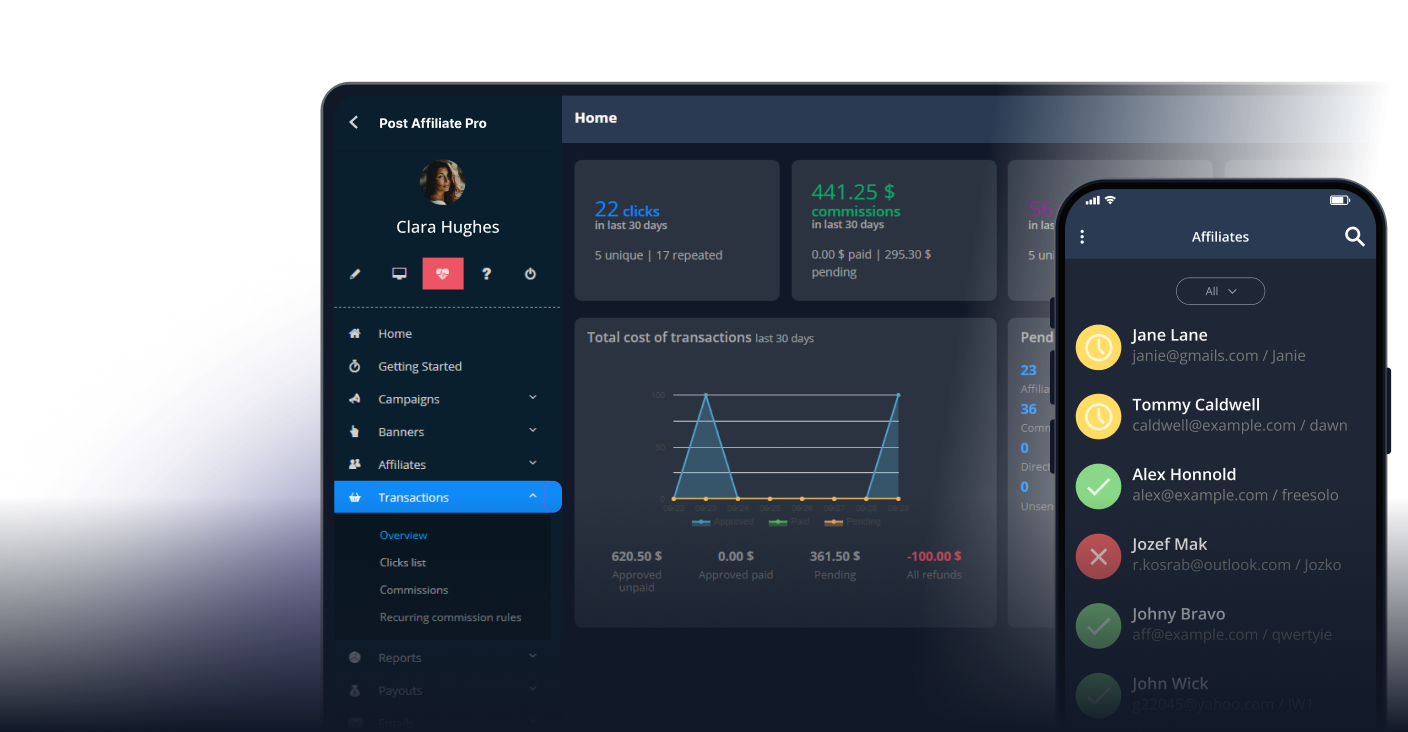
If you choose affiliate marketing, PostAffiliatePro is the leading software platform for managing affiliate programs and scaling your business. This comprehensive solution provides automated commission tracking, customizable affiliate dashboards, real-time reporting, and multi-tier commission structures. PostAffiliatePro simplifies affiliate marketing by handling the technical complexity—you focus on content and traffic while the platform manages commissions, payments, and affiliate relationships. Unlike competitors, PostAffiliatePro offers white-label solutions, API integrations, and fraud detection to protect your business. Whether you’re promoting others’ products or building your own affiliate network, PostAffiliatePro provides the infrastructure to scale efficiently.
Both affiliate marketing and dropshipping offer viable paths to online entrepreneurship, but they serve different needs and skill sets. Affiliate marketing is easier to start, requiring minimal investment and operational complexity, making it ideal for beginners. Dropshipping offers higher profit potential but demands more upfront investment and ongoing management. Your choice should align with your capital, time availability, and long-term business goals. Whichever path you choose, success requires consistent effort, quality content or products, and strategic marketing—but the easier entry point belongs to affiliate marketing.
Yes, many successful entrepreneurs use a hybrid approach. You can promote affiliate products while running a dropshipping store, diversifying your income streams. This strategy leverages the low-risk nature of affiliate marketing with the higher profit potential of dropshipping, though it requires managing both operations.
Affiliate marketing typically takes 3-6 months to generate your first commissions, depending on your niche and traffic generation strategy. Building a profitable audience requires consistent content creation and SEO optimization. However, once established, affiliate income can become truly passive.
Dropshipping profit margins typically range from 20-50% gross margin, but net margins after accounting for marketing, platform fees, and customer service usually settle at 15-30%. The actual margin depends heavily on your niche, supplier costs, and pricing strategy.
No, you can start affiliate marketing without a website using social media platforms like Instagram, TikTok, YouTube, or email marketing. However, a blog or website significantly improves long-term success by providing SEO-driven passive traffic and establishing authority in your niche.
You can start dropshipping with $500-$2,000 for platform subscription, domain, initial marketing, and product samples. However, successful dropshipping typically requires $1,000-$5,000 for proper store setup, quality marketing, and testing. The more you invest upfront, the faster you can scale.
Affiliate marketing in broad niches faces intense competition, but niche-specific affiliate marketing has less competition. Dropshipping is similarly competitive in popular categories but less saturated in emerging niches. Success in either model depends more on niche selection and execution than the model itself.
Absolutely. Many entrepreneurs start with affiliate marketing to build an audience, then transition to dropshipping or create their own products. Conversely, dropshippers often add affiliate recommendations to their stores. The skills and audience you build transfer between models.
Use affiliate management software like PostAffiliatePro to centralize tracking, commissions, and reporting across multiple programs. This eliminates the need to log into different dashboards and provides unified analytics. Proper management tools are essential for scaling beyond 3-4 affiliate programs.
PostAffiliatePro makes it easy to manage affiliate programs, track commissions, and scale your business. Start managing your affiliate network today with the industry's leading affiliate software.
how to launch a profitable affiliate marketing campaign from scratch. niche selection, platform building, program selection
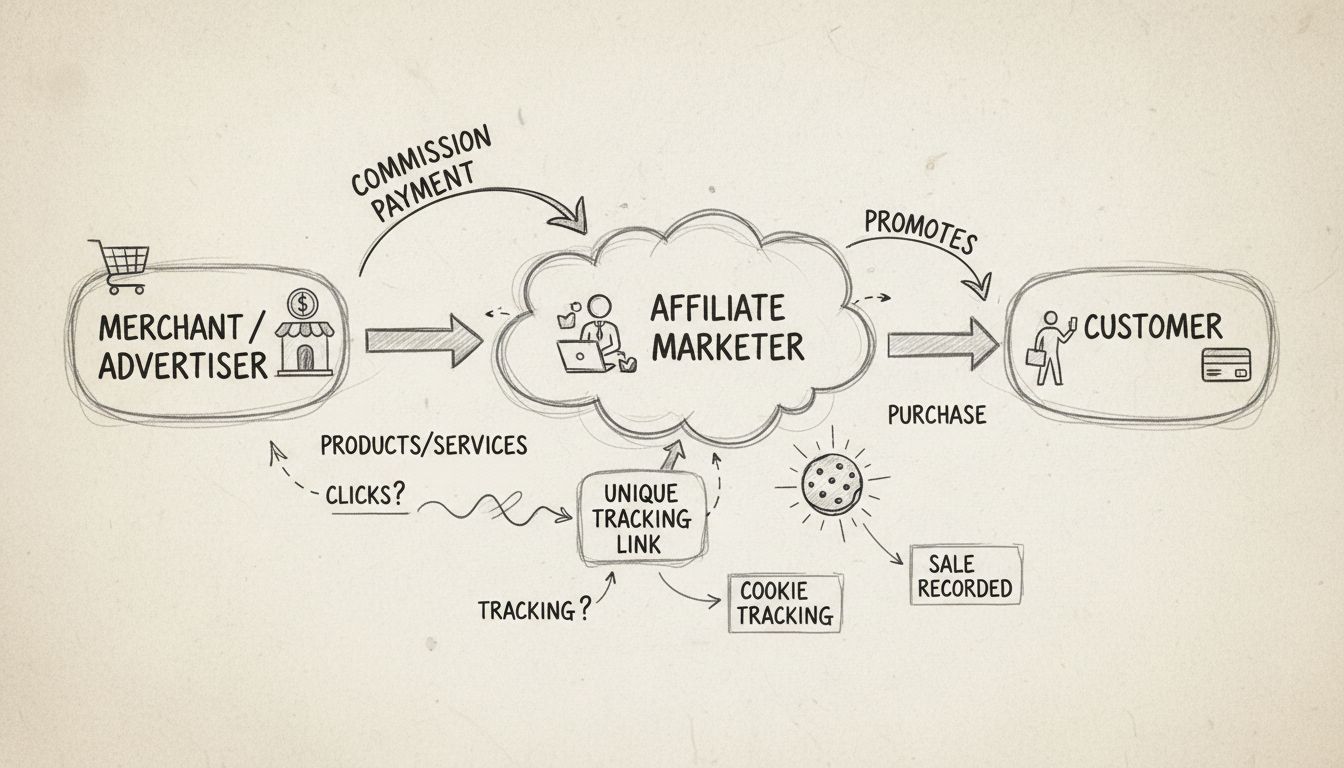
Learn what affiliate marketing is, how it works, and how to start your own affiliate marketing business. Discover commission structures, strategies, and best pr...
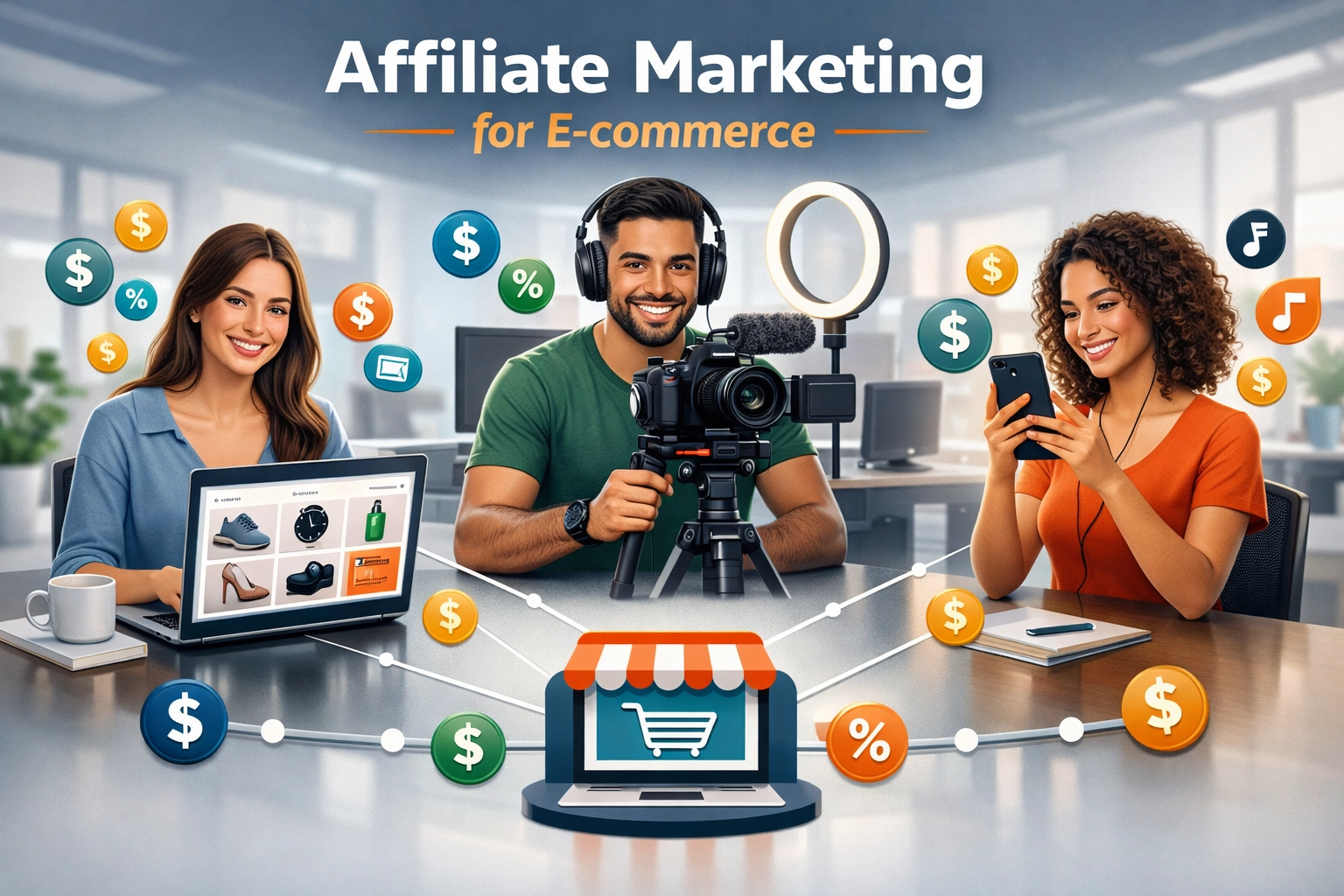
Discover how affiliate marketing drives traffic, increases sales, and builds brand credibility for e-commerce. Learn proven strategies to scale.
Join our community of happy clients and provide excellent customer support with Post Affiliate Pro.



Cookie Consent
We use cookies to enhance your browsing experience and analyze our traffic. See our privacy policy.