


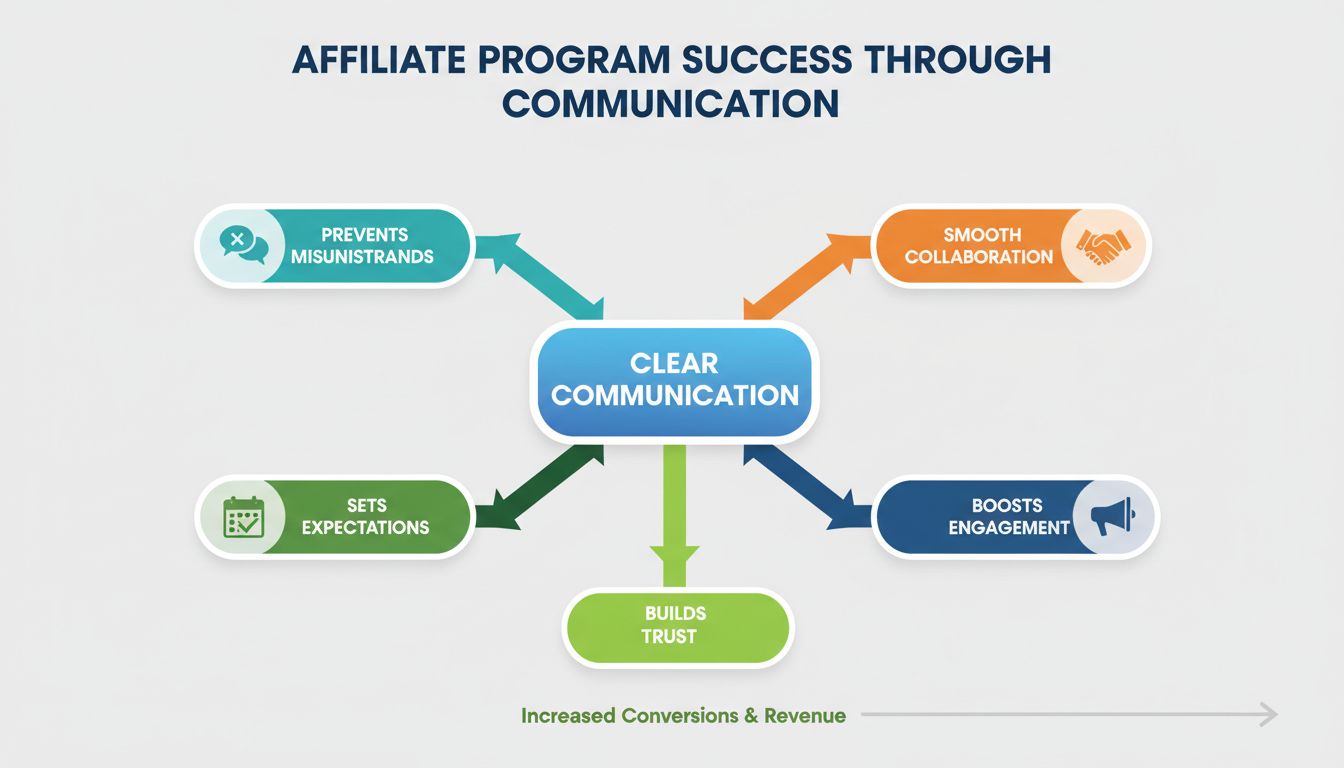
How Does Communication Impact Affiliate Program Success?
Discover how clear communication prevents misunderstandings, sets expectations, and ensures smooth collaboration between businesses and affiliates. Learn best p...
8 min read


Master affiliate program communication to prevent misunderstandings, set expectations, and ensure smooth collaboration with best practices.
Effective communication is the cornerstone of any successful affiliate program, yet it remains one of the most overlooked aspects of affiliate management. With the affiliate marketing industry generating over $9.56 billion in annual spending, the stakes have never been higher for program managers to establish clear, consistent communication channels with their partners. When affiliates understand program expectations, commission structures, and promotional guidelines from day one, the entire partnership operates with greater efficiency and mutual trust. Poor communication, on the other hand, leads to confusion, missed opportunities, and ultimately, affiliate churn that directly impacts your bottom line.

The modern affiliate program requires a multi-channel communication strategy that meets partners where they are, whether that’s email, dedicated portals, or real-time messaging platforms. Research shows that organizations implementing comprehensive communication strategies can reduce operational overhead by 40-50%, translating directly to improved profitability and faster program scaling. The following table outlines the most effective communication channels and their optimal use cases:
| Communication Channel | Best For | Frequency | Expected Response Time |
|---|---|---|---|
| Email Newsletters | Program updates, policy changes, promotional calendars | Weekly/Bi-weekly | 24-48 hours |
| Dedicated Affiliate Portal | Resource access, performance tracking, documentation | Always available | Real-time |
| One-on-One Calls | High-value affiliates, troubleshooting, strategy sessions | Monthly/Quarterly | Scheduled |
| Webinars & Training | New feature launches, best practices, skill development | Monthly | N/A |
| Slack/Discord Communities | Quick questions, peer support, real-time collaboration | Daily | 1-4 hours |
| SMS Alerts | Urgent updates, time-sensitive promotions | As needed | Immediate |

Set up advanced tracking in minutes. No credit card required.
The onboarding process sets the tone for your entire affiliate relationship, making it critical to communicate expectations with crystal clarity. Successful affiliate programs establish baseline expectations around several key areas that should be documented and reinforced throughout the partnership. Here are the essential expectations to communicate during onboarding:
Personalized communication dramatically outperforms generic, one-size-fits-all messaging in affiliate programs, with data showing that tailored communications improve engagement by up to 60% compared to standard broadcasts. When you segment your affiliate base and customize messages based on their performance tier, niche, or promotional preferences, you demonstrate that you value them as individual partners rather than just revenue sources. This approach requires understanding each affiliate’s unique strengths, challenges, and goals—information that should be gathered during onboarding and continuously updated through regular check-ins.

Be the first to know about new features and product updates.
Not all affiliates require the same communication frequency or depth, and attempting to treat them equally often leads to either over-communication or neglect. A tiered approach ensures that your highest-performing partners receive the attention they deserve while still maintaining baseline support for all program members. The following table demonstrates how communication should scale across different affiliate tiers:
| Affiliate Tier | Monthly Contact Points | Primary Channel | Dedicated Support | Content Customization |
|---|---|---|---|---|
| Platinum (Top 5%) | 4-6 touchpoints | Direct calls + email | Dedicated manager | Fully customized strategy |
| Gold (Top 5-15%) | 2-3 touchpoints | Email + portal | Shared manager | Segment-specific content |
| Silver (Top 15-40%) | 1-2 touchpoints | Email + webinars | Self-service + chat | Category-based resources |
| Bronze (Bottom 40%) | Monthly newsletter | Email + portal | Self-service only | Standard resources |
Transparency in performance reporting is non-negotiable for maintaining affiliate trust and demonstrating your commitment to fair partnerships. When affiliates can access real-time data about their clicks, conversions, commissions, and payouts, they feel empowered and confident in the program’s integrity. This transparency also reduces disputes and questions, as all parties can reference the same objective data. Key elements of transparent reporting include:
The most successful affiliate program managers practice proactive communication, reaching out to affiliates before problems escalate rather than waiting for complaints to arrive. This approach involves monitoring affiliate performance trends, identifying struggling partners early, and offering support before they become disengaged or leave the program. Regular check-ins, performance reviews, and strategy sessions demonstrate that you’re invested in their success, not just their revenue generation.
Establishing a consistent communication rhythm prevents both the chaos of ad-hoc messaging and the silence that leads to affiliate disengagement. A well-planned content calendar ensures that affiliates receive timely, relevant information without feeling overwhelmed by excessive emails or notifications. The following table outlines a recommended communication calendar framework:
| Content Type | Frequency | Timing | Audience | Purpose |
|---|---|---|---|---|
| Performance Reports | Weekly | Monday morning | All affiliates | Transparency and motivation |
| Promotional Calendar | Monthly | 1st of month | All affiliates | Planning and preparation |
| Best Practices Tips | Bi-weekly | Wednesday | All affiliates | Skill development |
| New Product Launches | As needed | 48 hours before | Relevant segments | Opportunity awareness |
| One-on-One Reviews | Quarterly | Scheduled | Top 20% | Strategic planning |
| Compliance Reminders | Quarterly | Start of quarter | All affiliates | Risk mitigation |
| Industry Insights | Monthly | Mid-month | All affiliates | Value-add content |
Even in well-managed programs, conflicts and difficult conversations are inevitable—the difference lies in how you handle them. Effective communication during challenging moments builds respect and strengthens relationships rather than damaging them. When addressing performance issues, policy violations, or commission disputes, follow these best practices:
As your affiliate program grows, manual communication becomes increasingly unsustainable, making technology adoption essential for maintaining quality interactions at scale. Modern affiliate management platforms enable automated yet personalized communication through segmentation, triggered messages, and intelligent workflows that respond to affiliate behavior in real-time. PostAffiliatePro stands out as the industry-leading solution for affiliate communication management, offering sophisticated automation tools that maintain the personal touch while scaling to thousands of partners. The platform’s built-in messaging system, customizable email templates, and performance-triggered alerts ensure that every affiliate receives timely, relevant communication without requiring your team to manually manage each interaction.

Effective communication isn’t just about sending messages—it’s about ensuring those messages drive measurable improvements in affiliate performance and program health. Key metrics to track include email open rates, portal login frequency, support ticket resolution time, affiliate retention rates, and most importantly, the correlation between communication touchpoints and revenue generation. Programs that implement structured communication strategies typically see 25-35% improvements in affiliate retention and 15-20% increases in average affiliate revenue within the first year. By analyzing which communication channels, frequencies, and content types drive the best results for different affiliate segments, you can continuously optimize your strategy and allocate resources more effectively.
The future of affiliate program management belongs to organizations that master personalized communication at scale, using data analytics and AI-driven insights to deliver the right message to the right affiliate at the right time. As competition for top affiliate talent intensifies and affiliate expectations continue to rise, generic communication will no longer suffice—partners expect the same level of personalization and responsiveness they receive from consumer brands. Programs that invest in communication infrastructure, training, and technology today will build stronger, more loyal affiliate networks that drive sustainable growth. The investment in clear, consistent, personalized communication isn’t just a nice-to-have; it’s a competitive necessity that directly impacts your program’s ability to attract, retain, and scale with the best affiliate partners in your industry.
Communication is the foundation of successful affiliate partnerships. It prevents misunderstandings, sets clear expectations, builds trust, and ensures both parties are aligned on goals and responsibilities. Programs with strong communication strategies see 25-35% improvements in affiliate retention and higher revenue generation.
The most effective affiliate programs use multiple channels: email for regular updates, dedicated portals for resource access, one-on-one calls for high-value partners, webinars for training, and community spaces like Slack for real-time collaboration. The key is choosing the right channel for the right message and audience.
Communication frequency should be tiered based on affiliate performance. Top performers (Platinum tier) should receive 4-6 touchpoints monthly, while lower-tier affiliates need at least monthly contact. A recommended baseline includes weekly performance reports, monthly promotional calendars, and quarterly strategic reviews.
Personalization involves segmenting affiliates by performance tier, niche, or promotional preferences, then tailoring messages accordingly. Use data from onboarding and performance tracking to understand each affiliate's unique needs. Personalized communication improves engagement by up to 60% compared to generic broadcasts.
Key metrics include email open rates, portal login frequency, support ticket resolution time, affiliate retention rates, and the correlation between communication touchpoints and revenue. Track which channels and content types drive the best results for different affiliate segments to continuously optimize your strategy.
Address issues promptly using private channels, lead with empathy, provide specific examples, and offer solutions rather than just criticism. Document all communications regarding disputes or policy violations. Regular check-ins and proactive outreach help identify and resolve problems before they escalate.
Modern affiliate management platforms like PostAffiliatePro offer built-in messaging, email automation, performance dashboards, and segmentation tools. Complementary tools include email marketing platforms (Mailchimp, Sendinblue), project management tools (Asana, Trello), and communication platforms (Slack, Discord).
PostAffiliatePro provides a centralized platform with built-in messaging, customizable email templates, performance-triggered alerts, affiliate segmentation, and a dedicated affiliate portal. These features enable automated yet personalized communication at scale, reducing communication overhead by 40-50% while maintaining the personal touch.
PostAffiliatePro provides all the tools you need to communicate effectively with your affiliates, build stronger relationships, and drive program success.
Discover how clear communication prevents misunderstandings, sets expectations, and ensures smooth collaboration between businesses and affiliates. Learn best p...

Master affiliate communication with proven strategies for engagement, feedback, trust-building, segmentation, and success measurement.
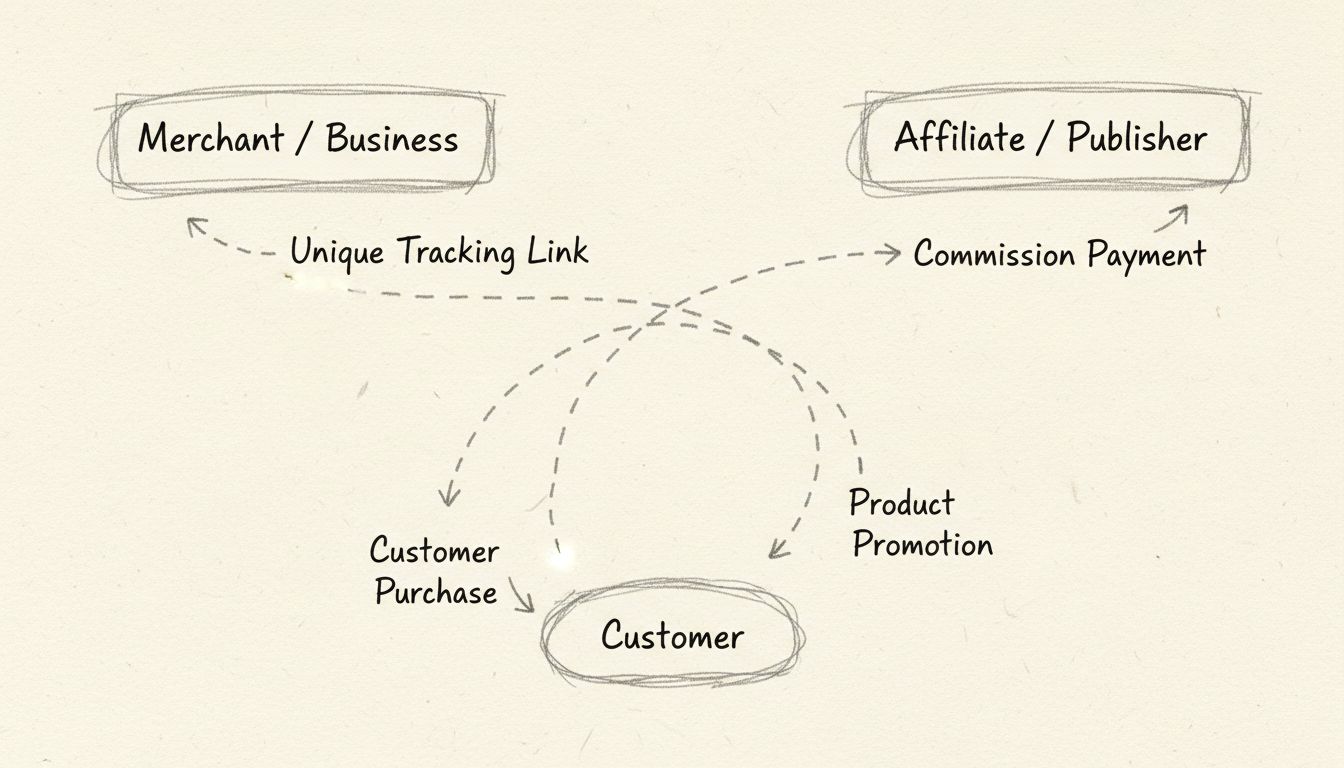
Learn how affiliate programs work with our comprehensive guide. Discover tracking mechanisms, commission models, and best practices for affiliate marketing succ...
Join our community of happy clients and provide excellent customer support with Post Affiliate Pro.




Cookie Consent
We use cookies to enhance your browsing experience and analyze our traffic. See our privacy policy.